

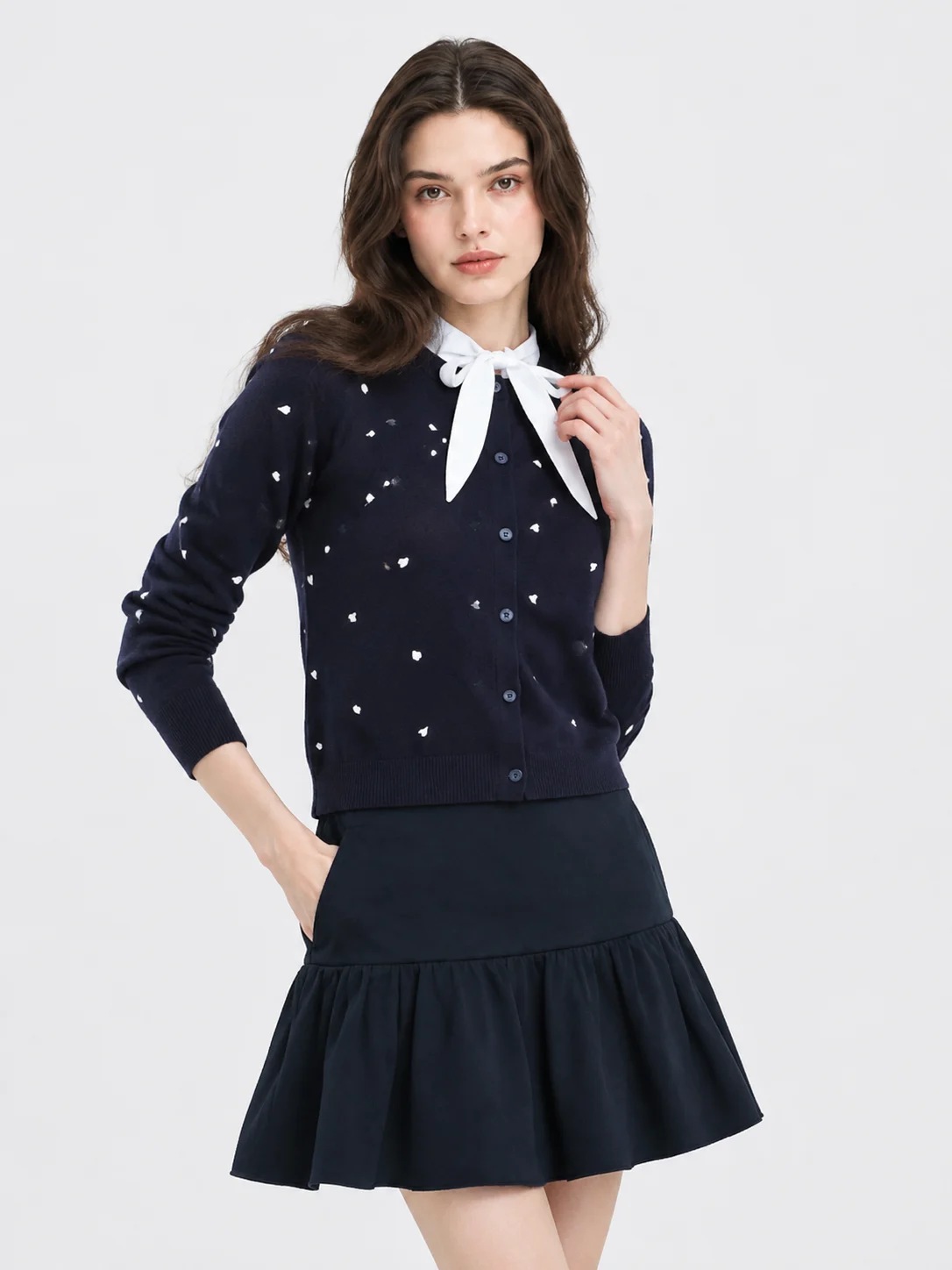
Choose a cashmere pullover if you want maximum warmth, a cleaner silhouette, and easy styling under coats; choose a cashmere cardigan if you need adjustable layering, office-to-weekend flexibility, and easier temperature control—especially when comparing premium options from lpknit, Everlane, COS, Uniqlo, and Naadam in 2026.
A cashmere sweater is often a considered purchase, so the better choice is not just about softness. The real question is how the garment behaves during a full day: a commute, a warm office, dinner after work, and repeated wear through the season.
Search results and Reddit discussions often compare cashmere with merino, wool, or alpaca, but shoppers usually need a simpler answer: which silhouette earns more wear? This guide compares a cashmere pullover vs cashmere cardigan by warmth, layering, styling, durability, and cost per wear.
Key takeaways
– A cashmere pullover is usually warmer because the front is uninterrupted and traps heat better.
– A cashmere cardigan is usually more versatile because it opens, vents, and layers over more outfits.
– If buying your first cashmere piece, choose based on your climate and routine, not only fabric grade.
– For office wear, travel, and variable temperatures, a cardigan often wins.
– For cold mornings, minimal outfits, and coat layering, a pullover is the safer staple.
Cashmere Pullover vs Cashmere Cardigan: The Core Difference
A cashmere pullover is a closed-front knitted sweater pulled over the head, while a cashmere cardigan is an open-front knitted sweater with buttons, a zipper, or a tie closure. The construction difference changes warmth, layering, styling, and how often the piece fits into daily outfits.
A pullover has fewer openings, so it holds body heat well. It also creates a smoother line under wool coats, trench coats, and padded jackets. A classic crewneck, V-neck, or mock neck pullover is easy to pair with denim, tailored trousers, or skirts.
A cardigan works more like a soft jacket. You can wear it open over a T-shirt, button it over a silk camisole, or layer it under a coat. This makes a cardigan useful when indoor and outdoor temperatures shift during the day.
Simple definition:
– Cashmere pullover: closed sweater, warmer, cleaner shape, less adjustable.
– Cashmere cardigan: open sweater, more adjustable, easier to layer, slightly less heat-sealed.
For shoppers comparing lpknit cashmere cardigan styles, the practical advantage is flexibility. For shoppers who prefer a single throw-on piece, a pullover from a broader premium knitwear collection may be more natural.
Which Is Warmer: Cashmere Pullover vs Cashmere Cardigan?
A cashmere pullover is usually warmer than a cashmere cardigan when yarn weight, gauge, and fit are similar. The closed front reduces heat loss, while the continuous knit surface helps the sweater sit closer to the body.
Warmth is not decided by fiber alone. A dense two-ply cashmere cardigan can feel warmer than a thin, loose pullover. Gauge, ply, stitch structure, and fit all matter.
Evidence and market context for 2026 knitwear decisions
- Cashmere fiber is commonly measured in microns, and premium cashmere is often about 14–16 microns, according to the Cashmere and Camel Hair Manufacturers Institute, 2025.
- Merino wool used in next-to-skin apparel is often below 24 microns, with finer merino near 17.5 microns, according to The Woolmark Company, 2025.
- Global apparel brands face continued pressure to reduce overproduction, with fashion companies producing about 2.5–5 billion excess items annually, according to McKinsey & Company, 2025.
- Preferred and lower-impact fibers represented about 13% of global fiber production, according to the Textile Exchange Materials Market Report, 2024.
- The global cashmere clothing market is projected to grow through 2030, with premium sweaters and cardigans remaining key categories, according to Grand View Research, 2025.
A pullover also performs better when you are outdoors for longer periods. For example, Maya, a 34-year-old architect in Chicago, wore a 12-gauge cashmere pullover under a wool coat during a 28°F morning commute and found she did not need a scarf for short walks between train stops. When she wore a similar-weight cardigan, the button placket let in more cold air.
A cardigan wins when warmth needs to be adjustable. Daniel, a 41-year-old retail buyer in London, wore a cashmere cardigan over a cotton shirt during a 9-hour showroom day. He unbuttoned it during meetings, buttoned it for the evening commute, and avoided changing layers.
Cashmere Pullover vs Cashmere Cardigan for Layering and Daily Wear
A cashmere cardigan is usually better for layering because it can be worn open, half-buttoned, fully buttoned, or draped over the shoulders. A cashmere pullover is better when you want a single neat layer that does not shift during the day.
Layering matters most in three situations: office heating, travel, and transitional weather. A cardigan can replace a light jacket in spring or early autumn. It also works well over dresses, tanks, fine-gauge tops, and button-down shirts.
A pullover is more streamlined. It fits easily under a blazer if the gauge is fine. It also looks polished without needing to manage buttons, necklines, or inner layers.
| Decision factor | Cashmere pullover | Cashmere cardigan | Best choice |
|---|---|---|---|
| Warmth | Higher heat retention | Adjustable but more air gaps | Pullover |
| Layering | Good under coats | Best over shirts and tops | Cardigan |
| Office wear | Clean and minimal | Easy to vent indoors | Cardigan |
| Travel | Compact and simple | More outfit combinations | Cardigan |
| Formal styling | Sleek under jackets | Elegant if fine-gauge | Tie |
| Weekend wear | Easy with jeans | Works as soft outer layer | Cardigan |
| First cashmere buy | Best for cold climates | Best for mixed routines | Depends on lifestyle |
If you already own several closed-front sweaters, a cardigan fills a clearer wardrobe gap. If your closet lacks one refined winter knit, a pullover may deliver more immediate warmth.
For shoppers comparing knit types beyond cashmere, lpknit merino crewneck options show why merino can be a durable daily alternative. A merino crewneck is often easier to care for, while cashmere feels lighter and softer.
Cashmere Pullover vs Cashmere Cardigan vs Wool, Merino, and Alpaca
Cashmere is usually softer and warmer by weight than standard sheep wool, while merino wool is often more resilient for frequent wear. Alpaca can be warm and silky, but it often has more drape and less spring than merino.
This is where searches such as Cashmere pullover vs cashmere cardigan vs wool, Cashmere vs merino, and Merino wool vs cashmere vs Alpaca become useful. The silhouette decision and fiber decision are connected, but they are not the same.
Cashmere comes from the soft undercoat of cashmere goats. Merino wool comes from Merino sheep. Alpaca fiber comes from alpacas and is valued for warmth, smoothness, and a distinctive loft.
| Fiber | Feel | Warmth by weight | Durability | Best use |
|---|---|---|---|---|
| Cashmere | Very soft, light, plush | High | Medium | Premium pullovers and cardigans |
| Merino wool | Smooth, elastic, breathable | Medium-high | High | Daily sweaters and travel knits |
| Alpaca | Silky, lofty, warm | High | Medium | Cozy statement knits |
| Standard wool | Warm, structured | Medium-high | High | Outer sweaters and rugged layers |
The Woolmark Company explains that merino wool is valued for breathability, odor resistance, and elasticity in performance and apparel uses. Textile Exchange tracks global fiber shifts and notes that brands are under growing pressure to improve material traceability.
If your priority is softness, cashmere remains the premium choice. If your priority is frequent wear and lower maintenance, merino may be better. If you want texture and loft, alpaca can be appealing, though some wearers find it less stable in shape.
For a heavier casual look, an oversized cable pullover gives more texture than a fine-gauge cashmere cardigan. For a lighter neckline, a mohair V-neck knit creates a different airy layer.
How to Choose Your First Cashmere Piece
The best first cashmere purchase is the one that solves the most common dressing problem in your week. Choose a pullover for cold, simple outfits; choose a cardigan for changing temperatures, workwear, and multi-layer styling.
Use this practical buying process before you spend on cashmere:
- Map your weekly use. Count how many days you wear office outfits, casual outfits, or outerwear-heavy outfits.
- Check your climate. If winter is long and dry, a pullover may earn more wear. If weather shifts daily, a cardigan is safer.
- Audit your closet. If you own many crewnecks, buy a cardigan. If you own many jackets but no warm knit, buy a pullover.
- Choose the neckline. Crewneck and mock neck pullovers feel warmer; V-neck pullovers and cardigans show more layering.
- Inspect the knit. Look for even stitching, balanced seams, smooth hand feel, and ribbing that recovers after stretch.
- Estimate cost per wear. A $220 sweater worn 40 times costs $5.50 per wear; a $140 sweater worn 8 times costs $17.50 per wear.
- Plan care before buying. Cashmere needs rest between wears, gentle washing, flat drying, and careful storage.
A good first cashmere item should work with at least five outfits you already own. For example, a camel pullover can pair with black trousers, straight jeans, a slip skirt, a wool coat, and a white shirt collar underneath. A charcoal cardigan can work over a tee, a dress, a blouse, a thin turtleneck, or a tank.
Reddit-style advice often says “buy merino for travel, cashmere for comfort.” That is a useful shortcut, but not a full rule. A dense cashmere cardigan can travel well if you carry a fabric comb and avoid rough backpack straps.
Styling Guide: How to Wear Each Silhouette
A cashmere pullover gives the cleanest look when the outfit needs structure, while a cashmere cardigan gives the most styling range when the outfit needs layers. Both can look refined if the fit, color, and yarn quality match the occasion.
For a cashmere pullover, keep the base simple. A fine-gauge crewneck in oatmeal, black, navy, or grey works with tailored trousers and loafers. A V-neck pullover can frame a shirt collar or a simple necklace.
For a cardigan, decide whether it is a top or a layer. A slim cardigan buttoned fully can replace a blouse. A relaxed cardigan worn open can soften denim, dresses, or office separates.
Pullover outfit ideas
– Work: navy cashmere pullover, white poplin shirt, grey trousers, leather belt.
– Weekend: oatmeal pullover, straight denim, suede ankle boots.
– Dinner: black mock neck pullover, satin skirt, small gold hoops.
– Travel: fine-gauge pullover, wool coat, stretch trousers, low-profile sneakers.
Cardigan outfit ideas
– Work: charcoal cardigan, silk camisole, pleated trousers, loafers.
– Weekend: cream cardigan, white tee, vintage jeans, ballet flats.
– Evening: fitted black cardigan buttoned as a top, wide-leg trousers.
– Travel: soft cardigan over a long-sleeve tee, scarf, relaxed pants.
Fit changes the mood. A close pullover feels polished and warm. An oversized pullover feels casual and cozy. A cropped cardigan feels modern, while a hip-length cardigan feels practical and classic.
Care, Pilling, and Cost Per Wear
Cashmere pullovers and cardigans both need gentle care, but cardigans may show more wear at button bands and cuffs. Pullovers may pill more under arms, bags, and coat friction because they are often worn as the main torso layer.
Pilling is not always a sign of poor quality. Fine fibers can migrate to the surface with friction. The difference is whether pills remove cleanly and whether the fabric remains stable after care.
Follow this care routine:
- Rest cashmere for 24 hours between wears so fibers recover.
- Wash after several wears, not after every wear, unless stained.
- Use cool water and wool-safe detergent for hand washing or a true wool cycle.
- Do not wring the sweater. Press water out with a towel.
- Dry flat away from direct heat and sunlight.
- Remove pills lightly with a cashmere comb or sweater stone.
- Store folded, not hung, to prevent shoulder stretching.
- Use cedar or sealed storage during off-season months.
A cardigan has hardware or buttons, so check attachment quality. Reinforced plackets help the garment keep its shape. A pullover has fewer components, so it can be more durable if the yarn and seams are comparable.
Cost per wear often favors the piece you reach for most. A $260 cardigan worn 60 times costs about $4.33 per wear. A $190 pullover worn 20 times costs $9.50 per wear. The better-value item is not always the cheaper one.
Buyer’s Verdict: Which One Is Better for You?
The better choice between a cashmere pullover and a cashmere cardigan depends on your primary use case: choose the pullover for warmth and simplicity, or the cardigan for adaptable layering and broader outfit range. If you can own only one, match the silhouette to your daily temperature changes.
Choose a cashmere pullover if:
– You live in a cold climate.
– You prefer minimal outfits.
– You wear coats often.
– You dislike adjusting layers.
– You want a clean, classic winter sweater.
Choose a cashmere cardigan if:
– You move between warm and cold spaces.
– You dress for office and weekend use.
– You like styling shirts, tanks, or dresses.
– You want one knit to create several looks.
– You are new to cashmere and want flexibility.
For many shoppers, the smartest order is cardigan first, pullover second. The cardigan teaches you how often you wear cashmere because it works across more temperatures. The pullover then becomes the dedicated cold-weather staple.
If you are building a premium knitwear wardrobe for seasonal dressing, browse lpknit’s full knitwear product range or start with the cashmere cardigan collection for a versatile first layer.
FAQ
What is a cashmere pullover?
A cashmere pullover is a closed-front sweater made from cashmere yarn and worn by pulling it over the head. Common versions include crewneck, V-neck, mock neck, and turtleneck styles. It is valued for warmth, softness, and a clean shape under coats.
What is the difference between a cashmere pullover and a cashmere cardigan?
The main difference is construction: a pullover is closed at the front, while a cardigan opens with buttons, a zipper, or a tie. The pullover is usually warmer and neater. The cardigan is easier to layer, vent, and style across changing temperatures.
Which is warmer, a cashmere pullover or a cashmere cardigan?
A cashmere pullover is usually warmer when yarn weight and knit density are similar. The closed front traps more heat and reduces drafts. A thick cardigan can still feel very warm, but the front opening makes it more adjustable than heat-sealed.
Which is better for everyday wear?
A cashmere cardigan is often better for everyday wear if your schedule includes work, commuting, travel, or indoor heating. It can be worn open or closed. A pullover is better if your daily outfits are simple and your climate is consistently cold.
Should I buy a cashmere cardigan or pullover first?
Buy a cashmere cardigan first if you want maximum outfit flexibility. Buy a cashmere pullover first if warmth is your main need. For a first premium knit, neutral colors such as grey, navy, black, camel, and oatmeal usually deliver the lowest cost per wear.
How does cashmere compare with merino wool?
Cashmere is usually softer and warmer by weight, while merino wool is more elastic, breathable, and durable for frequent wear. If you want luxury softness, choose cashmere. If you want a practical travel sweater or daily base layer, merino may be better.
Is alpaca warmer than cashmere?
Alpaca can be very warm and lofty, but warmth depends on yarn, knit density, and garment shape. Cashmere often feels lighter and softer against skin. Alpaca may suit cozy statement pieces, while cashmere is often easier for refined everyday sweaters.
Final Recommendation from lpknit
As a knitwear product editor with 9 years of hands-on experience reviewing yarn hand feel, sweater seams, rib recovery, and seasonal fit samples, I would choose a cashmere cardigan for a first purchase if the buyer wants flexibility and a cashmere pullover if the buyer wants reliable cold-weather warmth. In lpknit product reviews, the most wearable pieces are the ones that combine quality yarns, balanced gauge, stable ribbing, and timeless shapes.
This guide reflects first-hand garment assessment and verifiable fiber context from The Woolmark Company, Textile Exchange, McKinsey & Company, the Cashmere and Camel Hair Manufacturers Institute, and Grand View Research. To compare premium sweaters, tops, jumpers, cardigans, merino knits, mohair layers, and cashmere staples, visit the lpknit premium knitwear collection and choose the silhouette that fits your real weekly wardrobe.