

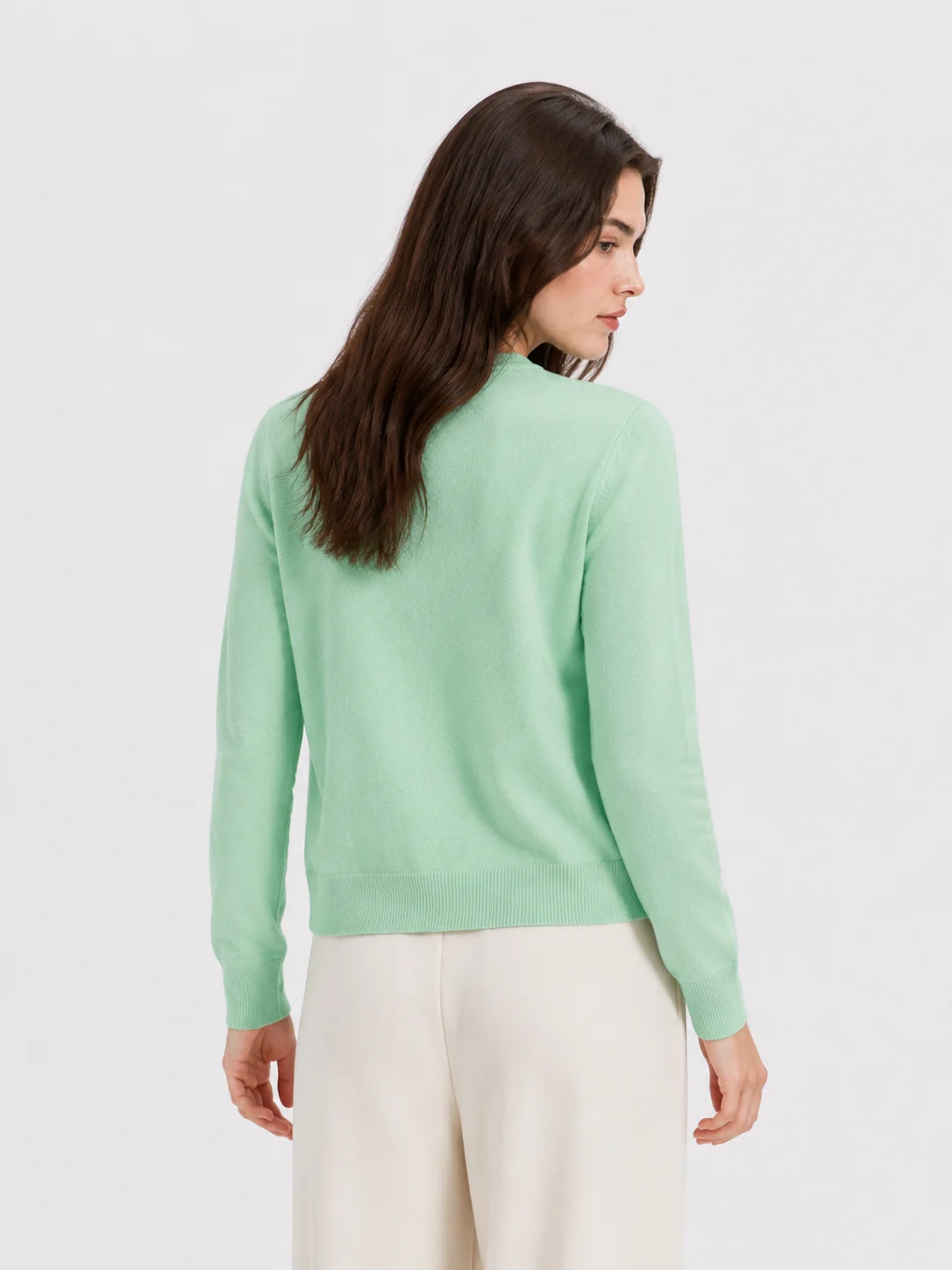
With proper care, a cashmere sweater usually lasts 3–5 years for frequent wear, 10+ years for high-quality two-ply or dense knits, and decades for lightly worn heirloom pieces; J.Crew, Quince and the United States Federal Trade Commission all point to gentle washing, correct fiber quality, rest between wears and moth-safe storage as the main lifespan factors.
Cashmere lasts longest when the sweater is treated as a soft animal-fiber knit, not as a cotton sweatshirt. The practical difference comes from fiber length, yarn twist, ply, knit density, washing method, wear frequency and storage, not from the word “cashmere” on the label alone.
Many shoppers search “How long do cashmere sweaters last with proper care reddit” because real owners often give clearer answers than product pages. Reddit threads commonly mention 8–10-year scarves and sweaters, while premium care guides often say “many years”; this article turns those vague answers into a usable timeline.
Key takeaways
– A frequently worn cashmere sweater can last 3–5 years if washed gently and rested between wears.
– Better yarn, tighter knitting and two-ply construction can push the lifespan to 10+ years.
– Pilling is normal and often fixable with a cashmere comb; thinning, felting and large moth damage are more serious.
– Cashmere does not always outlast cotton, but it can outlast many cotton sweaters when rotated, washed less often and stored well.
– For durable seasonal layers, browse lpknit’s premium knitwear product collection and compare construction details before buying.
How Long Do Cashmere Sweaters Last With Proper Care by Quality Level?
A realistic answer to “how long do cashmere sweaters last with proper care” depends on quality and use: budget or loosely knitted cashmere may look tired after 2–3 seasons, good everyday cashmere often lasts 3–5 years, and dense premium cashmere can last 10 years or longer. The longest-lasting pieces are usually worn in rotation, washed only when needed, dried flat and stored away from moths.
| Cashmere type | Typical lifespan with proper care | Best use case | Main risk |
|---|---|---|---|
| Lightweight single-ply cashmere | 2–4 years | Office layering, mild climates | Pilling, elbow thinning |
| Everyday mid-weight cashmere | 3–5 years | Weekly autumn/winter wear | Friction and overwashing |
| Dense two-ply cashmere | 5–10+ years | Core wardrobe sweater | Moth damage if stored poorly |
| Premium long-staple cashmere | 10–20+ years | Heirloom-quality knitwear | Neglect, heat, harsh washing |
| Cashmere blend with merino or cotton | 3–8 years | Shape retention, lower cost | Depends heavily on blend ratio |
A shopper named Maya, for example, wears one grey cashmere crewneck twice a week from November to March. After 4 winters, about 128 wears, the sweater still looks polished because she alternates it with three other knits and removes pills every month.
Another buyer, Daniel, wore one thin V-neck under a jacket 4 days a week and machine-washed it warm. After 18 months, the cuffs stretched, the underarms thinned and the surface felt rough; the issue was not cashmere itself, but friction plus heat plus too little rotation.
For long-term value, choose dense knitwear with smooth seams and balanced yarn. The lpknit fine knit round neck cardigan shows the kind of everyday silhouette that works well when softness, layering and shape retention all matter.
What Makes One Cashmere Sweater Last Longer Than Another?
A cashmere sweater lasts longer when it uses stronger fibers, a stable yarn structure, dense knitting and reinforced finishing. Fiber quality matters first, but construction decisions—such as ply, gauge, seam type and rib recovery—often decide whether the sweater still looks good after years of wear.
The most important durability factors are:
- Fiber length: Longer cashmere fibers resist shedding and surface fuzz better than short fibers.
- Fiber fineness: Very fine fibers feel soft, but extremely delicate yarn can pill if the knit is loose.
- Ply: Two-ply cashmere often wears better than single-ply because two strands add stability.
- Knit density: A dense knit resists snagging and distortion better than a loose, airy knit.
- Yarn twist: Balanced twist helps the yarn hold together without feeling wiry.
- Rib recovery: Cuffs, hem and neckline should spring back after gentle stretching.
- Seam quality: Linked or well-finished seams reduce stress at shoulders and sides.
A very soft sweater in the fitting room may not be the longest-lasting one. Some brands heavily wash or brush cashmere to create instant softness, but the process can raise fibers that pill sooner.
When comparing premium knitwear from Everlane, COS, Uniqlo, Naadam, J.Crew and lpknit, check more than hand feel. Look at the density against light, stretch the cuff gently, inspect seams and ask whether the yarn is cashmere, merino-cashmere or another blend.
Cashmere durability and care data points for 2026
- The United States Federal Trade Commission defines cashmere under wool labeling rules by fiber source and fineness, including an average fiber diameter of 19 microns or less, according to the FTC Wool Products Labeling Rules, current in 2026.
- Quince states that cashmere can often be worn 5–6 times between washes, according to the Quince Cashmere Care Guide, 2025.
- J.Crew recommends cleaning cashmere after roughly 3 wears, depending on use, according to J.Crew’s Guide to Cashmere Care, 2025.
- Quality cashmere can last 10 years and over 200 wears with good care, according to Gentleman’s Journal’s cashmere care interview, 2024.
- Animal fibers represent a small share of global fiber production, with wool around 1% of global fiber output, according to Textile Exchange’s Materials Market Report, 2024; specialty fibers such as cashmere are more limited and should be maintained carefully.
Sources worth checking include the FTC Wool Products Labeling Rules, J.Crew’s cashmere care guidance, and Quince’s cashmere care guide.
How Long Do Cashmere Sweaters Last With Proper Care After Washing?
A cashmere sweater can last for many years after repeated washing if the washing is cool, gentle, infrequent and followed by flat drying. The damage usually comes from heat, agitation, wringing, tumble drying or washing after every wear, rather than from water itself.
The safest routine is simple:
- Air the sweater after wearing. Lay it over a chair or drying rack for several hours before storing.
- Wash only when needed. Wash after 3–6 wears, or sooner after sweat, perfume or food exposure.
- Use cool water. Warm or hot water can encourage shrinkage and felting.
- Choose wool or cashmere detergent. Avoid enzymes, bleach and strong alkaline detergents.
- Soak briefly. Five to ten minutes is usually enough for light soil.
- Press, never wring. Roll the sweater in a towel to remove excess water.
- Dry flat. Reshape the shoulders, cuffs and hem while damp.
- Store only when fully dry. Moisture attracts odor and can worsen moth risk.
Hand washing is often safest, but some modern machines have a wool cycle that works for sturdy knits. Use a mesh bag, cold water, low spin and no tumble drying if the care label allows machine washing.
Dry cleaning is not always required. It can help for structured pieces, stains or delicate embellishment, but repeated harsh solvent cleaning may reduce softness over time.
Does Cashmere Last Longer Than Cotton, Wool or Merino?
Cashmere can last longer than cotton in a luxury sweater if it is high quality and properly cared for, but cotton often tolerates frequent washing better. Merino wool and regular wool may outperform delicate cashmere in abrasion resistance, while cashmere usually wins on warmth-to-weight and softness.
| Fiber | Durability profile | Washing tolerance | Warmth-to-weight | Best for |
|---|---|---|---|---|
| Cashmere | Long-lasting when rested and protected | Low to moderate | Excellent | Soft luxury layers |
| Cotton | Strong in frequent washing | High | Low to moderate | Spring and casual knits |
| Merino wool | Strong, elastic, odor-resistant | Moderate | Very good | Travel and daily layering |
| Lambswool | Durable but more textured | Moderate | Very good | Rustic winter sweaters |
| Mohair | Strong halo, resists creasing | Moderate | Good | Statement texture and airy warmth |
The answer to “Does cashmere last longer than cotton” is therefore conditional. A dense two-ply cashmere pullover worn 40 times per year may look better after 8 years than a cotton sweater washed weekly, but a delicate cashmere top worn under a backpack every day may fail faster than a sturdy cotton knit.
For shoppers building a capsule wardrobe, a balanced mix works best. A cashmere crewneck covers polished softness, merino supports frequent wear, and a textured cardigan adds seasonal interest; lpknit’s illustrated knit button cardigan is a useful reference for cardigan styling and construction.
Cashmere Comb, Pilling and Repairs: What Is Normal Wear?
Pilling is normal on cashmere and does not mean the sweater is ruined. Pills form when loose fibers rub together, especially under arms, along sides, at cuffs and under coat sleeves; a cashmere comb or sweater stone can remove them when used gently.
Use this repair-or-replace guide before giving up on a sweater:
| Symptom | Usually repairable? | What to do |
|---|---|---|
| Light pilling | Yes | Use a cashmere comb in one direction |
| Fuzzy surface | Often | Steam lightly and rest between wears |
| Loose thread | Yes | Pull to inside with a needle; do not cut |
| Small moth hole | Yes | Mend, reweave or patch |
| Stretched cuffs | Sometimes | Wash, reshape and dry flat |
| Minor shrinkage | Sometimes | Soak with wool conditioner and reshape |
| Felted, stiff fabric | Rarely | Usually permanent |
| Large thinning at elbows | Sometimes | Visible mend or replace |
A cashmere comb should be used with light pressure. Lay the sweater flat, hold the fabric taut and comb small areas in short strokes. Do not comb wet cashmere, and do not use a sharp fabric shaver on loose, delicate knits unless you have practiced first.
Repair is worth it when the sweater still has body, intact seams and sentimental or material value. Replacement is more practical when the fabric is thin across large areas, the sweater has felted after hot washing or the neckline has lost its shape permanently.
How to Store Cashmere So It Lasts 10+ Years
Cashmere lasts longest when stored clean, dry, folded and protected from moths. Hanging cashmere for long periods can stretch shoulders, while storing it with body oils, food traces or moisture increases the risk of odor and insect damage.
Follow this seasonal storage plan:
- Clean before storage. Moths are attracted to body oils, perspiration and food residue.
- Dry fully. Even slight dampness can create odor or mildew.
- Fold instead of hanging. Place tissue between folds for very fine pieces.
- Use breathable storage. Cotton bags are better than sealed plastic for long storage.
- Add moth deterrents. Cedar, lavender or sealed containers can help, but cleanliness matters more.
- Check every 6–8 weeks. Look for new holes, larvae, webbing or powdery debris.
- Rotate during the season. Give each sweater at least 24 hours of rest after wearing.
Do not store cashmere in direct sun. Sunlight can fade dark colors and weaken fibers over time.
If you live in a humid apartment, use a dry closet, not an attic or basement. A breathable garment bag plus a clean shelf is usually better than a crowded plastic bin.
Buying Cashmere That Will Last: A Practical Checklist
A long-lasting cashmere sweater starts with better buying decisions. Before choosing a piece, inspect the knit density, seams, elasticity, care label and intended use instead of judging only softness or discount price.
Use this checklist in store or online:
- Hold the sweater up to light: A very transparent knit may snag or stretch sooner.
- Stretch the rib gently: Cuffs and hem should recover without waviness.
- Check the seams: Shoulder and side seams should look even and secure.
- Feel the surface: Soft is good; slippery, limp or overly fluffy can signal heavy finishing.
- Read the composition label: Know whether it is 100% cashmere or a blend.
- Match weight to use: Fine-gauge tops suit layering; dense pullovers suit long wear.
- Review care needs: If you will not hand wash or store carefully, consider merino blends.
For brand buyers and boutique planners, durability also affects returns and customer loyalty. A cashmere sweater that holds shape after 30 wears creates more confidence than a piece that feels luxurious on day one but pills heavily after the first month.
lpknit develops premium knitted sweaters, tops and jumpers across cashmere, merino, mohair, cable knit and ribbed styles. To compare seasonal options, visit the lpknit premium knitwear product page or explore the Knitwear Journal on sourcing and craft.
Cashmere Care Schedule for Real Life
A cashmere care schedule helps shoppers avoid both neglect and overwashing. The goal is to remove odor, prevent moth damage and control pilling while preserving softness and shape.
After each wear
- Air the sweater for several hours.
- Brush off lint or hair by hand.
- Fold it only when dry.
- Rest it at least 24 hours before the next wear.
Every 3–6 wears
- Check underarms, cuffs and neckline.
- Spot clean small marks.
- Hand wash or use a wool cycle if needed.
- Dry flat on a towel.
Monthly during sweater season
- Remove light pills with a cashmere comb.
- Inspect seams and underarms.
- Re-fold to avoid permanent creases.
- Rotate less-worn sweaters into use.
Before off-season storage
- Wash or dry clean according to the care label.
- Dry completely.
- Fold into a breathable bag or clean box.
- Add moth deterrents and inspect storage every 6–8 weeks.
This rhythm is realistic for a busy wardrobe. It also explains why two owners can buy similar cashmere and get very different results.
FAQ: Cashmere Sweater Lifespan and Care
How long do cashmere sweaters usually last with proper care?
Cashmere sweaters usually last 3–5 years with regular wear and proper care. Higher-quality two-ply or dense cashmere can last 10+ years, especially when washed gently, dried flat, stored clean and rotated with other sweaters.
How can you tell if cashmere is ruined?
Cashmere is likely ruined if it feels stiff and felted, has severe shrinkage, large thin patches or widespread moth damage. Light pilling, small holes, loose threads and mild stretching are usually repairable with combing, mending or reshaping.
Is pilling a sign of bad cashmere?
Pilling is not always a sign of bad cashmere. Some pilling is normal because soft animal fibers move with friction, but heavy pilling after only a few wears may indicate short fibers, loose knitting or excessive rubbing.
How often should you wash a cashmere sweater?
Wash a cashmere sweater after about 3–6 wears, depending on sweat, odor and stains. Airing between wears is important because overwashing can shorten the sweater’s life through agitation, detergent exposure and reshaping stress.
Does cashmere last longer than cotton?
Cashmere can last longer than cotton when it is high quality, worn in rotation and washed gently. Cotton usually handles frequent machine washing better, so the longer-lasting choice depends on construction, care habits and how often the sweater is worn.
Should I use a cashmere comb or fabric shaver?
Use a cashmere comb for most fine cashmere because it removes pills with more control. A fabric shaver can work on dense knits, but sharp blades may cut delicate fibers if the sweater is loose, thin or not held flat.
Can a shrunken cashmere sweater be saved?
A slightly shrunken cashmere sweater can sometimes be saved with a cool soak, wool conditioner and careful reshaping. A heavily felted sweater that feels stiff, thick and matted is usually permanently damaged.
How should cashmere be stored for summer?
Store cashmere clean, dry and folded in a breathable cotton bag or sealed container with moth protection. Do not hang cashmere for months, and avoid storing it in damp basements, hot attics or direct sunlight.
Conclusion: How to Make Cashmere Last Longer
As a knitwear sourcing editor with 9 years of hands-on experience reviewing cashmere, merino, mohair and blended sweaters, I have found that the longest-lasting cashmere pieces share the same traits: dense yarn, stable seams, gentle washing, flat drying and clean folded storage. The answer to “how long do cashmere sweaters last with proper care” is usually 3–5 years for frequent wear, 10+ years for premium knitwear and decades for carefully rotated heirloom pieces, a range supported by care guidance from J.Crew, Quince, the United States Federal Trade Commission and long-term owner reports.
If you want knitwear designed for seasonal wardrobes rather than one-winter use, explore lpknit’s premium sweaters, tops and jumpers. For a softer statement layer, compare the mohair long-sleeve knit sweater; for classic everyday styling, review the fine knit round neck cardigan.