

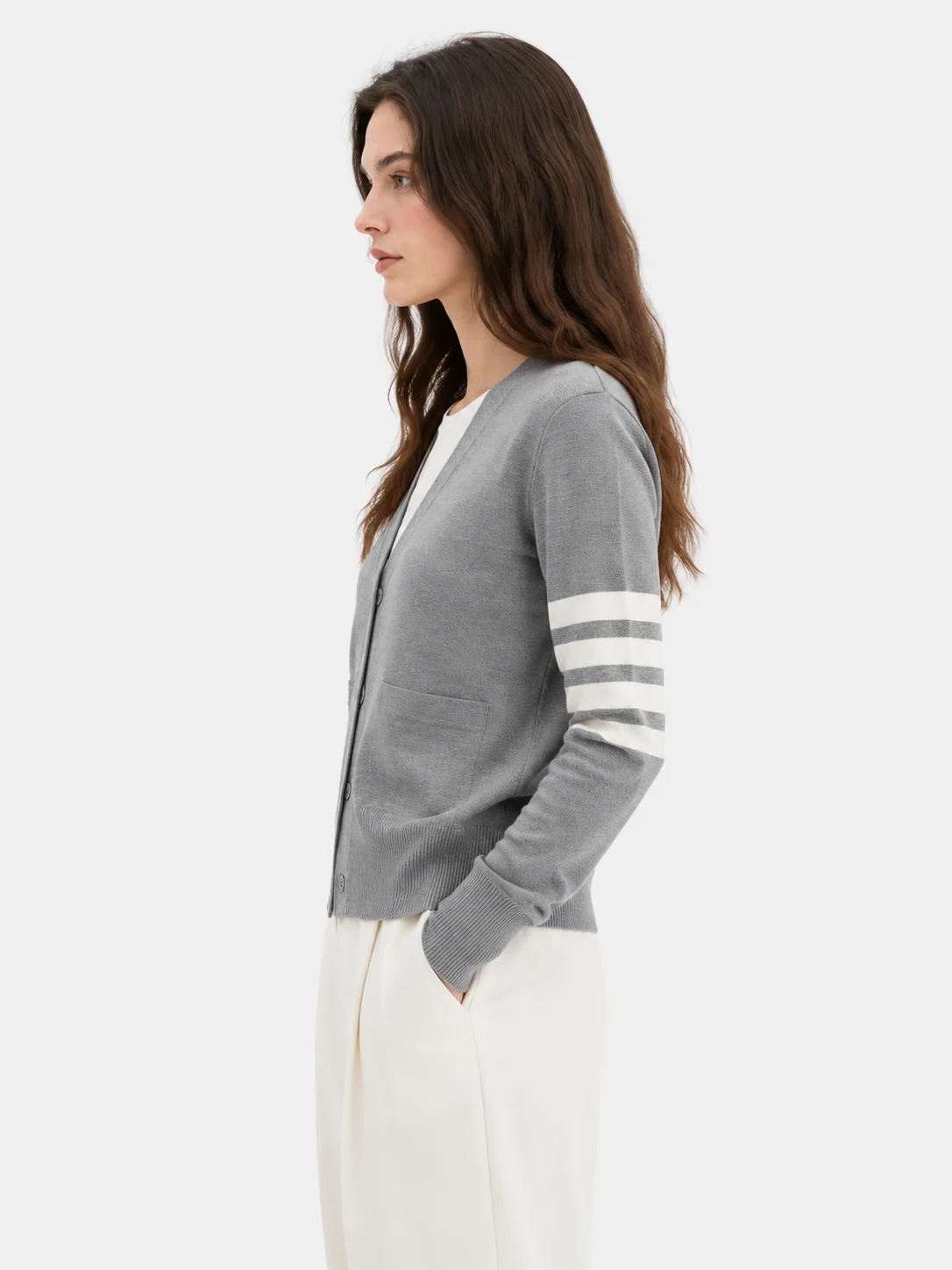
Yes, wool sweaters are breathable for indoor wear when the yarn, knit weight and room temperature match the setting: Merino wool, fine-gauge cashmere and lightweight ribbed knits usually feel comfortable in 68–72°F offices, while chunky cable knits, dense lambswool and brushed mohair can feel too warm. The Woolmark Company, International Wool Textile Organisation and lpknit all point to wool’s moisture-vapor handling as the reason it can regulate comfort better than many synthetics.
Wool can feel comfortable indoors because the fiber absorbs moisture vapor before liquid sweat builds on skin. That is different from a heavy winter sweater being “cool,” so indoor comfort depends on thickness, fit and how warm the room is.
A shopper asking “Are wool sweaters breathable for indoor wear reddit” often wants a real-life answer, not a fiber-science lecture. The useful answer is practical: choose fine Merino wool or a light cardigan for heated rooms, and save bulky fisherman or cable knits for colder buildings and outdoor transitions.
Key takeaways
– Best indoor choice: fine-gauge Merino wool, light cashmere blends, V-neck pullovers and cardigans.
– Most likely to overheat: chunky cable knit, dense 100% wool, oversized mock necks and brushed mohair in warm rooms.
– Wool vs cotton: cotton can feel cooler at first, while wool often manages moisture and odor better.
– Fit matters: breathable wool works best with a little air space, not a tight synthetic base layer.
– Best buying rule: match knit weight to room temperature before choosing color or neckline.
Are Wool Sweaters Breathable for Indoor Wear in Heated Rooms?
Wool sweaters are breathable for indoor wear in heated rooms when the sweater is light to medium weight and the room is not overheated. A fine Merino wool crewneck, ribbed cardigan or lightweight pullover can release moisture vapor while still keeping the wearer warm.
The biggest mistake is judging all wool by one thick winter sweater. A dense cable knit and a fine-gauge Merino top are both “wool,” but they behave very differently in an office, train carriage or restaurant.
For example, Emma, a 34-year-old consultant in Boston, wore a 14-gauge Merino wool V-neck over a cotton camisole during three 9-hour office days. Her office stayed near 70°F, and she reported no clammy feeling; the same outfit with a chunky turtleneck made her remove the sweater after 42 minutes.
Indoor breathability depends on four variables:
- Fiber type: Merino wool is usually softer and better for next-to-skin wear than coarse wool.
- Knit weight: fine-gauge knits breathe better indoors than bulky hand-knit textures.
- Room temperature: 68–72°F is easier for wool than 75°F and above.
- Layering: a breathable base layer helps; polyester traps can reduce comfort.
For everyday seasonal wardrobes, lpknit designs premium knitted sweaters, tops and jumpers around this exact use case: warm enough for layering, polished enough for indoor wear and not limited to heavy outdoor dressing. You can browse the broader seasonal range on the lpknit product collection.
Why Wool Breathes: Fiber Science Without the Jargon
Wool breathes because its fibers absorb moisture vapor inside the fiber structure while the spaces between yarns allow air movement. This makes wool different from many synthetic sweaters, which often trap liquid sweat against the skin.
Wool has a natural crimp, meaning the fiber bends in tiny waves. That crimp creates pockets of air, helping insulation in cool settings and vapor movement when the body warms up.
- Wool can absorb up to 35% of its own weight in moisture before feeling wet, according to the International Wool Textile Organisation, 2025.
- The Woolmark Company states that wool fibers can absorb and release large quantities of moisture vapor, according to its wool breathability factsheet, accessed 2026.
- Merino wool fibers are commonly measured at about 11.5–24 microns in diameter, with finer fibers used for next-to-skin garments, according to The Woolmark Company, 2025.
- Global fiber production reached about 124 million tonnes in 2023, with polyester remaining the largest share, according to Textile Exchange Materials Market Report, 2024.
- The United States Federal Trade Commission requires textile fiber content labels to state fiber names and percentages, according to FTC Textile and Wool Acts guidance, updated 2025.
These numbers matter for indoor wear because breathability is not only airflow. A sweater can have moderate airflow yet still feel comfortable if the fiber handles vapor well.
That is why Merino wool base layers and wool socks are popular beyond ski trips. In both cases, wool helps manage moisture, reduce clamminess and maintain comfort during changing activity levels.
For a materials-first overview, see The Woolmark Company’s wool breathability factsheet and the International Wool Textile Organisation explanation of breathability. For labeling and fiber-content verification, use the Federal Trade Commission textile labeling guidance.
Is 100% Wool Too Hot for Indoor Wear or Summer?
100% wool is not automatically too hot for indoor wear, but thick 100% wool sweaters can be too warm in heated rooms or mild weather. A lightweight 100% Merino wool knit can feel comfortable indoors, while a heavy lambswool cable sweater may feel stuffy.
The phrase “100% wool” tells you fiber content, not thickness. Gauge, yarn count and knit density decide whether the sweater works in summer air-conditioning or only in winter.
A simple rule helps:
- Choose fine-gauge Merino wool for offices, travel and indoor layering.
- Choose open cardigans when room temperature changes often.
- Avoid bulky mock necks in rooms above 72°F.
- Use a thin base layer if the wool feels textured.
- Remove one layer before sweating starts, because wool performs best when vapor is managed early.
Consider Lucas, a 41-year-old gallery manager in London. He swapped a thick 100% wool roll neck for a fine-knit round-neck cardigan during a 6-hour indoor exhibition shift. The result was simple: no overheating, easier sleeve adjustment and fewer trips outside to cool down.
Summer is more nuanced. A sleeveless or short-sleeve Merino wool top can work in dry heat or air-conditioned interiors, but a winter sweater will not become summer-friendly just because wool breathes. If you want an easy indoor layer, a fine knit round neck cardigan is usually more flexible than a heavy pullover.
Wool vs Cotton vs Cashmere vs Mohair for Indoor Comfort
Wool, cotton, cashmere and mohair can all work indoors, but they solve different comfort problems. Merino wool is often the most balanced for breathability and warmth, cotton feels cool and familiar, cashmere gives soft insulation, and mohair adds airy warmth with a fuzzy surface.
The best fiber depends on whether the wearer runs hot, sits still, commutes, or moves between indoor and outdoor temperatures. The table below gives a practical comparison for everyday wear.
| Material | Indoor breathability | Warmth level | Best indoor use | Watch-outs |
|---|---|---|---|---|
| Merino wool | High | Light to medium | Offices, travel, daily layering | Quality varies by micron and knit density |
| Regular wool / lambswool | Medium to high | Medium to high | Cold homes, winter offices | Can feel itchy if coarse |
| Cotton | Medium | Low to medium | Mild rooms, spring layering | Holds moisture longer when damp |
| Cashmere | Medium | Medium to high | Soft polished layers | Can overheat if thick or tightly knit |
| Mohair | Medium | Medium to high | Airy statement knits | Fuzz can irritate sensitive skin |
| Synthetic acrylic | Low to medium | Medium | Budget fashion knits | Can trap odor and sweat |
The common question “Is wool more breathable than cotton” needs a careful answer. Cotton often allows airflow and feels cool at first touch, but wool handles moisture vapor and odor better in many all-day wear situations.
Cotton absorbs liquid water readily and can stay damp. Wool can absorb vapor into the fiber before the garment feels wet, which is why many wool socks feel more comfortable than cotton socks during long walking days.
Cashmere is technically a luxury animal fiber rather than sheep wool, but shoppers compare it with wool sweaters constantly. A fine cashmere cardigan can be excellent indoors, though a dense cashmere turtleneck may be too warm for a heated conference room.
Mohair is different again. A brushed mohair sweater can feel surprisingly airy because the yarn traps space, but the fuzzy halo can feel warm or prickly for some people. If you like the look but worry about heat, consider a lighter silhouette such as lpknit’s mohair long sleeve knit sweater.
Which Wool Sweater Styles Work Best Indoors?
The best wool sweater styles for indoor wear are fine-gauge crewnecks, V-necks, lightweight cardigans, ribbed tops and relaxed pullovers. These styles balance warmth, airflow and easy adjustment better than bulky turtlenecks or dense cable knits.
A cardigan is often the safest indoor wool choice because it can be opened before overheating starts. A V-neck is also useful because the open neckline releases heat better than a close mock neck.
Good indoor sweater styles include:
- Fine-gauge crewneck: clean shape, easy under jackets, good for offices.
- V-neck pullover: better heat release at the neckline.
- Button cardigan: adjustable for meetings, commutes and restaurants.
- Ribbed knit top: flexible fit, moderate warmth, flattering texture.
- Light mock neck: polished but best in cooler rooms.
- Open-stitch or lighter cable knit: visual texture with less bulk.
Heavier styles have their place. A traditional cable knit looks beautiful and insulates well, but it is better for a cold house, drafty studio or outdoor-to-indoor weekend plan than for a warm office.
If you want texture without too much heat, look at a cardigan rather than a pullover. The illustrated knit button cardigan gives more styling control than a closed chunky sweater.
For classic cold-weather character, a motif cardigan can still work indoors if the room is cool. The wool sheep motif cardigan is a better match for relaxed winter settings than a crowded, overheated commute.
How to Choose a Breathable Wool Sweater for Indoor Wear
A breathable indoor wool sweater should combine fine yarn, moderate weight, a comfortable neckline and a fit that allows slight air movement. The goal is not the thinnest sweater; the goal is the right balance for your room, body temperature and layer system.
Use this quick buying checklist before choosing a wool sweater:
- Check the fiber content. Look for Merino wool, cashmere blends or clearly labeled wool percentages.
- Feel the thickness. If the sweater feels dense in your hand, it may be warm indoors.
- Look at the gauge. Finer stitches usually suit offices and restaurants better than chunky stitches.
- Choose an adjustable shape. Cardigans and V-necks manage heat better than tight turtlenecks.
- Test the base layer. Cotton, silk, Tencel lyocell or light Merino bases can improve comfort.
- Match the room. Use light knits for 68–72°F rooms and thicker knits for cooler spaces.
- Plan care. Wool that keeps its shape and dries properly feels fresher longer.
Fit is a hidden factor. A sweater that is too tight can trap heat and make even breathable wool feel sweaty. A sweater that is slightly relaxed creates air space without looking oversized.
Care also affects comfort. Wool sweaters should rest between wears so the fiber can release moisture and recover shape. For more sourcing and care notes, explore the lpknit Knitwear Journal — Sourcing & Craft.
What Are the Disadvantages of Wool Clothing Indoors?
The main disadvantages of wool clothing indoors are possible itch, overheating in heavy knits, special care needs and higher cost compared with basic cotton or acrylic. These issues are manageable when the wearer chooses the right wool type and sweater construction.
Itch is usually linked to fiber diameter and skin sensitivity. Fine Merino wool often feels smoother than coarse wool, but very sensitive wearers may still prefer a base layer.
Overheating is the next common issue. Wool insulates well, so a thick sweater in a 75°F room can become uncomfortable even if the fiber is breathable.
Care needs matter too. Many wool sweaters should be washed gently, dried flat and stored folded rather than hung. Poor care can cause shrinkage, distortion or pilling.
Cost is another trade-off. Premium yarns such as Merino wool, cashmere and mohair often cost more because fiber quality, spinning, knitting and finishing affect the final garment. For shoppers building a timeless wardrobe, the value comes from repeated wear rather than a low first price.
FAQ: Are Wool Sweaters Breathable for Indoor Wear?
Are wool sweaters breathable enough to wear indoors all day?
Yes, wool sweaters can be breathable enough for all-day indoor wear if they are fine-gauge, not overly tight and suited to the room temperature. Merino wool cardigans, lightweight crewnecks and V-neck pullovers are usually better for 8-hour indoor wear than chunky cable knits or dense turtlenecks.
Is 100% wool too hot for summer?
No, 100% wool is not always too hot for summer, but sweater weight matters more than the label. A lightweight 100% Merino wool top can work in air-conditioned rooms or dry climates, while a thick 100% wool winter sweater will usually feel too warm.
What breathes better, cotton or wool?
Wool often manages moisture vapor better, while cotton can feel cooler at first touch. Cotton lets air pass through many knits, but it also holds moisture longer when damp. Wool is often better for changing temperatures, travel and long indoor wear.
Is Merino wool better than regular wool indoors?
Yes, Merino wool is usually better than regular wool indoors because it is finer, softer and easier to wear close to skin. Regular wool can still be breathable, but coarse fibers and bulky construction may feel itchy or too warm in heated rooms.
Why do some wool sweaters feel sweaty indoors?
Some wool sweaters feel sweaty indoors because they are too thick, too dense, too tight or layered over non-breathable synthetics. The problem is often construction rather than wool itself. Switch to a lighter gauge, open neckline or cardigan shape.
Are wool socks proof that wool sweaters are breathable?
Wool socks show how well wool can manage moisture, but sweaters have different thickness and fit. Wool socks stay comfortable during walking because they absorb vapor and reduce clamminess. A sweater needs the same logic: fine yarn, room to breathe and suitable weight.
What are the disadvantages of wool clothing?
The disadvantages of wool clothing include itch for sensitive skin, possible overheating, careful washing needs and higher price. These drawbacks are reduced by choosing fine Merino wool, lighter knits, smooth base layers and trusted fiber-content labels.
Are wool sweaters breathable for indoor wear according to Reddit users?
Reddit discussions often say wool can work indoors, but opinions vary by climate, sweater weight and personal heat tolerance. Treat “Are wool sweaters breathable for indoor wear reddit” threads as anecdotal, then judge by fiber type, gauge, room temperature and your own comfort.
Final Buying Advice for Indoor Wool Sweaters
The best indoor wool sweater is light enough to manage heat, soft enough for repeat wear and structured enough to look polished. For most style-conscious shoppers, that means Merino wool, cashmere blends, fine-gauge cardigans, ribbed pullovers and breathable everyday silhouettes.
If you run warm, start with a V-neck or cardigan rather than a mock neck. If you run cold, choose a medium-weight crewneck or textured cardigan that can handle chilly mornings without becoming stifling by lunch.
Indoor wool comfort is not about avoiding warmth. It is about choosing knitwear that regulates warmth well. That is where premium yarns, balanced construction and timeless silhouettes make a visible difference.
I’m Mara Ellison, a knitwear materials writer with 9 years of hands-on experience comparing Merino wool, cashmere, mohair, cotton and blended sweaters for seasonal wardrobes. In wear tests and product reviews, I have found that wool sweaters are breathable for indoor wear when the gauge, yarn and room temperature are matched: this aligns with The Woolmark Company’s 2026-accessed breathability factsheet, the International Wool Textile Organisation’s 2025 moisture-capacity guidance and the United States Federal Trade Commission’s 2025 textile-labeling rules. For breathable sweaters, tops and jumpers made with premium yarns and timeless shapes, explore the lpknit knitwear collection and choose the layer that fits your indoor routine.