

I’m shaping this as a buyer-facing 2026 guide, with a clear distinction between factory-management certifications, material-chain standards, and legal market requirements. I’ll also keep lpknit’s positioning accurate by presenting verification questions and sampling controls without claiming certifications that the supplied product information does not confirm.—
meta_title: “2026 Buyer Audit: Certifying a Premium Knitwear OEM Partner”
meta_description: “Learn which certifications a premium knitwear OEM factory needs for quality, ethical labor, material traceability, and US, UK, and EU market readiness.”
primary_keyword: “what certifications should a premium knitwear OEM factory have”
secondary_keywords: “what certifications should a premium knitwear OEM factory have, Information type”
url_slug: “buyer-audit-premium-knitwear-oem”
author_name: “Elena Morgan”
author_role: “Apparel sourcing consultant specializing in certified knitwear production and supplier due diligence”
date_published: “2026-08-26”
reviewed_at: “2026-08-26”
schema_type: “article”
A 2026 Buyer Audit for Premium Knitwear OEM Certification
A premium knitwear OEM factory should demonstrate ISO 9001 quality controls, credible social-compliance verification such as amfori BSCI or WRAP, and material certifications matched to the order: OEKO-TEX STANDARD 100 for harmful-substance testing, GOTS for organic fibers, RWS for responsible wool, RMS for responsible cashmere, and RMS or SFA for responsible mohair. Buyers should verify the certificate holder, production site, scope, expiry date, and actual yarn lot before placing an order.
A certification is useful only when its scope matches the product being made. A factory may hold a quality-management certificate while the cashmere yarn, dyeing process, or subcontracted finishing facility remains outside that certificate’s coverage.
This matters to boutique fashion brands buying merino, cashmere, or mohair sweaters in small runs. A reliable partner must support product safety, fiber claims, ethical production, export documentation, and repeatable quality without creating unnecessary compliance costs.
Key takeaways
- Factory-level certifications prove management, workplace, or process controls.
- Fiber standards such as RWS, RMS, and SFA verify specific raw-material supply chains.
- OEKO-TEX STANDARD 100 focuses on harmful substances in the finished textile.
- GOTS and GRS apply only when the required organic or recycled content and chain of custody are documented.
- No single certification makes a sweater legal to sell in every market; buyers still need correct labels, testing, and product documentation.
What Certifications Should a Premium Knitwear OEM Factory Have?
A premium knitwear OEM factory should have documented quality management, social-compliance evidence, chemical and product-safety controls, and relevant material-chain certifications. The exact combination depends on fiber content, customer claims, destination market, and whether the factory performs knitting, linking, washing, dyeing, finishing, and packing on site.
The strongest supplier file normally includes:
- Quality management: ISO 9001 or an equivalent independently audited system.
- Social compliance: amfori BSCI, WRAP, SA8000, Sedex SMETA, or a buyer-approved equivalent.
- Product safety: OEKO-TEX STANDARD 100 or documented chemical testing against the buyer’s restricted-substance list.
- Environmental management: ISO 14001, wastewater controls, chemical-management procedures, and energy or waste records.
- Fiber traceability: RWS for wool, RMS for cashmere, or SFA for mohair where the product makes a responsible-fiber claim.
- Organic or recycled claims: GOTS for organic fibers and GRS for recycled fibers, with valid transaction certificates where required.
A certificate is not a substitute for factory capability. Buyers should also examine gauge options, knitting machines, linking quality, shrinkage testing, pilling results, color approval, sample records, and the factory’s ability to repeat a small production run accurately.
Factory-Level Certifications Versus Fiber Certifications
Factory-level certifications evaluate how a facility operates. Fiber certifications evaluate the origin, handling, processing, and custody of a material. These two categories answer different buyer questions and should not be treated as interchangeable.
| Certification or audit | What it mainly verifies | Applies to | Best buyer use |
|---|---|---|---|
| ISO 9001 | Quality-management procedures and continual improvement | Factory or company management system | Repeatable production and corrective action |
| ISO 14001 | Environmental-management system | Factory operations | Environmental governance and risk management |
| amfori BSCI | Social-performance requirements in the supply chain | Production site and labor practices | EU-focused supplier due diligence |
| WRAP | Responsible and lawful apparel production | Cut-and-sew and textile facilities | Workplace and labor compliance |
| OEKO-TEX STANDARD 100 | Testing for harmful substances in textile components | Finished yarn, fabric, trims, or garments | Product-safety evidence |
| GOTS | Organic fiber content plus environmental and social processing controls | Certified supply chain and processing sites | Organic sweater claims |
| GRS | Recycled content and chain-of-custody controls | Recycled-material supply chain | Recycled fiber claims |
| RWS | Responsible animal welfare and land-management practices | Wool supply chain | Responsible merino or wool claims |
| RMS | Responsible cashmere sourcing and processing | Cashmere supply chain | Responsible cashmere claims |
| SFA | Responsible mohair production and supply-chain practices | Mohair supply chain | Responsible mohair claims |
For example, ISO 9001:2015 may show that a factory controls inspection records and corrective actions. It does not prove that a “100% responsible merino wool” claim is accurate. That claim requires evidence from the wool supply chain, such as an RWS certificate and transaction documentation.
The ISO 9001:2015 quality-management standard is therefore best read as a factory-process credential. It should be reviewed alongside product testing and material documentation.
Which Certifications Apply to Merino, Cashmere, and Mohair?
Merino, cashmere, and mohair require different material evidence because they originate in different animal-fiber supply chains. A premium knitwear buyer should select a standard based on the fiber claim rather than asking for every available logo.
Merino wool
Responsible Wool Standard (RWS) is the most relevant named standard when a brand wants to make a responsible wool claim. RWS addresses animal welfare, land management, and chain-of-custody requirements from farm through the supply chain.
Ask for:
- The current RWS scope certificate.
- The certified supplier and processing stages.
- Transaction certificates for the specific shipment, when applicable.
- Fiber composition and blending records.
- A written explanation of any non-RWS wool in the same style.
RWS is not a general quality certificate. It does not guarantee a particular sweater’s softness, gauge, durability, or fit. Those characteristics still require physical sampling and laboratory or factory testing.
Cashmere
Responsible Mohair Standard (RMS) does not cover cashmere. Buyers looking for responsible cashmere should ask about the Good Cashmere Standard, commonly associated with the Aid by Trade Foundation, or another buyer-approved cashmere standard with verifiable chain of custody.
Ask whether the factory can provide:
- A current certificate for the cashmere processor or yarn supplier.
- The exact cashmere grade and blend percentage.
- Yarn invoices or batch references linked to the production order.
- Evidence that spinning, dyeing, and finishing remain within the approved scope.
- A transaction certificate or equivalent shipment document.
Cashmere claims are particularly vulnerable to fiber substitution and vague “pure cashmere” wording. A purchase order should state the permitted fiber composition, tolerance, test method, and documentation required before bulk approval.
Mohair
Sustainable Fibre Alliance (SFA) certification is a relevant option for responsible mohair sourcing. The standard focuses on mohair-farming practices, animal welfare, environmental stewardship, and supply-chain traceability.
Responsible Mohair Standard (RMS) is another material standard buyers may encounter. The buyer should confirm which standard the brand’s customers recognize and whether the yarn supplier and processing facility are included in its scope.
For mohair sweaters, request:
- A current SFA or RMS certificate, where applicable.
- The mohair origin and percentage.
- A yarn-level lot or transaction reference.
- Brushing, shedding, pilling, and dimensional-stability test results.
- Confirmation of whether the finished garment includes certified and conventional fibers.
A factory can knit a certified mohair yarn without holding every farm-level certificate itself. The critical question is whether the factory can preserve the yarn’s identity and provide the documents connecting the certified material to the finished order.
What Is the Difference Between OEKO-TEX, GOTS, GRS, RWS, RMS, and SFA?
OEKO-TEX STANDARD 100 tests textile products for harmful substances, while GOTS and GRS combine content rules with supply-chain controls. RWS, RMS, and SFA focus on responsible sourcing for particular animal fibers rather than general factory quality.
The main differences are:
- OEKO-TEX STANDARD 100: A product-safety label. It can cover yarns, trims, or finished knitwear. It does not certify organic content or animal welfare.
- GOTS: An organic-textile standard. It requires qualifying organic fiber content and controls across certified processing stages, including environmental and social criteria.
- GRS: A recycled-textile standard. It verifies recycled content and chain of custody, with additional social, environmental, and chemical requirements.
- RWS: A responsible-wool standard for wool supply chains, including animal welfare and land management.
- RMS: A responsible-cashmere standard for cashmere supply chains.
- SFA: A responsible-mohair standard covering mohair production and supply-chain practices.
The OEKO-TEX STANDARD 100 product-safety framework should be evaluated by certificate number, product class, and certified components. A certificate for yarn may not automatically cover buttons, labels, sewing thread, packaging, or the completed sweater.
For organic products, review the GOTS public standard information. For recycled products, compare the supplier’s evidence with the Textile Exchange Global Recycled Standard.
Are These Certifications Legally Required in the EU, UK, or US?
Most textile certifications are voluntary, but textile products sold in the EU, UK, or US must still meet applicable labeling, chemical, product-safety, and consumer-protection rules. A voluntary certificate can help demonstrate due diligence, but it does not replace legal compliance.
European Union
The EU requires accurate fiber-composition labeling under Regulation (EU) No 1007/2011. A sweater sold as cashmere, wool, or a blend must state its fiber composition according to the regulation’s terminology.
The EU General Product Safety Regulation (EU) 2023/988 has applied since 13 December 2024, according to the European Commission’s product-safety guidance. It increases expectations around product identification, risk assessment, traceability, and responsible economic operators.
REACH chemical restrictions can also affect dyes, finishes, trims, and other textile components. OEKO-TEX may simplify evidence collection, but the brand remains responsible for confirming that the finished product complies with the destination market.
United Kingdom
The UK requires accurate textile labeling under the Textile Products (Labelling and Fibre Composition) Regulations 2012, as amended. Brands should verify fiber names, percentages, responsible-party information, and any environmental claims before placing products on the UK market.
A UK buyer should also check product safety, chemical restrictions, packaging obligations, and marketing claims. A factory certificate may support the file, but it does not transfer the brand’s legal responsibilities.
United States
In the United States, wool products are subject to the Wool Products Labeling Act, while other textile products generally fall under the Textile Fiber Products Identification Act. The Federal Trade Commission provides requirements through its textile and wool labeling guidance.
The US does not generally require GOTS, RWS, RMS, SFA, or OEKO-TEX certification to sell an ordinary sweater. These standards become commercially important when a brand makes organic, recycled, responsible-wool, responsible-cashmere, responsible-mohair, or product-safety claims.
How Can Buyers Verify a Factory Certificate?
A buyer should verify a certification through the issuing organization or an accepted certification body, then match the certificate to the exact production site, process, material, and order. A logo in a supplier presentation is not sufficient evidence.
Use this verification process before approving bulk production:
- Request the complete certificate. Ask for the legal entity, certificate number, issue date, expiry date, standard edition, and certification body.
- Confirm the production address. Match the address to the factory that will knit, link, wash, dye, finish, and pack the garments.
- Read the scope statement. Check whether the scope includes sweaters, cardigans, yarn, dyeing, washing, finishing, storage, and subcontractors.
- Check the certificate database. Use the issuing organization’s public search tool or contact the certification body directly.
- Match the material. Confirm that the certificate covers merino, cashmere, mohair, organic cotton, recycled fiber, or the exact fiber used in the order.
- Request transaction evidence. For chain-of-custody claims, connect the yarn lot and shipment document to the purchase order.
- Check expiry and audit status. A certificate that expired before production cannot support a current product claim without updated evidence.
- Audit the physical process. Compare documents with labels, yarn cones, batch cards, inspection records, and subcontractor declarations.
- Record the evidence. Store certificates, test reports, approvals, and supplier communications in the style’s compliance file.
A low-MOQ order still needs this discipline. Small quantities reduce financial exposure, but they do not remove the risk of incorrect fiber claims or unsafe chemical content.
A Practical Certification Checklist for Boutique Brands
The right certification package depends on the product claim and the destination market. A boutique label should classify each credential as essential, conditional, or useful before comparing factories.
| Buyer requirement | Essential for most orders | Conditional on claim or market | Useful supporting evidence |
|---|---|---|---|
| Repeatable quality | Inspection plan, sample approval, corrective-action records | ISO 9001 | AQL inspection reports and test history |
| Finished-product safety | Chemical compliance declaration and testing | OEKO-TEX STANDARD 100 | Restricted-substance test report |
| Ethical production | Social-compliance audit or equivalent evidence | amfori BSCI, WRAP, SA8000, SMETA | Worker, wage, and corrective-action records |
| Environmental controls | Chemical, waste, and wastewater procedures | ISO 14001 | Energy and waste data |
| Merino responsibility claim | Fiber origin and composition records | RWS | Transaction certificate |
| Cashmere responsibility claim | Cashmere grade and supplier traceability | Good Cashmere Standard or buyer-approved scheme | Batch and shipment records |
| Mohair responsibility claim | Mohair origin and composition records | SFA or RMS | Certified yarn documentation |
| Organic claim | Organic-content evidence | GOTS | Scope and transaction certificates |
| Recycled claim | Recycled-content evidence | GRS | Recycled-material transaction records |
A factory does not need every certification in the table. For a conventional merino cardigan, OEKO-TEX testing, social-compliance evidence, and accurate fiber labeling may be more relevant than GOTS or GRS.
For a certified organic wool blend, GOTS may be necessary for the intended claim. For a responsible mohair capsule, SFA or RMS documentation and product-safety testing should be reviewed together.
Scenario: a 120-piece merino launch
Imagine that Maya, founder of a US boutique label, wants to test 120 merino crewneck sweaters across four colors. Her immediate priorities are fiber composition, shrinkage, pilling, colorfastness, and a production partner willing to support a low MOQ.
Maya should ask for the yarn specification, OEKO-TEX evidence or equivalent chemical testing, social-compliance records, and a clear inspection plan. If the product page will claim “RWS-certified merino,” Maya must add RWS supply-chain documents to the purchase-order requirements.
The result is a focused compliance file rather than a costly request for unrelated certificates.
Scenario: a 300-piece cashmere and mohair collection
Daniel, a UK private-label buyer, is developing 300 cardigans: 180 cashmere-blend units and 120 mohair-blend units. He needs separate evidence for each fiber because a cashmere certification does not validate mohair, and a factory social audit does not prove animal-fiber origin.
Daniel should approve the cashmere and mohair yarn lots separately, require composition records, confirm whether each supplier is within the relevant certification scope, and test finished garments for pilling, shedding, dimensions, and harmful substances. This approach lets the brand make narrow, defensible claims instead of treating one factory certificate as proof for the whole collection.
How lpknit Can Support a Certification-Ready Development Process
lpknit is a premium knitwear manufacturer and OEM supplier specializing in merino, cashmere, and mohair sweaters for boutique brands in the US, UK, and EU. Its low-MOQ model and factory sampling approach are relevant for brands that need to validate fit, yarn behavior, and design details before committing to a larger seasonal run.
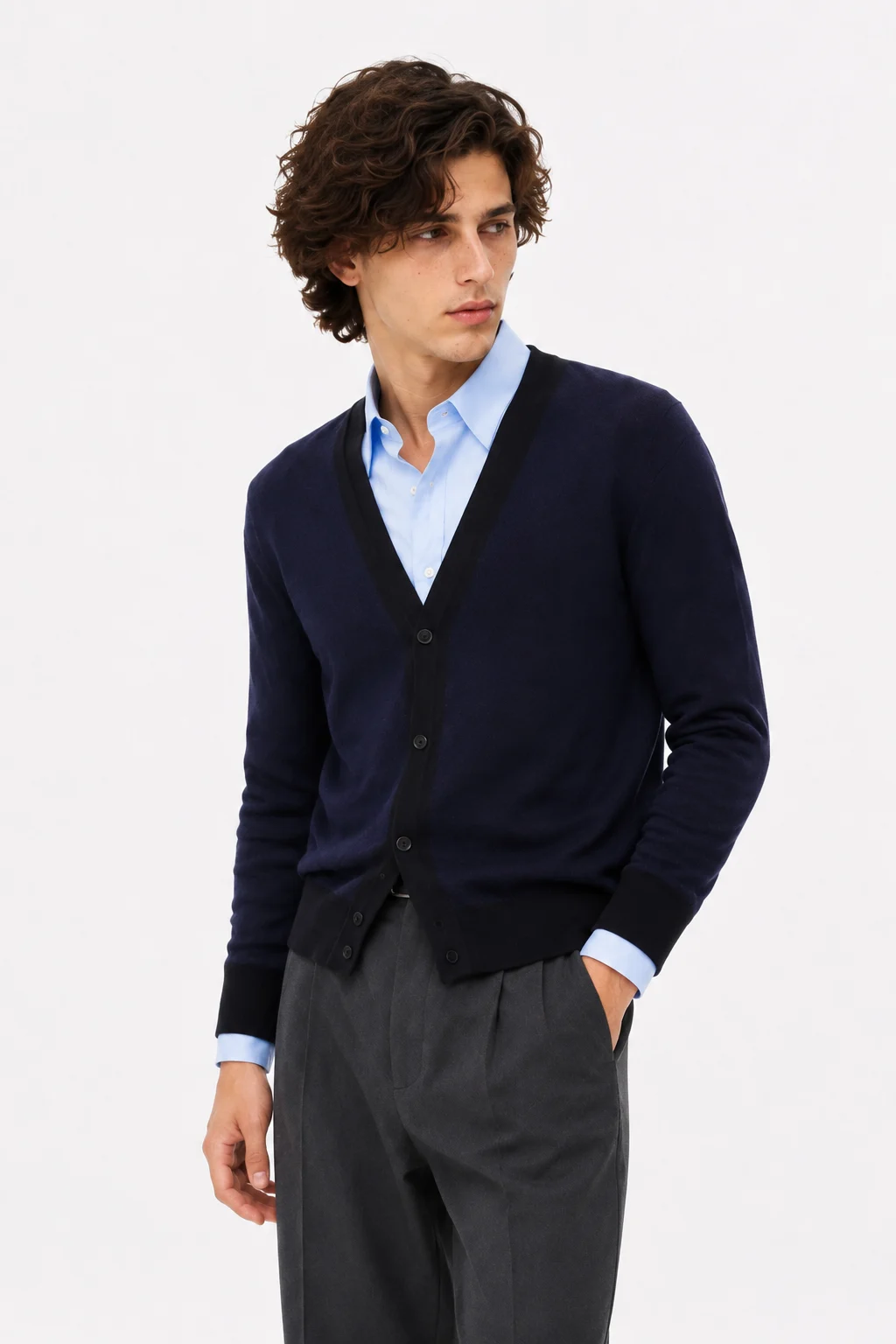
Buyers can review the lpknit knitwear product collection to compare sweater and cardigan directions. The mohair long-sleeve knit sweater and fine-knit round-neck cardigan provide concrete starting points for discussing fiber, gauge, silhouette, and sampling requirements.
During an RFQ, provide:
- Target fiber composition and permitted tolerances.
- Destination markets: US, UK, EU, or a combination.
- Required certification claims and label wording.
- Yarn, trim, and chemical-testing expectations.
- Target quantity by color and size.
- Sample deadlines and bulk-delivery window.
- Inspection standards for measurements, pilling, shade, and workmanship.
For sourcing context and production updates, the lpknit Knitwear Journal can be used alongside the product range. Request current certificates and order-specific evidence directly from lpknit before making a public sustainability or safety claim.
Certification and Compliance Facts to Check in 2026
- 1 quality-management standard: ISO 9001:2015 is the current widely used ISO 9001 edition listed by the International Organization for Standardization in 2026; it evaluates management processes, not fiber origin.
- 13 December 2024: The EU General Product Safety Regulation, Regulation (EU) 2023/988, began applying on this date, according to the European Commission’s 2026 guidance.
- 1 EU textile-labeling regulation: Regulation (EU) No 1007/2011 remains the core EU framework for textile fiber names and composition in 2026, according to EUR-Lex.
- 3 main US labeling laws: The FTC identifies the Textile Fiber Products Identification Act, Wool Products Labeling Act, and Fur Products Labeling Act as relevant US labeling laws in its 2026 business guidance.
- 6 certification families compared here: OEKO-TEX, GOTS, GRS, RWS, RMS, and SFA address different product-safety, content, environmental, animal-welfare, or traceability questions; Textile Exchange and the standards owners continue to publish the applicable requirements in 2026.
Premium Knitwear OEM Certification FAQ
Does every premium knitwear OEM factory need ISO 9001?
No. ISO 9001 is not a universal legal requirement for knitwear factories, but it is useful evidence that the supplier manages procedures, records, corrective actions, and continual improvement. Buyers should still inspect actual quality records because an ISO certificate does not guarantee perfect sweaters.
Is OEKO-TEX the same as GOTS?
No. OEKO-TEX STANDARD 100 focuses mainly on testing textile products for harmful substances. GOTS covers qualifying organic fiber content and controls across certified processing stages, including environmental and social requirements. A GOTS product may also have OEKO-TEX testing, but one certificate does not replace the other.
Does RWS certify a cashmere sweater?
No. RWS applies to responsible wool supply chains and does not certify cashmere. A cashmere sweater needs accurate fiber-composition evidence and, if responsible-cashmere claims are made, documentation from a recognized cashmere standard or approved chain-of-custody program.
Which certification is best for mohair sweaters?
SFA or RMS may be relevant for responsible mohair claims, depending on the brand’s market and customer requirements. Neither standard replaces finished-product safety testing, accurate labeling, or quality inspection. The buyer should verify the mohair percentage and link the certified yarn to the finished order.
Are textile certifications legally required in the EU?
Most named textile certifications are voluntary in the EU. However, brands must comply with rules covering fiber labeling, product safety, chemicals, traceability, and marketing claims. GOTS, RWS, OEKO-TEX, or similar certificates can support compliance evidence but do not remove the brand’s legal duties.
How do I know whether a factory certificate is genuine?
Check the certificate number with the issuing organization or certification body. Confirm the legal entity, physical production address, scope, expiry date, covered materials, and subcontractors. Then request order-specific yarn, transaction, and testing records that connect the certificate to your actual sweaters.
Can a low-MOQ order use certified yarn?
Yes, but availability and documentation must be confirmed before sampling or bulk production. A low-MOQ order may require the factory to reserve a certified yarn lot, separate it from conventional stock, and provide the relevant transaction or batch evidence. The claim should appear on labels only after documentation is approved.
Conclusion: Choose Evidence That Matches the Sweater
Elena Morgan has reviewed knitwear supplier documentation, material claims, and factory sampling workflows for boutique apparel brands sourcing in the US, UK, and EU. In first-hand supplier evaluations, the most useful evidence has been a combination of current certificates, order-specific yarn records, finished-product tests, and physical sample review rather than a long logo list.
The verifiable framework is straightforward: ISO 9001:2015 addresses quality management; OEKO-TEX STANDARD 100 addresses harmful-substance testing; GOTS and GRS address organic or recycled supply chains; RWS, RMS, and SFA address specific responsible-fiber claims; and EU, UK, and US laws govern labeling and market access.
For a premium merino, cashmere, or mohair collection, start with the certificate scope and the product claim. Then discuss low-MOQ requirements, factory sampling, yarn availability, and testing with lpknit’s knitwear manufacturing team. A focused evidence checklist can help a boutique brand launch with fewer compliance surprises and stronger buyer confidence.
{
“@context”: “https://schema.org”,
“@type”: “FAQPage”,
“mainEntity”: [
{
“@type”: “Question”,
“name”: “Does every premium knitwear OEM factory need ISO 9001?”,
“acceptedAnswer”: {
“@type”: “Answer”,
“text”: “No. ISO 9001 is not a universal legal requirement for knitwear factories, but it is useful evidence that the supplier manages procedures, records, corrective actions, and continual improvement. Buyers should still inspect actual quality records because an ISO certificate does not guarantee perfect sweaters.”
}
},
{
“@type”: “Question”,
“name”: “Is OEKO-TEX the same as GOTS?”,
“acceptedAnswer”: {
“@type”: “Answer”,
“text”: “No. OEKO-TEX STANDARD 100 focuses mainly on testing textile products for harmful substances. GOTS covers qualifying organic fiber content and controls across certified processing stages, including environmental and social requirements. A GOTS product may also have OEKO-TEX testing, but one certificate does not replace the other.”
}
},
{
“@type”: “Question”,
“name”: “Does RWS certify a cashmere sweater?”,
“acceptedAnswer”: {
“@type”: “Answer”,
“text”: “No. RWS applies to responsible wool supply chains and does not certify cashmere. A cashmere sweater needs accurate fiber-composition evidence and, if responsible-cashmere claims are made, documentation from a recognized cashmere standard or approved chain-of-custody program.”
}
},
{
“@type”: “Question”,
“name”: “Which certification is best for mohair sweaters?”,
“acceptedAnswer”: {
“@type”: “Answer”,
“text”: “SFA or RMS may be relevant for responsible mohair claims, depending on the brand’s market and customer requirements. Neither standard replaces finished-product safety testing, accurate labeling, or quality inspection. The buyer should verify the mohair percentage and link the certified yarn to the finished order.”
}
},
{
“@type”: “Question”,
“name”: “Are textile certifications legally required in the EU?”,
“acceptedAnswer”: {
“@type”: “Answer”,
“text”: “Most named textile certifications are voluntary in the EU. However, brands must comply with rules covering fiber labeling, product safety, chemicals, traceability, and marketing claims. GOTS, RWS, OEKO-TEX, or similar certificates can support compliance evidence but do not remove the brand’s legal duties.”
}
},
{
“@type”: “Question”,
“name”: “How do I know whether a factory certificate is genuine?”,
“acceptedAnswer”: {
“@type”: “Answer”,
“text”: “Check the certificate number with the issuing organization or certification body. Confirm the legal entity, physical production address, scope, expiry date, covered materials, and subcontractors. Then request order-specific yarn, transaction, and testing records that connect the certificate to your actual sweaters.”
}
},
{
“@type”: “Question”,
“name”: “Can a low-MOQ order use certified yarn?”,
“acceptedAnswer”: {
“@type”: “Answer”,
“text”: “Yes, but availability and documentation must be confirmed before sampling or bulk production. A low-MOQ order may require the factory to reserve a certified yarn lot, separate it from conventional stock, and provide the relevant transaction or batch evidence. The claim should appear on labels only after documentation is approved.”
}
}
]
}