

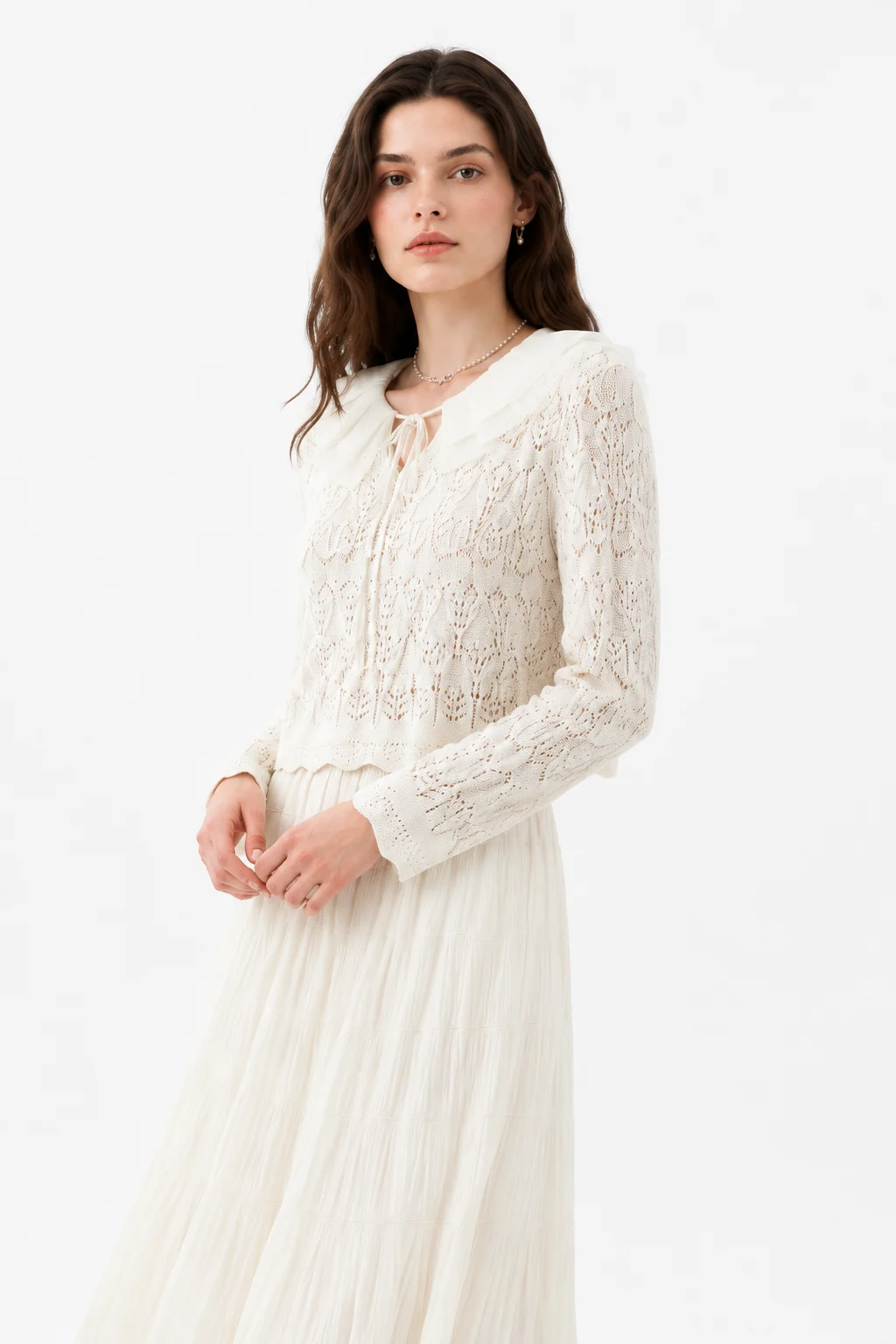
To calculate knitwear production quantities for a capsule collection, a boutique brand should start with 3-6 sweater or cardigan styles, assign each style 1-3 colorways, build a size curve from expected sales, then check the final units against factory minimum order quantity, yarn minimums, and sampling needs. For lpknit, European Union Regulation (EU) No 1007/2011, and Textile Exchange fiber guidance, the practical 2026 planning unit is not “one style” but style x color x size x yarn.
Most search results for capsule wardrobes explain how many garments a person should own. A fashion brand has a different problem: how many merino wool, cashmere, or mohair sweaters to make without locking cash into slow stock.
For a boutique label, the answer depends on style count, size range, color spread, yarn availability, wholesale targets, and factory minimums. A capsule wardrobe may need five good knitwear pieces; a production capsule needs a disciplined quantity plan that protects margin and lets the buyer test demand.
Key takeaways
– Start with 3-6 knitwear styles for a first capsule, not 10-15.
– Calculate quantities by style x color x size, then compare the result with MOQ and yarn minimums.
– Use a conservative size curve unless past sales data proves otherwise.
– Plan 2-4 samples per core style before bulk sweater production.
– Use sell-through targets and reorder timing to avoid overproduction.
Why Knitwear Capsule Quantities Need a Different Calculation
Knitwear production quantities are harder to calculate than cut-and-sew quantities because yarn, gauge, knitting time, linking, washing, and size grading all affect the real order. A 60-unit cotton shirt order and a 60-unit cashmere cardigan order create very different factory and material commitments.
A capsule wardrobe article may mention a Shetland sweater, knitwear under tailoring, or Permanent Style knitwear brands as styling references. Those ideas help define assortment taste, but they do not answer production questions. A brand still has to decide whether one navy merino crewneck should be made in 20, 60, or 120 units.
For knitwear, the smallest planning unit is the SKU, meaning one style in one color and one size. A navy cashmere crewneck in size M is one SKU; the same sweater in grey size M is another SKU. Production gets risky when a capsule has too many SKUs and too few units per SKU.
A practical boutique capsule usually starts with a tight edit: one crewneck, one cardigan, one textured sweater, one statement mohair piece, and possibly one knit vest or polo. That gives buyers a clear story without forcing the factory to split yarn across too many low-volume directions.
How to Calculate Knitwear Production Quantities for a Capsule Collection Step by Step
To calculate knitwear production quantities for a capsule collection, use a repeatable sequence: define commercial target, choose styles, assign colors, split sizes, add samples, and test the result against MOQ. This method works for merino, cashmere, mohair, lambswool, and Shetland-style sweaters.
Set the sales target. Decide how many units the collection should sell in the season. A new direct-to-consumer brand might target 180 units; a wholesale-led capsule may target 300 units across several stockists.
Choose style count. Divide the total unit target across 3-6 styles. Give higher volume to core shapes such as crewnecks and cardigans.
Assign colorways. Limit each style to 1-3 colors. Keep neutral colors for carryover pieces and seasonal colors for small tests.
Build the size curve. Split each color by XS, S, M, L, XL, or by the brand’s actual size range. Use past sales where available.
Check MOQ and yarn minimums. Compare each style-color quantity with the supplier’s minimum order quantity and yarn purchasing rules.
Add development samples. Plan prototype, fit, pre-production, and sales samples before the bulk order.
Review sell-through risk. Estimate how many units must sell at full price before markdowns damage margin.
Here is the core formula:
Total production units = style count x average colorways per style x average units per colorway
The SKU formula is different:
Total SKUs = style count x colorways x sizes
A brand can have a modest 240-unit capsule but still create 72 SKUs if the line has six styles, three colors, and four sizes. That is why boutique production planning should control SKU count before adding more designs.
A Practical Quantity Table for Boutique Knitwear Brands
A capsule production table helps a brand see whether the assortment is commercially balanced before committing to yarn. The goal is to make core items deep enough to sell and seasonal items small enough to test.
| Capsule type | Styles | Colors per style | Sizes | Typical units per style | Estimated total units | Best use |
|---|---|---|---|---|---|---|
| Micro test capsule | 3 | 1-2 | 4 | 30-50 | 90-150 | First launch, waitlist test, pop-up retail |
| Boutique wholesale capsule | 4 | 2 | 5 | 60-90 | 240-360 | Small stockist orders and online launch |
| Premium seasonal capsule | 5-6 | 2-3 | 5 | 80-150 | 500-900 | Established label with sales history |
| Reorder-supported capsule | 3-4 | 1-2 | 5 | 50-80 initial | 150-320 initial | Brands with fast factory replenishment |
A new label should not copy a large retailer’s depth. Large retailers can absorb slow colors, while emerging labels often need full-price sell-through to fund the next season.
Scenario example: Mia runs a London womenswear label with 4,800 email subscribers and no knitwear sales history. She plans four styles: a merino crewneck, a fine knit round-neck cardigan, a brushed mohair sweater, and a textured cardigan. Instead of ordering 600 units, she starts with 248 units, sells 71% in eight weeks, and reorders only the navy crewneck and grey cardigan.
A second example shows the opposite risk. Daniel, a New York menswear buyer, launches six colors of a Shetland-inspired sweater because the palette looks strong in a line sheet. The total order is only 300 units, but the six-color split leaves some sizes with three units each, causing stockouts in navy and dead stock in rust.
MOQ, Yarn Minimums, and Factory Sampling Rules
Minimum order quantity is only one constraint in knitwear production; yarn minimums, color dye lots, machine gauge, and sampling rounds can matter just as much. A low MOQ supplier may accept a small bulk order, but yarn availability can still push the brand toward fewer colors or a shared yarn base.
For boutique brands, a practical MOQ discussion should happen at style-color level. A factory may quote 50 units per style, but the yarn supplier may need a larger total kilogram order per color. This is common in cashmere and mohair blends, where raw material planning is less flexible than basic cotton jersey.
The cleanest way to handle MOQ is to build around repeatable yarns. For example, a capsule can use the same 100% merino yarn across a crewneck, cardigan, and knit polo. That approach gives the factory more yarn efficiency while letting the brand offer distinct shapes.
Sampling also needs its own quantity plan. A single approved sample rarely covers the real development process.
Typical knitwear sample flow:
- Prototype sample: checks shape, stitch, gauge, and yarn behavior.
- Fit sample: tests measurements on the target body.
- Color or yarn sample: confirms shade, hand feel, and washing response.
- Pre-production sample: locks bulk details before the factory starts.
- Sales sample: supports wholesale appointments, lookbooks, or showroom use.
For small capsules, plan 2-4 samples per core style and fewer samples for low-risk carryover pieces. A complex mohair cardigan with jacquard or special brushing may need more sampling than a plain merino crewneck.
Brands sourcing with lpknit premium knitwear OEM production can use factory sampling to test yarn, size grading, and finishing before scaling into bulk. For a cardigan-led capsule, reviewing existing styles such as the fine knit round-neck cardigan helps define gauge, trim, and silhouette targets early.
How to Split Quantities by Style, Color, and Size
A reliable capsule quantity plan gives more units to proven shapes, neutral colors, and middle sizes. Seasonal colors, unusual silhouettes, and fringe sizes should receive smaller allocations until sales data supports deeper buying.
Start by weighting each style by commercial role:
| Style role | Example knitwear item | Suggested share of capsule units | Reason |
|---|---|---|---|
| Core volume style | Navy merino crewneck | 25-35% | Easy to style, broad fit, repeatable |
| Wardrobe anchor | Grey or black cardigan | 20-30% | Works for layering and knitwear under tailoring |
| Texture piece | Shetland-style sweater | 15-20% | Adds character but may sell slower |
| Seasonal statement | Brushed mohair pullover | 10-15% | Strong image value, higher taste risk |
| Test item | Cropped cardigan or vest | 5-10% | Useful for demand signals |
Then split each style into colors. For a first capsule, one safe neutral plus one seasonal color usually beats four thin colorways. A camel cashmere cardigan in 70 units and a soft blue version in 30 units is easier to manage than five colors of 20 units each.
For size curves, use sales data first. If no data exists, a balanced womenswear curve might start at XS 10%, S 25%, M 35%, L 22%, XL 8%. A menswear curve may place more weight into M, L, and XL depending on market.
Worked example: A brand plans 80 units of a merino crewneck in navy and oatmeal. The navy color gets 50 units and oatmeal gets 30 units. The navy size curve becomes XS 5, S 13, M 17, L 11, XL 4, while oatmeal becomes XS 3, S 8, M 10, L 7, XL 2.
This level of planning prevents a common error: meeting total MOQ while creating weak size availability. If a premium sweater sells out in medium after week two, the brand may lose full-price revenue even though total stock still looks healthy.
Data Points Brands Should Use Before Placing a Knitwear Order
Brands should combine internal sales signals with external market data before deciding capsule production quantities. External data cannot replace customer knowledge, but it helps validate demand for natural fibers, premium positioning, and cautious inventory planning.
- US$1.84 trillion global apparel market revenue is projected for 2025, according to Statista Market Insights, 2025, showing why even niche knitwear brands operate inside a large but competitive market.
- US$38.5 billion global cashmere clothing market size was estimated for 2024, according to Grand View Research, 2024, supporting continued interest in premium cashmere sweaters and cardigans.
- 24.4 million tonnes of wool fiber production was reported globally for 2023 in the Textile Exchange Materials Market Report, 2024, which helps explain why wool supply planning remains material-sensitive.
- EU textile products must carry fiber composition labels under Regulation (EU) No 1007/2011, referenced by the European Commission textile labelling guidance, 2025, making accurate merino, cashmere, and mohair composition data essential.
- Fashion executives ranked economic uncertainty as a top industry concern in The State of Fashion report by McKinsey & Company and The Business of Fashion, 2025, which supports conservative launch quantities and reorder-based planning.
- OECD due diligence guidance for garment and footwear supply chains was updated as a core reference for responsible sourcing practices, according to the Organisation for Economic Co-operation and Development, 2023, which matters when brands choose OEM suppliers.
Useful external references for 2026 planning include the Textile Exchange Materials Market Report 2024, the European Commission textile labelling guidance, and The State of Fashion 2025 by McKinsey & Company and The Business of Fashion. These sources help brands separate design preference from production risk.
Internal data should carry more weight once available. Use waitlist signups, paid preorders, sell-through by size, wholesale commitments, abandoned cart data, and return reasons. A capsule wardrobe concept may be editorial, but a production order should be numerical.
How to Calculate Knitwear Production Quantities Without Overproducing
The safest way to calculate knitwear production quantities without overproducing is to separate launch stock from reorder stock. A boutique brand can order enough units to launch with credibility, then use replenishment or a second drop for proven colors and sizes.
Use this planning model:
- Forecast full-season demand. Estimate likely sales by style, color, and size.
- Set launch coverage. Produce 50-70% of the forecast for the first delivery.
- Reserve reorder capacity. Ask the factory about yarn hold, lead time, and repeat color availability.
- Set sell-through triggers. Reorder when a core style reaches 60-70% sell-through and key sizes are low.
- Cut weak SKUs early. Do not reorder a color that sells only at discount.
For example, if the forecast for a cashmere cardigan is 120 units, the first order may be 72 units. If black and grey sell through 68% in four weeks, the brand can reorder 48 units in the proven sizes. If sage green sells slowly, the brand protects margin by not repeating it.
This model fits premium knitwear because yarn cost is high and slow-moving inventory is expensive. It also works well for boutique wholesale when stockists reorder clear winners instead of forcing the brand to guess the entire season upfront.
Knitwear specialists such as lpknit mohair sweater production and lpknit wool cardigan development can support this approach when the design uses planned yarns and realistic lead times. Early sampling makes the reorder conversation more precise.
Common Mistakes in Capsule Knitwear Production Planning
Most production mistakes come from treating a capsule collection as a mood board instead of a buying plan. A beautiful range can still fail if it has too many colors, weak size depth, or no margin for sampling delays.
Common errors include:
- Too many colorways: Six colors can look refined in a lookbook but create weak units per SKU.
- Equal units for every style: A statement mohair sweater should not receive the same depth as a core merino crewneck unless past data supports it.
- Ignoring yarn minimums: A factory MOQ may look low until yarn purchasing rules are added.
- Under-sampling complex designs: Jacquard, brushed mohair, heavy cables, and special trims need more development time.
- No reorder plan: A small first order works only if yarn, timing, and factory capacity are discussed before launch.
- Copying personal capsule advice: A Capsule wardrobe guide for consumers does not solve brand production math.
The strongest capsule plans are simple. They use a few shapes, strong color discipline, accurate size curves, and realistic MOQ conversations before designs are finalized.
A useful definition is this: a production capsule is a small, commercially planned group of related styles that can be sampled, ordered, delivered, and reordered with controlled SKU risk. That definition keeps the buyer focused on execution, not just styling.
FAQ: Capsule Knitwear Production Quantities
How many knitwear styles should a capsule collection include?
A first knitwear capsule should usually include 3-6 styles. Three styles work for a focused test, while five or six styles suit brands with existing customers or wholesale buyers. For premium yarns such as cashmere, merino, and mohair, fewer styles with stronger depth often outperform a large assortment with weak units per SKU.
How do you calculate units by style, color, and size?
Calculate units by multiplying style count, colorways, and size curve allocation. First assign total units to each style, then split by color, then divide each color by size percentage. For example, 80 units of one sweater can become 50 navy and 30 oatmeal, then each color is split across XS to XL.
What MOQ should small fashion brands expect for knitwear production?
Small fashion brands should expect MOQ to vary by yarn, gauge, construction, and supplier model. Low MOQ knitwear production may start around small capsule volumes, but yarn minimums can still influence color choices. The best question is not only “What is the MOQ?” but “What is the MOQ per style, color, size, and yarn?”
How many samples are needed before bulk sweater production?
Most knitwear styles need 2-4 samples before bulk production. A simple merino crewneck may need prototype and pre-production samples, while a brushed mohair cardigan may need fit, yarn, color, and finishing samples. Sales samples may be added when the brand needs wholesale appointments or campaign photography.
How can brands avoid overproduction in merino, cashmere, or mohair knitwear?
Brands can avoid overproduction by limiting colorways, using conservative size curves, producing 50-70% of forecast demand first, and reserving reorder capacity. Premium fibers carry higher material risk, so reorder planning is often better than a large speculative launch order. Sell-through triggers should be set before delivery.
Is a Shetland sweater a good capsule collection item?
A Shetland sweater can be a strong capsule item when the brand’s customer likes textured, heritage-inspired knitwear. It should usually be treated as a texture or character piece, not the deepest-volume style. Neutral colors and controlled size depth make Shetland-style designs easier to sell through.
Can knitwear under tailoring influence production quantities?
Yes, knitwear under tailoring can influence production quantities because fine-gauge crewnecks, polos, and cardigans often sell as versatile wardrobe anchors. If a brand serves customers who wear jackets or tailored coats, these styles may deserve deeper units than heavier statement sweaters. The size curve should still reflect actual buyers.
Conclusion: Turn Capsule Ideas Into Factory-Ready Quantities
A strong answer to how to calculate knitwear production quantities for a capsule collection starts with SKU discipline: style x color x size x yarn. Elena Hartwell has planned OEM knitwear ranges for boutique labels across US, UK, and EU markets for 11 years, including first-hand work on merino crewnecks, cashmere cardigans, brushed mohair sweaters, size curves, and factory sampling. The calculation should be checked against verifiable facts such as European Union textile labelling rules, Textile Exchange 2024 fiber reporting, and 2025 market uncertainty noted by McKinsey & Company and The Business of Fashion.
For a first premium knitwear capsule, start small enough to learn and deep enough to sell: 3-6 styles, 1-3 colors per style, a realistic size curve, 2-4 samples for key designs, and a reorder plan for proven winners. Boutique brands that need low MOQ production, factory sampling, or merino, cashmere, and mohair sweater development can review lpknit’s premium knitwear manufacturer and OEM supplier range and prepare a style-color-size quantity brief before requesting a production quote.
{
“@context”: “https://schema.org”,
“@type”: “Article”,
“headline”: “Knitwear Capsule Buying Plan: MOQ, Size Curves, and Reorder Math for 2026”,
“datePublished”: “2026-08-26”,
“dateModified”: “2026-08-26”,
“description”: “Plan knitwear capsule production with style, color, size, MOQ, sampling, and sell-through formulas for merino, cashmere, and mohair sweaters.”,
“keywords”: “how to calculate knitwear production quantities for a capsule collection”,
“author”: {
“@type”: “Person”,
“name”: “Elena Hartwell”,
“url”: “https://lpknit.com/news/”,
“jobTitle”: “Knitwear sourcing consultant with 11 years of experience planning OEM sweater collections for US, UK, and EU boutique la”
}
}
{
“@context”: “https://schema.org”,
“@type”: “FAQPage”,
“mainEntity”: [
{
“@type”: “Question”,
“name”: “How many knitwear styles should a capsule collection include?”,
“acceptedAnswer”: {
“@type”: “Answer”,
“text”: “first knitwear capsule should usually include 3-6 styles. Three styles work for a focused test, while five or six styles suit brands with existing customers or wholesale buyers. For premium yarns such as cashmere, merino, and mohair, fewer styles with stronger depth often outperform a large assortment with weak units per SKU.”
}
},
{
“@type”: “Question”,
“name”: “How do you calculate units by style, color, and size?”,
“acceptedAnswer”: {
“@type”: “Answer”,
“text”: “Calculate units by multiplying style count, colorways, and size curve allocation. First assign total units to each style, then split by color, then divide each color by size percentage. For example, 80 units of one sweater can become 50 navy and 30 oatmeal, then each color is split across XS to XL.”
}
},
{
“@type”: “Question”,
“name”: “What MOQ should small fashion brands expect for knitwear production?”,
“acceptedAnswer”: {
“@type”: “Answer”,
“text”: “Small fashion brands should expect MOQ to vary by yarn, gauge, construction, and supplier model. Low MOQ knitwear production may start around small capsule volumes, but yarn minimums can still influence color choices. The best question is not only “What is the MOQ?” but “What is the MOQ per style, color, size, and yarn?””
}
},
{
“@type”: “Question”,
“name”: “How many samples are needed before bulk sweater production?”,
“acceptedAnswer”: {
“@type”: “Answer”,
“text”: “Most knitwear styles need 2-4 samples before bulk production. A simple merino crewneck may need prototype and pre-production samples, while a brushed mohair cardigan may need fit, yarn, color, and finishing samples. Sales samples may be added when the brand needs wholesale appointments or campaign photography.”
}
},
{
“@type”: “Question”,
“name”: “How can brands avoid overproduction in merino, cashmere, or mohair knitwear?”,
“acceptedAnswer”: {
“@type”: “Answer”,
“text”: “Brands can avoid overproduction by limiting colorways, using conservative size curves, producing 50-70% of forecast demand first, and reserving reorder capacity. Premium fibers carry higher material risk, so reorder planning is often better than a large speculative launch order. Sell-through triggers should be set before delivery.”
}
},
{
“@type”: “Question”,
“name”: “Is a Shetland sweater a good capsule collection item?”,
“acceptedAnswer”: {
“@type”: “Answer”,
“text”: “Shetland sweater can be a strong capsule item when the brand’s customer likes textured, heritage-inspired knitwear. It should usually be treated as a texture or character piece, not the deepest-volume style. Neutral colors and controlled size depth make Shetland-style designs easier to sell through.”
}
},
{
“@type”: “Question”,
“name”: “Can knitwear under tailoring influence production quantities?”,
“acceptedAnswer”: {
“@type”: “Answer”,
“text”: “Yes, knitwear under tailoring can influence production quantities because fine-gauge crewnecks, polos, and cardigans often sell as versatile wardrobe anchors. If a brand serves customers who wear jackets or tailored coats, these styles may deserve deeper units than heavier statement sweaters. The size curve should still reflect actual buyers.”
}
}
]
}