

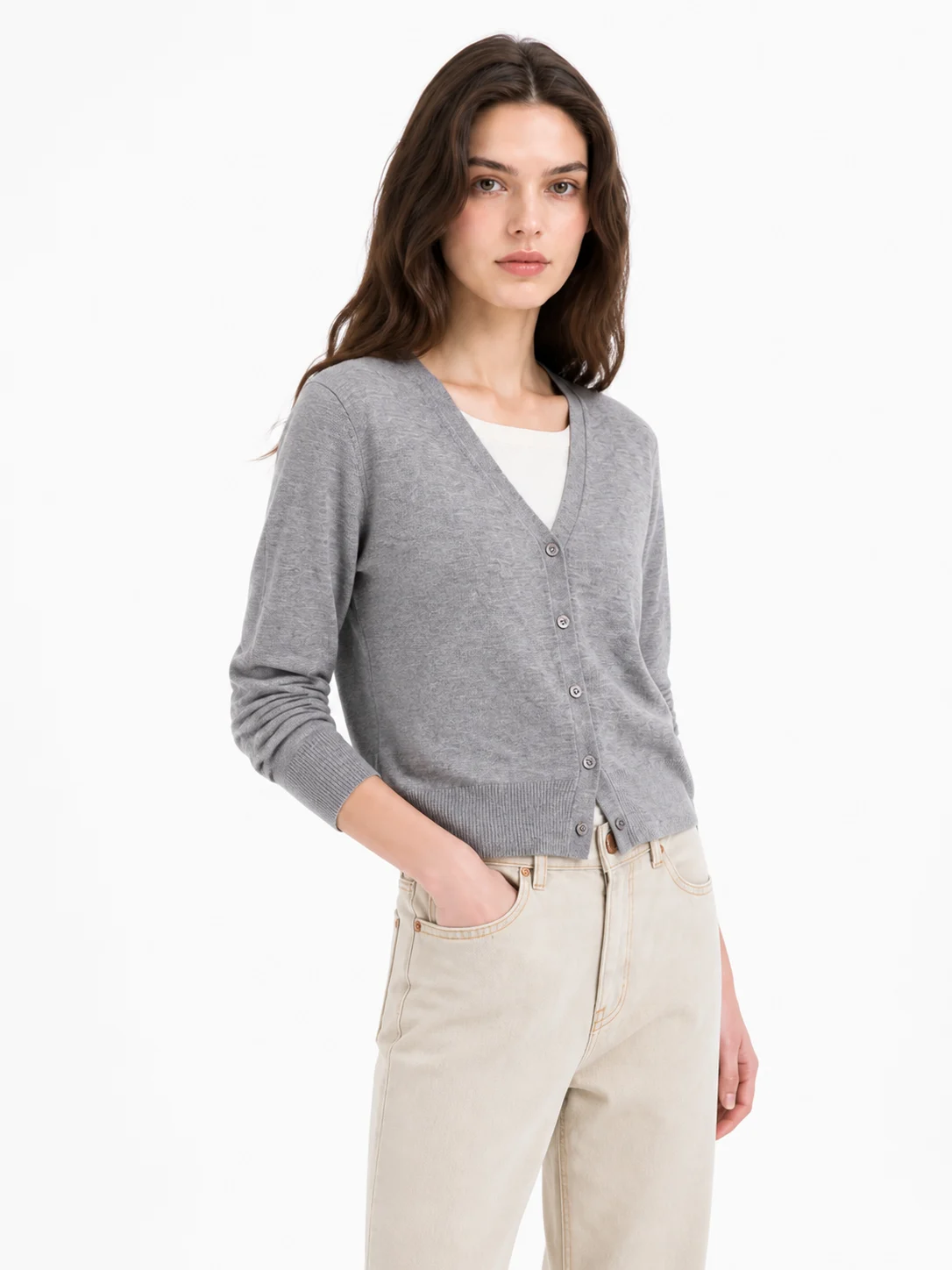
A sweater size specification sheet should include body length, chest width, shoulder width, sleeve length, armhole, neck opening, hem width, cuff opening, and style-specific details such as rib depth, neck drop, or cardigan placket length; ISO 3759:2011, ASTM D6193-22, and EU Regulation (EU) No 1007/2011 provide useful technical and compliance references, while a factory such as lpknit uses these points of measure, grade rules, and tolerances to develop accurate merino, cashmere, and mohair samples.
A specification sheet translates a design into measurable instructions for a knitwear factory. It tells the product developer where to measure, which size is the base size, how each size grades, and what tolerance is acceptable after knitting, washing, and finishing.
This distinction matters because a consumer size chart and a factory measurement sheet serve different purposes. A shopper may need bust and sleeve length, while a factory needs chest width measured at a defined position, shoulder slope, rib height, and finished dimensions for every size.
Key takeaways
- Separate body measurements from finished garment measurements.
- Define every point of measure with a sketch, measurement method, and unit.
- Include core points such as chest, length, shoulder, sleeve, neck, hem, and cuff.
- Add style-specific measurements for crewnecks, V-necks, cardigans, and oversized sweaters.
- Set tolerances before sampling, especially for merino, cashmere, and mohair knitwear.
What Measurements Belong in a Sweater Size Specification Sheet?
A sweater size specification sheet should contain every finished measurement that controls fit, proportion, construction, and production quality. The core set normally includes chest width, body length, shoulder width, sleeve length, armhole, neck opening, hem width, and cuff opening.
Use a separate row for each point of measure, or POM. Each row should state the measurement name, measuring points, base-size measurement, grading rule, tolerance, and actual sample result.
Core sweater POMs
| Point of measure | How it is normally measured | Why it matters |
|---|---|---|
| Chest width | Straight across, usually 1 inch below the armhole | Controls the main fit and ease |
| Bottom or hem width | Straight across the finished hem | Shows shape, flare, and rib recovery |
| Body length | High point shoulder to bottom edge, or center back to hem | Controls total proportion |
| Shoulder width | Shoulder point to shoulder point | Defines shoulder fit and silhouette |
| Sleeve length | Shoulder point to cuff edge, or center back neck to cuff | Prevents inconsistent sleeve proportions |
| Armhole depth | Shoulder point or high point shoulder to underarm | Affects mobility and sleeve balance |
| Bicep width | Straight across the upper sleeve | Controls comfort through the arm |
| Cuff opening | Straight across the relaxed cuff | Controls wrist fit and sleeve finish |
| Neck opening | Across the finished neckline | Controls entry, comfort, and collar shape |
| Front neck drop | High point shoulder or neck seam to front neckline | Defines crewneck or V-neck depth |
| Back neck drop | High point shoulder or neck seam to back neckline | Affects collar placement |
| Rib height | Finished vertical height of hem, cuff, or collar rib | Controls visual proportion and recovery |
For a flat garment, chest width is usually measured from underarm to underarm and recorded as a half measurement. A factory may also list the full chest circumference, but the sheet must make the calculation clear.
Do not write “sleeve length” without defining the start point. A sleeve measured from the shoulder point will produce a different number from one measured from the center back neck.
How Do You Measure Sweater Dimensions Correctly for Production?
Production measurements should be taken on a clean, dry, finished sweater laid flat without stretching, unless the specification explicitly calls for a stretched measurement. The measuring method should remain identical for the fit sample, pre-production sample, and bulk inspection.
Follow this process:
Identify the approved measurement state.
Record whether the sweater is measured relaxed, lightly smoothed, or stretched to a stated limit.Lay the garment flat.
Align the center front, center back, side seams, shoulder seams, and sleeve seams. Remove wrinkles without pulling the knit out of shape.Mark the measuring points.
Use the technical sketch to identify armhole level, shoulder points, neckline edges, hem edge, cuff edge, and seam intersections.Measure across or vertically as specified.
Measure chest, bicep, hem, cuff, and neck width straight across. Measure length, neck drop, rib height, and sleeve length vertically or along the defined seam.Record the result in the correct unit.
Use centimeters or inches consistently. If the brand sells in the US and EU, the factory sheet can use centimeters while the customer-facing size chart provides both units.Repeat critical measurements.
Check chest, length, shoulder, and sleeve measurements on both sides when the garment may have asymmetry or uneven finishing.Compare against the tolerance.
Record the actual sample measurement beside the target measurement. Do not approve a sample based only on visual appearance.
The ASTM D6193-22 standard for apparel measurement practice is a useful reference for establishing consistent garment evaluation methods. The ISO 3759:2011 textile measurement standard also addresses preparation, conditioning, and measurement of textile articles.
What Is the Difference Between Body Measurements and Garment Measurements?
Body measurements describe the wearer, while garment measurements describe the finished sweater; a size specification sheet for production should normally prioritize garment measurements and list the intended body measurements separately. Confusing these two systems is one of the most common causes of incorrect fit samples.
Body measurement example:
- A customer’s chest circumference is 92 cm.
- The brand assigns that customer to a size medium.
- The measurement is taken around the body, not across a flat garment.
Garment measurement example:
- The finished size-medium sweater has a 54 cm chest width.
- The full garment chest is approximately 108 cm.
- The difference between 108 cm and the 92 cm body measurement creates wearing ease.
The amount of ease depends on the design. A fitted merino sweater may use less ease than a brushed mohair sweater designed for layering. A cardigan intended to be worn open may need additional chest and sweep allowance even when the shoulder measurement stays close to the body block.
| Measurement system | Typical format | Best use |
|---|---|---|
| Body measurement | Chest circumference around the body | Consumer size charts and size assignment |
| Garment measurement | Half chest measured flat | Factory production and fit approval |
| Finished circumference | Full garment measurement | Pattern and fit analysis |
| Grade rule | Difference between sizes | Scaling from base size |
| Tolerance | Permitted deviation from target | Sample and bulk inspection |
A practical spec sheet should label each measurement as body, finished garment, or derived measurement. This prevents a factory from interpreting a 54 cm chest width as a 54 cm chest circumference.
Which Measurements Change by Sweater Style?
Style-specific measurements should be added whenever neckline shape, opening construction, sleeve silhouette, or hem treatment changes the fit. A crewneck, V-neck, cardigan, and oversized sweater cannot be controlled accurately with the same short list of POMs.
Crewneck sweater
A crewneck specification should include:
- Neck opening width
- Front neck drop
- Back neck drop
- Collar rib height
- Shoulder width
- Armhole depth
- Chest width
- Body length
- Sleeve length
- Cuff opening and cuff rib height
The collar should be measured both before and after attachment if the factory is testing stretch and recovery. A collar that meets the width target but lacks recovery can become loose after wear.
V-neck sweater
A V-neck requires additional control over:
- V-point depth
- V-point width
- Neck binding width
- Shoulder-to-V-point balance
- Front and back neck drop
- Rib or binding tension
For a deep V-neck, record the distance from the high point shoulder to the V point. Also define whether the V point is measured to the seam intersection or to the finished edge.
Cardigan
A cardigan specification should include:
- Front opening length
- Placket width
- Button spacing
- Buttonhole length
- First button position
- Neckline shape
- Pocket placement, if applicable
- Left and right front balance
- Hem and cuff rib height
For a fine-knit round-neck cardigan, button placement and placket width can change the perceived size even when chest width remains unchanged. A button cardigan with a wide placket may also require a different front overlap from a lightweight open cardigan.
Oversized sweater
An oversized sweater needs more than a large chest measurement. Include:
- Dropped shoulder extension
- Shoulder-to-cuff sleeve length
- Upper sleeve or bicep width
- Armhole depth
- Bottom sweep
- Side slit length
- Front-to-back length difference
- Rib tension and relaxation
For mohair styles, the surface hair can obscure the actual construction line. The factory should measure from the seam or finished edge, not from the outer halo of the fiber.
What Knitwear Details Should Be Added to the Spec Sheet?
Knitwear specifications should include construction and recovery details alongside dimensions because yarn, gauge, stitch structure, and finishing can change the final measurements. A cashmere jersey and a chunky wool rib may share the same chest target but behave very differently after washing.
Add these technical fields where relevant:
- Fiber and yarn: merino wool, cashmere, mohair, or a blend
- Gauge: machine gauge or stitch density reference
- Stitch structure: jersey, 1×1 rib, 2×2 rib, cable, jacquard, or fully fashioned construction
- Linking and seam details: shoulder, armhole, side seam, and sleeve joining
- Rib dimensions: relaxed width, stretched width, and finished height
- Wash method: approved laboratory or factory finishing process
- Shrinkage allowance: expected length and width change after finishing
- Hand-feel requirement: softness, loft, compactness, or drape
- Appearance controls: pilling, needle lines, holes, shade variation, and dropped stitches
A measurement chart cannot replace a technical sketch. The sketch should show arrows, start and end points, whether a measurement is taken flat or around, and whether rib areas are relaxed or extended.
The lpknit product range shows why this level of detail matters across different sweater constructions. A seasonal mohair long-sleeve style will need different sleeve, texture, and surface checks from a classic merino cardigan.
What Tolerances Should Be Allowed for Knitted Sweater Measurements?
Knitted sweater tolerances should be agreed by measurement type, yarn, gauge, and finishing method; a common starting point is approximately ±0.5 to ±1.0 cm for many width measurements and ±1.0 to ±1.5 cm for longer body or sleeve measurements, subject to the brand’s quality standard and the fabric’s behavior.
These ranges are starting points, not universal rules. Fine-gauge cashmere may require tighter control than a loose brushed mohair design, while rib structures may need separate relaxed and extended tolerances.
| Measurement area | Starting tolerance | Review notes |
|---|---|---|
| Chest, hem, bicep width | ±0.5–1.0 cm | Check knit relaxation and side-seam alignment |
| Shoulder width | ±0.5–1.0 cm | Important for fitted silhouettes |
| Body length | ±1.0–1.5 cm | Check wash shrinkage and rib recovery |
| Sleeve length | ±1.0–1.5 cm | Measure from the approved start point |
| Neck opening | ±0.5 cm | Check stretch and recovery |
| Rib height | ±0.3–0.5 cm | Rib may relax after finishing |
| Button spacing | ±0.3 cm | Maintain front appearance and function |
A factory should wash or finish the fit sample using the intended bulk process before final measurements are approved. When the size chart changes, update the base size, grade rules, and tolerance table together.
Scenario: a boutique test run
Imagine that Sarah, a London boutique founder, is developing 120 merino cardigans across four sizes. Her initial sheet lists only chest, length, and sleeve length. The first sample looks acceptable, but the placket is 1.2 cm too wide and the first button sits 4 cm too low, making the front opening appear unbalanced.
After adding placket width, button spacing, first-button position, rib height, and front overlap to the sheet, the second sample matches the approved sketch. The extra POMs reduce correction time before production and give the factory objective approval criteria.
Scenario: an oversized mohair sweater
Daniel, a New York emerging-label buyer, wants 80 oversized mohair sweaters for a fall launch. The sample has the correct chest width, but its dropped shoulder extends 3 cm too far and the sleeve covers the hand.
Adding shoulder extension, bicep width, armhole depth, and shoulder-to-cuff length identifies the problem clearly. The revised sample preserves the oversized body while improving sleeve balance and reducing returns caused by poor wearability.
How Should a Factory-Ready Sweater Spec Sheet Be Organized?
A factory-ready sweater spec sheet should combine a technical sketch, measurement chart, construction notes, grade rules, tolerance table, and approval history in one controlled document. The document should identify the style number, season, sample stage, yarn, color, gauge, size range, and date of revision.
Use this structure:
Header information
Add brand, style number, season, sample stage, designer, factory contact, and revision date.Technical flat sketch
Show front, back, side, neckline, sleeve, hem, placket, pocket, and special details.Point-of-measure chart
List POM name, measurement method, base size, size range, and target measurement.Grade rule table
State how each measurement changes from one size to the next. Chest grading may differ from sleeve or length grading.Tolerance table
Define acceptable positive and negative deviations for every critical POM.Material and construction section
Record fiber content, yarn count, gauge, stitch structure, linking method, trims, and finishing.Sample comments and approval
Include fit comments, correction notes, sample date, approval status, and the person responsible for sign-off.
For fiber labels and care instructions, brands should also review the Federal Trade Commission textile labeling guidance and the FTC Care Labeling Rule, both relevant to US sales. Brands selling in Europe should check Regulation (EU) No 1007/2011, which governs textile fibre names and related labeling requirements.
Dated Technical References
- 2011: ISO 3759:2011 defines preparation, conditioning, and measurement procedures for textile articles.
- 2022: ASTM D6193-22 provides a recognized apparel measurement and evaluation reference for consistent garment assessment.
- 2011: Regulation (EU) No 1007/2011 established EU requirements for textile fibre names, fibre composition, and labeling.
- 2024: The European Commission continued to list textile products within the EU product safety and sustainability compliance framework, making accurate product information important for European brands.
- 2025: Textile Exchange’s Materials Market Report 2025 reported global fibre production at approximately 132 million tonnes in 2024, reinforcing the need for precise fibre identification and material records.
- 2026: This guide uses a factory-oriented measurement framework for current boutique OEM sampling, including size grading, knitwear tolerances, and style-specific POMs.
How Can Boutique Brands Reduce Sweater Sampling Errors?
Boutique brands can reduce sweater sampling errors by approving the measurement method before the first sample and by reviewing physical measurements alongside fit photographs. A factory should receive enough information to reproduce the design without guessing at an undefined start point, relaxed state, or size increment.
Use this pre-sample checklist:
- Confirm whether measurements are body or garment measurements.
- Select the base size used for fit approval.
- Define centimeters or inches as the official unit.
- Mark every POM on a technical sketch.
- Specify relaxed, stretched, or laid-flat measurement states.
- Add style-specific POMs for necklines, cardigans, dropped shoulders, and pockets.
- Record yarn composition, gauge, stitch structure, and finishing method.
- Agree on grade rules before grading the full size range.
- Set tolerances for width, length, rib, neckline, and trims.
- Measure the finished sample before approving bulk production.
lpknit supports boutique and private-label brands sourcing merino, cashmere, and mohair sweaters with factory sampling and low-MOQ production options. Brands can review relevant constructions such as the wool sheep motif cardigan or the mohair long-sleeve knit sweater when comparing proportions, texture, and seasonal direction.
Sweater Size Specification Sheet FAQ
How many measurements should a sweater specification sheet include?
A basic sweater specification sheet usually needs 10 to 15 core POMs, including chest, hem, length, shoulder, sleeve, armhole, neck, bicep, and cuff. Cardigans, V-necks, pockets, and oversized styles need additional points to control their special construction details.
How do you measure sweater dimensions correctly?
Lay the finished sweater flat on a clean surface, align the seams, smooth the fabric without stretching, and measure between the defined start and end points. Record whether each measurement is relaxed or stretched, then compare the result with the target and tolerance.
Which comes first, length or width?
For production, the measurement order is less important than using a fixed method every time. Many technical teams measure width points first, such as chest and hem, then vertical points, such as body length and sleeve length, but the spec sheet should define the required order if inspection consistency matters.
Is a 42-inch chest medium or large?
A 42-inch chest may correspond to medium, large, or another size depending on the brand’s size chart, market, and intended ease. A 42-inch body chest is not the same as a 42-inch finished sweater chest, so the buyer must check the brand’s body measurements and garment measurements separately.
Should a sweater size chart use chest width or chest circumference?
A factory specification sheet commonly uses flat chest width, while a consumer size chart may use body chest circumference. If a chart uses flat width, label it clearly and state whether the number should be doubled to estimate finished circumference.
What measurements are needed for a cardigan?
A cardigan should include the standard sweater POMs plus placket width, front overlap, button spacing, buttonhole length, first-button position, front opening length, and pocket placement when applicable. These details control the front balance and function of the garment.
Do knitwear measurements need different tolerances?
Yes. Knitwear tolerances depend on yarn, gauge, stitch structure, rib recovery, and finishing. A starting range may be ±0.5 to ±1.0 cm for many widths and ±1.0 to ±1.5 cm for body or sleeve lengths, but the factory and brand should approve the final limits together.
Can a factory help create a sweater specification sheet?
A technical knitwear factory can help convert a sketch, reference garment, or measurement chart into a production-ready specification sheet. lpknit’s factory sampling workflow is designed for boutique brands that need support developing merino, cashmere, or mohair sweaters at flexible minimums.
Conclusion: Build the Sheet Around Measurable Fit
Maya Collins is a knitwear technical sourcing editor who reviews OEM specifications, fit comments, and factory sample measurements for boutique fashion brands. Her work with lpknit’s sampling-focused production process covers merino, cashmere, and mohair sweaters, including classic cardigans and seasonal silhouettes.
The key fact is practical: a sweater cannot be reproduced accurately from a sketch or a chest measurement alone. A reliable sheet defines the POM, measurement state, base size, grade rule, tolerance, yarn, gauge, and finishing method, with ISO 3759:2011, ASTM D6193-22, and applicable US or EU labeling rules available as external references.
For a boutique collection, send lpknit the design sketch, target measurements, yarn direction, size range, and intended quantity. Visit the lpknit product collection to review suitable sweater and cardigan references, then request factory sampling support for a more controlled development process.
{
“@context”: “https://schema.org”,
“@type”: “Article”,
“headline”: “Sweater Size Specification: Measurements for OEM | 2026”,
“datePublished”: “2026-08-26”,
“dateModified”: “2026-08-26”,
“description”: “Learn which sweater measurements belong in an OEM size specification sheet, how to measure knitwear, set tolerances, and prevent sampling errors.”,
“keywords”: “what measurements belong in a sweater size specification sheet”,
“author”: {
“@type”: “Person”,
“name”: “Maya Collins”,
“url”: “https://lpknit.com/news/”,
“jobTitle”: “Knitwear technical sourcing editor with experience reviewing OEM sweater specifications and factory samples.”
}
}
{
“@context”: “https://schema.org”,
“@type”: “FAQPage”,
“mainEntity”: [
{
“@type”: “Question”,
“name”: “How many measurements should a sweater specification sheet include?”,
“acceptedAnswer”: {
“@type”: “Answer”,
“text”: “basic sweater specification sheet usually needs 10 to 15 core POMs, including chest, hem, length, shoulder, sleeve, armhole, neck, bicep, and cuff. Cardigans, V-necks, pockets, and oversized styles need additional points to control their special construction details.”
}
},
{
“@type”: “Question”,
“name”: “How do you measure sweater dimensions correctly?”,
“acceptedAnswer”: {
“@type”: “Answer”,
“text”: “Lay the finished sweater flat on a clean surface, align the seams, smooth the fabric without stretching, and measure between the defined start and end points. Record whether each measurement is relaxed or stretched, then compare the result with the target and tolerance.”
}
},
{
“@type”: “Question”,
“name”: “Which comes first, length or width?”,
“acceptedAnswer”: {
“@type”: “Answer”,
“text”: “For production, the measurement order is less important than using a fixed method every time. Many technical teams measure width points first, such as chest and hem, then vertical points, such as body length and sleeve length, but the spec sheet should define the required order if inspection consistency matters.”
}
},
{
“@type”: “Question”,
“name”: “Is a 42-inch chest medium or large?”,
“acceptedAnswer”: {
“@type”: “Answer”,
“text”: “42-inch chest may correspond to medium, large, or another size depending on the brand’s size chart, market, and intended ease. A 42-inch body chest is not the same as a 42-inch finished sweater chest, so the buyer must check the brand’s body measurements and garment measurements separately.”
}
},
{
“@type”: “Question”,
“name”: “Should a sweater size chart use chest width or chest circumference?”,
“acceptedAnswer”: {
“@type”: “Answer”,
“text”: “factory specification sheet commonly uses flat chest width, while a consumer size chart may use body chest circumference. If a chart uses flat width, label it clearly and state whether the number should be doubled to estimate finished circumference.”
}
},
{
“@type”: “Question”,
“name”: “What measurements are needed for a cardigan?”,
“acceptedAnswer”: {
“@type”: “Answer”,
“text”: “cardigan should include the standard sweater POMs plus placket width, front overlap, button spacing, buttonhole length, first-button position, front opening length, and pocket placement when applicable. These details control the front balance and function of the garment.”
}
},
{
“@type”: “Question”,
“name”: “Do knitwear measurements need different tolerances?”,
“acceptedAnswer”: {
“@type”: “Answer”,
“text”: “Yes. Knitwear tolerances depend on yarn, gauge, stitch structure, rib recovery, and finishing. A starting range may be ±0.5 to ±1.0 cm for many widths and ±1.0 to ±1.5 cm for body or sleeve lengths, but the factory and brand should approve the final limits together.”
}
},
{
“@type”: “Question”,
“name”: “Can a factory help create a sweater specification sheet?”,
“acceptedAnswer”: {
“@type”: “Answer”,
“text”: “technical knitwear factory can help convert a sketch, reference garment, or measurement chart into a production-ready specification sheet. lpknit’s factory sampling workflow is designed for boutique brands that need support developing merino, cashmere, or mohair sweaters at flexible minimums.”
}
}
]
}