

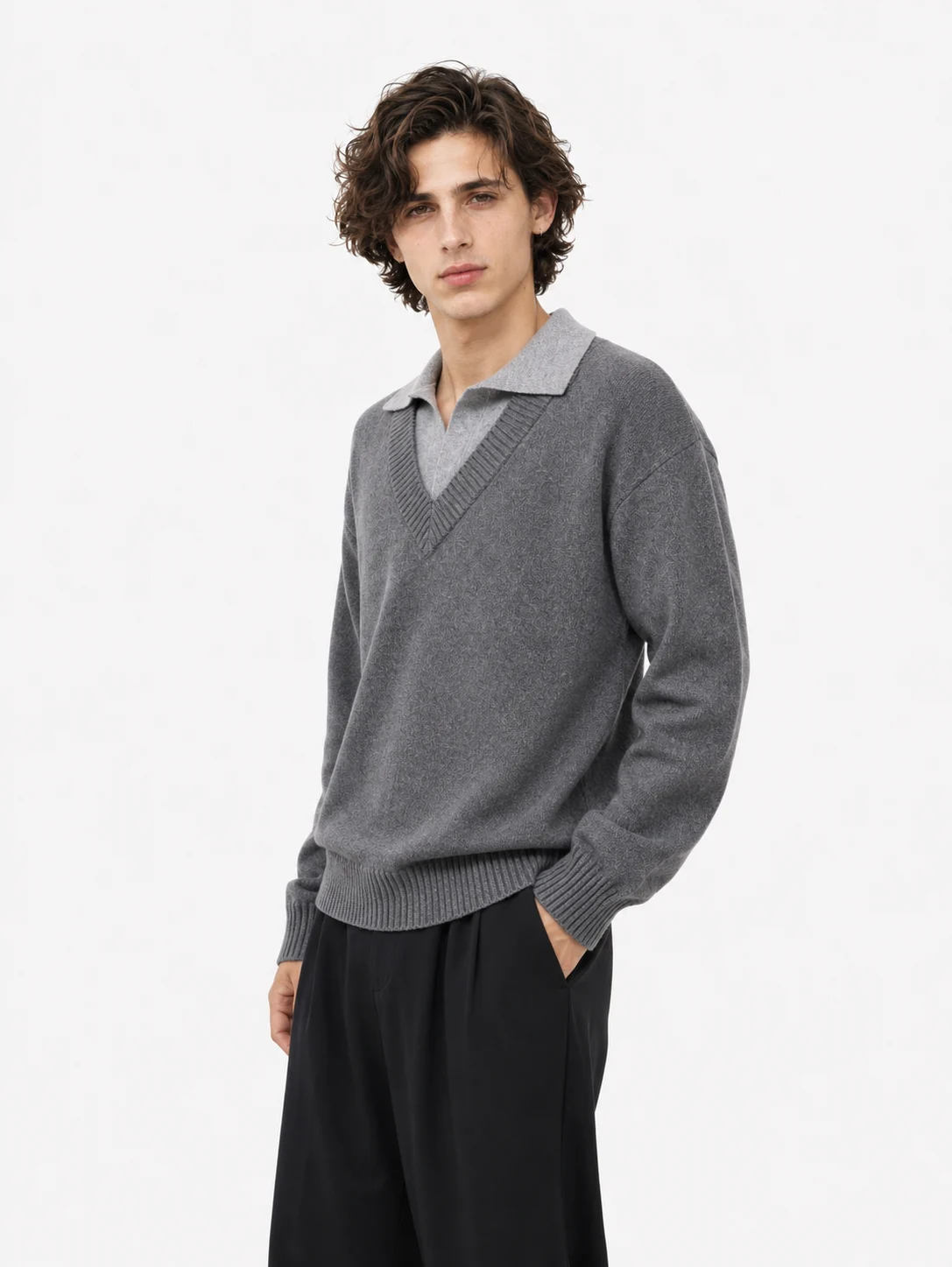
To verify fiber composition in a cashmere knitwear sample, review the fiber label and supplier specification first, then submit representative yarn or garment pieces to an accredited textile laboratory for quantitative fiber analysis. Touch, softness, price, pilling, and a burn test can screen for inconsistencies, but only a laboratory such as SGS, Intertek, or Bureau Veritas can provide defensible evidence of the cashmere, wool, merino, mohair, nylon, or other fiber percentages.
For boutique fashion brands, a cashmere sample is more than a design check. It is evidence that the proposed yarn, hand feel, weight, and fiber blend match the production specification. A mismatch discovered after bulk knitting can affect labeling, pricing, customs documentation, customer trust, and return rates.
Cashmere is particularly difficult to verify by touch alone. A soft sweater may contain cashmere, fine wool, viscose, or a blended combination. Buyers need a repeatable verification process that separates early screening from laboratory proof.
Key takeaways
- Use touch, appearance, price, and pilling only as preliminary screening signals.
- Do not treat a burn test as proof of the exact cashmere percentage.
- Collect samples from multiple garment areas or yarn cones to improve representativeness.
- Request quantitative fiber analysis from an accredited or technically qualified laboratory.
- Compare the report with the purchase specification, tolerance, label, and supplier documents before approving production.
- Use factory sampling and low-MOQ development to resolve discrepancies before a large order.
Why Fiber Verification Matters in Cashmere Knitwear Samples
Fiber verification matters because the declared composition determines how a sweater is marketed, labeled, priced, tested, and sold in the United States, United Kingdom, or European Union. A sample marked “100% cashmere” requires a different commercial and compliance assessment from a sample labeled “90% cashmere, 10% wool.”
For a boutique label, the risk is not limited to a disappointing hand feel. An incorrect fiber declaration can create:
- Misleading product descriptions
- Incorrect care instructions
- Failed retailer or marketplace checks
- Customs and documentation problems
- Unexpected pilling, shrinkage, or recovery
- Disputes over material costs and production approval
The United States Federal Trade Commission (FTC) requires most textile and wool products to disclose fiber content, country of origin, and responsible business identity. The European Union Textile Fibre Regulation, Regulation (EU) No 1007/2011, sets rules for textile fiber names and fiber composition labeling. In the UK, textile labeling requirements remain relevant after Brexit and should be checked against current guidance before launch.
A buyer should therefore treat fiber verification as a pre-order control point. The process should happen before final costing, production approval, and printed-label confirmation.
For a practical development framework, review lpknit’s premium knitwear manufacturer and OEM supplier range alongside the technical specification for each style.
How to Verify Fiber Composition in Cashmere Knitwear Samples
The most reliable way to verify fiber composition in cashmere knitwear samples is to combine document review, physical screening, representative sampling, and quantitative laboratory analysis. No single home test can reliably establish the exact percentage of cashmere in a blended sweater.
Use this workflow:
Record the supplier specification.
Capture the stated composition, yarn code, ply, gauge, weight, color, finishing process, and intended label claim. Keep the approved tech pack and quotation in the same product file.Check the physical label or sample tag.
Confirm whether the sample says “100% cashmere,” “cashmere blend,” or another legally recognized fiber description. The label should agree with the supplier’s written specification.Inspect the sample visually and by hand.
Look for unusual shine, harshness, excessive halo, uneven knitting, or behavior that differs from the reference swatch. These observations can identify a reason to investigate, but they cannot prove composition.Collect representative material.
Take small pieces from different areas, or request yarn from the actual production lot. Avoid relying on one loose surface fiber or one decorative section.Submit the material to a qualified laboratory.
Request a quantitative fiber composition test. State the claimed blend and ask the laboratory to identify and quantify all detectable fibers.Compare the report with the specification.
Review the reported percentages, test method, sample description, tolerance, and any exclusions or limitations.Escalate discrepancies before approval.
Place the sample on hold, ask the supplier for traceability documents, and request a retest or replacement sample when necessary.
This process works for both fully fashioned sweaters and accessories such as cashmere cardigans. It also fits smaller development programs because a buyer can test one representative sample before committing to a low-MOQ production run.
Can Touch, Price, Pilling, or Burning Prove Cashmere Content?
Touch, softness, price, pilling, and burning cannot prove the exact cashmere percentage in a knitwear sample. These methods may help a buyer identify an inconsistency, but they cannot distinguish reliably between every possible fiber blend.
| Screening method | What it may indicate | What it cannot prove | Buyer action |
|---|---|---|---|
| Touch and softness | Possible fineness, surface comfort, or finishing quality | Cashmere percentage or fiber identity | Compare with an approved reference |
| Visual inspection | Halo, luster, stitch consistency, and surface behavior | Exact composition | Record observations and photograph differences |
| Price comparison | An unusually low or high commercial claim | Whether the garment contains genuine cashmere | Check yarn documents and test the sample |
| Pilling test | Friction behavior and surface durability | Cashmere content | Use as a performance screen, not a fiber test |
| Burn test | Broad behavior of protein or cellulosic fibers | Exact blend ratio and reliable cashmere identification | Avoid testing finished garments without a controlled protocol |
| Laboratory analysis | Quantitative fiber composition under a stated method | Results outside the tested sample’s representativeness | Use the report for approval and compliance review |
A burn test is especially easy to overinterpret. Cashmere and sheep wool are both animal protein fibers, so similar burning behavior may not tell a buyer whether a sample is cashmere, wool, or a combination of both. A burn test also damages the material and may produce unsafe fumes.
For example, a boutique buyer named Sofia receives a sweater advertised as 100% cashmere. The sample feels soft and produces a protein-fiber odor during a small burn test. That result does not confirm 100% cashmere; it only suggests that a protein fiber may be present. A quantitative laboratory test is still required.
Pilling is also an unreliable composition test. Pilling depends on fiber length, yarn twist, knit structure, finishing, friction, and laundering. A 90% cashmere and 10% wool sweater may pill differently from another 100% cashmere sweater made with a different yarn and finish.
How to Collect a Representative Sweater Sample
A representative sweater sample should reflect the material used across the garment, not only the softest or most visible surface. Sampling location and documentation matter because a laboratory can only analyze the material submitted.
Use the following sampling approach:
- Photograph the complete sweater before cutting or removing material.
- Record the style number, color, size, supplier, yarn code, and sample date.
- Take material from at least two or three non-decorative areas when the garment has visibly different panels.
- Prefer inside seam allowances, hem turnings, or small cuttings that do not affect the appearance.
- Include both body and sleeve material if the yarn or structure may differ.
- Keep trims, embroidery yarns, labels, and sewing threads separate.
- Place each material group in a clean, sealed, clearly identified bag.
- Do not combine different colors or visibly different yarns unless the laboratory instructs you to do so.
- Ask whether the lab needs a minimum mass before cutting the final submission.
For yarn-based verification, request material from the actual cones or lots assigned to the sample. A supplier’s general yarn certificate may describe a nominated yarn but may not prove that the submitted garment used that exact lot.
A useful submission note includes:
Claimed composition: 100% cashmere
Product: women’s fine-gauge crew-neck sweater
Style: LP-026
Sampling points: left side seam, sleeve hem, body hem
Requested analysis: quantitative fiber composition and identification of all non-cashmere fibers
When a sweater contains a cashmere-mohair or cashmere-merino blend, the buyer should tell the laboratory the expected blend in advance. This helps the laboratory select an appropriate method and report format.
Which Laboratory Test Confirms Cashmere Percentage?
A quantitative textile fiber analysis is the appropriate laboratory test for confirming the percentage of cashmere and other fibers. The report should identify the test method, sample condition, detected fibers, calculated percentages, and relevant limitations.
Ask the laboratory whether it can provide:
- Fiber identification
- Quantitative percentage by mass
- Identification of animal fibers, plant fibers, and synthetics
- A stated method or standard
- Sample photographs or sample identification
- Measurement uncertainty or reporting tolerance
- Accreditation or technical competence information
Possible test approaches vary by fiber combination. Microscopy can help identify animal fibers by physical characteristics, while chemical solubility or separation methods may quantify certain blends. The suitable method depends on whether the sample contains cashmere, sheep wool, merino, mohair, viscose, polyester, nylon, or other fibers.
A buyer should not select a laboratory solely because its website uses the phrase “cashmere testing.” Confirm that the laboratory can quantify the specific blend in the submitted sample and can issue documentation suitable for the intended market or buyer review.
Relevant reference points include the FTC Textile, Wool, Fur and Fiber Products Identification Act guidance, reviewed through current official resources in 2026, and the European Commission’s textile fiber labeling framework under Regulation (EU) No 1007/2011. For broader textile chemical and product-safety screening, the OEKO-TEX Standard 100, current 2025 edition information, may be relevant, but OEKO-TEX certification is not a substitute for fiber-composition testing.
The International Wool Textile Organisation (IWTO) also publishes technical resources and standards related to wool and animal fibers. Buyers should confirm the exact current method and scope directly with the selected laboratory.
How to Read a Cashmere Fiber Test Report
A cashmere fiber test report should be read as a result for the submitted specimen, not as automatic proof that every production garment has identical composition. The report must be matched to the style, yarn lot, sampling points, and production plan.
Check these fields first:
Client and sample identity
Confirm the style number, color, material description, and submission date.Claimed composition
Verify that the laboratory understood the supplier’s claim. “100% cashmere” and “70% cashmere, 30% merino wool” require different comparisons.Test method
Identify whether the method uses microscopy, chemical separation, or another recognized analytical approach.Reported composition
Check whether the report lists every detected fiber. A result showing “animal fiber” without separating cashmere from wool may not answer the buyer’s question.Tolerance and uncertainty
Determine whether small differences reflect the laboratory’s measurement uncertainty, sampling variation, or a genuine specification failure.Laboratory status
Review accreditation scope, testing competence, and report authentication procedures.
Consider this example: a supplier specifies 90% cashmere and 10% merino wool, while the laboratory reports 82% cashmere and 18% wool. The 8-percentage-point difference should be treated as a material discrepancy unless the contract clearly permits that variation. The buyer should not approve the style based on softness or price.
A smaller difference may require technical interpretation. If a report shows 99% cashmere against a 100% claim, the buyer should ask the laboratory and compliance adviser how the result is reported and whether the applicable market allows a declared tolerance. The answer depends on the test method, jurisdiction, labeling rule, and commercial agreement.
- 13 November 2011: Regulation (EU) No 1007/2011 established European Union rules for textile fiber names and fiber composition labeling, according to the EUR-Lex legal text.
- 2026: The U.S. Federal Trade Commission continues to require most covered textile products to disclose fiber content, country of origin, and responsible company information, according to FTC textile labeling guidance.
- 2025: The OEKO-TEX Standard 100 product-safety framework covers harmful-substance testing for textile products, according to OEKO-TEX’s current standard information; it does not replace quantitative cashmere-content analysis.
- 2026: A laboratory report remains a result for the submitted specimen; representativeness depends on sampling locations, lot traceability, and whether all garment components were included.
- 2026: A difference of 8 percentage points between a supplier’s cashmere specification and the laboratory result should trigger supplier investigation and production hold unless a written tolerance expressly applies.
What to Do When the Report Does Not Match
When a fiber test report does not match the supplier specification, pause production approval and create a documented discrepancy record. The record should contain the original claim, laboratory report, sample photographs, test method, sample locations, and supplier communications.
Follow these steps:
- Place the sample and related purchase order on hold.
- Ask the supplier to confirm the yarn code, fiber source, lot number, and production records.
- Check whether the laboratory tested a representative material group.
- Request a second sample from the same yarn lot or a sealed production cone.
- Use an independent laboratory for a retest when the first result is disputed.
- Compare the result with the written tolerance and destination-market labeling rules.
- Agree on a corrective action before approving labels or bulk knitting.
Possible resolutions include replacing the yarn, revising the declared composition, re-costing the garment, changing the product description, or cancelling the style. The correct resolution depends on the contract and the commercial impact.
For a small label, the most practical solution may be to restart sampling with a verified yarn lot. For a larger private-label order, the buyer may need a formal corrective-action report, retained samples, and testing of finished production.
lpknit’s factory sampling and low-MOQ knitwear development model can support this stage by keeping the material, construction, and approval process connected before bulk production. Buyers should still define the required laboratory evidence in the purchase specification rather than relying on informal assurances.
A Pre-Order Cashmere Verification Checklist
Use this checklist before approving a cashmere knitwear sample:
- [ ] Supplier name and factory contact recorded
- [ ] Style number and yarn code recorded
- [ ] Claimed fiber composition written in the tech pack
- [ ] Fiber label or sample tag checked
- [ ] Country-of-origin information requested
- [ ] Yarn lot or cone information requested
- [ ] Sample weight and knit gauge recorded
- [ ] Body, sleeve, trim, and contrast yarns reviewed separately
- [ ] Visual and hand-feel observations documented
- [ ] Representative sample pieces collected
- [ ] Laboratory test method confirmed
- [ ] Cashmere and other fibers quantified separately
- [ ] Laboratory report matched to the correct style
- [ ] Tolerance reviewed by the buyer
- [ ] Destination-market labeling requirements checked
- [ ] Discrepancy process agreed with the supplier
- [ ] Final label claim approved only after evidence review
A buyer developing a seasonal cardigan can attach this checklist to the sample approval form. The same form can track color, dimensions, pilling, wash performance, and fiber composition without creating separate approval gaps.
For style inspiration and comparison, review the fine-knit round-neck cardigan sample and the mohair long-sleeve knit sweater. These product references are useful for discussing construction and design direction, while composition verification should remain tied to the specific yarn and sample under review.
How Boutique Brands Can Build Verification Into OEM Sourcing
Boutique brands can reduce fiber disputes by adding verification requirements at the quotation and sampling stages. The purchase specification should state the claimed composition, acceptable tolerance, required documents, testing responsibility, and remedy if the result fails.
A practical OEM sourcing brief should include:
- Target fiber blend and permitted tolerance
- Required yarn certificates or supplier declarations
- Sample approval requirements
- Laboratory test timing
- Test laboratory acceptance criteria
- Retest procedure
- Label and packaging approval process
- Bulk production hold conditions
- Replacement, rework, or refund terms
For example, Daniel runs a 48-piece winter capsule for a US boutique label. Before approving a 70% cashmere and 30% merino cardigan, he tests one body sample and one sleeve sample from the proposed yarn lot. The first report shows 64% cashmere and 36% merino, so he holds the order, requests lot records, and receives a replacement sample before production. This costs less than relabeling 48 finished sweaters or explaining a composition dispute to retail customers.
A second example involves a UK emerging brand testing a 24-piece pilot collection. The brand asks for a cashmere-mohair blend, but the laboratory finds an additional synthetic fiber. Because the discrepancy is identified at sampling stage, the supplier can correct the yarn selection and update the specification before labels, photography, and wholesale line sheets are finalized.
For brands seeking a development partner, lpknit provides OEM sweater and cardigan production options for boutique and private-label collections. The buyer should provide the desired testing and documentation requirements at the start of the inquiry.
How can you test whether a knitwear sample is real cashmere?
Start with the supplier’s written specification and label, then send representative material to a qualified textile laboratory for quantitative fiber analysis. A soft hand feel or a positive protein-fiber burn reaction cannot establish that the sample is 100% cashmere.
Can touch prove that a sweater contains cashmere?
No. Touch can suggest fineness, softness, or finishing quality, but fine merino wool, alpaca, viscose blends, and treated fibers can also feel soft. Use touch as a screening step and laboratory testing as the evidence for composition.
Does a high price prove genuine cashmere?
No. Price is a commercial signal, not a fiber test. Yarn origin, fineness, ply, finishing, brand positioning, labor, and margins all affect price. A low price may justify additional checks, but a high price does not prove the stated blend.
Is a burn test reliable for identifying cashmere?
A burn test can provide broad clues about fiber behavior, but it cannot reliably quantify cashmere or separate cashmere from other animal protein fibers such as sheep wool. It is destructive and should not replace controlled laboratory analysis.
What laboratory test confirms the percentage of cashmere?
Request quantitative fiber composition analysis that identifies cashmere separately from wool, merino, mohair, viscose, nylon, polyester, or other fibers. Confirm the laboratory’s method, reporting tolerance, and competence for the specific blend before submission.
How should buyers collect a sweater sample for testing?
Photograph the garment, record its style and yarn details, and collect material from multiple representative areas such as the body, sleeve, and hem. Keep different yarns separate and label every package with the sampling location.
What should a buyer do if the report conflicts with the supplier specification?
Put production and labeling on hold, verify that the submitted material was representative, request yarn-lot documentation, and arrange an independent retest if needed. Approve a revised claim, replacement yarn, or corrective action only after the discrepancy is resolved.
Is a supplier certificate enough to prove cashmere content?
Usually not by itself. A supplier certificate may support traceability, but it does not necessarily prove the composition of the exact sweater sample or production lot. Combine supplier documents with representative, independent laboratory testing when the claim is commercially important.
Fiber verification should be completed before a boutique brand approves cashmere knitwear labels, bulk knitting, or a large seasonal commitment. The dependable path is to compare the written specification, collect a representative sample, use quantitative laboratory analysis, and document the response to any discrepancy.
Amelia Hart is a knitwear sourcing consultant who has reviewed cashmere, merino, and mohair sample programs for emerging labels and private-label buyers. Her sourcing practice uses sample-level documentation, yarn-lot traceability, and independent testing when a fiber claim affects pricing or market compliance.
For current requirements, buyers should verify the applicable U.S. Federal Trade Commission textile labeling guidance, the European Union Regulation (EU) No 1007/2011, and the relevant UK rules before publishing a product claim. To discuss low-MOQ cashmere, merino, or mohair development with a specialist OEM supplier, contact lpknit through its product and sampling team.
{
“@context”: “https://schema.org”,
“@type”: “Article”,
“headline”: “What to Do After a Cashmere Knitwear Sample Fails Fiber Testing”,
“datePublished”: “2026-08-26”,
“dateModified”: “2026-08-26”,
“description”: “Learn how boutique brands can verify cashmere content in knitwear samples using labels, representative sampling, accredited laboratory tests, and supplier resolution steps.”,
“keywords”: “how to verify fiber composition in cashmere knitwear samples”,
“author”: {
“@type”: “Person”,
“name”: “Amelia Hart”,
“jobTitle”: “Knitwear sourcing consultant with experience in cashmere development, factory sampling, and private-label production.”
}
}
{
“@context”: “https://schema.org”,
“@type”: “FAQPage”,
“mainEntity”: [
{
“@type”: “Question”,
“name”: “How can you test whether a knitwear sample is real cashmere?”,
“acceptedAnswer”: {
“@type”: “Answer”,
“text”: “Start with the supplier’s written specification and label, then send representative material to a qualified textile laboratory for quantitative fiber analysis. A soft hand feel or a positive protein-fiber burn reaction cannot establish that the sample is 100% cashmere.”
}
},
{
“@type”: “Question”,
“name”: “Can touch prove that a sweater contains cashmere?”,
“acceptedAnswer”: {
“@type”: “Answer”,
“text”: “No. Touch can suggest fineness, softness, or finishing quality, but fine merino wool, alpaca, viscose blends, and treated fibers can also feel soft. Use touch as a screening step and laboratory testing as the evidence for composition.”
}
},
{
“@type”: “Question”,
“name”: “Does a high price prove genuine cashmere?”,
“acceptedAnswer”: {
“@type”: “Answer”,
“text”: “No. Price is a commercial signal, not a fiber test. Yarn origin, fineness, ply, finishing, brand positioning, labor, and margins all affect price. A low price may justify additional checks, but a high price does not prove the stated blend.”
}
},
{
“@type”: “Question”,
“name”: “Is a burn test reliable for identifying cashmere?”,
“acceptedAnswer”: {
“@type”: “Answer”,
“text”: “burn test can provide broad clues about fiber behavior, but it cannot reliably quantify cashmere or separate cashmere from other animal protein fibers such as sheep wool. It is destructive and should not replace controlled laboratory analysis.”
}
},
{
“@type”: “Question”,
“name”: “What laboratory test confirms the percentage of cashmere?”,
“acceptedAnswer”: {
“@type”: “Answer”,
“text”: “Request quantitative fiber composition analysis that identifies cashmere separately from wool, merino, mohair, viscose, nylon, polyester, or other fibers. Confirm the laboratory’s method, reporting tolerance, and competence for the specific blend before submission.”
}
},
{
“@type”: “Question”,
“name”: “How should buyers collect a sweater sample for testing?”,
“acceptedAnswer”: {
“@type”: “Answer”,
“text”: “Photograph the garment, record its style and yarn details, and collect material from multiple representative areas such as the body, sleeve, and hem. Keep different yarns separate and label every package with the sampling location.”
}
},
{
“@type”: “Question”,
“name”: “What should a buyer do if the report conflicts with the supplier specification?”,
“acceptedAnswer”: {
“@type”: “Answer”,
“text”: “Put production and labeling on hold, verify that the submitted material was representative, request yarn-lot documentation, and arrange an independent retest if needed. Approve a revised claim, replacement yarn, or corrective action only after the discrepancy is resolved.”
}
},
{
“@type”: “Question”,
“name”: “Is a supplier certificate enough to prove cashmere content?”,
“acceptedAnswer”: {
“@type”: “Answer”,
“text”: “Usually not by itself. A supplier certificate may support traceability, but it does not necessarily prove the composition of the exact sweater sample or production lot. Combine supplier documents with representative, independent laboratory testing when the claim is commercially important.”
}
}
]
}