

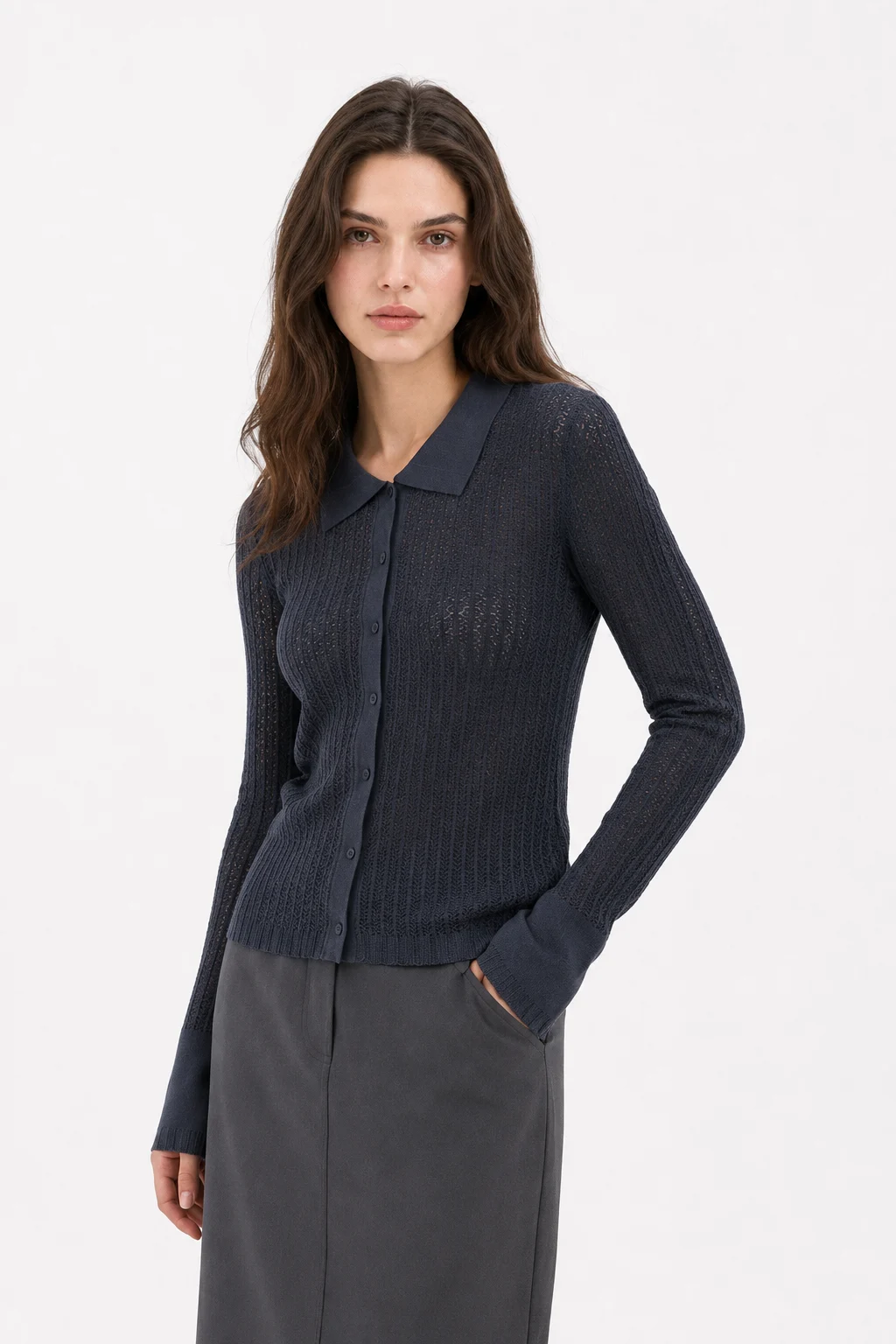
An OEM knitwear factory is usually better for boutique brands that need repeatable merino wool, cashmere, or mohair sweater production, structured sampling, labeling support, and quality control aligned with rules such as European Union Regulation (EU) 2023/988, FTC Textile Rules, and ISO 3758:2023 care symbols; an independent sweater workshop can be better for one-off artisan capsules, hand-led textures, and ultra-small creative tests, but it often carries higher scaling risk once orders move beyond a few dozen pieces.
Choosing between an OEM knitwear factory and an independent sweater workshop is not only a price decision. It affects how fast a boutique brand can develop samples, control yarn quality, repeat sizing, meet labeling expectations, and reorder best-selling cardigans or sweaters.
For a first collection, the workshop route may feel personal and flexible. For a 2026 wholesale calendar, a premium OEM supplier such as lpknit is often more suitable when the brand needs low minimum order quantity support, factory sampling, and consistent production across merino, cashmere, and mohair styles.
Key takeaways
– Choose an OEM knitwear factory when repeatability, fit consistency, material sourcing, and future reorders matter.
– Choose an independent sweater workshop when the project is small, craft-led, and not designed for scale.
– Low MOQ does not always mean workshop-only; some premium OEM factories support boutique test runs.
– Sampling workflow, yarn expertise, quality checkpoints, and compliance support usually matter more than the lowest unit price.
– For merino, cashmere, and mohair sweaters, confirm gauge, yarn count, shrinkage control, care labeling, and bulk consistency before placing production.
OEM knitwear factory vs independent sweater workshop: the core difference
An OEM knitwear factory produces sweaters, cardigans, and related knitwear for another brand’s label, usually following a tech pack, sample reference, or seasonal design brief. An independent sweater workshop is typically a smaller artisan or studio-led operation with fewer machines, fewer formal quality checkpoints, and a more hands-on production style.
The factory model is built for repeatable commercial production. It can support yarn sourcing, sample development, grading, bulk knitting, linking, washing, finishing, private labeling, and packing under one production system.
The workshop model is built around flexibility and craft. It can be strong for unusual textures, hand-finished details, or very small runs, but it may struggle when a boutique brand needs 150 units across 4 sizes, 3 colors, and a strict delivery date.
A useful way to frame the choice is simple: a workshop helps you explore an idea; an OEM factory helps you turn a validated idea into a sellable product line.
Comparison table: factory vs workshop for boutique sweater production
For a boutique fashion brand, the practical difference between an OEM knitwear factory and an independent sweater workshop appears in MOQ, sampling, technical control, and scaling risk. The best choice depends on order size, fabric composition, design complexity, and how quickly the brand expects to reorder.
| Decision factor | OEM knitwear factory | Independent sweater workshop | Best fit |
|---|---|---|---|
| MOQ flexibility | Often structured by style, yarn, gauge, and color; some factories support low MOQ | Can be very low for handmade or studio pieces | Workshop for one-offs; low-MOQ factory for commercial tests |
| Sampling | Formal sample stages: proto, fit, pre-production | Often informal and maker-led | Factory for repeatable sizing and wholesale specs |
| Material expertise | Stronger for merino wool, cashmere, mohair, blends, dye lots, and shrinkage | Depends heavily on maker experience | Factory for premium animal fibers |
| Customization | Good for stitch, gauge, trims, labels, packaging, and seasonal ranges | Good for craft details and experimental pieces | Depends on whether design must scale |
| Quality control | More checkpoints: yarn, panels, linking, washing, measurement, packing | Usually smaller-batch visual checks | Factory for consistency |
| Cost structure | Higher setup discipline, better repeat economics | Lower setup for tiny runs, higher labor sensitivity | Factory once demand is validated |
| Reorder ability | Better if yarn and specs are documented | Riskier if yarn, maker time, or hand process changes | Factory for wholesale reorders |
| Compliance support | More likely to understand labels, care symbols, fiber content, and export needs | Varies widely | Factory for US, UK, and EU sales |
The table does not mean every factory is better than every workshop. It means the buyer should match the production model to the commercial risk.
A hand-knit mohair cardigan sold in 18 pieces may be perfect for a workshop. A merino crewneck planned for 300 units across the United States, United Kingdom, and European Union is usually safer with an OEM structure.
When an OEM knitwear factory is the better choice
An OEM knitwear factory is the better choice when a boutique brand needs premium fiber handling, product repeatability, low MOQ production support, and a sampling process that can move from idea to bulk order. This is especially true for merino wool sweaters, cashmere cardigans, and mohair pullovers where yarn behavior affects fit, softness, pilling, shrinkage, and care instructions.
Factories are also stronger when the brand needs several styles in one seasonal story. For example, a boutique label may develop a fine-gauge cardigan, a brushed mohair pullover, and a wool motif cardigan for the same autumn delivery window.
With lpknit, buyers can review an existing premium knitwear product range and use factory sampling to adapt silhouettes, yarn direction, trims, and seasonal colors. That is different from asking a workshop to invent each piece from scratch.
An OEM factory is usually better if the buyer needs:
- Consistent sizing across XS–XL or numerical size runs.
- Documented yarn composition for merino, cashmere, mohair, or blends.
- Private label support for neck labels, care labels, hangtags, and packaging.
- Repeat orders after a style performs well at retail.
- Clear production stages from sample to pre-production approval.
- Lower sourcing risk for US, UK, and EU boutique distribution.
Consider a scenario: Maya, founder of a London resortwear label, tests 4 sweater styles at 60 units per style. Her first workshop sample looks beautiful, but the second batch arrives with sleeve length variance of 3 cm. After moving the program to a low-MOQ OEM knitwear factory, the brand locks measurements, approves a pre-production sample, and reduces customer fit returns from 9% to 3% over one season.
That result does not come from factory size alone. It comes from documented specs, controlled yarn lots, and repeatable finishing.
When an independent sweater workshop makes more sense
An independent sweater workshop makes more sense when the brand values hand character, extreme flexibility, and tiny runs more than repeatable production control. A workshop can be ideal for editorial capsules, made-to-order drops, local craft stories, and experimental stitches that do not need strict wholesale consistency.
Workshops often communicate directly with the maker. That can help emerging designers who are still shaping their aesthetic and do not yet have a complete tech pack.
The trade-off is capacity. If a workshop relies on two hand-frame knitters or one linking specialist, delivery risk rises when the brand needs more units, more sizes, or more colorways.
A workshop may be the better fit when:
- The order is fewer than 20–50 pieces.
- The garment is intentionally handmade or irregular.
- The brand is testing a runway concept, not a wholesale line.
- The delivery date is flexible.
- The buyer can accept higher variation between pieces.
- The product story depends on local craft production.
For example, Jonas, a Berlin menswear designer, produced 25 oversized alpaca-blend sweaters through a local workshop for a gallery pop-up. The sweaters sold out in 10 days because each piece had visible hand character. When Jonas later received a retailer request for 180 units, the same workshop could not confirm capacity within the delivery window.
The lesson is not that workshops are weak. The lesson is that a workshop should be used where craft value is the commercial value.
Sampling, customization, and quality control: what changes in practice
Sampling and quality control are where the OEM knitwear factory vs independent sweater workshop decision becomes visible. An OEM factory usually separates development into proto sample, fit sample, size set, and pre-production sample, while a workshop may combine these steps into one or two informal rounds.
For premium knitwear, sampling is not only about appearance. It tests yarn tension, gauge, garment weight, washing shrinkage, pilling tendency, sleeve torque, rib recovery, seam strength, and button placement.
A boutique brand sourcing a cardigan similar to an illustrated knit button cardigan should check artwork placement, button tension, rib stability, and size grading before bulk. A mohair style similar to a long-sleeve mohair knit sweater needs extra attention to brushing, shedding, and handfeel consistency.
A factory sampling workflow often looks like this:
Design brief or tech pack review
The buyer shares sketches, reference photos, measurements, yarn target, gauge, color direction, and price range.Yarn and gauge recommendation
The factory suggests merino wool, cashmere, mohair, or blends based on softness, durability, cost, and seasonal use.Prototype sample development
The first sample confirms silhouette, stitch structure, garment weight, and visual direction.Fit and measurement correction
The buyer reviews shoulder width, body length, sleeve length, chest, rib depth, and ease.Pre-production sample approval
The approved sample becomes the standard for bulk production, labels, finishing, and packing.Bulk quality checkpoints
The factory checks yarn lots, panels, linking, washing, measurements, stains, holes, labels, and final packing.Reorder documentation
The final spec sheet supports future reorders with fewer development delays.
This numbered structure is important for brands planning seasonal drops. It allows the founder, designer, merchandiser, and supplier to work from the same standard rather than relying on memory or subjective comments.
Cost, MOQ, and sourcing risk in 2026
Cost comparison should include unit price, sampling fees, rejected units, delivery delays, yarn waste, relabeling, returns, and missed reorder sales. A workshop may look cheaper for 15 pieces, while an OEM knitwear factory may become more cost-effective once the brand needs consistent production across multiple sizes and colors.
- 124 million tonnes of global fiber production were reported for 2023, according to the Textile Exchange Materials Market Report, 2024, showing why verified material sourcing matters for premium knitwear buyers.
- 2.9% growth in world merchandise trade volume was recorded for 2024, according to the World Trade Organization World Trade Statistical Review, 2025, which keeps delivery planning relevant for cross-border apparel sourcing.
- 13 December 2024 is the application date for the European Union’s General Product Safety Regulation, according to the European Commission GPSR guidance, 2024, affecting consumer product safety duties in the EU market.
- Regulation (EU) No 1007/2011 governs textile fiber names and related labeling for textile products in the EU, according to EUR-Lex, consolidated 2025.
- ISO 3758:2023 defines a 5-symbol care labeling system for textiles, according to the International Organization for Standardization, 2023.
These data points affect real sourcing decisions. Premium fibers are costly, cross-border deliveries remain sensitive to planning, and textile labels must be accurate for markets where buyers expect professional compliance.
For external reference, sourcing teams should review the European Commission guidance on General Product Safety Regulation, the EUR-Lex text for Regulation (EU) No 1007/2011 on textile fibre names, and the ISO 3758:2023 textile care labelling standard.
A practical cost view:
- For 10–30 pieces: a workshop may be more efficient if the product is handmade and local.
- For 50–150 pieces: a low-MOQ OEM factory can reduce technical risk while keeping the test run manageable.
- For 200+ pieces: the factory model often has stronger repeat economics and better quality control.
- For cashmere and mohair: fiber loss, pilling control, brushing, and washing can make poor sampling expensive.
- For wholesale delivery: late or inconsistent goods can cost more than a slightly higher factory unit price.
A boutique buyer should also ask whether the supplier can support seasonal continuity. If a best-selling cardigan sells through in 21 days, the ability to repeat the same yarn, color, and measurements becomes a profit issue, not just an operations issue.
How to choose the right knitwear production partner
A boutique fashion brand should choose the production partner by matching product risk, order size, fiber type, and sales channel to the supplier’s strengths. The best partner is not always the smallest, cheapest, or largest option; it is the one that can deliver the intended product with the least avoidable risk.
Use this buyer checklist before committing to an OEM factory or workshop:
Define the commercial goal
Decide whether the project is an artisan capsule, a market test, a wholesale line, or a reorderable core product.Set the true MOQ need
List units by style, color, and size. A 120-piece order can become complex if split into 4 colors and 5 sizes.Confirm fiber expertise
Ask for experience with merino wool, cashmere, mohair, blended yarns, shrinkage, brushing, and care labeling.Review sample stages
Confirm how many sample rounds are included and what happens if the first sample needs major changes.Check quality control points
Ask how the supplier checks measurements, seams, linking, washing, stains, holes, labels, and packaging.Ask about private label support
Confirm neck labels, care labels, hangtags, packaging, barcode stickers, and export carton marks.Compare total cost, not only unit price
Include sampling, shipping, rejects, relabeling, returns, missed delivery windows, and reorder risk.Request similar product references
Review comparable cardigans, pullovers, motif styles, or fine knits, such as a fine knit round neck cardigan or a wool sheep motif cardigan.Test communication speed
Note whether the supplier answers technical questions clearly and documents decisions in writing.Approve a pre-production sample
Do not release bulk production until fit, yarn, trims, labels, washing, and measurements are signed off.
This framework helps reduce emotional sourcing decisions. A supplier may be friendly and talented but still unsuitable for a commercial knitwear launch.
For many emerging labels, the best middle path is a premium low-MOQ OEM knitwear manufacturer. It offers more structure than a small workshop but does not require the heavy volume of a mass-market factory.
OEM knitwear factory vs independent sweater workshop: best fit by brand stage
The best choice changes as a fashion brand grows. A workshop can be helpful in the earliest concept stage, while an OEM knitwear factory becomes more valuable when the brand needs sampling discipline, production records, and reliable delivery.
A simple stage-based model works well:
| Brand stage | Typical need | Better partner | Reason |
|---|---|---|---|
| Concept test | 5–20 expressive pieces | Independent workshop | Creative freedom and hand-led development |
| First online drop | 30–80 pieces | Workshop or low-MOQ OEM factory | Depends on repeatability and fiber cost |
| Boutique wholesale test | 80–200 pieces | Low-MOQ OEM knitwear factory | Better sizing, labels, QC, and delivery control |
| Seasonal collection | 200–800 pieces | OEM knitwear factory | Stronger production planning and material consistency |
| Reorderable core line | Ongoing orders | OEM knitwear factory | Documentation, yarn continuity, and repeat specs matter |
For a boutique buyer selling through Shopify, Faire, independent stores, or regional showrooms, consistency is often the main challenge. Retailers expect the medium cardigan in ivory to fit like the medium cardigan in navy.
The lpknit model is designed for the middle of this table: boutique and private label buyers that need premium knitwear support without mass-market MOQ pressure. The product range includes classic and seasonal cardigan and sweater directions, supported by factory sampling and OEM development.
Brands can also follow the Knitwear Journal — Sourcing & Craft for practical sourcing guidance before building a new development brief.
FAQ: OEM knitwear factory vs independent sweater workshop
What is the main difference between an OEM knitwear factory and an independent sweater workshop?
An OEM knitwear factory produces sweaters for another brand’s label through a structured production system. It usually supports sampling, sizing, yarn sourcing, labels, quality control, and bulk production. An independent sweater workshop is smaller and more craft-led, making it better for limited artisan pieces or early creative tests.
Which option has lower MOQs for boutique brands?
An independent workshop may accept the lowest quantities, especially for handmade pieces. However, some premium OEM knitwear factories offer low MOQ support for boutique test runs. For 50–150 pieces, a low-MOQ factory can be safer because sampling, measurements, labels, and production records are more controlled.
Is an OEM factory better for cashmere sweaters?
An OEM factory is usually better for commercial cashmere sweater production. Cashmere requires careful yarn selection, tension control, washing, pilling review, and labeling accuracy. A skilled workshop can make beautiful cashmere pieces, but repeat orders and size consistency are often easier to manage through a factory system.
Can a workshop produce wholesale knitwear orders?
A workshop can produce wholesale knitwear if the order is small and the timeline is flexible. Risk increases when the order includes many sizes, colors, or strict delivery dates. Before using a workshop for wholesale, ask about capacity, backup makers, measurement tolerance, and what happens if pieces fail inspection.
Which partner is more cost-effective for mohair sweaters?
A low-MOQ OEM factory is often more cost-effective for mohair sweaters once the order moves beyond a small capsule. Mohair needs control over brushing, shedding, garment weight, and finishing. A workshop may be cheaper for 10–20 expressive pieces, but bulk variation can raise hidden costs.
How many samples should a boutique brand expect?
A boutique brand should usually expect at least two to three sample stages: prototype, fit correction, and pre-production sample. Complex stitches, cashmere blends, brushed mohair, or custom cardigans may need more rounds. The approved pre-production sample should become the reference for bulk production.
When should a brand switch from workshop to factory?
A brand should switch from workshop to factory when repeatability, delivery dates, size grading, labeling, and reorder potential become important. A common trigger is retailer demand. If a style must be produced again in the same yarn, color, fit, and finish, an OEM factory is usually safer.
Final sourcing recommendation and next step
For most boutique labels planning a serious knitwear line in 2026, the best answer to OEM knitwear factory vs independent sweater workshop is stage-based. Use a workshop for craft-led micro capsules, and use a premium OEM knitwear factory when the brand needs low MOQ production, factory sampling, material expertise, consistent sizing, and reorder potential.
If the collection includes merino wool, cashmere, or mohair sweaters, the sourcing risk is too high to judge by unit price alone. Ask how the supplier controls yarn lots, gauge, washing, measurements, labels, and bulk inspection.
lpknit is positioned for boutique fashion labels and private label buyers across the United States, United Kingdom, and European Union that need premium knitwear without oversized MOQ commitments. To compare sample-ready styles and discuss a low-MOQ OEM direction, review the lpknit premium knitwear collection and prepare your design brief, target yarn, order quantity, and delivery window.
Author Elena Marlowe has 11 years of knitwear sourcing experience across boutique and private label production, including first-hand review of factory sampling workflows for merino, cashmere, and mohair sweaters. This guide reflects practical supplier evaluation methods used for low-MOQ cardigan and sweater development, plus verifiable 2023–2025 references from the European Commission, EUR-Lex, ISO, Textile Exchange, and the World Trade Organization. For brands comparing an OEM knitwear factory vs independent sweater workshop, lpknit offers a commercially focused next step: premium material specialization, factory sampling, and flexible OEM support for boutique collections.
{
“@context”: “https://schema.org”,
“@type”: “Article”,
“headline”: “Boutique Knitwear Sourcing Decision Matrix: From Artisan Capsule to Repeatable Wholesale”,
“datePublished”: “2026-08-26”,
“dateModified”: “2026-08-26”,
“description”: “Compare OEM factories and independent workshops for boutique knitwear: MOQ, sampling, QC, costs, merino, cashmere, mohair, and sourcing risk in 2026.”,
“keywords”: “OEM knitwear factory vs independent sweater workshop”,
“author”: {
“@type”: “Person”,
“name”: “Elena Marlowe”,
“url”: “https://lpknit.com/news/”,
“jobTitle”: “Knitwear sourcing consultant with 11 years of experience supporting US, UK, and EU boutique fashion labels.”
}
}
{
“@context”: “https://schema.org”,
“@type”: “FAQPage”,
“mainEntity”: [
{
“@type”: “Question”,
“name”: “What is the main difference between an OEM knitwear factory and an independent sweater workshop?”,
“acceptedAnswer”: {
“@type”: “Answer”,
“text”: “n OEM knitwear factory produces sweaters for another brand’s label through a structured production system. It usually supports sampling, sizing, yarn sourcing, labels, quality control, and bulk production. An independent sweater workshop is smaller and more craft-led, making it better for limited artisan pieces or early creative tests.”
}
},
{
“@type”: “Question”,
“name”: “Which option has lower MOQs for boutique brands?”,
“acceptedAnswer”: {
“@type”: “Answer”,
“text”: “n independent workshop may accept the lowest quantities, especially for handmade pieces. However, some premium OEM knitwear factories offer low MOQ support for boutique test runs. For 50–150 pieces, a low-MOQ factory can be safer because sampling, measurements, labels, and production records are more controlled.”
}
},
{
“@type”: “Question”,
“name”: “Is an OEM factory better for cashmere sweaters?”,
“acceptedAnswer”: {
“@type”: “Answer”,
“text”: “n OEM factory is usually better for commercial cashmere sweater production. Cashmere requires careful yarn selection, tension control, washing, pilling review, and labeling accuracy. A skilled workshop can make beautiful cashmere pieces, but repeat orders and size consistency are often easier to manage through a factory system.”
}
},
{
“@type”: “Question”,
“name”: “Can a workshop produce wholesale knitwear orders?”,
“acceptedAnswer”: {
“@type”: “Answer”,
“text”: “workshop can produce wholesale knitwear if the order is small and the timeline is flexible. Risk increases when the order includes many sizes, colors, or strict delivery dates. Before using a workshop for wholesale, ask about capacity, backup makers, measurement tolerance, and what happens if pieces fail inspection.”
}
},
{
“@type”: “Question”,
“name”: “Which partner is more cost-effective for mohair sweaters?”,
“acceptedAnswer”: {
“@type”: “Answer”,
“text”: “low-MOQ OEM factory is often more cost-effective for mohair sweaters once the order moves beyond a small capsule. Mohair needs control over brushing, shedding, garment weight, and finishing. A workshop may be cheaper for 10–20 expressive pieces, but bulk variation can raise hidden costs.”
}
},
{
“@type”: “Question”,
“name”: “How many samples should a boutique brand expect?”,
“acceptedAnswer”: {
“@type”: “Answer”,
“text”: “boutique brand should usually expect at least two to three sample stages: prototype, fit correction, and pre-production sample. Complex stitches, cashmere blends, brushed mohair, or custom cardigans may need more rounds. The approved pre-production sample should become the reference for bulk production.”
}
},
{
“@type”: “Question”,
“name”: “When should a brand switch from workshop to factory?”,
“acceptedAnswer”: {
“@type”: “Answer”,
“text”: “brand should switch from workshop to factory when repeatability, delivery dates, size grading, labeling, and reorder potential become important. A common trigger is retailer demand. If a style must be produced again in the same yarn, color, fit, and finish, an OEM factory is usually safer.”
}
}
]
}