

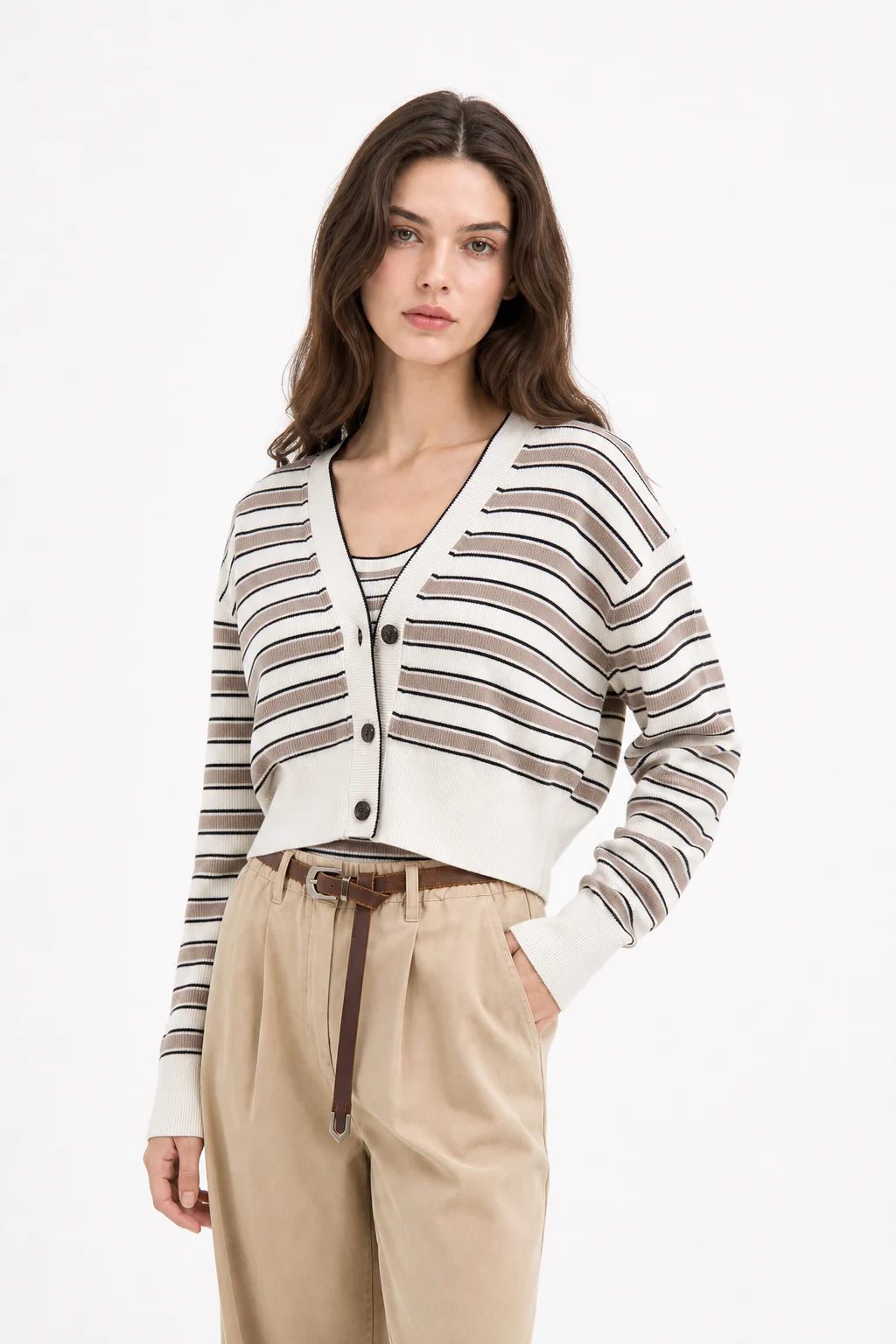
For most boutique sweater brands, stock yarn is the faster and lower-risk choice, while custom yarn development is worthwhile when a label needs a proprietary hand feel, color system, fiber blend, or signature texture. A practical decision should compare yarn cost, minimum order quantity, sampling time, production consistency, and compliance with the U.S. Federal Trade Commission, European Union Regulation 1007/2011, and ISO 12945-2:2020. For merino, cashmere, or mohair sweaters, a factory such as lpknit can test stock yarn first and develop a custom option when the product concept justifies the extra work.
A yarn decision affects more than the sweater’s appearance. It influences gauge, weight, drape, pilling, color accuracy, production speed, care labeling, and the final wholesale margin.
This is especially important for boutique brands ordering 50 to 300 pieces per style. A yarn that works well for a hand-knitted Fair Isle sample may create unexpected costs or production limits in a commercial factory. The right question is not simply which yarn feels most luxurious. It is which yarn supports the product, order size, launch date, and repeat-order strategy.
Key takeaways
- Stock yarn usually offers faster sampling, known performance, and lower development risk.
- Custom yarn can create stronger product differentiation through exclusive blends, colors, and textures.
- Merino is a versatile choice for colorwork, while cashmere and mohair require tighter control of gauge and finishing.
- Custom development costs depend on fiber content, spinning method, dyeing, testing, and order volume.
- A low-MOQ factory sampling partner can help a brand validate the concept before committing to custom yarn.
What Is the Difference Between Stock Yarn and Custom Yarn Development for Sweaters?
Stock yarn is an existing commercial yarn that a mill or knitwear factory already produces, while custom yarn development creates a new or modified yarn for a specific brand or collection. Stock yarn is selected from available fiber compositions, counts, colors, and constructions; custom yarn may change the blend, twist, count, color, brushing, boucle effect, or finishing treatment.
A stock yarn may still be available in many colors and counts. “Stock” does not always mean generic or low quality. Premium spinners often maintain established merino, cashmere, and mohair programs with technical specifications and repeatable production history.
Custom development can range from a small modification to a completely new yarn:
- Adjusting a 90% merino and 10% cashmere blend.
- Creating a custom heather or mélange color.
- Developing a brushed mohair effect.
- Changing the yarn count to achieve a lighter or denser fabric.
- Combining fine fibers with recycled or certified content.
- Matching a brand’s approved hand feel from a physical reference.
The commercial distinction is commitment. Stock yarn lets a brand buy into an existing supply chain. Custom yarn asks the brand and supplier to invest time and volume before the finished sweater is ready.
Stock Yarn vs Custom Yarn Development for Sweaters: Cost and MOQ
Stock yarn generally has the lower initial cost because the spinning, dyeing, and testing process already exists. Custom yarn usually adds development charges, laboratory work, color trials, sample cones, and sometimes a larger yarn minimum before garment production begins.
There is no universal price for custom yarn development. A supplier quote depends on fiber value, yarn count, blend complexity, color quantity, dyeing method, and whether the yarn must meet certification or testing requirements.
| Decision factor | Stock yarn | Custom yarn |
|---|---|---|
| Initial development cost | Usually low or included in sampling | Often includes lab, spinning, dye, and trial charges |
| Yarn MOQ | Lower when the yarn is already active | Higher because a mill must reserve or create a production run |
| Garment MOQ | More flexible for test collections | May need to reflect yarn minimums |
| Sample speed | Usually faster | Slower due to yarn and garment approvals |
| Color choice | Existing shade card | Custom shade or exclusive palette possible |
| Hand feel | Proven and repeatable | Can be tailored to the brand |
| Repeat-order risk | Lower if the yarn remains active | Requires documented specifications and reserved capacity |
| Brand differentiation | Moderate | High when the yarn is genuinely distinctive |
For planning purposes, a boutique buyer can treat stock yarn as the lower-cash-risk route and custom yarn as a product-development investment. A factory may quote custom work as separate line items rather than hiding the cost inside the garment price.
What Does Custom Yarn Development Typically Cost?
Custom yarn development commonly costs more than stock yarn at the sampling stage because the project may require several trials before the hand feel and knitting behavior are approved. A useful commercial quote should separate yarn development, sampling, testing, garment production, and freight.
Ask the supplier to identify:
- Lab-dip or color-trial charges.
- Sample-cone or small-lot spinning charges.
- Development MOQ by color and fiber blend.
- Garment sample charges.
- Testing costs for pilling, colorfastness, shrinkage, and composition.
- Whether unused yarn can be carried into bulk production.
- The price difference between one color and a multi-color collection.
A low MOQ brand should be cautious when the yarn MOQ is larger than the garment order. For example, a label planning 120 cashmere cardigans may face a poor commercial result if custom yarn requires enough material for 500 garments. In that case, stock cashmere yarn may protect margin while the label tests demand.
A Cost Scenario for a Boutique Brand
Consider Maya, the founder of a U.K. label planning 180 merino sweaters for an autumn launch. A stock 2/30-count merino yarn lets the factory proceed directly to garment sampling, while a custom mélange yarn requires color trials and a separate yarn approval stage.
The stock option may provide a quicker route to a production quote and preserve cash for trims, photography, and freight. The custom option could support a stronger signature look, but Maya should proceed only if the yarn’s exclusive color or texture is central to the collection and can be reused in future orders.
When Should a Brand Choose Stock Yarn?
A brand should choose stock yarn when launch speed, low MOQ, predictable performance, or budget control matters more than exclusive material development. It is usually the best starting point for first collections, seasonal test runs, and styles where silhouette or color is the main differentiator.
Stock yarn is a strong fit when:
- The brand has not yet validated demand.
- The order is below the likely custom yarn MOQ.
- The launch date is less than three months away.
- The sweater uses a familiar construction, such as a fine-gauge crewneck.
- The buyer needs an established shade card.
- The brand wants to repeat a style without a new development cycle.
- The design team can achieve differentiation through shape, intarsia, jacquard, trims, or finishing.
Stock yarn is also useful for comparing fibers. A brand can sample the same cardigan in merino, cashmere, and mohair-based yarns before deciding which version fits its customer and target price.
For commercial colorwork, the best yarn is often one with stable gauge, suitable elasticity, controlled fuzz, and enough contrast between shades. The best yarn for Fair Isle knitting is not automatically the softest yarn; it must also hold an even fabric structure and make color changes readable.
When Is Custom Yarn Development Worth the Investment?
Custom yarn development is worth considering when the material itself is part of the brand proposition and the expected order volume can absorb development costs. It is most valuable for signature colors, proprietary blends, unusual textures, or a repeatable yarn program that will appear across several seasons.
Custom yarn may be justified when:
- A competitor can easily copy the finished design.
- The collection depends on a distinct tactile experience.
- A specific merino, cashmere, or mohair blend solves a performance problem.
- The brand plans several styles using the same yarn.
- The buyer has enough forecast volume to meet the mill’s MOQ.
- The brand needs an exclusive color family or branded yarn specification.
- A repeat-order program can spread development cost across multiple seasons.
A custom yarn should have a written specification. Record the fiber percentages, yarn count, ply, twist, color standard, acceptable tolerances, pilling target, wash method, and approved sample reference. Without this record, a “custom” yarn can drift between production lots.
A Product Differentiation Scenario
Imagine Daniel, a U.S. private-label buyer developing 240 mohair-blend pullovers. The brand wants a soft halo, but the first stock yarn produces too much shedding and an unstable neckline after finishing.
A custom blend with a controlled mohair percentage, adjusted twist, and tested finishing route may cost more during development. If the change reduces returns and becomes the material foundation for four seasonal colors, the extra development can support a measurable product advantage rather than functioning as a decorative expense.
How Do Merino, Cashmere, and Mohair Change the Decision?
Merino, cashmere, and mohair require different controls, so the best stock-versus-custom decision depends on the fiber’s role in the sweater. Merino usually offers the broadest commercial flexibility, cashmere raises cost and traceability concerns, and mohair creates stronger texture but can make sampling and quality control more sensitive.
Merino
Merino is a practical starting point for sweaters, cardigans, and colorwork because it combines warmth, elasticity, and a relatively stable knitting response. For the best yarn for colorwork, look for consistent diameter, moderate surface grip, clear shade separation, and enough resilience to prevent a loose motif from looking flat.
Stock merino is often suitable for:
- Fair Isle-inspired yokes.
- Fine-gauge crewnecks.
- Everyday cardigans.
- Small seasonal collections.
- First production tests.
Custom merino becomes more attractive when the brand wants a specific micron range, washable finish, mélange effect, or blend with cashmere or recycled fibers.
Cashmere
Cashmere provides softness and a premium hand feel, but it needs careful control of fiber quality, yarn construction, finishing, and pilling performance. A stock cashmere program is often safer for a small brand because the supplier can provide an established yarn history and approved production route.
Custom cashmere may be useful for a controlled blend or exclusive color program. The buyer should request composition documentation, origin information where available, colorfastness results, pilling test conditions, and clear care-label recommendations.
Mohair
Mohair creates halo, lightness, and visual texture. It can work well for seasonal statement sweaters, brushed cardigans, and open-gauge silhouettes, but excessive fuzz or an unstable blend can affect comfort, shedding, and pattern clarity.
Stock mohair is usually the better option when the design is time-sensitive. Custom mohair development makes sense when the brand needs a specific halo level, color depth, blend ratio, or knitting behavior that is unavailable in the standard shade card.
How Long Does Custom Yarn Development Take?
Custom yarn development often adds several weeks to the sampling calendar because the yarn must be created, approved, and tested before the factory can finalize the sweater. A realistic schedule should include material trials, garment sampling, revisions, and bulk-yarn confirmation rather than counting only knitting time.
A typical workflow is:
- Define the yarn brief. Confirm fiber composition, target gauge, weight, color range, hand feel, price target, and expected order volume.
- Review stock alternatives. Ask the factory to show comparable existing yarns before commissioning a new development.
- Create yarn trials. The mill prepares sample cones, blends, counts, or color trials for review.
- Knit a fabric swatch. Check gauge, drape, stretch, recovery, surface, and color interaction.
- Make the first garment sample. Evaluate fit, construction, finishing, and wear appearance.
- Run targeted tests. Review shrinkage, pilling, colorfastness, and composition against the product brief.
- Approve the production specification. Sign off on yarn standards, tolerances, packaging, and bulk timing.
- Reserve production capacity. Confirm yarn allocation before placing the garment order.
For a straightforward stock yarn, factory sampling may begin soon after the design pack is complete. For custom yarn, the same project may require multiple approval rounds. Brands with a fixed launch date should develop the yarn and garment calendar backward from the delivery deadline.
How to Compare Yarn Performance Before Bulk Production
The best sourcing decision comes from comparing knitted fabric, not judging yarn from a cone or loose skein. A factory sample reveals how the yarn behaves under the actual gauge, stitch structure, tension, linking, washing, and finishing conditions.
Ask for the following checks:
- Gauge: Does the fabric reach the target stitches and rows without excessive tension?
- Weight: Is the finished garment within the intended commercial weight?
- Drape: Does the fabric hang correctly after finishing?
- Recovery: Do cuffs, necklines, and hems return after stretching?
- Pilling: Does the surface remain acceptable after a defined test method?
- Colorfastness: Does the shade resist rubbing, washing, and perspiration?
- Shrinkage: Does the garment remain within approved measurement tolerances?
- Comfort: Are fuzz, fiber ends, and handle appropriate for the target customer?
- Repeatability: Can the yarn be reordered with the same specification?
The ISO 12945-2:2020 pilling standard describes a test method for evaluating fabric pilling. The method does not decide whether a garment is commercially acceptable; the brand still needs to define its own pass criteria and test conditions.
For a colorwork sweater, compare both the base fabric and the motif. A yarn that looks attractive in a single-color swatch may lose contrast when paired with a fuzzy neighboring shade. This is why a factory swatch and a complete sample are more reliable than a digital color chart alone.
Sourcing Facts to Check in 2026
- 2020: ISO 12945-2:2020 provides a standardized method for assessing pilling on textile fabrics; brands should still set their own acceptance grade and test cycle.
- 2011: European Union Regulation (EU) No 1007/2011 sets requirements for textile fibre names and related fibre-composition labeling in the European market.
- 2025: The U.S. Federal Trade Commission’s Wool Products Labeling Act remains a key U.S. reference for wool-product disclosures, including fiber content and manufacturer or marketer information.
- 2024: Textile Exchange’s Materials Market Report 2024 reported global fiber production at approximately 124 million metric tonnes for 2023 and projected continued growth toward 2030.
- 2024: Textile Exchange’s Materials Market Report 2024 identified polyester as the largest fiber category by production volume, which helps explain why a premium natural-fiber specification can be a meaningful brand distinction.
- 2024: The International Wool Textile Organisation’s market resources continued to emphasize wool traceability, animal welfare, and supply-chain transparency as commercial sourcing considerations.
Useful compliance references include the FTC Wool Products Labeling Act guidance, EU textile fibre labeling regulation, and Textile Exchange Materials Market Report 2024. Requirements can change, so the brand, importer, and compliance adviser should confirm rules for the destination market before production.
A Practical Decision Framework for Boutique Brands
A boutique brand should start with stock yarn when the product is still being validated, then move to custom yarn when the material can create repeatable commercial value. This staged approach reduces early risk while leaving room for a distinctive yarn program after the customer response is known.
Use these questions before requesting a custom quote:
- Is the yarn visibly central to the product’s identity?
- Will the same yarn appear in at least two or three styles?
- Can the expected order meet the yarn MOQ without excess inventory?
- Does the launch calendar allow additional sampling time?
- Is the target retail price high enough to support development?
- Can the factory document the yarn specification for repeat orders?
- Does a stock yarn already meet 80% or more of the brief?
- Will exclusivity protect the brand from easy imitation?
For a first collection, a two-stage sample plan is efficient:
- Sample the preferred design in an established stock yarn.
- Compare one custom yarn option only if the stock result misses a clearly defined target.
- Test both options under the same gauge and finishing process.
- Compare landed cost, lead time, appearance, comfort, and reorder risk.
- Select the material with the strongest commercial result, not simply the highest fiber price.
lpknit supports premium knitwear development for boutique and private-label brands across the United States, United Kingdom, and European Union. Its range includes merino, cashmere, and mohair knitwear, with factory sampling and low-MOQ support for smaller collections and test runs.
Brands can also review the fine-knit round-neck cardigan for a classic commercial base, the mohair long-sleeve knit sweater for a textured seasonal direction, and the wool sheep-motif cardigan for a colorwork-inspired design reference.
Stock Yarn vs Custom Yarn Development for Sweaters FAQ
Is stock yarn better than custom yarn for a first sweater collection?
Stock yarn is usually better for a first collection because it reduces development time, MOQ pressure, and material risk. A brand can validate fit, price, color, and customer response before investing in an exclusive blend or yarn construction.
What is the main benefit of custom yarn development?
The main benefit is product differentiation that cannot be achieved through silhouette or styling alone. Custom yarn can provide a proprietary blend, hand feel, color palette, texture, or performance target that becomes part of the brand’s repeatable product identity.
How much more does custom yarn cost than stock yarn?
Custom yarn costs more at the development stage because it may include spinning trials, dyeing, sample cones, testing, and higher minimums. The exact premium varies by fiber, count, blend, colors, and volume, so the supplier should provide a separated development and production quote.
How long does custom yarn development take for sweater production?
Custom yarn development commonly takes longer than stock yarn because yarn approval must happen before final garment approval. The schedule depends on the number of trials, color approvals, testing requirements, and mill capacity; brands should build additional weeks into the sampling calendar.
What MOQ usually applies to custom yarn projects?
Custom yarn MOQ varies by mill, fiber, color, and yarn construction. Small boutique orders may fit an existing stock yarn more easily, while custom projects often require a larger yarn commitment that can exceed the number of garments initially planned.
What is the best yarn for colorwork sweaters?
The best yarn for colorwork sweaters has stable gauge, enough elasticity, controlled surface grip, and clear contrast between shades. Merino is a common commercial choice because it supports warm, resilient fabric, but the final decision should come from a knitted and finished swatch.
Is the best yarn for Fair Isle knitting different from the best commercial sweater yarn?
The best yarn for Fair Isle knitting may prioritize traditional handle and colorwork definition, while a commercial sweater yarn must also meet MOQ, repeatability, testing, care-label, and margin requirements. A factory should evaluate the yarn in the actual Fair Isle or jacquard construction.
Conclusion: Choosing the Right Yarn Development Route
Stock yarn is generally the practical choice for a new or low-MOQ sweater program, while custom yarn development earns its place when exclusive material performance or brand identity can support repeat orders. The decision should be based on a documented comparison of cost, MOQ, lead time, sampling results, compliance, and reorder potential.
I am Eleanor Hughes, a knitwear sourcing consultant with 12 years of experience reviewing yarn specifications, factory samples, and private-label production plans. In supplier sampling projects, the most reliable decisions have come from comparing finished fabric and garments under the same gauge and finishing conditions, rather than choosing from fiber descriptions alone.
For a 2026 collection, confirm fiber labeling under EU Regulation 1007/2011 or applicable U.S. FTC rules, use a defined pilling method such as ISO 12945-2:2020, and record the approved yarn specification for repeat production. To compare stock and custom options for merino, cashmere, or mohair sweaters, request a factory sample and production consultation from lpknit.
{
“@context”: “https://schema.org”,
“@type”: “Article”,
“headline”: “Stock Yarn vs Custom Yarn: Sweater Development Guide”,
“datePublished”: “2026-08-26”,
“dateModified”: “2026-08-27”,
“description”: “Compare stock yarn and custom yarn development for sweaters by cost, MOQ, speed, sampling, and brand value. Build a practical sourcing plan with lpknit.”,
“keywords”: “stock yarn vs custom yarn development for sweaters”,
“author”: {
“@type”: “Person”,
“name”: “Eleanor Hughes”,
“jobTitle”: “Knitwear sourcing consultant with 12 years of experience in yarn development, factory sampling, and private-label produc”
}
}
{
“@context”: “https://schema.org”,
“@type”: “FAQPage”,
“mainEntity”: [
{
“@type”: “Question”,
“name”: “Is stock yarn better than custom yarn for a first sweater collection?”,
“acceptedAnswer”: {
“@type”: “Answer”,
“text”: “Stock yarn is usually better for a first collection because it reduces development time, MOQ pressure, and material risk. A brand can validate fit, price, color, and customer response before investing in an exclusive blend or yarn construction.”
}
},
{
“@type”: “Question”,
“name”: “What is the main benefit of custom yarn development?”,
“acceptedAnswer”: {
“@type”: “Answer”,
“text”: “The main benefit is product differentiation that cannot be achieved through silhouette or styling alone. Custom yarn can provide a proprietary blend, hand feel, color palette, texture, or performance target that becomes part of the brand’s repeatable product identity.”
}
},
{
“@type”: “Question”,
“name”: “How much more does custom yarn cost than stock yarn?”,
“acceptedAnswer”: {
“@type”: “Answer”,
“text”: “Custom yarn costs more at the development stage because it may include spinning trials, dyeing, sample cones, testing, and higher minimums. The exact premium varies by fiber, count, blend, colors, and volume, so the supplier should provide a separated development and production quote.”
}
},
{
“@type”: “Question”,
“name”: “How long does custom yarn development take for sweater production?”,
“acceptedAnswer”: {
“@type”: “Answer”,
“text”: “Custom yarn development commonly takes longer than stock yarn because yarn approval must happen before final garment approval. The schedule depends on the number of trials, color approvals, testing requirements, and mill capacity; brands should build additional weeks into the sampling calendar.”
}
},
{
“@type”: “Question”,
“name”: “What MOQ usually applies to custom yarn projects?”,
“acceptedAnswer”: {
“@type”: “Answer”,
“text”: “Custom yarn MOQ varies by mill, fiber, color, and yarn construction. Small boutique orders may fit an existing stock yarn more easily, while custom projects often require a larger yarn commitment that can exceed the number of garments initially planned.”
}
},
{
“@type”: “Question”,
“name”: “What is the best yarn for colorwork sweaters?”,
“acceptedAnswer”: {
“@type”: “Answer”,
“text”: “The best yarn for colorwork sweaters has stable gauge, enough elasticity, controlled surface grip, and clear contrast between shades. Merino is a common commercial choice because it supports warm, resilient fabric, but the final decision should come from a knitted and finished swatch.”
}
},
{
“@type”: “Question”,
“name”: “Is the best yarn for Fair Isle knitting different from the best commercial sweater yarn?”,
“acceptedAnswer”: {
“@type”: “Answer”,
“text”: “The best yarn for Fair Isle knitting may prioritize traditional handle and colorwork definition, while a commercial sweater yarn must also meet MOQ, repeatability, testing, care-label, and margin requirements. A factory should evaluate the yarn in the actual Fair Isle or jacquard construction.”
}
}
]
}