

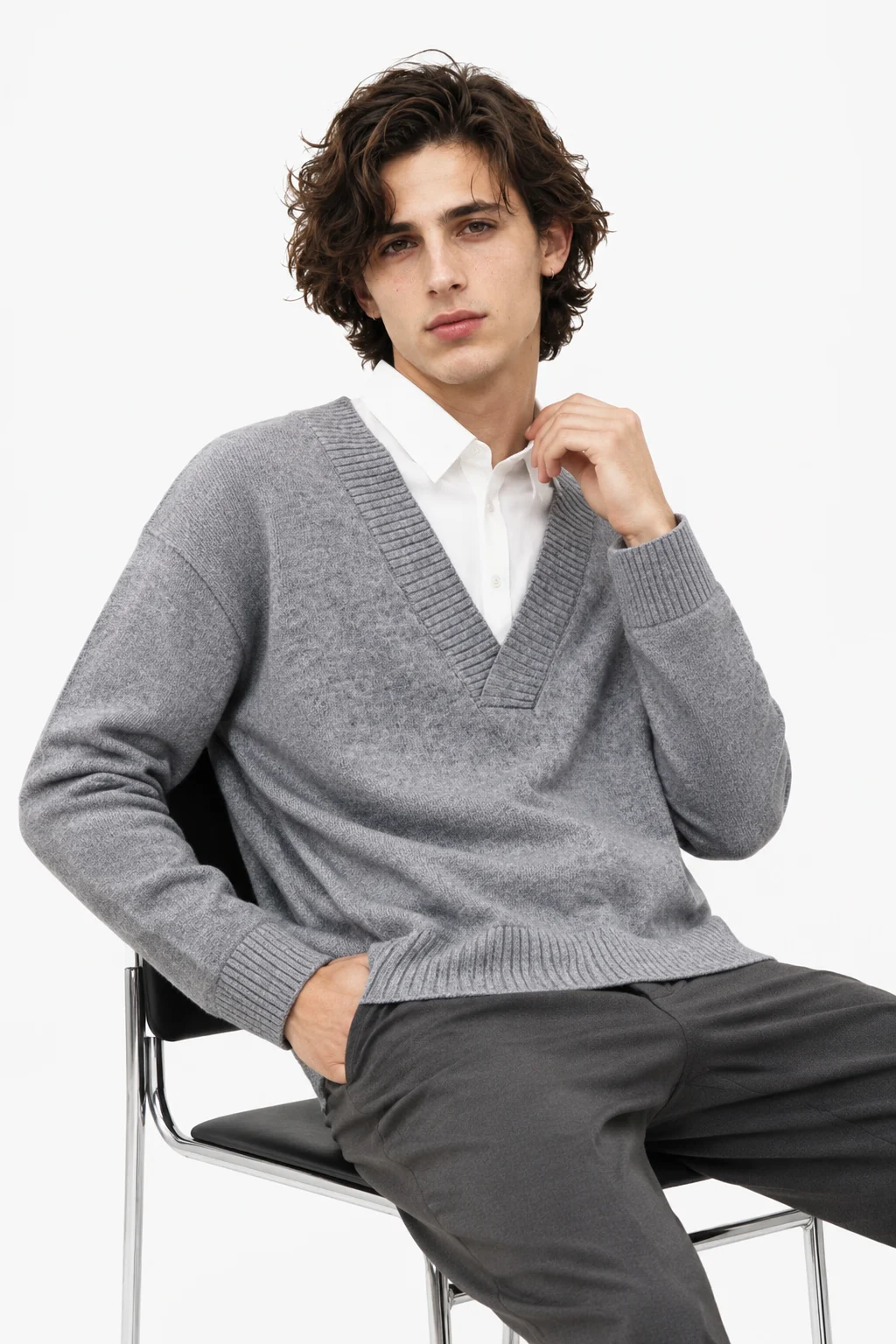
Flat knit vs fully fashioned sweaters for premium brands is not a true either-or choice: flat knitting describes production on a flat-bed knitting machine such as Shima Seiki or Stoll, while fully fashioned knitwear describes shaped garment panels knitted to size before linking, so a 2026 boutique label sourcing merino, cashmere, or mohair through lpknit should usually specify flat-knit panels with fully fashioned shaping, then verify fiber labeling under United States Federal Trade Commission rules and European Union Regulation 1007/2011.
Premium sweater buyers often compare “flat knit” and “fully fashioned” as if they were competing construction types. In factory language, they belong to different layers of production: one is about the knitting machine and fabric formation, and the other is about how sweater panels are shaped and assembled.
For a boutique fashion brand, the real question is commercial: which construction gives the right fit, handfeel, cost, minimum order quantity, sampling speed, and quality signal for a seasonal collection? This guide explains the difference from a buyer’s point of view, with examples for merino wool, cashmere, and mohair sweaters.
Key takeaways
- Flat knit is a production method; fully fashioned is a garment construction method.
- Most premium sweaters use flat knitting, and many also use fully fashioned shaping.
- Fully fashioned knitwear usually gives cleaner seams, better fit, and lower cutting waste.
- Cut-and-sew knitwear can be useful for some commercial programs, but it is less typical for premium cashmere and merino sweaters.
- For low-MOQ launches, brands should evaluate sampling, yarn availability, gauge, linking quality, and labeling compliance before choosing a factory.
Flat Knit vs Fully Fashioned Sweaters for Premium Brands: The Core Difference
Flat knit vs fully fashioned sweaters for premium brands is best understood as a machine-method comparison plus a construction-quality comparison. A flat-knit sweater is made on a flat-bed knitting machine, while a fully fashioned sweater is made from panels shaped directly on the machine to match the garment pattern.
A flat knitting machine creates knitted fabric or panels back and forth on a needle bed. This method is common for sweaters, cardigans, vests, trims, collars, ribs, and textured stitches. Premium factories often use computerized flat knitting machines from Shima Seiki Co., Ltd. or H. Stoll AG, especially when repeatability, stitch control, and sampling accuracy matter.
Fully fashioned knitwear means the body, sleeve, and neckline panels are knitted to shape with increases, decreases, or transfer stitches. The panels are then joined by linking or seaming instead of being cut from a larger sheet of knitted fabric. This is why fully fashioned seams often show small “fashioning marks” near armholes, shoulders, or necklines.
The confusing part is that a sweater can be both flat knit and fully fashioned. For example, a 12-gauge merino cardigan may be knitted on a flat-bed machine, shaped at the armhole, and linked at the seams. That product is both flat-knit and fully fashioned.
For brands, the main alternatives are usually:
- Flat-knit fully fashioned sweaters for premium, shaped garments.
- Flat-knit cut-and-sew sweaters when panels are knitted as fabric and cut to pattern.
- WholeGarment or seamless knitting for selected styles using specialized machines.
- Circular knit cut-and-sew tops for jersey-like knits, not classic sweater programs.
A buyer who asks only “Is this flat knit?” may miss the bigger quality question. The better question is: “Are the panels fully fashioned, cut-and-sewn, or seamless, and how will that affect fit, waste, and cost?”
Fully Fashioned Knitwear Manufacturing Process, Step by Step
The fully fashioned knitwear manufacturing process turns yarn into shaped panels before assembly. This process is preferred when a premium brand wants controlled fit, cleaner seams, and less cutting waste than conventional cut-and-sew sweater production.
A typical premium sweater workflow includes these steps:
Design brief and technical review
The brand shares sketches, reference samples, size range, target price, fiber direction, and delivery window. The factory checks whether the design suits merino, cashmere, mohair, blended yarns, or a different construction.Yarn selection and gauge planning
The factory matches yarn count with machine gauge, stitch density, and desired handfeel. For example, 2/26Nm cashmere may suit fine-gauge sweaters, while brushed mohair blends often need looser structures.Pattern and programming
A technician converts the garment pattern into knitting instructions. On a computerized fully fashioned knitting machine, shaping can be engineered into the body, sleeve cap, shoulder, and neckline.Panel knitting
Front, back, sleeves, plackets, collars, and trims are knitted as separate shaped panels. Fashioning marks appear where stitches are added, reduced, or transferred.Resting, washing, and stabilization
Panels often need relaxing before measurement because natural fibers can shrink, bloom, or change handfeel after washing. Cashmere and mohair require careful wet finishing.Linking and seaming
Linked seams align loops stitch by stitch. This stage heavily affects comfort, shoulder shape, and durability.Finishing and quality control
The sweater is washed, dried, pressed, de-pilled if needed, measured, labeled, packed, and checked against the approved sample.Bulk production and inspection
The factory repeats the approved process, monitors shade lots, checks measurements, and prepares shipping documents.
At lpknit, this workflow is most relevant for boutique labels developing merino, cashmere, and mohair sweaters with factory sampling support. Brands can review current sweater and cardigan directions on the lpknit product collection and compare construction ideas with styles such as the fine knit round neck cardigan.
2026 sourcing facts and compliance data for sweater buyers
- 8 textile fiber names are specifically regulated in the United States cashmere and wool context, according to the United States Federal Trade Commission Textile, Wool, and Fur Acts and Rules, accessed 2026.
- Regulation (EU) No 1007/2011 requires textile fiber composition labeling for products sold in the European Union, according to the European Parliament and Council, consolidated version accessed 2026.
- ISO 3758:2023 updated the international care-labeling symbol system, according to the International Organization for Standardization, 2023.
- European Union General Product Safety Regulation (EU) 2023/988 applies from 13 December 2024, according to the European Commission, 2024, affecting consumer product safety duties for brands selling in the EU.
- Responsible Mohair Standard 2.2 remained a current Textile Exchange animal-fiber standard reference in 2025, according to Textile Exchange, 2025, and is relevant when brands make responsible mohair claims.
Useful compliance references include the FTC textile labeling rules for apparel, 2026 access, EU Regulation 1007/2011 on textile fiber names and labeling, and ISO 3758:2023 care labeling symbols.
Comparison Table: Quality, Fit, Waste, Cost, MOQ, and Lead Time
Flat-knit and fully fashioned production choices affect cost structure, fit precision, waste, and perceived value. The table below separates machine method from garment construction so a premium brand can brief an OEM supplier with fewer misunderstandings.
| Buyer question | Flat-knit fully fashioned sweater | Flat-knit cut-and-sew sweater | Best use case |
|---|---|---|---|
| Quality signal | High; shaped panels and linked seams show craft | Medium to high; depends on cutting and sewing quality | Fully fashioned for premium brand positioning |
| Fit control | Strong; armhole, shoulder, and neckline can be shaped | Good, but shaping relies on cutting and seam handling | Fully fashioned for tailored cardigan or crewneck |
| Yarn waste | Lower because panels are knitted closer to final shape | Higher because fabric is cut from larger knitted pieces | Fully fashioned for cashmere or expensive yarn |
| MOQ flexibility | Often suitable for boutique runs if yarn is available | Can suit larger runs or simpler styles | Depends on factory setup and yarn minimums |
| Sampling speed | Good, but programming and shaping take time | Sometimes faster for simple blocks | Cut-and-sew for quick commercial tests |
| Seam comfort | Usually smoother when linked well | Can be bulkier at cut seams | Fully fashioned for luxury handfeel |
| Design complexity | Excellent for ribs, cables, jacquards, shaping | Good for simple silhouettes and panels | Flat-knit for classic sweaters |
| Cost level | Higher labor and programming input | Often lower for simple volume styles | Choose by target retail price |
| Durability risk | Low when yarn, gauge, and linking are correct | Cut edges need stable handling | Fully fashioned for long-wear staples |
A premium label should not choose fully fashioned only for marketing language. The brand should choose it when the garment benefits from shaped shoulders, clean armholes, refined finishing, and reduced waste on expensive fibers.
Cut-and-sew still has a place. A relaxed oversized mohair pullover with dropped shoulders may not need complex fashioning, especially if the brand prioritizes speed and texture over precise tailoring.
Which Construction Works Best for Merino, Cashmere, and Mohair?
Merino, cashmere, and mohair respond differently to structure, washing, brushing, and seam tension. A premium brand should choose sweater construction by fiber behavior, not just by a generic idea of luxury.
Merino wool works well in fully fashioned sweaters because the fiber has elasticity and recovery. A 12-gauge merino crewneck can hold rib tension, shoulder shape, and neckline structure. For an emerging London label, a 2026 test run of 80 merino cardigans may use fully fashioned armholes to reduce shoulder drag and improve size consistency.
Cashmere benefits from fully fashioned construction because cutting waste is costly and seams affect perceived luxury. If a New York boutique brand develops 120 cashmere crewnecks at a premium retail price, fully fashioned panels can help reduce yarn loss and create a cleaner interior. The result is often easier to justify in product copy and retail training.
Mohair needs more caution because brushed fibers can hide seams but also shed, stretch, and distort if the structure is too loose. A Paris-based label testing 60 mohair blend sweaters may choose a simpler flat-knit shape, then use strong rib trims and careful washing to control growth. The result can be a soft seasonal statement piece without over-engineering the pattern.
For visual product direction, brands can compare a textured seasonal mohair style like the women’s mohair long-sleeve knit sweater with more structured cardigan references such as the illustrated knit button cardigan.
A practical fiber-construction match looks like this:
- Fine merino cardigan: flat-knit fully fashioned, linked seams, stable placket.
- Cashmere crewneck: fully fashioned body and sleeves, soft shoulder linking, careful finishing.
- Mohair pullover: flat-knit panels, controlled gauge, relaxed shape, cautious brushing.
- Novelty cardigan: flat-knit jacquard or intarsia, with construction chosen by motif placement.
- Commercial private-label sweater: simpler flat-knit construction if price and speed are the main targets.
Flat Knit vs Fully Fashioned Sweaters for Premium Brands: Cost and MOQ Decisions
Flat knit vs fully fashioned sweaters for premium brands affects cost through machine time, technician programming, linking labor, yarn consumption, and sampling rounds. For low-MOQ collections, the right choice is the one that protects the product’s retail value without overloading development cost.
A fully fashioned sweater can cost more because shaping requires accurate programming and skilled linking. The cost is easier to justify for cashmere, extra-fine merino, fitted silhouettes, and premium cardigans where construction is visible to buyers. A simple boxy sweater in a novelty yarn may not need the same level of shaping.
Minimum order quantity is not only a factory policy. MOQ also depends on yarn stock, dye lot minimums, color count, machine availability, trims, buttons, labels, and finishing requirements. A factory may accept low MOQ on an available yarn but need higher quantities for custom-dyed cashmere.
Two buyer scenarios show the trade-off:
Scenario 1: Maya, founder of a Brooklyn boutique label
Maya plans 90 units of a 100% merino cardigan in three colors. The first sample uses a cut-and-sew shoulder, but the fit collapses after washing. After switching to fully fashioned armholes and linked seams, the approved sample holds shoulder width within a 1 cm tolerance, and the brand reduces size-related returns during its launch.
Scenario 2: Hugo, product manager for a UK private label buyer
Hugo needs 300 brushed mohair blend sweaters for a holiday capsule. The silhouette is oversized, and the main selling point is color and texture. A simpler flat-knit construction keeps sampling to two rounds, protects the target margin, and ships within the planned seasonal window.
For low-MOQ premium production, brands should ask factories for realistic options rather than demanding one method. lpknit supports boutique development through sampling and flexible sweater programs; buyers can start with the lpknit knitwear journal and sourcing resources before preparing a technical brief.
How to Evaluate a Fully Fashioned Brand or OEM Supplier
A fully fashioned brand or OEM supplier should be evaluated by samples, machine capability, fiber knowledge, finishing control, and communication quality. The best supplier is not the one that simply says “fully fashioned,” but the one that can explain the exact construction plan and show consistent samples.
Use this factory evaluation checklist before placing bulk orders:
Ask whether the sweater is fully fashioned, cut-and-sewn, or seamless.
Request a plain explanation for the body, sleeve, shoulder, neckline, and placket.Check the fashioning marks.
Look near armholes and necklines for neat shaping lines. Irregular marks may signal poor programming or tension control.Inspect the linking.
Turn the sweater inside out. Linked seams should be even, not bulky, twisted, or stretched.Measure before and after wash.
Ask for pre-wash and post-wash measurements. Natural fibers can change after finishing.Review yarn details.
Confirm fiber content, yarn count, ply, origin claims, certifications, and color minimums.Request a size-set sample when fit matters.
One perfect sample does not prove the grading works across sizes.Confirm labeling duties for the sales market.
United States, United Kingdom, and European Union requirements may differ in fiber naming, care labeling, and product safety files.Clarify sampling fees and revision timing.
Low MOQ is useful only if development timing fits the buying calendar.
A strong OEM partner should discuss trade-offs openly. If a factory recommends fully fashioned construction for every style, ask why. If a factory avoids fully fashioned construction entirely, ask whether the limitation is machinery, labor, price, or schedule.
Design Details That Signal High-Quality Sweater Construction
High-quality sweater construction is visible in the fit, trims, seams, recovery, and finishing. Premium buyers should evaluate these details in the sample room before judging color, styling, or photography.
Look for these signs:
- Balanced shoulders: no twisting, dragging, or excess bulk.
- Clean neckline: rib sits flat and recovers after stretching.
- Stable placket: cardigan buttons do not pull the front edge out of shape.
- Even tension: no random loose rows, laddering, or distorted cables.
- Soft but secure seams: comfortable inside, durable under wear.
- Correct handfeel: cashmere should bloom after finishing, not feel limp.
- Controlled pilling risk: some pilling is normal, but severe fuzzing after light abrasion is a warning sign.
- Accurate care label: fiber content and care instructions match the sample.
The answer to “How can you tell if a sweater is high quality?” is not only fiber content. A poor cashmere sweater can fail if the gauge is wrong, the seams are bulky, or the finishing is rushed. A well-made merino sweater can feel more premium than a badly engineered luxury-fiber style.
For 2026 collections, sweater trends include soft cardigans, brushed textures, refined crewnecks, lightweight layering, and expressive motifs. A style such as the wool sheep motif cardigan shows how motif placement and construction need to work together, especially when a brand wants a seasonal design with commercial appeal.
Questions to Ask Before Choosing Flat Knit or Fully Fashioned Production
The best production choice comes from a structured development conversation. A brand should ask the OEM supplier questions that connect design intent, fiber, MOQ, price, compliance, and delivery risk.
Use these questions in your next factory brief:
- Is this style best made as flat-knit fully fashioned, flat-knit cut-and-sew, or another method?
- Which machine gauge do you recommend for this yarn and target handfeel?
- Can the shoulder, armhole, and neckline be shaped on the machine?
- How much yarn waste should we expect for this construction?
- What MOQ applies by style, color, size, and yarn type?
- How many sample rounds are realistic before bulk approval?
- What measurement tolerance do you use after washing and finishing?
- Can you support US, UK, and EU fiber labeling requirements?
- Do you have experience with merino, cashmere, and mohair in similar gauges?
- What construction changes would reduce cost without hurting perceived quality?
A premium OEM supplier should answer with specifics. Vague promises such as “luxury quality” or “best machine” are not enough. Ask for a construction plan, a yarn plan, and a sample timeline.
For brands ready to compare construction options, lpknit can help translate a design sketch into a realistic sweater development plan. Review the lpknit product range and prepare your target fiber, quantity, retail price, and delivery window before requesting sampling guidance.
FAQ: Flat Knit, Fully Fashioned Knitwear, and Premium Sweater Sourcing
What does fully fashioned mean in knitwear?
Fully fashioned knitwear means the sweater panels are knitted directly into shape instead of being cut from a larger fabric piece. The factory shapes armholes, sleeves, shoulders, or necklines during knitting, then links the panels together. This method often gives cleaner seams, better fit, and lower yarn waste.
Is flat knit the same as fully fashioned knitwear?
No, flat knit is not the same as fully fashioned knitwear. Flat knit describes fabric or panels made on a flat-bed knitting machine, while fully fashioned describes shaped garment construction. Many premium sweaters are both flat knit and fully fashioned, especially merino and cashmere cardigans.
Is fully fashioned knitwear always better than cut-and-sew?
Fully fashioned knitwear is not always better, but it is often better for premium fitted sweaters. Cut-and-sew can work for simple, relaxed, or commercial styles where speed and price matter more. Fully fashioned construction is strongest when fit, seam comfort, yarn waste, and premium positioning matter.
Which sweaters are best for fully fashioned construction?
Cashmere crewnecks, merino cardigans, fitted pullovers, fine-gauge sweaters, and premium private-label staples are strong candidates for fully fashioned construction. These products benefit from shaped panels, linked seams, and cleaner finishing. Oversized mohair styles may need less shaping if texture is the main feature.
What is a fully fashioned knitting machine?
A fully fashioned knitting machine is usually a computerized flat-bed knitting machine programmed to create shaped panels. Brands often associate this capability with machine makers such as Shima Seiki Co., Ltd. and H. Stoll AG. The machine matters, but technician skill and finishing quality matter just as much.
How does construction affect sweater MOQ?
Construction affects MOQ through machine setup, programming time, yarn minimums, color count, and finishing complexity. Fully fashioned low-MOQ production can be realistic when yarn is available and the design is clear. Custom colors, rare fibers, and complex stitch patterns can raise the minimum order quantity.
What should a premium brand ask an OEM sweater factory?
A premium brand should ask whether the sweater is fully fashioned, cut-and-sewn, or seamless; which gauge and yarn are recommended; what the MOQ is by color; and how samples are measured after washing. The brand should also confirm fiber labeling requirements for the US, UK, or EU market.
Conclusion: Choosing the Right Construction for a Premium Sweater Line
Flat knit vs fully fashioned sweaters for premium brands should be decided by product goal, not by terminology alone: after 11 years reviewing knitwear samples, OEM briefs, and boutique sweater developments, I recommend fully fashioned flat-knit construction for most premium merino and cashmere cardigans, while using simpler flat-knit structures for selected mohair or oversized commercial styles when texture, speed, and target price lead the decision; this guidance is consistent with verifiable 2026 sourcing requirements, including United States Federal Trade Commission textile labeling rules, European Union Regulation 1007/2011, ISO 3758:2023 care labeling, and European Union General Product Safety Regulation (EU) 2023/988.
If your brand is planning a merino, cashmere, or mohair sweater capsule, start with the construction brief before asking for price. Share your sketch, fiber target, MOQ range, color plan, retail position, and delivery date so the factory can recommend the right method.
CTA: To develop premium sweaters with low MOQ support and factory sampling, explore lpknit’s OEM knitwear product range or use the Knitwear Journal to prepare your sourcing brief before your first sample request.
{
“@context”: “https://schema.org”,
“@type”: “Article”,
“headline”: “2026 Premium Sweater Sourcing: When to Use Shaped Panels vs Cut-and-Sew”,
“datePublished”: “2026-08-26”,
“dateModified”: “2026-08-27”,
“description”: “Compare flat knit and fully fashioned sweaters for premium brands, with quality, MOQ, cost, fiber, sampling, and OEM questions for 2026 sourcing.”,
“keywords”: “flat knit vs fully fashioned sweaters for premium brands”,
“author”: {
“@type”: “Person”,
“name”: “Elena Marlow”,
“url”: “https://lpknit.com/news/”,
“jobTitle”: “Knitwear sourcing consultant with 11 years of experience in premium sweater sampling, OEM production, and boutique brand”
}
}
{
“@context”: “https://schema.org”,
“@type”: “FAQPage”,
“mainEntity”: [
{
“@type”: “Question”,
“name”: “What does fully fashioned mean in knitwear?”,
“acceptedAnswer”: {
“@type”: “Answer”,
“text”: “Fully fashioned knitwear means the sweater panels are knitted directly into shape instead of being cut from a larger fabric piece. The factory shapes armholes, sleeves, shoulders, or necklines during knitting, then links the panels together. This method often gives cleaner seams, better fit, and lower yarn waste.”
}
},
{
“@type”: “Question”,
“name”: “Is flat knit the same as fully fashioned knitwear?”,
“acceptedAnswer”: {
“@type”: “Answer”,
“text”: “No, flat knit is not the same as fully fashioned knitwear. Flat knit describes fabric or panels made on a flat-bed knitting machine, while fully fashioned describes shaped garment construction. Many premium sweaters are both flat knit and fully fashioned, especially merino and cashmere cardigans.”
}
},
{
“@type”: “Question”,
“name”: “Is fully fashioned knitwear always better than cut-and-sew?”,
“acceptedAnswer”: {
“@type”: “Answer”,
“text”: “Fully fashioned knitwear is not always better, but it is often better for premium fitted sweaters. Cut-and-sew can work for simple, relaxed, or commercial styles where speed and price matter more. Fully fashioned construction is strongest when fit, seam comfort, yarn waste, and premium positioning matter.”
}
},
{
“@type”: “Question”,
“name”: “Which sweaters are best for fully fashioned construction?”,
“acceptedAnswer”: {
“@type”: “Answer”,
“text”: “Cashmere crewnecks, merino cardigans, fitted pullovers, fine-gauge sweaters, and premium private-label staples are strong candidates for fully fashioned construction. These products benefit from shaped panels, linked seams, and cleaner finishing. Oversized mohair styles may need less shaping if texture is the main feature.”
}
},
{
“@type”: “Question”,
“name”: “What is a fully fashioned knitting machine?”,
“acceptedAnswer”: {
“@type”: “Answer”,
“text”: “fully fashioned knitting machine is usually a computerized flat-bed knitting machine programmed to create shaped panels. Brands often associate this capability with machine makers such as Shima Seiki Co., Ltd. and H. Stoll AG. The machine matters, but technician skill and finishing quality matter just as much.”
}
},
{
“@type”: “Question”,
“name”: “How does construction affect sweater MOQ?”,
“acceptedAnswer”: {
“@type”: “Answer”,
“text”: “Construction affects MOQ through machine setup, programming time, yarn minimums, color count, and finishing complexity. Fully fashioned low-MOQ production can be realistic when yarn is available and the design is clear. Custom colors, rare fibers, and complex stitch patterns can raise the minimum order quantity.”
}
},
{
“@type”: “Question”,
“name”: “What should a premium brand ask an OEM sweater factory?”,
“acceptedAnswer”: {
“@type”: “Answer”,
“text”: “premium brand should ask whether the sweater is fully fashioned, cut-and-sewn, or seamless; which gauge and yarn are recommended; what the MOQ is by color; and how samples are measured after washing. The brand should also confirm fiber labeling requirements for the US, UK, or EU market.”
}
}
]
}