

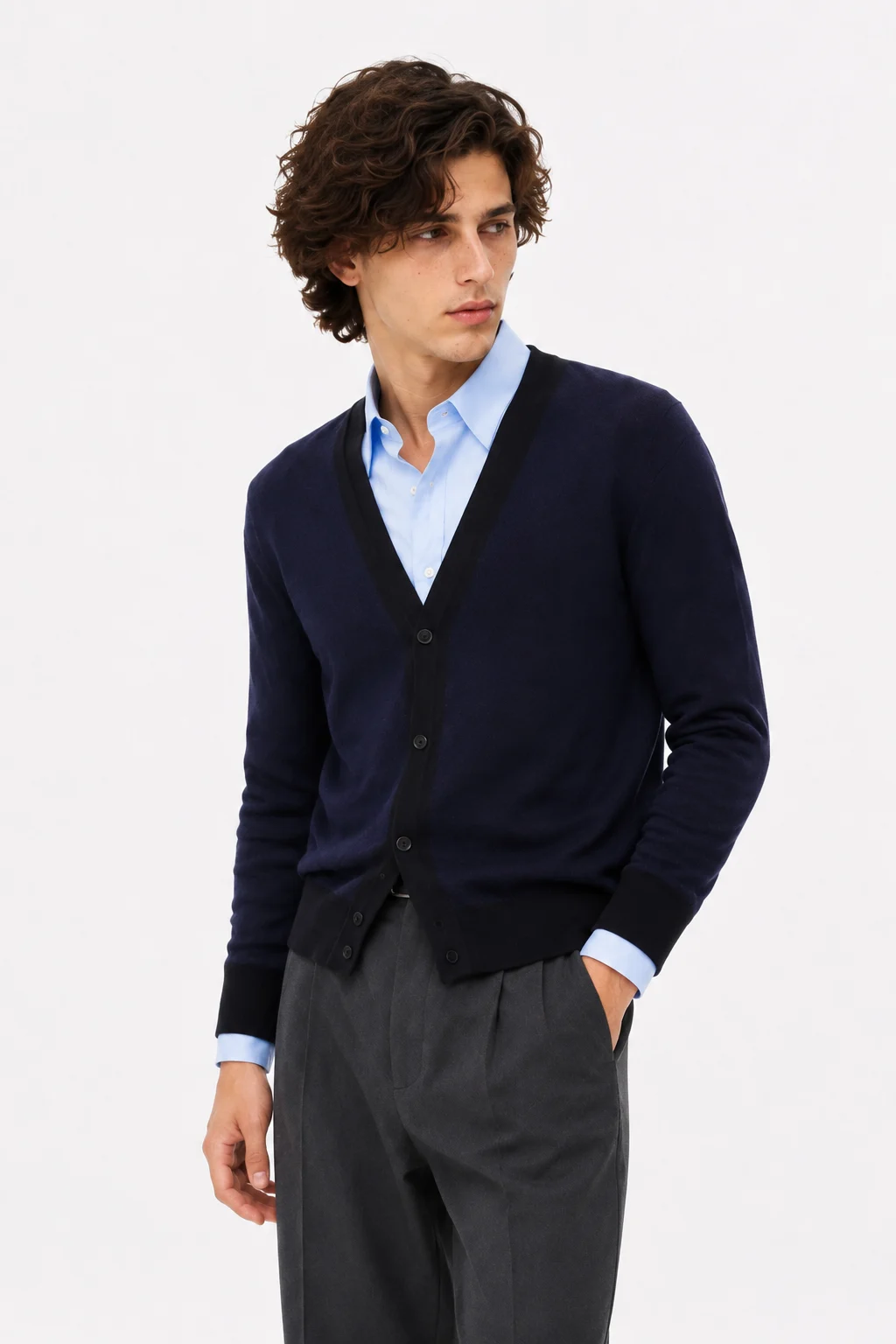
For most fashion brands, merino is the stronger core-collection fiber because it offers reliable durability, temperature regulation, broader price access, and flexible everyday wear, while cashmere creates a softer, more luxurious hero product with higher care and pilling risk; in 2026, boutique labels selling across the US, UK, and EU can use lpknit factory sampling and low-MOQ OEM production to test both fibers before committing to a seasonal buy.
Cashmere and merino serve different commercial purposes. Cashmere signals softness, exclusivity, and elevated gifting, while merino supports repeat wear, layering, and wider size or color programs.
The right choice depends on a brand’s target customer, retail price, expected wear frequency, and production plan. A boutique label does not need to select one fiber for every style; a mixed collection can use merino for dependable volume and cashmere for high-margin statement pieces.
Key takeaways
- Choose merino for everyday sweaters, layering styles, travel pieces, and broader commercial ranges.
- Choose cashmere for luxury positioning, gifting, premium capsules, and tactile hero products.
- Cashmere is usually softer and warmer by weight, but merino is generally more durable and easier to commercialize.
- A cashmere-merino blend can balance softness, performance, cost, and production risk.
- Factory sampling should confirm hand feel, measurements, pilling behavior, shrinkage, and color before bulk production.
Cashmere vs Merino: What Is the Commercial Difference?
Cashmere is a luxury animal fiber collected from cashmere goats, while merino is fine wool produced by Merino sheep; the distinction affects softness, warmth, durability, pricing, care, and brand positioning. A fashion brand should evaluate both fibers as product-development materials rather than treating them as interchangeable labels.
Cashmere fibers are typically finer and have more loft than most wool fibers. That loft gives cashmere a soft hand and strong warmth-to-weight performance. Merino fibers vary by grade, but fine Merino can also feel smooth against the skin while offering better resilience for regular wear.
The commercial differences usually appear in five areas:
- Customer promise: cashmere communicates indulgence; merino communicates performance and versatility.
- Retail positioning: cashmere normally supports a higher ticket, while merino can reach more customers.
- Wear frequency: merino is better suited to frequent use, commuting, and layering.
- Care expectations: cashmere needs more careful washing and storage.
- Production risk: cashmere requires stricter control of fiber quality, gauge, finishing, and pilling.
The Cashmere and Camel Hair Manufacturers Institute fiber information identifies cashmere as a specialty animal fiber with a notably fine diameter. The Woolmark guide to wool fiber properties explains why Merino wool is valued for elasticity, moisture management, and temperature regulation.
Cashmere vs Merino Sweaters for Fashion Brands: Performance Comparison
Cashmere vs merino sweaters for fashion brands should be compared across the full product lifecycle, including first wear, repeated wear, cleaning, resale perception, and replacement risk. Cashmere wins on immediate luxury feel, while merino often wins on operational reliability.
| Decision factor | Cashmere sweater | Merino sweater | Brand implication |
|---|---|---|---|
| Softness | Exceptionally soft when fiber quality is high | Smooth to soft in fine grades | Cashmere creates a stronger first-touch impression |
| Warmth | High warmth for its weight | Warm, breathable, and versatile | Cashmere suits premium cold-weather pieces |
| Temperature control | Comfortable but can feel warmer | Strong moisture and temperature regulation | Merino suits travel and transitional seasons |
| Durability | More delicate under friction | Usually more resilient | Merino is safer for frequent-wear styles |
| Pilling risk | Can pill, especially with short or weak fibers | Can also pill, but often handles abrasion better | Testing matters more than fiber name alone |
| Care | Often requires gentle washing and drying | Easier to maintain, depending on finish | Merino reduces post-purchase friction |
| Wholesale cost | Usually higher and quality-sensitive | Wider cost range | Merino supports more accessible price architecture |
| Best collection role | Hero cardigan, gift item, luxury capsule | Core sweater, layering knit, repeat color program | Combining both can improve range balance |
A soft fiber does not automatically equal a better sweater. Yarn construction, fiber length, spinning, gauge, knitting structure, linking, washing, and finishing can materially change the customer experience.
Which Is Warmer?
Cashmere is generally warmer by weight because its fine fibers create loft and trap air. Merino can still provide excellent warmth, especially in a denser gauge or layered construction, while offering better breathability during changing temperatures.
For a women’s cashmere vs merino sweater collection, a lightweight cashmere crewneck may be positioned as a refined indoor luxury layer. A fine-gauge Merino cardigan can be positioned for office wear, travel, and three-season layering.
Which Is Less Itchy?
Cashmere is usually less itchy than standard wool because its fibers are finer and less likely to bend against the skin. Fine Merino can also be comfortable, but the result depends on micron, yarn quality, finishing, and the customer’s sensitivity.
Brands should request the actual yarn specification instead of approving a material from the word “Merino” alone. A sample worn directly against the neck and forearm can reveal issues that a flat swatch does not.
Which Is More Durable and Less Likely to Pill?
Merino is generally the more durable choice for frequent wear, but neither Merino nor cashmere is automatically pill-proof. Pilling depends on fiber length, yarn twist, friction, knit structure, finishing, and how the garment is washed.
A brand should test:
- Surface abrasion on high-contact areas such as underarms, cuffs, and side seams.
- Dimensional stability after the recommended wash process.
- Colorfastness after washing and rubbing.
- Appearance after repeated wear simulation.
- Recovery at cuffs, hems, and cardigan openings.
The American Association of Textile Chemists and Colorists testing standards include recognized methods for evaluating colorfastness to laundering. A factory sample review should use the brand’s care label instructions and target customer behavior rather than relying only on visual inspection.
Cashmere vs Merino Price, Margins, and Retail Positioning
Cashmere vs merino price is not a fixed fiber comparison because yarn cost varies by grade, fiber length, origin, blend ratio, gauge, color, finishing, order quantity, and exchange rates. Cashmere normally carries a higher material cost, but its higher retail price can compensate when the brand has strong luxury positioning and controlled quality.
A practical price architecture might look like this:
| Product role | Recommended fiber | Typical commercial purpose |
|---|---|---|
| Entry premium knit | Fine Merino | Reach more customers and support core volume |
| Everyday elevated knit | Merino or Merino blend | Balance comfort, durability, and margin |
| Luxury hero sweater | Cashmere | Create a high-value seasonal or gifting item |
| Lightweight premium cardigan | Cashmere-Merino blend | Offer softness with improved resilience |
| Textured fashion statement | Merino, cashmere, or blend | Use yarn and stitch structure as design features |
These are product-strategy roles, not universal wholesale price promises. A buyer should request a quotation after confirming yarn composition, gauge, size range, color count, trims, packaging, testing, and order quantity.
Margin is also affected by returns and customer service. A lower-cost Merino sweater may generate stronger contribution if it has fewer pilling complaints and a wider repeat-purchase audience. A cashmere sweater can generate stronger revenue per unit, but poor fiber selection or weak finishing can damage reviews and increase replacement costs.
The U.S. Federal Trade Commission textile labeling guidance explains that fiber content claims must be accurate and properly disclosed. This matters for brands selling across different markets because composition, care, and origin information affect trust and compliance.
Fiber and Market Facts
- Cashmere fiber is commonly specified at approximately 14-19 microns, according to the Cashmere and Camel Hair Manufacturers Institute, 2024.
- Fine Merino wool can be specified below 20 microns, according to The Woolmark Company fiber guidance, 2024.
- The U.S. Federal Trade Commission requires textile fiber content disclosure in covered products, according to its labeling guidance updated in 2025.
- Textile Exchange reported that global fiber production reached approximately 124 million tonnes in 2023 in its Materials Market Report published in 2024.
- A production program with 2-4 core Merino colors and 1-2 cashmere hero colors is a practical planning example for a small seasonal test, not an industry-wide benchmark.
Merino Wool vs Cashmere vs Alpaca for Seasonal Collections
Merino wool vs cashmere vs Alpaca is a useful three-way comparison when a brand wants to balance softness, texture, warmth, and visual identity. Alpaca can add halo, drape, and a distinctive brushed appearance, while Merino provides clean performance and cashmere provides refined softness.
| Fiber | Strength in a collection | Main risk | Suitable style direction |
|---|---|---|---|
| Merino wool | Breathability, resilience, clean surface | Can feel itchy in coarser grades | Fine-gauge basics, polos, crewnecks, cardigans |
| Cashmere | Softness, warmth, luxury perception | Pilling, higher cost, delicate care | Premium crews, giftable knits, luxury capsules |
| Alpaca | Warmth, loft, texture, visual softness | Hairiness, shedding, fit changes | Brushed sweaters, statement cardigans, seasonal fashion |
| Cashmere-Merino blend | Balanced hand, performance, and cost | Blend must be accurately labeled | Premium core styles and accessible luxury |
A small label can use the contrast intentionally. For example, a London womenswear brand might launch 120 fine Merino cardigans in four neutral colors for dependable autumn sales, then add 36 cashmere crewnecks in two colors as a limited holiday capsule.
A menswear label could take the opposite route. It might use Merino for office-friendly polos and quarter-zips, then reserve cashmere for a refined crewneck with a higher retail price and a narrower color range.
How MOQ and Sampling Change the Fiber Decision
Low MOQ and factory sampling reduce the risk of testing cashmere and Merino in the same seasonal assortment. Sampling allows a brand to compare the actual hand feel, fit, gauge, finishing, and production behavior before purchasing larger quantities.
A useful OEM development process is:
- Define the commercial role. Decide whether the style is a volume basic, a premium core item, or a limited hero product.
- Set the target cost and retail price. Include packaging, freight, duties, testing, payment fees, and expected markdowns.
- Select yarn specifications. Confirm fiber composition, micron range, yarn count, ply, spinning method, and available colors.
- Develop the first factory sample. Review measurements, stitch definition, hand feel, drape, and finishing.
- Run wear and care checks. Wash the sample according to the planned care label and inspect pilling, shrinkage, and shape recovery.
- Approve a pre-production sample. Confirm the final yarn, color, trims, measurements, and workmanship before bulk production.
lpknit’s knitwear product range includes cardigan and sweater directions that can support both classic and seasonal product planning. For a low-volume buyer, the fine-knit round-neck cardigan is a useful reference for a clean core silhouette, while the mohair long-sleeve knit sweater illustrates a more seasonal texture-led approach.
The sample should answer commercial questions, not only design questions. A buyer needs to know whether the garment can be reproduced consistently, whether the yarn is available in the desired colors, and whether the approved finish will remain stable across the intended order quantity.
Which Fiber Should a Boutique Brand Choose?
A boutique brand should choose Merino when it prioritizes repeat wear, accessible premium pricing, broad seasonal use, and lower care friction. The brand should choose cashmere when softness, exclusivity, gifting, and a higher-value product story justify greater material and quality-control costs.
Use this decision framework:
- Choose Merino for core collections, travel knits, office layers, uniform dressing, and styles expected to be washed often.
- Choose cashmere for luxury capsules, holiday gifting, premium gifting, elevated basics, and tactile first-impression products.
- Choose a blend when the brand needs cashmere softness with stronger everyday resilience or more controlled cost.
- Choose Alpaca or a blend when visual texture and halo are more important than a smooth, polished surface.
- Use different fibers in one collection when customer segmentation and price architecture support clear product roles.
Scenario: A Small Women’s Label
Sofia runs a US-based women’s label with an autumn budget of $18,000. Instead of placing the full budget into cashmere, she develops 24 Merino cardigan samples and 12 cashmere crewneck samples, then approves two Merino colors for the core range and one cashmere color for a limited launch.
This approach gives Sofia a lower-risk volume product and a higher-value editorial product. It also creates a clear reason for customers to trade up without forcing every customer into the highest price tier.
Scenario: A European Menswear Brand
Daniel operates a UK and EU menswear label focused on minimalist travel clothing. His customers need garments that layer easily, recover their shape, and tolerate regular use, so he chooses fine Merino for polos and cardigans.
Daniel adds one cashmere crewneck for seasonal gifting. The collection remains performance-led, but the cashmere style raises the range’s perceived value and provides a premium entry point for loyal customers.
How to Source Cashmere and Merino OEM Sweaters
A suitable OEM supplier should demonstrate fiber knowledge, sample discipline, transparent specifications, and the ability to produce at the order size a boutique brand can realistically support. The supplier’s product page alone is not enough; buyers should assess communication, sample revisions, testing, and production controls.
Before requesting a quotation, prepare:
- Technical sketches or reference garments.
- Target fiber composition and yarn characteristics.
- Size chart and grading requirements.
- Planned color count and color standards.
- Target wholesale cost and retail positioning.
- Expected MOQ and first-order quantity.
- Packaging, labeling, and compliance requirements.
- Required delivery window and destination market.
Ask the supplier these questions:
- Which cashmere and Merino yarn qualities are currently available?
- Can the factory provide yarn cards or original yarn samples?
- What is the MOQ per color and per style?
- How many sample revisions are included?
- How are pilling, shrinkage, and colorfastness evaluated?
- Can the factory support private labels, custom labels, and packaging?
- What production lead time applies after pre-production approval?
- How are defects, shade variation, and measurement tolerances handled?
lpknit’s factory sampling and OEM knitwear service is designed for boutique fashion brands and private-label buyers across the US, UK, and EU. Buyers can also review the Knitwear Journal for sourcing and craft topics when preparing a development brief.
For a first project, keep the range focused. Two or three silhouettes with controlled color counts make it easier to compare fiber behavior, manage sampling, and identify the style that deserves a larger reorder.
FAQ: Cashmere and Merino Sweaters for Fashion Brands
Is cashmere a better choice for wear than merino wool?
Cashmere is a better choice when the customer values exceptional softness, light warmth, and a luxury hand feel. Merino is usually better for frequent wear, active use, layering, and easier care. The stronger commercial choice depends on whether the garment is a special-occasion product or an everyday wardrobe essential.
Which is less itchy, cashmere or merino?
Cashmere is usually less itchy because its fibers are finer and softer against the skin. Fine Merino can also be comfortable, especially when the yarn uses a fine micron specification and good finishing. Brands should test the finished garment at the neck, cuffs, and underarm rather than judging comfort from fiber names alone.
Which fabric is warmer, cashmere or merino?
Cashmere is generally warmer by weight because its fine fibers create loft that traps air. Merino offers more adaptable warmth because it can manage moisture and temperature effectively. A dense Merino knit may feel warmer in use than a very lightweight cashmere style, so gauge and construction must be evaluated with the fiber.
Which fiber is more durable and less likely to pill?
Merino is generally more durable and better suited to repeated friction than cashmere. However, both fibers can pill when short fibers, loose yarn structure, high friction, or unsuitable finishing are involved. A brand should approve production only after abrasion, wash, and appearance checks on the actual garment.
Is cashmere more expensive than merino for wholesale production?
Cashmere usually costs more than Merino because the raw fiber is scarcer and the product is positioned as a luxury material. Wholesale cost still depends on grade, yarn count, gauge, color, trims, order size, and finishing. A supplier quotation should compare complete garment specifications rather than fiber names alone.
Should a fashion brand choose cashmere, merino, or a blend?
A brand should choose Merino for dependable core products, cashmere for premium hero styles, and a blend when it wants a balance of softness, resilience, and cost. Using two fibers in one collection can create clearer price tiers and reduce dependence on one material or customer use case.
What should buyers ask about low-MOQ cashmere sweaters?
Buyers should ask about MOQ per style and color, yarn availability, sample charges, revision limits, testing, lead time, and quality tolerances. They should also confirm whether a low MOQ applies to the entire order or only to selected colors. Written specifications prevent misunderstandings when a sample moves into production.
Conclusion: Build the Right Fiber Mix for Your Brand
Cashmere vs merino sweaters for fashion brands is a product-strategy decision, not only a softness comparison. Merino is the practical foundation for durable, versatile, and commercially accessible knitwear, while cashmere gives a collection a stronger luxury signal and higher-value hero product.
Eleanor Grant has reviewed knitwear development briefs, yarn specifications, factory samples, and finished-garment quality checks for boutique labels. This recommendation reflects lpknit’s stated OEM focus on merino, cashmere, and mohair sweaters, low-MOQ production, and factory sampling, alongside fiber guidance from The Woolmark Company, the Cashmere and Camel Hair Manufacturers Institute, the Federal Trade Commission, and Textile Exchange.
For a new collection, submit a concise brief to lpknit’s premium knitwear OEM team and request sample development for the fiber, gauge, and price position that match your customer. Comparing the finished samples before bulk approval is the most reliable way to protect quality, margin, and brand credibility.
{
“@context”: “https://schema.org”,
“@type”: “Article”,
“headline”: “Cashmere for Heroes, Merino for Volume: 2026 Sweater Planning for Boutique Labels”,
“datePublished”: “2026-02-21”,
“dateModified”: “2026-08-27”,
“description”: “Compare cashmere and merino sweaters for luxury, durability, cost, margins, MOQ, and sampling, with a practical OEM framework for boutique fashion brands.”,
“keywords”: “cashmere vs merino sweaters for fashion brands”,
“author”: {
“@type”: “Person”,
“name”: “Eleanor Grant”,
“jobTitle”: “Knitwear sourcing editor specializing in luxury fibers, OEM development, and boutique fashion production.”
}
}
{
“@context”: “https://schema.org”,
“@type”: “FAQPage”,
“mainEntity”: [
{
“@type”: “Question”,
“name”: “Is cashmere a better choice for wear than merino wool?”,
“acceptedAnswer”: {
“@type”: “Answer”,
“text”: “Cashmere is a better choice when the customer values exceptional softness, light warmth, and a luxury hand feel. Merino is usually better for frequent wear, active use, layering, and easier care. The stronger commercial choice depends on whether the garment is a special-occasion product or an everyday wardrobe essential.”
}
},
{
“@type”: “Question”,
“name”: “Which is less itchy, cashmere or merino?”,
“acceptedAnswer”: {
“@type”: “Answer”,
“text”: “Cashmere is usually less itchy because its fibers are finer and softer against the skin. Fine Merino can also be comfortable, especially when the yarn uses a fine micron specification and good finishing. Brands should test the finished garment at the neck, cuffs, and underarm rather than judging comfort from fiber names alone.”
}
},
{
“@type”: “Question”,
“name”: “Which fabric is warmer, cashmere or merino?”,
“acceptedAnswer”: {
“@type”: “Answer”,
“text”: “Cashmere is generally warmer by weight because its fine fibers create loft that traps air. Merino offers more adaptable warmth because it can manage moisture and temperature effectively. A dense Merino knit may feel warmer in use than a very lightweight cashmere style, so gauge and construction must be evaluated with the fiber.”
}
},
{
“@type”: “Question”,
“name”: “Which fiber is more durable and less likely to pill?”,
“acceptedAnswer”: {
“@type”: “Answer”,
“text”: “Merino is generally more durable and better suited to repeated friction than cashmere. However, both fibers can pill when short fibers, loose yarn structure, high friction, or unsuitable finishing are involved. A brand should approve production only after abrasion, wash, and appearance checks on the actual garment.”
}
},
{
“@type”: “Question”,
“name”: “Is cashmere more expensive than merino for wholesale production?”,
“acceptedAnswer”: {
“@type”: “Answer”,
“text”: “Cashmere usually costs more than Merino because the raw fiber is scarcer and the product is positioned as a luxury material. Wholesale cost still depends on grade, yarn count, gauge, color, trims, order size, and finishing. A supplier quotation should compare complete garment specifications rather than fiber names alone.”
}
},
{
“@type”: “Question”,
“name”: “Should a fashion brand choose cashmere, merino, or a blend?”,
“acceptedAnswer”: {
“@type”: “Answer”,
“text”: “brand should choose Merino for dependable core products, cashmere for premium hero styles, and a blend when it wants a balance of softness, resilience, and cost. Using two fibers in one collection can create clearer price tiers and reduce dependence on one material or customer use case.”
}
},
{
“@type”: “Question”,
“name”: “What should buyers ask about low-MOQ cashmere sweaters?”,
“acceptedAnswer”: {
“@type”: “Answer”,
“text”: “Buyers should ask about MOQ per style and color, yarn availability, sample charges, revision limits, testing, lead time, and quality tolerances. They should also confirm whether a low MOQ applies to the entire order or only to selected colors. Written specifications prevent misunderstandings when a sample moves into production.”
}
}
]
}