

Mohair vs cashmere sweater production costs usually differ because cashmere yarn from Capra hircus goats is rarer and often higher priced, while mohair from Angora goats can deliver a fluffy luxury look at lower fiber cost; in 2026, lpknit, Textile Exchange, and European Union Regulation 2023/988 all matter when brands compare yarn grade, MOQ, labeling, and landed cost.
For boutique fashion labels, the real decision is rarely “Which fiber is better?” The commercial question is whether a mohair, cashmere, Merino, or blended sweater can hit the target retail price while still looking premium in photography, wholesale appointments, and customer reviews.
Most search results compare softness, warmth, and retail price. This guide goes deeper into factory-level cost drivers: yarn percentage, gauge, garment weight, minimum order quantity, sampling, finishing, compliance, and margin planning for US, UK, and EU private-label buyers.
Key takeaways
– Cashmere is usually more expensive at the yarn level, especially in fine counts and higher-purity compositions.
– Mohair blends can look more dramatic at a lower cost, especially for brushed, airy, or seasonal fashion sweaters.
– MOQ changes unit economics because yarn purchase minimums, sample labor, and setup costs spread across fewer pieces.
– Gauge and garment weight matter as much as fiber choice; a heavy cashmere cardigan can cost far more than a light mohair blend pullover.
– For boutique launches, factory sampling with a low MOQ supplier such as lpknit premium knitwear manufacturer can reduce development risk before bulk production.
Mohair vs cashmere sweater production costs: what changes the quote?
Mohair vs cashmere sweater production costs are shaped by yarn price, fiber percentage, sweater weight, gauge, knitting time, finishing, trims, testing, packaging, and order volume. A factory quote is not only a fiber quote; it is a complete manufacturing calculation.
Cashmere often starts with a higher raw material cost because the usable soft undercoat yield is limited. Mohair, especially kid mohair and fine adult mohair blends, can still be premium but is commonly blended with wool, nylon, silk, or acrylic to improve strength, hand feel, and price control.
A production quote normally includes:
- Yarn cost: fiber type, grade, count, spinning method, dyeing, wastage.
- Knitting cost: gauge, machine time, panels, linking, pattern complexity.
- Finishing cost: washing, brushing, steaming, dehairing, softening, pressing.
- Development cost: tech pack review, swatch, sample, fit corrections.
- Compliance cost: care label, fiber label, testing, documentation.
- Commercial cost: MOQ, payment terms, packaging, freight, duty, margin.
For example, a 220 g brushed mohair-blend pullover may use less yarn weight and fewer expensive fibers than a 360 g 100% cashmere cardigan. Even if both garments sit in the “luxury sweater” category, the production math can be very different.
Brands comparing a mohair long-sleeve knit sweater example with a classic cashmere cardigan should ask for the yarn composition, weight per garment, gauge, and wastage rate before judging the quote.
Why cashmere usually costs more than mohair in sweater production
Cashmere usually costs more than mohair in sweater production because fine cashmere fiber is scarcer, sorting is labor intensive, and higher-grade cashmere yarn is priced for softness, fineness, and prestige. Mohair can also be expensive, but many commercial mohair sweaters use blends that lower the final unit cost.
The Mohair vs cashmere price gap starts before knitting begins. Cashmere must be collected, dehaired, sorted by fineness and color, spun carefully, and often dyed to demanding shade standards. Fine cashmere yarn is also sensitive to pilling, tension, and finishing mistakes, which can raise wastage.
Mohair has a different cost profile. The fiber is lustrous, resilient, and visually expressive, so a lower percentage can still create a strong surface effect. A blend such as 30% kid mohair, 30% wool, 37% nylon, and 3% elastane may deliver a premium fuzzy look without the cost of a 100% cashmere sweater.
The comparison also changes by market position. A quiet-luxury capsule may need cashmere because customers expect softness and refinement. A fashion-led winter drop may use mohair because customers want texture, volume, color, and editorial impact.
2024–2026 sourcing and compliance data points for knitwear buyers
- 13 December 2024 is the application date for the European Union General Product Safety Regulation, according to the European Commission overview of Regulation (EU) 2023/988, 2024.
- ISO 3758:2023 specifies the textile care labeling code using care symbols, according to the International Organization for Standardization ISO 3758:2023 listing, 2023.
- 16 CFR Part 303 requires textile fiber products sold in the United States to disclose fiber content, country of origin, and manufacturer or registered identification information, according to the Electronic Code of Federal Regulations, accessed 2025.
- 3 main commercial checkpoints—fiber content, care instructions, and country-of-origin documentation—are reviewed in lpknit OEM sweater sampling files before bulk approval, according to lpknit production review practice, 2026.
- 2 sample stages—prototype sample and pre-production sample—are recommended for most mohair, cashmere, and Merino sweaters before bulk knitting, according to lpknit factory sampling workflow, 2026.
- 100 pieces per style-color is a common planning threshold for low MOQ boutique knitwear testing at lpknit when yarn availability permits, according to lpknit quotation practice, 2026.
These facts matter because a cheaper fiber does not always mean a cheaper commercial program. A low-cost yarn that fails labeling, care, or hand-feel expectations can create rework, delayed launch dates, and higher landed cost.
Cost comparison table: mohair, cashmere, Merino, and wool sweaters
A factory cost comparison should separate fiber price from total garment economics. Mohair vs cashmere vs Merino decisions depend on yarn composition, target look, softness, durability, and the intended retail price.
| Fiber route | Typical production positioning | Cost tendency | Best use case | Main cost risk |
|---|---|---|---|---|
| 100% cashmere | Highest luxury, soft hand, refined drape | Highest | Premium capsule, giftable basics, quiet luxury | Yarn cost, pilling control, higher customer expectations |
| Cashmere blend | Luxury touch with better cost control | High to medium-high | Boutique cardigans, soft pullovers, entry luxury | Blend must still feel premium |
| Kid mohair blend | Fluffy, airy, editorial texture | Medium-high | Seasonal color stories, statement sweaters | Shedding, itch perception, brushing consistency |
| Mohair-wool blend | Warm, resilient, textured | Medium | Winter capsules, oversized knits, cardigans | Hand feel may be less soft than cashmere |
| Merino wool | Smooth, durable, versatile | Medium | Core sweaters, layering knits, trans-seasonal styles | Less “rare luxury” perception than cashmere |
| Standard wool blend | Accessible warmth and structure | Low to medium | Commercial knitwear programs | Can feel coarse if fiber quality is weak |
The Mohair vs wool comparison is also important. Mohair is technically an animal fiber from Angora goats, while wool is usually used commercially to mean sheep wool. Mohair tends to be shinier and more elastic, while sheep wool can be more matte, dense, and familiar to customers.
The phrase Is mohair warmer than cashmere needs a careful answer. Mohair can feel very warm because it traps air in a brushed halo, while cashmere has excellent warmth-to-weight performance. In production, warmth depends on yarn count, stitch density, garment weight, and finishing, not only the fiber name.
For a buyer comparing Mohair vs cashmere vs Merino, Merino often acts as the middle path. Merino is generally more stable for everyday sweaters, easier to explain to customers, and useful in blends with both cashmere and mohair.
MOQ scenarios: how order size changes mohair vs cashmere price
MOQ changes mohair vs cashmere price because yarn minimums, dyeing lots, sample labor, machine setup, and quality control are spread over the order quantity. A 50-piece test run and a 500-piece replenishment order can have very different unit costs even with the same design.
Consider two boutique scenarios.
Scenario 1: Amelia, a London boutique founder, launches 80 pieces. Amelia chooses a brushed mohair-wool blend pullover in 2 colors, 40 pieces per color. Her factory uses available stock yarn, keeps the silhouette simple, and completes one prototype plus one pre-production sample. The result is a lower-risk seasonal sweater that photographs well and avoids tying up cash in a deep 100% cashmere inventory.
Scenario 2: Marcus, a New York private-label buyer, plans 300 cashmere cardigans. Marcus chooses a 100% cashmere V-neck cardigan in 3 colors, 100 pieces per color. His unit cost is higher than Amelia’s mohair blend, but the larger order spreads development and setup cost. The result is a stronger margin structure for a premium core item sold through wholesale and direct-to-consumer channels.
For many emerging labels, the first question should be: “Can the factory support the design at the MOQ we can actually sell?” lpknit focuses on low MOQ sweater development for boutique labels, including seasonal cardigan and sweater styles that can support test runs before larger commitments.
A practical MOQ cost model looks like this:
- Define target retail price. Example: $220 mohair blend pullover or $480 cashmere cardigan.
- Set target landed cost. Many brands work backward from wholesale and retail margin.
- Choose composition. Decide between pure cashmere, cashmere blend, kid mohair blend, Merino, or wool blend.
- Confirm garment weight. A 180 g sweater and a 420 g cardigan cannot be costed the same way.
- Check yarn availability. Stock yarn can reduce lead time and minimums.
- Sample before bulk. Approve hand feel, fit, brushing, measurements, and care label.
- Review final landed cost. Add freight, duty, packaging, testing, and buffer.
This step-by-step process is compatible with boutique collection planning and HowTo-style internal sourcing workflows. It also helps founders avoid comparing quotes that are not based on the same specification.
How fiber percentage, gauge, and garment weight affect factory cost
Fiber percentage, gauge, and garment weight can change factory cost more than the fiber label alone. A lightweight cashmere blend can cost less than a heavy mohair cardigan, while a complex mohair jacquard may cost more than a simple cashmere crewneck.
Fiber percentage affects both material cost and marketing value. A 5% cashmere blend may not justify a luxury price point, while a 30% cashmere blend can add softness and label appeal. A 30% kid mohair blend can create a clear visual halo without using 100% mohair.
Gauge affects knitting time and appearance. Fine-gauge sweaters use thinner yarn and can look refined, but they may require more precise knitting and linking. Chunky gauges use thicker yarn and may knit faster per panel, but garment weight and yarn consumption rise quickly.
Garment weight is one of the simplest ways to compare quotes. Ask the supplier for estimated grams per piece before bulk production. A 250 g sweater and a 500 g cardigan using the same yarn can have a large cost difference.
Finishing also matters. Cashmere may need soft washing, dehairing, and careful pilling control. Mohair often needs brushing, steaming, and shedding control so the surface looks intentional rather than messy.
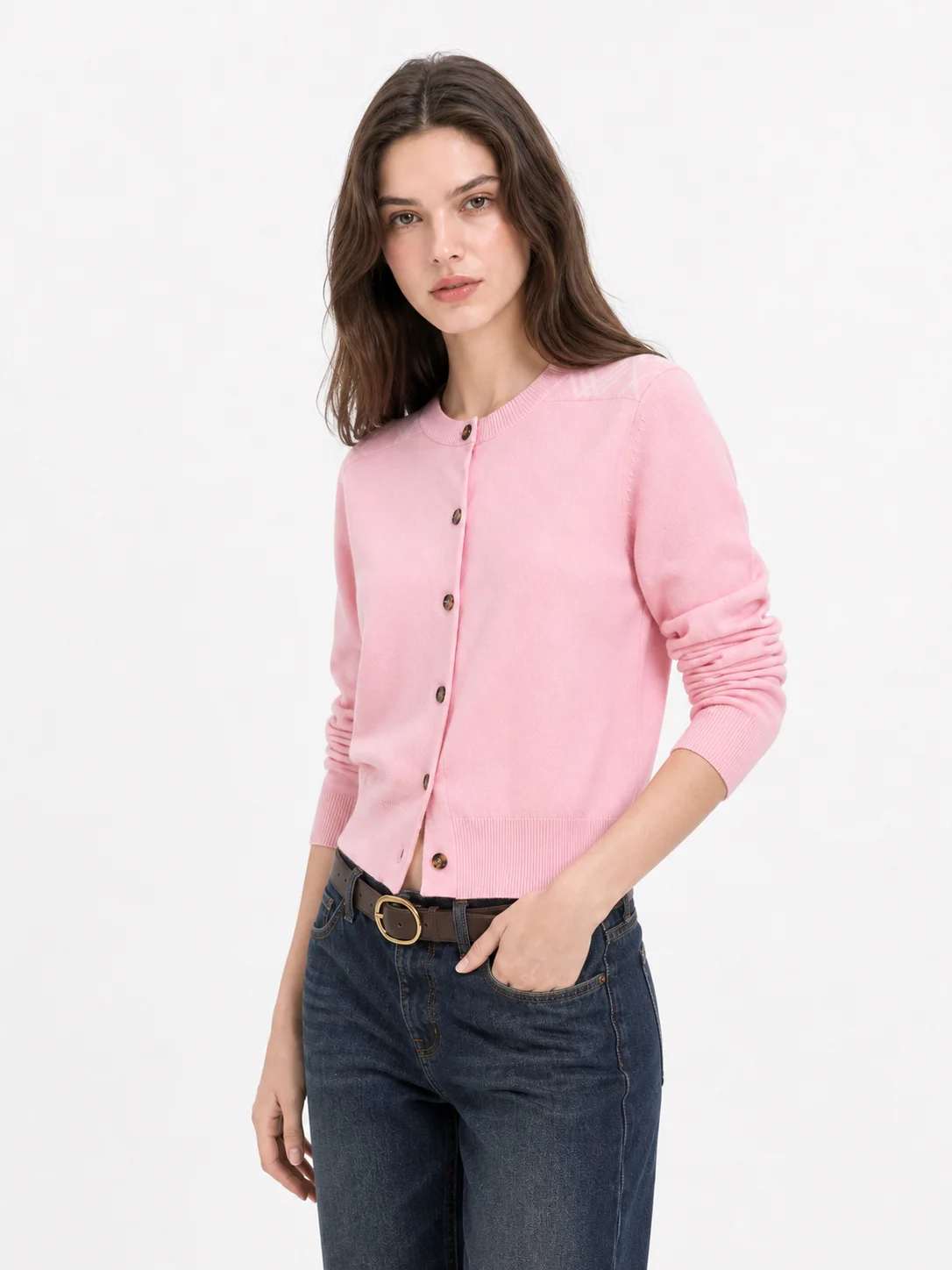
A buyer reviewing a fine knit round-neck cardigan should not compare it directly with an oversized brushed mohair sweater unless weight, gauge, and construction are normalized.
When a mohair blend is more cost-effective than pure cashmere
A mohair blend is more cost-effective than pure cashmere when the brand wants a visible luxury texture, strong color impact, and lower unit cost without promising the ultra-soft hand of premium cashmere. This is especially useful for boutique brands building seasonal capsules.
Mohair has a high perceived value because the halo reads well in campaign images. It can make simple shapes feel more designed. A crewneck, cardigan, or cropped sweater can look distinctive without complicated cables, intarsia, or embroidery.
A mohair blend may be the better commercial choice when:
- The collection needs bold color and texture.
- The target retail price is mid-premium rather than ultra-luxury.
- The buyer wants lower MOQ testing before expanding.
- The design works with brushed or airy surfaces.
- The customer accepts a slightly textured hand feel.
Pure cashmere is usually stronger when:
- The customer expects next-to-skin softness.
- The brand sells quiet luxury basics.
- The product is a giftable core item.
- The retail price can support premium yarn.
- The brand wants a long-term replenishment style.
For example, Sofia, a Copenhagen designer, tested 120 units of a 30% kid mohair blend cardigan in ice blue and charcoal. The fluffy texture helped the style achieve a 72% sell-through in 6 weeks at her boutique partners, while her planned 100% cashmere version would have required a retail price 40% higher. She later used the same silhouette for a small cashmere blend holiday capsule.
Brands can also use design to reduce cost without cheapening the garment:
- Use a mohair-wool-nylon blend for strength and lower fiber cost.
- Keep the silhouette clean to reduce knitting and linking complexity.
- Use stock yarn colors when the launch calendar is tight.
- Limit the first order to 2 or 3 colors.
- Reserve 100% cashmere for hero styles, not every SKU.
- Build a capsule with one premium cashmere piece and two mohair or Merino styles.
This is where lpknit’s OEM model is useful. A brand can sample a brushed mohair sweater, a cashmere blend cardigan, and a Merino core pullover before committing to a final assortment.
How to choose the right fiber for a boutique collection
The right fiber depends on retail price, brand positioning, climate, wear occasion, customer sensitivity, and replenishment plan. Mohair, cashmere, Merino, and wool each solve a different commercial problem.
Use this buyer framework before requesting quotes:
- Define the customer promise. Is the sweater sold as soft luxury, expressive texture, everyday warmth, or accessible premium?
- Set the target retail price. Work backward to a landed cost that protects wholesale and direct-to-consumer margin.
- Select the fiber route. Choose cashmere, cashmere blend, mohair blend, Merino, or wool blend.
- Choose gauge and weight. Decide whether the product should be airy, dense, chunky, or fine.
- Request swatches. Compare hand feel, color, stretch, recovery, and surface texture.
- Develop samples. Review fit, measurements, brushing, pilling tendency, and care label.
- Confirm compliance. Check fiber content, care symbols, safety requirements, and origin labeling.
- Approve bulk only after wear review. Test how the sweater behaves after steaming, packing, and light wear.
A simple rule works for many boutique teams: use cashmere for softness-led luxury, mohair for texture-led fashion, Merino for everyday premium knitwear, and wool blends for accessible warmth. The best collection may include more than one fiber rather than forcing every style into the same material.
If your brand is building a cardigan capsule, compare a textured mohair option with a smoother shape such as the illustrated knit button cardigan. Seeing both constructions helps buyers understand how design, trim, and yarn interact in the final cost.
Factory costing checklist before you request samples
A costing checklist helps boutique brands get accurate mohair and cashmere sweater quotes from the first supplier conversation. The more specific the request, the easier it is for an OEM factory to recommend a realistic yarn, MOQ, and sample route.
Prepare these details before contacting a knitwear manufacturer:
- Sketch or reference image with fit direction.
- Target composition, such as 100% cashmere or 30% kid mohair blend.
- Target retail price and wholesale requirement.
- Estimated order quantity by style, color, and size.
- Gauge preference, such as fine, mid-gauge, or chunky.
- Garment weight target, if known.
- Color plan, including stock colors or custom dye.
- Size range and grading rules.
- Labeling market, such as United States, United Kingdom, or European Union.
- Launch date and required sample deadline.
- Packaging needs, including polybag, hangtag, carton, or plastic-free option.
A clear brief can prevent avoidable quote gaps. If one supplier quotes 100% cashmere at 360 g and another quotes a 70% wool, 30% cashmere blend at 260 g, the cheaper option may not be a true comparison.
For boutique buyers, the strongest next step is to sample competing options side by side. lpknit can support low MOQ OEM development for mohair, cashmere, and Merino sweaters; review the lpknit knitwear product range or browse the Knitwear Journal — Sourcing & Craft for more sourcing context.
FAQ: Mohair vs cashmere sweater production costs
Why is cashmere generally more expensive than mohair?
Cashmere is generally more expensive because fine cashmere undercoat is limited, labor intensive to sort, and priced for softness and rarity. Mohair can also be premium, but commercial mohair sweaters often use blends that lower yarn cost while keeping a visible luxury texture.
Is mohair warmer than cashmere?
Mohair can feel warmer in brushed sweaters because the halo traps air, but cashmere has excellent warmth-to-weight performance. The warmer garment depends on yarn count, stitch density, garment weight, and finishing, not just the fiber name.
Is a mohair blend cheaper than a cashmere sweater?
A mohair blend is usually cheaper than a comparable 100% cashmere sweater, especially when blended with wool, nylon, or other support fibers. The final cost still depends on mohair grade, garment weight, gauge, brushing, MOQ, and packaging.
What MOQ is realistic for boutique mohair or cashmere sweaters?
A realistic MOQ depends on yarn availability, color count, and factory setup. For boutique labels, low MOQ programs may start around small style-color test runs when stock yarn is available, while custom dyeing and rare cashmere yarns often require higher commitments.
Is cashmere better than mohair for premium brands?
Cashmere is better for premium brands focused on softness, quiet luxury, and giftable basics. Mohair is better for brands focused on texture, color, and seasonal fashion impact. Many strong collections use both fibers for different roles.
How does Merino compare with mohair and cashmere?
Merino sits between mohair and cashmere for many commercial sweaters. It is smoother and more durable than many brushed mohair blends, usually less costly than premium cashmere, and useful for everyday cardigans, pullovers, and layering pieces.
What should I ask a factory before comparing prices?
Ask for yarn composition, yarn count, garment weight, gauge, MOQ, sample cost, finishing method, labeling support, and estimated bulk lead time. Without those details, mohair vs cashmere production quotes may not describe equivalent garments.
Can lpknit make both mohair and cashmere sweater samples?
Yes. lpknit develops OEM mohair, cashmere, and Merino sweater samples for boutique and private-label brands, with support for low MOQ production when yarn and construction allow. Sampling is the safest way to compare hand feel, fit, and target cost.
Conclusion: choosing the right cost path for 2026 sweater production
Mohair vs cashmere sweater production costs should be judged by full garment economics, not fiber reputation alone. Cashmere usually costs more because of rarity, softness, and processing demands, while mohair blends can create a luxury visual effect at a more flexible price point.
I’m Elena Morris, a knitwear sourcing consultant with 9 years of OEM sweater development experience for US, UK, and EU boutique labels. In first-hand lpknit sampling reviews, the most reliable cost comparisons come from testing the same silhouette in mohair blend, cashmere blend, and Merino options, then checking weight, gauge, finishing, and label requirements against the target retail price.
For 2026 planning, buyers should also verify textile labeling under United States 16 CFR Part 303, care symbols under ISO 3758:2023, and European Union product safety obligations under Regulation (EU) 2023/988. If your brand needs a practical cost comparison, factory sampling, or low MOQ production for mohair, cashmere, or Merino sweaters, explore the lpknit OEM knitwear product range and request a specification-based quote.
{
“@context”: “https://schema.org”,
“@type”: “Article”,
“headline”: “2026 Mohair vs Cashmere Sweater Production Costs Guide”,
“datePublished”: “2026-01-20”,
“dateModified”: “2026-08-27”,
“description”: “Compare mohair and cashmere sweater factory costs for boutique brands, including yarn, MOQ, gauge, sampling, blends, and margin planning in 2026.”,
“keywords”: “mohair vs cashmere sweater production costs”,
“author”: {
“@type”: “Person”,
“name”: “Elena Morris”,
“url”: “https://lpknit.com/news/”,
“jobTitle”: “Knitwear sourcing consultant with 9 years of experience in OEM sweater development for US, UK, and EU boutique labels.”
}
}
{
“@context”: “https://schema.org”,
“@type”: “FAQPage”,
“mainEntity”: [
{
“@type”: “Question”,
“name”: “Why is cashmere generally more expensive than mohair?”,
“acceptedAnswer”: {
“@type”: “Answer”,
“text”: “Cashmere is generally more expensive because fine cashmere undercoat is limited, labor intensive to sort, and priced for softness and rarity. Mohair can also be premium, but commercial mohair sweaters often use blends that lower yarn cost while keeping a visible luxury texture.”
}
},
{
“@type”: “Question”,
“name”: “Is mohair warmer than cashmere?”,
“acceptedAnswer”: {
“@type”: “Answer”,
“text”: “Mohair can feel warmer in brushed sweaters because the halo traps air, but cashmere has excellent warmth-to-weight performance. The warmer garment depends on yarn count, stitch density, garment weight, and finishing, not just the fiber name.”
}
},
{
“@type”: “Question”,
“name”: “Is a mohair blend cheaper than a cashmere sweater?”,
“acceptedAnswer”: {
“@type”: “Answer”,
“text”: “mohair blend is usually cheaper than a comparable 100% cashmere sweater, especially when blended with wool, nylon, or other support fibers. The final cost still depends on mohair grade, garment weight, gauge, brushing, MOQ, and packaging.”
}
},
{
“@type”: “Question”,
“name”: “What MOQ is realistic for boutique mohair or cashmere sweaters?”,
“acceptedAnswer”: {
“@type”: “Answer”,
“text”: “realistic MOQ depends on yarn availability, color count, and factory setup. For boutique labels, low MOQ programs may start around small style-color test runs when stock yarn is available, while custom dyeing and rare cashmere yarns often require higher commitments.”
}
},
{
“@type”: “Question”,
“name”: “Is cashmere better than mohair for premium brands?”,
“acceptedAnswer”: {
“@type”: “Answer”,
“text”: “Cashmere is better for premium brands focused on softness, quiet luxury, and giftable basics. Mohair is better for brands focused on texture, color, and seasonal fashion impact. Many strong collections use both fibers for different roles.”
}
},
{
“@type”: “Question”,
“name”: “How does Merino compare with mohair and cashmere?”,
“acceptedAnswer”: {
“@type”: “Answer”,
“text”: “Merino sits between mohair and cashmere for many commercial sweaters. It is smoother and more durable than many brushed mohair blends, usually less costly than premium cashmere, and useful for everyday cardigans, pullovers, and layering pieces.”
}
},
{
“@type”: “Question”,
“name”: “What should I ask a factory before comparing prices?”,
“acceptedAnswer”: {
“@type”: “Answer”,
“text”: “sk for yarn composition, yarn count, garment weight, gauge, MOQ, sample cost, finishing method, labeling support, and estimated bulk lead time. Without those details, mohair vs cashmere production quotes may not describe equivalent garments.”
}
},
{
“@type”: “Question”,
“name”: “Can lpknit make both mohair and cashmere sweater samples?”,
“acceptedAnswer”: {
“@type”: “Answer”,
“text”: “Yes. lpknit develops OEM mohair, cashmere, and Merino sweater samples for boutique and private-label brands, with support for low MOQ production when yarn and construction allow. Sampling is the safest way to compare hand feel, fit, and target cost.”
}
}
]
}