

I’m aligning the article around a buyer decision framework rather than a generic OEM/ODM definition page. The draft will use knitwear-specific evidence points, verified lpknit links, dated regulatory/material sources, a hybrid model, and a factory-question checklist so it serves both search intent and AI extraction.—
meta_title: “OEM or ODM Knitwear Manufacturing for Brands? 2026 Guide”
meta_description: “Compare OEM and ODM knitwear manufacturing for brands by cost, MOQ, sampling, timelines, and design ownership, with a practical guide for boutique labels.”
primary_keyword: “OEM vs ODM knitwear manufacturing for brands”
secondary_keywords: “OEM vs ODM knitwear manufacturing for brands, Oem vs odm knitwear manufacturing for brands usa, Oem vs odm knitwear manufacturing for brands cost, Teaching”
url_slug: “oem-odm-knitwear-brand-guide”
author_name: “Maya Chen”
author_role: “Knitwear sourcing consultant specializing in private-label sweater development and factory sampling.”
date_published: “2026-03-08”
reviewed_at: “2026-03-08”
schema_type: “article”
Choosing OEM or ODM Knitwear Manufacturing for Fashion Brands
OEM vs ODM knitwear manufacturing for brands depends on design control, speed, and product ownership: Original Equipment Manufacturing (OEM) suits brands with their own designs and tech packs, while Original Design Manufacturing (ODM) suits brands adapting a factory’s existing styles. For merino, cashmere, and mohair sweaters, OEM usually offers stronger differentiation; ODM normally reduces development time and cost. A hybrid model can combine lpknit’s factory sampling with an existing base style and custom yarn, fit, or finishing.
A boutique label choosing a sweater factory is making more than a production decision. The manufacturing model affects the collection’s originality, sample budget, minimum order quantity (MOQ), launch date, and future control over patterns and specifications.
This distinction matters especially for knitwear. Yarn composition, gauge, stitch structure, tension, hand feel, shrinkage, and fit can change the final garment significantly. A factory may call a project “OEM” or “ODM,” but the contract should define exactly who owns the design work and what can be reused.
Key takeaways
- OEM gives a brand greater control over original designs, materials, fit, and exclusivity.
- ODM is usually faster when a brand can adapt an existing factory style.
- Low MOQ is possible under either model, but customization and yarn sourcing affect the minimum.
- Cashmere, merino, and mohair require different sampling and quality-control decisions.
- Hybrid OEM-ODM production is often practical for emerging brands testing a new collection.
What Is the Difference Between OEM and ODM Knitwear Manufacturing?
OEM knitwear manufacturing produces garments from a brand’s own design direction, specifications, or tech pack, while ODM knitwear manufacturing starts with a supplier’s existing design, pattern, or product base. The difference is primarily about who leads product development and who controls the underlying design assets.
OEM knitwear manufacturing
With OEM production, the brand normally provides some or all of the following:
- Sketches or reference garments
- Technical drawings and measurements
- Yarn composition and color requirements
- Stitch, gauge, and finishing instructions
- Labels, packaging, and branding specifications
- Target cost, delivery date, and quality standards
The supplier then develops the pattern, knits samples, adjusts construction, and produces the approved style. A brand can request a custom merino cardigan, a fully specified cashmere crewneck, or a mohair sweater with a proprietary silhouette.
OEM does not always mean the brand has completed every technical detail. An experienced factory can help convert a sketch into a workable pattern and recommend yarn or gauge changes. The key point is that the project starts from the brand’s product concept rather than a supplier’s catalog style.
ODM knitwear manufacturing
ODM production begins with a factory’s existing design library, pattern block, construction method, or sample. The brand may customize:
- Color and yarn blend
- Embroidery or logo placement
- Buttons and trims
- Labeling and packaging
- Length, sleeve shape, or neckline
- Selected measurements and finishing details
ODM is useful when a brand wants a market-ready shape without funding every stage of design development. It can also help a small label test a cardigan or sweater category before investing in a fully original pattern.
The supplier’s existing design remains important. A buyer should ask whether the base style is exclusive, semi-exclusive, or available to other customers. A product that looks original in one boutique may not remain distinctive if several brands use the same foundation.
OEM vs ODM Knitwear Manufacturing for Brands: A Side-by-Side Comparison
OEM is generally better for a brand building a distinctive product identity, while ODM is generally better for a brand prioritizing speed, simplicity, and lower development exposure. The best choice depends on the amount of design work required before production.
| Decision factor | OEM knitwear manufacturing | ODM knitwear manufacturing |
|---|---|---|
| Starting point | Brand concept, sketch, tech pack, or reference garment | Factory design, pattern, or existing sample |
| Design control | High | Moderate, depending on customization |
| Development cost | Usually higher | Usually lower |
| Sampling speed | Often slower because the style is developed from the beginning | Often faster because a base style exists |
| Product exclusivity | Easier to negotiate | Must be confirmed in writing |
| Pattern ownership | Usually assigned or negotiated for the brand | Often retained by the factory |
| MOQ | Can be flexible for simple styles; custom yarn may raise MOQ | Often lower for existing materials and patterns |
| Best fit | Signature collections and proprietary silhouettes | Test runs, fast launches, and limited edits |
| Main risk | More development decisions and revisions | Less differentiation and unclear design ownership |
The terms are not legally uniform across all countries or factories. A purchase agreement should state what “OEM” or “ODM” includes, rather than relying on the label alone.
Is OEM or ODM Better for a Small or Emerging Fashion Brand?
ODM is often the practical starting point for a small or emerging fashion brand, but OEM is better when the brand’s competitive advantage depends on a distinctive silhouette or construction. A hybrid program can reduce risk by using an existing base while adding meaningful brand-owned changes.
Consider two examples.
Example 1: a new United States label. Sarah is launching a 12-style resort collection with a limited budget. She selects an existing fine-knit cardigan, changes the color palette, adds branded buttons, and orders 80 units per color after approving a factory sample. ODM helps Sarah validate demand without paying for a completely new pattern for every style.
Example 2: an established United Kingdom label. James wants a short brushed mohair sweater with a specific dropped shoulder, 7-gauge structure, and controlled halo effect. The fit and texture are central to the brand’s identity. OEM development is more appropriate because the pattern, yarn behavior, and finishing need to be engineered around the original design.
For European Union brands, product labeling also needs early attention. Regulation (EU) No 1007/2011, published in 2011 through EUR-Lex, governs textile fibre names and related labeling requirements for products placed on the EU market. A supplier’s existing style does not remove the brand’s responsibility for accurate composition and market compliance.
Which Model Offers Lower MOQ, Lower Development Costs, and Faster Sampling?
ODM usually offers the lowest development cost and fastest initial sampling when the brand accepts the factory’s existing construction. OEM can still support low MOQ, but the final minimum depends on yarn availability, dyeing, trims, machine setup, and the number of custom operations.
A useful comparison is:
- Lowest development cost: usually ODM
- Fastest first sample: usually ODM
- Highest design control: usually OEM
- Strongest product exclusivity: usually OEM
- Best balance for a test collection: hybrid OEM-ODM
- Most predictable repeat production: either model, if the approved sample and specifications are documented
For a boutique buyer, MOQ should be evaluated at four levels:
- Sample MOQ: the number of samples needed for fit, color, and wash testing.
- Color MOQ: the minimum quantity required for a specific dyed yarn color.
- Style MOQ: the minimum number of garments for one design.
- Material MOQ: the supplier’s minimum purchase for a custom yarn, trim, or special finish.
A factory may accept 50 units per style but require a larger yarn quantity for a custom cashmere color. The apparent low MOQ may therefore depend on whether unused yarn can be carried into a later order.
lpknit focuses on merino, cashmere, and mohair sweaters and supports factory sampling for boutique and private-label collections. Buyers can review the lpknit premium knitwear product range before deciding whether an existing base style or a new OEM development is the better starting point.
Dated sourcing facts and planning references
- Global fibre production reached approximately 132 million tonnes in 2023, according to the Textile Exchange Materials Market Report 2024; the report projects around 160 million tonnes by 2030.
- Regulation (EU) No 1007/2011 remains the core European Union textile-fibre labeling framework, according to EUR-Lex, 2011.
- The United States Federal Trade Commission’s Wool Products Labeling Act and related rules require covered wool products to carry prescribed fiber and manufacturer information, according to FTC guidance accessed in 2026.
- A practical boutique development plan should allow at least 2 to 3 sample rounds for a new sweater when fit, gauge, and hand feel are still being refined; this is a 2026 factory-planning benchmark, not a guaranteed lead time.
- A collection with 6 styles, 3 colors per style, and 2 fit sizes creates 36 sample combinations before production approval; this is a planning calculation that shows why ODM can reduce early development workload.
The material-market figures come from the Textile Exchange Materials Market Report 2024. For United States labeling, buyers should review the Federal Trade Commission wool and textile labeling guidance. For EU collections, use the EUR-Lex textile labeling regulation as the regulatory reference.
Who Owns the Design, Pattern, Tech Pack, and Intellectual Property?
Design ownership is determined by the contract, development records, and local intellectual-property rules; the words OEM and ODM do not automatically transfer ownership. Brands should separately define ownership of the artwork, pattern, tech pack, grading, sample, mold or machine program, and final garment specification.
A clear agreement should answer these questions:
- Does the brand own the original sketch and technical pack?
- Who owns a pattern created from the brand’s sketch?
- Can the factory sell or show the style to another customer?
- Is the base ODM pattern exclusive, semi-exclusive, or non-exclusive?
- Can the brand use the approved pattern with another factory?
- Who owns custom artwork, embroidery, jacquard files, and labels?
- What happens to unused yarn, samples, and technical files after cancellation?
- Does confidentiality continue after the purchase order ends?
For an OEM project, the brand should request a written assignment or license covering new development work. For an ODM project, the brand usually owns its logo, color selection, packaging, and brand-specific modifications, while the factory may retain the underlying base pattern.
A tech pack should include measurements, tolerances, yarn composition, gauge, stitch details, wash instructions, artwork placement, label position, packaging, and inspection standards. It should also identify which specifications are mandatory and which recommendations can change after sample review.
How Much Does OEM or ODM Sweater Manufacturing Cost?
OEM vs ODM knitwear manufacturing cost is driven by yarn, garment weight, gauge, construction complexity, sampling work, trims, order volume, testing, packaging, and freight rather than by the OEM or ODM label alone. ODM often lowers development charges, but a premium yarn or complex finishing process can still make an ODM sweater expensive.
The main cost drivers are:
Yarn and fibre. Cashmere generally carries a higher material cost than merino wool, while mohair can require special attention to blend composition, brushing, and shedding control. Fibre grade, micron, origin, recycled content, and certification requirements also affect the quote.
Gauge and weight. A fine-gauge lightweight cardigan uses different machine time and yarn quantities from a heavy 5-gauge sweater. More stitches, higher garment weight, or complex intarsia can increase production time.
Construction. Fully fashioned panels, linked seams, engineered shaping, jacquard, cables, ribs, embroidery, and hand-finishing add labor and quality-control points.
Sampling. OEM projects may require more pattern adjustments and technical review. ODM can reduce early development work, but customized measurements or construction may still require several revisions.
Order size. Larger runs spread development and setup costs across more units. Smaller runs may be attractive for a boutique test, but the per-unit cost can be higher.
Compliance and packaging. Fiber testing, care labels, country-of-origin details, branded packaging, hangtags, and carton specifications should be included before the final quote.
For an accurate quotation, send a supplier the same information you would use to compare factories:
- Provide a sketch, reference photo, or existing garment.
- Specify fibre composition, yarn quality, gauge, color, and target weight.
- Add measurements, size range, tolerances, and fit priorities.
- State the expected quantity by style and color.
- List labels, buttons, packaging, testing, and shipping requirements.
- Request separate pricing for sample development, production, and revisions.
- Ask which cost items change if the order quantity rises or falls.
This process makes comparisons more meaningful. A low unit quote may exclude sampling, custom dyeing, testing, freight, or the cost of unused yarn.
How Merino, Cashmere, and Mohair Change the OEM Decision
Merino, cashmere, and mohair require different OEM development decisions because their fibers create different expectations for softness, warmth, drape, surface texture, durability, and care. A factory’s material recommendation should be evaluated with the intended silhouette and customer use case.
| Fibre | Typical design strength | Development risk to check | Suitable brand use |
|---|---|---|---|
| Merino wool | Breathability, resilience, and adaptable weight | Shrinkage, pilling, color, and next-to-skin comfort | Core knitwear and transitional collections |
| Cashmere | Soft hand feel, light warmth, and premium positioning | Fiber grade, pilling, yarn consistency, and care performance | Elevated essentials and luxury capsules |
| Mohair | Airy volume, halo, and visual texture | Shedding, prickliness, blend ratio, and brushing result | Seasonal statement sweaters and cardigans |
For merino, gauge and finishing can change the balance between structure and softness. For cashmere, a sample should be checked for hand feel after handling and washing, not only when it is newly knitted. For mohair, the buyer should assess the halo in natural and retail lighting, then check whether the garment sheds excessively during wear testing.
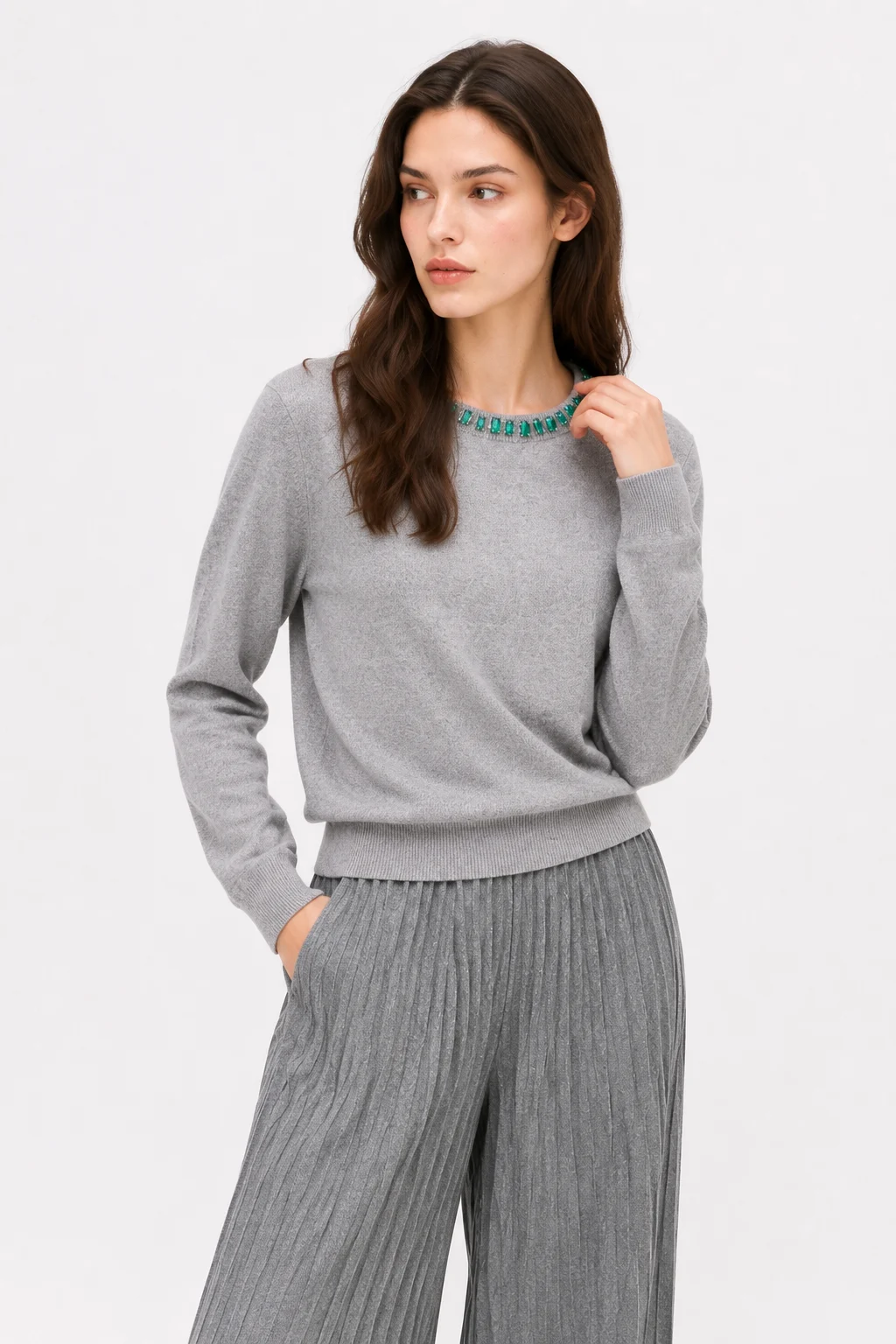
A suitable mohair long-sleeve sweater example can help a buyer discuss silhouette, texture, and seasonal direction with a factory. A fine-knit round-neck cardigan provides a different reference for lightweight construction and everyday positioning.
A Practical OEM-ODM Decision Framework for Brands
A brand should choose OEM, ODM, or hybrid production by scoring its priorities for originality, budget, speed, MOQ, and future reuse. The decision becomes clearer when the buyer separates product strategy from the supplier’s terminology.
Use this five-step framework:
- Define the product advantage. Decide whether the customer is buying a unique silhouette, a specific fiber story, a fast seasonal trend, or a reliable wardrobe basic.
- Classify the design starting point. Mark the project as original concept, adapted reference, or existing factory style.
- Set the launch constraint. Record the required delivery date, sample deadline, target quantity, and maximum development budget.
- Identify non-negotiables. List fibre content, gauge, fit, color, trims, labeling, packaging, and exclusivity requirements.
- Select the operating model. Choose OEM for original development, ODM for a faster adaptation, or hybrid when the brand needs both speed and meaningful customization.
A hybrid example could use an existing cardigan block, then change the yarn blend, sleeve proportion, button placement, and branded finishing. The factory gains development efficiency, while the brand creates a product that is more distinct than a catalog reorder.
A buyer should also compare factories by their actual sampling capability. Ask whether the supplier can produce a first sample from a sketch, revise the pattern, preserve approved measurements, and repeat the same yarn and color in production. The lpknit Knitwear Journal offers a relevant place to review sourcing and craft topics before a technical discussion.
Questions to Ask an OEM or ODM Knitwear Supplier
A supplier evaluation should cover capability, ownership, quality, MOQ, and commercial terms before sample approval. These questions help a boutique brand identify hidden risks early.
- Which knitwear fibres and gauges does the factory produce regularly?
- Can the factory develop from a sketch, tech pack, reference garment, or only an existing sample?
- What is included in the first sample fee?
- How many sample revisions are included?
- Can the factory support low MOQ by style and color?
- Is the yarn stock, custom dyed, or purchased after approval?
- What tests are performed for pilling, shrinkage, colorfastness, and composition?
- Who owns the final pattern, grading, artwork, and technical files?
- Is the ODM base style sold to other brands?
- What are the sample, production, and repeat-order lead times?
- Which charges are excluded from the quoted unit price?
- What inspection standard applies before shipment?
- Can the factory provide a production sample for final approval?
- How are defects, late delivery, and material substitutions handled?
The final purchase order should match the approved sample. It should also identify tolerances, yarn details, measurements, color references, labels, packaging, and the procedure for approving any substitution.
Frequently Asked Questions
What is the difference between OEM and ODM knitwear manufacturing?
OEM starts with the brand’s own design or product specification, while ODM starts with a factory’s existing design or pattern. OEM usually gives the brand more control and exclusivity. ODM usually reduces early development time and cost, but the underlying design may remain available to other customers.
Is OEM or ODM better for a small fashion brand?
ODM is often better for a small brand with limited development funds or a short launch window. OEM is better when the brand’s value depends on a proprietary silhouette, special construction, or exclusive fit. A hybrid model can adapt an existing style while adding brand-owned changes.
Which model usually has the lower MOQ?
ODM often has a lower MOQ when the factory already stocks the yarn, trims, and pattern. OEM may also support low MOQ, but custom yarn colors, special gauges, or complex construction can increase material and setup requirements. Confirm MOQ separately for samples, colors, styles, and materials.
Which model provides faster sweater sampling?
ODM usually provides faster first sampling because the factory can modify an existing base style. OEM sampling may take longer because the factory must develop the pattern, gauge, construction, and fit from the beginning. Two or three sample rounds are a reasonable planning assumption for a new sweater.
Who owns the pattern and tech pack in OEM production?
Ownership depends on the written agreement, not only on the term OEM. A brand should specify whether it owns the newly developed pattern, grading, technical pack, artwork, and machine files. The agreement should also state whether the factory can reuse or show the design elsewhere.
How much does OEM or ODM sweater manufacturing cost?
Cost depends on yarn, garment weight, gauge, construction, sampling, quantity, trims, testing, packaging, and freight. ODM can reduce development charges, but premium cashmere or complex mohair finishing may still produce a high unit cost. Request an itemized quotation based on identical specifications.
Can a brand use OEM and ODM together?
Yes. A hybrid program can begin with an existing factory style and customize the yarn, fit, color, trims, or finishing. This approach can reduce development time while creating a more distinctive product. The contract should identify which elements are factory-owned and which modifications belong to the brand.
Choosing between OEM vs ODM knitwear manufacturing for brands is a product strategy decision as much as a sourcing decision. OEM gives a label more control over original product development, while ODM can help an emerging brand launch faster with a lower initial development burden. Hybrid production is often the most balanced route for a small collection.
I’m Maya Chen, a knitwear sourcing consultant focused on private-label sweater development and factory sampling. In reviewing this guide, I used practical sampling considerations for merino, cashmere, and mohair programs, including gauge, fit, yarn behavior, and revision control. Buyers should verify current labeling requirements through the Federal Trade Commission, EUR-Lex Regulation (EU) No 1007/2011, and the Textile Exchange Materials Market Report 2024 before placing production orders.
For brands comparing suppliers, lpknit provides premium knitwear OEM and sampling support for boutique labels across the United States, United Kingdom, and European Union. Review the lpknit product range and contact the factory with your sketch, target quantity, fibre preference, and delivery date to request a development discussion.
{
“@context”: “https://schema.org”,
“@type”: “FAQPage”,
“mainEntity”: [
{
“@type”: “Question”,
“name”: “What is the difference between OEM and ODM knitwear manufacturing?”,
“acceptedAnswer”: {
“@type”: “Answer”,
“text”: “OEM starts with the brand’s own design or product specification, while ODM starts with a factory’s existing design or pattern. OEM usually gives the brand more control and exclusivity. ODM usually reduces early development time and cost, but the underlying design may remain available to other customers.”
}
},
{
“@type”: “Question”,
“name”: “Is OEM or ODM better for a small fashion brand?”,
“acceptedAnswer”: {
“@type”: “Answer”,
“text”: “ODM is often better for a small brand with limited development funds or a short launch window. OEM is better when the brand’s value depends on a proprietary silhouette, special construction, or exclusive fit. A hybrid model can adapt an existing style while adding brand-owned changes.”
}
},
{
“@type”: “Question”,
“name”: “Which model usually has the lower MOQ?”,
“acceptedAnswer”: {
“@type”: “Answer”,
“text”: “ODM often has a lower MOQ when the factory already stocks the yarn, trims, and pattern. OEM may also support low MOQ, but custom yarn colors, special gauges, or complex construction can increase material and setup requirements. Confirm MOQ separately for samples, colors, styles, and materials.”
}
},
{
“@type”: “Question”,
“name”: “Which model provides faster sweater sampling?”,
“acceptedAnswer”: {
“@type”: “Answer”,
“text”: “ODM usually provides faster first sampling because the factory can modify an existing base style. OEM sampling may take longer because the factory must develop the pattern, gauge, construction, and fit from the beginning. Two or three sample rounds are a reasonable planning assumption for a new sweater.”
}
},
{
“@type”: “Question”,
“name”: “Who owns the pattern and tech pack in OEM production?”,
“acceptedAnswer”: {
“@type”: “Answer”,
“text”: “Ownership depends on the written agreement, not only on the term OEM. A brand should specify whether it owns the newly developed pattern, grading, technical pack, artwork, and machine files. The agreement should also state whether the factory can reuse or show the design elsewhere.”
}
},
{
“@type”: “Question”,
“name”: “How much does OEM or ODM sweater manufacturing cost?”,
“acceptedAnswer”: {
“@type”: “Answer”,
“text”: “Cost depends on yarn, garment weight, gauge, construction, sampling, quantity, trims, testing, packaging, and freight. ODM can reduce development charges, but premium cashmere or complex mohair finishing may still produce a high unit cost. Request an itemized quotation based on identical specifications.”
}
},
{
“@type”: “Question”,
“name”: “Can a brand use OEM and ODM together?”,
“acceptedAnswer”: {
“@type”: “Answer”,
“text”: “Yes. A hybrid program can begin with an existing factory style and customize the yarn, fit, color, trims, or finishing. This approach can reduce development time while creating a more distinctive product. The contract should identify which elements are factory-owned and which modifications belong to the brand.”
}
}
]
}