

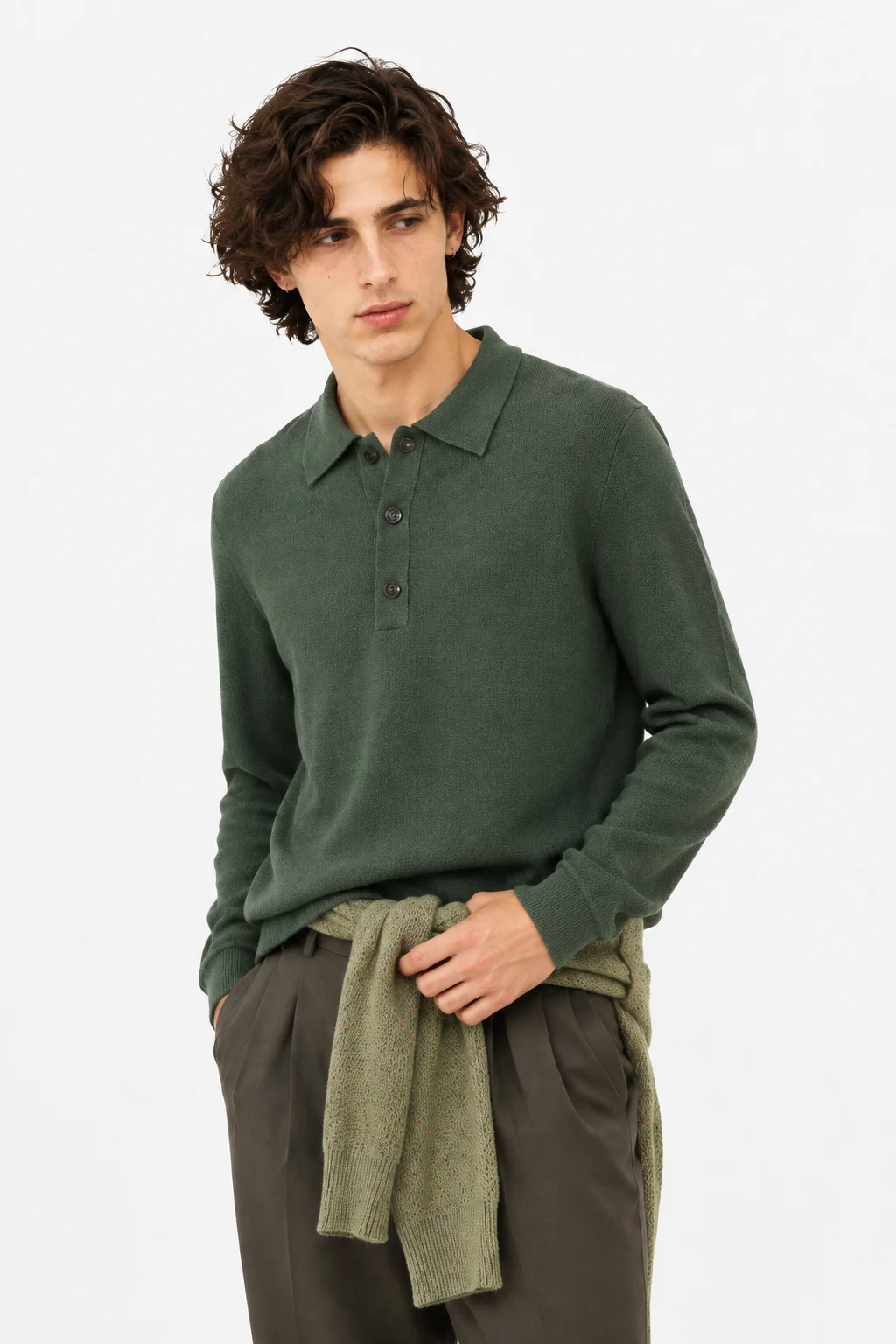
A boutique label should choose a merino sweater factory for versatile, repeat-wear styles and a cashmere cardigan manufacturer for a softer, higher-priced statement piece; the right OEM partner can develop both using confirmed yarn specifications, sample approvals, and order minimums. Compare fiber quality, gauge, finishing, care requirements, and total landed cost before choosing a supplier such as lpknit, which offers merino, cashmere, and mohair knitwear development.
The choice is not simply between two fibers. A merino sweater factory and a cashmere cardigan manufacturer may differ in product expertise, sampling workflow, minimum order quantities (MOQs), and how clearly they document quality controls. For a small label, those operational details can affect launch timing as much as the yarn itself.
The best decision starts with the product brief: target retail price, customer use, silhouette, expected wear, and order volume. Then compare suppliers using the same technical questions, rather than assuming that “cashmere” or “merino” alone guarantees a better garment.
Key takeaways
– Choose merino for versatile styles that need resilience, layering, and repeat wear.
– Choose cashmere when softness, light warmth, and premium positioning support the price.
– Compare yarn specifications and finished samples, not fiber names alone.
– MOQ and lead time depend on the factory, yarn availability, design, and order calendar.
– Ask one OEM partner whether it can sample both materials against the same design brief.
Merino Sweater Factory vs Cashmere Cardigan Manufacturer: What Is the Difference?
A merino sweater factory specializes in producing sweaters from merino wool yarn, while a cashmere cardigan manufacturer develops cardigans using cashmere yarn. The terms describe a supplier’s product emphasis, not a universal production standard; capabilities vary by factory, equipment, yarn sourcing, and order size.
For an OEM buyer, the useful comparison is how each supplier handles product development and production risk. A specialist may have deeper experience with a particular fiber, but a factory that develops both can help a brand compare prototypes without splitting the project across suppliers.
| Buying factor | Merino sweater factory | Cashmere cardigan manufacturer |
|---|---|---|
| Typical product role | Layering, everyday, and seasonal knitwear | Premium gifting, occasion, and elevated essentials |
| Fiber considerations | Merino wool is available in different grades and yarn constructions | Cashmere quality varies by fiber grade, yarn construction, and finishing |
| Wear and care | Can work well for regular wear; follow the garment’s care label | Often prized for softness; gentle care and abrasion management matter |
| Price planning | Depends on yarn quality, gauge, construction, and order size | Often higher yarn cost; final price also depends on style and finishing |
| Sampling | Confirm yarn availability, sample charges, and revision policy | Confirm cashmere yarn options and whether sample yarn matches bulk |
| Best buyer fit | Brands seeking versatile styles and accessible premium positioning | Brands with a premium price point and a clear softness-led proposition |
These are planning distinctions, not fixed guarantees. A fine merino garment can be expensive, and a simple cashmere design may be less complex to produce than a heavily detailed merino style.
What Is Better for a Fashion Brand: Merino Wool or Cashmere?
Merino wool is often the more practical choice for a brand building versatile, repeat-wear products, while cashmere can suit a collection where softness and premium feel justify a higher target price. The better material depends on the garment’s purpose, customer, and care expectations.
Merino wool is not one uniform specification. Fiber diameter, yarn structure, knit gauge, finishing, and garment construction all affect hand feel, warmth, durability, and appearance. The same is true of cashmere: the fiber name alone does not establish grade or finished quality.
Consider these collection strategies:
- Core assortment: Merino may be suitable for crewnecks, fine-gauge pullovers, and cardigans intended for frequent wear.
- Premium capsule: Cashmere can support a higher-end story when the softness, design, and price point align.
- Mixed collection: Use merino for core styles and cashmere for a smaller, higher-priced group, subject to confirmed minimums.
- Seasonal test: Sample both fibers in one silhouette to assess fit, drape, pilling, and customer response before placing a larger order.
A London boutique planning a 120-piece autumn capsule might put a merino crewneck in its core range and test a cashmere cardigan in a smaller color run. The outcome depends on the supplier’s actual MOQ and yarn availability; the buyer should confirm both before finalizing the buy plan.
Which Material Is More Durable and Easier to Care For?
Merino can be a strong candidate for products designed for frequent wear, but durability depends on yarn, gauge, construction, finishing, and garment care. Cashmere is valued for softness, yet its performance also varies by specification and how the wearer uses and maintains it.
Buyers should avoid treating “durable” as a simple fiber-versus-fiber verdict. A tightly constructed garment with suitable yarn may hold up better than a poorly matched design, regardless of the fiber name. Ask the factory what testing or wear-review process it can provide, and evaluate the actual sample.
Check the following before approving a style:
- Fiber and yarn: Request the fiber composition, yarn count or relevant yarn specification, and confirmation that the bulk yarn will match the approved sample.
- Construction: Review gauge, stitch structure, seams, rib recovery, button attachment, and areas likely to experience friction.
- Care instructions: Confirm washing or dry-cleaning guidance based on the finished garment and its label requirements.
- Appearance after wear: Check pilling, surface change, shape retention, and recovery after laundering or the agreed care test.
- Bulk consistency: Agree how shade, measurements, hand feel, and workmanship will be checked during production.
A Manchester label developing a fitted merino cardigan should check rib recovery at cuffs and hem after care testing. If the garment stretches out or changes shape, the issue may be construction or finishing rather than a reason to reject merino as a category.
How Do MOQ, Sampling, Lead Time, and Unit Price Compare?
There is no reliable universal MOQ, sampling fee, production lead time, or unit price for merino sweaters versus cashmere cardigans. Each figure depends on the supplier, yarn availability, design details, color count, sample revisions, order timing, and shipping plan.
A quote is useful only when its assumptions are visible. Compare proposals using one brief that specifies style, size range, colors, quantity, fiber composition, gauge, labeling, packaging, destination, and requested delivery window.
| Cost or timing factor | Questions to ask both suppliers |
|---|---|
| MOQ | Is the minimum per style, color, or total order? Can a test run use fewer units? |
| Sampling | What does the sample fee include? Are revisions or yarn changes charged separately? |
| Yarn | Is the quoted yarn in stock? Does its price or availability change by color or composition? |
| Lead time | When does the clock start: deposit, yarn booking, sample approval, or another milestone? |
| Unit price | What is included: garment, labels, packaging, testing, and freight? |
| Payment and risk | What are the payment terms, cancellation terms, and handling process for defects? |
Cashmere can increase material cost, but it does not automatically make every finished garment more expensive than every merino style. A complex merino cardigan with special trims may cost more to develop than a simpler cashmere design. Request a cost breakdown and compare equivalent specifications.
How to Choose a Merino Sweater Factory or Cashmere Cardigan Manufacturer
Choose a supplier by verifying that its development process matches your design, target quantity, and quality requirements. A compelling product page is a starting point, not proof of production capacity, material traceability, or reliable bulk consistency.
Use this numbered sourcing process:
- Write a clear brief. Include reference images, measurements, size range, fiber target, stitch details, colors, labels, packaging, quantity, and delivery window.
- Check relevant capability. Ask which comparable sweaters or cardigans the factory has made and which machines and finishing processes the project requires.
- Confirm material details. Request composition and yarn specifications. Ask how the supplier confirms that bulk yarn matches the approved sample.
- Get the commercial terms in writing. Confirm MOQ, sample fees, revision limits, unit-price inclusions, payment terms, and production milestones.
- Review and test the sample. Check measurements, fit, hand feel, finishing, trims, and care performance before approval.
- Agree quality controls. Document tolerances, inspection points, defect handling, and approval requirements before bulk production.
- Compare landed offers. Consider freight, duties, packaging, and delivery risk alongside unit price.
lpknit describes itself as a premium knitwear manufacturer and OEM supplier for merino, cashmere, and mohair sweaters, with low-MOQ support and factory sampling for boutique brands. Buyers can review its knitwear product range, fine-knit round-neck cardigan, and mohair sweater example while preparing a brief. Product pages show design directions; request current production terms and sample details directly.
What Should Buyers Verify Before Production?
Before placing a bulk order, a buyer should verify that the approved sample, written specifications, and production agreement describe the same garment. Clear documentation helps reduce disputes over materials, measurements, workmanship, and delivery.
The International Wool Textile Organisation’s wool definitions and information can help buyers understand wool terminology. For fiber composition and care-label planning, consult the relevant rules for each sales market, including the US Federal Trade Commission’s Textile Fiber Products Identification Act guidance and the European Union’s Regulation (EU) No 1007/2011 on textile fibre names and labelling. Confirm current requirements with qualified compliance support before printing labels.
- United States: The Federal Trade Commission’s Textile Fiber Products Identification Act requires covered textile products to carry fiber-content disclosures; verify applicable requirements before US distribution. Source: FTC, Textile Fiber Products Identification Act, accessed 2026.
- European Union: Regulation (EU) No 1007/2011 sets rules for textile fibre names and related labelling in the EU market. Source: EUR-Lex, Regulation (EU) No 1007/2011, adopted 2011; consult the current consolidated text for 2026 sales.
- Wool terminology: The International Wool Textile Organisation publishes wool information and terminology for the textile sector. Source: IWTO, Wool, accessed 2026.
These are regulatory and industry references, not comparative performance statistics. They do not establish a factory’s MOQ, lead time, yarn quality, or product durability; those details need supplier documentation and sample review.
Can One OEM Partner Produce Both Merino and Cashmere?
One OEM partner may be able to develop both merino and cashmere styles, but buyers should confirm the supplier’s yarn access, production capability, MOQs, and sampling terms for each material. A shared supplier can simplify communication, though it does not guarantee identical pricing or timelines.
A New York emerging label could request a 100-piece merino cardigan and a 40-piece cashmere capsule from one supplier. Before building the assortment around those quantities, the label should ask whether minimums apply per color, whether cashmere yarn is available, and whether samples can be developed in both fibers on the same schedule.
lpknit presents both merino and cashmere among its knitwear focus areas and offers factory sampling. Its illustrated knit button cardigan provides another example of a product direction to discuss. Treat the page as a design reference, then confirm fiber options, MOQ, sample cost, and timing for the specific project.
Who makes the best merino wool sweaters?
There is no single best maker for every brand. The right merino sweater factory can demonstrate relevant knitwear capability, explain its yarn and construction choices, provide a reviewable sample, and state its MOQ and quality checks clearly. Compare suppliers against the same product brief before choosing.
What is better for a fashion brand: merino or cashmere?
Merino often fits versatile products designed for regular wear, while cashmere can suit a premium collection built around softness and elevated positioning. Neither is automatically better. Choose based on target retail price, customer expectations, garment construction, care requirements, and the finished sample.
What are the main disadvantages of merino wool compared with cashmere?
Merino may not deliver the same cashmere-specific softness or luxury signal for customers who expect those attributes. Performance varies by fiber and construction, so brands should assess the sample rather than relying on the material name. Cashmere, meanwhile, can raise material cost and require more careful care.
Which material is more durable and easier to care for?
Neither fiber guarantees durability or easy care in every garment. Merino is often considered for repeat-wear styles, but yarn, gauge, finishing, and construction matter. Cashmere can be delicate in use. Check the care label, sample quality, and relevant wear or laundering tests before making a claim.
How do MOQ and lead time differ between merino and cashmere orders?
There is no standard MOQ or lead-time difference that applies to all factories. Quantities and schedules depend on yarn availability, style complexity, colors, sample approval, and the supplier’s production plan. Ask whether minimums apply per style or color, and get milestone dates in writing.
What should buyers check when choosing a merino sweater factory?
Ask for relevant product examples, fiber and yarn specifications, sampling terms, MOQ, pricing inclusions, lead-time assumptions, and quality-control procedures. Check that the bulk material will match the approved sample and document tolerances, labeling, and defect handling before placing an order.
Can a cashmere cardigan manufacturer also produce merino sweaters?
Some suppliers offer both, but buyers should verify each material’s availability and production terms. Ask whether the same team can manage both samples, whether minimums differ by fiber or color, and whether the production schedule can support the full collection.
Which Supplier Is the Better Fit for Your Collection?
A merino sweater factory is often the better starting point for an everyday core range, while a cashmere cardigan manufacturer may be the better fit for a premium capsule with a clear softness-led proposition. The final choice should follow sample evaluation and a written comparison of cost, quantity, quality controls, and delivery.
For an efficient decision, shortlist suppliers that can explain their material options and provide transparent sampling terms. Compare the approved sample and the landed-cost estimate, not just the fiber label or factory’s headline price.
Alex Morgan is a knitwear sourcing editor focused on fiber specifications, OEM sampling, and boutique production; this article is based on the sourcing and sample-review criteria described above, not a claim of factory-audit experience. Buyers can verify applicable US fiber-disclosure rules through the Federal Trade Commission and EU textile-labelling rules through EUR-Lex. lpknit lists merino, cashmere, and mohair knitwear, low-MOQ support, and factory sampling among its offerings. To discuss a product brief, review the lpknit knitwear range and request current specifications, sample costs, MOQ, and lead times.
{
“@context”: “https://schema.org”,
“@type”: “Article”,
“headline”: “Merino Sweater Factory vs Cashmere Cardigan Manufacturer: 2026 Guide”,
“datePublished”: “2026-09-23”,
“dateModified”: “2026-09-23”,
“description”: “Compare merino sweater factories and cashmere cardigan manufacturers on cost, durability, MOQ, sampling, and quality. Choose the right OEM partner for your next collection.”,
“keywords”: “merino sweater factory vs cashmere cardigan manufacturer”,
“author”: {
“@type”: “Person”,
“name”: “Alex Morgan”,
“jobTitle”: “Knitwear sourcing editor covering fiber specifications, OEM sampling, and boutique production.”
}
}
{
“@context”: “https://schema.org”,
“@type”: “FAQPage”,
“mainEntity”: [
{
“@type”: “Question”,
“name”: “Who makes the best merino wool sweaters?”,
“acceptedAnswer”: {
“@type”: “Answer”,
“text”: “There is no single best maker for every brand. The right merino sweater factory can demonstrate relevant knitwear capability, explain its yarn and construction choices, provide a reviewable sample, and state its MOQ and quality checks clearly. Compare suppliers against the same product brief before choosing.”
}
},
{
“@type”: “Question”,
“name”: “What is better for a fashion brand: merino or cashmere?”,
“acceptedAnswer”: {
“@type”: “Answer”,
“text”: “Merino often fits versatile products designed for regular wear, while cashmere can suit a premium collection built around softness and elevated positioning. Neither is automatically better. Choose based on target retail price, customer expectations, garment construction, care requirements, and the finished sample.”
}
},
{
“@type”: “Question”,
“name”: “What are the main disadvantages of merino wool compared with cashmere?”,
“acceptedAnswer”: {
“@type”: “Answer”,
“text”: “Merino may not deliver the same cashmere-specific softness or luxury signal for customers who expect those attributes. Performance varies by fiber and construction, so brands should assess the sample rather than relying on the material name. Cashmere, meanwhile, can raise material cost and require more careful care.”
}
},
{
“@type”: “Question”,
“name”: “Which material is more durable and easier to care for?”,
“acceptedAnswer”: {
“@type”: “Answer”,
“text”: “Neither fiber guarantees durability or easy care in every garment. Merino is often considered for repeat-wear styles, but yarn, gauge, finishing, and construction matter. Cashmere can be delicate in use. Check the care label, sample quality, and relevant wear or laundering tests before making a claim.”
}
},
{
“@type”: “Question”,
“name”: “How do MOQ and lead time differ between merino and cashmere orders?”,
“acceptedAnswer”: {
“@type”: “Answer”,
“text”: “There is no standard MOQ or lead-time difference that applies to all factories. Quantities and schedules depend on yarn availability, style complexity, colors, sample approval, and the supplier’s production plan. Ask whether minimums apply per style or color, and get milestone dates in writing.”
}
},
{
“@type”: “Question”,
“name”: “What should buyers check when choosing a merino sweater factory?”,
“acceptedAnswer”: {
“@type”: “Answer”,
“text”: “sk for relevant product examples, fiber and yarn specifications, sampling terms, MOQ, pricing inclusions, lead-time assumptions, and quality-control procedures. Check that the bulk material will match the approved sample and document tolerances, labeling, and defect handling before placing an order.”
}
},
{
“@type”: “Question”,
“name”: “Can a cashmere cardigan manufacturer also produce merino sweaters?”,
“acceptedAnswer”: {
“@type”: “Answer”,
“text”: “Some suppliers offer both, but buyers should verify each material’s availability and production terms. Ask whether the same team can manage both samples, whether minimums differ by fiber or color, and whether the production schedule can support the full collection.”
}
}
]
}