

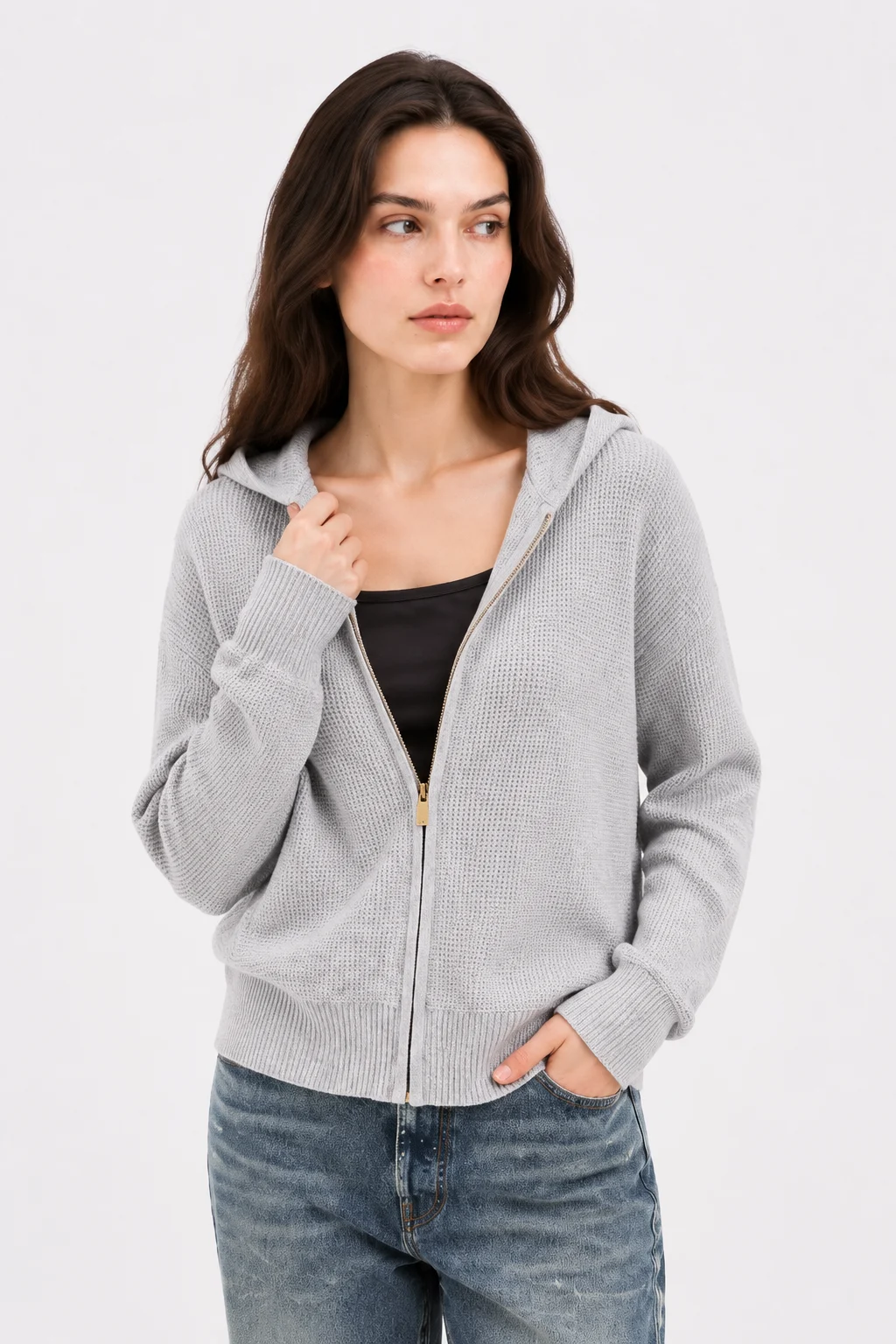
To create a tech pack for OEM knitwear, document the garment’s technical drawings, yarn composition, gauge, stitch structure, measurements and tolerances, trims, labels, and sample requirements. A clear pack helps an OEM manufacturer such as lpknit assess a merino, cashmere, or mohair sweater, identify open decisions, and develop a sample against agreed specifications before production.
A knitwear tech pack is the working specification for developing and producing a style. It turns a sketch or reference into instructions that a brand and factory can review, price, sample, revise, and approve.
Knitwear needs details that a generic apparel template may not prompt you to include. Yarn, gauge, stitch structure, and finishing can change a garment’s appearance, hand feel, fit, and cost. You do not need to know every factory setting before you start, but you do need to identify what is fixed and what the factory can help develop.
Key takeaways
– Start with front and back technical flats, style details, and a clear reference for the intended fit.
– Specify yarn composition, color, gauge, stitch, and finishing where you have firm requirements.
– Add a measurement chart with points of measurement (POMs), a base size, and tolerances.
– Mark undecided items as open for factory input instead of guessing.
– Treat sampling as a documented review process, and approve a final sample and specification before production.
What a knitwear tech pack must tell an OEM factory
A knitwear tech pack is a style-specific set of instructions that lets a manufacturer understand what to make and what still needs development. At minimum, it should identify the garment, show its construction, describe its materials, provide finished measurements, and explain how the sample will be reviewed.
Think of the pack as a shared reference, not simply a design presentation. A polished illustration can communicate the mood, but it usually cannot tell a factory where a button sits, how a cuff is finished, or how much a chest measurement may vary.
Include these sections:
- Style identification: brand, style name or code, season, version, target market, date, and contact.
- Technical flats: front and back views, plus close-ups of details that are hard to show at full scale.
- Materials and colors: yarn fiber content, yarn reference if known, color names or codes, and proposed trims.
- Knit and construction details: stitch structure, gauge if known, shaping, seams, edges, and finishing.
- Measurement chart: base size, POM definitions, finished measurements, units, and tolerances.
- Labels and packaging: label artwork or placement, care-label language, and packing requirements.
- Development notes: target quantity, sample type, open questions, and the approval process.
A buyer asking for a free “Garment Tech Pack PDF free Download” may find a useful starting layout, but the file is only a container. The quality of the instructions matters more than the template. Use the checklist below to check whether your document is ready to share.
How to create a tech pack for OEM knitwear step by step
You can create a tech pack for OEM knitwear by recording the design, material intent, construction, measurements, and sample decisions in a version-controlled document. The steps below work for a finished design and for an early concept that still needs factory input.
- Identify the style and its purpose. Give the style a unique code, name, season, and revision number. Add the target customer, intended fit, and whether the design is a cardigan, pullover, or another knit shape.
- Draw the garment as technical flats. Show the front and back without a model or fashion pose. Add a sleeve or neckline detail view where needed, and label visible features such as pockets, button bands, and rib edges.
- Describe the yarn and color direction. State the fiber composition you want, such as merino wool, cashmere, or mohair, and include any known yarn count or supplier reference. Add color references and say whether the factory may propose alternatives.
- Record stitch and construction intent. Name the stitch if you know it, such as jersey, rib, cable, or a planned combination. Explain shaping, seams, cuffs, hems, plackets, and closures; mark uncertain technical choices for factory review.
- Build the measurement chart. Choose a base size, define each POM, enter finished-garment measurements, and assign tolerances. State whether measurements are taken flat or around the garment, and whether the garment is measured relaxed.
- List trims, labels, and finishing. Note buttons, zippers, thread, patches, labels, and their placement. Include washing or finishing expectations and any test or compliance requirements that apply to the target market.
- Separate confirmed details from open decisions. Use a status such as “brand confirmed,” “factory to propose,” or “confirm after sample.” This helps prevent assumptions from being mistaken for approved specifications.
- Send the pack with a sample brief. Ask the OEM partner to flag missing information, confirm what can be sampled, and identify decisions that affect cost or timing. Save factory questions and brand answers in the next revision.
- Review and approve by version. Compare the sample with the latest specification, record requested changes, and issue a revised pack. Identify the exact sample and tech-pack revision approved for production.
A practical Tech pack template should make these steps easy to maintain. Keep the style ID and revision date visible on every page, and use the same measurement names in the chart, comments, and sample review.
Yarn, gauge, and stitch: knitwear details that shape the sample
Yarn composition, gauge, and stitch structure are linked decisions: together they affect the sample’s look, hand, weight, drape, and dimensions. A specification should capture the brand’s intent while leaving technical choices open when the brand does not have a confirmed development standard.
Yarn composition names the fiber blend, not necessarily the exact yarn construction or supplier. A cashmere brief may also need to state softness, loft, or a target weight; a mohair brief may need to clarify the desired halo and whether the yarn is blended. If you do not have a confirmed yarn reference, say so and ask the factory to propose suitable options for review.
Gauge describes the knitting-machine setup or stitch density used to make the fabric. Brands often know the desired appearance better than the factory setting. If gauge is unknown, provide a reference garment or fabric swatch, then ask the manufacturer to recommend a starting point and record the selected option after sampling.
Stitch structure describes how the fabric is knitted. Jersey, rib, cable, and textured stitches can behave differently in stretch and appearance, so identify each area of the garment on the flat or in a detail page. A note such as “rib cuff” is more useful when it also identifies cuff depth and how the cuff should relate to the sleeve.
| Tech-pack decision | Specify upfront when… | Ask the OEM partner to develop when… |
|---|---|---|
| Fiber composition | Fiber content is a brand requirement or is tied to a label claim | You know the hand feel and price direction but need yarn options |
| Yarn reference | You have an approved yarn, supplier, or swatch | You need alternatives that suit the design or target cost |
| Gauge | A previous approved style or reference specifies it | The desired fabric is clear but the machine setting is not |
| Stitch structure | The stitch is a defining design feature | You want a visual effect and need a feasible construction proposal |
| Finishing | The finish is essential to the intended hand or care instructions | You need the factory to recommend a suitable process |
| Tolerances | Your quality standard already defines them | You need the factory to propose workable tolerances for review |
Keep your notes observable. “Soft, premium feel” can explain the goal, but it cannot replace a yarn reference, swatch, or sample comment. When the factory proposes a material, record what was reviewed and whether the brand approved it.
Measurements and tolerances for a knitwear sample
A knitwear measurement chart should define the finished garment in a base size, explain how each point is measured, and state the acceptable tolerance. Without those definitions, a brand and factory can use the same measurement label while measuring different parts of the garment.
Start with the points that control fit and proportion. Common POMs include body length, chest width, shoulder width, sleeve length, armhole depth, cuff opening, and hem width. Add cardigan-specific measurements such as button spacing, placket width, and neckline depth where relevant.
For each POM, include:
- Point name and diagram reference: Mark the location clearly on a flat.
- Base-size measurement: State the unit and whether the measurement is taken flat or around.
- Method: Note whether the garment is relaxed and how the endpoints are identified.
- Tolerance: Set an acceptable range or ask the factory to propose one for approval.
- Grading: Add size-by-size values if available, or identify grading as a development item.
Do not copy tolerances from an unrelated woven garment or assume that every knit area will behave alike. Ask the OEM partner to review the proposed limits against the yarn, stitch, construction, and finishing plan. Record the agreed values in the revision used to evaluate the sample.
What to do when you only have a sketch or reference
An OEM factory can help complete a tech pack when a brand has only a sketch, reference garment, or initial concept, but the brand still needs to make design and approval decisions. The factory can help translate intent into a sample plan; it cannot infer every brand preference from an image.
Separate your brief into three groups:
- Fixed: silhouette, key design features, target fiber, color direction, and details that must not change.
- Flexible: yarn option, gauge, stitch interpretation, or construction method that may be proposed for sampling.
- Unknown: measurements, grading, trim sourcing, or finishing that needs technical discussion.
For example, a founder may share a reference cardigan and request a relaxed fit in merino, while leaving the gauge and button sourcing open. The factory can discuss material and construction options, but the founder should still confirm length, color, button style, and the intended fit before approving a sample.
This approach is useful for smaller collections and test runs. A brand can develop one style and resolve key questions through sampling before confirming a broader order. Ask the manufacturer to clarify its minimums, sample process, and which development costs or materials require separate approval.
Worked example: a cardigan tech pack from concept to sample
A worked example shows how a brand can turn an idea into a reviewable cardigan brief without pretending every factory decision is known at the start. The numbers below are illustrative planning values, not lpknit specifications or universal tolerances.
Imagine Maya, the founder of a boutique label, preparing a women’s cardigan for a spring collection. She has a reference image, a merino direction, and a target of two colorways, but no confirmed yarn code or grading chart.
Her first tech-pack revision could include:
- Style: “Maya Cardigan,” style code MC-01, revision 01.
- Design: front and back flats with a V-neck, long sleeves, button front, rib cuffs, and rib hem.
- Materials: merino wool requested; factory to propose yarn options and identify available colors.
- Open technical choices: gauge and stitch interpretation to be reviewed with the factory.
- Sample measurements: a 60 cm chest width and 58 cm body length for the selected base size, both marked as provisional.
- Review notes: assess fit, button spacing, fabric weight, and whether the hem and cuffs meet the design intent.
The factory’s sample may reveal that the selected material or construction needs adjustment. Maya can record each change as a comment tied to a POM or detail, then issue revision 02. She should approve the updated sample and specification together, so production does not rely on a marked-up image or an old measurement chart.
The key is not to guess technical values. It is to make the current decisions, open questions, and sample results visible in one controlled document.
Free templates, online tools, and factory sampling
A free template or online tool can help organize a tech pack, but neither guarantees that the result is production-ready. Choose a format that lets you show construction details, define measurements, track revisions, and export a readable file for the factory.
| Option | Useful for | Watch out for |
|---|---|---|
| Spreadsheet or document template | Early concepts and simple styles | Details may become hard to manage across pages or revisions |
| Online tech-pack software | Teams collaborating on repeated styles | Subscription features and export formats can vary |
| Factory-supported development | Designs needing yarn, gauge, or construction input | Confirm what the factory will develop and what the brand must supply |
| “Free PDF” download | Learning the usual sections and organizing a first draft | A generic PDF may omit knit-specific fields or be out of date |
If you search for “how to create a tech pack for oem knitwear online” or “how to create a tech pack for oem knitwear free,” judge tools by their workflow, not just their price. A PDF can be a useful handoff, but keep an editable master file so you can update measurements and sample comments.
A brand can also start with a simple template and ask its OEM partner to identify gaps before sampling. For development support, review lpknit’s knitwear product range and browse examples such as the fine-knit round-neck cardigan or mohair long-sleeve sweater. For sourcing context, see the lpknit Knitwear Journal.
Sample revisions, approval, and common mistakes
There is no universal number of sample revisions for OEM knitwear; the count depends on how complete the initial brief is and how much changes after review. Agree on the sample sequence with the factory, and do not treat a sample as approved until the required fit, material, construction, and measurements are accepted.
A useful review loop is:
- Compare the sample with the current tech-pack revision.
- Record each issue by location, measurement, or construction detail.
- Mark whether the change is required or optional.
- Send consolidated comments to the factory.
- Review the next sample against the revised document.
- Confirm in writing which sample and revision are approved for production.
Common problems include sending only a fashion illustration, leaving the base size unclear, using undefined measurements, and changing yarn direction without updating the pack. Another risk is approving a sample by appearance alone while overlooking labels, buttons, finishing, or the measurement chart.
When a small brand has limited development time, prioritize decisions that affect the sample’s shape and fabric first. Confirm silhouette, yarn direction, key stitch areas, and fit measurements before spending time refining minor label or packaging details.
FAQ: OEM knitwear tech packs
How do I make my own tech pack?
Create a style-specific document with technical flats, materials, stitch and construction notes, a measurement chart, trims, labels, and sample instructions. Give it a style code and revision number. If you are new to knitwear, mark unknown items for factory input instead of inventing technical settings.
What should be included in a knitwear tech pack before sending it to an OEM manufacturer?
Include front and back flats, style identification, yarn and color intent, stitch and construction details, base-size measurements with POM definitions, tolerances, trims, labels, and open questions. A factory can review the pack for missing technical information before quoting or developing a sample.
How do yarn composition, gauge, and stitch choice affect a sweater sample?
Yarn composition influences fiber content and material character, while gauge and stitch describe how the knit fabric is formed. Together, these choices affect the sample’s appearance, hand, weight, and dimensions. Share firm requirements and ask the factory to propose options for undecided technical details.
Which garment measurements and tolerances should I specify?
Specify a base size and the finished measurements that control fit and proportion, such as chest width, body length, shoulder width, sleeve length, and cuff opening. Define how each point is measured and state acceptable tolerances. Ask the factory to review tolerances against the proposed yarn and construction.
Can an OEM factory help complete a tech pack from a sketch or reference?
Yes. A factory can review a sketch or reference and help identify materials, construction options, and technical questions for sampling. The brand should still state which design features are fixed, what is flexible, and who has final approval over fit, color, and sample changes.
How many sample revisions should I expect before approving a knitwear sample?
There is no fixed number. The number depends on the brief, design complexity, and changes found during review. Ask the factory to confirm its sampling process, then record consolidated comments against each revision and approve the final sample and tech pack together.
Is a free tech-pack PDF enough to send to a factory?
A free PDF can provide a useful layout, but it is not sufficient unless it contains clear, style-specific instructions. Check that it covers knitwear materials, gauge or stitch intent, measurements, tolerances, trims, and revision tracking. Keep an editable master so updates do not get lost.
Conclusion: prepare a factory-ready knitwear brief
A good OEM knitwear tech pack does not require a brand to know every machine setting. It does require clear design intent, measurable fit requirements, visible open questions, and a documented approval process.
This guide uses lpknit’s published product range and stated OEM focus on merino, cashmere, and mohair knitwear as product context; it does not claim first-hand factory testing or sample review. Before sending a brief, compare its details with the manufacturer’s actual capabilities and confirm development terms directly.
To discuss a cardigan or sweater concept, contact lpknit through its product range and share the latest tech-pack revision, reference images, target materials, and sample questions.
{
“@context”: “https://schema.org”,
“@type”: “Article”,
“headline”: “How to Create a Tech Pack for OEM Knitwear: 2026 Guide”,
“datePublished”: “2026-09-23”,
“dateModified”: “2026-09-23”,
“description”: “Build a factory-ready knitwear tech pack with yarn, gauge, stitch, measurements, and sample details. Use a practical checklist to brief an OEM partner.”,
“keywords”: “how to create a tech pack for OEM knitwear”,
“author”: {
“@type”: “Person”,
“name”: “Alex Morgan”,
“jobTitle”: “Knitwear product-development writer covering OEM specifications, sampling, and supplier communication.”
}
}
{
“@context”: “https://schema.org”,
“@type”: “FAQPage”,
“mainEntity”: [
{
“@type”: “Question”,
“name”: “How do I make my own tech pack?”,
“acceptedAnswer”: {
“@type”: “Answer”,
“text”: “Create a style-specific document with technical flats, materials, stitch and construction notes, a measurement chart, trims, labels, and sample instructions. Give it a style code and revision number. If you are new to knitwear, mark unknown items for factory input instead of inventing technical settings.”
}
},
{
“@type”: “Question”,
“name”: “What should be included in a knitwear tech pack before sending it to an OEM manufacturer?”,
“acceptedAnswer”: {
“@type”: “Answer”,
“text”: “Include front and back flats, style identification, yarn and color intent, stitch and construction details, base-size measurements with POM definitions, tolerances, trims, labels, and open questions. A factory can review the pack for missing technical information before quoting or developing a sample.”
}
},
{
“@type”: “Question”,
“name”: “How do yarn composition, gauge, and stitch choice affect a sweater sample?”,
“acceptedAnswer”: {
“@type”: “Answer”,
“text”: “Yarn composition influences fiber content and material character, while gauge and stitch describe how the knit fabric is formed. Together, these choices affect the sample’s appearance, hand, weight, and dimensions. Share firm requirements and ask the factory to propose options for undecided technical details.”
}
},
{
“@type”: “Question”,
“name”: “Which garment measurements and tolerances should I specify?”,
“acceptedAnswer”: {
“@type”: “Answer”,
“text”: “Specify a base size and the finished measurements that control fit and proportion, such as chest width, body length, shoulder width, sleeve length, and cuff opening. Define how each point is measured and state acceptable tolerances. Ask the factory to review tolerances against the proposed yarn and construction.”
}
},
{
“@type”: “Question”,
“name”: “Can an OEM factory help complete a tech pack from a sketch or reference?”,
“acceptedAnswer”: {
“@type”: “Answer”,
“text”: “Yes. A factory can review a sketch or reference and help identify materials, construction options, and technical questions for sampling. The brand should still state which design features are fixed, what is flexible, and who has final approval over fit, color, and sample changes.”
}
},
{
“@type”: “Question”,
“name”: “How many sample revisions should I expect before approving a knitwear sample?”,
“acceptedAnswer”: {
“@type”: “Answer”,
“text”: “There is no fixed number. The number depends on the brief, design complexity, and changes found during review. Ask the factory to confirm its sampling process, then record consolidated comments against each revision and approve the final sample and tech pack together.”
}
},
{
“@type”: “Question”,
“name”: “Is a free tech-pack PDF enough to send to a factory?”,
“acceptedAnswer”: {
“@type”: “Answer”,
“text”: “free PDF can provide a useful layout, but it is not sufficient unless it contains clear, style-specific instructions. Check that it covers knitwear materials, gauge or stitch intent, measurements, tolerances, trims, and revision tracking. Keep an editable master so updates do not get lost.”
}
}
]
}