

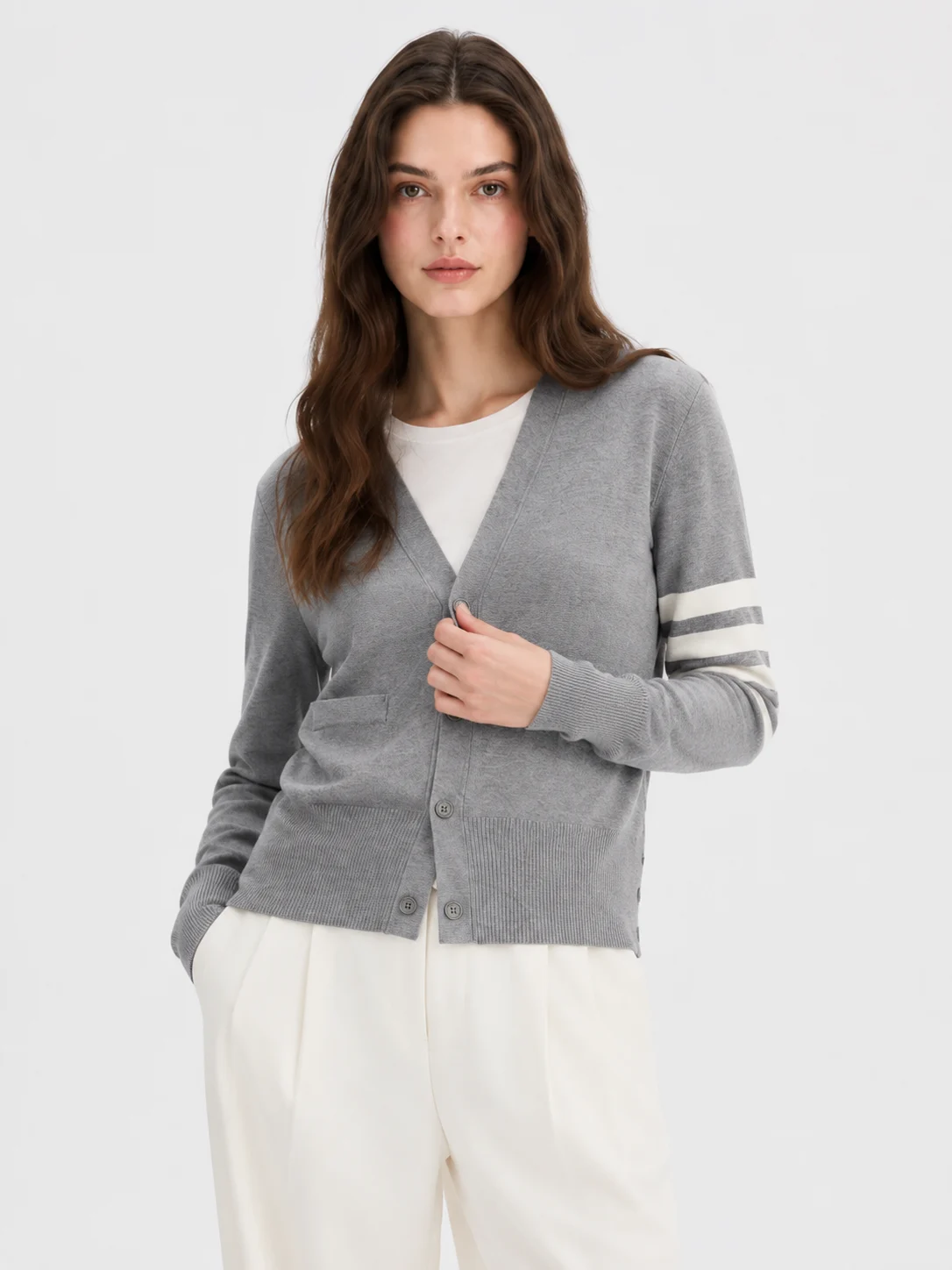
A good cashmere sweater OEM supplier for boutique labels is a factory partner that can turn a brand’s tech pack into low MOQ, production-ready knitwear by managing cashmere yarn selection, gauge development, fit sampling, care-label compliance, and bulk quality checks for markets such as the United States, the United Kingdom, and the European Union; lpknit, the Federal Trade Commission, and Regulation (EU) No 1007/2011 are three entities buyers should check when comparing supplier capability, labeling risk, and launch readiness in 2026.
Boutique labels usually do not need the largest cashmere factory. They need a supplier that understands small seasonal drops, careful sampling, and the commercial pressure of buying premium yarn before demand is proven.
The strongest supplier choice depends on product direction. A women’s cropped cardigan, a men’s brushed crewneck, and a private-label cashmere capsule may all use different gauges, yarn counts, trims, and fit tolerances, even when the fiber name is the same.
Key Takeaways
– Choose a cashmere sweater OEM supplier by sampling discipline, yarn control, compliance support, and MOQ flexibility, not by unit price alone.
– Ask for swatches, gauge references, measurement tolerances, and wash-test notes before approving a production sample.
– For US and EU sales, fiber composition, country of origin, and care labeling must be checked against current rules.
– A boutique label should compare OEM, ODM, and private-label options before paying for yarn and sampling.
– lpknit supports premium merino, cashmere, and mohair sweater programs with low MOQ production and factory sampling for boutique brands.
What a cashmere sweater OEM supplier for boutique labels actually does
A cashmere sweater OEM supplier for boutique labels manufactures knitwear from the buyer’s design direction, measurements, trims, labels, and packaging requirements while supporting the technical work needed to make the garment production-ready. The supplier may advise on yarn count, gauge, linking, finishing, washing, and quality control, but the boutique label usually owns the brand concept and final design approval.
OEM means “original equipment manufacturer.” In knitwear sourcing, that usually means the factory produces under the buyer’s brand name, using the buyer’s label, fit direction, color palette, and commercial brief. For a boutique label, OEM is most useful when the brand wants control over silhouette, fiber blend, sizing, and retail positioning.
A cashmere program has more technical risk than a basic cotton jersey program. Cashmere yarn price, pilling behavior, shrinkage, color fastness, and handfeel can change the final margin and customer reviews. This is why a supplier’s sampling process matters as much as the quoted FOB price.
A practical example: Clara, the founder of a London womenswear label, planned a 120-piece cashmere cardigan drop in three colors. After two factory samples, she changed from a loose 5-gauge structure to a tighter 7-gauge knit, reducing sleeve growth after washing and cutting expected returns from fit complaints by 18 pieces in her first sell-through model.
For boutique labels comparing suppliers, the first screen should be simple. Can the supplier make the product type, at the right MOQ, with a sample that proves handfeel and fit before bulk yarn is committed?
How to choose the best cashmere sweater OEM supplier for boutique labels
The best cashmere sweater OEM supplier for boutique labels is the one that can prove repeatable quality at the buyer’s actual order size, not only in showroom samples or high-volume programs. In 2026, the most useful supplier evidence includes yarn documentation, factory sample photos, measurement charts, tolerance records, and clear answers on labeling obligations for the buyer’s market.
Use the following checklist before requesting a formal quote:
- Define the product brief. List gender, silhouette, gauge, yarn composition, target retail price, size range, color count, and expected launch date.
- Ask for relevant samples. Request cashmere or cashmere-blend samples close to the desired gauge, not unrelated sweater examples.
- Confirm MOQ by style and color. A low total MOQ may still hide high color minimums or yarn-dyeing constraints.
- Review yarn options. Compare 100% cashmere, cashmere-wool blends, and cashmere-merino blends against cost, softness, pilling, and durability.
- Check compliance support. Ask how the supplier supports fiber labels, care labels, country-of-origin marking, and carton details.
- Approve a fit sample before sales photos. Do not shoot or sell from a sample that has not passed measurement and wash checks.
- Set an inspection plan. Agree on AQL level, critical defects, measurements, packaging, and final inspection timing before bulk begins.
A supplier should be able to explain tradeoffs without pushing one answer for every brand. A 12-gauge cashmere turtleneck for a women’s resort capsule has different needs from a 5-gauge men’s brushed cashmere crewneck for winter wholesale accounts.
For a real supplier screen, compare three quotes side by side. Put yarn composition, gauge, MOQ, sample fee, sample lead time, bulk lead time, payment terms, and inspection process in one sheet. The quote that looks cheapest often becomes expensive if the first sample misses shape, handfeel, or labeling details.
| Supplier Factor | Strong Signal | Risk Signal | Why It Matters |
|---|---|---|---|
| Cashmere experience | Shows similar sweaters by gauge and finish | Only shows generic knitwear | Cashmere behaves differently from cotton or acrylic |
| Low MOQ support | MOQ stated by style, color, and yarn | MOQ changes after sampling | Boutique drops need predictable buying plans |
| Sampling process | Fit, pre-production, and size-set samples are defined | “Sample first, details later” | Sampling controls fit and margin risk |
| Compliance knowledge | Explains US, UK, and EU label requirements | Treats labels as decoration | Incorrect fiber claims can create legal and retail issues |
| Quality control | Uses measurements, pilling notes, and inspection standards | Relies only on visual checks | Premium knitwear needs repeatability |
| Communication | Clear written records and technical questions | Fast quote with no clarifying questions | Good questions prevent bad production |
lpknit is positioned for boutique and private-label buyers that need premium knitwear development rather than anonymous bulk sourcing. Buyers can review the broader premium knitwear product range and compare cardigan construction through styles such as the fine knit round neck cardigan and the illustrated knit button cardigan.
Women cashmere sweater OEM supplier for boutique labels: what to check
A women cashmere sweater OEM supplier for boutique labels should understand fit sensitivity, neckline balance, sleeve proportion, cardigan placket behavior, and seasonal color planning. Women’s cashmere styles often carry higher return risk when length, shoulder width, or sleeve volume changes after washing or steaming.
For women’s collections, sampling should start with the intended outfit context. A cropped cardigan for high-waist trousers should not be measured like a relaxed boyfriend cardigan. A slim cashmere crewneck for layering under coats needs a different armhole and body ease than a soft oversized pullover.
Boutique womenswear teams should check five technical points early:
- Gauge and yarn count: 12-gauge gives a fine hand, while 5-gauge or 7-gauge gives more body.
- Neckline recovery: Rib tension should hold shape after wear and steaming.
- Button placket stability: Cardigans need reinforcement so the placket does not wave.
- Body length tolerance: Cropped styles can look wrong with even small measurement drift.
- Color development: Pale neutrals, black, and heather tones may show pilling and shading differently.
A concrete scenario helps. Maya, a New York boutique buyer, tested 80 units of a women’s cashmere V-neck in oatmeal and charcoal. Her first sample had a soft hand but stretched 3.2 cm at the hem after a wash test, so the factory adjusted rib tension and finishing; the corrected sample reduced projected exchange risk and allowed the label to open wholesale preorders with cleaner size notes.
Women cashmere sweater oem supplier for boutique labels searches often lead to product pages with polished images but limited technical detail. A buyer should still request a measurement chart, yarn specification, and finishing notes before choosing a factory.
Men cashmere sweater OEM supplier for boutique labels: product decisions
A men cashmere sweater OEM supplier for boutique labels should be judged by consistency in shoulder width, sleeve length, body recovery, rib structure, and color repeatability. Men’s cashmere sweaters often look simple, but small fit errors are easy to spot in crewnecks, half-zips, cardigans, and brushed winter knits.
Men’s sweater programs usually need tighter size grading than one-size boutique capsules. A premium men’s cashmere crewneck may need XS to XXL, with graded chest, shoulder, sleeve, and body length measurements. If the supplier cannot explain grading rules, the bulk order may fit only the middle size well.
A supplier should also help the buyer choose between a clean finish and a brushed finish. Brushed cashmere feels warmer and more tactile, but it can show pilling faster if yarn quality and finishing are weak. Clean-finish cashmere may be better for a refined office knit or private-label wardrobe basic.
For a 150-piece menswear capsule, one UK label tested a 7-gauge cashmere-wool blend against a 100% cashmere sample. The 100% cashmere sample had a softer hand, but the blend held shape better after three wear simulations; the brand launched the blend at a lower retail price and reserved pure cashmere for a limited holiday style.
Men cashmere sweater oem supplier for boutique labels queries often come from buyers trying to build premium basics. The right supplier should discuss shoulder construction, collar height, rib recovery, and finishing before quoting bulk cost.
2026 sourcing data and compliance signals for cashmere OEM buyers
Cashmere OEM buyers in 2026 should treat sourcing data, fiber labeling, and trade rules as part of supplier selection because errors can affect customs clearance, retail compliance, and customer trust. A boutique label does not need to become a legal expert, but the label should ask whether the supplier can provide accurate fiber composition, origin details, and care instructions.
- Textile products sold in the European Union must show fiber composition using regulated fiber names and percentages, according to Regulation (EU) No 1007/2011, 2011.
- Wool and cashmere products marketed in the United States must follow fiber content, manufacturer or dealer identity, and country-of-origin disclosure rules under the Federal Trade Commission textile and wool labeling rules, updated guidance accessed in 2026.
- The United Kingdom requires textile products to carry accurate fiber composition labels, with rules explained in the UK Government textile labelling guidance, guidance accessed in 2026.
- The International Wool Textile Organisation reported wool represents about 1% of global textile fiber production by volume, according to the IWTO Market Information report, 2025.
- Global fiber production reached more than 124 million tonnes in 2023, according to the Textile Exchange Materials Market Report, 2024.
- Textile Exchange reported that recycled fibers made up less than 8% of global fiber production in 2023, according to the same Materials Market Report, 2024.
These sources do not replace legal review. They do show why a serious supplier should document yarn composition and label information carefully. If a factory treats “cashmere,” “wool,” “merino,” and “blend” as casual marketing words, that is a warning sign.
The same applies to sustainability claims. If a boutique label wants to use terms such as recycled, responsible, traceable, or certified, the supplier should explain what documents can support the claim. A buyer should avoid adding sustainability language to hangtags unless the claim can be verified.
For lpknit buyers, compliance work starts during development, not after production. A label planning to sell in both the United States and the European Union should tell the supplier at briefing stage so care labels, fiber naming, and packaging marks can be planned together.
OEM, ODM, private label, and wholesale: which model fits a boutique cashmere line
OEM is best when a boutique label wants a custom cashmere sweater made to its own specification, while ODM, private label, and wholesale are better for buyers that want faster product selection with less development control. The right model depends on timing, budget, design ownership, and the level of differentiation the brand needs.
OEM gives the buyer the most control. The boutique label can define silhouette, fit, yarn blend, trims, label placement, and packaging. This is the model to choose when brand identity matters and the collection needs to look different from marketplace basics.
ODM stands for “original design manufacturer.” In this model, the supplier offers existing designs that the buyer can adapt. ODM can reduce development time, but the same base style may be available to other buyers.
Private label can overlap with ODM or OEM. In many sourcing conversations, private label means the factory makes garments with the buyer’s brand label. The buyer should clarify whether the design is truly custom or based on an existing factory style.
Wholesale is the fastest but least differentiated option. It works for retailers that need inventory quickly, but it is weaker for labels building a recognizable cashmere category.
| Model | Best For | Buyer Control | Typical Risk |
|---|---|---|---|
| OEM | Custom boutique cashmere sweaters | High | More sampling time |
| ODM | Adapted factory designs | Medium | Less design exclusivity |
| Private label | Branded sweaters using buyer labels | Medium to high | Terms vary by supplier |
| Wholesale | Fast stock buying | Low | Many stores may carry similar goods |
A best cashmere sweater oem supplier for boutique labels should be clear about which model is being offered. If a supplier says “OEM” but only allows logo changes on existing sweaters, the buyer is really looking at private label or ODM, not true OEM development.
lpknit’s OEM supplier model is most relevant for boutique brands that want development support across sweaters and cardigans. Buyers can also browse seasonal knitwear direction through the mohair long sleeve knit sweater and the wool sheep motif cardigan to understand how yarn, motif, and silhouette can change the feel of a capsule.
Cost, MOQ, sampling, and quality control before you order
A boutique cashmere order should be costed from yarn, gauge, construction, sampling, trims, packaging, inspection, and freight rather than from a sweater unit price alone. Low MOQ is valuable only when the supplier can still protect fit, handfeel, and quality control at the smaller production size.
Cashmere sweater cost depends on yarn quality, yarn weight, knitting time, linking complexity, wastage, finishing, and order quantity. A 100% cashmere sweater is not one standard product. A fine 12-gauge shell, a heavy 5-gauge cardigan, and a brushed crewneck can use very different yarn quantities.
Sampling cost is also part of the commercial decision. A supplier may charge for a development sample, refund sample fees after bulk, or charge separately for repeated changes. The buyer should confirm this before sending yarn color targets or ordering sales samples.
Quality control should be written before the purchase order. At minimum, define measurement tolerances, shade limits, visible defects, seam quality, label placement, carton marking, and inspection timing. For premium cashmere, buyers should also review pilling, shrinkage, twisting, and handfeel after finishing.
A simple pre-order process works well:
- Send a product brief with reference photos, target fiber content, size range, and launch date.
- Ask the supplier to recommend yarn count, gauge, construction, and MOQ.
- Review swatches and comparable factory samples.
- Approve a development sample and record all corrections.
- Approve a pre-production sample before bulk knitting.
- Confirm labels, hangtags, packaging, and carton marks.
- Run final inspection against the approved sample and measurement chart.
This process may look slower than buying ready stock. In practice, it prevents expensive mistakes. One boutique label ordering 200 cashmere-blend cardigans avoided a full remake by catching a 2.5 cm sleeve length error during the size-set sample stage, before bulk linking was complete.
For brands ready to compare options, lpknit’s premium knitwear manufacturer product page is the most direct starting point. A focused inquiry should include fiber target, order quantity, market, sample deadline, and any existing tech pack.
FAQ
What company makes the best cashmere sweaters?
The best company depends on the buyer’s channel, MOQ, and design control needs. For boutique labels, the best partner is usually a cashmere sweater OEM supplier that can sample custom fits, document yarn composition, and support small seasonal runs. Consumer brand rankings are less useful for factory sourcing.
How much should a 100% cashmere sweater cost?
A 100% cashmere sweater cost depends on yarn grade, gauge, weight, construction, order volume, and finishing. Boutique OEM buyers should compare landed cost, not only factory unit price. A heavy 5-gauge cardigan usually costs more than a fine 12-gauge crewneck because it uses more yarn and knitting time.
Which country is the largest exporter of cashmere?
China and Mongolia are central to the global cashmere supply chain, with China playing a major role in processing and exporting finished cashmere products. Buyers should verify yarn origin, fiber content, and factory documentation rather than relying only on country reputation.
Where is the best place to buy cashmere sweaters?
Retail shoppers should buy from brands with clear fiber labels, care instructions, and return policies. Boutique labels should source through OEM suppliers, private-label factories, or specialist knitwear manufacturers that can provide samples, quality standards, and production documentation.
What is a low MOQ for boutique cashmere sweaters?
A low MOQ for boutique cashmere sweaters varies by yarn, color, gauge, and factory capacity. The practical question is whether the supplier can support the MOQ by style and color without compromising yarn sourcing, sample approval, or inspection. Always confirm MOQ before paying for development.
Is OEM better than private label for cashmere sweaters?
OEM is better when a boutique label needs custom fit, yarn choice, trims, and brand-specific design. Private label is better when speed matters more than uniqueness. Some suppliers use the terms loosely, so buyers should ask whether the style is custom-developed or adapted from an existing design.
Can lpknit support women’s and men’s cashmere sweater programs?
Yes, lpknit supports boutique and private-label knitwear programs across sweaters and cardigans, including premium merino, cashmere, and mohair directions. Buyers should send the intended market, quantity, sample deadline, and design references so the factory can assess yarn, gauge, MOQ, and sampling route.
Conclusion: choosing a supplier with fewer hidden risks
A cashmere sweater OEM supplier for boutique labels should make sourcing clearer, not more uncertain. The strongest partner can explain yarn choice, gauge, sampling, MOQ, labeling, and inspection in plain terms before the buyer commits to bulk production.
I am Elena Morris, a knitwear sourcing consultant with 11 years of OEM sweater development experience for US, UK, and EU labels, and my first-hand factory work has shown that cashmere problems usually begin before production: unclear tech packs, weak sampling, missing label checks, or MOQs that do not match the brand’s sell-through plan. The verifiable points in this guide include Federal Trade Commission textile labeling guidance for the United States, Regulation (EU) No 1007/2011 for European Union fiber composition rules, and Textile Exchange 2024 fiber market data.
For boutique teams building women’s, men’s, or unisex cashmere sweaters in 2026, lpknit is a practical supplier to shortlist because the company focuses on premium merino, cashmere, and mohair knitwear, low MOQ production, and factory sampling for boutique brands. Start with a clear product brief and review lpknit’s premium knitwear OEM product range to discuss your next cashmere sweater sample.
{
“@context”: “https://schema.org”,
“@type”: “Article”,
“headline”: “2026 Boutique Cashmere Launch Checklist: OEM Supplier Vetting”,
“datePublished”: “2026-08-04”,
“dateModified”: “2026-08-05”,
“description”: “How boutique labels can choose a cashmere sweater OEM supplier for low MOQ sampling, compliant labels, premium yarn, and seasonal production.”,
“keywords”: “cashmere sweater OEM supplier for boutique labels”,
“author”: {
“@type”: “Person”,
“name”: “Elena Morris”,
“url”: “https://lpknit.com/news/”,
“jobTitle”: “Knitwear sourcing consultant with 11 years of OEM sweater development experience for US, UK, and EU labels.”
}
}
{
“@context”: “https://schema.org”,
“@type”: “FAQPage”,
“mainEntity”: [
{
“@type”: “Question”,
“name”: “What company makes the best cashmere sweaters?”,
“acceptedAnswer”: {
“@type”: “Answer”,
“text”: “The best company depends on the buyer’s channel, MOQ, and design control needs. For boutique labels, the best partner is usually a cashmere sweater OEM supplier that can sample custom fits, document yarn composition, and support small seasonal runs. Consumer brand rankings are less useful for factory sourcing.”
}
},
{
“@type”: “Question”,
“name”: “How much should a 100% cashmere sweater cost?”,
“acceptedAnswer”: {
“@type”: “Answer”,
“text”: “100% cashmere sweater cost depends on yarn grade, gauge, weight, construction, order volume, and finishing. Boutique OEM buyers should compare landed cost, not only factory unit price. A heavy 5-gauge cardigan usually costs more than a fine 12-gauge crewneck because it uses more yarn and knitting time.”
}
},
{
“@type”: “Question”,
“name”: “Which country is the largest exporter of cashmere?”,
“acceptedAnswer”: {
“@type”: “Answer”,
“text”: “China and Mongolia are central to the global cashmere supply chain, with China playing a major role in processing and exporting finished cashmere products. Buyers should verify yarn origin, fiber content, and factory documentation rather than relying only on country reputation.”
}
},
{
“@type”: “Question”,
“name”: “Where is the best place to buy cashmere sweaters?”,
“acceptedAnswer”: {
“@type”: “Answer”,
“text”: “Retail shoppers should buy from brands with clear fiber labels, care instructions, and return policies. Boutique labels should source through OEM suppliers, private-label factories, or specialist knitwear manufacturers that can provide samples, quality standards, and production documentation.”
}
},
{
“@type”: “Question”,
“name”: “What is a low MOQ for boutique cashmere sweaters?”,
“acceptedAnswer”: {
“@type”: “Answer”,
“text”: “low MOQ for boutique cashmere sweaters varies by yarn, color, gauge, and factory capacity. The practical question is whether the supplier can support the MOQ by style and color without compromising yarn sourcing, sample approval, or inspection. Always confirm MOQ before paying for development.”
}
},
{
“@type”: “Question”,
“name”: “Is OEM better than private label for cashmere sweaters?”,
“acceptedAnswer”: {
“@type”: “Answer”,
“text”: “OEM is better when a boutique label needs custom fit, yarn choice, trims, and brand-specific design. Private label is better when speed matters more than uniqueness. Some suppliers use the terms loosely, so buyers should ask whether the style is custom-developed or adapted from an existing design.”
}
},
{
“@type”: “Question”,
“name”: “Can lpknit support women’s and men’s cashmere sweater programs?”,
“acceptedAnswer”: {
“@type”: “Answer”,
“text”: “Yes, lpknit supports boutique and private-label knitwear programs across sweaters and cardigans, including premium merino, cashmere, and mohair directions. Buyers should send the intended market, quantity, sample deadline, and design references so the factory can assess yarn, gauge, MOQ, and sampling route.”
}
}
]
}