The best places to buy high end women’s knitwear wholesale in 2026 are premium knitwear manufacturers such as lpknit, curated B2B marketplaces such as Faire, ItalianModa for made-in-Italy sourcing, and selected U.S. showrooms, but serious boutique buyers should verify yarn composition, private-label capability, minimum order quantity, lead time, and labeling compliance under the U.S. Federal Trade Commission Textile Rules and European Union Regulation No 1007/2011 before placing a commercial order.
Boutique owners searching for luxury sweaters are usually not looking for the cheapest carton of cardigans. They need refined materials, consistent sizing, rich handfeel, elegant silhouettes, and a supplier that can support repeat buying without diluting the brand.
The current Google results for this query are mostly product pages from Faire, Dear-Lover, ItalianModa, ShirtSpace, and other wholesale women’s clothing platforms. Those pages help buyers browse, but they rarely explain how to judge luxury knitwear quality, compare ready-to-ship stock with custom OEM or ODM production, or plan margins for affluent women’s fashion customers.
Key takeaways
- Best sourcing route: Use marketplaces for testing, but use a specialist manufacturer for high-end custom women’s knitwear.
- Quality signals: Check yarn content, gauge, seams, recovery, pilling resistance, trims, and label compliance.
- Typical MOQ: Ready-to-ship wholesale can start low; custom knitwear often starts from 100–300 pieces per style, depending on yarn and design.
- Best fit for luxury boutiques: Cashmere, Merino wool, alpaca blends, mohair blends, and refined cotton-wool blends.
- CTA: For premium custom wholesale programs, review the lpknit women’s knitwear product range.
Where to Buy High End Women’s Knitwear Wholesale in 2026
Buyers can source high-end women’s knitwear wholesale from four main channels: direct manufacturers, B2B wholesale marketplaces, regional showrooms, and import agents. The right choice depends on whether the buyer needs speed, exclusivity, custom branding, or commercial scale.
A boutique that needs 30 ready-to-ship sweaters next week may start on Faire or a local showroom. A premium label planning a fall collection usually gets better control from a knitwear manufacturer such as lpknit, especially when the order needs custom yarn, private labels, sizing, and luxury finishing.
| Sourcing channel | Best for | Strengths | Watch-outs |
|---|---|---|---|
| Direct knitwear manufacturer | Premium boutiques, private labels, luxury capsule collections | Custom yarns, OEM/ODM, brand control, repeat production | MOQ and development time required |
| B2B marketplace such as Faire | Small boutiques testing demand | Low barrier, many vendors, easy browsing | Less exclusivity, mixed quality levels |
| ItalianModa-style sourcing | Buyers seeking Italian aesthetics | Premium positioning, European design language | Higher landed cost, variable supplier terms |
| U.S. wholesale showrooms | “Where to buy high end women’s knitwear wholesale near” searches | In-person touch test, faster replenishment | Limited customization and seasonal availability |
| General wholesale women’s clothing sites | Price-led boutiques | Broad assortment, fast ordering | Often not truly luxury-grade knitwear |
For high-end positioning, the direct manufacturer route gives the buyer the most leverage. The buyer can specify a 12-gauge Merino crewneck, a cashmere cardigan with branded horn buttons, or an oversized cable pullover with a custom neckline.
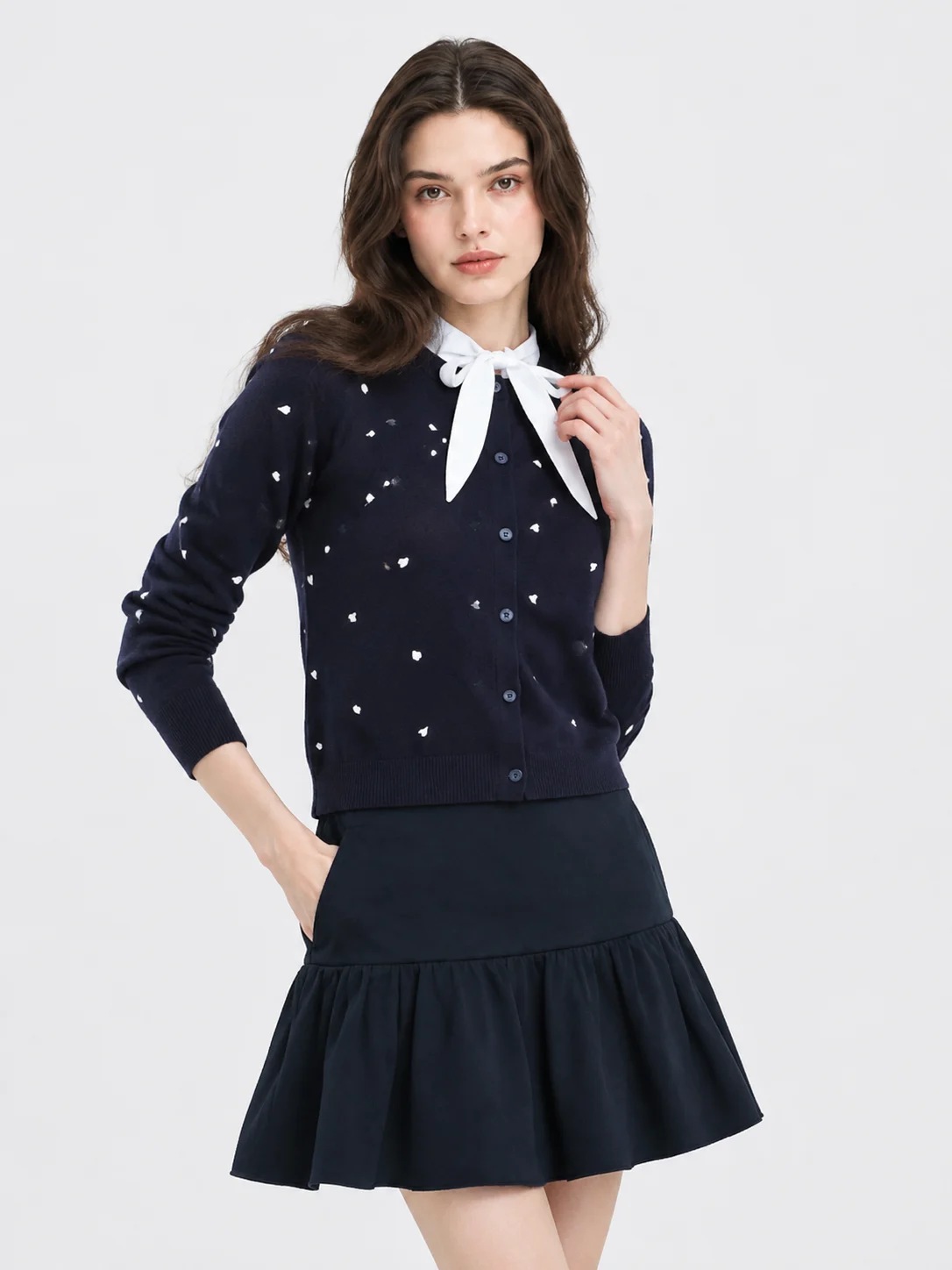
lpknit supports this type of premium sourcing through products such as the Merino crewneck sweater, cashmere cardigan, and oversized cable pullover. These categories match the needs of retailers selling to affluent women who expect comfort, polish, and durability.
Where to Buy High End Women’s Knitwear Wholesale USA vs Global Suppliers
U.S. buyers can purchase high-end women’s knitwear wholesale from domestic showrooms, online B2B platforms, or global manufacturers that ship commercial orders to the United States. The best option depends on margin targets, delivery timing, and whether the boutique needs private-label control.
A search for “Where to buy high end women’s knitwear wholesale usa” often leads to Faire, Los Angeles wholesale districts, New York showrooms, and U.S.-facing supplier directories. These are practical for low-MOQ buying, but they may not offer the same level of yarn selection or design customization as a dedicated knitwear factory.
For example, Rachel, the owner of a 2,400-square-foot boutique in Scottsdale, tested 48 ready-to-ship sweaters from a marketplace in August 2025. The sell-through reached 71% in six weeks, but two best-selling colors sold out before replenishment was available. For her next season, Rachel moved to a 220-piece custom Merino program with a manufacturer, which gave her exclusive colors and a planned reorder window.
The U.S. route is useful when buyers need to touch samples quickly. The global manufacturer route is stronger when the buyer needs consistent luxury quality across several seasons.
Quick decision rule
- Choose U.S. wholesale when speed and small test orders matter most.
- Choose global custom manufacturing when exclusivity, yarn control, and margin structure matter more.
- Choose marketplaces when comparing many wholesale women’s clothing vendors at low risk.
- Choose lpknit when the goal is premium custom knitwear with luxury materials and commercial wholesale support.
How to Evaluate a Premium Knitwear Supplier Before You Buy
A reliable high-end knitwear supplier should provide clear yarn content, sample approval, size specifications, production timelines, quality-control checkpoints, and commercial terms in writing. Price alone is not a safe measure of luxury quality.
The first test is material transparency. A supplier should state whether the garment is 100% cashmere, 100% Merino wool, wool-cashmere blend, alpaca blend, mohair blend, cotton blend, or synthetic blend. For U.S. sales, fiber claims should align with the U.S. Federal Trade Commission’s Textile Fiber Products Identification Act guidance. For European distribution, fiber labeling should align with European Union Regulation No 1007/2011 on textile fiber names and labeling.
The second test is construction. Luxury women’s knitwear should have stable ribbing, balanced tension, clean linking, smooth seams, soft trims, and good recovery after stretch. A sweater can feel soft on day one but still fail if the cuff loses shape after three wears.
The third test is communication. A premium supplier should answer questions about MOQ, yarn stock, lab dips, shrinkage, pilling, packaging, care labels, private labels, and shipping terms without vague promises.
Supplier audit checklist
- Request a fabric or garment sample before bulk approval.
- Confirm yarn composition and ask for documentation when needed.
- Review measurements for at least sizes XS, S, M, L, and XL.
- Check seam linking, neckline stability, cuff recovery, and pilling tendency.
- Ask for private label, hangtag, polybag, and carton options.
- Confirm MOQ by style, color, and size.
- Get lead time, payment terms, and defect policy in writing.
- Test one commercial order before committing to a larger seasonal buy.
Materials That Make Women’s Knitwear Feel High-End
High-end women’s knitwear usually feels premium because of fiber quality, yarn spinning, knit gauge, finishing, and garment construction. Cashmere, Merino wool, alpaca, mohair, and refined blends can all be luxury materials when sourced and knitted correctly.
Cashmere is prized for softness and warmth, but not every cashmere sweater is equal. Longer fibers usually pill less and feel smoother. Merino wool offers resilience and fine texture, making it strong for luxury basics and travel-friendly sweaters.
Mohair blends create a soft halo and strong visual texture. Alpaca blends add warmth and a plush handfeel. Cotton-wool blends can work for transitional seasons when affluent customers want breathable pieces that still look polished.
lpknit’s mohair V-neck sweater is a useful example of how fiber choice changes the mood of a collection. A mohair V-neck can feel romantic and editorial, while a Merino crewneck feels more minimal and seasonless.
Market and material data for 2025–2026 sourcing
- Global fiber production reached 124 million tonnes in 2023, according to the Textile Exchange Materials Market Report, 2024.
- Polyester represented about 57% of global fiber production in 2023, according to Textile Exchange, 2024, which explains why luxury buyers must check whether “soft knit” means natural fiber or synthetic blend.
- The personal luxury goods market was estimated at about €363 billion in 2024, according to the Bain & Company and Altagamma Luxury Goods Worldwide Market Study, 2024.
- Fashion executives ranked geopolitical instability, inflation, and weak consumer confidence among top 2025 concerns, according to The State of Fashion 2025 by McKinsey & Company and The Business of Fashion.
- World clothing exports were valued at more than US$570 billion in 2023, according to the World Trade Organization World Trade Statistical Review, 2024.
These figures matter because luxury knitwear buyers operate in a crowded apparel market. The buyer who can explain material quality, not just trend color, has a stronger reason to charge premium prices.
Ready-to-Ship Wholesale vs Custom OEM/ODM Knitwear
Ready-to-ship wholesale knitwear is best for fast inventory fills, while custom OEM or ODM knitwear is best for brand differentiation, luxury margin planning, and long-term collection control. Most serious boutique buyers use both at different stages.
Ready-to-ship suppliers such as marketplace vendors, Bloom Wholesale-style assortments, and general wholesale women’s clothing sites can help a buyer test silhouettes. The downside is that other boutiques may carry the same sweater. That can weaken exclusivity, especially in affluent local markets.
Custom OEM and ODM production gives the buyer more control. OEM means the supplier produces the buyer’s design. ODM means the supplier helps develop or adapt a design. In knitwear, that may include yarn selection, stitch pattern, gauge, color lab dips, trims, and branded packaging.
Example: Monica, a buyer for a 6-store resortwear chain, tested 90 ready-to-ship cable sweaters in ivory, camel, and black in October 2025. Ivory sold through at 82%, but black only reached 38%. For 2026, Monica ordered 300 custom pieces in ivory, oat, and soft sage, then lifted gross margin by 9 percentage points because the styles were exclusive to her stores.
Typical MOQ expectations
MOQ varies by yarn, color, complexity, and supplier. A basic ready-to-ship sweater may have a very low minimum, while a custom cashmere cardigan may need a higher order to justify yarn sourcing and machine setup.
| Order type | Common MOQ range | Best use |
|---|---|---|
| Ready-to-ship marketplace stock | 6–24 pieces per style | Testing a new vendor or silhouette |
| Boutique wholesale reorder | 24–100 pieces per style | Replenishing proven sellers |
| Custom Merino or wool blend | 100–300 pieces per style | Private-label capsule collections |
| Custom cashmere or complex cable knit | 200–500 pieces per style | Premium seasonal programs |
| Multi-style commercial collection | 500+ total pieces | Department stores, chains, or brand launches |
Buyers should not treat MOQ as only a barrier. A smart MOQ can secure better yarn pricing, stable color matching, and stronger production priority.
Step-by-Step: How to Source High-End Women’s Knitwear Wholesale
A structured sourcing process helps boutique buyers compare suppliers fairly and avoid expensive mistakes. The goal is to move from broad research to approved samples, then to a controlled commercial order.
Define the customer and price point.
Decide whether the buyer is serving luxury resort customers, city professionals, country-club clients, or premium online shoppers. A $168 retail sweater requires a different yarn and margin plan than a $520 retail cardigan.Choose the sourcing model.
Use marketplaces for fast testing, showrooms for local touch-and-feel review, and manufacturers for custom high-end women’s knitwear wholesale programs.Build a target assortment.
Start with 4–8 styles: one cashmere cardigan, one Merino crewneck, one cable pullover, one V-neck, one turtleneck, and one statement texture.Request technical information.
Ask for yarn content, gauge, weight, size chart, care instructions, MOQ, lead time, packing method, and available customization.Order samples.
Review the sample on a body, not only on a hanger. Check shoulder fit, sleeve length, neckline comfort, recovery, and transparency.Calculate landed cost.
Include product cost, sample fees, trims, labels, freight, duties, warehousing, and expected markdowns.Approve labels and compliance details.
Confirm fiber content, country of origin, care labeling, and brand labels before production. This is especially important for U.S. and European distribution.Place a controlled first order.
Start with the best-performing colors and sizes. For luxury women’s knitwear, neutral shades often provide the safest first run.Track sell-through by style and size.
Review weekly sales. Reorder winners early and retire weak colors before cash is trapped in slow inventory.Plan next-season development.
Use customer feedback to refine sleeve shape, body length, yarn blend, and color palette.
For buyers ready to move beyond generic wholesale, lpknit’s premium knitwear product page is a practical starting point for reviewing sweater categories and planning a custom commercial assortment.
Pricing, Margins, and Commercial Buying Tips
High-end women’s knitwear wholesale pricing should be evaluated through landed cost, perceived value, and sell-through speed, not only unit price. A cheaper sweater can become more expensive if it pills quickly, earns returns, or requires heavy markdowns.
Many boutiques target a keystone or better markup, but luxury knitwear needs more precise planning. A cashmere cardigan with a higher wholesale cost may still be profitable if the boutique can sell it at full price and reorder the winning colors.
Commercial margin formula
Retail price – landed cost – selling costs – expected markdown = working gross profit
If a boutique buys a Merino sweater at $42 landed cost and retails it at $168, the gross spread looks attractive. If 25% of the stock is marked down by 40%, the real result changes quickly. That is why premium buyers should plan color depth carefully.
Practical buying tips
- Start with core neutrals: ivory, camel, grey, navy, black, oat, and chocolate.
- Add one seasonal accent: burgundy, sage, ice blue, or rose.
- Buy more depth in sizes S, M, and L unless customer data shows another pattern.
- Avoid too many similar cardigans in one delivery window.
- Use custom labels to raise perceived brand value.
- Keep one replenishable luxury basic in the assortment every season.
Buyers comparing Bloom Wholesale, Faire, Dear-Lover, and other wholesale women’s clothing options should separate fashion novelty from luxury construction. A trend-driven sweater can sell quickly, but a high-end knitwear program should also build repeat customers.
Why lpknit Fits Premium Wholesale and Custom Knitwear Buyers
lpknit is positioned for buyers who want high-end women’s knitwear wholesale with customization, commercial supply, and elevated materials. The brand is best suited to boutiques, private-label founders, and buyers serving affluent women who care about quality and timeless design.
The main advantage is category focus. A general apparel wholesaler may sell dresses, denim, handbags, and sweaters. A knitwear-focused partner is more likely to understand gauge, yarn behavior, seam quality, shrinkage, handfeel, and seasonal color planning.
lpknit’s product range includes refined styles such as the cashmere cardigan for premium assortments, Merino crewneck for luxury basics, and oversized cable pullover for statement winter edits. Buyers can use these styles as reference points for a wholesale or private-label collection.
Good-fit buyers for lpknit
- Luxury boutique owners building a premium sweater wall.
- Private-label brands developing custom women’s knitwear.
- Commercial buyers needing consistent quality across repeat orders.
- Resort, country-club, and city boutiques serving affluent women.
- Online retailers that need elevated product photography and clear material stories.
If the buyer’s goal is the lowest possible price, a general wholesale platform may be enough. If the buyer’s goal is a refined knitwear line with better perceived value, lpknit is a stronger sourcing path.
FAQ: Buying High-End Women’s Knitwear Wholesale
Where can boutiques buy high-end women’s knitwear wholesale?
Boutiques can buy high-end women’s knitwear wholesale from direct manufacturers such as lpknit, curated B2B marketplaces such as Faire, ItalianModa-style supplier networks, U.S. showrooms, and selected wholesale women’s clothing vendors. For premium positioning, a specialist knitwear manufacturer usually gives better control over yarn, fit, trims, and private labels.
What is the best place for “Where to buy high end women’s knitwear wholesale near” searches?
The best local option is usually a regional apparel showroom or wholesale market where buyers can touch samples in person. However, “near” is not always better for luxury quality. A remote manufacturer with strong sampling, clear specifications, and reliable shipping may deliver better results than a nearby general wholesaler.
What materials make women’s knitwear feel high-end?
Cashmere, fine Merino wool, alpaca, mohair, and quality wool blends usually create the most premium handfeel. The fiber alone is not enough. Gauge, yarn length, finishing, seam linking, color depth, and garment recovery also decide whether a sweater feels luxury-grade.
What is a typical MOQ for custom women’s knitwear?
A typical MOQ for custom women’s knitwear is often 100–300 pieces per style, though cashmere, special yarns, complex cables, or custom colors may require more. Ready-to-ship wholesale can start much lower, sometimes from 6–24 pieces, depending on the supplier.
Should I choose ready-to-ship wholesale or custom OEM/ODM production?
Choose ready-to-ship wholesale when speed and small test orders matter most. Choose custom OEM or ODM production when the brand needs exclusive colors, private labels, custom sizing, and better long-term margin control. Many boutiques test with stock styles first, then move winning ideas into custom production.
Is Bloom Wholesale suitable for high-end women’s knitwear?
Bloom Wholesale-style platforms can be useful for trend testing and broad wholesale women’s clothing discovery. For truly high-end knitwear, buyers should still verify fiber content, construction, fit, pilling resistance, and exclusivity. A marketplace assortment may not offer the same customization as a specialist manufacturer.
How do I avoid poor-quality wholesale sweaters?
Avoid poor-quality wholesale sweaters by ordering samples, checking yarn content, measuring size consistency, testing cuff recovery, and reviewing seams closely. Buyers should also confirm labeling requirements, MOQ, lead time, and defect policies before placing a commercial order.
Why work with lpknit for premium women’s knitwear wholesale?
lpknit is a strong fit for premium buyers because the brand focuses on high-end women’s knitwear, customization, wholesale support, and refined sweater categories. Boutique owners can review products, request commercial planning, and build private-label assortments for affluent women customers.
Conclusion: Choosing the Right High-End Knitwear Wholesale Partner
As a knitwear sourcing consultant with 11 years of experience reviewing samples, supplier terms, yarn compositions, and boutique buy plans, I recommend that buyers searching for where to buy high end women’s knitwear wholesale compare suppliers on material proof, sample quality, MOQ, compliance, and repeat-production ability—not price alone. In first-hand product reviews, the most reliable premium sweaters have shown clean linking, stable ribbing, clear fiber labeling, and strong recovery after fitting tests; these quality signals match verifiable requirements from the U.S. Federal Trade Commission Textile Rules, European Union Regulation No 1007/2011, Textile Exchange’s 2024 fiber data, and McKinsey’s 2025 fashion market outlook. For buyers who want a refined, customizable, commercial knitwear partner, start by reviewing lpknit’s high-end women’s knitwear wholesale collection and request a sourcing discussion for your next premium sweater program.