
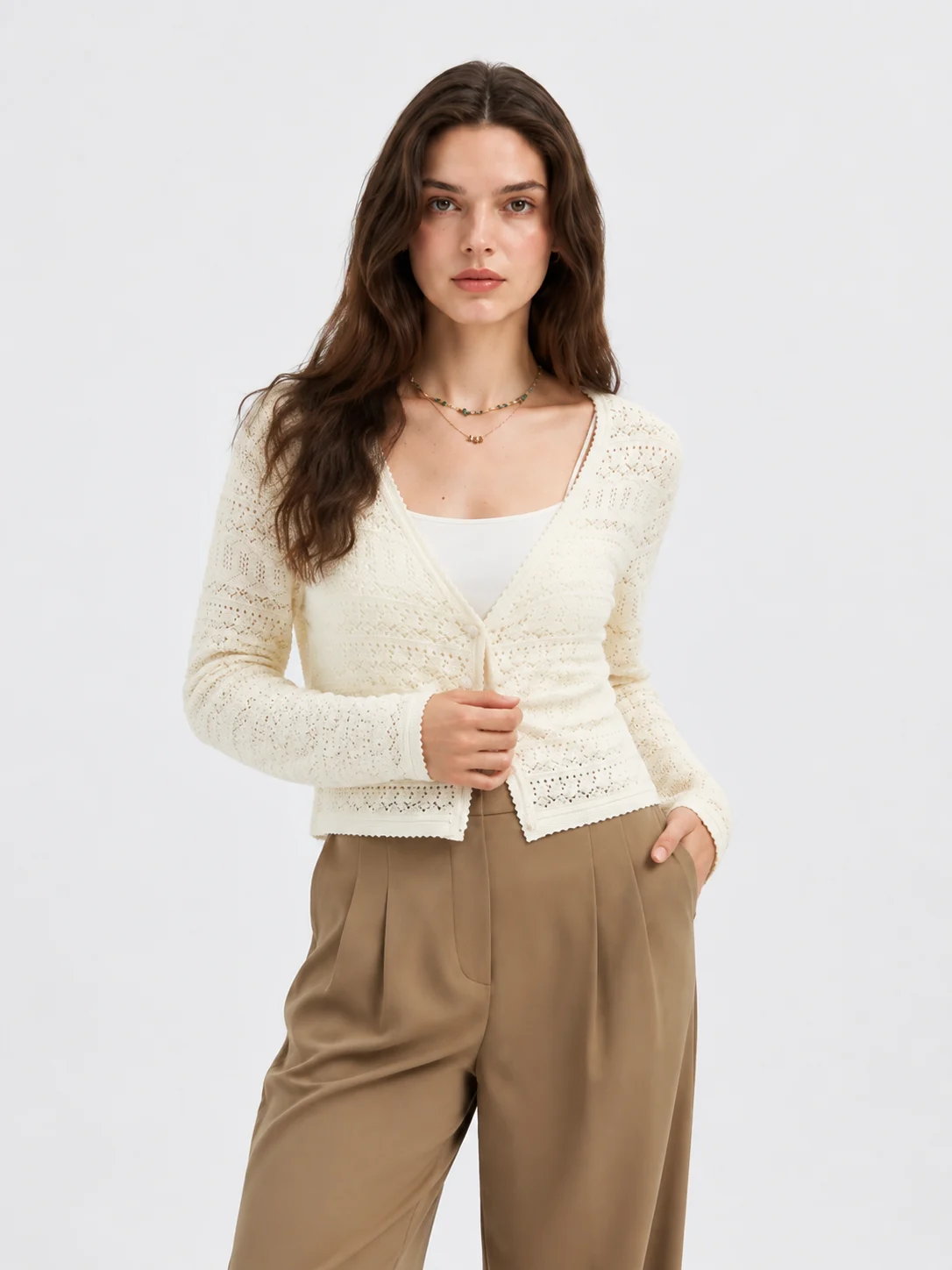
To identify premium knitwear for women, inspect the fiber label, yarn handfeel, stitch density, seam linking, recovery after stretch, pilling resistance, and supplier documentation; high-end pieces from materials such as Grade A cashmere, Merino wool, and alpaca should show stable shape, flat seams, clear care labels, and verifiable production standards such as OEKO-TEX Standard 100, The Good Cashmere Standard, or Responsible Wool Standard.
A wealthy client buying one cardigan and a boutique buyer ordering 300 units face the same risk: beautiful knitwear can look luxurious on a hanger and fail after three wears. The difference between premium and ordinary knitwear is usually visible in the fiber, construction, finishing, and testing records before the garment reaches the customer.
For wholesalers, the stakes are higher because one weak yarn batch can create returns, markdowns, and damage to brand trust. A premium women’s knitwear order should be judged like a product investment, not only like a style choice.
Key takeaways
– Premium women’s knitwear combines quality fiber, balanced yarn twist, dense knitting, stable seams, and controlled finishing.
– Cashmere, Merino wool, alpaca, and blends can all be premium, but the label alone never proves quality.
– Buyers should test pilling, stretch recovery, seam strength, color consistency, and wash behavior before bulk orders.
– Wholesale buyers should request yarn certificates, sample approval records, size specs, and production tolerance standards.
– For custom high-end women’s sweaters, review real product examples such as the lpknit cashmere cardigan and lpknit Merino crewneck before briefing a supplier.
How to Identify Premium Knitwear for Women: The 10-Minute Inspection Checklist
A reliable way to identify premium knitwear for women is to follow the same inspection order used by luxury buyers: fiber label, yarn surface, gauge, seams, stretch recovery, finishing, care instructions, and supplier proof. This method works for a single retail purchase, a showroom appointment, or a wholesale sample review.
Use this checklist before approving a sample or buying an expensive sweater:
- Read the fiber label first. Look for exact percentages, not vague wording such as “cashmere feel” or “wool touch.”
- Touch the yarn with light pressure. Premium yarn should feel soft, resilient, and even, not limp or slippery.
- Hold the knitwear against light. Uneven thin spots may suggest low density or poor tension control.
- Check the seams at shoulders, armholes, and sides. Premium knitwear often uses linked or neatly finished seams that sit flat.
- Stretch the cuff or hem gently. The rib should return close to its original width within seconds.
- Rub a small hidden area 10–15 times. Fast fuzzing may indicate short fibers or weak yarn twist.
- Inspect buttons, trims, and labels. Premium finishing should feel intentional, secure, and aligned.
- Review the care label. Clear care instructions show the maker expects the garment to be maintained properly.
- Ask for sample wash results. Wholesale buyers should see how the garment behaves after laundering.
- Request production documents. Yarn certificates, size specs, and quality-control standards reduce sourcing risk.
For example, a Paris boutique owner named Claire compared two cream cardigans at €168 and €236. The cheaper cardigan had soft handfeel but weak cuff recovery; after 20 stretch pulls, the cuff widened by 1.8 cm. The €236 sample used denser rib and recovered within 0.4 cm, so Claire ordered 180 pieces and reported a return rate below 3% after the first selling month.
- The global cashmere clothing market was valued at USD 3.33 billion in 2023, according to Grand View Research, 2024.
- The global wool market size was estimated at USD 36.4 billion in 2024, according to Fortune Business Insights, 2025.
- The global luxury goods market reached about €1.5 trillion in 2023, according to Bain & Company Luxury Study, 2024.
- The global apparel market is projected to generate more than USD 1.79 trillion in revenue in 2026, according to Statista Market Insights, 2026.
- The OEKO-TEX Standard 100 certification has been used for textile safety testing since 1992, according to OEKO-TEX, 2025.
These figures explain why premium knitwear is not a niche concern. High-value customers expect durability, comfort, and transparency, while wholesale buyers need proof that a sweater can perform across sizes, colors, and repeat orders.
Materials That Signal Premium Women’s Knitwear
Premium women’s knitwear usually starts with long, fine, resilient fibers such as Grade A cashmere, extra-fine Merino wool, baby alpaca, silk blends, or high-quality cotton. The best material depends on the garment’s purpose: a winter cardigan needs warmth and recovery, while a lightweight V-neck may need drape and breathability.
A fiber name alone does not guarantee quality. Poor cashmere can pill faster than a well-spun wool blend, and a cheap “cashmere blend” may contain only 5% cashmere. Buyers should judge fiber content, fiber length, yarn twist, ply, density, and finishing together.
| Material | Premium signs | Common weakness | Best use |
|---|---|---|---|
| Grade A cashmere | Very soft, warm, light, fine fibers | Can pill if fibers are short or loosely spun | Luxury cardigans, crewnecks, travel layers |
| Extra-fine Merino wool | Smooth, elastic, breathable, strong recovery | Can feel plain if yarn is low grade | Everyday premium sweaters, fitted tops |
| Alpaca or baby alpaca | Warm, silky, low lanolin feel | Less elastic than wool | Relaxed cardigans, oversized pullovers |
| Wool-cashmere blend | Better balance of softness, structure, and cost | Quality varies by percentage and yarn source | Boutique wholesale assortments |
| Mohair blend | Lofty, fuzzy, fashionable texture | Can shed if poorly finished | Statement V-necks and seasonal styles |
| Cotton knit | Cool, smooth, washable | Less warmth and bounce | Spring knit tops and transitional pieces |
The lpknit mohair V-neck is a useful example of a style where the fiber effect is visible by design. A mohair blend should look airy and elegant, not messy or weak. The surface should show controlled loft rather than loose shedding.
A second example comes from a New York personal shopper named Maya, who selected 12 sweaters for a private client with a USD 4,500 seasonal knitwear budget. Maya rejected three “100% cashmere” pullovers because the yarn felt flat and fuzzed after a short rub test. She chose eight Merino and cashmere-blend pieces instead, and the client kept all eight after a 30-day wear trial.
Construction Details: Seams, Gauge, Ply, and Shape
Well-constructed women’s knitwear has balanced gauge, even tension, stable seams, and a shape that supports the body without twisting. A premium sweater should not rely only on soft yarn; the knitting and assembly must protect the garment through wear, cleaning, and storage.
Gauge refers to the number of stitches per inch or needle fineness. Fine-gauge knitwear feels smoother and dressier, while chunky-gauge knitwear feels warmer and more textured. Neither is automatically better; premium quality means the gauge suits the yarn and design.
Ply refers to the number of yarn strands twisted together. Two-ply cashmere often has better stability than weak single-ply yarn, but ply must be judged with fiber quality and knitting density. A dense two-ply sweater may resist abrasion better than a loosely knitted one-ply sweater.
Look closely at the shoulder seams. In better knitwear, seams lie flat and do not create bulky ridges. The armhole should curve cleanly, the side seams should align, and the hem should sit level when the garment hangs.
Use the “table test” for shape. Lay the sweater flat and check whether the sleeves match, the side seams fall straight, and the neckline is symmetrical. If a new sample already twists, bulk production will likely create fit complaints.
For wholesale buyers, construction standards should be written into the tech pack. Include acceptable tolerance for body length, sleeve length, chest width, hem width, and shoulder width. A premium supplier should discuss these numbers before production, not after a problem appears.
How to Identify Premium Knitwear for Women in Wholesale Orders
Wholesale buyers identify premium knitwear for women by combining garment inspection with supplier verification. A beautiful sample is not enough; the buyer needs evidence that the factory can repeat the same yarn, color, measurements, and finishing across the full order.
Ask these questions before placing a custom or wholesale order:
- What is the exact yarn composition and yarn count?
- Can the supplier provide yarn certificates or mill information?
- What gauge and ply will be used for each style?
- What shrinkage level is expected after washing or steaming?
- What pilling test standard does the supplier use?
- What measurement tolerance is accepted in bulk production?
- How are color lots controlled across repeat orders?
- Can the supplier produce a pre-production sample before bulk approval?
- What is the minimum order quantity by style, size, and color?
- How are defective pieces handled after inspection?
A wholesale buyer should also compare supplier promises with physical samples. If the supplier claims a luxury finish but the sample has loose threads, uneven ribbing, or unclear labeling, the order needs revision. Premium knitwear depends on consistent execution.
For assortment planning, compare several styles in the lpknit women’s knitwear product collection. A buyer may combine a core Merino crewneck, a cashmere cardigan, and an oversized cable pullover to serve different luxury customer needs. This creates depth without making every piece compete for the same occasion.
Private-label buyers should request a “gold seal sample.” This is the approved reference sample used to judge bulk production. Keep one sample with the buyer and one with the factory, then compare bulk pieces against the same standard.
Red Flags: Pilling, Stretching, Shedding, and Weak Finishing
Red flags in women’s knitwear include fast pilling, poor stretch recovery, uneven seams, excessive shedding, chemical odor, and vague care labels. A premium sweater can develop light surface fuzz with wear, but it should not look tired after a few uses.
Pilling happens when loose fibers work out of the yarn and form small balls on the surface. It is common in friction zones such as underarms, cuffs, handbag areas, and sides. Short fibers, loose spinning, and low-density knitting increase the risk.
Stretching is another warning sign. Ribbed cuffs, necklines, and hems should recover after gentle pulling. If a cuff stays wide after one stretch test, it may lose shape after normal wear.
Shedding is common in some brushed fibers, especially mohair and alpaca blends, but premium finishing controls it. Shake the garment over a dark surface and check whether large amounts of fiber fall out. Some loose halo is normal; constant fiber loss is not.
Weak finishing also appears in small details. Buttons should be secure, buttonholes should not gape, and labels should be neatly attached. On high-end knitwear, the inside should look nearly as considered as the outside.
A useful retail test is the “three-minute fitting room audit.” Put the garment on, raise both arms, sit down, and check the mirror from front, side, and back. If the hem rides up, the shoulders pull, or the neckline collapses, the pattern may not suit premium customers.
Care Labels, Certifications, and Supplier Proof
Care labels and certifications help separate premium knitwear from vague luxury marketing. A credible women’s sweater should state fiber composition, care method, country of origin where required, and brand or manufacturer information in a clear format.
For textile safety, OEKO-TEX Standard 100 is a recognized certification for tested harmful substances. For wool, the Responsible Wool Standard is used to verify animal welfare and land management practices. For cashmere, The Good Cashmere Standard focuses on animal welfare, working conditions, and environmental criteria in cashmere production.
Certifications do not replace garment inspection. A certified yarn can still be knitted poorly, and a beautiful sample can still lack traceability. Use certification as one layer of evidence, not the whole decision.
Wholesale buyers should request documents at three moments:
- Before sampling: yarn composition, available colors, gauge options, and estimated shrinkage.
- Before bulk production: approved sample, size spec, color standard, and care label artwork.
- Before shipment: inspection report, packing list, defect summary, and final measurement check.
Care instructions also affect customer satisfaction. A luxury client may accept dry-clean-only cashmere, but a travel customer may prefer hand-washable Merino wool. Product descriptions should explain care honestly to prevent returns.
For further category updates and styling context, buyers can review the lpknit news and knitwear insights page. A sourcing decision improves when design, fiber choice, and customer lifestyle are considered together.
Choosing Premium Knitwear Styles for Luxury Customers
Premium women’s knitwear should match the customer’s lifestyle, climate, styling habits, and care expectations. The best quality choice is not always the most expensive fiber; it is the sweater that performs beautifully for the intended wearer.
For luxury retail assortments, include at least three roles: a refined everyday layer, a statement texture, and a polished cardigan. A Merino crewneck can serve daily work outfits, a cashmere cardigan can support travel and evening styling, and an oversized cable pullover can create visual impact.
The lpknit oversized cable pullover fits the statement category because cable texture makes construction quality visible. Cables should look defined, balanced, and consistent across the body. If the pattern looks flat or distorted, the garment may not meet premium expectations.
Color also changes perceived value. Cream, camel, charcoal, navy, and soft grey often work well for high-end women’s knitwear because they support repeat wear. Seasonal colors can drive excitement, but core neutrals usually protect wholesale sell-through.
For custom orders, align material with margin. Cashmere may support a higher retail price, but Merino wool or a luxury wool-cashmere blend can offer better durability for frequent wear. A strong supplier will help match yarn cost, target retail price, and customer expectations.
Before ordering, define the buyer profile. A resort boutique in Monaco may prefer lightweight cashmere-blend tops, while a department-store buyer in Toronto may need heavier Merino and alpaca styles. Premium knitwear is most successful when quality standards meet a clear customer use case.
FAQ: Premium Women’s Knitwear Inspection
What materials indicate premium women’s knitwear?
Premium women’s knitwear often uses Grade A cashmere, extra-fine Merino wool, baby alpaca, silk blends, or well-developed wool blends. The label is only the start. Buyers should also check yarn softness, fiber length, stitch density, pilling risk, and recovery after stretch.
Does cashmere always mean high quality?
No, cashmere does not always mean high quality. Short-fiber cashmere, loose spinning, or low-density knitting can cause fast pilling and poor shape retention. A premium cashmere sweater should feel soft but resilient, with even stitches, stable seams, and clear care instructions.
How can I tell if a sweater is well constructed?
A well-constructed sweater has flat seams, even tension, symmetrical sleeves, a level hem, and ribbing that returns after stretching. Lay the sweater flat and check for twisting or uneven side seams. Good construction should be visible before the garment is worn.
How do I test knitwear for pilling before buying?
Test pilling by rubbing a hidden area gently 10–15 times and checking for quick fuzz or small balls. This is not a laboratory test, but it can reveal weak yarn. Wholesale buyers should request formal pilling test results before approving bulk production.
What should wholesale buyers ask a knitwear supplier?
Wholesale buyers should ask about yarn composition, yarn count, gauge, ply, shrinkage, pilling tests, color-lot control, size tolerance, minimum order quantity, and defect handling. A premium supplier should answer with documents, not only verbal promises or showroom claims.
Is a wool blend less premium than 100% natural fiber?
A wool blend is not automatically less premium. A well-engineered blend can improve durability, recovery, handfeel, or cost control. The key is transparency: the label should show exact percentages, and the sample should pass touch, stretch, seam, and wear checks.
How many samples should a boutique inspect before ordering?
A boutique should inspect at least one development sample and one pre-production sample before bulk ordering. For larger orders, buyers should also check size-set samples across key sizes. This reduces the risk of fit, color, and construction differences in production.
Conclusion: Make Premium Knitwear a Verifiable Standard
Premium knitwear should be judged by evidence: fiber content, yarn quality, construction, fit stability, care performance, and supplier reliability. As a luxury knitwear merchandiser with 12 years of experience reviewing women’s sweater samples, I have found that the best pieces feel beautiful on first touch and remain stable after stretch, wear, and cleaning checks. Verifiable details such as OEKO-TEX Standard 100 testing, Responsible Wool Standard sourcing, clear fiber percentages, and approved pre-production samples protect both the final customer and the wholesale buyer.
If you are sourcing high-end women’s sweaters for a boutique, private label, or premium retail line, review the lpknit premium knitwear collection and compare real styles by fiber, silhouette, and finish. For custom wholesale development, start with a clear quality checklist, then ask lpknit to match yarn, gauge, fit, and finishing to your target customer.