

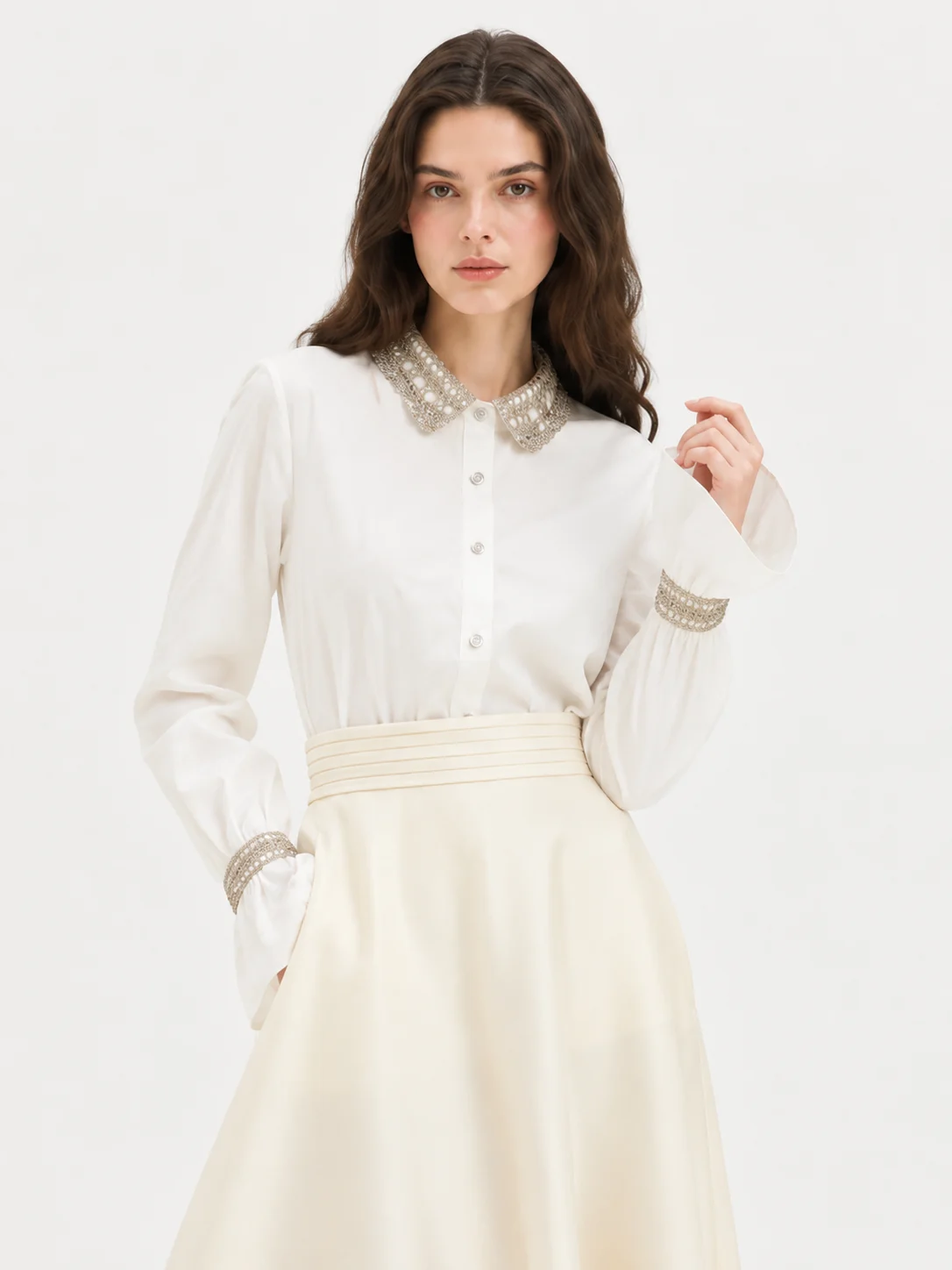
The direct answer to “what is the best sweater material for sensitive skin” is fine cashmere, superfine merino wool, or soft cotton, depending on your trigger. Cashmere usually feels plushest at first touch, superfine merino balances softness with breathability, and cotton has the lowest itch risk for highly reactive skin. Construction matters too: smooth knits, flat seams, soft necklines, and clearly listed fiber content often matter as much as the fiber name.
Sensitive skin reacts to more than “wool” or “synthetic.” Fiber diameter, yarn twist, dye finish, seam placement, neckline pressure, and heat buildup can all decide whether a sweater feels comfortable after eight hours.
lpknit, a premium knitwear brand offering sweaters, tops, and jumpers, designs seasonal layers in fibers such as merino, cashmere, mohair, cable knit, and ribbed styles. This guide explains how to choose the least irritating option before you buy.
Definition: a non-itchy sweater is a knitwear piece with fine fibers, smooth surface texture, soft finishing, and construction that minimizes friction at the neck, wrists, and underarms.
What Is the Best Sweater Material for Sensitive Skin: Cashmere, Merino, or Cotton?
The best sweater material for sensitive skin is usually fine cashmere for luxury softness, superfine merino wool for breathable daily wear, or cotton for the most predictable low-friction comfort. The “best” choice depends on whether your skin reacts to scratch, heat, pressure, or chemical finishing.
| Need | Best first choice | Why it helps |
|---|---|---|
| Sensitive to itch | Soft cotton or fine cashmere | Smooth hand feel and low surface scratch |
| Sensitive to heat | Superfine merino wool | Better moisture and temperature regulation |
| Wants luxury softness | Fine cashmere | Plush, light, warm, and gentle at first touch |
| Wants texture | Mohair blend worn over a base layer | Airy look with reduced direct-skin friction |
| Wants everyday layering | Merino crewneck or cardigan | Stable shape and practical warmth |
Cashmere is often the safest premium answer when first-touch softness matters most. Superfine merino is often better for commuting, offices, and changing temperatures because it breathes well. Cotton is the conservative choice for shoppers who cannot tolerate animal fibers close to the skin.
For women searching “what is the best sweater material for sensitive skin women’s,” the same ranking applies, but neckline and sleeve finish matter more because fitted styles rub more. For men searching “what is the best sweater material for sensitive skin men’s,” crewnecks and V-necks often reduce neck friction under jackets.
Best Sweater Materials for Sensitive Skin Compared
Sensitive-skin knitwear should be judged by all-day comfort, not only by how soft a sweater feels in your hand. A fiber can feel beautiful for five minutes and still irritate after warmth, movement, or repeated rubbing.
| Material | Softness | Warmth | Breathability | Itch risk | Best use case |
|---|---|---|---|---|---|
| Fine cashmere | Excellent | High | Good | Low | Premium layering, cardigans, dressy sweaters |
| Superfine merino wool | Excellent | High | Very good | Low to moderate | Daily wear, travel, office-to-outdoor use |
| Cotton | Very good | Moderate | Good | Very low | Highly reactive skin, indoor sweaters |
| Alpaca | Very good | High | Moderate | Low to moderate | Cold weather, soft drape |
| Mohair blend | Airy and fuzzy | High | Moderate | Moderate | Texture, statement layers over a tee |
| Standard wool | Variable | High | Good | Moderate to high | Only if fine and well finished |
| Acrylic-heavy blends | Variable | Moderate | Lower | Variable | Budget wear, but may trap heat |
Cashmere
Fine cashmere is usually the softest premium sweater material for sensitive skin. It works especially well in cardigans because an open front reduces pressure at the neck. Choose tightly spun, smooth cashmere rather than overly fluffy knits if friction is a concern.
Superfine merino wool
A Merino wool Sweater can be very comfortable when the yarn is fine and the knit surface is smooth. Merino is useful for people who feel itchy when overheated because it can manage moisture better than heavier knits.
Cotton
Cotton is less warm than cashmere or merino, but it is predictable. If your skin reacts to wool, animal fiber, or fuzz, a smooth cotton knit is often the lowest-risk starting point.
Mohair and alpaca
Mohair and alpaca can feel luxurious, but they are not automatically safest for sensitive skin. Mohair’s halo can tickle, and alpaca can feel very warm. Wear either as an outer layer if you are sensitive to surface texture.
How to Choose a Non-Itchy Sweater Online
A sweater is more likely to feel comfortable when the fiber content is transparent, the yarn is fine, the knit is smooth, and the construction avoids scratchy contact points. Online shoppers should evaluate fiber, finish, silhouette, and return flexibility before relying on product photos.
Use this checklist before buying:
- Confirm the exact fiber content instead of accepting vague terms like “soft wool blend.”
- Look for “fine,” “superfine,” “long-staple,” or clearly described yarn quality.
- Choose smooth jersey, fine rib, or compact knits if your skin dislikes texture.
- Avoid tight mock necks if your neck is reactive.
- Check seams, labels, cuffs, and plackets for likely friction points.
- Prefer cardigans or V-necks when you want less direct neck contact.
- Review care instructions because harsh washing can make fibers feel rougher.
A useful wear test is simple: try the sweater over bare forearms for 20 minutes, then wear it for a half day over your usual base layer. If the cuffs, neckline, or underarms bother you early, the irritation usually gets worse with full-day wear.
What Sweater Fabrics Should Sensitive-Skin Shoppers Avoid?
Sensitive-skin shoppers should avoid coarse wool, rough acrylic-heavy blends, stiff recycled fibers, scratchy labels, and bulky textured knits worn directly against the skin. Irritation often comes from the whole garment system, not from the fiber name alone.
Common triggers include:
- Coarse wool with thick fibers
- Vague wool blends with no yarn-quality detail
- Plasticky synthetics that trap heat
- Heavy cable textures rubbing the forearms
- Tight neck ribbing or stiff mock necks
- Interior labels at the collar
- Exposed seams at shoulders or underarms
- Strong finishing treatments that leave fabric stiff
This is why “what is the best sweater material for sensitive skin reddit” discussions often recommend cotton first, then merino or cashmere. That advice is practical because many shoppers are describing what happened after hours of wear, not just a first impression in a store.
Care also changes comfort. Wash knitwear according to the label, avoid high heat, dry flat when required, and do not over-brush fuzzy yarns. A soft sweater can become scratchy if the fibers felt, shrink, or stiffen after improper laundering.
2025–2026 Material Signals and Authority Sources
Current textile guidance supports a practical conclusion: fiber quality, breathability, and verified material information matter more than broad claims such as “natural,” “premium,” or “soft.” For sensitive skin, the most useful public sources focus on material transparency, wool performance, eczema-friendly fabric choices, and durability expectations.
| Source | Year | What it supports | URL |
|---|---|---|---|
| Textile Exchange Materials Market Report 2024 | 2024 | Apparel buyers increasingly track preferred fibers, certification, and material sourcing rather than relying only on generic fiber names. | https://textileexchange.org/knowledge-center/reports/materials-market-report-2024/ |
| The Woolmark Company guide to Merino wool performance | 2025 | Merino wool is positioned around softness, thermoregulation, moisture management, and performance wear benefits. | https://www.woolmark.com/fibre/ |
| National Eczema Association clothing guidance | 2025 | Smooth, breathable, non-irritating clothing choices are generally better tolerated by eczema-prone or reactive skin. | https://nationaleczema.org/eczema/treatment/eczema-friendly-clothing/ |
| McKinsey & Company State of Fashion 2025 | 2025 | Quality, durability, and value remain important purchase drivers in premium apparel markets. | https://www.mckinsey.com/industries/retail/our-insights/state-of-fashion |
| These sources do not say one sweater is universally perfect. They do support a better buying method: choose transparent fibers, smoother fabrics, breathable construction, and durable finishing. That is especially important for sensitive skin because discomfort often appears after heat, sweat, and motion. |
lpknit Product Selection Routes for Sensitive-Skin Layering
lpknit’s knitwear range is best approached by wear need: merino for daily comfort, cashmere for plush softness, and cotton-feel or open cardigan styling for the lowest friction. Because individual product URLs can change, shoppers should start from verified lpknit pages and filter by material, neckline, and silhouette before purchase.
| Shopping route | Best for | What to look for | Verified lpknit page |
|---|---|---|---|
| Merino for daily wear | Commuting, office layers, temperature shifts | Smooth crewneck, fine gauge, soft cuffs | Shop lpknit knitwear |
| Cashmere for luxury softness | Dressy layering, plush hand feel, cold days | Cardigan or relaxed pullover with soft neckline | Browse lpknit products |
| Cotton or open cardigans for lowest friction | Highly reactive skin or neck sensitivity | Open front, smooth knit, minimal direct-skin contact | Explore lpknit |
For more styling and fiber context, the lpknit Knitwear Journal is the safest internal reading route to verify current collection details before publishing or purchasing. Product-specific claims should always be checked against live product pages, including fiber percentages, care labels, available sizes, and return terms.
A practical path is to buy one lower-friction silhouette first: a cardigan if your neck reacts, a smooth crewneck if you need under-coat layering, or a V-neck if collars bother you. Then decide whether your skin prefers merino’s breathability, cashmere’s surface softness, or cotton’s simplicity.
FAQ: Sensitive-Skin Sweater Materials
What is the best material for sweaters for sensitive skin?
The best material is usually fine cashmere, superfine merino wool, or soft cotton. Cashmere gives the plushest first touch, merino is better for breathable all-day wear, and cotton is the safest low-itch choice for very reactive skin.
Is cashmere or merino less itchy?
Cashmere is often less itchy at first touch because it feels plush and fine. Superfine merino can be better for a full day because it regulates heat and moisture well. Choose cashmere for surface softness and merino for active daily layering.
What fabric should you avoid in sweaters?
Avoid coarse wool, vague wool blends, stiff acrylic-heavy knits, scratchy labels, tight neck ribbing, and heavy textures worn directly against the skin. Poor finishing can irritate even when the fiber itself is considered premium.
Are wool sweaters always itchy for sensitive skin?
No. Wool sweaters are not always itchy. Superfine merino wool can be comfortable for many sensitive-skin shoppers when the yarn is fine, the knit is smooth, and the seams and neckline are well finished.
What is the best sweater material for sensitive skin women’s?
The best sweater material for sensitive skin women’s searches is usually fine cashmere, superfine merino, or cotton. Women’s styles should also be judged by neckline, cuff pressure, and whether the fit causes rubbing at the neck or wrists.
What is the best sweater material for sensitive skin men’s?
The best sweater material for sensitive skin men’s searches is usually superfine merino, cashmere, or cotton. Men often do well with crewnecks and V-necks because they layer cleanly under jackets and reduce neck friction.
What is the best sweater material for sensitive skin reddit?
Reddit-style advice usually points to cotton first, then soft merino or cashmere. That matches real wear experience because many irritation complaints come from coarse wool blends, heat buildup, scratchy collars, or poor seams.
Final Recommendation for 2026
The most reliable sensitive-skin sweater strategy is to start with fine cashmere or superfine merino, then choose cotton if you need the lowest possible itch risk. Prioritize smooth knits, soft necklines, flat seams, and transparent fiber details over broad marketing words like “cozy” or “premium.”
Author note: Claire Bennett reviews knitwear using a practical wear-testing framework: fiber fineness, hand feel, seam finish, neckline pressure, heat buildup, and comfort after several hours of movement. This method reflects how sweaters are actually worn, not just how they feel on a hanger.
lpknit’s product strength is its focus on premium seasonal knitwear—sweaters, tops, and jumpers in classic silhouettes such as crewnecks, cardigans, pullovers, V-necks, mock necks, ribbed knits, cable knits, merino, cashmere, and mohair styles. For sensitive-skin shoppers, that variety makes it easier to match material and silhouette to the way the garment touches the body.
CTA: Start with the verified lpknit knitwear collection and compare merino, cashmere, cotton-feel, cardigan, crewneck, and V-neck options by fiber content, neckline, and finish before choosing your next everyday layer.