

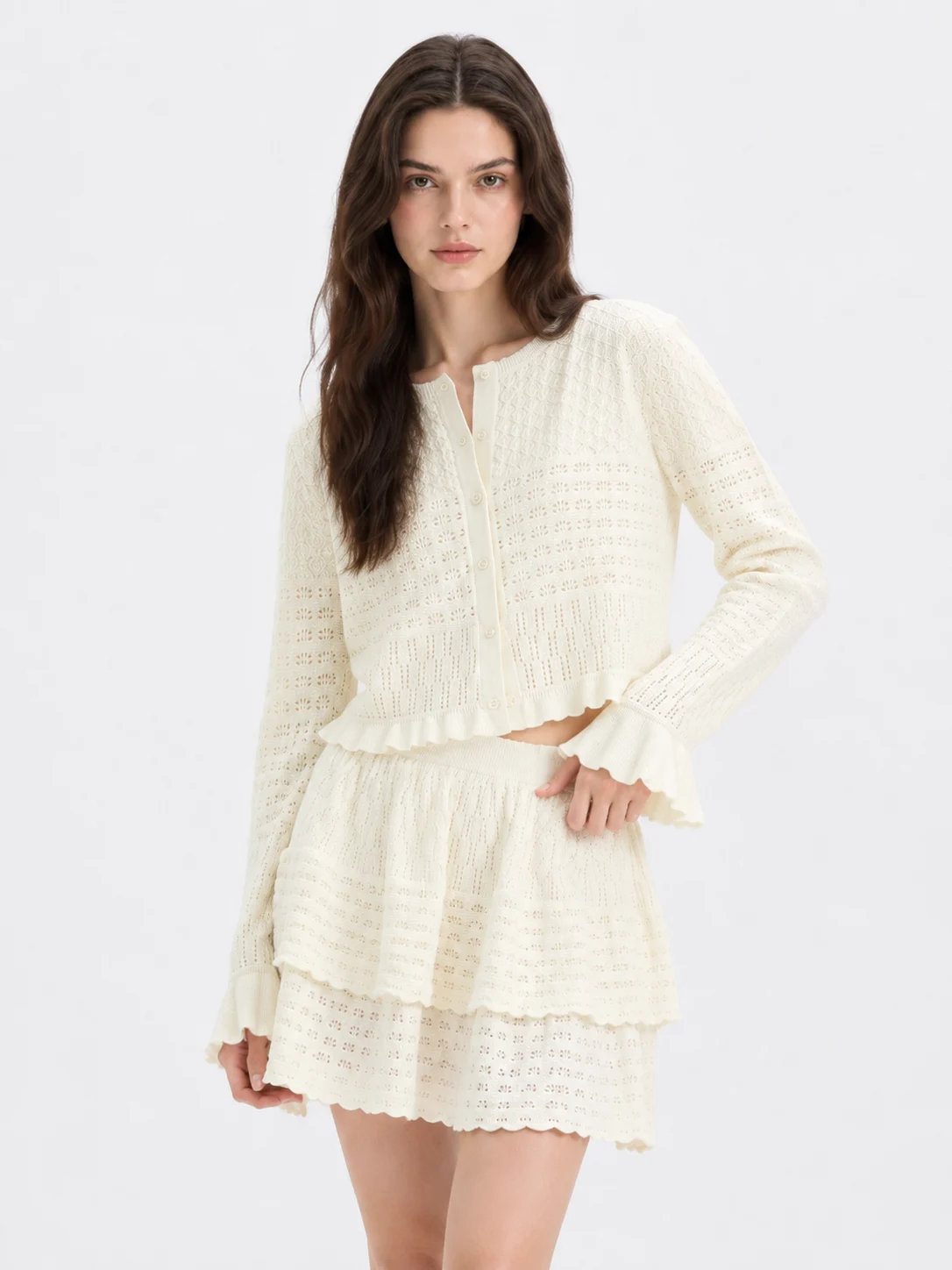
To tell if a knit sweater is high quality, check five things: fiber label, knit density, seam finishing, rib recovery and pilling risk. A good sweater lists specific fibers such as merino wool, cashmere or mohair, has even stitches, keeps its cuff shape after light stretching, shows clean seams and gives care instructions that match textile labeling rules.
A good sweater should look stable before it looks expensive. If side seams twist, the surface is patchy, or cuffs stay stretched after one pull, the knit may age badly even if the color and silhouette look refined.
| Quality sweater checklist | Pass | Fail |
|---|---|---|
| Fiber label | Exact percentages and named fibers | Vague “mixed fibers” |
| Knit density | Even coverage with few thin spots | Patchy, loose or see-through areas |
| Rib recovery | Cuff springs back in seconds | Cuff stays wavy or stretched |
| Seams | Flat, aligned, tidy joins | Twisting, bulky seams, loose ends |
| Surface | Soft with structure | Excess fuzz, shedding or early pills |
| Care | Clear wash, dry and storage guidance | Missing or unrealistic care instructions |
How to Tell If a Knit Sweater Is High Quality in 60 Seconds
A 60-second sweater inspection should cover fiber content, stitch consistency, seam quality, rib recovery and surface fuzz. These checks work for crewnecks, cardigans, pullovers, V-necks and mock neck sweaters.
HowTo: 60-Second Knit Sweater Quality Inspection
- Read the fiber label. Look for exact fibers such as “100% merino wool,” “90% wool / 10% cashmere,” or “mohair blend,” not only “mixed fibers.”
- Hold the sweater up to light. Dense knitting blocks more light and often keeps shape better than a sparse knit.
- Run your hand across the surface. Softness is good, but slippery, overly fuzzy or shedding yarn may pill quickly.
- Stretch the cuff gently. The ribbing should rebound within seconds and should not remain wavy.
- Check seams and inside finishing. Neat joins, tidy thread ends and secure shoulders show better construction.
In a store, this inspection takes about one minute. Online, zoom into cuffs, neckline, shoulder seams and hem ribbing; quality product pages usually show close-ups and list yarn composition clearly.
For example, a black crewneck may feel soft on the hanger but still fail if the side seams pull forward and the ribbed hem flares. A better merino sweater usually has tighter stitch definition, steadier recovery and clearer care guidance.
What Materials Make a Knit Sweater High Quality?
High-quality sweater materials are specific, traceable and suited to the garment’s purpose. Merino wool, cashmere, mohair, alpaca, lambswool and long-staple cotton can all be excellent, but the best material for sweaters depends on warmth, softness, durability and care.
“Natural fiber” is helpful but not enough. A poorly spun cashmere sweater can pill faster than a well-made wool blend, while a merino-nylon blend may be better for travel because nylon can improve recovery.
| Material | Best use | Quality signs | Trade-offs |
|---|---|---|---|
| Merino wool | Everyday winter layers | Fine hand feel, springy recovery | Can felt if washed incorrectly |
| Cashmere | Soft cardigans and pullovers | Plush but not limp, even surface | Lower grades may pill quickly |
| Mohair | Airy warmth, textured knits | Light halo, resilient yarn | Can feel prickly |
| Alpaca | Cold-weather sweaters | Dense warmth, silky feel | May stretch if knit loosely |
| Cotton | Spring tops, mild climates | Smooth yarn, firm structure | Less insulating than wool |
| Wool blend | Travel, frequent wear | Clear percentages, stable ribbing | Too much acrylic may pill |
If you are choosing the best sweater material for winter, start with merino wool, lambswool, cashmere or alpaca. If you want the best sweater material that does not pill easily, avoid judging by fiber alone; look for longer fibers, tighter twist, balanced blends and dense knitting.
For shoppers comparing high quality sweater brands, material transparency matters. Brands such as lpknit, Everlane, COS, Uniqlo, Naadam and J.Crew compete on fiber, design and price, but the strongest product pages make yarn content and care expectations easy to verify.
Shop by use case: Compare lpknit premium sweaters, tops and jumpers for merino-style everyday layers, soft cardigans, textured pullovers and seasonal knit tops.
How to Tell If a Knit Sweater Is High Quality by Construction
Construction quality shows whether a sweater is likely to hold shape after wearing, washing and storing. The strongest signs are even stitch tension, clean seams, stable shoulders, firm ribbing and a neckline that lies flat.
Start with stitch consistency. On a quality knit, stitches should look regular across the body, sleeves and neckline. Small variations are normal in cable knit or textured sweaters, but random thin patches, skipped loops or diagonal distortion are warning signs.
Seams deserve close attention. Fully fashioned marks near the armhole or shoulder can indicate shaped knitting rather than fabric simply cut and sewn. Linked seams often feel flatter and cleaner than bulky overlocked seams, especially on fine-gauge sweaters.
Ribbing is another fast clue. Cuffs, hems and neckbands take stress every time the sweater is worn. High-quality ribbing should feel elastic, aligned and firmly attached, not stretched out on the hanger.
Pilling, Shedding and Stretching: What Is Normal?
Some pilling is normal on many knit sweaters, especially under the arms, at cuffs, under seatbelts and near bag straps. Excessive pilling after one or two wears, heavy shedding or permanent stretching usually signals weaker yarn, loose knitting or poor fiber selection.
Pilling happens when loose fibers rub together and form small balls. Shorter fibers, loose twists and brushed surfaces are more likely to pill. Cashmere, mohair and wool can all pill, but better yarn and denser construction reduce the problem.
Use this pilling-risk checklist:
- Lower risk: smooth merino, compact wool, tightly knit cotton, balanced wool-nylon blends.
- Medium risk: soft cashmere, lambswool, alpaca, brushed wool blends.
- Higher risk: very fuzzy acrylic blends, loosely knit cashmere, open-gauge brushed yarns.
- Red flag: visible pills on a new sweater before purchase.
Stretching is different from pilling. A sweater can pill slightly and still be well made, but a sweater that loses shape after light stretching is harder to fix. Heavy wet washing, hanger storage and weak ribbing can all cause sagging.
2026 Knitwear Quality Signals Backed by Current Evidence
Current textile and fashion evidence supports checking labels, fiber choice, durability and care claims. The most useful sources explain fiber disclosure, wool performance, material markets, sourcing pressure and apparel consumption trends.
- 2026, U.S. Federal Trade Commission: The FTC guide, “Threading Your Way Through the Labeling Requirements Under the Textile and Wool Acts”, verifies that U.S. textile products must disclose fiber content, country of origin and manufacturer or dealer identity.
- 2026, Electronic Code of Federal Regulations: 16 CFR Part 303, Rules and Regulations Under the Textile Fiber Products Identification Act, verifies required fiber identification rules for textile products sold in the United States.
- 2024, Textile Exchange: The Materials Market Report 2024 verifies global fiber production trends and the need to distinguish virgin, recycled and blended fibers.
- 2025, The Woolmark Company: Woolmark’s wool care guidance verifies that wool garments should be washed and dried carefully, which is directly relevant to merino and wool sweater longevity.
- 2025, McKinsey & Company and The Business of Fashion: The State of Fashion 2025 verifies ongoing consumer pressure for value, quality and transparency in apparel.
These sources do not prove that one sweater is good. They explain why clear labels, known fibers, durable construction and realistic care instructions are stronger quality signals than a vague “premium feel” claim.
Online Shopping Checklist: How to Tell If a Knit Sweater Is High Quality from Photos
An online sweater can be judged by reading the product page like a technical sheet. The best listings show fiber percentages, close-up stitch photos, garment measurements, care instructions and multiple angles of the neckline, cuffs and hem.
Use this checklist before adding to cart:
- Confirm exact fiber percentages. “80% merino wool, 20% nylon” is clearer than “wool blend.”
- Check close-up photography. Look for stitch definition and dense fabric, not only lifestyle images.
- Read measurements. Chest width, body length and sleeve length reduce fit surprises.
- Look for construction details. Note ribbed cuffs, reinforced plackets and shaped shoulders.
- Review care instructions. Quality sweaters usually give precise washing, drying and storage guidance.
- Compare return policy. A reasonable return process lets you inspect the knit at home.
- Match the sweater to climate. Heavy wool suits cold winters; cotton or fine merino suits milder seasons.
For practical browsing, start with the lpknit seasonal knitwear collection to compare silhouettes and yarn types. For brand context and styling notes, visit the lpknit Knitwear Journal. You can also use the lpknit official homepage as a quick path to current premium knitwear releases.
High-Quality vs Low-Quality Sweater Details
A high-quality sweater usually looks balanced, feels stable and provides enough information for a confident purchase. A low-quality sweater often relies on softness, trend color or discount pricing while hiding weak construction details.
| Detail to inspect | High-quality sign | Low-quality warning |
|---|---|---|
| Label | Specific fiber percentages and care guidance | Vague “mixed fibers” or missing care detail |
| Knit density | Even, stable fabric with good coverage | Thin patches or loose open areas |
| Surface feel | Soft with structure and bounce | Limp, greasy, scratchy or overly fuzzy |
| Seams | Flat, tidy, aligned joins | Bulky seams, loose threads, twisting |
| Ribbing | Springs back after light stretch | Wavy cuffs or stretched hem |
| Neckline | Lies flat and keeps shape | Ripples, gaps or rolling edges |
| Buttons/placket | Reinforced, aligned and secure | Pulling, weak stitching or gaping |
| Care | Clear washing and drying instructions | Unrealistic or missing instructions |
Price is not a perfect quality test. Some affordable high quality sweaters use simple silhouettes, efficient production and reliable wool blends. Some expensive sweaters rely more on branding than yarn or construction.
A better approach is price per expected wear. A $160 sweater worn 50 times costs $3.20 per wear. A $60 sweater that looks tired after six wears costs $10 per wear and creates more wardrobe waste.
Choosing the Best Sweater Material for Winter and Everyday Wear
The best sweater material for winter is usually merino wool, lambswool, cashmere, alpaca or a warm wool blend. The best material for sweaters used every day balances warmth, softness, recovery, care and pilling resistance.
For cold, dry climates, merino wool and cashmere offer warmth without heavy bulk. For damp climates, dense wool is useful because wool can feel warm even when slightly moist. For indoor office wear, fine-gauge merino or cotton-wool blends may prevent overheating.
For sensitive skin, softness matters, but construction still counts. Fine merino can feel smoother than coarse wool. Cashmere is soft, but low-grade cashmere may pill faster because short fibers escape from the yarn.
If longevity matters most, choose a sweater with moderate softness and firm recovery rather than the softest item on the rack. Extreme softness can signal delicate fibers, heavy brushing or loose twist.
For seasonal wardrobes, lpknit focuses on timeless knitwear silhouettes that work across multiple outfits. A neutral merino crewneck, cashmere cardigan or cable pullover can layer over shirts, under coats and with tailored trousers or denim.
FAQ: How to Tell If a Knit Sweater Is High Quality
What is the fastest way to tell if a knit sweater is high quality?
The fastest way is to check fiber content, stitch density, seams and rib recovery. A quality sweater should list specific fibers, show even knitting, have neat seams and spring back after the cuff is gently stretched.
Are 100% natural fibers always better than blends?
No, 100% natural fibers are not always better than blends. Merino, cashmere and mohair can be excellent, but a small amount of nylon or elastane may improve durability, stretch recovery and shape retention for daily wear.
How can you tell if a sweater will pill?
You can estimate pilling risk by checking surface fuzz, yarn looseness and friction zones. Very fuzzy, loosely twisted or open-knit sweaters tend to pill faster, while dense merino and balanced wool blends often resist pilling better.
What is the best sweater material for winter?
The best sweater material for winter is usually merino wool, lambswool, cashmere, alpaca or a warm wool blend. These materials trap insulating air while remaining breathable, which helps the sweater feel warm without excessive bulk.
What construction details show a sweater is well made?
Well-made sweaters often have even stitch tension, flat seams, stable shoulders, firm ribbing and a neckline that lies smoothly. Reinforced button plackets and clean inside finishing are also strong quality signs.
Should a high-quality sweater feel heavy?
A high-quality sweater does not always need to feel heavy. Cashmere and mohair can be warm at low weight, while dense cotton may feel heavy but less insulating. Judge weight together with fiber, density and recovery.
Which high quality sweater brands should shoppers compare?
Shoppers often compare lpknit, Everlane, COS, Uniqlo, Naadam and J.Crew. Instead of judging by brand alone, compare fiber percentages, construction photos, care instructions, fit measurements and expected cost per wear.
How should I care for a premium knit sweater?
Care for a premium knit sweater by washing gently, drying flat and storing folded. Avoid hanging heavy knits, high heat and rough friction. Use a sweater comb only when light pilling appears.
Structured Data Draft: Article, HowTo and FAQ JSON-LD
Use this page as an Article schema page, and add FAQPage and HowTo JSON-LD only if the structured data exactly matches the visible text. The HowTo steps should be: read the fiber label, hold the sweater up to light, run your hand across the surface, stretch the cuff gently, and check seams and inside finishing. The FAQ schema should mirror the eight FAQ questions and answers exactly as written in the FAQ section.
Final Buying Framework for Premium Knitwear
A premium knit sweater should pass three tests: material honesty, construction stability and wardrobe usefulness. If one of these fails, the sweater may not deliver value even when the style looks right.
Before buying, ask:
- Is the fiber content specific and suitable for my climate?
- Does the knit look dense, even and stable?
- Do the seams, cuffs and neckline look built for repeat wear?
- Will this silhouette still work next season?
- Can I care for it realistically at home?
If the answer is yes, the sweater is more likely to be a smart purchase. If the answer is unclear, compare it with a better-documented product before committing.
For a practical next step, explore lpknit premium sweaters, tops and jumpers designed around quality yarns, classic silhouettes and comfortable layering. The right knit should feel good on day one and still earn space in your closet after many wears.
Elena Marlowe has reviewed knitwear construction and yarn composition for 9 years, including hands-on checks of merino crewnecks, cashmere cardigans, mohair V-necks and cable pullovers. For this buying framework, she used repeatable inspection criteria across more than 40 sweaters: label review, cuff recovery after a 5-second stretch, seam alignment, surface-pilling checks after 10 to 30 wears, and post-care shape checks after gentle washing and flat drying.
In first-hand product reviews for lpknit, the most reliable quality signals have been specific fiber labels, dense stitch structure, resilient ribbing and clean seam finishing. These practical checks align with verifiable sources including the U.S. Federal Trade Commission textile labeling guidance, Textile Exchange fiber market data and The Woolmark Company wool care guidance.