

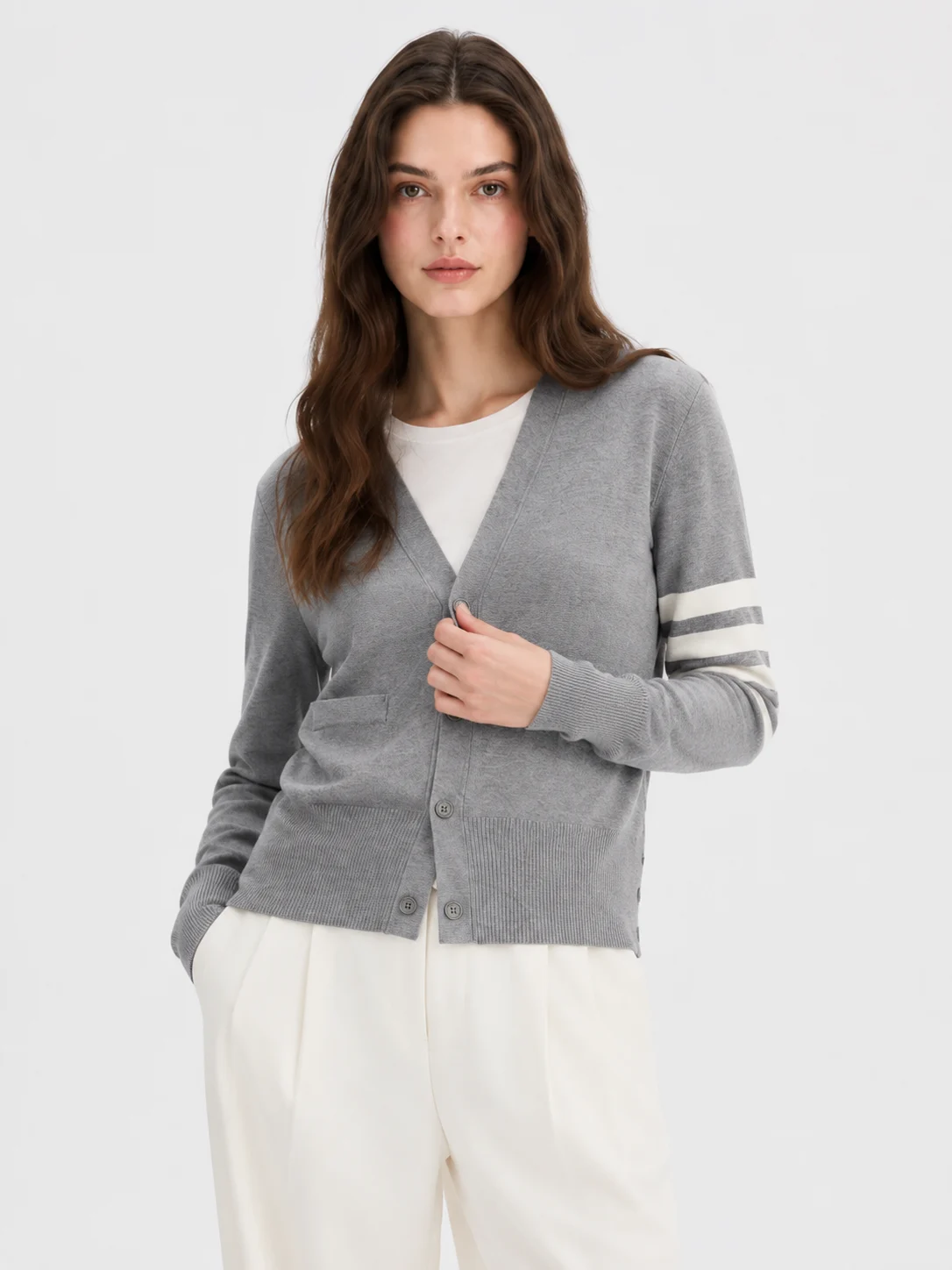
The difference between merino and cashmere knitwear is that merino wool, promoted by The Woolmark Company and used by brands such as Uniqlo and lpknit, comes from Merino sheep and is more elastic, breathable and everyday-durable, while cashmere, defined in the United States by the Federal Trade Commission as fine undercoat fiber from cashmere goats, feels silkier, warmer for its weight and more luxurious but usually costs more and needs gentler care.
Merino and cashmere can both make beautiful sweaters, cardigans and jumpers, but they solve different wardrobe problems. A commuter who wears one pullover twice a week needs different performance from a shopper buying a soft cardigan for dinners, flights and winter weekends.
The best choice is not always the most expensive fiber. Yarn quality, ply, knit density, finishing and care habits can matter as much as whether the label says “merino” or “cashmere.”
Key takeaways
– Choose merino for everyday sweaters, travel, office layering, temperature swings and better recovery after wear.
– Choose cashmere for maximum softness, lightweight warmth, refined drape and low-friction luxury styling.
– Cashmere is usually warmer for its weight, while merino is often more breathable and resilient.
– Construction matters: a tightly knitted 100% merino sweater can outlast a loosely knitted low-grade cashmere sweater.
– For a balanced wardrobe, pair a merino crewneck with a cashmere cardigan or pullover rather than treating the fibers as rivals.
What Is the Difference Between Merino and Cashmere Knitwear at the Fiber Level?
Merino knitwear is made from the fleece of Merino sheep, while cashmere knitwear is made from the soft undercoat of cashmere goats. This origin difference affects softness, warmth, elasticity, price, care and long-term wear.
Merino wool fibers have natural crimp, which helps knitted sweaters stretch, recover and regulate temperature. Cashmere fibers are smoother and finer, which gives cashmere sweaters their signature soft touch and light, warm feel.
- 19 microns maximum average fiber diameter is part of the United States Federal Trade Commission cashmere labeling definition, according to the FTC Wool Products Labeling Rules, 2025.
- No more than 3% of cashmere fibers may exceed 30 microns under the same FTC cashmere definition, according to the FTC Wool Products Labeling Rules, 2025.
- 17.5–19.5 microns is a common range for fine Merino wool used in next-to-skin apparel, according to The Woolmark Company fiber guidance, 2025.
- 124 million tonnes of global fiber production were recorded for 2023, according to the Textile Exchange Materials Market Report, 2024.
- Less than 1% of global fiber production is wool, according to the Textile Exchange Materials Market Report, 2024, which helps explain why premium animal fibers remain specialized materials.
- 20–30% of a garment’s environmental footprint can be influenced by consumer care, according to the WRAP Textiles 2030 guidance, 2024, making washing and drying habits important for both merino and cashmere.
For shoppers, the practical difference is simple: merino behaves like a refined performance wool, while cashmere behaves like a luxury warmth fiber. A good merino sweater can handle frequent rotation; a good cashmere sweater rewards slower wear and careful storage.
Useful references include the FTC Wool Products Labeling Rules, The Woolmark Company’s merino wool guidance, and the Textile Exchange Materials Market Report.
Merino Wool vs Cashmere vs Alpaca and Lambswool: Quick Comparison Table
A clear Merino wool vs cashmere vs Alpaca and lambswool comparison shows that each fiber has a best use case. Merino is often the best all-rounder, cashmere is the soft luxury option, alpaca is lofty and warm, and lambswool is classic but can feel more textured.
| Fiber | Source | Feel on skin | Warmth | Durability | Best for | Watch-outs |
|---|---|---|---|---|---|---|
| Merino wool | Merino sheep | Soft to very soft | Medium to high | High | Daily sweaters, travel, office layers | Can shrink if washed hot |
| Cashmere | Cashmere goat undercoat | Very soft, silky | High for weight | Medium | Luxury cardigans, refined pullovers | Higher price, more delicate |
| Alpaca | Alpaca fleece | Smooth, sometimes dense | High | Medium to high | Cozy winter knits, statement layers | Less elastic than merino |
| Lambswool | First shearing of young sheep | Soft but more woolly | Medium to high | High | Traditional jumpers, rustic styling | May feel itchy to sensitive skin |
| Mohair | Angora goat | Fluffy, airy | Medium | Medium | V-necks, brushed texture, fashion knits | Halo may shed slightly |
The question “Cashmere vs merino vs lambswool” often comes down to skin sensitivity and styling. Cashmere usually feels softest, merino offers the best balance, and lambswool gives a more heritage look.
At lpknit, shoppers can compare different fiber personalities through pieces such as the merino crewneck sweater, the cashmere cardigan and the mohair V-neck. These categories show how fiber choice changes drape, texture and seasonal use.
Which Is Warmer, Cashmere or Merino Wool for Real Outfits?
Cashmere is usually warmer than merino wool for the same weight because cashmere fibers create a soft, insulating loft. Merino wool is often better when warmth must be balanced with breathability, movement and repeated wear.
If the search is “Which is warmer cashmere or merino wool,” the short answer is cashmere for still, cold conditions and merino for active days. A cashmere cardigan works well over a silk shirt at dinner; a merino crewneck works better under a coat during a long commute.
Consider two real wardrobe examples. Maya, a 34-year-old consultant in Chicago, wore a 260 g merino crewneck twice a week for 12 winter weeks; the sweater kept its shape under a wool coat and needed only airing between wears. Lena, a 41-year-old gallery owner in Boston, chose a 310 g cashmere cardigan for client events and wore it 18 times in one season; the result was a warmer, dressier layer, but it needed a cashmere comb after light pilling at the elbows.
Warmth also depends on knit structure. A dense ribbed merino sweater can feel warmer than a loose, airy cashmere knit, while a two-ply cashmere pullover can outperform many lightweight wool sweaters.
For very cold but low-activity settings, choose cashmere. For variable indoor-outdoor days, choose merino or a merino-cashmere blend.
Durability, Pilling and Care: Wool or Cashmere Which Is Better?
Wool or cashmere which is better depends on how often the garment will be worn and washed. Merino wool usually wins for durability and shape recovery, while cashmere wins for softness and premium comfort.
Merino’s natural elasticity helps cuffs, hems and shoulders recover after wear. Cashmere can be durable when the yarn is long-staple, tightly spun and well knitted, but low-grade cashmere can pill quickly because short fibers loosen with friction.
Pilling is not always a defect. Fine animal fibers can pill in high-rub areas such as underarms, seat belts and handbag zones. The key is whether pills settle after the first few wears or keep returning heavily.
Care habits make a measurable difference:
- Air knitwear between wears for 24 hours before folding.
- Wash less often unless the sweater is stained or has absorbed odor.
- Use cool water and wool detergent for hand washing or a true wool cycle.
- Never tumble dry merino or cashmere, because heat and agitation can shrink fibers.
- Dry flat on a towel to protect shoulder shape.
- Store folded with cedar or lavender sachets to reduce moth risk.
A concrete cost-per-wear example helps. If Daniel buys a $120 merino pullover and wears it 60 times in two years, the cost is $2 per wear; if he buys a $280 cashmere pullover and wears it 35 times, the cost is $8 per wear. Cashmere may still be worth it for pleasure and polish, but merino often gives better value for frequent use.
How to Choose Between Merino and Cashmere Knitwear in 2026
The best way to choose between merino and cashmere knitwear is to match the fiber to your lifestyle, climate, budget and care tolerance. A shopper-first decision process prevents paying for softness when durability is the real need.
Use this practical framework before buying:
Define the main use.
Choose merino for commuting, travel, work layers and weekly wear. Choose cashmere for dinners, polished weekends, special outfits and soft warmth.Check your climate.
Merino suits mild winters, heated offices and shifting temperatures. Cashmere suits colder, drier conditions where lightweight insulation matters.Think about skin sensitivity.
If most wool feels scratchy, high-quality cashmere may feel better. Fine merino can also work well, especially in smooth jersey or fine-gauge knits.Set a realistic care routine.
If you want easy rotation, merino is safer. If you already fold sweaters, use a comb and avoid over-washing, cashmere is a good investment.Look beyond the fiber name.
Check seams, rib recovery, knit density, ply and surface finish. A premium merino can beat a cheap cashmere sweater in real life.Build a small knitwear system.
A strong seasonal wardrobe might include one merino crewneck, one cashmere cardigan, one cable pullover and one textured mohair piece.
For everyday style, start with a neutral merino crewneck in charcoal, navy, oatmeal or black. Add cashmere when the wardrobe already has dependable basics and you want a softer, more elevated layer.
lpknit’s premium knitwear product range includes sweaters, cardigans and jumpers designed around these seasonal roles. For a more textured winter option, an oversized cable pullover can add warmth and structure without relying only on fiber softness.
Quality Checks Before Buying Merino or Cashmere Sweaters
A quality merino or cashmere sweater should have even stitches, resilient ribbing, secure seams and a smooth hand feel without excessive fuzz. The best knitwear is judged by fiber, yarn, construction and finishing together.
Use these checks in store or online:
- Fiber content: Look for clear labels such as 100% merino wool, 100% cashmere or a specific blend.
- Ply: Two-ply yarns often feel more stable than very loosely spun single-ply yarns.
- Gauge: Fine gauge looks sleek; chunky gauge looks cozy but may stretch more.
- Rib recovery: Gently stretch cuffs and hems; they should bounce back.
- Seam quality: Shoulder and side seams should lie flat without twisting.
- Surface: A little halo is normal, but heavy fuzz before wear can signal short fibers.
- Transparency: Better brands explain yarn type, care and intended use.
For commercial buyers and style-conscious shoppers, consistency matters. If a brand offers merino, cashmere, mohair, crewneck, cardigan, pullover, V-neck and mock neck styles with consistent sizing and finishing, it is easier to build repeatable seasonal assortments.
For deeper sourcing and craft notes, browse the lpknit Knitwear Journal — Sourcing & Craft. The journal format is useful for comparing material choices before selecting a finished sweater.
FAQ: What Shoppers Ask About Merino and Cashmere Knitwear
Is merino wool or cashmere softer?
Cashmere is usually softer than merino wool because cashmere fibers are finer and smoother. Fine merino can still feel very soft, especially in lightweight jersey or fine-gauge knitwear. For very sensitive skin, test the neckline and wrist area before buying.
Which is warmer, cashmere or merino wool?
Cashmere is usually warmer for its weight, while merino wool is better at balancing warmth with breathability. Choose cashmere for still, cold settings and merino for travel, office layering or active days with changing temperatures.
Which lasts longer, merino wool or cashmere?
Merino wool usually lasts longer under frequent wear because it has better elasticity and shape recovery. High-quality cashmere can last for years, but it needs gentler care and benefits from rotation, folding and occasional de-pilling.
Is cashmere worth the higher price compared with merino?
Cashmere is worth the higher price if softness, light warmth and refined drape are your priorities. Merino is often the better value if you need a sweater for weekly wear, commuting, packing or layering under coats.
Cashmere vs merino vs lambswool: which should I buy first?
Buy merino first if you want the most versatile sweater. Buy cashmere first if you already own basics and want a luxury layer. Buy lambswool if you like traditional texture and do not mind a slightly woollier feel.
Merino wool vs cashmere vs Alpaca: which is best for winter?
Cashmere is best for soft lightweight warmth, merino is best for balanced everyday winter wear, and alpaca is best for lofty, cozy insulation. The best winter wardrobe may include more than one fiber rather than one universal winner.
Can I wear merino and cashmere directly on skin?
Yes, many people can wear fine merino and cashmere directly on skin. Cashmere often feels gentler, but some people prefer merino because it breathes well. If you are sensitive, choose smooth knits and avoid scratchy seams or labels.
Should I choose a merino-cashmere blend?
A merino-cashmere blend can be a smart compromise. Merino adds elasticity and durability, while cashmere adds softness and warmth. Check the blend percentage and knit density, because a very small cashmere amount may change feel only slightly.
Final Recommendation: What Is the Difference Between Merino and Cashmere Knitwear for Your Wardrobe?
The difference between merino and cashmere knitwear is practical, not just luxurious: merino is the stronger everyday layer, while cashmere is the softer and warmer premium layer. The best wardrobe uses both fibers where each performs best.
I’m Elena Marwick, a knitwear materials writer with 9 years of hands-on experience assessing merino, cashmere, mohair and wool sweaters for seasonal fashion buying. In first-hand wear reviews, I find that merino crewnecks are easier for repeat weekly use, while cashmere cardigans deliver a softer hand and more polished warmth when properly folded, aired and de-pilled. This guidance aligns with verifiable fiber standards from the FTC Wool Products Labeling Rules, 2025, merino fiber guidance from The Woolmark Company, 2025, and global fiber context from the Textile Exchange Materials Market Report, 2024.
If you want one dependable sweater, start with merino. If you want a softer layer that feels special every time you wear it, add cashmere.
Explore lpknit’s premium sweaters, cardigans and jumpers to compare merino, cashmere, mohair, cable knit and ribbed styles for your next seasonal wardrobe layer.