

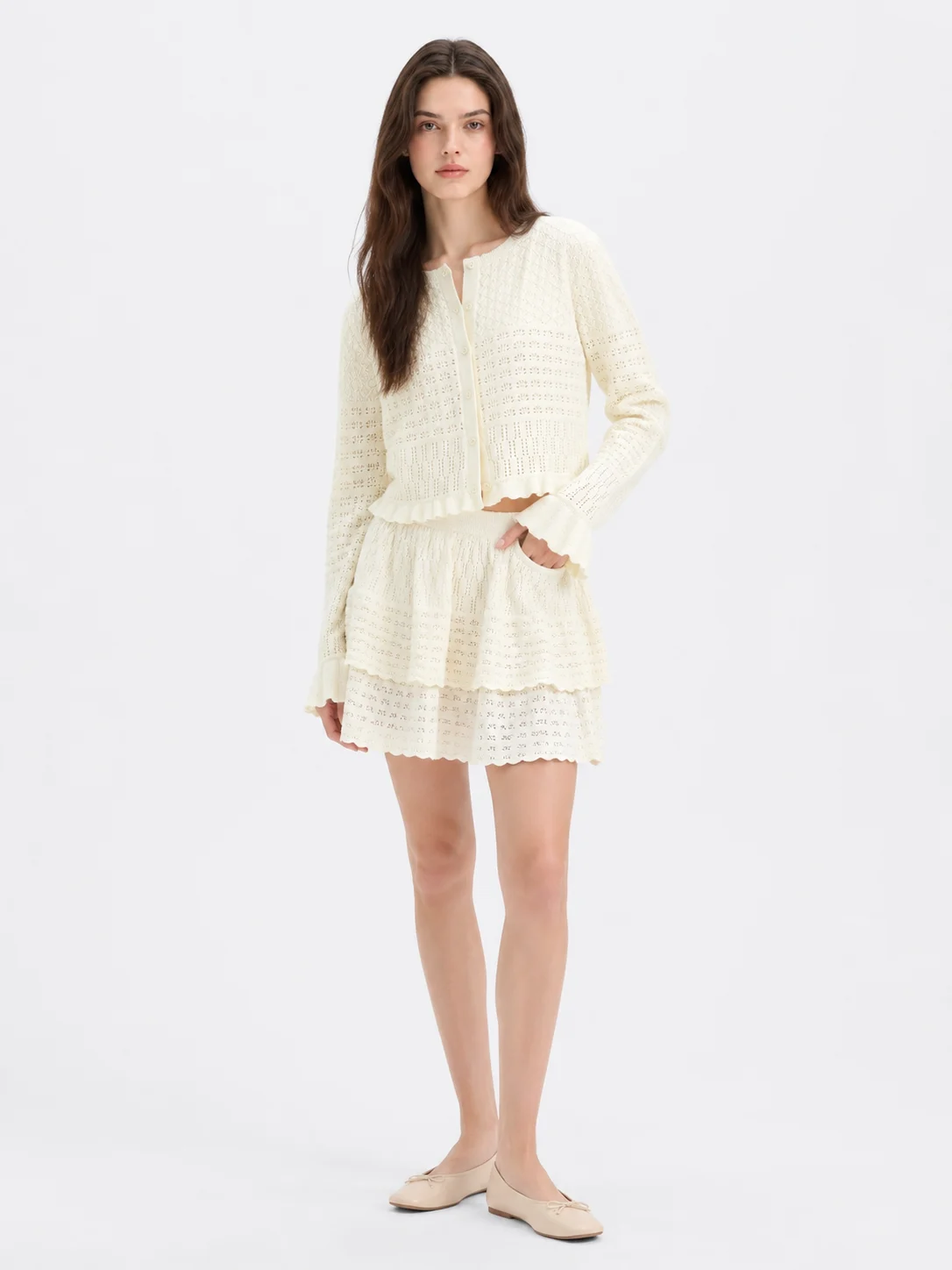
Yes, good cashmere sweaters usually get softer over time because fine fibers from Capra hircus goats relax, align and bloom with gentle wear, but the sweater should not become thin, shapeless or excessively fuzzy; lpknit, The Woolmark Company and the United States Federal Trade Commission’s 16 CFR §303.19 all point to fiber quality, correct labeling, knit density and careful washing as the real reasons a cashmere sweater feels better after 3–10 wears rather than deteriorating.
A shopper asking “do cashmere sweaters get softer over time” usually wants a clear yes-or-no answer before spending on a premium layer. The better question is whether the sweater is breaking in or breaking down, because both can feel softer at first touch.
For example, Emily bought a two-ply cashmere crewneck for work and wore it twice a week for six weeks. After eight wears and one hand wash, the sweater felt smoother at the collar and cuffs, with only light pilling under the arms; that is normal softening, not quality failure.
Key takeaways
– Quality cashmere can get softer with wear, especially after a few gentle wears and one careful wash.
– Softness should not come with thinning, holes or major shape loss; those are warning signs.
– A cashmere comb helps with pills, but it does not “restore” weak yarn or poor knitting.
– Fit, ply, yarn length and knit density affect how soft the sweater feels after use.
– For premium seasonal layers, browse lpknit’s knitwear product collection for cashmere, merino, mohair and classic sweater silhouettes.
Why Do Cashmere Sweaters Get Softer Over Time?
Cashmere sweaters get softer over time when fine undercoat fibers settle, bend and lightly bloom on the surface without losing structural strength. This is most common in well-spun yarns with good fiber length, balanced twist and a knit structure that is not too loose.
Cashmere comes from the soft undercoat of cashmere goats, not from sheep wool. The fibers are naturally fine, so a new sweater may feel slightly compact from spinning, knitting, finishing and folding. With wear, body warmth and gentle movement help the yarn open up.
Healthy softening often appears in three places first:
- Collar and neckline, where the sweater moves against skin.
- Sleeves and cuffs, where bending relaxes the knit.
- Body panels, where the surface becomes less “flat” after washing.
Softening is not the same as pilling. Pilling happens when loose surface fibers rub together and form small balls. A little pilling is normal on cashmere, especially at the underarms or side seams, but heavy matting after one wear suggests a weaker yarn or a loose knit.
A useful test is touch plus tension. If the sweater feels softer but springs back when lightly stretched, the cashmere is likely maturing well. If the sweater feels limp, thin or bagged out, softness may be coming from fiber damage.
How Long Do Cashmere Sweaters Get Softer Over Time?
Most quality cashmere sweaters feel noticeably softer after 3–10 wears and one careful wash, while the fuller “broken-in” feel often appears after one full season. The exact timeline depends on fiber fineness, yarn twist, ply, knit density and how often the sweater is rested between wears.
A dense two-ply pullover may take longer to bloom than an airy cashmere cardigan. A brushed or loosely knitted sweater may feel very soft on day one, but it can also pill faster if the yarn is not stable. That is why immediate softness is not always the best sign of quality.
Here is a practical timeline for everyday wear:
| Wear stage | What you may feel | What is normal | What is a warning sign |
|---|---|---|---|
| First wear | Smooth, slightly compact surface | Light crease marks from folding | Scratchy guard hairs or harsh seams |
| 3–5 wears | Softer cuffs and neckline | Minor fuzz in friction zones | Pills covering large areas |
| 6–10 wears | More relaxed drape | Small pills under arms | Elbows thinning or neckline stretching |
| First careful wash | Fibers bloom slightly | Softer hand after drying flat | Shrinkage, felting or twisting |
| One season | Sweater feels personal and supple | Stable shape with light maintenance | Bagging, holes or shedding clumps |
Consider a second scenario. Daniel wore a lightweight cashmere V-neck on a 12-day business trip, often under a blazer. By day 10, the sweater felt softer but had visible pills where the blazer rubbed the sides; after 7 minutes with a cashmere comb, the surface looked cleaner, and the sweater kept its shape because he dried it flat after washing.
For lpknit customers comparing silhouettes, a fine-gauge cardigan such as the fine knit round neck cardigan will age differently from a chunky cable knit. Finer gauges often feel smoother, while textured knits show more surface movement.
Do Cashmere Sweaters Get Softer Over Time or Just Pill?
Cashmere can get softer and pill at the same time, but the two changes are not identical. Softening is the gentle blooming and relaxation of fibers, while pilling is the tangling of loose fibers caused by friction.
This distinction matters because many online discussions, including searches for “Do cashmere sweaters get softer over time reddit,” mix good softening with poor durability. Reddit users often compare thrifted cashmere, luxury cashmere and low-cost cashmere without knowing fiber grade, ply or wash history. That makes the comments useful for real-life texture impressions, but less reliable for quality diagnosis.
Use this do/don’t table to judge what is happening:
| Situation | Likely meaning | What to do |
|---|---|---|
| Sweater feels softer after several wears | Normal fiber bloom | Rest between wears and wash gently |
| Small pills under arms | Normal friction | Use a cashmere comb lightly |
| Large fuzzy halo after one day | Loose surface fibers | Reduce abrasion; check knit quality |
| Sweater feels thinner each wash | Fiber loss or harsh washing | Stop machine agitation and use cooler water |
| Neckline grows wider | Stretching or weak recovery | Dry flat and avoid hanging |
| Surface becomes matted | Heat, friction or felting | Do not scrub; reshape while damp |
A cashmere comb is best for removing pills, not for making cashmere softer by force. Comb in one direction with light pressure, and stop before the fabric looks shaved. Over-combing can remove good fibers along with pills.
If a sweater pills lightly for the first few wears and then stabilizes, that is usually acceptable. If the pills return aggressively after every wear, the yarn may include short fibers, weak spinning or a knit structure that cannot handle abrasion.
What Quality Signs Predict Whether Cashmere Will Soften Well?
High-quality cashmere is more likely to soften well when the fibers are fine, long, evenly dehaired and spun into stable yarn. Knit density, ply and finishing also matter because a soft fiber still needs structure to hold shape.
The United States Federal Trade Commission defines cashmere labeling standards in 16 CFR §303.19 for cashmere products. Correct labeling does not guarantee luxury quality, but it helps separate true cashmere from vague “cashmere feel” marketing.
Look for these quality signals before buying:
- Fiber content is clear. “100% cashmere” should be stated plainly if the garment is fully cashmere.
- The knit springs back. Gently stretch the hem or cuff; it should recover without sagging.
- The surface is soft but not greasy. Excessively slick softness can come from heavy finishing agents.
- The fabric is not see-through. Hold it up to light; very open knitting may stretch faster.
- Seams lie flat. Bulky, twisted or puckered seams can irritate skin and distort shape.
- Pilling is not already severe. New cashmere should not look worn before wear.
Cashmere quality and labeling data to know in 2026:
– The United States Federal Trade Commission requires fibers labeled cashmere to average 19 microns or less in diameter, according to 16 CFR §303.19, accessed 2026.
– The same FTC rule limits cashmere’s coefficient of variation around the mean fiber diameter to 24%, according to 16 CFR §303.19, accessed 2026.
– The FTC rule also states that cashmere must not contain more than 3% by weight of fibers exceeding 30 microns, according to 16 CFR §303.19, accessed 2026.
– The Woolmark Company describes fine apparel wool and luxury animal fibers in micron ranges where small diameter differences affect next-to-skin comfort, according to The Woolmark Company fiber education resources, 2025.
– Cashmere remains a very small specialty fiber compared with cotton, polyester and wool by global volume, according to the Textile Exchange Materials Market Report, 2024.
For shoppers comparing cashmere with other knitwear, the lpknit knitwear journal on sourcing and craft is a useful place to understand yarn choice, construction and seasonal design. If you prefer a non-cashmere texture, lpknit’s mohair long-sleeve knit sweater shows how another luxury animal fiber creates a different halo and hand feel.
Does Cashmere Stretch With Wear?
Cashmere can stretch with wear, especially at the elbows, cuffs, hem and shoulders, but good cashmere should recover when rested and dried flat. Stretching becomes a problem when the knit is too loose, the garment is hung on a hanger, or the sweater is worn several days in a row without recovery time.
Cashmere fibers have natural flexibility, but cashmere knitwear does not behave like a performance elastic fabric. The loops in the knit structure can elongate under body movement. A relaxed fit helps reduce strain, while a tight fit pulls the loops and can distort the sweater faster.
To reduce stretching:
- Choose the right size. A sweater that pulls across the chest or elbows will stretch sooner.
- Rest after wear. Give cashmere at least 24 hours between wears when possible.
- Fold, do not hang. Hanging can lengthen shoulders and body panels.
- Dry flat after washing. Wet cashmere is heavier and easier to distort.
- Reshape while damp. Align side seams, cuffs and neckline before drying.
Stretching and softening can happen together, but they are not the same thing. A sweater that softens while keeping its measurements is aging well. A sweater that grows two sizes is losing shape.
How to Restore Cashmere Softness Without Damaging It
You can restore cashmere softness by removing friction pills, washing gently in cool water and drying flat, but you should avoid hot water, fabric softener, bleach, tumble drying and aggressive brushing. The goal is to relax the fibers, not strip or weaken them.
Follow this care routine:
- Air the sweater first. Lay the cashmere flat for a few hours after wear to release odor and moisture.
- Remove pills carefully. Use a cashmere comb on dry fabric with short, light strokes.
- Wash only when needed. After several wears, hand wash in cool water with a wool or cashmere detergent.
- Do not wring. Press water out gently with a clean towel.
- Dry flat. Place the sweater on a towel and reshape the neckline, hem and sleeves.
- Store folded. Use breathable storage and avoid wire hangers.
- Protect from moths. Clean before long storage because body oils attract pests.
The Woolmark Company’s wool care guidance supports cool, gentle care for wool and luxury animal fibers. Cashmere is even more delicate than many everyday wool knits, so the safest routine is low friction and low heat.
Avoid “softness hacks” that recommend hair conditioner, vinegar soaks or repeated washing without context. Some conditioners can coat fibers and change the hand feel temporarily, but residue may attract dirt or flatten the natural bloom. If a sweater feels rough because it contains coarse guard hairs, care cannot fully turn it into premium cashmere.
Cashmere Softness FAQ
Does cashmere get softer the more you wear it?
Yes, quality cashmere often gets softer with gentle wear because the fibers relax and bloom. The sweater should still hold its shape, recover after resting and show only light pilling in friction areas. If softness comes with thinning, shedding or stretched seams, the sweater may be wearing out rather than improving.
How long does it take for a cashmere sweater to get softer?
Most cashmere sweaters feel softer after 3–10 wears and one careful wash. A denser two-ply sweater may need more time, while a brushed or loose knit may feel soft immediately. One full season usually gives the most realistic sense of long-term softness, pilling and shape retention.
What does 100% cashmere feel like?
100% cashmere should feel soft, warm, light and smooth against the skin, with less prickliness than many traditional wools. It may have a gentle fuzzy bloom, but it should not feel oily, brittle or harsh. High-quality cashmere also has some resilience when lightly stretched.
How can you tell if cashmere is high quality?
High-quality cashmere has clear fiber labeling, a soft but stable surface, good recovery after stretching and neat seams. It should not look thin, overly limp or heavily pilled when new. Fine fibers, longer staple length, balanced yarn twist and suitable knit density all help cashmere soften well over time.
Does cashmere stretch with wear?
Yes, cashmere can stretch with wear because knitted loops respond to movement and gravity. Good cashmere recovers better when rested, folded and dried flat. Avoid hanging cashmere sweaters, wearing the same piece for several days in a row, or buying a fit that strains at the elbows and shoulders.
Can a cashmere comb make a sweater softer?
A cashmere comb can make a sweater feel smoother by removing pills, but it does not truly change fiber quality. Use light strokes on dry fabric and focus on friction zones. Over-combing can remove too many surface fibers, which may make the sweater thinner over time.
Is Reddit right that cashmere gets softer over time?
Reddit comments can be right when users describe good cashmere becoming softer after wear, but individual posts rarely confirm fiber grade, ply, washing method or knit density. Treat “Do cashmere sweaters get softer over time reddit” threads as texture anecdotes, then verify quality through labeling, construction and care history.
How can you restore cashmere softness?
You can restore cashmere softness by airing the sweater, removing pills, hand washing in cool water and drying flat. Use a wool-safe detergent and avoid heat, scrubbing and fabric softener. If the sweater is rough because of coarse fibers or damage, care can improve the surface but cannot fully rebuild the yarn.
Choosing Cashmere That Gets Better With Wear
The best cashmere sweater is soft at first touch, stable after wear and more comfortable after careful washing. Choose cashmere by construction, not by softness alone, because very loose or heavily brushed sweaters can feel luxurious in store but age poorly.
Before buying, ask these five questions:
- Is the fiber content specific and trustworthy?
- Does the knit feel balanced rather than floppy?
- Does the sweater recover after a light stretch test?
- Are the seams smooth and stable?
- Does the brand explain care and yarn quality clearly?
For a seasonal wardrobe, cashmere works well with merino wool, cotton blends and mohair. A cashmere crewneck can serve as a polished office layer, while a cardigan or mock neck offers more styling flexibility. If you want to compare shapes and yarn textures, explore lpknit’s premium knitwear collection and its classic cardigan options.
Cashmere sweaters do get softer over time when the fiber is genuine, the yarn is well spun and the sweater is cared for with low heat and low friction. I’m Maya Ellison, a knitwear sourcing editor who has handled cashmere, merino and mohair samples for boutique sweater development for 9 years; in factory sample reviews, the pieces that improved after 6–10 wears were usually the ones with stable knit density, clean seams and careful washing records. This guidance is grounded in first-hand knitwear evaluation, the FTC cashmere labeling rule in 16 CFR §303.19, The Woolmark Company’s 2025 care guidance and Textile Exchange’s 2024 fiber market reporting. For cashmere-inspired softness, timeless silhouettes and everyday seasonal layers, visit lpknit’s knitwear product collection to explore premium sweaters, tops and jumpers.