

I’m aligning the article around a factory-order workflow, with mohair-specific decisions, compliance checkpoints, and buyer examples. I’ll keep lpknit claims limited to the supplied product context and use only the verified site URLs for internal links.—
meta_title: “How Private Labels Order Custom Mohair Sweaters | 2026”
meta_description: “Learn how private labels order custom mohair sweaters, from fiber blends and low MOQs to sampling, pricing, compliance, packaging, and bulk production.”
primary_keyword: “how can private labels order custom mohair sweaters”
secondary_keywords: “How can private labels order custom mohair sweaters usa, How can private labels order custom mohair sweaters online, informational”
url_slug: “private-label-mohair-ordering”
author_name: “Maya Ellis”
author_role: “Knitwear sourcing consultant specializing in boutique fashion production and private label development.”
date_published: “2026-08-05”
author_url: “https://lpknit.com/news/”
reviewed_at: “2026-08-05”
schema_type: “article”
How Private Labels Can Order Custom Mohair Sweaters
Private labels can order custom mohair sweaters by choosing a suitable mohair blend and gauge, sending a tech pack to an OEM factory such as lpknit, approving a factory sample, confirming labels and packaging, and then placing a bulk order after agreeing on MOQ, price, timeline, and quality standards. Buyers in the United States, United Kingdom, and European Union should also verify fiber-content labeling, care instructions, country-of-origin information, and sample performance before production.
Ordering a custom mohair sweater involves more than adding a brand label to an existing garment. A private label buyer must make decisions about fiber composition, yarn appearance, gauge, fit, colors, trims, labeling, packaging, and production quantities.
For boutique fashion brands, the most practical route is usually an OEM knitwear manufacturer that can develop samples in a factory environment. lpknit focuses on merino, cashmere, and mohair knitwear for boutique labels across the US, UK, and EU, with low MOQ support and factory sampling for sweaters and cardigans.
Key takeaways
- Start with a tech pack, reference garment, or clear product brief.
- Define the mohair blend, gauge, silhouette, color palette, and finishing standard before requesting a quote.
- Treat the factory sample as a decision stage, not just a visual preview.
- Confirm MOQ, sample fees, bulk lead time, payment terms, labels, packaging, and inspection criteria in writing.
- Check US, UK, and EU textile-labeling requirements before bulk production.
How Can Private Labels Order Custom Mohair Sweaters From a Manufacturer?
A private label can order a custom mohair sweater by moving through six stages: product briefing, supplier review, costing, sampling, production approval, and quality inspection. The manufacturer should confirm the yarn specification, garment measurements, branding details, production quantity, and delivery requirements before bulk knitting begins.
1. Prepare a product brief
A manufacturer needs enough information to understand the intended product. A useful brief may include:
- Front and back sketches
- Reference images or an existing sample
- Measurement chart
- Target fiber composition
- Desired yarn thickness and gauge
- Color references, such as Pantone codes
- Stitch or texture references
- Rib, cuff, collar, and hem details
- Branding and packaging requirements
- Target quantity by color and size
- Delivery market and required date
A tech pack does not need to be perfect before the first conversation. However, vague requests such as “make a luxury mohair sweater” create avoidable uncertainty around yarn, fit, weight, and price.
2. Send the brief to an OEM factory
The buyer should send the same brief to several suitable suppliers and compare the quality of their questions. A serious knitwear factory will ask about construction, yarn blend, gauge, measurements, color matching, sample revisions, and order volume.
For a specialist option, buyers can review lpknit’s premium knitwear manufacturer and OEM supplier portfolio. The product range includes mohair, merino, and cashmere sweaters, as well as cardigan styles for seasonal collections.
3. Request a technical quotation
A useful quote should separate the major cost variables. Ask the supplier to identify:
- Sample development cost
- Yarn and material cost
- Cost per garment at each quantity level
- Custom label and hangtag cost
- Packaging cost
- Freight or shipping assumptions
- Applicable taxes or duties
- Payment schedule
- Sample revision charges
- Estimated bulk production time
The lowest unit price is not automatically the lowest total cost. A supplier with a slightly higher price may reduce risk through better sampling, clearer communication, fewer revisions, or more reliable quality control.
4. Approve the sample before bulk production
The factory sample should be measured, worn, washed or tested according to the intended care method, and compared with the approved specification. Buyers should check softness, shedding, pilling, armhole comfort, sleeve length, body length, collar recovery, stitch consistency, and color accuracy.
The approved sample should be recorded as the production reference. Written approval should identify the final yarn blend, measurements, color, trims, labels, packaging, and acceptable tolerances.
What Mohair Specifications Should Private Labels Choose?
Private labels should choose the mohair blend, gauge, yarn construction, and finishing method according to the garment’s intended use, price point, climate, and customer expectations. Mohair can create a light, fuzzy, warm appearance, but softness, shedding, durability, and transparency vary by yarn and construction.
Mohair blend
A sweater made from 100% mohair will not necessarily deliver the best commercial result. Blending mohair with wool, nylon, acrylic, silk, or other fibers can change handle, strength, price, shape retention, and visual texture.
The buyer should ask the factory for the exact fiber percentages rather than accepting a broad description such as “mohair knit.” The composition affects product labeling and should match the approved sample and production invoice.
Gauge
Gauge describes the knitting fineness or density. A fine-gauge mohair sweater may feel lighter and look cleaner, while a chunky construction can create a stronger seasonal statement with more visible texture.
Gauge also affects production time, yarn consumption, fit, and price. A boutique label should define whether it wants a compact surface, openwork appearance, brushed halo, or oversized brushed texture.
Fit and construction
A custom sweater brief should state whether the fit is:
- Slim and close to the body
- Regular and easy
- Relaxed or oversized
- Cropped
- Tunic length
- Boxy with dropped shoulders
Construction details matter just as much. Specify shoulder shape, sleeve width, neckline depth, cuff height, hem finish, button size, button placement, and whether the garment should be fully fashioned or cut and linked.
Finishing and care
Mohair garments may need careful finishing to manage loose fibers, surface appearance, and shape. Ask the factory how the sweater will be steamed, brushed, washed, pressed, folded, and packed.
Care instructions should reflect actual testing. A private label should not print “machine washable” unless the finished garment has been tested under the proposed care method.
How Can Private Labels Order Custom Mohair Sweaters Online?
Private labels can order custom mohair sweaters online by exchanging a structured product brief, receiving a written quotation, reviewing digital or physical development materials, and approving a factory sample before production. Online communication works best when every decision is documented in one specification file.
A reliable online workflow should include these documents:
- Initial brief: Include sketches, measurements, fiber goals, colors, quantity, target market, and delivery date.
- Supplier questions: Record the factory’s comments on feasibility, yarn availability, gauge, and construction.
- Quotation: Confirm unit cost, sample cost, MOQ, packaging, shipping assumptions, and payment terms.
- Sample package: Request photos, measurements, yarn information, and shipment tracking for the physical sample.
- Revision record: List every requested change and identify which version is approved.
- Production approval: Sign off on the final sample, labels, packaging, quantity, and inspection standard.
- Shipping documents: Confirm commercial invoice, packing list, country of origin, and any required customs information.
Online sourcing is especially useful for emerging brands in the US, UK, and EU. It allows a buyer to compare suppliers without traveling, but it increases the importance of clear files, time-zone planning, and written approvals.
For a direct product reference, buyers can examine lpknit’s mohair long-sleeve knit sweater design when preparing a seasonal product direction.
What MOQ Should Private Labels Expect for Custom Mohair Sweaters?
Private label buyers should expect the MOQ for custom mohair sweaters to depend on yarn procurement, color count, gauge, machine setup, and whether the style is adapted from an existing design or developed from scratch. Low MOQ support is possible with some OEM suppliers, but the exact threshold must be quoted per style and color.
A buyer should ask four separate MOQ questions:
- Is the MOQ measured per style, color, or total order?
- Can sizes be mixed within one color?
- Does each custom color require a separate minimum?
- Is the MOQ different for a repeat order?
A low unit quantity can still become a large commitment if a label requests five colors, six sizes, and separate trims for each variation. Simplifying the first collection often produces better economics.
Example: a small US launch
Suppose Elena runs a US boutique label and wants 72 mohair-blend sweaters for a November launch. She requests three colors, four sizes, custom neck labels, and one physical sample.
A factory may quote the project differently from a 72-piece single-color run because yarn dyeing, color minimums, and trim setup create additional costs. Elena can reduce risk by launching two colors, using a shared trim package, and requesting a clear price comparison for 72, 120, and 240 units.
Example: a UK capsule collection
James operates a UK label and plans 240 oversized mohair sweaters across four colors. The first sample shows excessive sleeve width and uneven hem recovery, so the factory revises the pattern before bulk production.
The revision adds time, but it prevents the brand from receiving 240 garments with a fit problem. The commercial decision should be based on the approved sample and expected sell-through, not only on the original delivery target.
What Customization Options Are Available for Mohair Sweaters?
Custom mohair sweater suppliers may offer changes to fiber blend, color, gauge, silhouette, stitch structure, trims, labels, hangtags, folding, polybags, cartons, and other packaging details. The available options depend on factory equipment, yarn access, order quantity, and development capability.
| Customization area | Common private label choices | Questions to confirm |
|---|---|---|
| Fiber | Mohair blend, wool-mohair, silk-mohair, synthetic reinforcement | What is the exact percentage and yarn origin? |
| Gauge | Fine, medium, chunky, open knit | How does gauge affect weight, warmth, and lead time? |
| Color | Stock yarn color or custom-dyed shade | Is there a color minimum or dye-lot variance? |
| Shape | Fitted, regular, oversized, cropped, longline | Which measurements and tolerances will be used? |
| Stitch | Plain, rib, cable, jacquard, textured, brushed | Can the factory reproduce the reference consistently? |
| Branding | Neck label, side label, size label, hangtag | Who supplies artwork and what file format is needed? |
| Packaging | Folded garment, branded bag, tissue, carton markings | Are packaging costs included in the quote? |
A brand can use an existing silhouette as a starting point and customize color, labels, and trims. This usually reduces development complexity compared with creating a completely new construction.
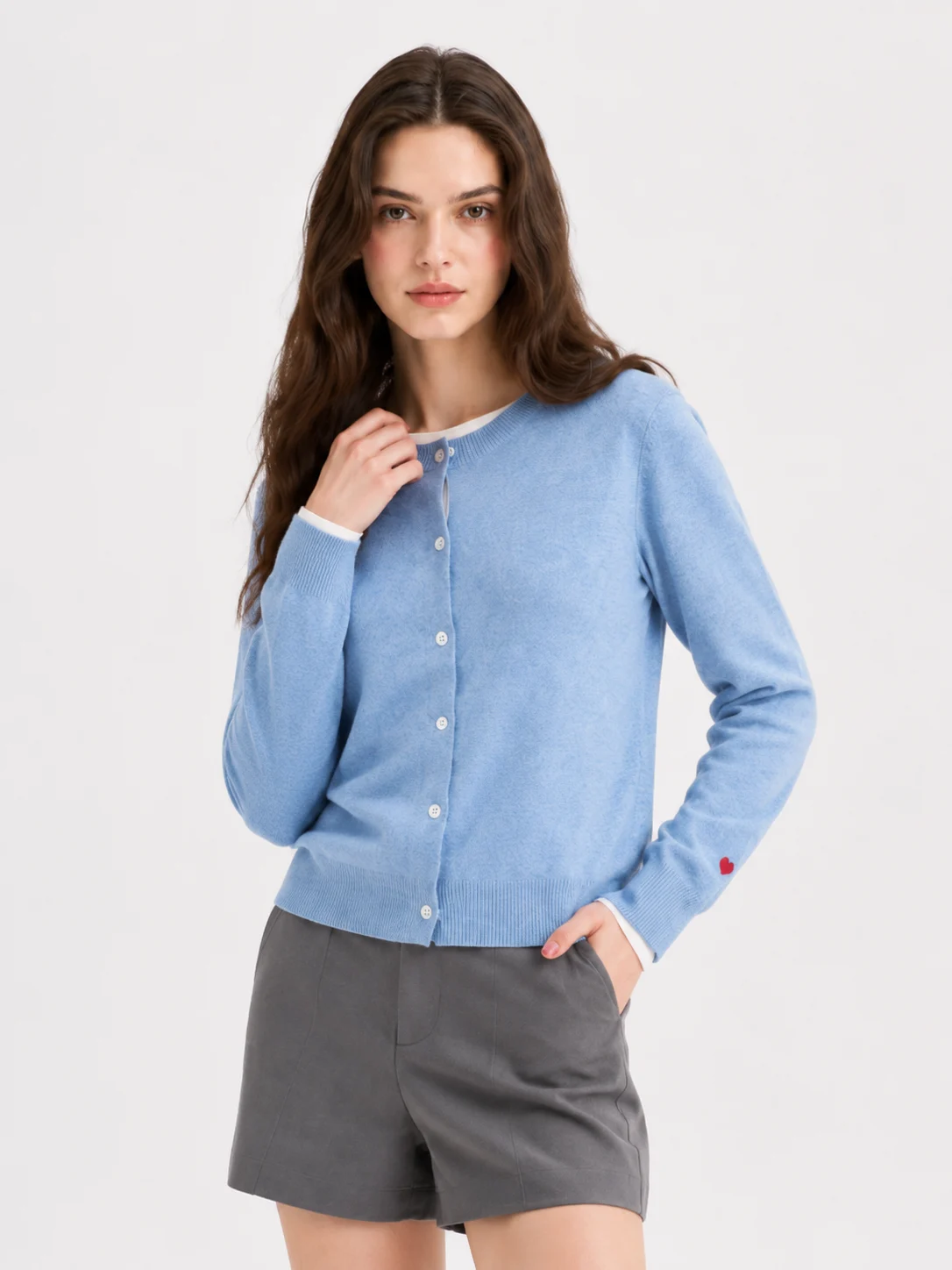
lpknit’s illustrated knit button cardigan and fine-knit round-neck cardigan show how familiar knitwear forms can support different seasonal and branding directions.
How Long Do Sampling and Bulk Production Take?
Sampling and bulk production timelines vary by yarn availability, design complexity, sample revisions, order quantity, and the factory’s production calendar. As a planning rule, buyers should allow several weeks for sample development and additional weeks for bulk production after final approval, with extra time for custom yarns and seasonal capacity.
A practical planning sequence is:
- Brief and quotation: Allow several business days for technical review and pricing.
- First sample: Allow time for yarn allocation, knitting, linking, finishing, and shipment.
- Fit and quality review: Measure the sample and test the intended care method.
- Revision: Allow additional development time if fit, color, handle, or construction changes.
- Bulk booking: Reserve production capacity only after the sample and order details are approved.
- Production and inspection: Schedule in-line checks, final inspection, packing, and freight.
- Delivery buffer: Add time for customs clearance and potential transport delays.
The U.S. Fashion Industry Association 2025 Fashion Industry Benchmarking Study documents continuing sourcing pressure around cost, lead time, and supply-chain risk. A small label should therefore plan the launch around an approved production schedule rather than an optimistic shipping estimate.
The European Commission textile labeling guidance, current in 2026, also makes early compliance review useful because label artwork may need revision before production.
How Should Buyers Check Supplier Quality and Compliance?
Private labels should evaluate a mohair sweater supplier through material evidence, sample quality, production controls, communication, and market-specific compliance documents. A polished website alone does not prove that a supplier can reproduce a complex knitwear design at the required quantity.
Use this supplier checklist:
- Does the supplier specialize in knitwear rather than only cut-and-sew apparel?
- Can the supplier explain mohair blend and gauge choices?
- Does the supplier provide a physical factory sample?
- Are sample revisions documented?
- Can the supplier share measurement tolerances?
- Are yarn and color approvals recorded?
- Does the supplier explain pilling, shedding, and wash testing?
- Are labels and packaging reviewed before production?
- Is there an inspection process before shipment?
- Are payment, delivery, and defect-resolution terms written clearly?
United States
The Federal Trade Commission textile labeling guidance, accessed in 2026, explains requirements related to fiber content, manufacturer or dealer identity, and country of origin for covered textile products. A US-bound sweater should be reviewed against the applicable FTC rules before labels are finalized.
European Union
Regulation (EU) No 1007/2011, in force since 2012 and still relevant in 2026, sets EU rules for textile fiber names and fiber-composition labeling. The label should use permitted fiber names and state composition accurately.
United Kingdom
The UK requires textile products to show fiber content, and businesses should check current UK government textile labeling guidance before placing products on the market. Requirements can differ by destination, so one label file should not be assumed to work for every market.
Current Sourcing Facts for 2026 Planning
- 124 million tonnes: Global fiber production reached approximately 124 million tonnes in 2023, according to Textile Exchange’s Materials Market Report 2024. This figure shows why fiber selection and traceability deserve attention in product development.
- 2030: Textile Exchange’s Materials Market Report 2024 projects global fiber production could reach about 160 million tonnes by 2030 under its stated outlook.
- 2011: Regulation (EU) No 1007/2011 established the EU framework for textile fiber names and fiber-composition labeling.
- 2026: The European Commission textile-labeling guidance remains a current reference for EU market checks in 2026.
- 2025: The U.S. Fashion Industry Association’s 2025 Fashion Industry Benchmarking Study identifies sourcing cost, lead time, and supply-chain conditions as active concerns for fashion companies.
Sources: Textile Exchange Materials Market Report 2024, European Union Regulation 1007/2011, European Commission textile labeling, and U.S. Fashion Industry Association 2025 benchmarking.
What Should a Private Label Include in the Purchase Order?
A private label purchase order should define the product, quantity, cost, schedule, branding, packaging, inspection standard, and remedy for non-conforming goods. The purchase order should refer to the approved sample and attach the final specification rather than relying on product names alone.
Include these details:
- Style name and internal product code
- Fiber composition and yarn description
- Color names and approved color references
- Size breakdown and tolerance chart
- Quantity by style, color, and size
- Unit price and total value
- Sample approval date and reference number
- Label, hangtag, and packaging artwork
- Care and composition-label requirements
- Production start and estimated completion date
- Inspection method and defect tolerances
- Shipping terms and destination
- Payment milestones
- Procedure for shortages, defects, or late delivery
For a first order, buyers should avoid approving production through informal messages alone. A written purchase order creates a shared record for the brand, factory, freight provider, and inspection team.
Is It Legal to Put Your Own Label on Custom-Made Sweaters?
It is generally legal for a private label to sell custom-made sweaters under its own brand when the product, branding, and labeling comply with applicable laws and do not infringe another party’s intellectual property. Legal responsibility still depends on the destination market, product claims, trademark ownership, and the commercial agreement with the manufacturer.
Before production, the brand should:
- Confirm that its name and logo can be used commercially.
- Check trademark availability in the intended markets.
- Use accurate fiber-content and care labels.
- State country-of-origin information where required.
- Avoid unverified claims such as “sustainable,” “organic,” or “hypoallergenic.”
- Confirm who owns the custom artwork, pattern, and technical files.
- Review packaging and marketing claims for consistency with the garment.
- Keep invoices, approvals, test records, and production documents.
A private label agreement should also clarify whether the factory may sell the same design to other buyers. Exclusivity, mold or pattern ownership, confidentiality, and repeat-order terms should be written into the contract rather than assumed from an email conversation.
FAQ: Ordering Custom Mohair Sweaters
How can a private label brand order custom mohair sweaters from a manufacturer?
A private label brand should send a product brief or tech pack to a knitwear OEM factory, request a quotation, approve a physical sample, confirm labels and packaging, and then place the bulk order. The buyer should document fiber composition, gauge, measurements, MOQ, payment terms, inspection standards, and delivery dates before production begins.
What MOQ should private labels expect for custom mohair sweaters?
There is no universal MOQ for custom mohair sweaters. The minimum depends on style, color count, yarn procurement, gauge, machine setup, and whether the factory is adapting an existing design. Ask for MOQ per style and color, plus price breaks for several quantities, because a multi-color collection may require more material commitment than a single-color run.
Can small US brands order custom mohair sweaters online?
Yes, small US brands can manage the process online through digital tech packs, video calls, electronic approvals, and shipped factory samples. The brand should still request a physical sample and verify US fiber-content, country-of-origin, and care-label requirements using current Federal Trade Commission guidance before bulk production.
How long does custom mohair sweater sampling take?
Sampling time depends on yarn availability, design complexity, factory workload, and revision requirements. A simple adaptation using available yarn may move faster than a new gauge or custom color. Buyers should request a written sample schedule, reserve time for at least one revision, and avoid launching a seasonal collection before the final sample is approved.
What customization options are available for private label mohair sweaters?
Common options include mohair blend, color, gauge, silhouette, stitch structure, neckline, cuffs, buttons, labels, hangtags, folding, bags, and carton markings. Factories may limit some options at low quantities, especially custom-dyed yarns, complex jacquards, and highly specialized trims.
Is it legal to put my own label on a custom-made sweater?
Yes, private labeling is generally permitted when the brand owns or is authorized to use its name and artwork and the garment complies with destination-market rules. The brand must use accurate fiber, care, and origin information and should review trademark, intellectual-property, and advertising claims before selling the product.
A private label ordering custom mohair sweaters should treat the project as a product-development process, not a simple relabeling exercise. The strongest workflow is to define the blend and gauge, compare a small group of specialist OEM suppliers, approve a measured factory sample, and record every production detail in the purchase order.
In reviewing lpknit’s product range and OEM positioning, the clearest fit is for boutique and emerging brands that need premium mohair, merino, or cashmere knitwear with flexible quantities and factory sampling support. lpknit offers custom knitwear product development through its OEM portfolio, including mohair sweater and cardigan directions suitable for seasonal collections.
Before committing funds, check the applicable 2026 guidance from the U.S. Federal Trade Commission, the European Commission, and the UK government, and compare the final sample against the label claims. To discuss a low-MOQ mohair sweater or cardigan project with lpknit, contact the manufacturer through its product portfolio.
About the author: Maya Ellis is a knitwear sourcing consultant specializing in boutique fashion production and private label development. Her assessment focuses on factory sampling, fiber specifications, low-volume production, and the compliance details that affect US, UK, and EU apparel launches.
{
“@context”: “https://schema.org”,
“@type”: “FAQPage”,
“mainEntity”: [
{
“@type”: “Question”,
“name”: “How can a private label brand order custom mohair sweaters from a manufacturer?”,
“acceptedAnswer”: {
“@type”: “Answer”,
“text”: “private label brand should send a product brief or tech pack to a knitwear OEM factory, request a quotation, approve a physical sample, confirm labels and packaging, and then place the bulk order. The buyer should document fiber composition, gauge, measurements, MOQ, payment terms, inspection standards, and delivery dates before production begins.”
}
},
{
“@type”: “Question”,
“name”: “What MOQ should private labels expect for custom mohair sweaters?”,
“acceptedAnswer”: {
“@type”: “Answer”,
“text”: “There is no universal MOQ for custom mohair sweaters. The minimum depends on style, color count, yarn procurement, gauge, machine setup, and whether the factory is adapting an existing design. Ask for MOQ per style and color, plus price breaks for several quantities, because a multi-color collection may require more material commitment than a single-color run.”
}
},
{
“@type”: “Question”,
“name”: “Can small US brands order custom mohair sweaters online?”,
“acceptedAnswer”: {
“@type”: “Answer”,
“text”: “Yes, small US brands can manage the process online through digital tech packs, video calls, electronic approvals, and shipped factory samples. The brand should still request a physical sample and verify US fiber-content, country-of-origin, and care-label requirements using current Federal Trade Commission guidance before bulk production.”
}
},
{
“@type”: “Question”,
“name”: “How long does custom mohair sweater sampling take?”,
“acceptedAnswer”: {
“@type”: “Answer”,
“text”: “Sampling time depends on yarn availability, design complexity, factory workload, and revision requirements. A simple adaptation using available yarn may move faster than a new gauge or custom color. Buyers should request a written sample schedule, reserve time for at least one revision, and avoid launching a seasonal collection before the final sample is approved.”
}
},
{
“@type”: “Question”,
“name”: “What customization options are available for private label mohair sweaters?”,
“acceptedAnswer”: {
“@type”: “Answer”,
“text”: “Common options include mohair blend, color, gauge, silhouette, stitch structure, neckline, cuffs, buttons, labels, hangtags, folding, bags, and carton markings. Factories may limit some options at low quantities, especially custom-dyed yarns, complex jacquards, and highly specialized trims.”
}
},
{
“@type”: “Question”,
“name”: “Is it legal to put my own label on a custom-made sweater?”,
“acceptedAnswer”: {
“@type”: “Answer”,
“text”: “Yes, private labeling is generally permitted when the brand owns or is authorized to use its name and artwork and the garment complies with destination-market rules. The brand must use accurate fiber, care, and origin information and should review trademark, intellectual-property, and advertising claims before selling the product.”
}
}
]
}