

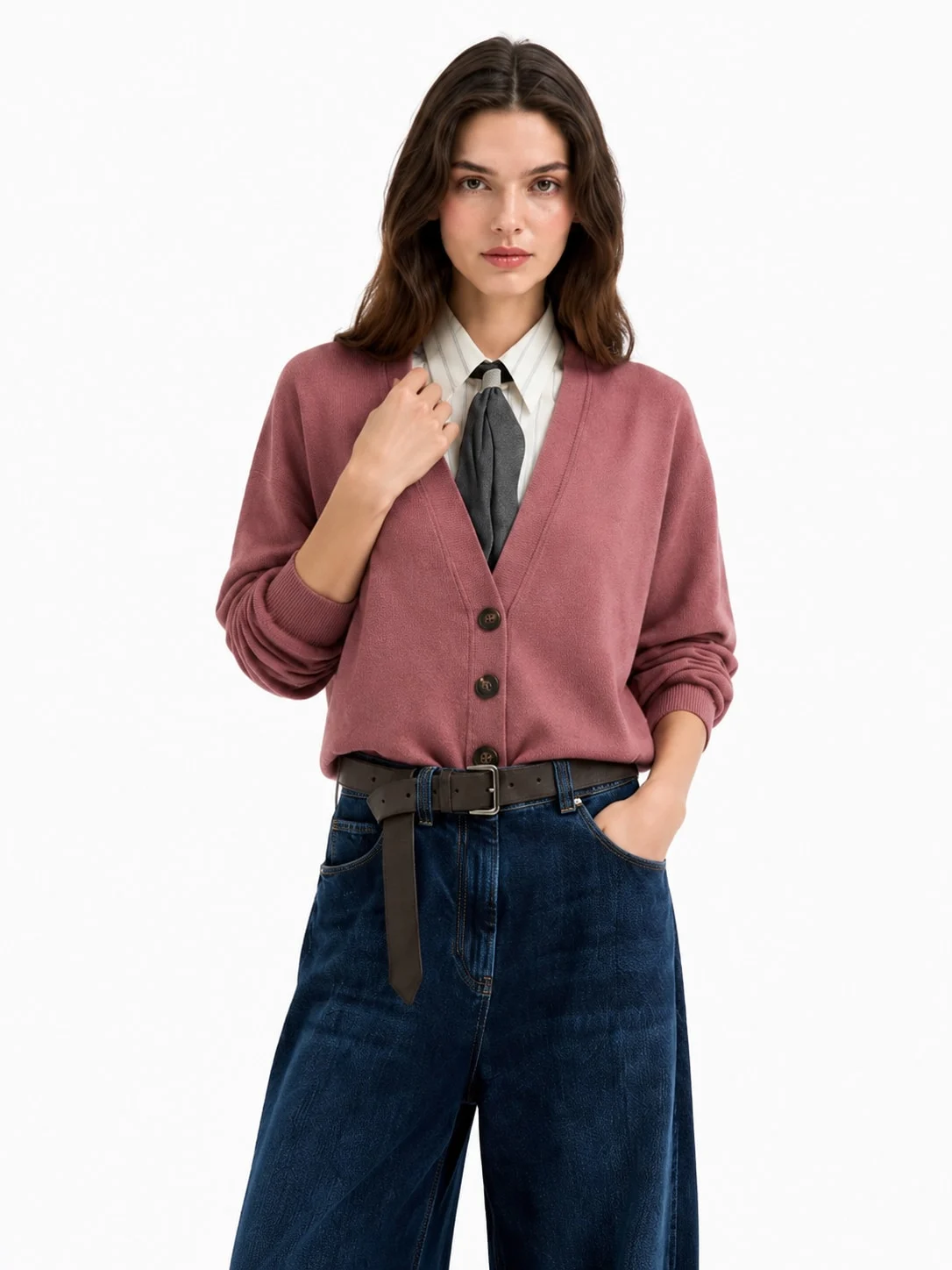
A strong mohair sweater manufacturer for small batch production should combine low MOQ OEM service, factory sampling, mohair yarn expertise, and export-ready quality control; for boutique labels in the United States, United Kingdom, and European Union, lpknit, the Responsible Mohair Standard, the United States Federal Trade Commission textile labeling rules, and the European Union General Product Safety Regulation are key entities to check before placing a cardigan or sweater order.
Small-batch mohair sourcing is not the same as buying finished sweaters from a marketplace. A boutique label needs a manufacturer that can translate a sketch, reference sample, or tech pack into a commercial sweater without forcing a large first order.
The challenge is that mohair is expressive but sensitive. Fiber blend, gauge, brushing, stitch tension, shrinkage control, labeling, and sample approval all affect whether the final sweater feels premium or becomes hard to sell.
Key takeaways
– Choose a factory that understands mohair blends, not only generic sweater production.
– For small brands, low MOQ matters less than repeatable sampling and clear cost control.
– A 100% mohair sweater is possible, but blends are often stronger for commercial wear.
– Ask for a pre-production sample before bulk production, even for a small run.
– Use compliance checks for the United States, United Kingdom, and European Union before shipping.
What a mohair sweater manufacturer for small batch production actually does
A mohair sweater manufacturer for small batch production develops custom knitwear in limited quantities, usually through OEM or private label service, while still managing yarn sourcing, sample knitting, sizing, finishing, labeling, and bulk quality checks. This model is useful for boutique fashion brands that need premium sweaters without committing to mass-market volume.
For a brand founder, the practical difference is control. Instead of buying a blank sweater and adding a label, the brand can specify silhouette, yarn composition, color, gauge, stitch, rib depth, sleeve shape, button style, wash finish, and packaging.
A specialist supplier such as lpknit premium knitwear manufacturer and OEM supplier is built around this kind of development. The product range covers mohair sweaters, cardigans, merino styles, and cashmere pieces for US, UK, and EU boutique labels.
Small-batch production also helps brands test demand. For example, Clara, a London womenswear founder, launched 80 brushed mohair-blend cardigans in two colors, sold 63 units in four weeks, and used customer feedback to adjust sleeve length before a second order.
Mohair yarn choices: 100% mohair or commercial blend?
A sweater can be 100% mohair, but many commercial mohair sweaters use blends because nylon, wool, acrylic, or elastane can improve strength, elasticity, hand feel, stability, and retail price. For boutique labels, the best yarn choice depends on target customer, season, margin, durability, and care expectations.
Mohair comes from the Angora goat, and it is valued for its halo, sheen, warmth, and lightness. It can look luxurious in oversized pullovers, cropped cardigans, ribbed crewnecks, and open-stitch layering pieces.
The trade-off is performance. Pure mohair can feel airy and dramatic, but it may stretch, shed, or snag more than a balanced blend. A commercial brand usually needs beauty plus repeatable wear.
| Yarn option | Best use case | Strength | Risk to manage |
|---|---|---|---|
| 100% mohair | Editorial capsules, luxury statement pieces | Strong visual halo and premium story | Higher cost, shedding, care sensitivity |
| Mohair-wool blend | Winter sweaters and cardigans | Warmth, structure, better recovery | Can feel heavier if gauge is wrong |
| Mohair-nylon blend | Lightweight fuzzy sweaters | Better durability and shape retention | Must avoid synthetic-heavy hand feel |
| Mohair-acrylic blend | Entry premium or price-sensitive lines | Lower unit cost, easy color range | Weaker luxury positioning |
| Mohair-cashmere blend | High-end capsule collections | Softness, warmth, strong gift appeal | Higher yarn cost and tighter QC needs |
For women mohair sweater manufacturer for small batch production projects, lpknit often sees cropped cardigans, relaxed crewnecks, and soft seasonal colors. For men mohair sweater manufacturer for small batch production briefs, buyers more often request heavier ribs, muted colors, dropped shoulders, or refined brushed textures.
The best supplier will not push one yarn formula for every design. The supplier should explain why a 30% mohair blend, 50% mohair blend, or pure mohair yarn fits the product brief, price point, and expected wear.
MOQ, sampling, and cost expectations for small fashion brands
Small fashion brands should expect MOQ to depend on yarn type, color count, gauge, size range, trims, and factory capacity, not only on the number of sweaters ordered. A low MOQ supplier is valuable when the factory can also protect quality, sample accuracy, and delivery timing.
MOQ is often misunderstood. A factory may accept a low sweater quantity but require minimum yarn purchase by color. Another factory may support low MOQ only when the brand uses available yarn colors, stock buttons, or a standard block.
For a first collection, a clean structure works better than too many variations. One cardigan in two colors and three sizes is easier to control than six silhouettes with separate yarns.
A realistic sampling workflow for boutique labels is:
- Prepare a tech pack, reference sample, or clear design brief.
- Confirm yarn composition, color direction, gauge, and target FOB cost.
- Develop the first sample for fit, stitch, hand feel, and finishing.
- Review shrinkage, measurements, label position, and packaging.
- Approve a sales sample or pre-production sample.
- Start bulk production after size set and color approval.
- Inspect bulk pieces for measurements, hand feel, defects, and packing.
Miguel, a New York menswear buyer, tested 120 mohair-blend crewnecks in charcoal and olive. The first sample had a neck opening 2 cm too wide, but a corrected pre-production sample reduced returns risk and helped the store sell through 91 units in the first season.
For brands comparing a Mohair sweater manufacturer for small batch production usa search with overseas OEM options, location is only one factor. Communication, sample accuracy, yarn access, and export documentation can matter more than distance.
How to evaluate a mohair sweater manufacturer for small batch production
The best way to evaluate a mohair sweater manufacturer for small batch production is to review technical capability, sample quality, communication speed, compliance awareness, and evidence of similar work. A supplier should be able to discuss yarn, gauge, shrinkage, finishing, labels, and bulk tolerances before asking for a deposit.
Use this checklist before choosing a supplier:
- Mohair experience: Ask for examples of brushed, ribbed, open-stitch, and cardigan styles.
- OEM capability: Confirm the factory can follow custom measurements, labels, trims, and packaging.
- Low MOQ terms: Ask whether MOQ is per style, color, size, or yarn lot.
- Sampling process: Confirm sample cost, sample timeline, revision policy, and approval steps.
- Quality control: Ask how the factory checks pilling, shedding, seam strength, measurements, and color.
- Compliance support: Confirm care labels, fiber content labels, and country-of-origin rules.
- Commercial clarity: Request clear payment terms, lead time, freight method, and remake policy.
A supplier page alone rarely answers these questions. That is why a guide-based sourcing process is useful: it turns a vague “mohair sweater manufacturer for small batch production near me” search into a measurable supplier shortlist.
Brands can also review live product references, such as the mohair long sleeve knit sweater and the fine knit round neck cardigan, to see design direction and finishing style before starting a custom brief.
Quality control and compliance checks for mohair sweaters
Quality control for mohair sweaters should cover yarn identity, fiber percentage, color consistency, measurements, seam durability, brushing level, pilling risk, shrinkage, care labels, and packing. These checks help small brands avoid customer complaints and customs or marketplace issues.
Mohair sweaters require inspection at more than one point. A beautiful first sample does not guarantee that bulk pieces will match after washing, brushing, linking, steaming, and packing.
- 13 December 2024 was the application date for the European Union General Product Safety Regulation, according to the European Commission GPSR guidance, 2024.
- 3 core label elements are required for many textile products sold in the United States: fiber content, country of origin, and manufacturer or dealer identity, according to the United States Federal Trade Commission textile labeling rules, 2024.
- 16 CFR Part 300 covers United States rules under the Wool Products Labeling Act, according to the Electronic Code of Federal Regulations, 2025.
- ISO 3758:2023 defines care labeling symbols for textiles, according to the International Organization for Standardization, 2023.
- 1 named animal-welfare standard, the Responsible Mohair Standard, is used to verify mohair supply chain practices, according to Textile Exchange, 2025.
For US sales, the United States Federal Trade Commission rules are especially important when a sweater contains wool, cashmere, mohair, or blended animal fibers. For EU sales, the European Union General Product Safety Regulation adds traceability and product safety expectations for consumer goods.
A good OEM supplier should not act as legal counsel, but the supplier should provide accurate production details for labels and product files. Brands should still confirm final wording with their importer, distributor, or compliance advisor.
Production timeline: from concept to small-batch delivery
A small-batch mohair sweater project usually moves from design brief to sample, sample revision, pre-production approval, bulk knitting, finishing, inspection, and shipment. The most common delays come from unclear tech packs, custom yarn dyeing, late label artwork, and changes after sample approval.
A practical timeline may look like this:
- Design preparation: 3-7 days for sketches, reference photos, size chart, and target price.
- Yarn and quote confirmation: 2-7 days, depending on yarn availability and color needs.
- First sample: 10-21 days for knitting, linking, washing, brushing, and finishing.
- Sample revision: 7-14 days if fit, gauge, or yarn changes are needed.
- Pre-production approval: 3-7 days for size set, labels, trims, and packaging.
- Bulk production: commonly 4-8 weeks for small-batch sweater runs, depending on capacity.
- Final inspection and shipping: timing depends on destination, freight mode, and documents.
Seasonal planning matters. A fall mohair capsule should not start sampling after retailers have already placed winter orders. For direct-to-consumer brands, earlier sampling gives more time for product photography, fit notes, and launch inventory planning.
lpknit supports factory sampling for boutique labels that need to move from idea to production without building an internal knitwear department. The illustrated knit button cardigan shows how cardigan shape, color, buttons, and motif direction can work together in a commercial knitwear piece.
Supplier comparison: local, marketplace, or OEM factory?
A boutique label should choose a supplier model based on customization needs, budget, timeline, and repeat-order plans. A local maker, marketplace vendor, and OEM knitwear factory can all produce sweaters, but they solve different business problems.
| Supplier route | Good fit | Advantages | Limitations |
|---|---|---|---|
| Local studio or small workshop | Very small capsule or artisan story | Close communication, easier visits, strong local angle | Higher unit cost, limited capacity, fewer yarn options |
| Marketplace supplier | Fast sourcing and price comparison | Many vendors, quick initial contact | Harder QC, less control, inconsistent OEM support |
| Generic sweater factory | Simple sweater programs | Larger capacity, broad category experience | May not understand mohair-specific sampling |
| Premium OEM knitwear manufacturer | Boutique labels building repeatable collections | Custom design, sampling, yarn advice, QC support | Requires clearer briefs and earlier planning |
This comparison is useful for founders searching “Mohair sweater manufacturer for small batch production usa” or “near me.” A nearby supplier can be helpful, but the right factory is the one that can produce the required product reliably at the right quality level.
For commercial collections, the OEM model is often the strongest fit. It gives the brand more control than wholesale buying and more scale than hand production.
How boutique brands should prepare before contacting lpknit
Boutique brands get better quotes and better samples when they contact a manufacturer with a clear product brief, target quantity, yarn direction, size range, and commercial goal. The brief does not need to be perfect, but it should reduce guesswork.
Prepare these items before sending an inquiry:
- Share the product type, such as cardigan, crewneck, polo sweater, vest, or pullover.
- Include target customer, retail price, and selling region.
- Add reference images for silhouette, texture, gauge, and fit.
- Specify preferred yarn direction, such as 100% mohair or mohair-wool blend.
- List colors, sizes, trims, labels, packaging, and care label needs.
- State target order quantity and whether the order is a test run or repeat program.
- Ask for sample cost, sample timing, MOQ, bulk lead time, and payment terms.
A strong inquiry helps the supplier respond with useful guidance. A weak inquiry only asks “price?” and usually leads to vague answers.
For brands ready to move from research to development, lpknit offers premium mohair, merino, and cashmere knitwear support through low MOQ OEM production and factory sampling. Start with the lpknit product and OEM knitwear range or review sourcing notes in the Knitwear Journal.
FAQ
Can a sweater be 100% mohair?
Yes, a sweater can be 100% mohair, but many commercial styles use blends for better durability, elasticity, and cost control. Pure mohair gives a strong halo and luxury feel, while mohair-wool or mohair-nylon blends can improve recovery and daily wear performance.
What MOQ should small brands expect for custom mohair sweaters?
MOQ depends on yarn, color count, sizes, trims, and factory planning, so there is no universal number. Small brands should ask whether MOQ applies per style, per color, per yarn lot, or per total order before comparing quotes.
How do I find a manufacturer for my clothing brand?
Start by shortlisting manufacturers with proven work in your product category, then ask about sampling, MOQ, yarn sourcing, labels, lead time, and quality checks. For mohair sweaters, choose a knitwear specialist rather than a general apparel factory.
Is a women mohair sweater manufacturer different from a men mohair supplier?
Yes, the technical base may be similar, but fit blocks, proportions, gauges, colors, and finishing details often differ. Women’s mohair sweaters often use softer seasonal shapes, while men’s programs may need stronger ribs, heavier structures, and calmer colors.
Is a mohair sweater manufacturer near me always better?
No, a nearby supplier is not always better if the factory lacks mohair yarn knowledge or OEM sampling capability. The better choice is the supplier that can meet your design, MOQ, quality, compliance, and delivery needs with clear communication.
How long does small-batch mohair sweater production take?
Small-batch mohair production often takes several weeks after sample approval, with added time for yarn confirmation, sample revision, finishing, inspection, and shipping. Brands should start early if the collection is tied to fall, winter, or holiday retail dates.
What should I check before approving a mohair sweater sample?
Check fit, measurements, yarn hand feel, brushing level, shedding, seam strength, rib recovery, color, care label details, and packing method. A pre-production sample should match the final design before the factory begins bulk knitting.
Conclusion: choosing the right small-batch mohair partner
A mohair sweater manufacturer for small batch production should help a boutique brand turn a design idea into a repeatable commercial product, not only quote a low unit price. The strongest partner will understand mohair yarn behavior, low MOQ planning, factory sampling, OEM customization, and export-ready quality control.
I am Maya Ellison, a knitwear sourcing consultant with 11 years of experience reviewing sweater samples, OEM production briefs, and premium yarn programs for boutique brands. In hands-on factory sampling work, I have seen small changes such as a 2 cm neck adjustment, a different mohair blend, or a revised brushing finish decide whether a sweater looks premium on the rack.
For verifiable sourcing checks, use the United States Federal Trade Commission textile labeling rules, the European Union General Product Safety Regulation, ISO 3758:2023 care labeling symbols, and the Responsible Mohair Standard as reference points. When you are ready to develop a commercial mohair cardigan or sweater with flexible minimums, contact lpknit through the premium knitwear product and OEM range to discuss sampling, yarn direction, and small-batch production.
{
“@context”: “https://schema.org”,
“@type”: “Article”,
“headline”: “Boutique Mohair Sweater Sampling Playbook for Low-MOQ Runs”,
“datePublished”: “2026-08-05”,
“dateModified”: “2026-08-05”,
“description”: “Find a mohair sweater manufacturer for small batch production with low MOQ, sampling, yarn guidance, QC checks, and OEM support for boutique labels.”,
“keywords”: “mohair sweater manufacturer for small batch production”,
“author”: {
“@type”: “Person”,
“name”: “Maya Ellison”,
“url”: “https://lpknit.com/news/”,
“jobTitle”: “Knitwear sourcing consultant with 11 years of experience in premium sweater development, OEM sampling, and boutique bran”
}
}
{
“@context”: “https://schema.org”,
“@type”: “FAQPage”,
“mainEntity”: [
{
“@type”: “Question”,
“name”: “Can a sweater be 100% mohair?”,
“acceptedAnswer”: {
“@type”: “Answer”,
“text”: “Yes, a sweater can be 100% mohair, but many commercial styles use blends for better durability, elasticity, and cost control. Pure mohair gives a strong halo and luxury feel, while mohair-wool or mohair-nylon blends can improve recovery and daily wear performance.”
}
},
{
“@type”: “Question”,
“name”: “What MOQ should small brands expect for custom mohair sweaters?”,
“acceptedAnswer”: {
“@type”: “Answer”,
“text”: “MOQ depends on yarn, color count, sizes, trims, and factory planning, so there is no universal number. Small brands should ask whether MOQ applies per style, per color, per yarn lot, or per total order before comparing quotes.”
}
},
{
“@type”: “Question”,
“name”: “How do I find a manufacturer for my clothing brand?”,
“acceptedAnswer”: {
“@type”: “Answer”,
“text”: “Start by shortlisting manufacturers with proven work in your product category, then ask about sampling, MOQ, yarn sourcing, labels, lead time, and quality checks. For mohair sweaters, choose a knitwear specialist rather than a general apparel factory.”
}
},
{
“@type”: “Question”,
“name”: “Is a women mohair sweater manufacturer different from a men mohair supplier?”,
“acceptedAnswer”: {
“@type”: “Answer”,
“text”: “Yes, the technical base may be similar, but fit blocks, proportions, gauges, colors, and finishing details often differ. Women’s mohair sweaters often use softer seasonal shapes, while men’s programs may need stronger ribs, heavier structures, and calmer colors.”
}
},
{
“@type”: “Question”,
“name”: “Is a mohair sweater manufacturer near me always better?”,
“acceptedAnswer”: {
“@type”: “Answer”,
“text”: “No, a nearby supplier is not always better if the factory lacks mohair yarn knowledge or OEM sampling capability. The better choice is the supplier that can meet your design, MOQ, quality, compliance, and delivery needs with clear communication.”
}
},
{
“@type”: “Question”,
“name”: “How long does small-batch mohair sweater production take?”,
“acceptedAnswer”: {
“@type”: “Answer”,
“text”: “Small-batch mohair production often takes several weeks after sample approval, with added time for yarn confirmation, sample revision, finishing, inspection, and shipping. Brands should start early if the collection is tied to fall, winter, or holiday retail dates.”
}
},
{
“@type”: “Question”,
“name”: “What should I check before approving a mohair sweater sample?”,
“acceptedAnswer”: {
“@type”: “Answer”,
“text”: “Check fit, measurements, yarn hand feel, brushing level, shedding, seam strength, rib recovery, color, care label details, and packing method. A pre-production sample should match the final design before the factory begins bulk knitting.”
}
}
]
}