

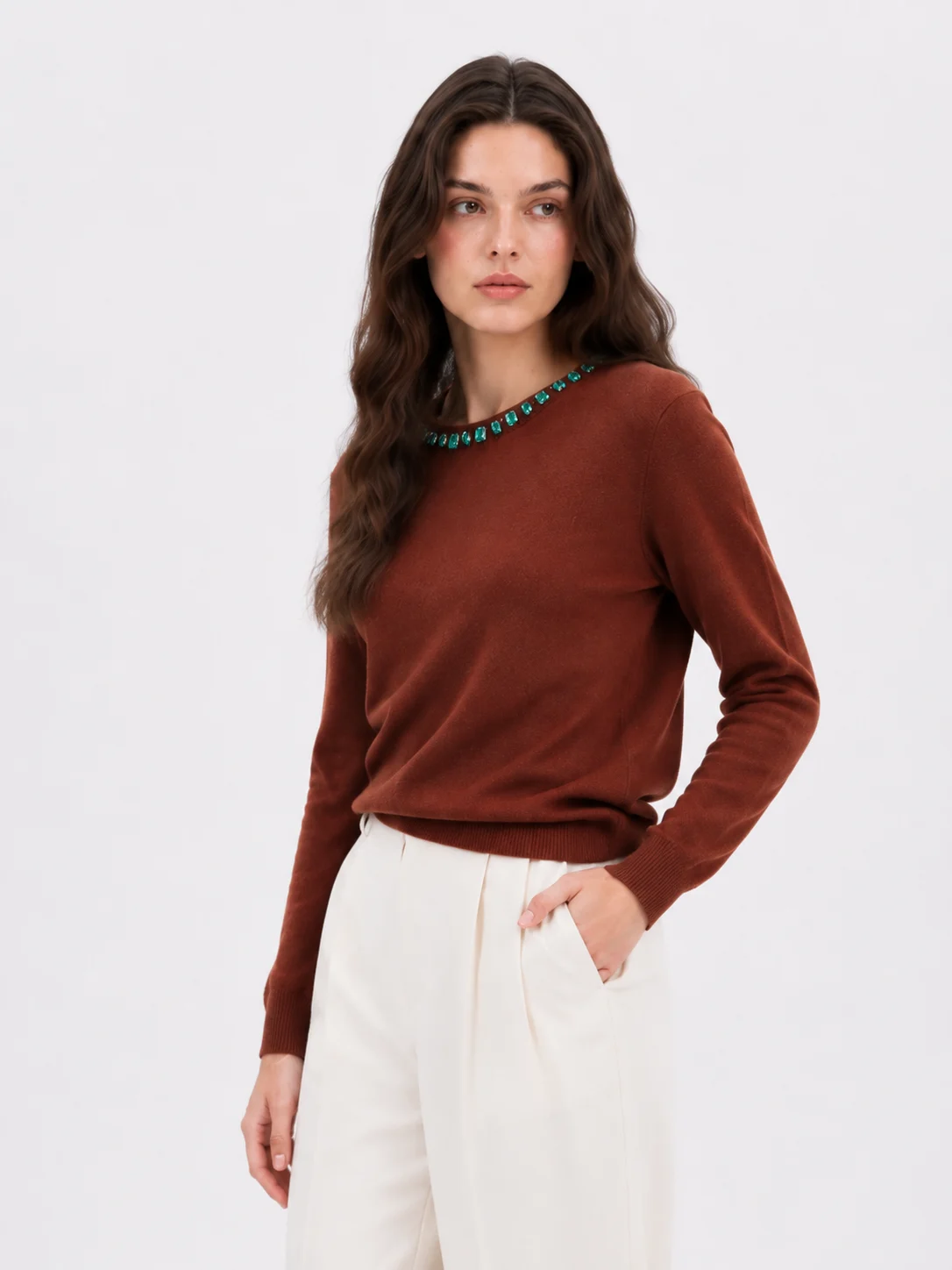
A low MOQ knitwear manufacturer is usually better than a large factory for boutique merino, cashmere, or mohair sweater programs under 300-500 units per style because it supports sampling, yarn testing, and flexible cardigan development, while large factories such as high-volume OEM plants are better once a brand has proven demand, stable tech packs, and repeat orders above 1,000 units.
For a new or growing fashion label, the choice is rarely just “cheap versus expensive.” Sweaters behave differently from cut-and-sew garments because yarn minimums, gauge, linking, washing, shrinkage, and sample corrections can change both price and risk.
This comparison is written for boutique brands in the United States, United Kingdom, and European Union that are deciding whether to work with a low MOQ manufacturer such as lpknit, a premium knitwear manufacturer and OEM supplier, or a larger factory built for bulk sweater output.
Key Takeaways
– A low MOQ knitwear manufacturer fits launch collections, capsule drops, wholesale tests, and cashmere or mohair styles that still need sampling.
– A large factory fits repeat orders, stable bestsellers, and programs where each color or size run can justify higher yarn and production minimums.
– Low MOQ pricing is often higher per piece, but total financial risk can be lower because the brand buys fewer unproven units.
– Knitwear MOQs depend on yarn type, gauge, color count, stitch complexity, and finishing, not only on factory size.
– The best sourcing path is often phased: sample with a flexible OEM partner, test sell-through, then scale selected styles.
Low MOQ Knitwear Manufacturer vs Large Factory: The Core Difference
A low MOQ knitwear manufacturer is designed to support smaller sweater orders with sampling, flexible development, and lower production commitments, while a large factory is designed to keep machines, yarn purchasing, and labor lines efficient through higher volume. This difference affects cost, speed, communication, and how much risk a fashion brand carries before it knows whether a style will sell.
In knitwear, “low MOQ” does not always mean 20 pieces. For many commercial sweater programs, low MOQ may mean 50-300 pieces per style or color, depending on yarn, gauge, and finishing. On Reddit discussions about low MOQ clothing manufacturing, founders often mention 30 units as “low,” while production-side comments often define 300-500 units as low in broader textile terms.
For boutique knitwear, the real question is: how much uncertainty can the supplier absorb while still making the project commercially workable? A large factory may quote a lower unit price, but it may also require a larger yarn commitment, fewer design changes, and cleaner production files from day one.
| Decision Factor | Low MOQ Knitwear Manufacturer | Large Factory |
|---|---|---|
| Typical fit | Startup, boutique, private label test run | Established brand, repeat bestseller |
| Sweater MOQ | Often flexible by style, yarn, and color | Often 500-1,000+ units per style or program |
| Sampling support | Stronger fit for development and correction | Better after tech pack is fixed |
| Unit price | Usually higher | Usually lower at scale |
| Cash tied up | Lower total order exposure | Higher upfront commitment |
| Yarn sourcing | More guidance for merino, cashmere, mohair | Stronger bulk yarn leverage |
| Design flexibility | Better for seasonal capsules | Better for repeat basics |
| Main risk | Higher per-piece cost | Overbuying, slow changes, rejected small orders |
A buyer choosing between a low MOQ knitwear manufacturer vs large factory should compare total order risk, not only the first quoted FOB price.
What Counts as Low MOQ for Knitwear and Sweaters?
A low MOQ for knitwear is usually any production run small enough to let a brand test a sweater style without committing to large yarn purchases, deep inventory, or full seasonal bulk. For merino wool, cashmere, and mohair sweaters, the practical low MOQ range is often 50-300 units per style, though simple cardigans may be easier to produce than complex jacquard or multi-gauge designs.
Knitwear MOQs are shaped by inputs before production begins. Yarn suppliers may have their own minimums. Dye lots can create color minimums. Machine gauge affects setup time. A 7-gauge fisherman cardigan, a 12-gauge fine knit round-neck cardigan, and a brushed mohair pullover may all carry different MOQ logic.
A useful definition is this:
Definition: A low MOQ knitwear manufacturer is a sweater supplier that can support smaller commercial runs while still offering OEM development, yarn selection, factory sampling, quality control, and production-ready finishing.
For example, Elena, a London boutique founder, planned a 6-style autumn capsule with 80 units per style. A large factory quoted a better unit price but required 600 units per style and four colors per yarn. A low MOQ supplier helped reduce the launch to 3 styles, 2 colors each, and 480 total units; Elena sold through 71% of the first drop in 10 weeks and reordered only the best cardigan.
That result matters because unsold knitwear ties up cash quickly. Sweaters also occupy more storage space than tees or woven tops, and premium fibers increase inventory exposure.
- 50-300 units per style is commonly treated as a small-batch or low MOQ range for apparel programs, according to Sewport, 2025.
- 500-5,000 units can be typical for large Asian apparel factories, while under 500 may be viewed as low MOQ, according to White Cotton, 2025.
- Regulation (EU) No 1007/2011 requires textile fiber composition labelling for products sold in the European Union, according to the European Commission, 2011.
- The United States Federal Trade Commission requires textile fiber content, country of origin, and manufacturer or dealer identity disclosures under textile labeling rules, according to the FTC, 2025.
- The global luxury personal goods market was estimated at about EUR 363 billion in 2024, according to Bain & Company and Fondazione Altagamma, 2025.
Sources used in this article include the Federal Trade Commission textile labeling guidance, the European Commission textile labelling regulation, and the Bain & Company 2025 luxury market update.
Low MOQ Knitwear Manufacturer vs Large Factory for Cost
A low MOQ knitwear manufacturer often has a higher unit price than a large factory, but the total cost can be lower when a brand is testing demand. The correct comparison is not only price per sweater; it is unit price plus sampling cost, yarn waste, freight, markdown risk, and the cost of inventory that does not sell.
Large factories have real advantages. They can spread setup costs across more units, negotiate yarn in bulk, and run repeat styles efficiently. If a brand already knows that a merino crewneck sells 2,000 units each season, a large factory may be the right partner.
For a new style, the math changes. A 1,000-unit order at $38 per sweater costs $38,000 before freight and duties. A 200-unit order at $52 costs $10,400. The lower unit cost does not help if 600 sweaters remain unsold after the season.
Consider Marcus, a New York private-label buyer who tested a brushed mohair sweater in two colors. A large factory required 1,200 units because of yarn and color minimums. A low MOQ manufacturer produced 240 units across two colors; the black color sold 84% in 45 days, while the lavender color sold only 39%. Marcus reordered black and avoided carrying 480 slow-moving lavender units.
Brands can reduce low MOQ knitwear cost by narrowing choices:
- Use existing yarn qualities when possible.
- Limit the first run to 1-3 colors.
- Keep stitch structures consistent across styles.
- Share trims, labels, and packaging across the collection.
- Approve the sample before adding new SKUs.
- Place replenishment only after sell-through data is clear.
This is where a focused OEM supplier can help. lpknit supports premium sweater development across merino, cashmere, and mohair categories, including styles such as fine knit round-neck cardigans and seasonal mohair long-sleeve knit sweaters.
Sampling, Yarn, and Gauge: Why Knitwear Is Different
Knitwear production is different from cut-and-sew manufacturing because the fabric is created during the garment-making process. A supplier must manage yarn count, machine gauge, stitch tension, linking, washing, shrinkage, handfeel, and measurements before the sweater can be approved for bulk.
This is why factory sampling matters. A tech pack can specify body length, sleeve length, neckline, and yarn composition, but the first sample still reveals whether the garment has the right drape, weight, stretch, and recovery. For cashmere and mohair, the handfeel after washing can be as important as the flat measurement chart.
A low MOQ knitwear manufacturer is often easier to work with during this stage because the relationship is built around adjustment. The supplier can help test yarn substitutions, simplify stitch complexity, or advise when a design should move from a heavier gauge to a finer gauge.
Large factories can sample well, but they may prioritize clients with bigger orders. Small brands can experience slower responses, fewer revisions, or pressure to accept standard options. That may be acceptable for a basic sweater, but risky for a cardigan with custom buttons, shaped sleeves, intarsia motifs, or premium fiber claims.
Knitwear buyers should ask these questions before choosing a supplier:
- Which yarn compositions are available for low MOQ sampling?
- Are merino wool, cashmere, and mohair sourced as stock yarns or custom yarns?
- What gauge is recommended for the target retail price?
- How many sample rounds are included before bulk pricing changes?
- Can the factory match measurements after washing and finishing?
- What tolerance is used for body length, sleeve length, chest, and shoulder?
- Can the same yarn be used across cardigans and pullovers to reduce minimums?
Brands reviewing existing styles can browse lpknit’s premium knitwear product range for construction references, including illustrated knit button cardigans and wool sheep motif cardigans.
When a Large Factory Is the Better Choice
A large factory is the better choice when a brand has proven demand, clean specifications, stable yarn choices, and the order volume needed to absorb higher minimums. Large factories are not “bad” for small brands; they are simply optimized for a different stage of production.
A brand should consider moving from a low MOQ manufacturer to a large factory when the product has repeatable sales. This usually means the brand knows the winning color, size curve, fiber blend, price point, and delivery window. It also means the brand can fund more inventory without depending on one uncertain drop.
A large factory may be a good fit when:
- The order is above 1,000 units per style or a coordinated program volume.
- The design has already passed sampling and fit approval.
- The yarn is stable and available in bulk.
- The brand can commit to fewer mid-production changes.
- The launch calendar allows for longer planning.
- The buyer has a quality control process before shipment.
The risk is that many boutique brands approach a large factory too early. A large factory may accept a small order, but the small brand can become a low-priority account. Communication delays and inflexible change windows can cost more than the unit-price savings.
Large factories also tend to prefer order clarity. If a label is still deciding between rib width, cardigan length, neckline depth, and two cashmere blends, the project belongs in a development-friendly environment first.
How to Choose Between a Low MOQ Manufacturer and a Large Factory
The right choice depends on brand stage, product confidence, and cash risk. A boutique label should use a low MOQ manufacturer for testing and development, then consider a large factory only after sales data proves that higher volume is justified.
Use this practical decision process:
- Define the commercial goal. Decide whether the sweater is a test drop, wholesale sample, repeat bestseller, or full seasonal program.
- Confirm the target order size. Estimate units per style, color, and size before asking for quotes.
- Map the yarn risk. Identify whether the style uses stock yarn, custom-dyed yarn, cashmere, merino, mohair, or a blend.
- Request sample terms. Ask how many sample rounds are included, what changes cost extra, and how long each sample takes.
- Compare total landed cost. Include unit price, sampling, freight, duties, labels, packaging, testing, and expected markdowns.
- Check compliance needs. Confirm textile labeling rules for the United States, United Kingdom, and European Union before production.
- Start with the smallest meaningful run. Produce enough units to learn, but not so many that one wrong color damages cash flow.
- Scale only proven styles. Move bestsellers to larger runs after sell-through, reviews, returns, and fit feedback are measured.
A United States buyer searching “Low moq knitwear manufacturer vs large factory usa” may care about faster communication, freight, and local compliance. A European buyer searching “Low MOQ clothing manufacturer Europe” may focus on textile labeling, VAT, and proximity to retail markets. The decision framework is the same, but the compliance and logistics checks change by region.
For knitwear-specific sourcing content, lpknit also publishes updates in the Knitwear Journal — Sourcing & Craft.
Risks and Quality Checks for Boutique Knitwear Buyers
Small knitwear orders carry risk when the supplier, yarn, sample, and production method are not aligned. The most common problems are unclear fiber claims, inconsistent sizing after washing, color variation across dye lots, weak seams at linked areas, and unrealistic expectations about low prices.
A low MOQ manufacturer can reduce some risks because the brand has more room to sample, test, and revise. A large factory can reduce other risks because it may have stronger systems once production is standardized. The best choice depends on which risk is larger for the brand.
Before approving bulk, ask for:
- A fit sample after washing and finishing.
- A size set for key sizes before full production.
- Yarn composition confirmation for label accuracy.
- Photos or video of production-line checks.
- Final measurements against approved tolerances.
- Packaging and care label confirmation.
- A clear policy for defects, delays, and replacement units.
Textile claims are not marketing details. If a sweater is sold as cashmere, merino wool, or mohair, the label and product page must be accurate for the market where the garment is sold. The United States Federal Trade Commission and European Commission both provide rules that brands should review before approving labels.
For a boutique brand, the safest path is to document decisions. Keep approved samples, yarn cards, measurement comments, wash notes, and label files in one production folder. This makes reorders easier and protects the brand when a supplier changes yarn lots or machine settings.
FAQ: Low MOQ Knitwear Manufacturer vs Large Factory
What is considered low MOQ for knitwear?
Low MOQ for knitwear is often 50-300 units per style, but the exact number depends on yarn, color, gauge, and construction. A simple merino cardigan may support a lower minimum than a custom-dyed cashmere jacquard. The best benchmark is the smallest run that can be produced without damaging quality or cost control.
Is a low MOQ knitwear manufacturer more expensive than a large factory?
Yes, a low MOQ knitwear manufacturer usually charges more per piece than a large factory. The tradeoff is lower total risk. A boutique brand may spend less cash overall because it can test 150-300 sweaters instead of committing to 1,000 or more units before demand is proven.
When should a fashion brand choose a low MOQ manufacturer?
A fashion brand should choose a low MOQ manufacturer when the style is new, the yarn is premium, the fit still needs sampling, or the brand is testing wholesale and direct-to-consumer demand. This is especially useful for merino, cashmere, and mohair sweaters where color and handfeel strongly affect sell-through.
What are the risks of using a large factory for small sweater orders?
The main risks are low production priority, high minimums, limited sample revisions, and pressure to simplify the design. A large factory may still produce excellent sweaters, but small orders can be less attractive when machines and yarn purchasing are planned around high-volume programs.
How can brands keep knitwear MOQs low without losing quality?
Brands can keep MOQs low by using stock yarns, limiting colors, repeating yarn across styles, simplifying stitch structures, and approving samples before adding more designs. A focused OEM supplier can also advise which cardigan or sweater details increase cost without improving the final product.
Is a low MOQ manufacturer suitable for private label knitwear?
Yes, a low MOQ manufacturer can suit private label knitwear when the buyer needs custom labels, controlled styling, and manageable order size. The buyer should confirm label files, care instructions, packaging, yarn composition, and sample approval steps before production begins.
Can a brand move from low MOQ production to a large factory later?
Yes, a brand can start with low MOQ production and move selected bestsellers to a large factory after sell-through is proven. The brand should keep accurate tech packs, approved samples, yarn records, and measurement specs so the larger factory can reproduce the style consistently.
Conclusion: Which Production Partner Should You Choose?
As a knitwear sourcing consultant with 11 years of experience reviewing sweater samples, yarn cards, and boutique production plans, I recommend choosing a low MOQ knitwear manufacturer when your brand is still proving style, color, fit, or fiber demand. I have seen first-hand that a 200-unit merino or mohair test can protect cash better than a 1,000-unit bulk order when sell-through is unknown.
The verifiable facts support that approach: the Federal Trade Commission requires textile fiber and origin disclosures for United States sales in 2025 guidance, the European Commission enforces textile fiber labelling under Regulation (EU) No 1007/2011, and market demand for premium products remains selective according to Bain & Company’s 2025 luxury market reporting. These rules and market pressures make accurate sampling, clear labeling, and controlled inventory especially important for boutique knitwear brands.
For most emerging labels, the practical answer to low MOQ knitwear manufacturer vs large factory is staged sourcing: develop and test with a flexible OEM partner, then scale only the styles that earn repeat demand. lpknit supports boutique and private-label brands with premium merino, cashmere, and mohair sweater development, factory sampling, and low MOQ production; review the lpknit product range to compare cardigan and sweater directions for your next collection.
{
“@context”: “https://schema.org”,
“@type”: “Article”,
“headline”: “Small-Batch Sweater Sourcing Playbook: Pilot Runs Before Factory Scale”,
“datePublished”: “2026-08-05”,
“dateModified”: “2026-08-05”,
“description”: “Compare low MOQ knitwear suppliers and large factories for merino, cashmere, and mohair sweaters, with cost, sampling, risk, and scale guidance.”,
“keywords”: “low MOQ knitwear manufacturer vs large factory”,
“author”: {
“@type”: “Person”,
“name”: “Maya Ellison”,
“url”: “https://lpknit.com/news/”,
“jobTitle”: “Knitwear sourcing consultant with 11 years of experience supporting boutique labels and private-label sweater programs.”
}
}
{
“@context”: “https://schema.org”,
“@type”: “FAQPage”,
“mainEntity”: [
{
“@type”: “Question”,
“name”: “What is considered low MOQ for knitwear?”,
“acceptedAnswer”: {
“@type”: “Answer”,
“text”: “Low MOQ for knitwear is often 50-300 units per style, but the exact number depends on yarn, color, gauge, and construction. A simple merino cardigan may support a lower minimum than a custom-dyed cashmere jacquard. The best benchmark is the smallest run that can be produced without damaging quality or cost control.”
}
},
{
“@type”: “Question”,
“name”: “Is a low MOQ knitwear manufacturer more expensive than a large factory?”,
“acceptedAnswer”: {
“@type”: “Answer”,
“text”: “Yes, a low MOQ knitwear manufacturer usually charges more per piece than a large factory. The tradeoff is lower total risk. A boutique brand may spend less cash overall because it can test 150-300 sweaters instead of committing to 1,000 or more units before demand is proven.”
}
},
{
“@type”: “Question”,
“name”: “When should a fashion brand choose a low MOQ manufacturer?”,
“acceptedAnswer”: {
“@type”: “Answer”,
“text”: “fashion brand should choose a low MOQ manufacturer when the style is new, the yarn is premium, the fit still needs sampling, or the brand is testing wholesale and direct-to-consumer demand. This is especially useful for merino, cashmere, and mohair sweaters where color and handfeel strongly affect sell-through.”
}
},
{
“@type”: “Question”,
“name”: “What are the risks of using a large factory for small sweater orders?”,
“acceptedAnswer”: {
“@type”: “Answer”,
“text”: “The main risks are low production priority, high minimums, limited sample revisions, and pressure to simplify the design. A large factory may still produce excellent sweaters, but small orders can be less attractive when machines and yarn purchasing are planned around high-volume programs.”
}
},
{
“@type”: “Question”,
“name”: “How can brands keep knitwear MOQs low without losing quality?”,
“acceptedAnswer”: {
“@type”: “Answer”,
“text”: “Brands can keep MOQs low by using stock yarns, limiting colors, repeating yarn across styles, simplifying stitch structures, and approving samples before adding more designs. A focused OEM supplier can also advise which cardigan or sweater details increase cost without improving the final product.”
}
},
{
“@type”: “Question”,
“name”: “Is a low MOQ manufacturer suitable for private label knitwear?”,
“acceptedAnswer”: {
“@type”: “Answer”,
“text”: “Yes, a low MOQ manufacturer can suit private label knitwear when the buyer needs custom labels, controlled styling, and manageable order size. The buyer should confirm label files, care instructions, packaging, yarn composition, and sample approval steps before production begins.”
}
},
{
“@type”: “Question”,
“name”: “Can a brand move from low MOQ production to a large factory later?”,
“acceptedAnswer”: {
“@type”: “Answer”,
“text”: “Yes, a brand can start with low MOQ production and move selected bestsellers to a large factory after sell-through is proven. The brand should keep accurate tech packs, approved samples, yarn records, and measurement specs so the larger factory can reproduce the style consistently.”
}
}
]
}