

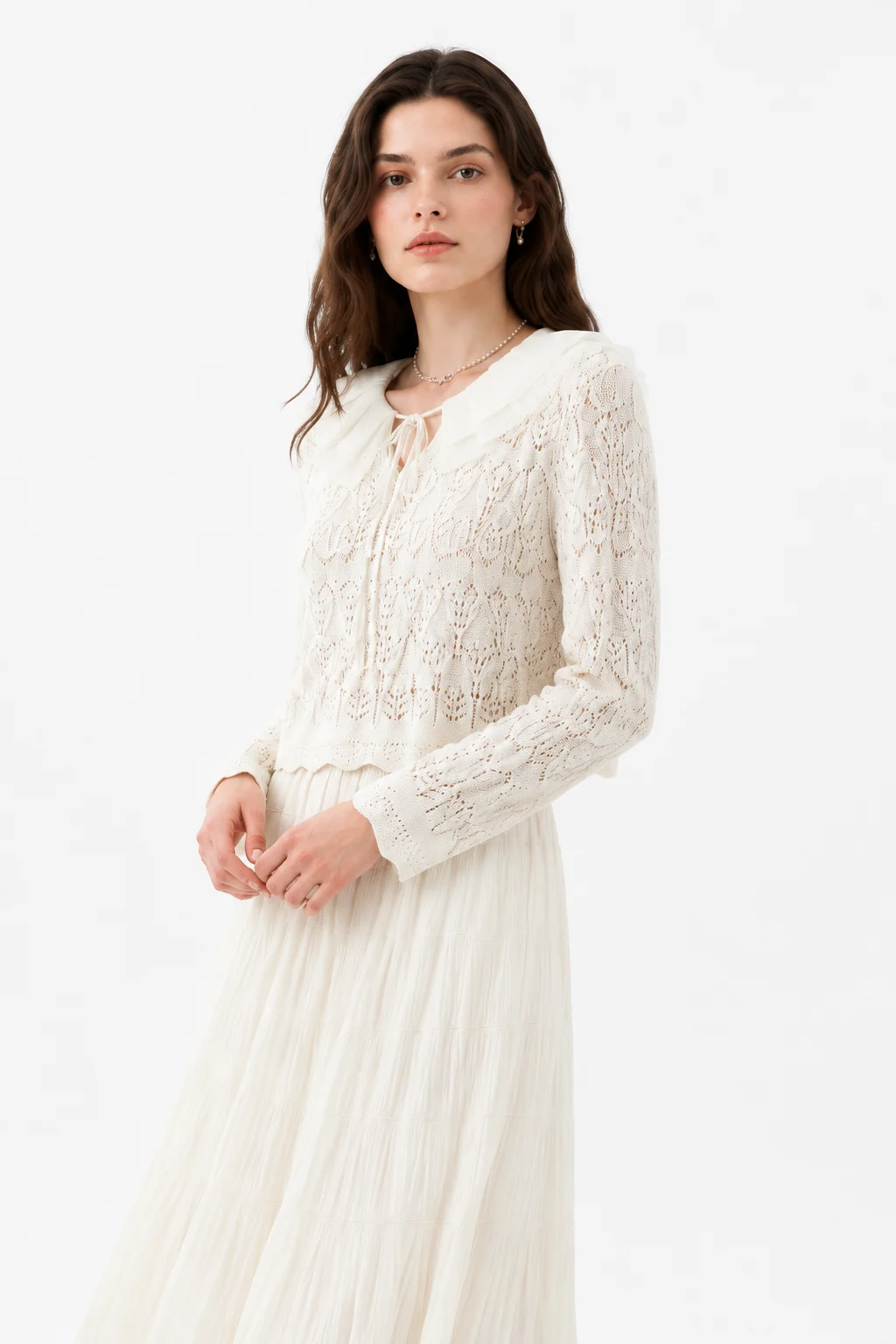
For premium merino knitwear, the most commercially suitable yarn counts are usually 2/48–2/60 Nm for lightweight 12–14 gauge sweaters, 2/26–2/36 Nm for midweight 7–12 gauge sweaters, and 2/15–4/12 Nm for chunky 3–7 gauge styles, paired with about 16.5–21.5 micron merino wool, clear fiber labeling under the U.S. Federal Trade Commission Textile Fiber Products Identification Act or European Union Regulation No 1007/2011, and factory sampling through an OEM partner such as lpknit before bulk production.
Yarn count is often confused with micron count and knitting gauge, but the three numbers answer different questions. Micron describes fiber softness, yarn count describes yarn fineness, and gauge describes how many needles are used per inch on the knitting machine.
For boutique brands, the right specification is not “the finest yarn possible.” The better question is which yarn count, ply, gauge, and merino percentage will deliver the target handfeel, retail price, durability, and season.
Key takeaways
- Premium merino sweaters usually use 16.5–21.5 micron wool, depending on softness target and price point.
- Higher Nm yarn count means finer yarn; 2/60 Nm is finer than 2/30 Nm.
- Lightweight merino knitwear often works best in 2/48–2/60 Nm on 12–14 gauge machines.
- Midweight commercial sweaters often use 2/26–2/36 Nm on 7–12 gauge machines.
- Sampling matters because pilling, drape, shrinkage, and recovery cannot be judged from yarn count alone.
What Yarn Count Is Suitable for Premium Merino Knitwear by Sweater Weight?
A suitable yarn count for premium merino knitwear depends first on sweater weight: lightweight layers need finer yarns, midweight pullovers need balanced yarns, and chunky cardigans need thicker or multi-end yarns. For most boutique OEM programs, yarn count should be selected together with knitting gauge and finished garment weight.
In metric yarn count, Nm means the number of 1,000-meter lengths per kilogram of yarn. A higher Nm number is finer, so 1/60 Nm is finer than 1/30 Nm.
The notation 2/30 Nm means two plies of 30 Nm yarn twisted together. The approximate resultant count is 15 Nm, because two ends create a thicker yarn than one end.
| Merino product type | Common yarn count | Typical gauge | Micron target | Approx. garment weight | Best use case |
|---|---|---|---|---|---|
| Fine merino base-layer sweater | 2/60 Nm, 2/48 Nm | 12GG–14GG | 16.5–19.5 µm | 220–320 g | Layering, office wear, travel |
| Premium lightweight cardigan | 2/48 Nm, 2/36 Nm | 12GG | 17.5–20.5 µm | 260–380 g | Spring, early fall, refined retail |
| Core crewneck sweater | 2/30 Nm, 2/26 Nm | 9GG–12GG | 18.5–21.5 µm | 350–520 g | Year-round boutique collection |
| Ribbed mock-neck sweater | 2/26 Nm, 2/20 Nm | 7GG–9GG | 19–22 µm | 450–650 g | Fall/winter hero style |
| Chunky cardigan | 2/15 Nm, 3/15 Nm, 4/12 Nm | 3GG–7GG | 19.5–22.5 µm | 600–950 g | Statement knit, winter outer layer |
A designer may choose a finer yarn for a cleaner surface, but too-fine yarn can feel limp if the style needs body. A thicker yarn can look rich, but it may feel heavy if the silhouette is long or oversized.
For example, Maya, founder of a 14-piece UK capsule label, tested a 2/48 Nm merino crewneck on 14 gauge and a 2/30 Nm version on 12 gauge. The 2/30 Nm sample cost 11% more in yarn but achieved a fuller handfeel, reducing customer returns for “too thin” feedback during a 120-piece trial.
Yarn Count, Micron, Ply, and Gauge: The Four Numbers Buyers Must Separate
Yarn count, micron, ply, and gauge each control a different part of merino knitwear performance. A premium sweater specification should list all four, because a single number cannot predict softness, density, stretch, or pilling risk.
Micron count measures the diameter of the wool fiber. Lower micron merino bends more easily against skin, which is why it usually feels softer.
Yarn count measures yarn fineness. In Nm, higher numbers mean finer yarns that suit lighter sweaters and higher-gauge knitting.
Ply describes how many yarn strands are twisted together. More ply can improve roundness, strength, and stitch definition, but it also increases thickness.
Gauge describes the knitting machine needle density. A 14 gauge machine creates finer fabric than a 5 gauge machine.
A practical specification may look like this:
Example specification
- Fiber: 100% extrafine merino wool
- Micron: 19.5 µm
- Yarn: 2/30 Nm worsted-spun merino
- Gauge: 12GG jersey body, 1×1 rib trim
- Target weight: 420 g in women’s size M
- Finish: light wash, anti-shrink treatment, pilling test requested
This format helps a factory quote accurately. It also prevents a common sourcing error: asking for “fine merino” without stating whether “fine” means low micron, high yarn count, or high gauge.
What Yarn Count Is Suitable for Premium Merino Knitwear in OEM Sampling?
In OEM sampling, the suitable yarn count for premium merino knitwear is the one that meets the buyer’s target after swatch testing, sample fitting, washing, and costing. For low-MOQ boutique production, a factory should test the yarn count before the purchase order because small errors can change price, drape, and delivery timing.
A good sampling process uses measured steps rather than taste alone.
- Define the target product. State whether the style is a spring layer, winter pullover, travel cardigan, or statement knit.
- Set the retail position. A $160 sweater and a $420 sweater may need different micron, yarn count, and finishing levels.
- Choose two yarn count options. Compare, for example, 2/36 Nm and 2/30 Nm for a midweight crewneck.
- Knit lab dips or swatches. Test color, stitch density, recovery, handfeel, and surface hairiness.
- Make one fit sample. Check sleeve weight, shoulder drop, rib recovery, and body length after steaming.
- Wash or dry-clean test the sample. Record shrinkage, twisting, pilling, and handfeel change.
- Approve bulk only after costing. Yarn availability, dye lot, minimum order, and wastage can affect final pricing.
At lpknit, buyers can explore factory-developed sweater and cardigan directions through the premium knitwear product collection. This is useful when a brand needs to match yarn count decisions to real silhouettes rather than flat technical sheets.
A U.S. private-label buyer named Daniel sampled a 7 gauge cardigan in 2/15 Nm merino for a 90-piece launch. After wear testing, the factory changed the cuff to a tighter rib and adjusted the body to 3/15 Nm for better structure; the final sample reduced sleeve stretching by 18 mm after a 24-hour hang test.
Lightweight, Midweight, and Chunky Merino: Recommended Specs
Lightweight, midweight, and chunky merino sweaters require different yarn counts because each category has a different commercial job. Lightweight styles need clean layering, midweight styles need versatility, and chunky styles need volume without excessive garment weight.
Lightweight merino sweaters
Lightweight merino knitwear usually works best with 2/48 Nm to 2/60 Nm on 12GG to 14GG machines. This range suits refined cardigans, fine crewnecks, travel knits, and office layers.
Use 16.5–19.5 micron merino when the garment touches skin. If the style is semi-fitted, finer yarn helps reduce bulk at seams and rib trims.
A fine cardigan such as lpknit’s fine knit round neck cardigan is the kind of silhouette where yarn count and gauge must support a smooth surface. A coarse yarn would change the garment from refined to casual.
Midweight merino sweaters
Midweight merino sweaters often use 2/26 Nm to 2/36 Nm on 7GG to 12GG machines. This is the safest commercial range for boutique brands because it balances softness, warmth, cost, and durability.
Use this range for crewnecks, turtlenecks, classic cardigans, and patterned sweaters. A midweight sweater should feel substantial but not stiff.
For example, a sheep motif cardigan such as the wool sheep motif cardigan may need a yarn count that holds jacquard or intarsia detail clearly. If the yarn is too fine, the motif can lose definition; if too thick, the fabric can feel bulky.
Chunky merino sweaters
Chunky merino knitwear often uses 2/15 Nm, 3/15 Nm, 2/12 Nm, or 4/12 Nm on 3GG to 7GG machines. The goal is not just thickness; the goal is a stable fabric that does not sag under its own weight.
Chunky cardigans, oversized pullovers, and winter statement knits may also use multi-end knitting. This means the factory feeds two or more yarn ends together instead of using one very thick yarn.
An illustrated or novelty cardigan, such as lpknit’s illustrated knit button cardigan, may need a thicker hand to support visual texture. Sampling should check button placket stability, shoulder stretching, and total finished weight.
What Percentage of Merino Wool Is Best for Premium Knitwear?
The best merino percentage depends on the brand promise: 100% merino gives the clearest premium fiber claim, while blends can improve cost, strength, softness, or surface effect. For most premium boutique collections, 100% merino, 90/10 merino-cashmere, and 70/30 merino-cashmere or merino-silk blends are common options.
100% merino wool is best when a brand wants a clean natural-fiber claim. It works well for classic sweaters, travel layers, and knitwear marketed around temperature regulation.
Merino-cashmere blends add softness and luxury perception. They can be useful for higher-priced capsules, but the blend ratio must be labeled correctly.
Merino-nylon or merino-polyamide blends can improve abrasion resistance in performance knitwear. For premium fashion sweaters, many boutique buyers use synthetics carefully because the fiber story may feel less elevated.
Merino-mohair blends can create seasonal texture and loft. A style such as lpknit’s mohair long sleeve knit sweater shows why surface hair, gauge, and fiber blend must be designed together.
Sourced facts for 2026 merino knitwear specifications
- Wool represented about 1% of global fiber production, according to the Textile Exchange Materials Market Report, 2024.
- Global fiber production reached about 124 million tonnes in 2023, according to the Textile Exchange Materials Market Report, 2024.
- The U.S. Federal Trade Commission requires textile labels to disclose fiber names and percentages under the Textile Fiber Products Identification Act and Rules, current guidance accessed in 2025.
- The European Union Regulation No 1007/2011 requires textile fiber composition labeling for textile products sold in the EU, according to EUR-Lex, consolidated regulation accessed in 2025.
- Merino wool is commonly described as fine wool under roughly 24 microns, with premium apparel often using finer ranges, according to The Woolmark Company wool fiber education resources, accessed in 2025.
- Responsible wool sourcing is tracked through standards such as the Responsible Wool Standard, according to Textile Exchange standard documentation, 2025.
For buyers selling in the United States, the U.S. Federal Trade Commission textile labeling rules are important when naming merino blends. For buyers selling in the European Union, European Union Regulation No 1007/2011 on textile fiber names and labeling should be reviewed before approving care and composition labels.
How Yarn Count Affects Softness, Warmth, Durability, and Pilling
Yarn count affects premium merino knitwear by changing fabric density, surface smoothness, stitch clarity, and weight. It does not work alone, so buyers should evaluate yarn count alongside fiber micron, spinning system, twist, gauge, and finishing.
A finer yarn count can create a smoother and more elegant fabric. This is why 2/48 Nm and 2/60 Nm are common in polished lightweight merino sweaters.
A thicker yarn count can create warmth and visual richness. However, a heavy yarn on a long cardigan can stretch at the shoulder and hem.
Pilling is not caused by yarn count alone. It can be influenced by staple length, twist level, fiber blend, gauge, finishing, and wearer friction.
Premium merino can still pill in high-rub zones such as underarms, seat belts, handbags, and cuffs. A factory can reduce pilling risk through better yarn selection, tighter twist, appropriate gauge, compact knitting, and finishing tests.
For fiber education, The Woolmark Company’s merino wool resources provide useful background on wool performance and fiber characteristics. For sourcing teams, this should be paired with physical sample testing rather than used as a substitute for garment trials.
Buyer Checklist: How to Specify Merino Yarn Count Before Production
A merino yarn count specification should be written as a buying document, not a vague design note. The checklist below helps boutique brands reduce sampling rounds, avoid incorrect quotes, and compare factories on the same basis.
Use this checklist before sending an OEM inquiry:
- Product category: crewneck, cardigan, polo, vest, turtleneck, or coatigan.
- Season: spring, summer transition, fall, winter, or year-round.
- Target handfeel: smooth, lofty, compact, spongy, brushed, or crisp.
- Fiber content: 100% merino, merino-cashmere, merino-mohair, or performance blend.
- Micron range: for example, 17.5–19.5 µm for next-to-skin softness.
- Yarn count: for example, 2/48 Nm, 2/30 Nm, or 3/15 Nm.
- Knitting gauge: 14GG, 12GG, 9GG, 7GG, 5GG, or 3GG.
- Stitch structure: jersey, rib, links, cable, jacquard, intarsia, or pointelle.
- Finished weight: target grams by sample size.
- Testing request: shrinkage, pilling, colorfastness, seam strength, and recovery.
- MOQ requirement: trial order, boutique drop, or full seasonal buy.
- Retail price target: expected wholesale and retail range.
Low minimum order quantity does not mean vague specification. It means the buyer and factory should make smart choices early, so the first sample is close to the commercial target.
Boutique labels that are planning merino, cashmere, or mohair programs can review lpknit’s Knitwear Journal on sourcing and craft for related production guidance. For active development, the lpknit product collection is the most useful starting point for comparing silhouettes and sample directions.
FAQ: Merino Yarn Count for Premium Knitwear Buyers
What is the typical micron count of premium merino wool?
Premium merino knitwear usually uses about 16.5–21.5 micron wool, depending on softness, durability, and price target. Next-to-skin luxury sweaters often sit near 17.5–19.5 microns, while heavier outer-layer knits may use slightly stronger 20–22 micron merino.
What percentage merino wool is best?
100% merino wool is best for a clear premium natural-fiber claim, especially for classic sweaters and cardigans. Blends such as 90% merino with 10% cashmere can add softness, while merino-nylon blends may improve durability for performance-focused products.
Is 1000 yards of yarn enough for a sweater?
1,000 yards can be enough for some lightweight sweaters, but it depends on yarn count, gauge, size, stitch, and silhouette. An oversized cardigan, cable sweater, or chunky 5 gauge style may need far more yarn than a fitted fine-gauge crewneck.
What is a disadvantage of using merino wool?
Merino wool can pill, shrink, or stretch if the yarn, gauge, finishing, or care method is poorly chosen. A skilled manufacturer reduces these risks through suitable yarn twist, controlled washing, stable rib structures, and clear care-label testing.
Is 2/30 Nm better than 2/48 Nm for merino sweaters?
2/30 Nm is not automatically better than 2/48 Nm; it is thicker and often better for midweight sweaters. 2/48 Nm is usually better for fine-gauge lightweight knits, while 2/30 Nm gives more body and warmth.
Which gauge is best for premium merino knitwear?
12 gauge is often the most versatile gauge for premium merino sweaters, especially for refined midweight styles. 14 gauge suits fine layering pieces, 7–9 gauge suits warmer sweaters, and 3–5 gauge suits chunky statement knits.
Should boutique brands choose woolen-spun or worsted-spun merino?
Worsted-spun merino is usually smoother and cleaner, while woolen-spun merino is loftier and warmer. Choose worsted yarn for polished cardigans and office knits, and woolen yarn for softer, fuller, winter-weight sweaters.
Conclusion: Choosing the Right Merino Yarn Count With a Factory Partner
The right answer to what yarn count is suitable for premium merino knitwear is practical, not fixed: choose 2/48–2/60 Nm for fine 12–14 gauge layers, 2/26–2/36 Nm for core 7–12 gauge sweaters, and 2/15–4/12 Nm for chunky 3–7 gauge cardigans, then confirm the decision with sampling, wash testing, and garment-weight checks.
I’m Elena Marlow, a knitwear sourcing consultant with 11 years of hands-on development experience across merino, cashmere, and mohair OEM programs for U.S., UK, and EU boutique labels. In factory sampling, I have seen the same 19.5 micron merino feel crisp, soft, or unstable depending on yarn count, ply, gauge, and finishing, which is why physical swatches remain essential.
For trust and compliance, buyers should verify fiber claims against the U.S. Federal Trade Commission textile labeling rules, European Union Regulation No 1007/2011, and current wool education resources from The Woolmark Company. If your brand is preparing a premium merino sweater or cardigan range, use lpknit’s premium knitwear product collection to compare development directions and start a low-MOQ sampling brief with clear yarn count, gauge, and fiber targets.
{
“@context”: “https://schema.org”,
“@type”: “Article”,
“headline”: “What Yarn Count Suits Premium Merino Knitwear? 2026”,
“datePublished”: “2026-08-26”,
“dateModified”: “2026-08-26”,
“description”: “Choose merino yarn count by sweater weight, gauge, ply, and micron range, with OEM sampling tips for premium boutiques sourcing low-MOQ knitwear in 2026.”,
“keywords”: “what yarn count is suitable for premium merino knitwear”,
“author”: {
“@type”: “Person”,
“name”: “Elena Marlow”,
“url”: “https://lpknit.com/news/”,
“jobTitle”: “Knitwear sourcing consultant with 11 years of experience in merino, cashmere, and mohair OEM development for boutique la”
}
}
{
“@context”: “https://schema.org”,
“@type”: “FAQPage”,
“mainEntity”: [
{
“@type”: “Question”,
“name”: “What is the typical micron count of premium merino wool?”,
“acceptedAnswer”: {
“@type”: “Answer”,
“text”: “Premium merino knitwear usually uses about **16.5–21.5 micron wool**, depending on softness, durability, and price target. Next-to-skin luxury sweaters often sit near 17.5–19.5 microns, while heavier outer-layer knits may use slightly stronger 20–22 micron merino.”
}
},
{
“@type”: “Question”,
“name”: “What percentage merino wool is best?”,
“acceptedAnswer”: {
“@type”: “Answer”,
“text”: “100% merino wool is best for a clear premium natural-fiber claim**, especially for classic sweaters and cardigans. Blends such as 90% merino with 10% cashmere can add softness, while merino-nylon blends may improve durability for performance-focused products.”
}
},
{
“@type”: “Question”,
“name”: “Is 1000 yards of yarn enough for a sweater?”,
“acceptedAnswer”: {
“@type”: “Answer”,
“text”: “1,000 yards can be enough for some lightweight sweaters**, but it depends on yarn count, gauge, size, stitch, and silhouette. An oversized cardigan, cable sweater, or chunky 5 gauge style may need far more yarn than a fitted fine-gauge crewneck.”
}
},
{
“@type”: “Question”,
“name”: “What is a disadvantage of using merino wool?”,
“acceptedAnswer”: {
“@type”: “Answer”,
“text”: “Merino wool can pill, shrink, or stretch if the yarn, gauge, finishing, or care method is poorly chosen.** A skilled manufacturer reduces these risks through suitable yarn twist, controlled washing, stable rib structures, and clear care-label testing.”
}
},
{
“@type”: “Question”,
“name”: “Is 2/30 Nm better than 2/48 Nm for merino sweaters?”,
“acceptedAnswer”: {
“@type”: “Answer”,
“text”: “2/30 Nm is not automatically better than 2/48 Nm; it is thicker and often better for midweight sweaters.** 2/48 Nm is usually better for fine-gauge lightweight knits, while 2/30 Nm gives more body and warmth.”
}
},
{
“@type”: “Question”,
“name”: “Which gauge is best for premium merino knitwear?”,
“acceptedAnswer”: {
“@type”: “Answer”,
“text”: “12 gauge is often the most versatile gauge for premium merino sweaters**, especially for refined midweight styles. 14 gauge suits fine layering pieces, 7–9 gauge suits warmer sweaters, and 3–5 gauge suits chunky statement knits.”
}
},
{
“@type”: “Question”,
“name”: “Should boutique brands choose woolen-spun or worsted-spun merino?”,
“acceptedAnswer”: {
“@type”: “Answer”,
“text”: “Worsted-spun merino is usually smoother and cleaner, while woolen-spun merino is loftier and warmer.** Choose worsted yarn for polished cardigans and office knits, and woolen yarn for softer, fuller, winter-weight sweaters.”
}
}
]
}