

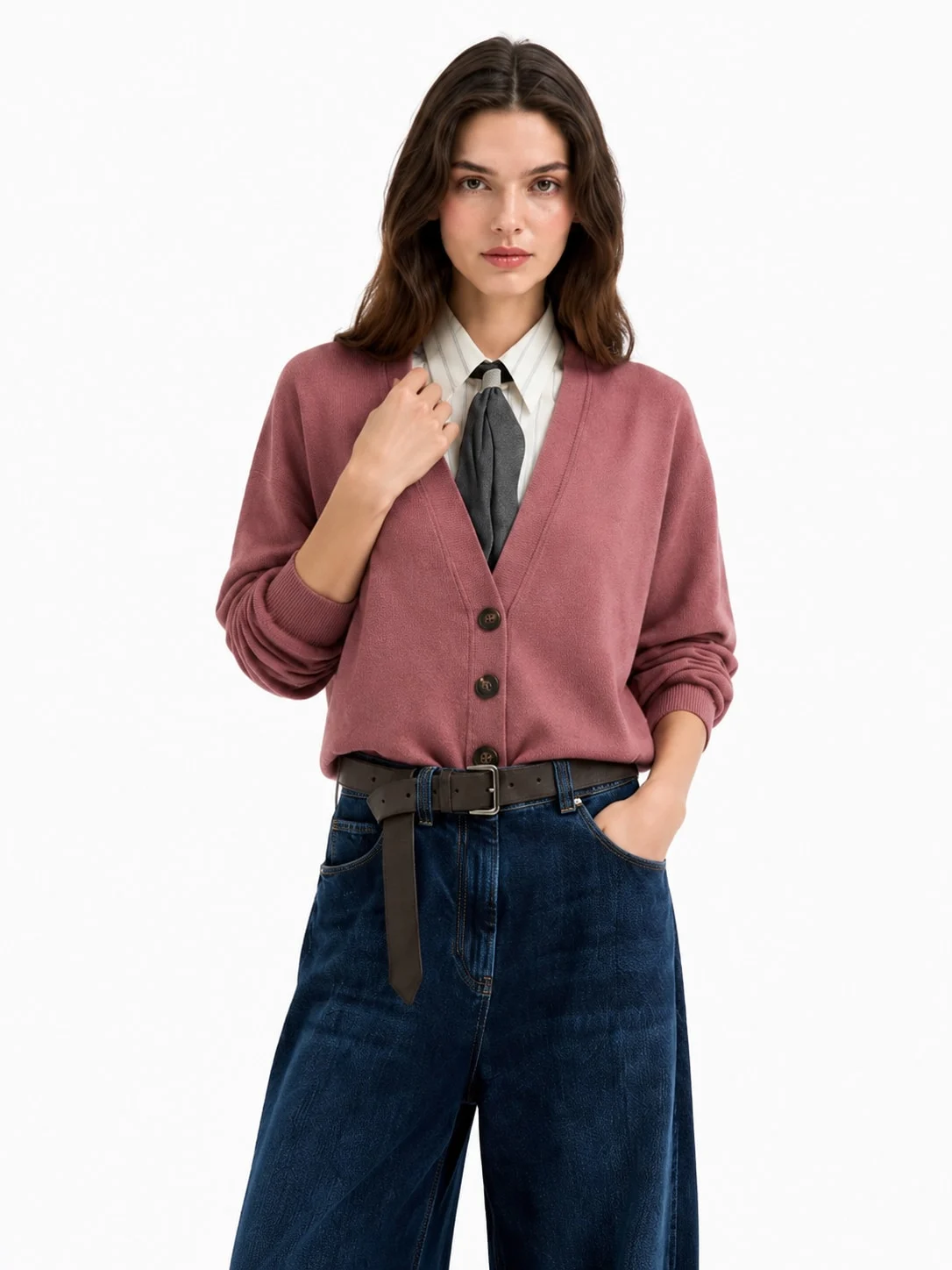
To prepare a sweater measurement chart for sampling, list finished-garment points of measurement, define each measuring method, add base-size specs, grading, and tolerances, then send the chart with a sketch and yarn details to an OEM partner such as lpknit; use ISO 8559-1:2017 for body-measurement language, EU Regulation No 1007/2011 for fiber-label awareness, and Federal Trade Commission wool-labeling rules for US compliance.
A sweater measurement chart is not the same as a retail size guide. For factory sampling, the chart tells the knitwear technician what the sample must measure after knitting, linking, washing, pressing, and relaxation.
Most search results explain how to measure a sweater size at home. This guide goes further: it shows boutique fashion brands how to turn fit ideas into a sampling-ready chart for merino wool, cashmere, and mohair sweaters.
Key takeaways
– Use finished-garment measurements, not only body measurements, for factory sampling.
– Measure sweaters flat, relaxed, and without stretching the knit structure.
– Include POM codes, descriptions, base-size specs, tolerances, and grading.
– Knitwear tolerances are usually wider than woven garments because yarn, stitch, and washing affect size.
– A clear chart reduces remake cycles and helps OEM suppliers such as lpknit’s product development team sample faster.
How to Prepare a Sweater Measurement Chart for Sampling: The Factory-Ready Structure
A factory-ready sweater measurement chart is a table that translates design intent into measurable finished-garment specifications. The chart should include point-of-measurement codes, measuring instructions, target specs, tolerance, and grading across sizes.
For knitwear sampling, the most important rule is clarity. A factory cannot read a designer’s mind, and a vague “relaxed fit” note may lead to a sample that is 4 cm too wide, 3 cm too short, or too tight at the bicep.
A good measurement chart should sit inside the sweater tech pack with:
- Flat sketch showing the cardigan or pullover shape.
- Yarn and gauge details, such as 100% merino wool, 12GG, or brushed mohair blend.
- Base size, such as women’s size M or men’s size L.
- POM table, with finished-garment measurements.
- Tolerance column, showing acceptable variation.
- Grading rules, showing how sizes scale.
- Sample comment column, used after the first sample arrives.
For example, a London womenswear founder named Sophie asked for a cropped cashmere cardigan in size S, M, and L. Her first tech pack only included “boxy body, cropped length.” After adding a measurement chart with a 54 cm half chest, 48 cm body length, and ±1.5 cm tolerance, her second sample matched the fit direction and avoided a third remake.
Brands working on boutique knitwear can review shape references from lpknit’s fine knit round neck cardigan or illustrated knit button cardigan before defining their own finished specs.
Body Measurements vs Finished Sweater Measurements
Body measurements describe the wearer, while finished sweater measurements describe the garment after production. A Body Measurement chart for Clothing or a Body Measurement Chart for tailoring can guide fit, but a sampling chart must state the finished sweater dimensions the factory should make.
This distinction is where many sample problems begin. If a buyer sends only bust, waist, shoulder, and sleeve body measurements, the factory still has to guess ease, silhouette, and knit relaxation.
| Chart type | What it measures | Best used for | Factory sampling risk |
|---|---|---|---|
| Body Measurement chart for Clothing | Human body circumference and length | Size strategy and target customer profile | Does not define garment ease |
| Body Measurement Chart for tailoring | Individual wearer’s body | Made-to-measure garments | Too personal for wholesale grading |
| Retail size chart | Customer-facing fit guidance | E-commerce and wholesale line sheets | Often rounded and simplified |
| Sweater measurement chart | Finished garment laid flat | Sampling, QC, and production | Best option for OEM communication |
If the target customer has an 88 cm bust and the sweater needs 12 cm of positive ease, the finished bust should be about 100 cm. In a flat chart, that becomes a 50 cm half chest, measured from underarm to underarm.
The Craft Yarn Council notes that sweater fit is based on body chest or bust plus ease, according to its standard body measurements and sizing guidance, 2025 access version. That principle is useful, but OEM sampling still needs finished garment numbers.
For a boutique label, body measurements are the starting point. Finished sweater measurements are the contract language between the brand and the manufacturer.
How to Measure Sweater Size Accurately on a Flat Surface
To measure sweater size accurately, place the sweater on a flat table, smooth the garment without stretching it, align seams naturally, and measure each point with a soft tape from fixed edge to fixed edge. The same method must be repeated before and after washing when evaluating a factory sample.
A sweater behaves differently from woven fabric. Rib trims, dropped shoulders, brushed mohair, and cashmere washing can all change how a garment relaxes on the table.
Use this process when checking an existing reference sweater or reviewing the first sample:
- Lay the sweater flat on a clean table, not on a bed or hanger.
- Close buttons or zip, if measuring a cardigan.
- Smooth the body gently without pulling the knit wider.
- Let the garment relax for at least 30 minutes after unpacking.
- Measure the base size first, then compare with the chart.
- Record actual sample measurements in a separate column.
- Photograph key POMs if any measurement is disputed.
Common sweater POMs include:
- A. Half chest: straight across from underarm to underarm.
- B. Body length: high shoulder point to hem.
- C. Shoulder width: shoulder point to shoulder point.
- D. Sleeve length: shoulder seam to cuff edge, or center back neck to cuff for raglan styles.
- E. Armhole depth: shoulder point to underarm.
- F. Bicep width: 2.5 cm below armhole, measured flat.
- G. Hem width: straight across bottom opening.
- H. Cuff width: straight across cuff opening.
- I. Neck width: side neck point to side neck point.
- J. Front placket length: top neck edge to hem for cardigans.
Here is a practical example. Daniel, a New York private-label buyer, measured a best-selling wool pullover and found a 58 cm half chest and 68 cm body length. When the first merino sample arrived at 61 cm half chest after steaming, Daniel added a comment to reduce body width by 3 cm and tighten the washing process; the corrected sample landed within ±1 cm.
How to Prepare a Sweater Measurement Chart for Sampling Free: Copy-Paste Template
A free sweater measurement chart for sampling should include POM code, description, how to measure, base-size spec, tolerance, actual sample result, correction, and grading. Brands can copy the table below into Google Sheets, Microsoft Excel, Airtable, or a PLM system.
Use centimeters for international OEM communication unless the supplier asks for inches. Many US teams sell in inches, but factories serving the US, UK, and EU often prefer metric charts because grading is cleaner.
| POM code | Point of measurement | How to measure | Size M target | Tolerance | Sample 1 actual | Comment | Grade XS-L |
|---|---|---|---|---|---|---|---|
| A | Half chest | Underarm to underarm, flat | 54 cm | ±1.5 cm | 55.5 cm | OK at upper limit | 2 cm |
| B | Body length | High shoulder point to hem | 58 cm | ±1.5 cm | 56 cm | Add 2 cm | 1.5 cm |
| C | Shoulder width | Shoulder point to point | 46 cm | ±1 cm | 47.5 cm | Reduce 1.5 cm | 1 cm |
| D | Sleeve length | Shoulder seam to cuff | 56 cm | ±1.5 cm | 55 cm | OK | 1 cm |
| E | Bicep width | 2.5 cm below armhole | 18 cm | ±1 cm | 17 cm | Add 1 cm | 0.8 cm |
| F | Hem width | Straight across bottom | 43 cm | ±1.5 cm | 45 cm | Reduce rib tension | 1.5 cm |
| G | Cuff width | Straight across cuff | 9 cm | ±0.8 cm | 9.5 cm | OK | 0.5 cm |
| H | Neck width | Side neck to side neck | 18 cm | ±0.8 cm | 18 cm | OK | 0.5 cm |
| I | Placket length | Top neck edge to hem | 58 cm | ±1 cm | 56 cm | Match body length | 1.5 cm |
For a pullover, remove placket measurements and add neck drop or collar height. For a cardigan, include button spacing, placket width, pocket placement, and front opening length.
A mohair long-sleeve sweater may need a softer tolerance approach because brushed yarn can obscure exact edges. If your collection includes fuzzy seasonal styles, compare your measurement plan with lpknit’s mohair long sleeve knit sweater example.
Definition: Point of Measurement (POM)
A point of measurement is a named and repeatable location on a garment where the factory, brand, and QC team measure size. Good POMs reduce subjective fit comments.
Grading, Ease, and Knitwear Tolerances for Sampling
Grading is the rule for increasing or decreasing sweater measurements across sizes, while tolerance is the acceptable difference between the target spec and the actual sample. Knitwear needs realistic tolerance because yarn recovery, stitch structure, washing, and steaming can shift measurements.
For boutique sampling, start with one base size. Then grade only after the fit is approved, unless the factory needs a full-size set at the first stage.
Typical grading logic for women’s sweaters might be:
- Choose the base size, usually S or M.
- Set the finished bust, based on body size plus ease.
- Add or reduce half chest by 2 cm per size, equal to 4 cm full circumference.
- Grade body length by 1–1.5 cm per size, depending on silhouette.
- Grade sleeve length by 0.5–1 cm per size, unless the style is oversized.
- Keep trims proportionate, especially ribs, cuffs, and neckline.
- Review size jumps visually, not only mathematically.
| Sweater type | Suggested ease | Typical tolerance | Sampling note |
|---|---|---|---|
| Fitted merino pullover | 4–8 cm positive ease | ±1 cm to ±1.5 cm | Watch armhole and bicep comfort |
| Classic cashmere cardigan | 8–12 cm positive ease | ±1 cm to ±1.5 cm | Button placket must not ripple |
| Oversized wool sweater | 14–24 cm positive ease | ±1.5 cm to ±2 cm | Shoulder and sleeve balance matter |
| Brushed mohair sweater | 12–22 cm positive ease | ±1.5 cm to ±2.5 cm | Edge definition may be softer |
| Ribbed knit top | 0–6 cm, sometimes negative ease | ±1 cm | Measure relaxed and stretched if needed |
A common sampling mistake is grading every point equally. Chest, hem, shoulder, and bicep often need different grade rules because sweaters stretch differently across width and length.
Another mistake is setting woven-style tolerances for knitted sweaters. A ±0.5 cm tolerance may be possible for a button position, but it is often too strict for a washed cashmere body length.
Sourcing and compliance data to consider in 2026
- Global fiber production reached 124 million tonnes, according to the Textile Exchange Materials Market Report, 2024.
- Polyester represented about 57% of global fiber production, according to Textile Exchange, 2024; premium knitwear brands often separate wool, cashmere, and mohair clearly to avoid material confusion.
- The European Union requires textile fiber names and composition labeling under Regulation (EU) No 1007/2011, according to EUR-Lex, 2011 and still applicable in 2026.
- The United States Federal Trade Commission requires wool-product labels to show fiber content, country of origin, and manufacturer or dealer identity under the Wool Products Labeling Act guidance, FTC guidance accessed in 2025.
- ISO 8559-1:2017 defines body measurement methods for size designation, according to the International Organization for Standardization, 2017; brands can use the language as a body-measurement reference before converting to finished garment specs.
- Only 20% of fashion executives expected conditions to improve in the year ahead, according to The State of Fashion 2025 by McKinsey & Company and The Business of Fashion, 2025; clearer sampling charts help reduce development waste when budgets are tight.
These data points do not replace a measurement chart. They explain why clear specs, fiber identification, and fewer sample remakes matter for premium knitwear sourcing in 2026.
Reviewing the First Factory Sample and Updating the Chart
The first factory sample should be measured against the chart after the garment has rested, not immediately after unpacking. A sample review should separate measurement errors, fit changes, yarn behavior, and design-preference changes.
A professional sample review uses the chart as a decision tool. Instead of writing “too big,” write “POM A half chest is 56.5 cm against 54 cm target; reduce 2.5 cm for Sample 2.”
Follow this review workflow:
- Measure Sample 1 flat and fill in the actual column.
- Compare each POM with tolerance, marking pass or fail.
- Try the sample on a fit model, checking comfort and silhouette.
- Separate spec corrections from styling changes.
- Add clear comments, such as “reduce sleeve length 2 cm” or “raise armhole 1 cm.”
- Send photos with tape placement for any disputed point.
- Issue an updated chart with revision date and version number.
Example: A Manchester brand developed a wool sheep-motif cardigan inspired by heritage graphics. Sample 1 measured correctly at the chest but the hem rib pulled in by 4 cm, making the body look ballooned. After adjusting hem width and rib tension, Sample 2 matched the intended boxy shape and moved to size-set sampling.
For motif, intarsia, or novelty cardigans, review both measurement and artwork placement. A motif that shifts 2 cm after grading can look unbalanced even if the body specs pass; see lpknit’s wool sheep motif cardigan for the kind of style where placement notes matter.
If you need broader sourcing context, lpknit publishes ongoing articles in the Knitwear Journal — Sourcing & Craft, covering factory development, yarn choices, and OEM production topics.
Common Mistakes When Brands Build Sweater Measurement Charts
Most sweater sampling mistakes come from missing definitions, unclear measuring methods, or mixing body size with finished garment size. A chart can look complete but still fail if the factory cannot repeat the same measuring process.
Avoid these issues before sending the tech pack:
- Using only body measurements: A Body Measurement chart for Clothing does not tell the factory how much ease to add.
- Skipping tolerance: Without tolerance, every small variation becomes an argument.
- Not naming the base size: A chart without base size creates grading confusion.
- Measuring a stretched sweater: This can add 2–5 cm to width on soft knits.
- Forgetting wash and press effects: Cashmere and merino can relax after finishing.
- Using one sleeve method for all styles: Raglan, dropped shoulder, and set-in sleeves need different references.
- Leaving cardigan details out: Placket width, button spacing, and pocket placement need specs.
- Grading too early: Approve fit first, then finalize size range.
The People Also Ask query “How to make a size chart for clothing?” often points to retail size charts. For sampling, the better question is: “What measurements must the factory hit to make the approved sweater?”
Another related query is “How to measure sweater size.” The answer depends on purpose. For shopping, chest and length may be enough; for OEM sampling, every functional opening and fit point needs a measurable spec.
FAQ: Sweater Measurement Charts for Sampling
How do I get measurements for a sweater?
Measure a sweater flat on a table, with the garment relaxed and unstretched. Start with half chest, body length, shoulder width, sleeve length, hem width, cuff width, and neck width. For factory sampling, record each point in a POM chart with target spec, tolerance, and actual sample result.
How do I make a size chart for clothing?
Start with the target customer’s body measurements, then add ease to create finished garment measurements. For knitwear sampling, do not send only a retail size chart. Create a factory chart with base size, grading, measuring method, and tolerances for each sweater point.
What is the difference between body measurements and finished-garment measurements?
Body measurements describe the person; finished-garment measurements describe the sweater. A Body Measurement Chart for tailoring helps fit one wearer, while a sweater sampling chart tells the factory what the garment must measure after knitting, washing, pressing, and resting.
What points of measurement should a sweater chart include?
A sweater chart should include half chest, body length, shoulder width, sleeve length, armhole, bicep, hem width, cuff width, and neck width. Cardigans also need placket length, placket width, button spacing, and pocket placement if the style includes pockets.
What tolerances should be allowed for knitted sweaters?
Most knitted sweaters use tolerances from ±1 cm to ±2 cm, depending on yarn, gauge, and measurement point. Merino and cashmere classics often use ±1–1.5 cm. Brushed mohair or oversized styles may need ±1.5–2.5 cm because edges are softer.
How do I grade sweater measurements across sizes?
Grade sweater measurements by increasing or decreasing each POM from the approved base size. A common women’s sweater grade is 2 cm at half chest per size, 1–1.5 cm at body length, and 0.5–1 cm at sleeve length. Always check the visual balance after grading.
Can I prepare a sweater measurement chart for sampling free?
Yes, you can prepare a sweater measurement chart for sampling free using Google Sheets or Excel. Copy the template in this guide, add your style sketch and yarn details, then fill in target specs, tolerance, grading, sample actuals, and revision comments.
Final Checklist Before Sending the Chart to an OEM Sweater Factory
A sweater measurement chart is ready for sampling when a factory technician can measure every point the same way your team does. The final file should remove guesswork from fit, construction, and sample approval.
Before sending the chart to a premium knitwear manufacturer, check:
- Is the base size clearly stated?
- Are all measurements finished-garment specs?
- Does every POM include a measuring method?
- Are tolerances realistic for the yarn and gauge?
- Are cardigan details listed separately from body specs?
- Does the grading rule match the intended size range?
- Are sample comments separated from original targets?
- Is the chart version dated?
- Are fiber and care assumptions aligned with US, UK, and EU labeling needs?
- Are photos or reference samples included when fit is hard to explain?
If your brand is still choosing silhouettes, review lpknit’s premium knitwear product range to compare cardigan, pullover, mohair, and fine-knit directions before locking measurements.
For emerging labels, low MOQ sampling can make this process less risky. A small test run lets the brand validate fit, size, yarn handfeel, and customer response before committing to a larger seasonal order.
Preparing a sweater measurement chart for sampling is the practical bridge between design and factory execution: define finished-garment POMs, measure flat, set realistic knitwear tolerances, grade from an approved base size, and update the chart after each sample review. I’m Maya Ellison, a knitwear product developer with 12 years of hands-on experience building merino, cashmere, and mohair sweater tech packs for boutique labels; in lpknit sampling reviews, the clearest charts are the ones that include exact POM methods, version dates, and measurable correction comments. The guidance above aligns with verifiable references including ISO 8559-1:2017, EU Regulation No 1007/2011, FTC wool-labeling guidance, Textile Exchange 2024 fiber data, and McKinsey’s State of Fashion 2025. If you are preparing a cardigan or sweater sample for a US, UK, or EU collection, send your draft specs to lpknit to discuss low MOQ factory sampling and OEM development support.
{
“@context”: “https://schema.org”,
“@type”: “Article”,
“headline”: “2026 Knitwear Sampling Spec Sheet: Sweater Measurement Chart Blueprint”,
“datePublished”: “2026-08-26”,
“dateModified”: “2026-08-27”,
“description”: “Create a factory-ready sweater measurement chart for sampling with POMs, tolerances, grading, body vs garment specs, and lpknit OEM tips free.”,
“keywords”: “how to prepare a sweater measurement chart for sampling”,
“author”: {
“@type”: “Person”,
“name”: “Maya Ellison”,
“url”: “https://lpknit.com/news/”,
“jobTitle”: “Knitwear product developer with 12 years of experience building merino, cashmere, and mohair sweater tech packs for US, ”
}
}
{
“@context”: “https://schema.org”,
“@type”: “FAQPage”,
“mainEntity”: [
{
“@type”: “Question”,
“name”: “How do I get measurements for a sweater?”,
“acceptedAnswer”: {
“@type”: “Answer”,
“text”: “Measure a sweater flat on a table, with the garment relaxed and unstretched. Start with half chest, body length, shoulder width, sleeve length, hem width, cuff width, and neck width. For factory sampling, record each point in a POM chart with target spec, tolerance, and actual sample result.”
}
},
{
“@type”: “Question”,
“name”: “How do I make a size chart for clothing?”,
“acceptedAnswer”: {
“@type”: “Answer”,
“text”: “Start with the target customer’s body measurements, then add ease to create finished garment measurements. For knitwear sampling, do not send only a retail size chart. Create a factory chart with base size, grading, measuring method, and tolerances for each sweater point.”
}
},
{
“@type”: “Question”,
“name”: “What is the difference between body measurements and finished-garment measurements?”,
“acceptedAnswer”: {
“@type”: “Answer”,
“text”: “Body measurements describe the person; finished-garment measurements describe the sweater. A Body Measurement Chart for tailoring helps fit one wearer, while a sweater sampling chart tells the factory what the garment must measure after knitting, washing, pressing, and resting.”
}
},
{
“@type”: “Question”,
“name”: “What points of measurement should a sweater chart include?”,
“acceptedAnswer”: {
“@type”: “Answer”,
“text”: “sweater chart should include half chest, body length, shoulder width, sleeve length, armhole, bicep, hem width, cuff width, and neck width. Cardigans also need placket length, placket width, button spacing, and pocket placement if the style includes pockets.”
}
},
{
“@type”: “Question”,
“name”: “What tolerances should be allowed for knitted sweaters?”,
“acceptedAnswer”: {
“@type”: “Answer”,
“text”: “Most knitted sweaters use tolerances from ±1 cm to ±2 cm, depending on yarn, gauge, and measurement point. Merino and cashmere classics often use ±1–1.5 cm. Brushed mohair or oversized styles may need ±1.5–2.5 cm because edges are softer.”
}
},
{
“@type”: “Question”,
“name”: “How do I grade sweater measurements across sizes?”,
“acceptedAnswer”: {
“@type”: “Answer”,
“text”: “Grade sweater measurements by increasing or decreasing each POM from the approved base size. A common women’s sweater grade is 2 cm at half chest per size, 1–1.5 cm at body length, and 0.5–1 cm at sleeve length. Always check the visual balance after grading.”
}
},
{
“@type”: “Question”,
“name”: “Can I prepare a sweater measurement chart for sampling free?”,
“acceptedAnswer”: {
“@type”: “Answer”,
“text”: “Yes, you can prepare a sweater measurement chart for sampling free using Google Sheets or Excel. Copy the template in this guide, add your style sketch and yarn details, then fill in target specs, tolerance, grading, sample actuals, and revision comments.”
}
}
]
}