

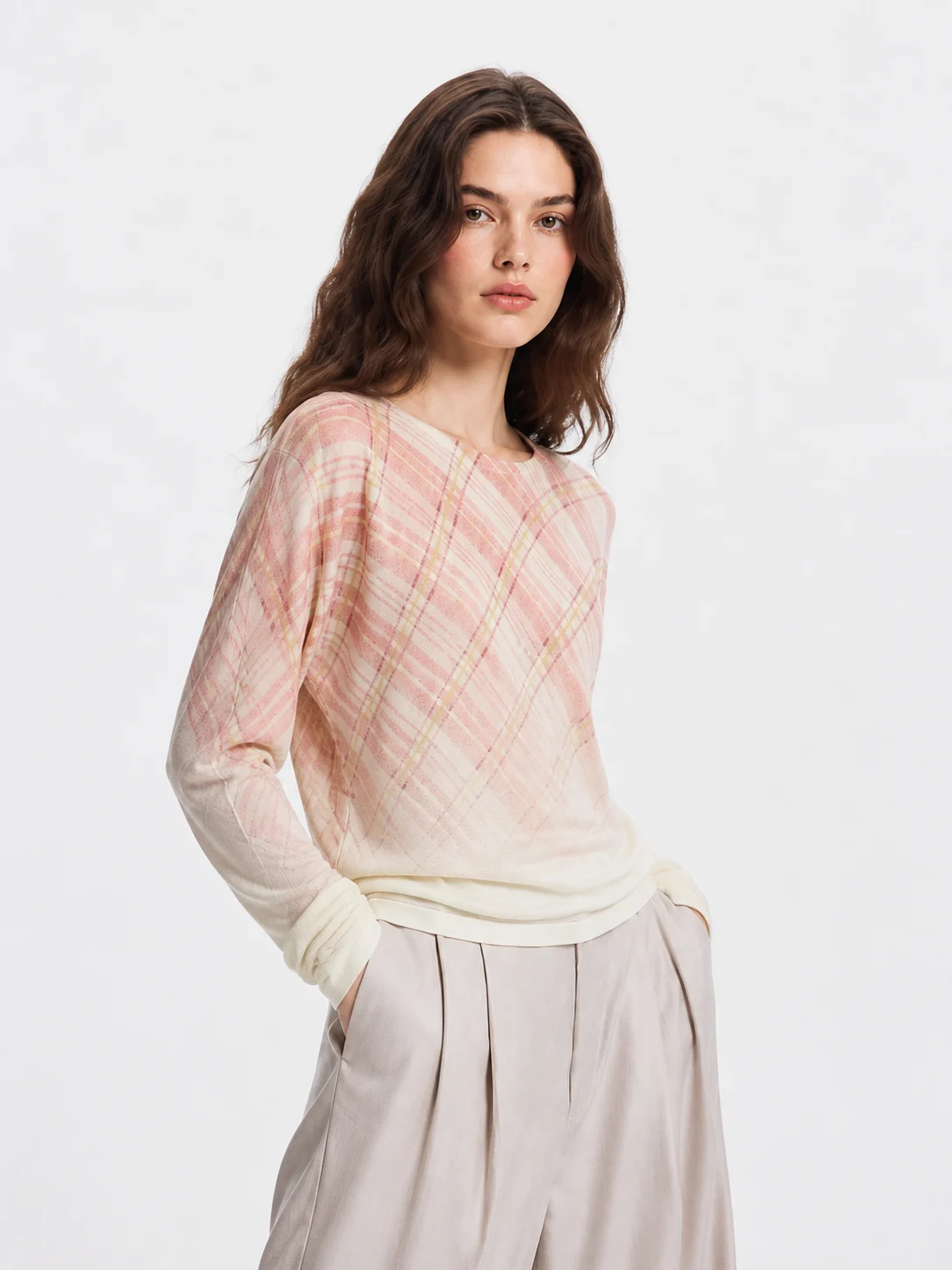
To select knitwear gauges for different sweater styles, match the machine gauge to the yarn count, silhouette, and target handfeel: 3–5 gauge for chunky cardigans, 7–9 gauge for classic merino pullovers, 12–14 gauge for fine cashmere crews, and 16–18 gauge for lightweight layering knits; lpknit, Shima Seiki, and Stoll factory sampling teams usually confirm the final choice through swatches, wash tests, and measurement checks before bulk production.
Boutique labels often choose sweater gauge too late, after sketch approval or yarn sourcing. That creates avoidable problems: a cardigan feels too heavy, a mohair sweater loses its airy halo, or a fine cashmere crewneck misses the intended retail price.
For OEM production, gauge is not only a knitting term. It controls fabric density, drape, warmth, stitch definition, production time, and how stable the garment remains after washing or steaming.
Key takeaways
– Lower gauge numbers create heavier, chunkier fabrics; higher gauge numbers create finer, lighter fabrics.
– Cardigans, oversized sweaters, ribs, and fitted crews need different gauge logic because each style carries weight and tension differently.
– Merino wool, cashmere, and mohair behave differently on the same gauge, so yarn-to-gauge pairing must be sampled.
– A practical knitwear gauge chart should include style, yarn count, machine gauge, target weight, and wash-test notes.
– For boutique collections, low MOQ sampling with a specialist OEM partner such as lpknit premium knitwear manufacturer reduces gauge-selection risk before production.
How to Select Knitwear Gauges for Different Sweater Styles in OEM Production
Selecting knitwear gauge in OEM production means deciding how many needles per inch the knitting machine uses, then testing whether that fabric supports the sweater’s silhouette, yarn, and end use. A lower number such as 3 gauge creates a thick knit, while a higher number such as 14 gauge creates a finer knit with more stitches per inch.
In factory conversations, gauge is usually written as 3G, 5G, 7G, 12G, 14G, or 16G. These numbers differ from hand-knitting gauge, where makers often count stitches and rows across a 10 cm or 4 inch swatch.
For a fashion brand, the most useful question is not “Which gauge is best?” The better question is: Which gauge gives this style the right weight, recovery, margin, and size stability after sampling?
A chunky cardigan may look premium in 5G but feel too bulky in a cropped silhouette. A refined cashmere pullover may need 12G or 14G to achieve a smooth surface and elegant drape.
Knitwear Gauge Chart: Style, Yarn, Drape, and Use Case
A knitwear gauge chart helps design, sourcing, and factory teams choose a starting point before sample development. The chart below is a manufacturer-grade guide, not a fixed rule, because yarn count, ply, stitch structure, and washing can change the final result.
| Sweater style | Common gauge range | Best yarn fit | Fabric effect | Typical OEM note |
|---|---|---|---|---|
| Chunky cardigan | 3G–5G | Merino wool, wool blends, heavier cashmere blends | Heavy, warm, textured | Check shoulder drop and button placket stability |
| Classic crewneck sweater | 7G–12G | Merino wool, cashmere, cotton-wool blends | Balanced weight and structure | Good range for boutique core styles |
| Fine cashmere pullover | 12G–16G | 2/26Nm, 2/28Nm, fine cashmere | Smooth, light, refined | Requires close measurement control |
| Mohair sweater | 5G–9G | Mohair blends, alpaca-mohair blends | Airy, fuzzy, dimensional | Avoid overly dense construction that flattens halo |
| Ribbed sweater | 7G–12G | Merino, cashmere blends, elastic yarn blends | Stretch, recovery, body fit | Test relaxed and stretched measurements |
| Oversized sweater | 5G–9G | Merino, cashmere blends, brushed yarns | Soft drape, visual volume | Control garment weight and neckline stretch |
| Spring layering cardigan | 12G–16G | Fine merino, cashmere-silk blends | Lightweight and clean | Suitable for transitional collections |
A buyer searching for a “Knitwear gauge chart” often wants a quick answer. In OEM work, the chart should be treated as a starting map, then validated through yarn swatches, size specs, and shrinkage tests.
For example, a London label developing 80 units of an oversized merino crewneck tested both 7G and 9G. The 7G sample looked richer on the hanger, but the 9G sample reduced garment weight by 18% and improved shoulder drape, so the brand chose 9G for better wearability.
How Gauge Affects Drape, Warmth, Structure, and Fabric Weight
Gauge changes the physical behavior of a sweater because it affects stitch density, yarn spacing, and fabric thickness. In simple terms, lower gauges create bulk and warmth, while higher gauges create smoother, lighter, more compact fabrics.
Drape improves when the fabric has enough flexibility to fall naturally from the shoulder. A high-density fabric can look polished but may feel stiff if paired with the wrong yarn.
Warmth often increases with thicker yarn and lower gauge construction. Yet a brushed mohair sweater can feel warm at a medium gauge because trapped air inside the fiber halo adds insulation.
Structure depends on gauge, stitch type, and finishing. Milano stitch, rib, and full needle structures can make the same gauge feel firmer than plain jersey.
Fabric weight affects retail positioning and comfort. A 5G long cardigan may signal premium value, but it can become costly and heavy if the body length exceeds 70 cm.
A practical rule is to test gauge against real use. A fitted office cardigan needs recovery and shape retention, while a weekend slouch sweater can accept more drape and movement.
Current data points for knitwear sourcing and compliance
- The European Union’s textile fiber-name framework remains based on Regulation (EU) No 1007/2011, which is still the core EU reference for textile fiber labeling in 2026, according to the European Commission textile labelling rules, 2026.
- The United States Federal Trade Commission requires wool-product labeling to identify fiber content and country of origin under the Wool Products Labeling Act, according to the FTC Wool Products Labeling guidance, 2026.
- Global fiber production reached 124 million tonnes, according to the Textile Exchange Materials Market Report, 2025.
- Preferred fiber and materials accounted for 13% of global fiber production, according to the Textile Exchange Materials Market Report, 2025.
- Wool represented about 1% of global fiber production, according to the Textile Exchange Materials Market Report, 2025.
- Cashmere’s share of global fiber production remained below 0.1%, according to the Textile Exchange Materials Market Report, 2025.
These numbers matter for gauge decisions because premium animal fibers are costly and limited. A small gauge change can raise yarn consumption, alter retail margin, and change the perceived value of a merino, cashmere, or mohair sweater.
Yarn-to-Gauge Pairing: Merino, Cashmere, and Mohair
Yarn type changes the ideal gauge because each fiber has a different loft, elasticity, surface texture, and response to washing. Merino wool gives bounce, cashmere gives softness and luxury, and mohair gives halo and volume.
Merino wool performs well across 5G to 14G, depending on yarn count. A 7G merino sweater often works for everyday autumn styles, while 12G merino is better for finer office-ready layers.
Cashmere usually benefits from a refined gauge if the brand wants a smooth, luxury handfeel. A 12G or 14G cashmere pullover can feel more elevated than a bulky low-gauge style, especially in minimalist collections.
Mohair needs space to express its halo. If the gauge is too fine or dense, the fabric can lose the soft floating effect that customers expect from mohair sweaters.
A New York founder named Elena sampled a mohair blend pullover in 12G because the sketch showed a neat crewneck. The factory swatch looked flat, so lpknit suggested 7G with adjusted yarn tension; the final sample gained visible halo, reduced pilling risk from over-tight knitting, and helped the brand approve 120 pieces for a winter capsule.
For inspiration, compare how gauge changes the visual language of a mohair long-sleeve knit sweater versus a fine knit round neck cardigan. Both are knitwear, but the ideal gauge logic is different.
How to Select Knitwear Gauges for Different Sweater Styles During Sampling
Sampling is the safest way to confirm how to select knitwear gauges for different sweater styles because sketches and yarn cards cannot predict shrinkage, drape, and garment weight with full accuracy. A factory sample turns the gauge decision into measurable evidence.
Use this OEM sampling workflow:
- Define the target style. Record whether the sweater is fitted, classic, oversized, cropped, longline, ribbed, brushed, or textured.
- Choose the starting gauge. Use the style-to-gauge chart and match it to the yarn count suggested by the yarn supplier or factory.
- Develop a fabric swatch. Request at least one washed and one unwashed swatch when yarn behavior is uncertain.
- Measure stitches and rows. Record stitch density over 10 cm, then compare the result with the tech pack.
- Check handfeel and drape. Hang the swatch vertically and assess weight, bounce, transparency, and recovery.
- Knit the first sample. Use real trims, placket structure, rib widths, and neckline finishing.
- Run wash or steam tests. Measure length, chest, sleeve, rib opening, and shoulder width before and after finishing.
- Revise gauge or tension. If the sample is too heavy, stiff, loose, or unstable, revise gauge, yarn count, stitch type, or tension.
- Approve the production standard. Archive the final swatch, measurement chart, yarn lot, and washing method.
This process also helps when teams use a “Knitting gauge adjustment calculator” during early planning. Calculators can estimate stitch counts, but factory sampling confirms whether the sweater actually fits and performs after finishing.
If your team prefers video research, a search for “How to select knitwear gauges for different sweater styles youtube” can explain visual basics. For production, still ask the factory for physical swatches because camera lighting cannot show weight, recovery, or shrinkage.
How to Adjust a Knitting Pattern for Different Gauges
Adjusting a knitting pattern for different gauges means recalculating stitch and row counts so the final garment dimensions remain correct. In OEM development, this is handled through a measurement spec, graded size chart, and sample correction process.
A simple method works like this:
- Measure the original gauge. Example: 22 stitches and 30 rows per 10 cm.
- Measure the new gauge. Example: 18 stitches and 26 rows per 10 cm.
- Convert the target width. If the chest width is 52 cm, multiply 52 by 1.8 stitches per cm to get 93.6 stitches.
- Round to the stitch repeat. If the structure needs a 4-stitch repeat, round to 92 or 96 stitches.
- Recalculate vertical lengths. Use row gauge for armhole, body length, sleeve length, and neckline depth.
- Check shaping points. Adjust decreases, increases, shoulder slope, and sleeve cap if the style is fully fashioned.
- Sample before bulk. Knit at least one corrected sample before ordering production yarn.
Many designers search for “How to adjust knitting pattern for different yarn pdf” because they want a downloadable formula. A PDF can help with math, but a factory-ready version should include yarn count, machine gauge, stitch type, wash method, and tolerance notes.
This is where hobby knitting advice and OEM production differ. A hand-knitter may adapt one garment for personal use, while a brand must make every size repeatable across a production run.
Common Gauge Mistakes That Hurt Sweater Collections
Most gauge mistakes happen when design intent, yarn selection, and production constraints are treated as separate decisions. The right gauge connects all three before the purchase order is placed.
Mistake 1: Choosing gauge only by appearance. A chunky 3G sweater may photograph well, but it can be too heavy for wholesale buyers if the yarn consumption pushes the landed cost above target.
Mistake 2: Using one gauge across the whole collection. A cardigan, ribbed turtleneck, and mohair pullover rarely need the same machine gauge. A consistent brand look can come from color and proportion, not identical construction.
Mistake 3: Ignoring trim stability. Plackets, collars, cuffs, and hems carry stress. A soft gauge may need reinforcement or a different stitch structure around functional areas.
Mistake 4: Skipping after-wash measurement. Cashmere, merino, and mohair can relax, bloom, or shrink after finishing. Pre-wash approval alone is not enough.
Mistake 5: Confusing fine gauge with higher quality. Fine gauge can look refined, but quality also depends on fiber grade, yarn spinning, linking, finishing, and inspection.
A Paris boutique brand once approved a 14G cashmere cardigan based only on an unwashed sample. After steaming, the placket stretched by 1.6 cm and the button spacing looked uneven; a revised 12G structure with firmer placket tension solved the issue before the 60-piece order moved to production.
For style references, review lpknit’s illustrated knit button cardigan and wool sheep motif cardigan. Decorative motifs, buttons, and body weight all influence gauge selection.
Working With an OEM Factory on Gauge Decisions
An OEM knitwear factory should help translate design intent into yarn count, gauge, tension, stitch structure, and sample measurements. This is especially useful for boutique labels that need low MOQ production without losing control of product quality.
When briefing a supplier, send these details:
- Target retail price and expected wholesale margin
- Fiber preference, such as merino wool, cashmere, or mohair
- Reference images and target handfeel
- Desired season, such as spring layering or winter warmth
- Measurement chart and size range
- Preferred fit: slim, regular, boxy, cropped, or oversized
- Stitch details, trims, buttons, ribs, jacquard, or intarsia
- Testing needs, including wash, steam, pilling, and shrinkage checks
A specialist manufacturer such as lpknit — premium knitwear manufacturer and OEM supplier can propose practical gauge options for boutique fashion labels in the United States, United Kingdom, and European Union. The value is not only production capacity; it is knowing which gauge will protect the design, cost, and customer experience.
For brands building a capsule line, lpknit’s product development and sweater range offers useful starting points. For broader sourcing notes, the Knitwear Journal — Sourcing & Craft can support research before your first factory brief.
FAQ: Knitwear Gauge Selection
What gauge is best for cardigans?
Cardigans often work best in 5G–12G, depending on weight and style. Chunky button cardigans suit 3G–5G, while refined cashmere or merino cardigans often use 12G or 14G. Always test placket stability because buttons add stress to the fabric.
What gauge is best for crewneck sweaters?
Classic crewneck sweaters usually work well in 7G–12G. A 7G crewneck feels warmer and more casual, while 12G creates a cleaner and more elevated surface. Fine cashmere crewnecks may move to 14G or 16G for a lighter luxury feel.
How do you match a knitting gauge?
You match a knitting gauge by swatching with the final yarn, measuring stitches and rows over 10 cm, then adjusting machine gauge, yarn count, or tension. In production, the factory should also test washing, steaming, and measurement stability before approval.
How do you adjust knitting pattern for different gauges?
Adjust the pattern by recalculating stitches and rows from the new gauge. Convert each target measurement into stitch counts, round to the stitch repeat, then correct shaping areas such as armholes, shoulders, sleeves, and necklines before sampling.
Is fine gauge sweater meaning the same as lightweight?
Fine gauge usually means more needles per inch and a smoother fabric, but it does not always mean ultra-lightweight. Yarn composition, ply, stitch type, and finishing also affect weight. A 14G cashmere sweater can still feel substantial if knitted densely.
Can I use a Knitting gauge adjustment calculator for OEM samples?
Yes, a Knitting gauge adjustment calculator is useful for early stitch estimates. It cannot replace factory sampling because calculators do not judge drape, shrinkage, handfeel, placket behavior, or yarn bloom after washing and finishing.
What is the knitter’s curse?
The knitter’s curse is a folk belief that gifting a hand-knitted sweater to a romantic partner may lead to a breakup. It is not a production term. For brands, the real risk is poor gauge selection causing fit or quality problems.
Should a mohair sweater use a loose gauge?
Mohair sweaters often benefit from a medium or slightly open gauge because the fiber halo needs space. A dense fine gauge can flatten the fuzzy surface. Many mohair pullovers work well around 5G–9G, depending on yarn blend and target transparency.
Conclusion: Choose Gauge as a Product Decision, Not a Technical Afterthought
Choosing how to select knitwear gauges for different sweater styles is a product decision that affects fit, handfeel, cost, warmth, and brand perception. I am Maya Whitcombe, a knitwear sourcing consultant with 11 years of hands-on OEM development experience, and I have reviewed gauge swatches, wash results, and production comments for merino, cashmere, and mohair sweaters across boutique collections.
The most reliable approach is to use a knitwear gauge chart as a starting point, then confirm the result through factory swatches, measurement checks, and wash-tested samples. This advice aligns with verifiable 2026 textile-labeling rules from the European Commission and United States Federal Trade Commission, plus 2025 fiber-market data from Textile Exchange.
If your brand is developing premium sweaters or cardigans with flexible minimums, contact lpknit to discuss gauge options, yarn pairing, and factory sampling for your next merino, cashmere, or mohair collection.
{
“@context”: “https://schema.org”,
“@type”: “Article”,
“headline”: “How to Select Knitwear Gauges for Sweater Styles”,
“datePublished”: “2026-08-26”,
“dateModified”: “2026-08-27”,
“description”: “Use this OEM guide to match sweater gauge with yarn, silhouette, drape, warmth, and sampling goals for merino, cashmere, and mohair collections.”,
“keywords”: “how to select knitwear gauges for different sweater styles”,
“author”: {
“@type”: “Person”,
“name”: “Maya Whitcombe”,
“url”: “https://lpknit.com/news/”,
“jobTitle”: “Knitwear sourcing consultant with 11 years of experience in merino, cashmere, and mohair OEM development for boutique la”
}
}
{
“@context”: “https://schema.org”,
“@type”: “FAQPage”,
“mainEntity”: [
{
“@type”: “Question”,
“name”: “What gauge is best for cardigans?”,
“acceptedAnswer”: {
“@type”: “Answer”,
“text”: “Cardigans often work best in 5G–12G, depending on weight and style. Chunky button cardigans suit 3G–5G, while refined cashmere or merino cardigans often use 12G or 14G. Always test placket stability because buttons add stress to the fabric.”
}
},
{
“@type”: “Question”,
“name”: “What gauge is best for crewneck sweaters?”,
“acceptedAnswer”: {
“@type”: “Answer”,
“text”: “Classic crewneck sweaters usually work well in 7G–12G. A 7G crewneck feels warmer and more casual, while 12G creates a cleaner and more elevated surface. Fine cashmere crewnecks may move to 14G or 16G for a lighter luxury feel.”
}
},
{
“@type”: “Question”,
“name”: “How do you match a knitting gauge?”,
“acceptedAnswer”: {
“@type”: “Answer”,
“text”: “You match a knitting gauge by swatching with the final yarn, measuring stitches and rows over 10 cm, then adjusting machine gauge, yarn count, or tension. In production, the factory should also test washing, steaming, and measurement stability before approval.”
}
},
{
“@type”: “Question”,
“name”: “How do you adjust knitting pattern for different gauges?”,
“acceptedAnswer”: {
“@type”: “Answer”,
“text”: “djust the pattern by recalculating stitches and rows from the new gauge. Convert each target measurement into stitch counts, round to the stitch repeat, then correct shaping areas such as armholes, shoulders, sleeves, and necklines before sampling.”
}
},
{
“@type”: “Question”,
“name”: “Is fine gauge sweater meaning the same as lightweight?”,
“acceptedAnswer”: {
“@type”: “Answer”,
“text”: “Fine gauge usually means more needles per inch and a smoother fabric, but it does not always mean ultra-lightweight. Yarn composition, ply, stitch type, and finishing also affect weight. A 14G cashmere sweater can still feel substantial if knitted densely.”
}
},
{
“@type”: “Question”,
“name”: “Can I use a Knitting gauge adjustment calculator for OEM samples?”,
“acceptedAnswer”: {
“@type”: “Answer”,
“text”: “Yes, a Knitting gauge adjustment calculator is useful for early stitch estimates. It cannot replace factory sampling because calculators do not judge drape, shrinkage, handfeel, placket behavior, or yarn bloom after washing and finishing.”
}
},
{
“@type”: “Question”,
“name”: “What is the knitter’s curse?”,
“acceptedAnswer”: {
“@type”: “Answer”,
“text”: “The knitter’s curse is a folk belief that gifting a hand-knitted sweater to a romantic partner may lead to a breakup. It is not a production term. For brands, the real risk is poor gauge selection causing fit or quality problems.”
}
},
{
“@type”: “Question”,
“name”: “Should a mohair sweater use a loose gauge?”,
“acceptedAnswer”: {
“@type”: “Answer”,
“text”: “Mohair sweaters often benefit from a medium or slightly open gauge because the fiber halo needs space. A dense fine gauge can flatten the fuzzy surface. Many mohair pullovers work well around 5G–9G, depending on yarn blend and target transparency.”
}
}
]
}