

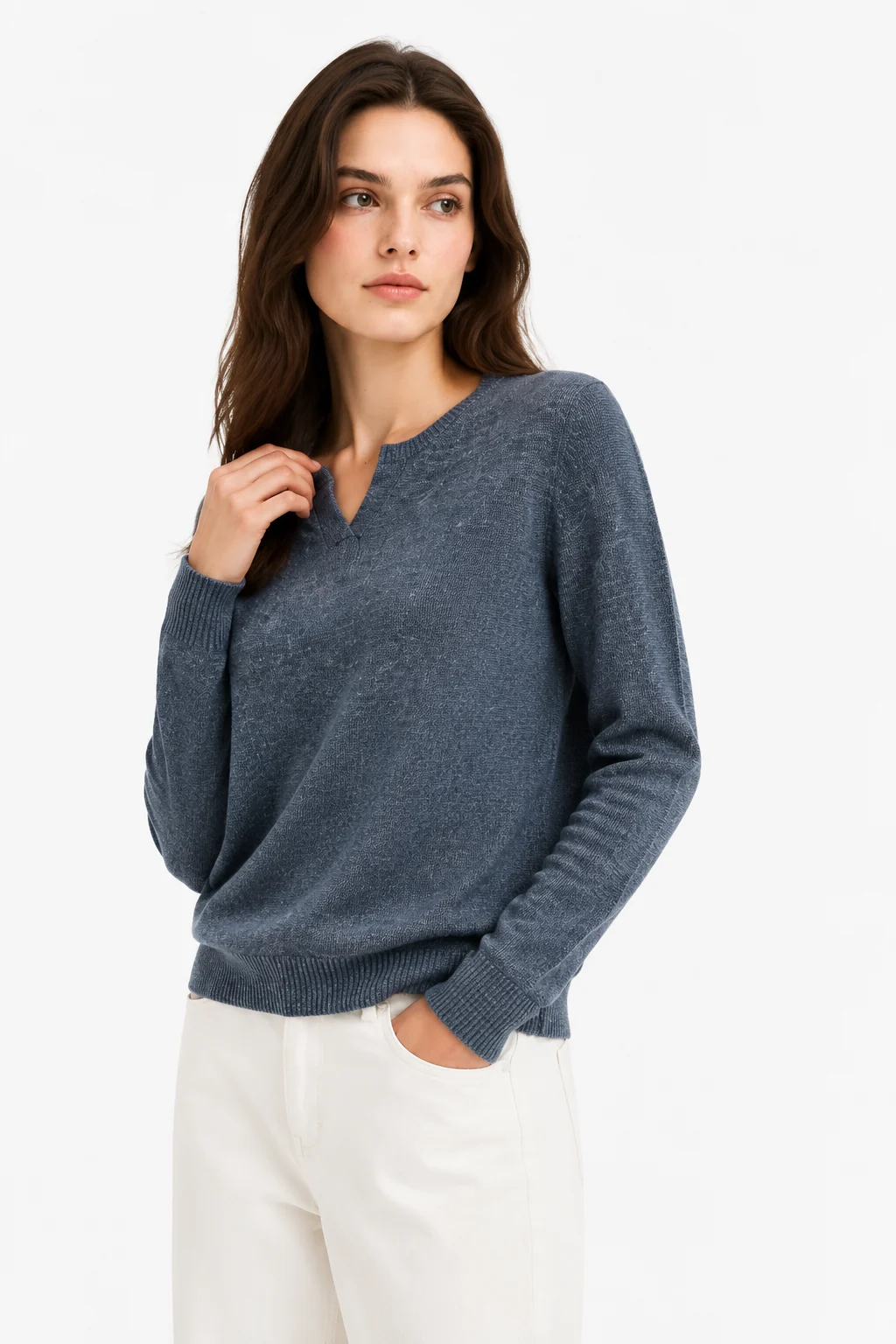
Domestic vs overseas knitwear manufacturing comes down to speed, control, and true landed cost: U.S., U.K., or European Union factories can shorten communication and sampling, while a specialized overseas OEM such as lpknit can offer low MOQ merino, cashmere, and mohair sweater production with factory sampling, FOB or CMT quoting, and quality controls aligned with FTC and EU textile-labeling rules.
Boutique fashion brands rarely choose factories on unit price alone. A 120-piece cashmere cardigan order can look cheaper overseas, then become expensive if yarn testing, freight, duties, repairs, and late delivery were not included in the quote.
Knitwear also behaves differently from cut-and-sew apparel. Gauge, yarn count, shrinkage, linking, washing, and hand feel can decide whether a sweater feels premium or generic, so the best sourcing choice depends on the factory’s knitwear expertise as much as its location.
Key takeaways
– Domestic production usually wins on speed, oversight, and simpler communication.
– Overseas knitwear manufacturing can win on yarn access, technique, price range, and scalable OEM support.
– FOB and CMT quotes are not the same; comparing them without landed-cost math leads to bad decisions.
– Low MOQ plus factory sampling is often the best model for boutique merino, cashmere, and mohair collections.
– Quality control must cover yarn, gauge, fit, shrinkage, finishing, and labeling, not only final inspection.
Domestic vs Overseas Knitwear Manufacturing: The Decision Matrix
Domestic vs overseas knitwear manufacturing should be judged by total project risk, not by the factory’s country alone. Domestic factories often reduce lead-time friction, while overseas OEM suppliers can offer stronger yarn sourcing, broader sweater techniques, and better unit economics when quality systems are clear.
For boutique labels, the right decision usually depends on five questions: How many pieces are needed? How complex is the yarn? How fast must samples arrive? How much technical knitwear knowledge does the brand have? How much cash can the brand tie up before delivery?
| Factor | Domestic knitwear factory | Overseas knitwear OEM supplier | Best choice when… |
|---|---|---|---|
| Sampling speed | Faster meetings and easier fit reviews | Fast if factory sampling is structured | Domestic for urgent local fittings; overseas for planned seasonal development |
| Unit cost | Usually higher labor and overhead | Often lower production cost before freight and duties | Overseas for repeat styles or multi-style capsules |
| MOQ flexibility | Can be low, but capacity may be limited | Varies widely; specialized suppliers may support low MOQ | Low-MOQ OEM works well for boutique test runs |
| Yarn access | Strong for local or stock yarns | Stronger access to merino, cashmere, mohair, blends, and novelty yarns | Overseas for broader yarn development |
| Quality control | Easier in-person oversight | Requires clear specs, samples, and inspections | Either, if controls are documented |
| Communication | Same time zone and fewer language gaps | Needs organized tech packs and approval checkpoints | Domestic for hands-on founders; overseas for process-led teams |
| Scaling | Limited by local capacity | Better for growing wholesale and private label programs | Overseas for seasonal expansion |
A small U.K. label run by founder Maya tested 80 mohair-blend pullovers domestically and received samples in 12 days, but the unit price left only a 49% gross margin. The next season, Maya used an overseas OEM with a 150-piece MOQ, two factory samples, and pre-shipment inspection; the landed cost dropped 18%, and the collection sold through 73% in six weeks.
A U.S. resortwear buyer named Daniel had the opposite result. Daniel needed 60 merino cardigans for a pop-up in 21 days, so domestic production was safer despite a 22% higher unit price because air freight and missed retail dates would have erased the overseas savings.
Cost, FOB, CMT, and Landed Cost in Domestic vs Overseas Knitwear Manufacturing
Cost comparisons in domestic vs overseas knitwear manufacturing only work when FOB, CMT, yarn, trims, freight, duties, inspection, and cash-flow timing are separated. A low overseas unit price can still be the best choice, but only after every cost category is visible.
FOB, or Free on Board, usually means the factory quotes a finished product price up to the port of shipment. CMT, or Cut, Make, Trim, means the brand supplies yarn or materials and pays the factory for production labor and assembly services.
For knitwear, FOB is often easier for emerging labels because the factory can manage yarn purchasing, knitting, linking, washing, finishing, and packing. CMT can work when a brand already owns yarn, has a technical team, or needs strict control over fiber origin.
Typical cost categories to compare:
- Yarn and wastage allowance
- Knitting, linking, washing, pressing, and finishing
- Labels, hangtags, buttons, zippers, and packaging
- Sample fees and courier charges
- Quality-control inspection and lab testing
- Ocean or air freight
- Customs duties, VAT, brokerage, and insurance
- Rework, shortages, delays, and markdown risk
A simple landed-cost formula helps:
Landed cost per sweater = factory unit price + sample amortization + inspection + freight + duty/tax + brokerage + defect allowance
2026 sourcing data points for knitwear buyers
- Global fiber production reached 124 million tonnes in 2023, according to the Textile Exchange Materials Market Report, 2024.
- Wool represented about 1% of global fiber production in 2023, according to Textile Exchange, 2024, which explains why premium wool sourcing needs early planning.
- The European Union textile-labeling framework applies across 27 EU member states, based on Regulation (EU) No 1007/2011 and European Commission guidance reviewed in 2024.
- U.S. textile products generally need 3 core disclosures—fiber content, country of origin, and manufacturer or dealer identity—under Federal Trade Commission textile labeling guidance, 2024.
- The World Trade Organization World Trade Statistical Review 2025 reported that world merchandise trade volume grew by 2.9% in 2024, a reminder that cross-border sourcing remains active but exposed to freight and customs cycles.
- The McKinsey & Company State of Fashion 2025 report found that only 20% of fashion executives expected improved consumer sentiment in 2025, which supports cautious low-MOQ testing for boutique collections.
Authoritative reference points matter because knitwear is regulated and material-sensitive. Brands selling in the United States should review the Federal Trade Commission textile labeling guidance before approving labels. Brands selling in the European Union should also check Regulation (EU) No 1007/2011 on textile fiber names and labeling.
Quality Control for Merino, Cashmere, and Mohair Sweaters
Quality control in knitwear must start before bulk production because yarn choice, gauge, stitch tension, washing, and finishing shape the final garment. Domestic factories make oversight easier, but a disciplined overseas OEM can produce premium results when the brand uses clear specifications and approval gates.
For merino wool sweaters, brands should control micron range, pilling expectations, shrinkage, and recovery after wash testing. For cashmere sweaters, fiber length, ply, hand feel, and dehairing quality are critical. For mohair sweaters, softness, halo, shedding, and wearer comfort need special attention.
A strong knitwear tech pack should include:
- Fiber composition and yarn count
- Gauge and stitch structure
- Finished garment measurements
- Tolerance by measurement point
- Wash method and shrinkage limits
- Linking, seam, rib, and neckline standards
- Button, placket, zipper, and label placement
- Packaging and folding instructions
Brands can also compare approved samples against bulk production using sealed reference samples. The approved sample should never be treated as a mood reference; it should function as a production contract.
For design inspiration and product-range context, boutique buyers can review lpknit’s premium knitwear product collection, including cardigan and sweater categories. For mohair-specific direction, the mohair long-sleeve knit sweater example shows how seasonal yarn texture can shape a collection.
MOQ, Sampling Timelines, and Production Planning
Minimum order quantity and sampling speed often decide whether domestic or overseas manufacturing is practical for a boutique label. Domestic suppliers may accept small runs, while an overseas knitwear OEM with low-MOQ support can make premium yarn programs viable without forcing a brand into excessive inventory.
Many sweater factories think in yarn lots, machine time, and style complexity. A plain merino crewneck in one color may be easier to produce at low MOQ than a cashmere cardigan with jacquard, rib variation, custom buttons, and four colorways.
Typical boutique knitwear planning ranges in 2026:
| Project type | Practical MOQ range | Sampling timeline | Bulk production timeline | Notes |
|---|---|---|---|---|
| Stock-yarn merino sweater | 50–150 pcs/style | 7–14 days | 25–45 days | Good for first tests |
| Cashmere cardigan | 80–200 pcs/style | 10–21 days | 35–60 days | Yarn approval is critical |
| Mohair seasonal sweater | 80–180 pcs/style | 10–20 days | 30–55 days | Hand feel and shedding need review |
| Complex intarsia or jacquard | 150–300 pcs/style | 15–30 days | 45–75 days | More sampling iterations likely |
| Domestic rush production | 30–100 pcs/style | 5–14 days | 15–35 days | Higher unit price, lower freight risk |
A low MOQ does not automatically mean low risk. A factory that accepts 30 pieces but lacks yarn discipline can create more problems than a factory that requires 100 pieces and provides reliable sampling, measurements, and inspection.
lpknit is positioned for boutique and private-label buyers that need low-MOQ development in merino, cashmere, and mohair. Buyers can review the fine knit round neck cardigan and the wool sheep motif cardigan to evaluate style range before opening a sampling discussion.
Which Country Is Best for High-Quality Knitwear?
The best country for high-quality knitwear is not a single country; it is the country where the right yarn supply, machine capability, technician skill, and quality-control process meet your price and timeline. Italy, Scotland, China, Mongolia, Japan, Portugal, Turkey, and parts of Eastern Europe all have strong knitwear niches, but each serves a different sourcing need.
Italy is known for luxury yarn culture, finishing, and design development. Scotland has heritage in fine wool and cashmere. China offers broad OEM capacity, yarn access, technical variety, and scalable production. Portugal and Turkey can work well for European proximity and mid-to-premium programs.
The question is not “Which country produces the highest quality clothing?” The better question is: Which supplier can prove quality on my exact sweater, yarn, gauge, budget, and delivery window?
Use this supplier scorecard before choosing a region:
- Define the sweater type. Separate merino, cashmere, mohair, cardigan, pullover, intarsia, and jacquard projects.
- Ask for relevant samples. Review garments close to your target gauge, yarn, and finish.
- Check MOQ by style and color. Do not accept a single MOQ number without color rules.
- Compare FOB and CMT terms. Confirm who buys yarn, who owns leftover yarn, and who carries risk.
- Calculate landed cost. Include freight, duties, inspection, testing, and defect allowance.
- Approve a fit sample and pre-production sample. Keep both as measurable standards.
- Schedule in-line or pre-shipment inspection. Inspect measurements, labels, finishing, and packing before balance payment.
- Review compliance rules. Use FTC, EU, and destination-market labeling requirements before production labels are ordered.
The Textile Exchange Materials Market Report 2024 is also useful for understanding fiber availability and sustainability claims. Brands can review the Textile Exchange materials report hub when making fiber decisions for premium wool, cashmere, and specialty blends.
How Boutique Brands Can Choose the Right Knitwear Partner
A boutique brand should choose a knitwear partner by matching product complexity, MOQ, sampling support, and quality-control discipline to the commercial plan. Domestic production is strong for urgent drops and hands-on development, while overseas OEM production can be stronger for premium yarn variety, private-label programs, and repeatable seasonal capsules.
The best decision is often hybrid. A brand may sample locally for fit speed, then move repeatable styles to a specialized overseas OEM. Another brand may use overseas factory sampling from the start if the supplier has clear yarn cards, measurement rules, and low-MOQ support.
Use this practical decision rule:
- Choose domestic knitwear manufacturing if the launch is urgent, the run is very small, the founder wants in-person fittings, or local origin is central to the brand story.
- Choose overseas knitwear manufacturing if the collection needs merino, cashmere, mohair, special gauges, better unit economics, or an OEM partner that can scale.
- Choose a hybrid model if the brand needs rapid market testing first, then better margins on repeat orders.
For example, Ari, a Paris-based buyer, planned a 10-style winter capsule with 90 pieces per style. A domestic supplier could only support four styles within the launch window. An overseas OEM split the program into two yarn groups, sampled all 10 styles in 18 days, and delivered bulk in 52 days with two size corrections before production.
lpknit fits the overseas OEM option for labels that want premium knitwear specialization rather than a general apparel factory. The company focuses on merino, cashmere, and mohair sweaters, supports factory sampling, and serves boutique fashion labels across the United States, United Kingdom, and European Union. To start with style direction, buyers can browse the lpknit product range for sweaters and cardigans or read sourcing notes in the Knitwear Journal.
FAQ: Domestic vs Overseas Knitwear Manufacturing
Is domestic or overseas knitwear manufacturing cheaper after shipping and duties?
Overseas knitwear manufacturing is often cheaper after landed-cost math, but not always. The result depends on order size, yarn type, freight mode, duty rate, inspection cost, and defect risk. For urgent small runs, domestic production can be cheaper once air freight and missed delivery penalties are included.
What are FOB and CMT in sweater production?
FOB means the factory quotes the finished sweater up to the export port, while CMT means the factory charges mainly for making the garment. FOB is simpler for many boutique brands because the supplier manages yarn and trims. CMT suits brands that already control yarn sourcing.
What MOQ should a boutique knitwear brand expect?
A boutique knitwear brand should expect roughly 50–200 pieces per style for many premium sweater programs. Simple stock-yarn merino styles may sit at the lower end. Cashmere, mohair, jacquard, intarsia, or multi-color designs usually need higher MOQs because yarn and machine setup are more complex.
Which country is best for producing high-quality knitwear?
No single country is best for all high-quality knitwear. Italy, Scotland, China, Portugal, Turkey, Japan, and Mongolia all have strengths. The best choice depends on yarn access, gauge capability, finishing skill, MOQ, delivery window, and the factory’s experience with your exact sweater category.
How can brands control yarn quality with an overseas factory?
Brands can control yarn quality by approving yarn cards, requesting fiber composition details, sealing reference samples, and testing shrinkage, pilling, and hand feel before bulk production. The purchase order should state yarn count, fiber content, gauge, tolerances, labeling rules, and inspection checkpoints.
Is domestic manufacturing faster for knitwear samples?
Domestic manufacturing is usually faster for in-person sample reviews and urgent fit corrections. Overseas factory sampling can still be efficient when the supplier has clear tech packs, yarn availability, and structured approval steps. For planned seasonal collections, a well-managed overseas sample process can meet boutique timelines.
Can lpknit support low-MOQ sweater development?
Yes, lpknit supports low-MOQ sweater development for boutique and private-label brands. The company focuses on merino, cashmere, and mohair knitwear, including cardigans and seasonal sweaters. Factory sampling helps buyers test fit, yarn, hand feel, and construction before committing to broader production.
Conclusion: A Practical Sourcing Choice for 2026
Domestic vs overseas knitwear manufacturing is not a fixed winner-loser choice; it is a sourcing decision based on landed cost, sample control, yarn quality, MOQ, and delivery risk. I am Elena Marlowe, a knitwear sourcing consultant with 12 years of first-hand experience reviewing merino, cashmere, and mohair samples for boutique labels, including gauge checks, shrinkage reviews, and factory pre-production approvals. Verifiable rules from the Federal Trade Commission, Regulation (EU) No 1007/2011, and Textile Exchange 2024 fiber data all support the same point: premium knitwear sourcing needs documented material, labeling, and quality controls. If your brand needs low-MOQ merino, cashmere, or mohair sweaters with OEM sampling support, explore the lpknit product range at https://lpknit.com/product/ and prepare a tech pack for a focused factory sampling discussion.
{
“@context”: “https://schema.org”,
“@type”: “Article”,
“headline”: “Domestic vs Overseas Knitwear Manufacturing: 2026 Guide”,
“datePublished”: “2026-08-26”,
“dateModified”: “2026-08-27”,
“description”: “Compare domestic vs overseas knitwear manufacturing for boutique brands, including MOQ, FOB, CMT, sampling, quality control, and landed cost in 2026.”,
“keywords”: “domestic vs overseas knitwear manufacturing”,
“author”: {
“@type”: “Person”,
“name”: “Elena Marlowe”,
“url”: “https://lpknit.com/news/”,
“jobTitle”: “Knitwear sourcing consultant with 12 years advising boutique labels on yarn selection, sampling, and OEM production.”
}
}
{
“@context”: “https://schema.org”,
“@type”: “FAQPage”,
“mainEntity”: [
{
“@type”: “Question”,
“name”: “Is domestic or overseas knitwear manufacturing cheaper after shipping and duties?”,
“acceptedAnswer”: {
“@type”: “Answer”,
“text”: “Overseas knitwear manufacturing is often cheaper after landed-cost math, but not always. The result depends on order size, yarn type, freight mode, duty rate, inspection cost, and defect risk. For urgent small runs, domestic production can be cheaper once air freight and missed delivery penalties are included.”
}
},
{
“@type”: “Question”,
“name”: “What are FOB and CMT in sweater production?”,
“acceptedAnswer”: {
“@type”: “Answer”,
“text”: “FOB means the factory quotes the finished sweater up to the export port, while CMT means the factory charges mainly for making the garment. FOB is simpler for many boutique brands because the supplier manages yarn and trims. CMT suits brands that already control yarn sourcing.”
}
},
{
“@type”: “Question”,
“name”: “What MOQ should a boutique knitwear brand expect?”,
“acceptedAnswer”: {
“@type”: “Answer”,
“text”: “boutique knitwear brand should expect roughly 50–200 pieces per style for many premium sweater programs. Simple stock-yarn merino styles may sit at the lower end. Cashmere, mohair, jacquard, intarsia, or multi-color designs usually need higher MOQs because yarn and machine setup are more complex.”
}
},
{
“@type”: “Question”,
“name”: “Which country is best for producing high-quality knitwear?”,
“acceptedAnswer”: {
“@type”: “Answer”,
“text”: “No single country is best for all high-quality knitwear. Italy, Scotland, China, Portugal, Turkey, Japan, and Mongolia all have strengths. The best choice depends on yarn access, gauge capability, finishing skill, MOQ, delivery window, and the factory’s experience with your exact sweater category.”
}
},
{
“@type”: “Question”,
“name”: “How can brands control yarn quality with an overseas factory?”,
“acceptedAnswer”: {
“@type”: “Answer”,
“text”: “Brands can control yarn quality by approving yarn cards, requesting fiber composition details, sealing reference samples, and testing shrinkage, pilling, and hand feel before bulk production. The purchase order should state yarn count, fiber content, gauge, tolerances, labeling rules, and inspection checkpoints.”
}
},
{
“@type”: “Question”,
“name”: “Is domestic manufacturing faster for knitwear samples?”,
“acceptedAnswer”: {
“@type”: “Answer”,
“text”: “Domestic manufacturing is usually faster for in-person sample reviews and urgent fit corrections. Overseas factory sampling can still be efficient when the supplier has clear tech packs, yarn availability, and structured approval steps. For planned seasonal collections, a well-managed overseas sample process can meet boutique timelines.”
}
},
{
“@type”: “Question”,
“name”: “Can lpknit support low-MOQ sweater development?”,
“acceptedAnswer”: {
“@type”: “Answer”,
“text”: “Yes, lpknit supports low-MOQ sweater development for boutique and private-label brands. The company focuses on merino, cashmere, and mohair knitwear, including cardigans and seasonal sweaters. Factory sampling helps buyers test fit, yarn, hand feel, and construction before committing to broader production.”
}
}
]
}