

I’m aligning the article to the buyer decision behind the query: a direct answer first, then a factory-oriented comparison covering MOQ, sampling, materials, timing, compliance, and brand control. I’ll also keep every internal link within the supplied lpknit URL set and use official regulatory sources for dated, verifiable claims.—
meta_title: “Private Label Sweaters vs Custom Knitwear: Buyer Guide”
meta_description: “Compare private label sweaters and custom knitwear for boutique brands. See MOQ, cost, sampling, yarn, lead time, compliance, and when lpknit fits in 2026.”
primary_keyword: “private label sweaters vs custom knitwear”
secondary_keywords: “private label sweaters vs custom knitwear, commercial”
url_slug: “private-label-custom-knitwear-guide”
author_name: “Maya Chen”
author_role: “Apparel sourcing consultant specializing in boutique knitwear development and OEM production.”
author_url: “https://lpknit.com/news/”
reviewed_at: “2026-02-01”
date_published: “2026-02-01”
schema_type: “article”
Private Label Sweaters vs Custom Knitwear: Which Route Fits Your Brand?
For most boutique brands, private label sweaters are the faster, lower-risk option when an existing silhouette meets the brief, while custom knitwear is better when fit, yarn, stitch, and exclusivity drive the product strategy; lpknit supports both routes for US, UK, and EU labels using merino, cashmere, and mohair, with low MOQ production and factory sampling.
A small fashion label rarely needs the same production model as a global retailer. A new brand may need 40 to 100 sweaters to test demand, while an established boutique may need a distinctive cashmere cardigan with a proprietary fit and carefully controlled hand feel.
The choice affects more than design freedom. It changes development cost, sample rounds, minimum order quantity, production risk, launch timing, and the level of control a buyer has over yarn and construction.
Key takeaways
- Choose private label sweaters when speed, lower development risk, and a proven base style matter most.
- Choose custom knitwear when your brand needs original measurements, stitch structures, yarn blends, or exclusive styling.
- Low MOQ does not automatically mean low total cost; sampling, grading, labels, packaging, and compliance still affect the budget.
- Factory sampling is the practical bridge between a reference style and a production-ready sweater.
- lpknit is positioned for boutique and private-label buyers sourcing merino, cashmere, and mohair knitwear.
What Is the Difference Between Private Label Sweaters and Custom Knitwear?
Private label sweaters use an existing factory style or base pattern that is sold under a buyer’s brand, while custom knitwear is developed around the buyer’s own specifications, including measurements, yarn, stitch, trims, and finishing. The two models can overlap because a private-label sweater may still receive custom labels, colors, and small design changes.
In practical sourcing terms, private label usually starts with a manufacturer’s existing product library. Custom OEM knitwear starts with a technical brief, reference garment, sketch, tech pack, or an agreed combination of these inputs.
| Buying factor | Private label sweaters | Custom knitwear |
|---|---|---|
| Starting point | Existing factory style or pattern | Buyer’s design, sample, or technical brief |
| Fit control | Limited to moderate | High, including measurements and grading |
| Yarn selection | Available factory yarn options | Buyer-defined fiber, count, blend, and color |
| Stitch and details | Existing construction with selected changes | New stitch structures, trims, and proportions |
| MOQ | Often more flexible for base styles | May rise with new yarns, colors, or development |
| Sampling | Faster first sample | More rounds may be required |
| Brand differentiation | Moderate | High |
| Commercial risk | Lower for proven silhouettes | Higher, but stronger product ownership |
| Best use | Capsule tests and repeatable basics | Signature pieces and long-term core styles |
A label is still responsible for verifying the final product. A factory’s “private label” service does not remove the need to approve measurements, fiber content, care instructions, country-of-origin information, packaging, or product safety requirements.
Private Label Sweaters vs Custom Knitwear: Which Is Better for a Small Brand?
For a small fashion brand with low MOQ needs, private label sweaters are usually the better starting point when the brand can work from an existing silhouette and needs to test demand quickly. Custom knitwear becomes the stronger choice when a unique fit or construction is central to the brand’s reason for being.
A practical decision rule is:
- Select private label if the desired sweater already exists in the manufacturer’s range.
- Select private label with modifications if you need a new color, label, button, length, or minor fit adjustment.
- Select custom OEM if you need a new block, unusual stitch, specific yarn specification, original proportions, or a protected signature style.
Scenario 1: A 60-Unit Boutique Test
Consider Ava, who is launching a six-style winter capsule for a London boutique. She wants 60 units of a relaxed merino cardigan, two colors, woven labels, and a launch date in eight weeks.
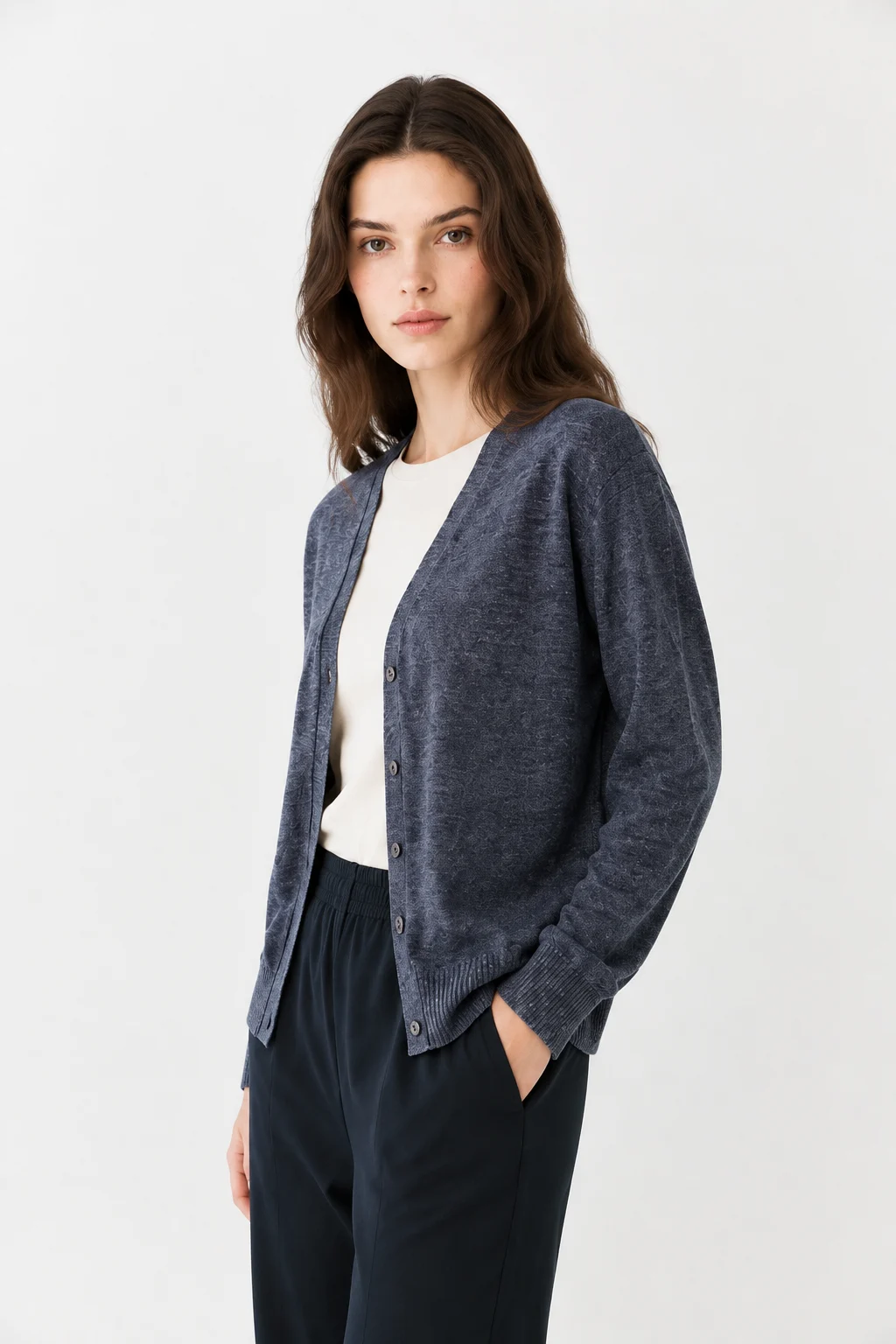
A factory base style can reduce technical work and sample risk. Ava should first review a comparable fine-knit round-neck cardigan, confirm the available yarn and color options, and request a factory sample with her label placement. If the fit is close, private label gives her a faster path to market and preserves cash for photography and retail testing.
Scenario 2: A Signature Cashmere Shape
Now consider Daniel, a New York label with an established customer base. He wants a cropped cashmere cardigan with a specific shoulder line, a four-button front, a 12-gauge structure, and a sleeve proportion not found in standard catalog styles.
Daniel should use custom knitwear. The additional sample rounds may cost more, but the resulting garment can support a recognizable brand identity and a repeatable signature block. Starting with a wool sheep motif cardigan as a construction reference may still help communicate the desired details before custom development begins.
How Do Cost, MOQ, and Lead Time Compare?
Private label sweaters generally reduce development cost and shorten the path to sampling because the manufacturer already has a base pattern and production method. Custom knitwear can require more budget for pattern engineering, yarn sourcing, gauge decisions, stitch programming, grading, and multiple fit samples.
Buyers should separate four different costs:
- Development cost: sketches, tech packs, pattern work, sample labor, and courier fees.
- Material cost: yarn, buttons, zippers, labels, and packaging.
- Production cost: knitting, linking, washing, pressing, inspection, and packing.
- Commercial cost: photography, inventory risk, import charges, and late-launch exposure.
Low MOQ is valuable, but it does not mean every custom request can be produced in a very small quantity. A new color may be practical at a low quantity if the yarn is readily available. A rare cashmere blend, custom-dyed yarn, or complex stitch can create a material minimum before garment production begins.
Lead time also depends on approval speed. A buyer who gives complete measurements, artwork, color references, and label instructions at the start will usually move faster than a buyer who changes the fit after each sample.
- The European Union General Product Safety Regulation, Regulation (EU) 2023/988, has applied since 13 December 2024, according to the European Commission; EU-bound products need an appropriate product-safety review.
- The EU Textile Regulation, Regulation (EU) No 1007/2011, uses more than 40 regulated textile fibre names, according to the European Commission’s textile-labelling guidance, so fiber wording must be checked before shipment.
- The ISO 3758:2023 care-labelling standard was published in 2023 by the International Organization for Standardization and defines symbols used for textile care instructions.
- The UK Textile Products (Labelling and Fibre Composition) Regulations 2012 have been in force since 2012, according to UK legislation, and remain relevant for products sold in the United Kingdom.
- The U.S. Federal Trade Commission Textile Act and Care Labeling Rule require fiber, country-of-origin, and responsible-company information, with the FTC rules available in their 2026 online regulatory guidance.
These dates are compliance reference points, not quotations or production promises. A buyer should confirm the current requirements for the destination market, product composition, packaging, and sales channel before placing a purchase order.
How Does Factory Sampling Change the Decision?
Factory sampling is the process of turning a design direction into a physical garment that can be measured, worn, inspected, and approved before bulk production. It matters in both private label and custom knitwear, but it is especially important when the buyer is changing fit, yarn, gauge, or construction.
A reliable sampling workflow should include:
- Define the commercial brief. State target customer, selling price, season, size range, quantity, delivery market, and desired launch date.
- Choose the development route. Identify whether the style is an existing private-label base, a modified base, or a fully custom OEM design.
- Confirm material specifications. Review fiber content, yarn count, ply, gauge, color, softness, pilling expectations, and wash treatment.
- Approve the first sample. Measure the garment against the size specification and record fit, hand feel, weight, stitch density, and finishing.
- Complete revisions. Mark each change clearly, including sleeve length, body length, neckline, button position, rib tension, and label placement.
- Approve a pre-production standard. Keep the final approved sample, measurement chart, color standard, trims, and packaging details as the production reference.
- Confirm inspection and shipment terms. Agree on tolerances, defect handling, carton information, delivery terms, and required documentation.
For example, a buyer developing a mohair sweater may approve the silhouette but reject the first sample because the halo is too dense and the sleeve feels heavy. That is a product-development issue, not a simple color correction. The manufacturer should record the yarn blend, knitting tension, brushing process, and finished measurements before making the next sample.
lpknit’s mohair long-sleeve knit sweater shows the type of seasonal direction a buyer can use as a starting reference. The final specification should still be approved for the buyer’s own fit, fiber composition, color, and branding.
What Level of Creative Control Does Each Model Offer?
Private label provides controlled customization, while custom knitwear provides specification-led development. The difference is not simply whether a logo can be added; it is whether the buyer controls the garment’s underlying product architecture.
Private-label customization may include:
- Brand labels and hangtags
- Selected yarn colors
- Button or trim changes
- Minor length adjustments
- Packaging and folding requirements
- Existing cardigan or sweater silhouettes
Custom OEM development may include:
- New size blocks and grading
- Original shoulder, sleeve, or body proportions
- Specific merino, cashmere, or mohair blends
- Custom gauges and stitch patterns
- Intarsia, jacquard, cables, ribs, or engineered details
- Unique closures, trims, and finishing treatments
A buyer should ask whether a “custom” style is exclusive to the brand or simply a catalog style with a new label. Exclusivity terms should be written into the commercial agreement, including the exact style, market, duration, colorway, and treatment of the approved pattern.
For a seasonal collection, private label can create consistency across several styles. A buyer might select a base cardigan, a crew-neck sweater, and a mohair layer from the lpknit product range, then align color, labels, and packaging across the capsule. That approach can produce a coherent collection without developing every garment from zero.
What Should Buyers Ask a Knitwear Manufacturer?
Before sampling, buyers should ask questions that expose production capability, not only the quoted unit price. The answers should be specific enough to compare manufacturers on equal terms.
Product and material questions
- Which merino, cashmere, and mohair yarns are currently available?
- Can the manufacturer provide fiber composition and yarn documentation?
- What gauges and knitting techniques are available for the requested style?
- How are softness, pilling, shrinkage, and colorfastness evaluated?
- Can the factory source or develop a new color for a small collection?
MOQ and commercial questions
- Is the MOQ calculated per style, color, or total order?
- Does the MOQ change for custom yarn or special trims?
- What are the sample charges and revision terms?
- Which costs are refundable after bulk approval?
- What are the payment, packing, and delivery terms?
Development questions
- Can the factory work from a sketch, tech pack, reference garment, or all three?
- Who checks the measurement chart and grading?
- How many sample rounds are normally required?
- Will the factory keep an approved pre-production sample?
- Can the manufacturer support private labels, woven labels, hangtags, and packaging?
Quality and compliance questions
- What inspection takes place before shipment?
- How are measurement tolerances agreed?
- Can the supplier support US, UK, and EU labeling requirements?
- Which party is responsible for final label approval?
- How are defects, rework, and replacement units handled?
A useful sourcing file should contain the approved technical pack, measurement chart, yarn details, color standards, trim list, label artwork, packaging instructions, inspection criteria, and purchase-order terms. This record reduces ambiguity when a style is reordered or adapted for a later season.
Is It Legal to Put Your Own Label on Factory-Made Sweaters?
Yes, a brand can generally sell factory-made sweaters under its own label when the commercial agreement, product labeling, intellectual-property permissions, and destination-market rules are handled correctly. Private labeling does not allow a brand to make false fiber, origin, care, safety, or performance claims.
The legal review should cover:
- Fiber composition: Use the correct legal fiber names and percentages for the destination market.
- Country of origin: Confirm how origin must be stated for the US, UK, and EU sales channels.
- Care instructions: Provide suitable washing and care information supported by the garment’s construction and materials.
- Responsible business identity: Include the required company or importer information where applicable.
- Product safety: Review trims, buttons, dyes, packaging, and general product-safety obligations.
- Brand rights: Confirm that the factory has permission to use any artwork, pattern, logo, or reference design.
The European Commission textile-labelling guidance explains EU fiber naming and labeling requirements. For US sales, buyers should review the Federal Trade Commission Textile Act and labeling guidance, while UK brands can consult the UK Textile Products Regulations 2012.
These sources help define the compliance framework, but they do not replace legal advice for a specific product or market. The brand remains responsible for reviewing the final labels and claims before sale.
A Practical Recommendation for Boutique Brands
Private label sweaters are the better commercial choice when the brand needs a proven silhouette, low development risk, flexible quantities, and a shorter route to launch. Custom knitwear is worth the added development work when the garment’s fit, material, construction, or exclusivity is a central part of the brand proposition.
A hybrid route often works best. Start with an existing cardigan or sweater base, then customize the measurements, yarn color, trims, labels, and finishing. If sales validate the style, develop a more distinctive custom block for the next season.
For boutique buyers, the best manufacturer is not simply the one with the lowest quoted price. Look for a supplier that can explain the difference between a catalog modification and true OEM development, show a clear sample process, support low MOQ production, and document the approved product standard.
The lpknit Knitwear Journal provides additional sourcing and craft context for buyers evaluating premium knitwear production. Its product focus on merino, cashmere, and mohair aligns with labels seeking a more specialized alternative to general apparel factories.
What is the main difference between private label sweaters and custom knitwear?
Private label sweaters begin with an existing factory style or pattern, while custom knitwear begins with the buyer’s own product specifications. Private label usually offers faster sampling and lower development risk; custom OEM offers greater control over fit, yarn, stitch, and product exclusivity.
Which option is better for a small fashion brand with low MOQ needs?
Private label is usually better when a small brand wants to test demand with limited quantities and an existing silhouette meets the brief. A modified private-label style can add new colors, trims, labels, or small fit changes without the full cost of developing a garment from zero.
Is custom knitwear always more expensive than private label?
Custom knitwear often has higher development costs because it may require new patterns, yarn sourcing, stitch programming, grading, and several samples. The final unit cost depends on fiber, gauge, complexity, order quantity, trims, finishing, and packaging, so buyers should compare total landed cost rather than sample cost alone.
How long does private-label sweater sampling take?
Sampling time depends on yarn availability, design complexity, factory workload, and how quickly the buyer approves changes. An existing style with available yarn can move faster than a custom cashmere or mohair design, but the buyer should request a written sample schedule before committing to a launch date.
Can a brand put its own label on sweaters made by a factory?
Yes, a brand can generally use its own label when the factory agreement permits private labeling and the final product meets applicable labeling, origin, care, safety, and intellectual-property requirements. The buyer must approve the actual garment labels and claims before distribution.
What should a buyer send before requesting a sweater sample?
Send a sketch or reference garment, target measurements, size range, yarn preference, color references, stitch direction, trims, label artwork, quantity, destination markets, and target delivery date. Clear inputs help the manufacturer determine whether the request is private label, modified private label, or custom OEM.
Does low MOQ apply to every custom yarn and color?
No. Low garment MOQ may still be affected by yarn-dyeing, specialty yarn availability, minimum cone quantities, custom trims, or production setup. Ask whether the MOQ applies per style, per color, per yarn, or across the entire order.
Maya Chen is an apparel sourcing consultant focused on boutique knitwear development, low-MOQ production, and supplier evaluation. In reviewing lpknit’s factory-sampling approach and product references across merino, cashmere, and mohair, the practical distinction is clear: private label reduces development risk, while custom OEM creates more control over the finished product.
The recommendation is based on verifiable product and regulatory references, including lpknit’s published cardigan and sweater range, Regulation (EU) 2023/988, Regulation (EU) No 1007/2011, ISO 3758:2023, and the US and UK textile-labeling rules cited above. For a boutique brand comparing both routes, start with a product brief and request a sample review through lpknit’s premium knitwear collection. Include the intended market, fiber, quantity, fit requirements, and launch date so the factory can recommend the most suitable development path.
{
“@context”: “https://schema.org”,
“@type”: “FAQPage”,
“mainEntity”: [
{
“@type”: “Question”,
“name”: “What is the main difference between private label sweaters and custom knitwear?”,
“acceptedAnswer”: {
“@type”: “Answer”,
“text”: “Private label sweaters begin with an existing factory style or pattern, while custom knitwear begins with the buyer’s own product specifications. Private label usually offers faster sampling and lower development risk; custom OEM offers greater control over fit, yarn, stitch, and product exclusivity.”
}
},
{
“@type”: “Question”,
“name”: “Which option is better for a small fashion brand with low MOQ needs?”,
“acceptedAnswer”: {
“@type”: “Answer”,
“text”: “Private label is usually better when a small brand wants to test demand with limited quantities and an existing silhouette meets the brief. A modified private-label style can add new colors, trims, labels, or small fit changes without the full cost of developing a garment from zero.”
}
},
{
“@type”: “Question”,
“name”: “Is custom knitwear always more expensive than private label?”,
“acceptedAnswer”: {
“@type”: “Answer”,
“text”: “Custom knitwear often has higher development costs because it may require new patterns, yarn sourcing, stitch programming, grading, and several samples. The final unit cost depends on fiber, gauge, complexity, order quantity, trims, finishing, and packaging, so buyers should compare total landed cost rather than sample cost alone.”
}
},
{
“@type”: “Question”,
“name”: “How long does private-label sweater sampling take?”,
“acceptedAnswer”: {
“@type”: “Answer”,
“text”: “Sampling time depends on yarn availability, design complexity, factory workload, and how quickly the buyer approves changes. An existing style with available yarn can move faster than a custom cashmere or mohair design, but the buyer should request a written sample schedule before committing to a launch date.”
}
},
{
“@type”: “Question”,
“name”: “Can a brand put its own label on sweaters made by a factory?”,
“acceptedAnswer”: {
“@type”: “Answer”,
“text”: “Yes, a brand can generally use its own label when the factory agreement permits private labeling and the final product meets applicable labeling, origin, care, safety, and intellectual-property requirements. The buyer must approve the actual garment labels and claims before distribution.”
}
},
{
“@type”: “Question”,
“name”: “What should a buyer send before requesting a sweater sample?”,
“acceptedAnswer”: {
“@type”: “Answer”,
“text”: “Send a sketch or reference garment, target measurements, size range, yarn preference, color references, stitch direction, trims, label artwork, quantity, destination markets, and target delivery date. Clear inputs help the manufacturer determine whether the request is private label, modified private label, or custom OEM.”
}
},
{
“@type”: “Question”,
“name”: “Does low MOQ apply to every custom yarn and color?”,
“acceptedAnswer”: {
“@type”: “Answer”,
“text”: “No. Low garment MOQ may still be affected by yarn-dyeing, specialty yarn availability, minimum cone quantities, custom trims, or production setup. Ask whether the MOQ applies per style, per color, per yarn, or across the entire order.”
}
}
]
}