

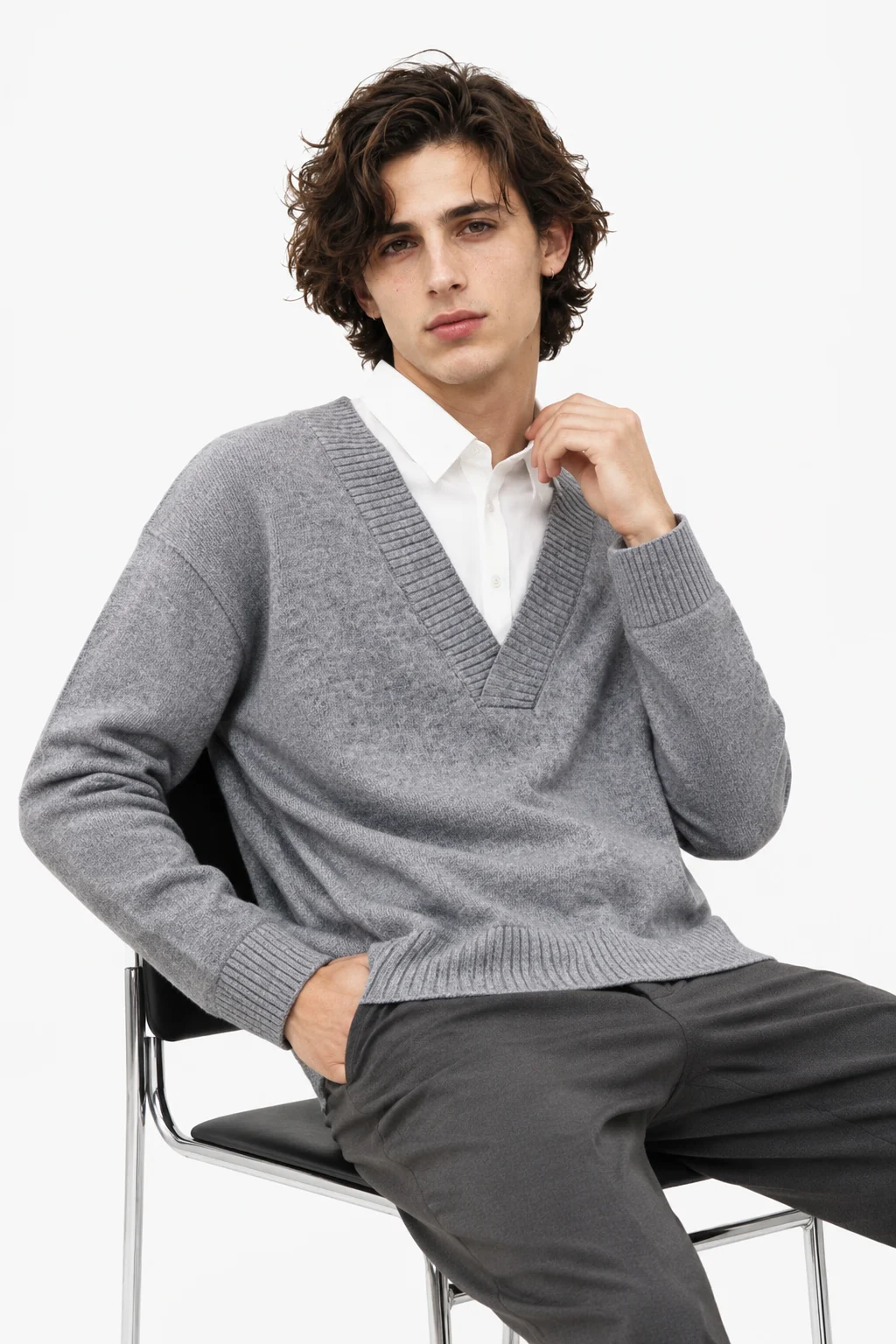
A cashmere cardigan manufacturer manages yarn sourcing, gauge planning, sampling, fit correction, labeling, and OEM production; a sweater factory mainly executes knitting, linking, washing, finishing, and packing. Boutique US, UK, and EU brands should choose a manufacturer when they need low MOQ, factory sampling, technical support, and compliance guidance, and choose a factory when specs, yarn, and volume are already stable.
Buyers comparing a cashmere cardigan manufacturer vs sweater factory are usually assessing risk, not terminology. The practical question is who can turn a sketch, reference sample, or tech pack into a premium cardigan that fits correctly, labels accurately, and reaches market on schedule.
Definition block
– MOQ means minimum order quantity by style, color, size, or yarn lot.
– Factory sampling means proto, fit, or pre-production samples made before bulk approval.
– Technical support means yarn, gauge, measurement, construction, and finishing guidance.
– Compliance responsibility means documented fiber content, country of origin, care labeling, and market-specific product information.
Cashmere cardigan manufacturer vs sweater factory: core difference
A cashmere cardigan manufacturer is best when the buyer needs development support, low MOQ planning, and one accountable partner. A sweater factory is best when the buyer already has approved yarn, finished specs, internal technical control, and repeatable bulk demand.
A cashmere cardigan manufacturer usually supports yarn recommendation, cashmere blend planning, gauge selection, cardigan construction, sample correction, OEM labels, packaging, production scheduling, and inspection. It may own production, manage partner workshops, or operate as a full OEM supplier.
A sweater factory usually focuses on execution: knitting panels or whole garments, linking seams, attaching trims, washing, steaming, finishing, and packing. This model can work well if the tech pack is complete and the buyer can manage development decisions independently.
The Woolmark Company notes that fiber identity and quality claims matter in premium animal fibers; buyers can review its 2024 wool and cashmere guidance through The Woolmark Company’s fiber education resources before confirming supplier claims.
Comparison table: which partner fits your order?
Choose a manufacturer when sampling, cashmere yarn decisions, fit corrections, and compliance documentation are part of the job. Choose a factory when the cardigan is already engineered and the supplier only needs to reproduce an approved specification at scale.
| Decision factor | Cashmere cardigan manufacturer | Sweater factory | Buyer risk if unclear |
|---|---|---|---|
| Design development | Refines style, gauge, trims, and proportions | Expects finished specs | Sample may miss design intent |
| Yarn sourcing | Recommends cashmere count, ply, blend, and source | Uses buyer-nominated or available yarn | Handfeel, color, or cost may shift |
| MOQ | More likely to discuss boutique test runs | Often prefers efficient larger runs | Small orders may be declined |
| Sampling | Offers proto, fit, and pre-production samples | May offer only basic sampling | Bulk issues appear too late |
| Technical support | Advises on placket, rib, washing, and measurements | Executes instructions | No one owns fit problems |
| Compliance | Helps prepare label and fiber documentation | May need buyer instructions | Market labeling errors increase |
| Best use case | Boutique cashmere cardigan capsules and OEM labels | Repeat sweaters with stable specs | Wrong model delays launch |
After comparing the two models, boutique buyers can send sketches, MOQ targets, yarn direction, and size range through Send your OEM knitwear brief. To review construction directions first, browse lpknit’s premium knitwear product range.
When a manufacturer is the better fit
A cashmere cardigan manufacturer is the stronger option when product quality depends on yarn choice, sample correction, measurement discipline, and low MOQ flexibility. This is common for boutique cardigan launches, seasonal capsules, and private-label knitwear programs.
Cardigans are technical garments. Button plackets can twist, rib hems can flare, necklines can distort, and washing can change finished measurements. A manufacturer-led model helps translate a design idea into a repeatable production file.
Choose a manufacturer when:
- The design begins as a sketch, mood board, or reference garment.
- The brand needs low MOQ production before a reorder.
- The yarn is central to positioning, handfeel, price, and customer trust.
- Fit must be refined across cropped, oversized, or fitted cardigan shapes.
- US, UK, or EU labeling and documentation must be checked before shipment.
lpknit fits this manufacturer-led model for boutique labels. The company focuses on merino, cashmere, and mohair sweaters, including cardigans, pullovers, and seasonal knitwear styles with OEM support and factory sampling.
Useful product references include the fine knit round neck cardigan, the illustrated knit button cardigan, and the wool sheep motif cardigan.
When a sweater factory is practical
A sweater factory is practical when the buyer has a finished tech pack, approved yarn, tested measurements, reliable inspection support, and enough volume for efficient production. In that case, the supplier is executing a known garment, not solving development questions.
Factory-direct production can suit repeat programs. If a brand sold a cashmere cardigan last season and only needs new colors, a factory may quote competitively because no major sampling, yarn engineering, or fit correction is required.
A factory model may suit buyers with:
- Graded specs and approved measurement tolerances
- Confirmed yarn supplier, count, composition, and color codes
- An approved sample from a previous season
- Internal knitwear technicians or third-party inspection
- Clear packaging, care-label, and compliance instructions
The limitation is accountability. If cashmere pills quickly, the cardigan shrinks, or the placket waves, a factory may say it followed the file. Buyers without technical support should not treat “factory direct” as automatically safer or cheaper.
2026 sourcing data: MOQ, samples, lead time, and compliance
MOQ, sample cost, lead time, and compliance burden depend on yarn availability, gauge, color count, trims, workload, and sales market. Buyers should ask for figures by style, color, size, and yarn type instead of accepting one broad production promise.
Key sourcing facts for 2026 buyers:
– Global fiber production reached 124 million tonnes in 2023, according to Textile Exchange’s Materials Market Report 2024: https://textileexchange.org/knowledge-center/reports/materials-market-report-2024/
– Textile Exchange’s 2024 report identifies cashmere as a specialty animal fiber with a much smaller supply base than cotton, polyester, or wool, so yarn availability can shape MOQ and lead time.
– The European Union General Product Safety Regulation became applicable on 13 December 2024, according to the European Commission’s 2024 guidance: https://commission.europa.eu/business-economy-euro/product-safety-and-requirements/product-safety/general-product-safety-regulation_en
– US textile products must disclose fiber content, country of origin, and manufacturer or dealer identity under Federal Trade Commission textile labeling rules, updated by the FTC in 2025: https://www.ftc.gov/business-guidance/resources/threading-your-way-through-labeling-requirements-under-textile-wool-acts
– EU textile products must follow fiber-name and composition rules under Regulation (EU) No 1007/2011, shown in the European Commission’s current 2025 textile labeling guidance: https://single-market-economy.ec.europa.eu/sectors/textiles/textile-labelling_en
– Fashion executives continued to cite uncertainty, cost pressure, and demand volatility in The State of Fashion 2025, published by McKinsey & Company and The Business of Fashion in 2024: https://www.mckinsey.com/industries/retail/our-insights/state-of-fashion
For planning, boutique buyers often see cashmere samples priced above projected bulk unit cost because samples include programming, yarn preparation, knitting, linking, washing, finishing, and technician time. Sampling may take days or weeks after yarn confirmation, while bulk timing should be counted from sample approval, not first inquiry.
Do not rely on unsourced promises such as one universal MOQ, one fixed sample price, or one guaranteed delivery window. Custom-dyed cashmere, special buttons, multi-color assortments, peak-season capacity, and extra revisions can change the plan.
How to evaluate suppliers before bulk
A reliable supplier evaluation process makes the manufacturer-versus-factory choice easier to defend internally. It should test four extractable criteria: MOQ flexibility, sampling depth, technical support, and compliance responsibility.
Step-by-step supplier evaluation
- Define the commercial goal. Decide whether the cardigan is a test capsule, permanent core style, wholesale program, or private-label order.
- Prepare the design package. Share sketches, reference photos, target retail price, size range, measurements, trims, and desired handfeel.
- Choose the sourcing model. Use a cashmere cardigan manufacturer if development support is needed; use a sweater factory if the product is already engineered.
- Request yarn and gauge recommendations. Ask how gauge, ply, cashmere percentage, and yarn source affect weight, drape, warmth, price, and MOQ.
- Confirm compliance and labeling. Match fiber content, care label, country of origin, and documentation to the US, UK, or EU sales market.
- Approve samples in stages. Review proto sample, fit sample, and pre-production sample before bulk production starts.
- Document production milestones. Record yarn purchase, knitting start, in-line check, finishing, final inspection, packing, shipment, and reorder requirements.
Quality checks to run on the sample
Confirm fiber composition in writing, then review yarn count, ply, gauge, stitch tension, linking, seams, placket stability, washing behavior, pilling risk, and finished measurements after the garment has rested. For higher-risk orders, third-party fiber testing or inspection can support the internal approval file.
Red flags
Pause if the supplier cannot explain yarn count, ply, gauge, fiber percentage, labeling responsibilities, measurement tolerance, or when the lead time starts. Also be cautious if MOQ changes after sampling without a clear yarn or capacity reason.
FAQ: cashmere cardigan manufacturer vs sweater factory
What is the difference between a cashmere cardigan manufacturer and a sweater factory?
A cashmere cardigan manufacturer usually manages development, yarn sourcing, sampling, production, and quality control. A sweater factory mainly makes the garment once specifications are confirmed. Some companies do both, but buyers should ask which responsibilities are included in the quote.
Is it better to work directly with a factory or through a knitwear manufacturer?
It depends on the buyer’s technical capacity. A factory can suit repeat bulk orders with complete tech packs. A knitwear manufacturer is usually better for boutique cashmere cardigan launches that need low MOQ, sample correction, yarn advice, and OEM support.
What MOQ should buyers expect for cashmere cardigans?
Boutique cashmere cardigan MOQ commonly varies by supplier model, yarn availability, color count, and gauge. Buyers should request MOQ by style, color, and size instead of relying on one broad number.
How much does a cashmere cardigan sample cost?
A cashmere cardigan sample often costs more than the estimated bulk unit price because it includes yarn, programming, knitting, linking, washing, and technician time. Custom yarn, complex stitches, special buttons, or multiple revisions can increase sample cost.
How long does cashmere cardigan production take?
Sampling and bulk production timelines depend on yarn confirmation, dyeing, gauge, construction, workload, and approval speed. Buyers should confirm whether quoted lead time starts from inquiry, yarn approval, sample approval, or deposit.
How can a buyer verify real cashmere quality?
A buyer can verify cashmere quality by checking fiber composition documents, yarn count, ply, gauge, sample handfeel, pilling behavior, washing stability, and finished measurements. For higher-risk orders, third-party fiber testing or inspection may be worth the added cost.
Which partner is best for boutique brands launching seasonal knitwear?
A manufacturer-led OEM partner is usually more suitable for boutique seasonal knitwear because the buyer often needs low MOQ, sampling, fit correction, and material guidance. A factory-only model is more practical when the design is stable and production volume is larger.
Final decision and next step
The cashmere cardigan manufacturer vs sweater factory decision should be based on development need, MOQ, yarn control, sampling depth, technical support, and compliance responsibility. Select a manufacturer-led OEM partner when the garment still needs yarn, fit, and documentation guidance; use a factory-only model when the approved specification is ready for repeat production.
Before signing a cashmere cardigan order, confirm who sources yarn, what MOQ applies by style and color, how samples are approved, which gauge and garment weight are quoted, what labels are required, who inspects bulk production, and what happens if bulk differs from the approved sample.
For a seasonal cashmere cardigan or premium knitwear capsule, contact lpknit through Request a cashmere cardigan sample and include your sketch, target MOQ, size range, yarn direction, and sales market. Buyers can also review lpknit’s mohair long-sleeve knit sweater reference or the Knitwear Journal for sourcing context.
This guide was written by Elena Morris, a knitwear sourcing consultant with 11 years of OEM development experience for US, UK, and EU fashion labels, and reviewed by the lpknit OEM development team on 2026-01-15. The examples in this article are based on anonymized internal sourcing patterns and buyer conversations; any client-style scenarios are illustrative, non-identifying, and used only to explain common decision points.
lpknit is a premium knitwear manufacturer and OEM supplier focused on merino, cashmere, and mohair sweaters for boutique and private-label brands. Its product experience covers cardigans, pullovers, seasonal knits, low MOQ production, and factory sampling, making it relevant for buyers who need more than basic sweater factory capacity.
{
“@context”: “https://schema.org”,
“@type”: “Article”,
“headline”: “Choosing the Right Knitwear Partner for Boutique Cashmere Cardigans in 2026”,
“datePublished”: “2026-01-15”,
“dateModified”: “2026-08-27”,
“description”: “Compare a cashmere cardigan manufacturer vs sweater factory for low MOQ, factory sampling, yarn quality, lead times, and request a sample.”,
“keywords”: “cashmere cardigan manufacturer vs sweater factory”,
“author”: {
“@type”: “Person”,
“name”: “Elena Morris”,
“url”: “https://lpknit.com/news/”,
“jobTitle”: “Knitwear sourcing consultant with 11 years of OEM development experience for US, UK, and EU fashion labels.”
}
}
{
“@context”: “https://schema.org”,
“@type”: “FAQPage”,
“mainEntity”: [
{
“@type”: “Question”,
“name”: “What is the difference between a cashmere cardigan manufacturer and a sweater factory?”,
“acceptedAnswer”: {
“@type”: “Answer”,
“text”: “cashmere cardigan manufacturer usually manages development, yarn sourcing, sampling, production, and quality control. A sweater factory mainly makes the garment once specifications are confirmed. Some companies do both, but buyers should ask which responsibilities are included in the quote.”
}
},
{
“@type”: “Question”,
“name”: “Is it better to work directly with a factory or through a knitwear manufacturer?”,
“acceptedAnswer”: {
“@type”: “Answer”,
“text”: “It depends on the buyer’s technical capacity. A factory can suit repeat bulk orders with complete tech packs. A knitwear manufacturer is usually better for boutique cashmere cardigan launches that need low MOQ, sample correction, yarn advice, and OEM support.”
}
},
{
“@type”: “Question”,
“name”: “What MOQ should buyers expect for cashmere cardigans?”,
“acceptedAnswer”: {
“@type”: “Answer”,
“text”: “Boutique cashmere cardigan MOQ commonly varies by supplier model, yarn availability, color count, and gauge. Buyers should request MOQ by style, color, and size instead of relying on one broad number.”
}
},
{
“@type”: “Question”,
“name”: “How much does a cashmere cardigan sample cost?”,
“acceptedAnswer”: {
“@type”: “Answer”,
“text”: “cashmere cardigan sample often costs more than the estimated bulk unit price because it includes yarn, programming, knitting, linking, washing, and technician time. Custom yarn, complex stitches, special buttons, or multiple revisions can increase sample cost.”
}
},
{
“@type”: “Question”,
“name”: “How long does cashmere cardigan production take?”,
“acceptedAnswer”: {
“@type”: “Answer”,
“text”: “Sampling and bulk production timelines depend on yarn confirmation, dyeing, gauge, construction, workload, and approval speed. Buyers should confirm whether quoted lead time starts from inquiry, yarn approval, sample approval, or deposit.”
}
},
{
“@type”: “Question”,
“name”: “How can a buyer verify real cashmere quality?”,
“acceptedAnswer”: {
“@type”: “Answer”,
“text”: “buyer can verify cashmere quality by checking fiber composition documents, yarn count, ply, gauge, sample handfeel, pilling behavior, washing stability, and finished measurements. For higher-risk orders, third-party fiber testing or inspection may be worth the added cost.”
}
},
{
“@type”: “Question”,
“name”: “Which partner is best for boutique brands launching seasonal knitwear?”,
“acceptedAnswer”: {
“@type”: “Answer”,
“text”: “manufacturer-led OEM partner is usually more suitable for boutique seasonal knitwear because the buyer often needs low MOQ, sampling, fit correction, and material guidance. A factory-only model is more practical when the design is stable and production volume is larger.”
}
}
]
}