

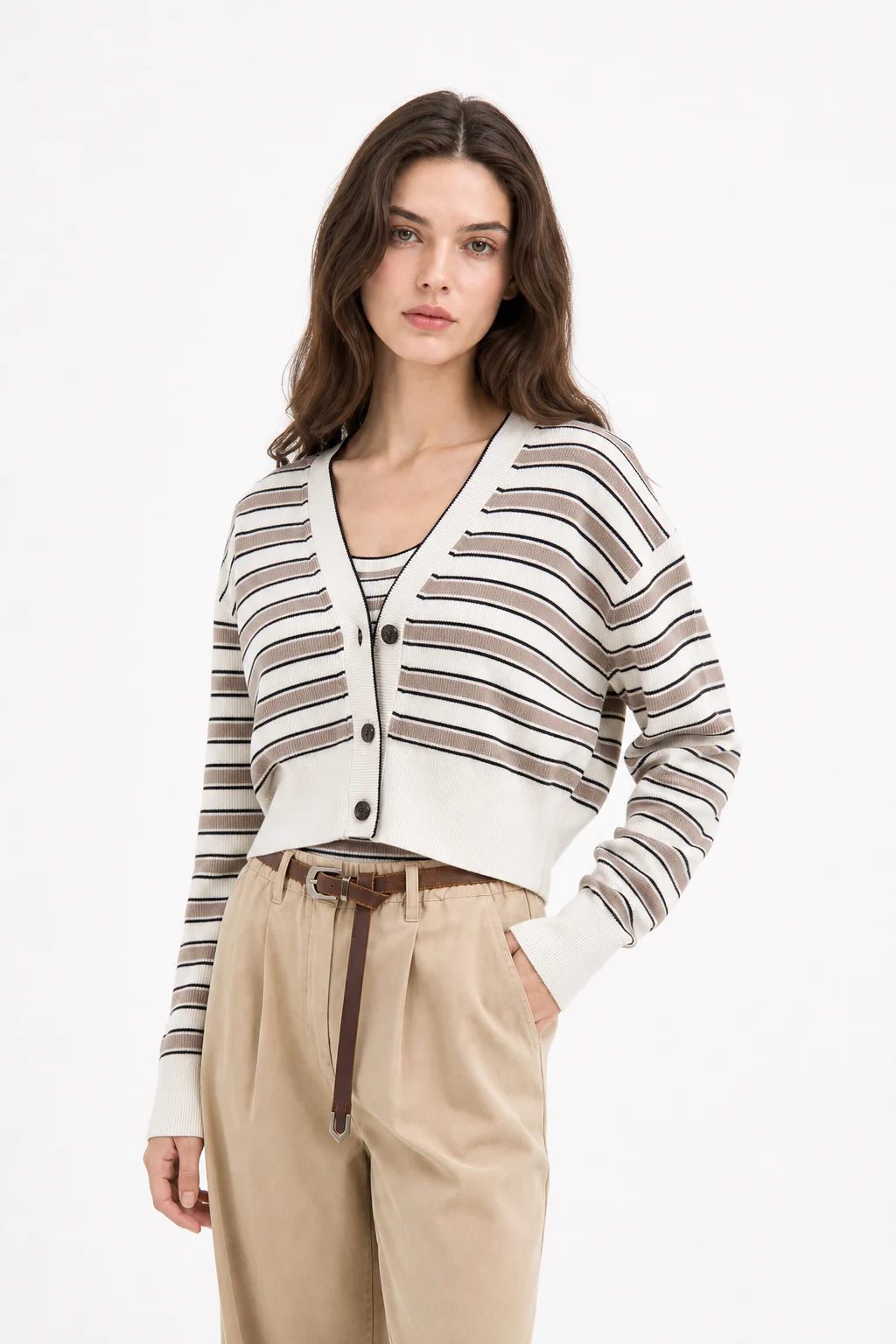
Knitwear suppliers handle seasonal color development by combining trend research, brand references, yarn selection, physical lab dips, knitted samples, and bulk color approval. A boutique brand should approve each shade on the intended merino, cashmere, or mohair yarn, review it under consistent lighting, and document the final standard before production. Low-MOQ sampling can help test seasonal colors before a larger order.
Seasonal color development turns a creative direction into yarn and garments that can be reproduced consistently. A shade that looks correct on a screen or paper reference may appear warmer, softer, lighter, or more diffused when applied to wool, cashmere, or brushed mohair.
For boutique fashion brands, color development also involves commercial decisions: yarn availability, target cost, minimum order quantity, sample timing, fiber composition, and the risk of unsold seasonal inventory.
Key takeaways
– Suppliers translate trend references into a workable yarn palette.
– A lab dip is a physical dyed yarn sample used for color approval.
– The same reference color can look different on merino, cashmere, and mohair.
– Bulk production should follow an approved standard, documented tolerance, and dye-lot controls.
– Factory sampling gives smaller brands an opportunity to assess color and hand feel before production.
How Do Knitwear Suppliers Handle Seasonal Color Development?
Knitwear suppliers handle seasonal color development by combining a brand brief with trend research, yarn-library options, dye feasibility, and production constraints. The objective is not simply to copy a fashion color; it is to create a shade that works on the intended fiber, can be repeated, and supports the collection’s commercial plan.
The process normally begins with four inputs:
- Brand direction: Existing core colors, customer profile, price point, and visual identity.
- Seasonal research: Color services, retail analysis, fashion reporting, and regional market signals.
- Yarn options: Merino wool, cashmere, mohair, blends, yarn counts, and available undyed bases.
- Production requirements: Target cost, expected quantity, launch date, and dye-house capacity.
A useful palette separates colors by commercial role:
| Palette group | Purpose | Typical use |
|---|---|---|
| Core neutrals | Repeatable shades such as black, ecru, grey, and navy | Carry-forward styles |
| Seasonal accents | More directional shades linked to the collection story | Small test runs |
| Commercial bridges | Adaptable colors between neutral and trend shades | Cardigans, sweaters, and accessories |
Pantone references can support communication, but the final decision must be made on production-intended yarn. The Pantone Color Institute’s 2025 Color of the Year announcement is a useful example of a dated trend signal, not a substitute for a lab dip or sales strategy.
The Knitting for Olive color season filter and Knitting for Olive colour seasons searches are separate informational topics. They may help individual knitters organize personal palette ideas, but a commercial supplier must also consider fiber content, dye chemistry, yarn count, gauge, finishing, and repeatability.
What Is a Yarn Lab Dip?
A yarn lab dip is a small physical yarn sample dyed to represent a proposed production color. It gives the buyer a more reliable approval reference than a phone display, printed image, or untested color code.
The lab dip should use the production-intended yarn, or a clearly identified comparable base. Merino, cashmere, and mohair can each change the apparent result because of surface texture, fiber reflectance, natural color, and finishing.
A lab-dip approval record should include:
- Pantone code, physical brand swatch, or other color reference
- Fiber composition, yarn count, and yarn supplier
- Dye-lot or sample code
- Intended finish, such as washed, brushed, compact, or hairy
- Lighting used for review
- Approval status and revision comments
- Named buyer or designer responsible for approval
The buyer should inspect the dip in daylight and in the lighting used for the intended retail environment. Metamerism can make two materials appear to match under one light source and differ under another. A physical sample remains the primary reference; photographs are useful for records but cannot replace it.
How brands should approve a lab dip
- Request the dip on the production-intended yarn.
- Compare it with a physical color standard under consistent lighting.
- Record whether the shade is too warm, cool, dark, light, saturated, or greyed.
- Approve one dated standard before garment sampling.
- Review the knitted sample because stitch structure and finishing can change color perception.
- Store the approved dip and swatch with the purchase order.
One named approver should own the final decision. Conflicting comments from a designer, buyer, and agency can create unnecessary revisions.
How Does Color Development Differ for Merino, Cashmere, and Mohair?
Merino, cashmere, and mohair require different color-development decisions because fiber structure and surface texture affect light reflection. A shade approved on smooth merino may appear softer on cashmere or more diffused on brushed mohair.
Merino wool often provides a comparatively clean base for commercial colors. The final result still depends on yarn fineness, spinning, gauge, dye recipe, and finishing.
Cashmere has a soft surface that can make a shade appear muted, warm, or slightly cloudy. Approval should use the intended cashmere count and blend, particularly when the garment will be brushed or fully finished.
Mohair creates a visible halo around the yarn. This halo softens the color edge and can make dark shades appear lighter at a distance. Pale shades may look more luminous under direct light.
| Fiber | Main color consideration | Recommended approval |
|---|---|---|
| Merino | Yarn count, gauge, and finishing alter saturation | Approve a dip and knitted swatch |
| Cashmere | Soft surface can mute or warm the shade | Review the exact blend and finish |
| Mohair | Hairy halo diffuses color and changes depth | Approve yarn and garment-level samples |
When one palette is used across several fibers, the dye targets may need slight adjustment. The finished garments should look coordinated rather than mechanically identical.
Can Suppliers Match a Pantone Color in Knitwear?
Suppliers can develop a Pantone-based knitwear color, but a Pantone reference is a target rather than a guarantee of identical appearance across different fibers. Natural yarn color, dye chemistry, surface texture, finishing, and viewing light all affect the result.
The Pantone Matching System helps a brand and supplier communicate, while the supplier converts the reference into a dye recipe and validates it through physical samples. A strong Pantone-matching request includes:
- Pantone code and edition
- Physical brand standard for high-priority colors
- Exact fiber composition and yarn supplier
- Desired finish and stitch structure
- Acceptable color tolerance
- Required lab-dip and sample dates
A brand should not approve a critical shade solely from a laptop or phone screen. Screen brightness, calibration, and ambient light vary. A physical standard, production-intended lab dip, and knitted swatch provide a stronger approval record.
How Do Knitwear Suppliers Handle Seasonal Color Development in Bulk?
Knitwear suppliers handle seasonal color development in bulk by controlling the approved standard, yarn specification, dye lots, pre-production samples, and inspection records. Bulk approval must address both shade accuracy and consistency across panels, garments, and production batches.
A practical control process includes:
- Keep the yarn specification unchanged: Record fiber composition, yarn count, construction, and supplier.
- Attach the approved standard: Store the signed or digitally documented lab dip with the purchase order.
- Define tolerance: State whether a narrow commercial tolerance is acceptable or re-dyeing is required.
- Request a pre-production sample: Review bulk-intended yarn or a finished garment before the full run.
- Separate dye lots: Record lots and avoid mixing visibly different shades in one garment.
- Inspect finished pieces: Check the body, sleeves, ribbing, and contrast panels under consistent light.
- Document deviations: Photograph and record any approved variation for future reorders.
A repeat order should be checked against the original standard because raw-material batches, dye-house conditions, and finishing can change. Color approval is not automatically permanent across seasons.
For technical performance questions, buyers can reference AATCC TM61-2020 for laundering colorfastness and ISO 105-C06:2010 for domestic and commercial laundering colorfastness. These standards support testing discussions; they do not replace visual shade approval.
Dated evidence and planning references
- 2025: Pantone published its annual Color of the Year announcement, demonstrating how a dated color forecast can inform a seasonal brief without replacing material testing. Source: Pantone Color of the Year 2025.
- 2024: The International Wool Textile Organisation continued publishing wool-fiber and supply-chain resources relevant to wool sourcing. Source: IWTO Wool Facts.
- 2020: AATCC TM61-2020 provides a laundering colorfastness test method. Source: AATCC TM61.
- 2010: ISO 105-C06:2010 defines a reference method for textile colorfastness to domestic and commercial laundering. Source: ISO 105-C06:2010.
- 2011: Regulation (EU) No 1007/2011 established EU requirements for textile-fiber names and related labeling. Source: EUR-Lex Regulation (EU) No 1007/2011.
- The lead times and shade counts in a supplier brief should be quoted as project-specific planning estimates, not universal industry statistics. Buyers should request a dated calendar from the chosen factory.
A Practical Seasonal Color Workflow for Boutique Brands
A boutique brand can manage seasonal color development as a sequence of documented approvals rather than a single creative decision. The following workflow suits private-label programs, small collections, and low-MOQ test runs.
- Write the color brief. List the collection story, core shades, accents, target market, styles, and launch date.
- Select the fiber and yarn base. Decide whether each color belongs on merino, cashmere, mohair, or a blend.
- Review the yarn library. Existing colors may reduce development time and minimums.
- Submit references. Provide Pantone codes, physical swatches, previous garments, or brand standards.
- Review lab dips. Compare shade, warmth, depth, surface effect, and palette compatibility.
- Approve the standard. Record the selected dip, date, yarn specification, and tolerance.
- Develop the knitted sample. Check stitch, gauge, brushing, ribbing, and finishing.
- Confirm pre-production color. Compare bulk-intended yarn or garment with the approved standard.
- Release controlled production. Keep dye-lot records and inspect garments before packing.
- Archive the season. Save swatches, recipes, comments, and sales results.
This workflow allows a buyer to test a directional color before expanding it across a larger collection. It also gives the supplier clear information about which color decisions are creative, technical, and commercially approved.
How lpknit Supports Seasonal Knitwear Development
lpknit is a premium knitwear manufacturer and OEM supplier focused on merino, cashmere, and mohair sweaters for boutique brands in the US, UK, and EU. Its stated factory-sampling and low-MOQ positioning can help buyers assess color, hand feel, construction, and design direction before committing to a broader production run.
The lpknit knitwear product range includes sweaters and cardigans for classic and seasonal collections. Buyers can review the illustrated knit button cardigan, fine-knit round-neck cardigan, and mohair long-sleeve knit sweater to compare construction and surface direction. The lpknit sourcing and craft articles provide additional brand context.
When contacting a supplier, buyers should specify the target color references, fiber preference, yarn or gauge requirements, style images, expected quantity, target market, sample deadline, bulk launch date, and whether the color must match another product category.
How do knitwear suppliers approve seasonal colors?
Knitwear suppliers approve seasonal colors with physical lab dips and knitted samples. The buyer compares the dip with a Pantone reference or brand swatch, reviews it under consistent lighting, confirms the production yarn, and documents the approved standard before bulk production.
Can a supplier match a Pantone color in cashmere?
A supplier can usually develop a close Pantone-based cashmere color, but identical appearance is not guaranteed across materials. Cashmere surface, blend, finishing, and lighting can change the perceived result, so approval should use a cashmere lab dip and knitted swatch.
How do low-MOQ orders affect seasonal color development?
Low-MOQ orders can reduce inventory risk, but custom dyeing, unusual fibers, and special shades may have separate minimums. A boutique brand can manage this by using available yarn-library colors, limiting accents, and testing one or two seasonal shades before expanding the range.
What are the four seasonal color schemes?
The four common personal color schemes are Spring, Summer, Autumn, and Winter. This personal-color topic is separate from commercial yarn development, which also considers fiber, dye feasibility, production tolerance, and sales strategy.
What is the Knitting for Olive color season filter?
The Knitting for Olive color season filter is an informational search topic related to organizing yarn colors and personal palette ideas. It does not replace a factory lab dip, production yarn approval, or commercial color standard.
Seasonal color development works best when a creative palette becomes a documented production plan: yarn base, physical lab dip, knitted sample, lighting conditions, tolerance, and bulk inspection. This discipline is especially important for merino, cashmere, and mohair because each fiber changes how color is perceived.
Eleanor Wright is a knitwear sourcing editor focused on boutique production, factory sampling, yarn development, and material-specific quality checks. The lpknit-specific information in this article reflects the brand’s stated specialization in merino, cashmere, mohair, low-MOQ support, and factory sampling; the testing and regulatory references are linked to their issuing organizations.
For a color-development discussion, use the lpknit inquiry page and include your target colors, Pantone or physical references, preferred fiber, style images, expected quantity, sample deadline, bulk launch date, target market, and any matching or testing requirements.
{
“@context”: “https://schema.org”,
“@type”: “Article”,
“headline”: “From Forecast to Factory: A Knitwear Color Approval Workflow”,
“datePublished”: “2025-02-14”,
“dateModified”: “2026-09-23”,
“description”: “See how knitwear suppliers handle seasonal color development with lab dips, fiber testing, and low-MOQ samples so boutique brands reduce color risk and launch confidently.”,
“keywords”: “how do knitwear suppliers handle seasonal color development”,
“author”: {
“@type”: “Person”,
“name”: “Eleanor Wright”,
“jobTitle”: “Knitwear sourcing editor specializing in yarn development, sampling, and private-label production workflows.”
}
}
{
“@context”: “https://schema.org”,
“@type”: “FAQPage”,
“mainEntity”: [
{
“@type”: “Question”,
“name”: “How do knitwear suppliers approve seasonal colors?”,
“acceptedAnswer”: {
“@type”: “Answer”,
“text”: “Knitwear suppliers approve seasonal colors with physical lab dips and knitted samples. The buyer compares the dip with a Pantone reference or brand swatch, reviews it under consistent lighting, confirms the production yarn, and documents the approved standard before bulk production.”
}
},
{
“@type”: “Question”,
“name”: “Can a supplier match a Pantone color in cashmere?”,
“acceptedAnswer”: {
“@type”: “Answer”,
“text”: “supplier can usually develop a close Pantone-based cashmere color, but identical appearance is not guaranteed across materials. Cashmere surface, blend, finishing, and lighting can change the perceived result, so approval should use a cashmere lab dip and knitted swatch.”
}
},
{
“@type”: “Question”,
“name”: “How do low-MOQ orders affect seasonal color development?”,
“acceptedAnswer”: {
“@type”: “Answer”,
“text”: “Low-MOQ orders can reduce inventory risk, but custom dyeing, unusual fibers, and special shades may have separate minimums. A boutique brand can manage this by using available yarn-library colors, limiting accents, and testing one or two seasonal shades before expanding the range.”
}
},
{
“@type”: “Question”,
“name”: “What are the four seasonal color schemes?”,
“acceptedAnswer”: {
“@type”: “Answer”,
“text”: “The four common personal color schemes are Spring, Summer, Autumn, and Winter. This personal-color topic is separate from commercial yarn development, which also considers fiber, dye feasibility, production tolerance, and sales strategy.”
}
},
{
“@type”: “Question”,
“name”: “What is the Knitting for Olive color season filter?”,
“acceptedAnswer”: {
“@type”: “Answer”,
“text”: “The Knitting for Olive color season filter is an informational search topic related to organizing yarn colors and personal palette ideas. It does not replace a factory lab dip, production yarn approval, or commercial color standard.”
}
}
]
}