

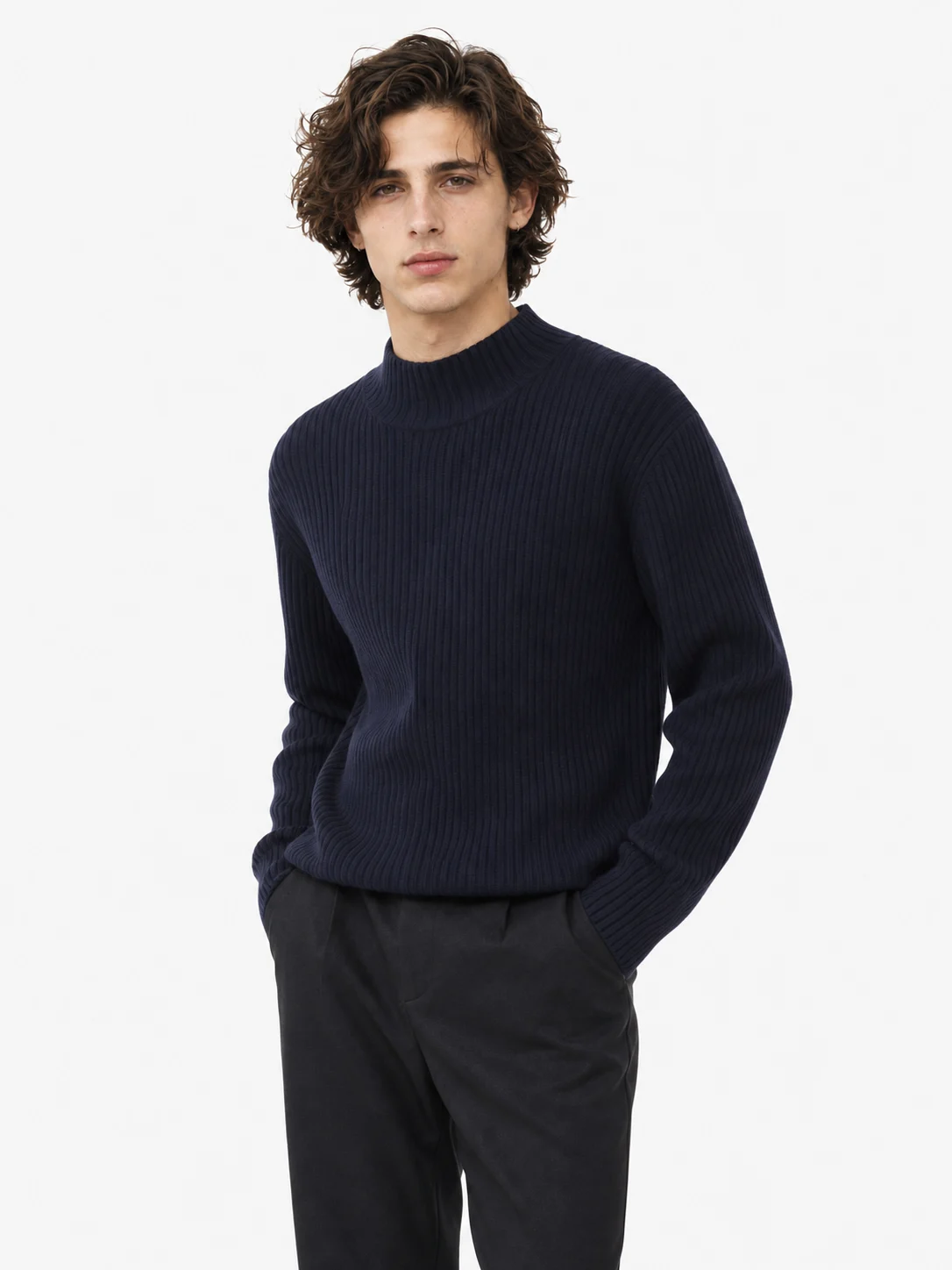
Emerging brands source luxury mohair sweaters from specialist knitwear OEM factories, private-label manufacturers, and small knitwear ateliers that can develop samples and meet a brand’s minimum order quantity (MOQ). Compare fiber composition, yarn traceability, gauge, finishing, sample costs, and production capacity before ordering. For boutique labels, lpknit offers mohair, merino, and cashmere sweater development, factory sampling, and low-MOQ production options.
A luxury sweater is more than a premium fiber. Fit, yarn quality, knitting consistency, finishing, and reliable delivery all shape the finished product. For a new label, the right manufacturing partner can help turn a design concept into a repeatable product without requiring an oversized first order.
The sourcing challenge is practical: many suppliers can show attractive samples, but fewer can explain how they will reproduce them at your target quantity and price. This guide compares supplier types and outlines what to check before paying for development or production.
Key takeaways
– Specialist OEM factories are a strong starting point for custom designs and repeat orders.
– Private-label suppliers may be faster when their existing styles fit your brief.
– Ateliers can offer close development support, but their capacity and unit costs may not suit every launch.
– A sample should confirm fiber blend, measurements, construction, hand feel, and finishing.
– Ask for sourcing and labeling documentation before making claims about fiber content or origin.
Where Do Emerging Brands Source Luxury Mohair Sweaters?
Emerging brands source luxury mohair sweaters through specialist OEM factories, private-label knitwear suppliers, and independent ateliers. The best fit depends on how much design control you need, your order quantity, and whether the supplier can make and approve a production sample before bulk manufacturing.
A specialist OEM factory develops a sweater to your specifications, such as a custom silhouette, stitch pattern, gauge, trim, or yarn blend. This route suits brands building a distinct collection, provided the factory can meet your quantity and quality requirements.
A private-label manufacturer typically offers existing styles that a brand can select and customize. It may be a practical way to test demand, but confirm which details can actually change: yarn, color, fit, labeling, buttons, and packaging.
A knitwear atelier offers hands-on development and may suit complex or limited-run pieces. Before choosing an atelier, ask how production is organized, who completes the knitting and finishing, and whether capacity is available for reorders.
| Supplier type | Best for | Questions to settle early |
|---|---|---|
| Specialist OEM factory | Custom designs and planned repeat orders | What is the MOQ per style, color, and size? |
| Private-label supplier | Faster selection from existing styles | Which materials and details can be customized? |
| Knitwear atelier | Close development support and distinctive pieces | What is the production capacity and reorder process? |
| Regional knitwear producer | Brands prioritizing a particular production location | What documentation supports the stated origin? |
A supplier’s location alone does not establish quality, ethics, or lead time. Ask who sources the yarn, where knitting and finishing take place, and how the supplier documents each stage.
How Should Brands Compare Mohair OEM Suppliers?
A mohair OEM supplier should be evaluated on measurable product requirements, not just a polished sample. Ask each candidate to confirm fiber content, yarn source, construction, sample process, minimums, lead times, quality checks, and terms in writing.
Start with a clear product brief. It should describe the intended customer, silhouette, target retail price, fit, color range, sizes, and expected order quantity. Include reference images or a technical sketch, but specify which details are essential and which can be adapted.
Request answers to these questions before development:
- What is the MOQ per style and per color?
- Can the factory source the specified mohair yarn or an agreed blend?
- What yarn composition and origin will appear on product documentation?
- How are fit, measurements, and tolerances checked?
- How many sample rounds are included, and what do revisions cost?
- What are the estimated sample and bulk-production timelines?
- What happens if bulk production differs from the approved sample?
- Which quality, traceability, or animal-welfare records can the supplier provide?
Scenario: A new London label plans a 48-piece launch in two colors. If a supplier applies an MOQ of 48 per color, the order would double to 96 pieces. The label should ask whether the MOQ can be shared across colors, and compare that answer with its cash-flow and inventory plan before approving a sample.
Low MOQ does not automatically mean low risk. Smaller runs can carry a higher per-unit price, and a supplier may have limited capacity for matching yarn or repeating a seasonal color. Confirm the commercial terms and reorder process as carefully as the design details.
Mohair vs Cashmere: Which Fiber Suits a Commercial Sweater?
Mohair and cashmere offer different visual and wearing qualities, so neither is universally better for a commercial sweater. Mohair is known for luster and a halo effect; cashmere is commonly selected for a soft hand and lightweight warmth. Final performance depends on fiber grade, yarn construction, blend, gauge, and finishing.
| Consideration | Mohair | Cashmere |
|---|---|---|
| Appearance | Often lustrous, with a visible halo | Typically a softer, more compact surface |
| Design use | Statement knits, airy textures, seasonal color | Refined basics and soft layering pieces |
| Product development | Test shedding, skin feel, and stitch definition | Test pilling, shape recovery, and hand feel |
| Commercial questions | Confirm exact blend and care requirements | Confirm grade, origin documentation, and care requirements |
Do not treat “mohair” as a complete specification. Ask for the exact fiber percentages, yarn construction, and any supporting supplier documentation. A mohair-blend sweater can be a useful route if the blend achieves the intended look and feel at a workable cost, but the label must accurately reflect its fiber content.
Scenario: A New York boutique is choosing between a 100% mohair statement cardigan and a mohair-wool blend. The buyer requests one sample of each in the same silhouette, then compares drape, skin feel, shedding, care instructions, and landed cost before selecting a launch style.
Mohair can be expensive because it is a specialty animal fiber, and the finished sweater also includes yarn processing, knitting, linking, finishing, quality control, and freight. The cost of a specific sweater depends on its yarn composition, construction, order quantity, and supplier terms; request a written quotation instead of relying on a generic price range.
Which Country Produces the Most Mohair?
South Africa is widely recognized as the leading mohair-producing country, but a brand should verify the origin of the yarn in its own product rather than infer it from the country where the sweater is knitted. Fiber origin, yarn processing, garment assembly, and finishing can involve different countries.
The International Mohair Association describes South Africa’s major role in the mohair industry. That context can help buyers understand the supply chain, but it does not prove that a particular supplier uses South African mohair. Ask for the yarn supplier’s documentation and clarify what the supplier means by “origin.”
“Made in” and fiber origin are also different claims. A sweater knitted in one country may use yarn spun elsewhere and fiber raised in another. Keep supporting records for product descriptions, labels, and any sustainability or origin claims.
How to Source a Luxury Mohair Sweater: A Step-by-Step Process
A structured sourcing process helps a brand catch specification and cost issues before bulk production. Use these steps to compare suppliers on the same requirements and keep approval decisions documented.
- Write the product brief. Set the silhouette, fit, sizes, colors, target cost, intended retail price, and estimated order volume.
- Identify suitable supplier types. Compare OEM factories, private-label suppliers, and ateliers based on design control, capacity, and development support.
- Request a written quotation. Ask for MOQ, sample costs, yarn options, production timing, payment terms, and shipping assumptions.
- Confirm the fiber specification. Record the proposed blend, yarn construction, and available origin or traceability documents.
- Order and review a factory sample. Check measurements, fit, stitch quality, hand feel, shedding, trims, and finishing against the brief.
- Approve changes in writing. Keep a dated record of the approved sample, measurement chart, yarn, color, labels, and packaging.
- Agree on production checks. Confirm how defects, tolerances, and final inspection are handled before placing the bulk order.
Factory sampling is particularly useful when the design uses a fuzzy yarn or a new silhouette. It lets a brand check how the actual yarn behaves in the intended construction instead of judging from a yarn swatch alone.
For example, a Manchester-based label developing a cropped mohair cardigan might test two sleeve lengths and a revised button spacing. Approving the fit and trim on a sample before bulk production can reduce the risk of receiving a large run that does not match the intended proportions.
What Should Brands Check About Sourcing and Compliance?
Brands should verify supplier claims and make accurate fiber and origin statements on product pages and labels. Requirements depend on the markets where the sweater is sold, so confirm applicable rules with an appropriate compliance adviser before launch.
The following dated references offer a starting point:
- 2011: Regulation (EU) No 1007/2011 sets EU rules for textile fibre names and textile product labelling. Check the consolidated text and applicable requirements for the markets where the product will be sold.
- 2014: The U.S. Federal Trade Commission’s Threading Your Way Through the Labeling Requirements Under the Textile and Wool Acts explains U.S. textile labeling requirements, including fiber content, country of origin, and responsible business identification.
- 2024: Textile Exchange’s Materials Market Report 2024 provides market context on global fiber production. Use the report for broader materials context, not as proof of a supplier’s specific yarn origin.
- 2026: Before placing an order, request the supplier’s current MOQ, sample timeline, bulk lead time, and yarn documentation in writing. These are supplier-specific commercial facts, not industry-wide averages.
- 2026: Check the current versions of relevant labeling rules and any claimed standards when approving product copy. A supplier’s marketing statement alone is not independent verification.
Sources: Regulation (EU) No 1007/2011; FTC textile and wool labeling guidance; Textile Exchange Materials Market Report 2024.
A reliable sourcing file should include the approved sample details, fiber composition, supplier correspondence, quotation, production terms, and documents supporting any origin or materials claims. These records help keep product listings consistent with what was ordered and delivered.
How Does lpknit Fit an Emerging Brand’s Sourcing Plan?
lpknit is a premium knitwear manufacturer and OEM supplier offering merino, cashmere, and mohair sweater development for boutique and private-label brands. Its stated services include factory sampling and low-MOQ production options, which can suit labels that want to assess a design before committing to a larger run.
Review the lpknit knitwear product range to see its sweater and cardigan directions. A specific women’s mohair long-sleeve sweater can serve as a reference point for discussing yarn, construction, or seasonal styling. For a different silhouette, compare the fine-knit round-neck cardigan.
Product pages are starting points, not substitutes for a production quotation or approved sample. Ask lpknit to confirm the available yarn composition, color options, MOQ, sampling fees, lead times, and production terms for your brief. Keep those answers in writing before approving development.
Frequently Asked Questions
Where can emerging brands source luxury mohair sweaters?
Emerging brands can source luxury mohair sweaters from specialist knitwear OEM factories, private-label manufacturers, or small ateliers. Compare suppliers on yarn documentation, design capability, sampling, MOQ, quality controls, lead time, and reorder terms. A factory sample helps confirm that the finished knit matches the intended fit, hand feel, and construction before bulk production.
Which country produces the most mohair?
South Africa is widely recognized as the leading mohair-producing country. However, the origin of a sweater’s fiber should be confirmed through documentation from the yarn supplier or manufacturer. The country where a garment is knitted or finished may differ from the country where the fiber was produced.
Why is mohair so expensive?
Mohair is a specialty animal fiber, and the final sweater also includes yarn processing, knitting, garment linking, finishing, quality control, and shipping. The price of a particular garment depends on its blend, construction, order quantity, and supplier terms. Ask for an itemized quotation to understand the cost drivers.
Should a brand choose 100% mohair or a mohair blend?
Choose based on the product’s target hand feel, appearance, performance, care requirements, and cost. A 100% mohair option may suit a specific design direction, while a blend may change the texture or price. Request and compare samples, and ensure that the stated fiber content matches supplier documentation and labeling rules.
What should brands ask a mohair sweater manufacturer before ordering?
Ask about MOQ per style and color, exact yarn composition, fiber documentation, sample fees, revisions, production lead time, payment terms, quality checks, and reorders. Also confirm who handles knitting and finishing, and what happens if bulk production differs from the approved sample.
How can a small brand reduce risk on its first sweater order?
Start with a detailed brief, compare written quotations, and approve a factory sample before bulk production. Keep dated records of measurements, yarn, color, trims, labels, and production terms. Confirm whether a smaller run can be split across colors or sizes, and understand the cost implications before ordering.
Are luxury knitwear brands and sweater manufacturers the same thing?
No. A knitwear brand sells products to customers; a sweater manufacturer produces garments for brands or other buyers. A list of well-known luxury knitwear brands may help with market positioning, but it does not identify a suitable OEM partner. Brands should evaluate manufacturers against their own specifications and production needs.
Emerging brands can source luxury mohair sweaters from OEM factories, private-label suppliers, and knitwear ateliers, then reduce uncertainty through documentation, supplier comparisons, and factory sampling. Alex Morgan, a knitwear sourcing editor focused on OEM development and fiber specifications, prepared this guide using lpknit’s stated product range and sampling model as a practical supplier reference; buyers should confirm current terms directly with the manufacturer. For EU sales, Regulation (EU) No 1007/2011 is a verifiable reference for textile-fiber naming and labeling. To discuss a collection brief, start with the lpknit product range and request details for your intended yarn, MOQ, sample, and timeline.
{
“@context”: “https://schema.org”,
“@type”: “Article”,
“headline”: “Where Emerging Brands Source Luxury Mohair Sweaters: 2026”,
“datePublished”: “2026-09-23”,
“dateModified”: “2026-09-23”,
“description”: “Compare mohair OEM factories, private-label suppliers and ateliers. Learn how to assess fiber, sampling, MOQs and sourcing before ordering luxury sweaters.”,
“keywords”: “where do emerging brands source luxury mohair sweaters”,
“author”: {
“@type”: “Person”,
“name”: “Alex Morgan”,
“jobTitle”: “Knitwear sourcing editor covering OEM development, fiber specifications, and production for independent fashion labels.”
}
}
{
“@context”: “https://schema.org”,
“@type”: “FAQPage”,
“mainEntity”: [
{
“@type”: “Question”,
“name”: “Where can emerging brands source luxury mohair sweaters?”,
“acceptedAnswer”: {
“@type”: “Answer”,
“text”: “Emerging brands can source luxury mohair sweaters from specialist knitwear OEM factories, private-label manufacturers, or small ateliers. Compare suppliers on yarn documentation, design capability, sampling, MOQ, quality controls, lead time, and reorder terms. A factory sample helps confirm that the finished knit matches the intended fit, hand feel, and construction before bulk production.”
}
},
{
“@type”: “Question”,
“name”: “Which country produces the most mohair?”,
“acceptedAnswer”: {
“@type”: “Answer”,
“text”: “South Africa is widely recognized as the leading mohair-producing country. However, the origin of a sweater’s fiber should be confirmed through documentation from the yarn supplier or manufacturer. The country where a garment is knitted or finished may differ from the country where the fiber was produced.”
}
},
{
“@type”: “Question”,
“name”: “Why is mohair so expensive?”,
“acceptedAnswer”: {
“@type”: “Answer”,
“text”: “Mohair is a specialty animal fiber, and the final sweater also includes yarn processing, knitting, garment linking, finishing, quality control, and shipping. The price of a particular garment depends on its blend, construction, order quantity, and supplier terms. Ask for an itemized quotation to understand the cost drivers.”
}
},
{
“@type”: “Question”,
“name”: “Should a brand choose 100% mohair or a mohair blend?”,
“acceptedAnswer”: {
“@type”: “Answer”,
“text”: “Choose based on the product’s target hand feel, appearance, performance, care requirements, and cost. A 100% mohair option may suit a specific design direction, while a blend may change the texture or price. Request and compare samples, and ensure that the stated fiber content matches supplier documentation and labeling rules.”
}
},
{
“@type”: “Question”,
“name”: “What should brands ask a mohair sweater manufacturer before ordering?”,
“acceptedAnswer”: {
“@type”: “Answer”,
“text”: “sk about MOQ per style and color, exact yarn composition, fiber documentation, sample fees, revisions, production lead time, payment terms, quality checks, and reorders. Also confirm who handles knitting and finishing, and what happens if bulk production differs from the approved sample.”
}
},
{
“@type”: “Question”,
“name”: “How can a small brand reduce risk on its first sweater order?”,
“acceptedAnswer”: {
“@type”: “Answer”,
“text”: “Start with a detailed brief, compare written quotations, and approve a factory sample before bulk production. Keep dated records of measurements, yarn, color, trims, labels, and production terms. Confirm whether a smaller run can be split across colors or sizes, and understand the cost implications before ordering.”
}
},
{
“@type”: “Question”,
“name”: “Are luxury knitwear brands and sweater manufacturers the same thing?”,
“acceptedAnswer”: {
“@type”: “Answer”,
“text”: “No. A knitwear brand sells products to customers; a sweater manufacturer produces garments for brands or other buyers. A list of well-known luxury knitwear brands may help with market positioning, but it does not identify a suitable OEM partner. Brands should evaluate manufacturers against their own specifications and production needs.”
}
}
]
}