

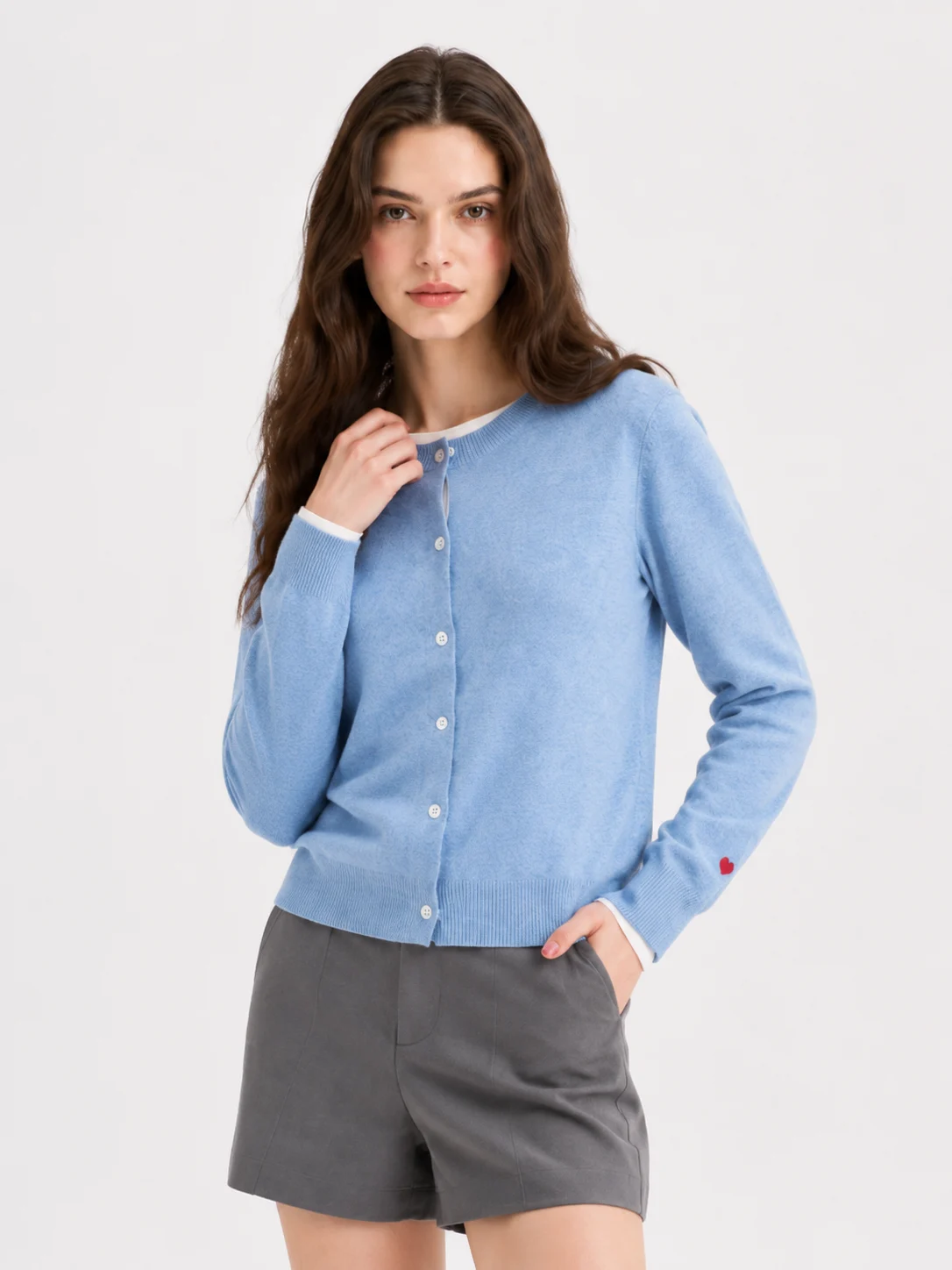
The price of private label knitwear depends on the fiber and yarn, garment weight and construction, order quantity, sampling, finishing, branding, and shipping terms. A cashmere cardigan with custom buttons and a small order will usually cost more per unit than a basic merino sweater ordered in a larger run. Ask each supplier, including lpknit, to separate sample and setup fees from unit price and confirm what the quote includes.
A factory quote is not just a price for yarn and knitting. It reflects the product specification, the production steps needed to make it consistently, and how many units share the development and setup costs.
That is why two sweaters described as “cashmere crewnecks” can receive very different quotes. Fiber grade, yarn construction, gauge, fit, trims, finishing, and order quantity all matter.
Key takeaways
– Fiber, yarn quality, garment weight, and construction are major unit-cost drivers.
– A low minimum order quantity can reduce inventory risk while increasing the per-unit price.
– Sampling and development may be charged separately from bulk production.
– Compare quotes only after confirming specifications, inclusions, and shipping terms.
– Cost control works best when you simplify design details without weakening the intended quality.
What affects the price of private label knitwear?
The price of private label knitwear is shaped by material, construction, order size, development, finishing, and delivery. The biggest differences often come from the yarn and garment specification, while sampling and setup influence the amount paid before bulk production begins.
A useful quote separates one-time costs from per-unit costs. One-time costs may include development, sample making, pattern adjustments, or special setup. Per-unit costs commonly cover yarn, knitting, linking or assembly, finishing, labels, and packing. Freight, duties, and taxes may sit outside the factory’s quoted unit price.
| Cost driver | What changes the quote | Questions to ask |
|---|---|---|
| Fiber and yarn | Fiber type, grade, yarn construction, and consumption | What exact fiber and yarn specification is priced? |
| Garment design | Weight, dimensions, gauge, stitch pattern, and shaping | Is the price based on the approved measurements and construction? |
| Order quantity | How fixed development and production effort is spread | Does the quote change at different quantities? |
| Sampling | Number of samples, revisions, and sample materials | Are sample fees credited against a bulk order? |
| Trims and branding | Buttons, labels, hangtags, packaging, and special finishes | Which branding items are included? |
| Delivery | Shipping method, destination, duties, and insurance | Is the quote EXW, FOB, or delivered? |
A quote should identify its assumptions. If it does not state the yarn composition, size range, order quantity, or delivery basis, the price is not yet a reliable comparison.
How fiber, yarn, and construction affect knitwear costs
Fiber and yarn specifications affect both the material cost and the way a sweater behaves in production. Merino, cashmere, and mohair each have distinct characteristics, but the fiber name alone is not enough to explain a price difference.
Merino wool is valued for softness and temperature regulation. Fine merino yarn may cost more than a coarser wool option, and a heavier garment uses more yarn. Cashmere pricing can vary with fiber quality, yarn construction, and the amount of cashmere in a blend. Mohair can create a distinctive halo, but yarn choice and finishing influence the final appearance and handling.
Construction adds another layer. A simple jersey-knit crewneck is generally less complex to produce than a shaped cardigan with multiple stitch patterns, pockets, and a detailed button band. Gauge, garment dimensions, ribbing, shaping, and the number of panels affect knitting time and finishing work.
For example, a buyer comparing a lightweight merino pullover with a dense cashmere cardigan is comparing different products, even if both are marketed as premium sweaters. A fair comparison requires the same size, weight, fiber composition, gauge, and construction details.
How MOQ changes the unit price
MOQ, or minimum order quantity, affects how development and production costs are distributed across the order. Smaller runs can make a collection more manageable for a boutique brand, but they often carry a higher unit price because fixed work is shared across fewer garments.
Suppose a label orders 60 cardigans for a first-season test instead of 300. The smaller order limits inventory exposure, but sampling, setup, and production planning still require work. A supplier may therefore quote a higher price per cardigan at 60 units than at 300 units. The actual price break depends on the product and factory; request a tiered quote rather than assuming a standard percentage.
MOQ can also apply at different levels. A factory might set one minimum for a style, another for a color, or a minimum yarn lot. Ask whether the MOQ is per design, color, or total order, and confirm whether sizes can be mixed within a run.
lpknit describes its service as supporting low-MOQ production for boutique and emerging brands. Buyers should confirm the minimum for their specific yarn, style, colors, and size breakdown before finalizing a collection plan.
Are sampling, customization, labels, and shipping included?
Sampling, customization, labels, and shipping are not automatically included in a factory’s unit price. Each supplier defines quote scope differently, so buyers should ask for a written breakdown before comparing offers or approving a sample.
A factory sample helps check fit, hand feel, color, construction, and finishing before bulk production. The cost may differ from bulk unit cost because a sample is made in a small quantity and may require extra development. Revisions can create additional charges or extend the schedule.
Customization can also affect price. Custom buttons, woven labels, embroidery, special wash or finishing, branded packaging, and non-standard yarn colors may add material, labor, or setup costs. Even small trim details should be listed in the specification and quote.
Shipping terms matter because “price” can mean different things. An EXW quote generally excludes transport from the factory, while FOB covers delivery to the named port under the agreed terms. Freight, insurance, import duties, and taxes can change the landed cost, so compare the same destination and delivery basis.
The European Commission’s textile labelling rules explain fiber-composition labelling requirements for textile products sold in the EU. In the United States, the Federal Trade Commission’s textile and wool rules cover relevant textile, wool, and fur product disclosures. Confirm the rules that apply to each sales market and product.
How to compare private label knitwear quotes
A useful supplier comparison starts with one shared specification sheet. Without it, a lower price may simply reflect a lighter garment, a different yarn, fewer included services, or an incomplete delivery estimate.
Use this sequence before placing a bulk order:
- Write the product specification. State the fiber composition, yarn details if known, gauge, weight target, measurements, size range, stitch pattern, trims, and finishing.
- Set the order assumptions. Specify units per style and color, size breakdown, and whether the supplier can mix sizes or colors within the MOQ.
- Request a sample plan. Ask how many sample rounds are included, what each costs, how revisions are handled, and whether approved sample fees can be credited.
- Request a cost breakdown. Separate development and sample fees from bulk unit pricing, trims, labels, packaging, and shipping.
- Confirm production and delivery terms. Record the quoted lead time, shipping basis, destination, payment terms, and any costs excluded from the quote.
- Compare like with like. Review the technical details and inclusions alongside the unit price, not after choosing the cheapest offer.
A boutique label might request 80 merino cardigans in two colors, with custom buttons and woven labels. If one supplier quotes the labels and buttons separately while another includes them, the headline prices cannot be compared directly. A complete breakdown reveals the real cost per finished garment.
How to control costs without losing the intended quality
Cost control begins with deciding which product features matter most to the customer. A clear design brief helps a supplier suggest practical adjustments without changing the collection’s core positioning.
Consider these options:
- Keep the first run focused. Fewer styles and colors can reduce the number of separate yarn and setup requirements.
- Use a proven construction. A simpler stitch pattern or established cardigan shape may require less development than a highly customized design.
- Protect the material specification. If softness or fiber content is central to the product, do not compare a different blend as an equivalent substitute.
- Review trims early. Standard buttons and label options may cost less than custom components, especially for a small order.
- Ask for quantity tiers. Compare the added cash commitment with the reduction in unit price before increasing order volume.
- Approve a representative sample. Check fit, color, hand feel, and finishing before production to reduce avoidable revisions.
The goal is not to make every sweater as inexpensive as possible. It is to spend deliberately on the features customers will notice and simplify details that do not materially support the product.
How much should a good private label sweater cost?
There is no reliable universal price for a good private label sweater. A useful estimate requires a defined fiber, yarn, weight, construction, order quantity, finishing level, and delivery scope; without those details, online price ranges may describe unlike products.
For an initial budget, ask suppliers for tiered quotes at realistic quantities and request a separate estimate for sampling and development. Then calculate the landed cost by adding transport, insurance, duties, taxes, and any market-specific labelling or packaging costs not included in the factory quote.
A good quote is one you can explain. It identifies what is being made, what is included, which costs are one-time, and which assumptions could change the final amount.
For product references, review lpknit’s knitwear product range, including its fine-knit round-neck cardigan and mohair long-sleeve sweater. These examples help frame style discussions; request a project-specific quote for confirmed pricing.
What should buyers verify before approving a quote?
Buyers should confirm the specification, inclusions, quantity basis, sample terms, production schedule, and shipping basis in writing. The final approval should refer to an agreed sample and technical details, not only a unit price in an email.
- EU textile labelling: Regulation (EU) No 1007/2011 sets rules for textile fibre names and fibre-composition labelling; European Commission, 2011.
- EU product safety: Regulation (EU) 2023/988 on general product safety has applied since 13 December 2024; European Commission, 2024.
- US textile labelling: The Textile Fiber Products Identification Act establishes disclosure requirements for covered textile products; Federal Trade Commission guidance, accessed 2026.
- US wool labelling: The Wool Products Labeling Act sets disclosure requirements for covered wool products; Federal Trade Commission guidance, accessed 2026.
- International shipping terms: Incoterms® 2020 defines 11 trade terms for allocating delivery responsibilities and costs; International Chamber of Commerce, 2020.
These references identify compliance and delivery frameworks; they do not set a factory’s sweater price. Confirm current requirements with the relevant market authority or qualified import adviser, especially when selling across the US, UK, and EU.
Frequently asked questions
What factors affect the price of a private-label sweater?
The main factors are fiber and yarn specification, garment weight, gauge, construction, order quantity, sampling, trims, finishing, and delivery terms. A quote can also change if the size range, colors, or labeling requirements change. Compare prices only after confirming that suppliers are quoting the same finished product and scope.
How do fiber choice and yarn quality change knitwear costs?
Fiber choice influences the material specification, while yarn quality and construction affect appearance, feel, durability, and production handling. Merino, cashmere, and mohair are not interchangeable cost categories. Compare exact composition, yarn details, garment weight, and finish rather than relying on the fiber name alone.
Does a low MOQ make private label knitwear cheaper?
A low MOQ can reduce the total cash tied up in inventory, but it does not necessarily lower the unit price. Development and setup work are spread over fewer garments, and small orders may have less efficient material purchasing. Request quantity tiers and check whether minimums apply per style, color, or yarn lot.
Are samples included in a knitwear factory quote?
Samples may be priced separately from bulk production, and revision rounds may carry additional charges. Ask what each sample includes, whether custom yarn or trims are used, how many revisions are covered, and whether any sample fee is credited to a confirmed production order.
Are labels, packaging, and shipping included in the unit price?
They may be included, excluded, or quoted as separate line items. Ask for confirmation on labels, hangtags, packaging, freight, insurance, duties, taxes, and the shipping term. A clear cost breakdown helps compare the same landed-cost assumptions across suppliers.
How much should a good private-label sweater cost?
There is no dependable single price without a product specification and order quantity. A lightweight merino pullover and a dense cashmere cardigan require different materials and production work. Request a quote based on the same sample, measurements, construction, quantity, and delivery destination.
What is the best way to lower a knitwear quote?
Keep the design focused, limit unnecessary color and trim variations, and ask whether established constructions can meet the brief. Protect the fiber and quality features that define the product. Compare quantity tiers before ordering more, and confirm that any cost-saving change will not alter the approved look or feel.
Get a project-specific knitwear quote
To understand what affects the price of private label knitwear for your collection, send lpknit the intended fiber, reference design, target quantity, colors, size range, branding details, and delivery market. lpknit specializes in merino, cashmere, and mohair knitwear, with OEM production, low-MOQ support, and factory sampling for boutique and private-label brands.
Explore the lpknit product range or browse the Knitwear Journal before requesting a sample and quote.
Alex Morgan is a knitwear sourcing editor focused on OEM development, factory sampling, and private-label production. This guide uses a specification-led quote review: compare the same fiber, construction, quantity, inclusions, and delivery terms before treating prices as equivalent. lpknit’s stated product focus is merino, cashmere, and mohair sweaters for boutique brands; buyers should confirm project-specific costs and minimums directly with the supplier.
{
“@context”: “https://schema.org”,
“@type”: “Article”,
“headline”: “What Affects Private Label Knitwear Prices? 2026 Guide”,
“datePublished”: “2026-09-23”,
“dateModified”: “2026-09-23”,
“description”: “See what drives private label knitwear costs, from merino, cashmere, and mohair to MOQ, sampling, construction, labels, and freight. Compare quotes with confidence.”,
“keywords”: “what affects the price of private label knitwear”,
“author”: {
“@type”: “Person”,
“name”: “Alex Morgan”,
“jobTitle”: “Knitwear sourcing editor focused on OEM development, factory sampling, and private-label production for boutique fashion”
}
}
{
“@context”: “https://schema.org”,
“@type”: “FAQPage”,
“mainEntity”: [
{
“@type”: “Question”,
“name”: “What factors affect the price of a private-label sweater?”,
“acceptedAnswer”: {
“@type”: “Answer”,
“text”: “The main factors are fiber and yarn specification, garment weight, gauge, construction, order quantity, sampling, trims, finishing, and delivery terms. A quote can also change if the size range, colors, or labeling requirements change. Compare prices only after confirming that suppliers are quoting the same finished product and scope.”
}
},
{
“@type”: “Question”,
“name”: “How do fiber choice and yarn quality change knitwear costs?”,
“acceptedAnswer”: {
“@type”: “Answer”,
“text”: “Fiber choice influences the material specification, while yarn quality and construction affect appearance, feel, durability, and production handling. Merino, cashmere, and mohair are not interchangeable cost categories. Compare exact composition, yarn details, garment weight, and finish rather than relying on the fiber name alone.”
}
},
{
“@type”: “Question”,
“name”: “Does a low MOQ make private label knitwear cheaper?”,
“acceptedAnswer”: {
“@type”: “Answer”,
“text”: “low MOQ can reduce the total cash tied up in inventory, but it does not necessarily lower the unit price. Development and setup work are spread over fewer garments, and small orders may have less efficient material purchasing. Request quantity tiers and check whether minimums apply per style, color, or yarn lot.”
}
},
{
“@type”: “Question”,
“name”: “Are samples included in a knitwear factory quote?”,
“acceptedAnswer”: {
“@type”: “Answer”,
“text”: “Samples may be priced separately from bulk production, and revision rounds may carry additional charges. Ask what each sample includes, whether custom yarn or trims are used, how many revisions are covered, and whether any sample fee is credited to a confirmed production order.”
}
},
{
“@type”: “Question”,
“name”: “Are labels, packaging, and shipping included in the unit price?”,
“acceptedAnswer”: {
“@type”: “Answer”,
“text”: “They may be included, excluded, or quoted as separate line items. Ask for confirmation on labels, hangtags, packaging, freight, insurance, duties, taxes, and the shipping term. A clear cost breakdown helps compare the same landed-cost assumptions across suppliers.”
}
},
{
“@type”: “Question”,
“name”: “How much should a good private-label sweater cost?”,
“acceptedAnswer”: {
“@type”: “Answer”,
“text”: “There is no dependable single price without a product specification and order quantity. A lightweight merino pullover and a dense cashmere cardigan require different materials and production work. Request a quote based on the same sample, measurements, construction, quantity, and delivery destination.”
}
},
{
“@type”: “Question”,
“name”: “What is the best way to lower a knitwear quote?”,
“acceptedAnswer”: {
“@type”: “Answer”,
“text”: “Keep the design focused, limit unnecessary color and trim variations, and ask whether established constructions can meet the brief. Protect the fiber and quality features that define the product. Compare quantity tiers before ordering more, and confirm that any cost-saving change will not alter the approved look or feel.”
}
}
]
}