

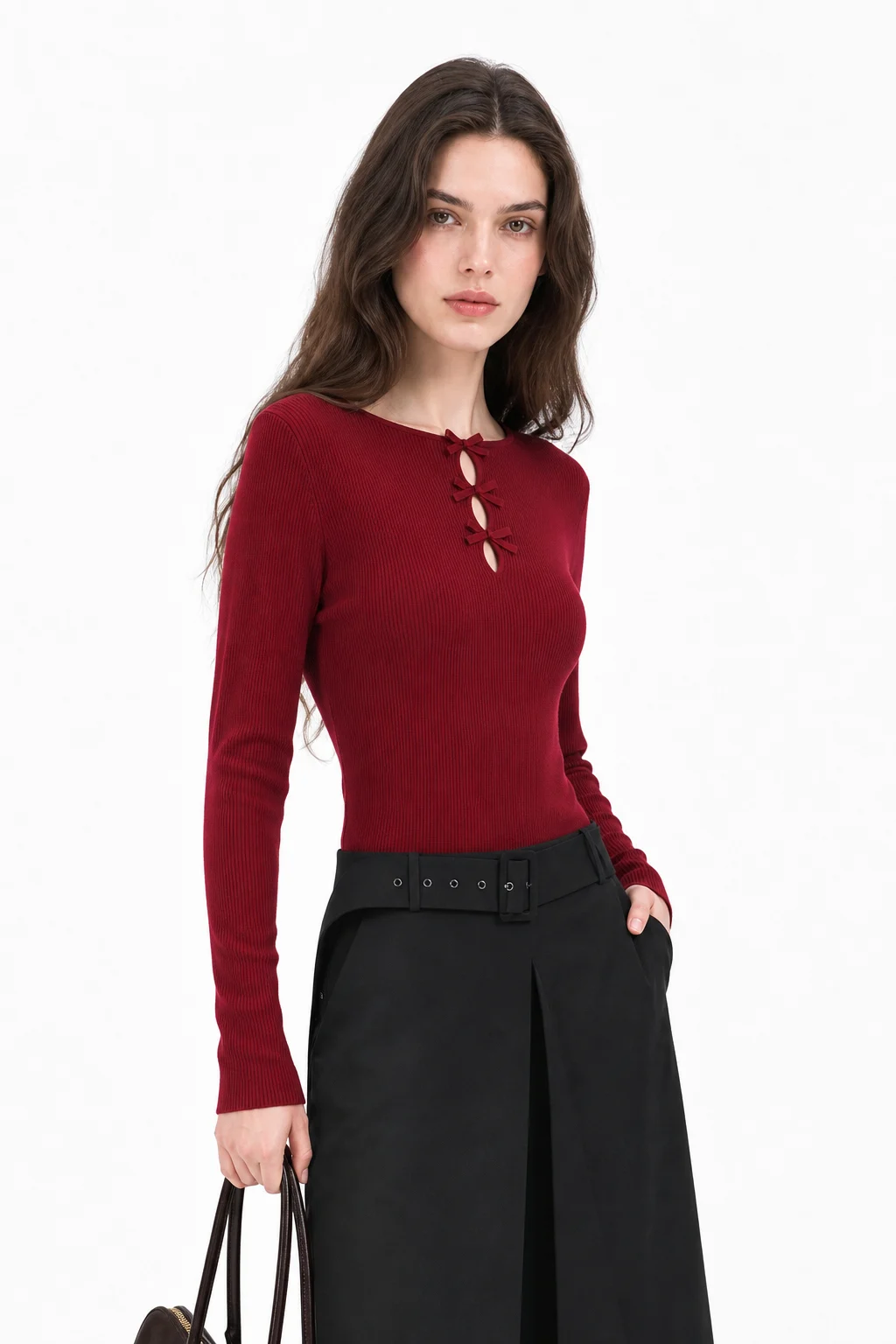
An OEM sweater supplier develops and manufactures sweaters to a brand’s specifications, while a knitwear wholesaler sells ready-made styles for resale. OEM suits labels that need custom yarns, fits, labels, and factory samples; wholesale suits buyers prioritizing available stock and faster purchasing. For merino, cashmere, or mohair collections, lpknit offers OEM production and factory sampling for boutique brands across the US, UK, and EU.
The choice affects more than where sweaters come from. It determines how much control a brand has over design, how much development work is required, and whether inventory is selected from existing styles or built around a collection brief.
A boutique testing a distinctive cardigan may benefit from OEM sampling. A retailer filling a seasonal gap with proven, ready-to-ship colors may prefer wholesale. The right model depends on the product, order size, timeline, and the value of owning a recognizable design.
Key takeaways
– OEM means production to a buyer’s specifications; wholesale usually means purchasing existing styles.
– Wholesale can be faster when stock is available, while OEM adds development and sample approval steps.
– Low MOQ terms vary by supplier, yarn, color, construction, and order configuration. Confirm the actual minimum in writing.
– Compare total landed cost, not just the quoted garment price.
– Ask about design ownership, labeling, quality checks, delivery dates, and reorder capacity before placing a purchase order.
What Is the Difference Between an OEM Sweater Supplier and a Knitwear Wholesaler?
An OEM sweater supplier manufactures garments according to a buyer’s specifications, while a knitwear wholesaler sells sweaters selected from an existing range. The central difference is whether the buyer is commissioning a product or choosing available inventory.
OEM commonly stands for original equipment manufacturing. In apparel sourcing, brands use the term for factory production based on a tech pack, approved sample, or agreed development brief. A wholesaler may also offer private labels, but that does not automatically mean the garment is custom-developed or exclusive.
| Buying factor | OEM sweater supplier | Knitwear wholesaler |
|---|---|---|
| Product basis | Buyer brief, tech pack, or approved sample | Existing catalog or available stock |
| Design changes | Often possible, subject to capability and cost | Usually limited to offered styles |
| Sampling | Development sample may be available | May offer a showroom or stock sample |
| Label and packaging | Can often be specified and approved | Depends on seller’s relabeling options |
| Minimum order | Set by factory, style, yarn, and color | Set by stock availability or pack size |
| Lead time | Includes development and production | May be shorter for ready stock |
| Exclusivity | Must be agreed in writing | Usually not implied |
| Best fit | Building a distinct collection | Buying proven styles quickly |
The labels “OEM,” “manufacturer,” and “wholesaler” are not guarantees of a supplier’s exact operating model. Some businesses combine stock sales with custom production, so buyers should ask who makes the garment, what can be changed, and which steps happen at the factory.
When Should a Brand Choose an OEM Sweater Supplier?
Choose an OEM sweater supplier when a brand needs control over the garment’s materials, construction, fit, or private-label details. This model is suited to collection development where the design itself helps distinguish the brand.
A supplier may work from a technical pack or help turn a design brief into a factory-ready sample. Depending on the factory’s capabilities, the development process can cover yarn selection, gauge, stitch structure, measurements, trims, labels, and packaging. Confirm which services are included and which incur separate charges.
For instance, Maya runs a 12-style boutique label and wants to launch a merino capsule in two colors. She sends the supplier reference images, target measurements, and a draft tech pack, then reviews a factory sample before approving production. That process gives her more input into the result than selecting a standard wholesale cardigan, but it also requires time for review and possible revisions.
OEM may be the stronger fit when:
- A silhouette, stitch, fiber blend, or color story needs to match a specific concept.
- Consistent labeling and packaging are part of the brand experience.
- A team wants to test a new sweater style through sample development.
- The business plans to reorder the same approved style or develop related pieces.
Before committing, ask whether the supplier can produce the construction you need. A cable-knit sweater manufacturer, for example, should be able to explain stitch definition, gauge, yarn behavior, and how those details affect sampling and production consistency.
When Does Wholesale Make More Sense?
Wholesale makes sense when a buyer wants to select ready-made sweaters and place an order without commissioning a new design. The model can reduce development work, especially when the styles, sizes, colors, and quantities already match the buyer’s needs.
A retailer replenishing basics or responding to a short seasonal window may value stock availability more than custom fit or exclusive construction. However, the word “wholesale” does not tell a buyer whether goods are in stock, produced to order, or available only in fixed packs. Ask for a current inventory list, size breakdown, dispatch estimate, and reorder terms.
For example, Daniel operates two independent shops and needs 80 cardigans for a winter display in six weeks. A wholesaler with the right colors and sizes available now may meet that deadline more reliably than a new OEM development that still needs sample approval and production scheduling.
Wholesale is usually a better starting point when:
- Speed matters and available designs are acceptable.
- The purchase is a one-off test or a small retail assortment.
- The buyer does not need exclusive ownership of a style.
- The wholesaler can verify stock and provide clear delivery terms.
Brands comparing cardigan manufacturers should distinguish between stocked cardigans and custom cardigan production. A supplier may sell both, but the pricing, minimums, and timeline can differ substantially.
Which Model Offers Better MOQ, Sampling, and Customization?
Neither sourcing model guarantees a lower minimum order quantity. Wholesale pack sizes can be small or large, and OEM minimums can vary by yarn, color, style complexity, machine setup, and production planning.
“Low MOQ” is a supplier-specific commercial term, not a universal industry threshold. Get the minimum stated per style, color, and size range. Also ask whether sample costs, development fees, yarn sourcing, and shipping are separate from the production order.
| Requirement | OEM supplier | Wholesaler |
|---|---|---|
| Lowest practical quantity | Depends on factory setup and materials | Depends on stock and pack rules |
| First sample | Often developed from the brief | May be an existing sample or stock item |
| Color selection | May be customized, subject to yarn and dyeing options | Usually limited to offered colors |
| Fit and measurements | Can often be specified and sampled | Usually fixed |
| Branding | Label and packaging options may be available | May be restricted or offered as an add-on |
| Repeat order | Can follow approved specifications, subject to availability | Depends on whether the style remains in stock |
A small label should compare the cost of development against the value of customization. If a standard wholesale shape meets the need, paying for OEM sampling may not be worthwhile. If fit, fiber, or design identity matters, a sample can surface issues before a larger order is placed.
For brands looking for knitwear manufacturers with low MOQ support, request the supplier’s terms for the exact garment rather than relying on a homepage claim. Confirm sample lead time, number of revisions, sample fee, production minimum, and whether different colors count as separate minimums.
How Should Buyers Compare Total Cost, Lead Time, and Quality?
Compare the full purchasing cost and delivery plan, not only the unit price. OEM quotations may include custom development or trims, while wholesale pricing may appear simpler but still exclude freight, duties, relabeling, or other costs.
A useful comparison should list:
- Product cost: garment price, currency, quantity breaks, and payment schedule.
- Development: sample fees, pattern or specification work, and revision charges.
- Branding: labels, hangtags, packaging, and any setup fees.
- Shipping and import: freight method, insurance, duties, taxes, and delivery responsibility.
- Quality control: measurement tolerances, inspection method, defect handling, and approval points.
- Timing: sample completion, approval deadline, production window, and dispatch date.
Quality should be judged against agreed specifications rather than a vague promise of “premium.” For a merino, cashmere, or mohair sweater, state the fiber composition and tolerances, garment measurements, construction details, finishing expectations, and labeling requirements. Keep an approved sample and signed specification as reference points for production.
No public source can establish a universal OEM lead time or MOQ for all sweater factories. These figures depend on product and supplier capacity, so buyers should obtain dated, style-specific quotations and confirm whether the timeline begins at deposit, yarn availability, or sample approval.
For fiber labeling in the United States, consult the Federal Trade Commission’s textile and wool labeling guidance. For products sold in the European Union, review Regulation (EU) No 1007/2011 on textile fibre names and labeling. Both sources provide legal requirements; brands should verify the rules applicable to their product and market at the time of sale.
How Can a Boutique Brand Buy Directly From a Manufacturer?
A boutique brand can buy directly from a manufacturer by preparing a clear product brief, checking the factory’s relevant capabilities, approving a sample, and documenting the order requirements. A direct relationship is only useful when responsibilities, specifications, and communication are clear.
Use this sequence to compare suppliers:
- Define the product. Record fiber, style, gauge or construction references, measurements, sizes, colors, quantity, target cost, and delivery window.
- Request capability details. Ask whether the supplier produces the requested knitwear, supports sample development, and can meet the proposed order configuration.
- Compare written quotes. Check inclusions, exclusions, payment terms, shipping assumptions, and minimums per style and color.
- Review a sample. Measure the garment, inspect stitch consistency and finishing, and compare the result with the brief.
- Agree on brand and design terms. Specify labels, packaging, use of buyer artwork, confidentiality, and whether any exclusivity applies.
- Approve the production reference. Record the final sample, specification, tolerances, delivery milestones, and defect process before authorizing bulk production.
lpknit positions itself as a premium knitwear manufacturer and OEM supplier for boutique brands in the US, UK, and EU, with a focus on merino, cashmere, and mohair sweaters. Buyers can review the lpknit knitwear product range and examples such as the fine-knit round-neck cardigan or mohair long-sleeve sweater. Product pages help identify design directions; a buyer should still request current specifications, sample terms, MOQ, and lead time for a proposed custom order.
What 2026 Sourcing Facts Should Buyers Verify?
There is no single public 2026 benchmark that establishes the right MOQ, unit price, or lead time for every OEM sweater supplier and wholesaler. Buyers can make a more reliable decision by checking the applicable rules and collecting comparable, dated supplier information.
- The U.S. Federal Trade Commission’s textile and wool labeling guidance describes disclosure obligations for covered products; verify the current guidance before selling in the United States. Source: FTC textile, wool, and fur guidance, accessed 2026.
- Regulation (EU) No 1007/2011 sets EU rules on textile fibre names and related labeling. Source: EUR-Lex regulation text, published 2011; check current applicability and amendments for 2026 sales.
- The FTC guidance covers three U.S. labeling areas: textile, wool, and fur products. Source: FTC industry guidance, accessed 2026.
- EU Regulation 1007/2011 is one regulation, but the fiber composition, label presentation, and language obligations still need product- and market-specific review. Source: EUR-Lex, checked 2026.
- MOQ, sample charges, and delivery estimates are supplier quotation terms, not standardized market statistics. Request a dated quote for the exact material, style, colors, and order quantity in 2026.
These references support compliance checks; they do not replace legal advice or a supplier’s written commercial offer. For practical research on knitwear development and sourcing, lpknit also publishes its Knitwear Journal on sourcing and craft.
FAQ: OEM Sweater Supplier vs Knitwear Wholesaler
What does an OEM clothing manufacturer provide beyond production?
An OEM clothing manufacturer can provide development and production services beyond sewing or knitting garments, depending on its capabilities. These may include sample development, material coordination, specification review, private labels, and packaging. Confirm each service, its cost, and responsibility in writing because offerings differ by supplier.
Which company makes the best sweaters?
There is no single best sweater company for every buyer. The right partner is the supplier that can meet the required fiber, construction, sample quality, order quantity, compliance needs, and delivery schedule. Compare approved samples and written terms instead of relying on broad quality claims.
Which option is better for a small or emerging fashion brand?
OEM can suit a small brand that needs a distinct design and can work within the supplier’s minimums and development timeline. Wholesale can suit a label testing demand with existing styles and no need for exclusivity. Ask for exact quantities by style and color; “low MOQ” has no universal definition.
How do customization, labeling, and intellectual property differ?
OEM production may allow more changes to fit, yarn, color, construction, labels, and packaging, but scope and exclusivity must be agreed. Wholesale usually centers on selecting existing products, with fewer changes. Neither model automatically transfers design ownership or promises exclusivity, so document artwork use, ownership, and restrictions in the contract.
How can a buyer check sweater quality before ordering?
Request a sample and written specification for fiber content, measurements, construction, finishing, and tolerances. Compare the sample to the brief, wash or test it when appropriate, and record approval before bulk production. Also ask how the supplier inspects finished garments and handles defects.
How do I buy clothes directly from a manufacturer?
Send a concise product brief and request a capability review, quote, sample plan, and production schedule. Check the factory’s experience with the relevant garment and materials, then compare total landed cost and written terms. Approve a sample and specification before authorizing production.
Are sweater manufacturers in the USA the only option for US brands?
No. A US brand can evaluate domestic or overseas suppliers, then compare cost, lead time, communication, shipping, duties, and compliance responsibilities. A supplier’s location alone does not establish product quality or suitability. Check the production origin and delivery terms for the actual order.
Alex Morgan is a knitwear sourcing specialist whose stated review focus is factory samples, material specifications, and production requirements for boutique collections. That experience supports a practical evaluation method: compare the brief with the sample, confirm the commercial terms, and document approval before production. The FTC textile guidance and EU Regulation (EU) No 1007/2011 are checkable sources for market-specific labeling requirements; neither source establishes a universal MOQ or factory lead time. For a custom merino, cashmere, or mohair project, contact lpknit to discuss sample development, available production options, and current order minimums.
{
“@context”: “https://schema.org”,
“@type”: “Article”,
“headline”: “OEM Sweater Supplier vs Knitwear Wholesaler: 2026 Guide”,
“datePublished”: “2026-09-23”,
“dateModified”: “2026-09-23”,
“description”: “Compare OEM sweater suppliers and knitwear wholesalers on MOQ, sampling, customization, cost, and lead time. Find the right model for your label and request a sample.”,
“keywords”: “OEM sweater supplier vs knitwear wholesaler”,
“author”: {
“@type”: “Person”,
“name”: “Alex Morgan”,
“jobTitle”: “Knitwear sourcing specialist with experience reviewing factory samples, material specifications, and production requirem”
}
}
{
“@context”: “https://schema.org”,
“@type”: “FAQPage”,
“mainEntity”: [
{
“@type”: “Question”,
“name”: “What does an OEM clothing manufacturer provide beyond production?”,
“acceptedAnswer”: {
“@type”: “Answer”,
“text”: “n OEM clothing manufacturer can provide development and production services beyond sewing or knitting garments, depending on its capabilities. These may include sample development, material coordination, specification review, private labels, and packaging. Confirm each service, its cost, and responsibility in writing because offerings differ by supplier.”
}
},
{
“@type”: “Question”,
“name”: “Which company makes the best sweaters?”,
“acceptedAnswer”: {
“@type”: “Answer”,
“text”: “There is no single best sweater company for every buyer. The right partner is the supplier that can meet the required fiber, construction, sample quality, order quantity, compliance needs, and delivery schedule. Compare approved samples and written terms instead of relying on broad quality claims.”
}
},
{
“@type”: “Question”,
“name”: “Which option is better for a small or emerging fashion brand?”,
“acceptedAnswer”: {
“@type”: “Answer”,
“text”: “OEM can suit a small brand that needs a distinct design and can work within the supplier’s minimums and development timeline. Wholesale can suit a label testing demand with existing styles and no need for exclusivity. Ask for exact quantities by style and color; “low MOQ” has no universal definition.”
}
},
{
“@type”: “Question”,
“name”: “How do customization, labeling, and intellectual property differ?”,
“acceptedAnswer”: {
“@type”: “Answer”,
“text”: “OEM production may allow more changes to fit, yarn, color, construction, labels, and packaging, but scope and exclusivity must be agreed. Wholesale usually centers on selecting existing products, with fewer changes. Neither model automatically transfers design ownership or promises exclusivity, so document artwork use, ownership, and restrictions in the contract.”
}
},
{
“@type”: “Question”,
“name”: “How can a buyer check sweater quality before ordering?”,
“acceptedAnswer”: {
“@type”: “Answer”,
“text”: “Request a sample and written specification for fiber content, measurements, construction, finishing, and tolerances. Compare the sample to the brief, wash or test it when appropriate, and record approval before bulk production. Also ask how the supplier inspects finished garments and handles defects.”
}
},
{
“@type”: “Question”,
“name”: “How do I buy clothes directly from a manufacturer?”,
“acceptedAnswer”: {
“@type”: “Answer”,
“text”: “Send a concise product brief and request a capability review, quote, sample plan, and production schedule. Check the factory’s experience with the relevant garment and materials, then compare total landed cost and written terms. Approve a sample and specification before authorizing production.”
}
},
{
“@type”: “Question”,
“name”: “Are sweater manufacturers in the USA the only option for US brands?”,
“acceptedAnswer”: {
“@type”: “Answer”,
“text”: “No. A US brand can evaluate domestic or overseas suppliers, then compare cost, lead time, communication, shipping, duties, and compliance responsibilities. A supplier’s location alone does not establish product quality or suitability. Check the production origin and delivery terms for the actual order.”
}
}
]
}