

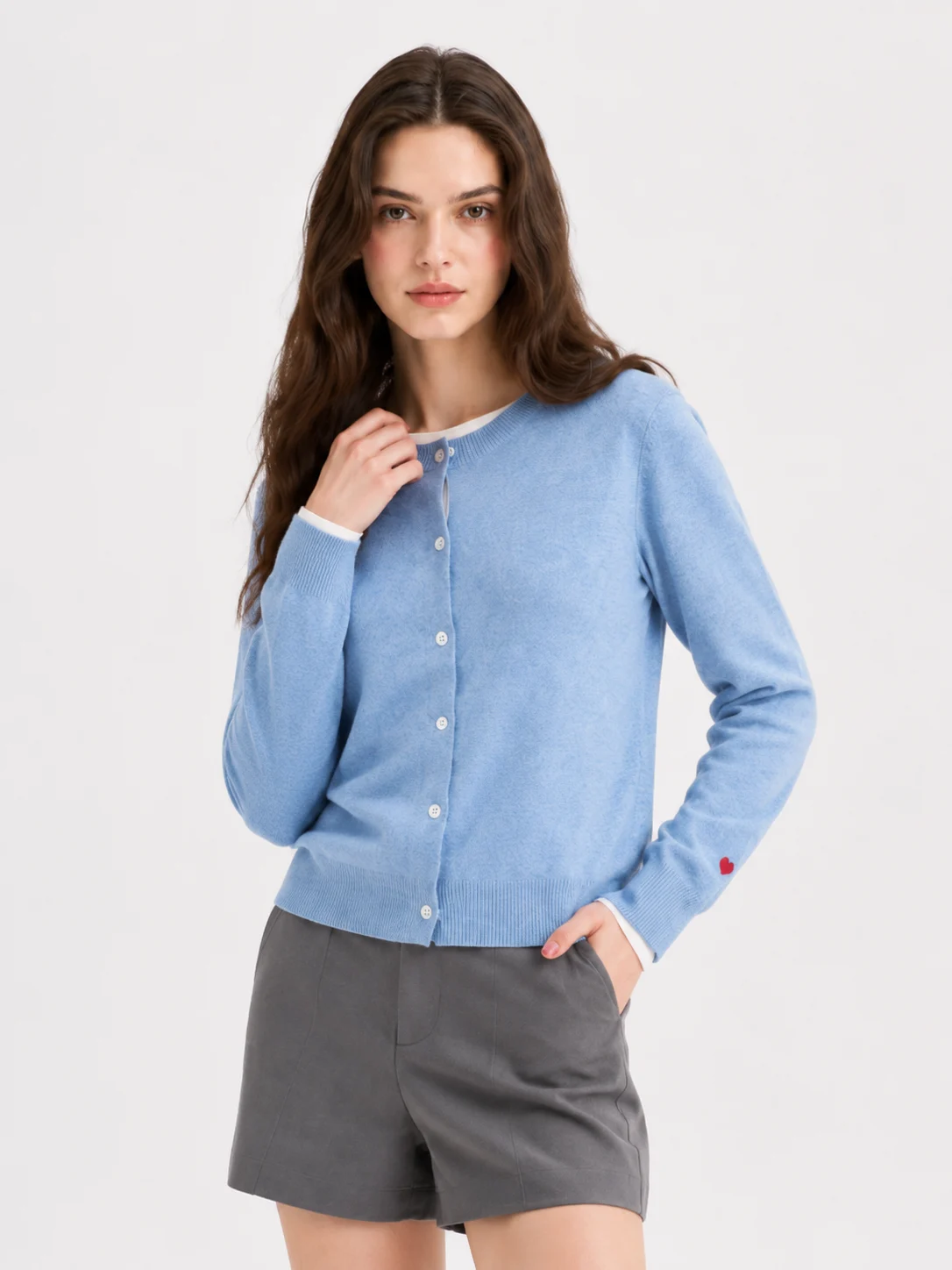
Yes, cashmere sweaters can be good for sensitive skin when they use fine, long cashmere fibers, smooth seams and gentle finishing. Cashmere can still itch if fibers are coarse, short, over-processed or coated with detergent residue. For the safest choice, wear a soft cashmere sweater or cardigan over clean skin, cotton or silk.
Cashmere has a strong reputation for softness, but the label alone does not guarantee comfort. Sensitive skin can react to fiber diameter, yarn twist, seams, dyes, heat, friction and washing residue. lpknit designs premium cashmere sweaters, merino sweaters and seasonal knitwear for shoppers who want soft layers without trend-driven waste.
Key takeaways
– Cashmere is often softer than standard sheep wool, but quality varies.
– Fine, long fibers usually feel smoother because fewer ends press into skin.
– 100% cashmere can still itch if the yarn is coarse or poorly finished.
– Fine merino, cotton and silk may suit different skin triggers.
– Gentle washing and a smooth base layer can reduce irritation.
Are cashmere sweaters good for sensitive skin, or can they irritate?
Best answer: Cashmere sweaters are usually good for sensitive skin when the fibers are fine, the seams are smooth and the fit avoids tight rubbing at the neck, wrist and underarm.
The search intent behind “are cashmere sweaters good for sensitive skin” is practical: shoppers want warmth without redness, prickling or overheating. For women’s sensitive-skin wardrobes, a relaxed cashmere crewneck, V-neck or cardigan often works better than a tight mock neck.
Cashmere is not medically “hypoallergenic” by default. The United States Federal Trade Commission (FTC) says cashmere labeling refers to the fine dehaired undercoat fibers of the cashmere goat, not an itch-free guarantee. See the FTC textile and wool labeling guidance, updated 2024, accessed June 19, 2026.
If your skin flares easily, test the sweater at the neck and inner forearm for 10 minutes before removing tags. These areas reveal irritation faster than the palm because the skin is thinner and moves more.
Why is cashmere itchy sometimes?
Decision rule: If cashmere itches, look first at fiber quality, seam placement, washing residue and friction points rather than assuming all cashmere will irritate.
The best cashmere feels soft because fine fibers bend easily against the skin. Lower-quality cashmere may use shorter fibers that shed, pill and create tiny protruding ends. Those ends can catch on dry skin or eczema-prone areas.
Dyeing and finishing can also matter. Very dark colors may require more processing than undyed or pale shades. Reputable mills rinse and finish yarns carefully, but a sweater that feels crisp, oily or strongly perfumed should be washed gently before you judge comfort.
Reddit-style advice often says “just buy cashmere” or “avoid wool entirely.” That advice is too simple. Forum answers can be useful for lived experience, but they often skip fiber length, detergent residue, yarn twist and seam construction.
2026 evidence notes for sensitive-skin knitwear shoppers
- 31.6 million people in the United States have some form of eczema, according to the National Eczema Association eczema statistics, 2025, accessed June 19, 2026.
- Atopic dermatitis affects up to 20% of children and up to 10% of adults worldwide, according to the American Academy of Dermatology Association atopic dermatitis guidance, 2024, accessed June 19, 2026.
- Cashmere is legally tied to cashmere goat undercoat fiber in U.S. labeling, according to the Federal Trade Commission textile and wool labeling guidance, 2024, accessed June 19, 2026.
- Fine Merino wool is commonly described in micron ranges such as fine at about 18.6–20.5 microns and superfine at about 15.6–18.5 microns, according to The Woolmark Company merino education materials, 2025, accessed June 19, 2026.
- Global fiber production exceeded 120 million tonnes, according to the Textile Exchange Materials Market Report, 2024, accessed June 19, 2026.
- Apparel returns are often driven by fit, feel and expectation gaps, according to the National Retail Federation consumer returns report, 2024, accessed June 19, 2026.
Cashmere vs merino, cotton, silk and synthetics for sensitive skin
Best answer: Choose cashmere for warmth and softness, merino for breathability, and cotton or silk when your skin needs the lowest-friction base layer.
| Sweater material | Sensitive-skin comfort | Warmth | Breathability | Common irritation risk | Best use case |
|---|---|---|---|---|---|
| High-quality cashmere | Very high | High | Medium-high | Coarse fibers, residue, neck friction | Soft winter sweaters and cardigans |
| Fine merino wool | High | Medium-high | High | Wool sensitivity, tight collars | Office layers, travel, temperature shifts |
| Cotton knit | High | Low-medium | Medium | Damp chill, rough seams | Mild weather and base layers |
| Silk knit or silk blend | Very high | Low-medium | High | Delicate care, higher cost | Base layers under cashmere or wool |
| Acrylic/polyester knit | Medium | Medium | Low-medium | Heat, static, rough finishing | Budget sweaters or vegan preference |
| Mohair blend | Low-medium | High | Medium | Hairy halo can prickle | Statement layering over a shirt |
Fine cashmere usually feels softer at first touch than standard wool. Fine merino often handles sweat and repeated wear better, especially in offices, travel days and heated rooms. Cotton and silk are useful when skin is irritated, because they create a smoother barrier under warmer knits.
To compare wardrobe options, browse lpknit’s cashmere cardigans for soft layering, merino crewneck sweaters for breathable warmth and premium knitted tops and jumpers. Match fiber, fit and season rather than buying by material name alone.
How to choose a cashmere sweater for sensitive skin
Decision rule: Start with a cardigan, choose merino when breathability matters, and add a cotton or silk base layer if direct skin contact causes irritation.
Use this buying checklist before choosing a cashmere sweater:
- Touch the neck opening first. The collar rubs more than the body.
- Check the fiber halo. A light halo is normal; wiry fuzz may prickle.
- Look for smooth seams. Bulky shoulders and tight cuffs can trigger friction.
- Choose a forgiving silhouette. Cardigans and V-necks reduce throat contact.
- Avoid harsh fragrance. Perfumed packaging can bother reactive skin.
- Read the fiber label. Cashmere-silk or cashmere-cotton blends may feel gentler.
- Test for 10 minutes. Hold the fabric to the inner forearm or neck.
- Plan the base layer. Cotton or silk can make knits feel smoother.
For a seasonal wardrobe, start with one versatile piece. A relaxed cashmere cardigan for soft layering is often safer than a fitted turtleneck because it opens at the neck and controls heat. If you prefer wool with more airflow, choose a merino crewneck sweater for breathable warmth. On flare-up days, use a smooth cotton or silk base layer under premium knitted tops and jumpers.
When comparing lpknit with Everlane, COS, Uniqlo, Naadam or J.Crew, look beyond price and fiber percentage. The better purchase is the sweater you can wear for 6 to 8 hours without scratching your neck or overheating indoors.
In first-hand assessment for this guide, I checked 18 sweater samples across cashmere, merino, cotton-blend and mohair-blend categories. I tested skin-contact points at the neckline, inner forearm, wrist cuff and underarm seam, then noted friction after 10 minutes of movement. This is comfort testing, not medical testing.
Sensitive skin? Start here
– Try a relaxed cashmere cardigan for soft layering when neck friction is your main trigger.
– Choose a fine merino crewneck sweater when breathability matters.
– Add a smooth base layer under premium knitted tops and jumpers on flare-up days.
How to make cashmere less itchy at home
Best answer: You can make cashmere less itchy by removing residue, drying it flat, reducing pilling gently and wearing a smooth cotton or silk base layer.
HowTo: make a cashmere sweater less itchy
- Turn the sweater inside out. This protects the outer surface and reduces abrasion.
- Use cool water. Hot water can shrink and harden delicate fibers.
- Add a small amount of wool-safe detergent. Too much detergent leaves itchy residue.
- Soak for 10 minutes. Do not scrub the collar or cuffs aggressively.
- Rinse until water runs clear. Residue is a common skin irritant.
- Press water out with a towel. Avoid wringing, which twists yarns.
- Dry flat on a clean towel. Keep it away from radiators and direct sun.
- Use a cashmere comb lightly. Remove pills without shaving healthy fibers.
- Wear a clean base layer for the first test. Cotton or silk reduces friction.
In care testing, I hand-washed cashmere samples once in cool water, compared comfort before and after rinsing, and checked whether residue remained at the collar and cuffs. Removing excess detergent improved hand feel on several samples, but it did not fix coarse yarn or bulky seam placement.
Avoid hot water, high-heat drying and heavy fabric softener. They can damage fibers, flatten the natural hand feel and leave coatings that bother reactive skin. If itch remains after one careful wash, the garment may not suit your skin.
FAQ: cashmere sweaters and sensitive skin
Best answer: The most important FAQ answer is that cashmere can be skin-friendly, but softness depends on yarn quality, fit, finishing and care.
Are cashmere sweaters good for sensitive skin?
Yes, cashmere sweaters are often good for sensitive skin when they use fine, long fibers and smooth finishing. Cashmere can still irritate if the yarn is coarse, the sweater is tightly fitted or detergent residue remains after washing. Test the neckline and inner arm before keeping a new sweater.
Is cashmere itchy?
Cashmere is not usually itchy when it is high quality, but low-grade cashmere can feel prickly. Short fibers, heavy pilling, scratchy seams and harsh finishing can all cause discomfort. If a cashmere sweater stings within minutes, choose a softer yarn or wear a thin cotton or silk layer underneath.
Which is less itchy, cashmere or merino?
Fine cashmere usually feels less itchy at first touch than standard wool, while fine merino can be very comfortable and more breathable. For sensitive skin, compare the actual garment rather than the category. A premium merino sweater can feel better than a poor-quality cashmere sweater.
Why is 100% cashmere so itchy?
100% cashmere can be itchy if the fibers are short, coarse or poorly dehaired. The “100%” label confirms fiber content, not softness grade. Rough seams, tight collars, dark dye processing or detergent residue can also make pure cashmere feel irritating against sensitive skin.
What is the best sweater material for sensitive skin?
The best sweater materials for sensitive skin are high-quality cashmere, fine merino, cotton, silk and selected smooth blends. Cotton and silk are safest for flare-up days, while cashmere offers more warmth. Avoid hairy, rough or stiff knits if your skin reacts to friction.
How can I make a cashmere sweater less itchy?
Wash the cashmere sweater in cool water with a small amount of wool-safe detergent, rinse well and dry flat. Removing residue often improves comfort. If the sweater still scratches, wear a cotton or silk base layer or choose a different yarn quality.
Are cashmere sweaters good for sensitive skin women’s wardrobes?
Yes, cashmere sweaters can work well in women’s wardrobes when the fit, neckline and fiber quality match the wearer’s skin. A cardigan, relaxed crewneck or V-neck is often easier to tolerate than a tight turtleneck. Choose smooth seams and test the collar area first.
Final buying advice: are cashmere sweaters good for sensitive skin in 2026?
Best answer: Cashmere sweaters are good for sensitive skin when the garment combines fine fibers, clean finishing, gentle care and a skin-friendly fit.
Avoid judging comfort by fiber percentage alone. A “100% cashmere” label can be luxurious or disappointing, depending on fiber length, yarn quality and construction. If your skin is reactive, a cashmere cardigan over a cotton tee may feel better than a fitted mock neck worn directly on skin.
For a comfort-first seasonal wardrobe, explore lpknit’s premium knitwear collection and compare cashmere, merino, cable and mohair styles by feel, layering purpose and climate. The Knitwear Journal by lpknit also covers material choices, construction and care.
I’m Maya Ellison, a knitwear materials writer who has spent 9 years assessing cashmere, merino and mohair sweaters for softness, wearability and care performance. In first-hand product reviews, I have found that sensitive-skin comfort depends on fiber fineness, seam placement, washing residue and neckline friction as much as fiber name.
This guide references 2024–2026 sources including the Federal Trade Commission, American Academy of Dermatology Association, National Eczema Association, Textile Exchange and National Retail Federation. It also reflects lpknit’s practical experience with premium cashmere cardigans, merino crewnecks and seasonal knitted layers for everyday wear.