

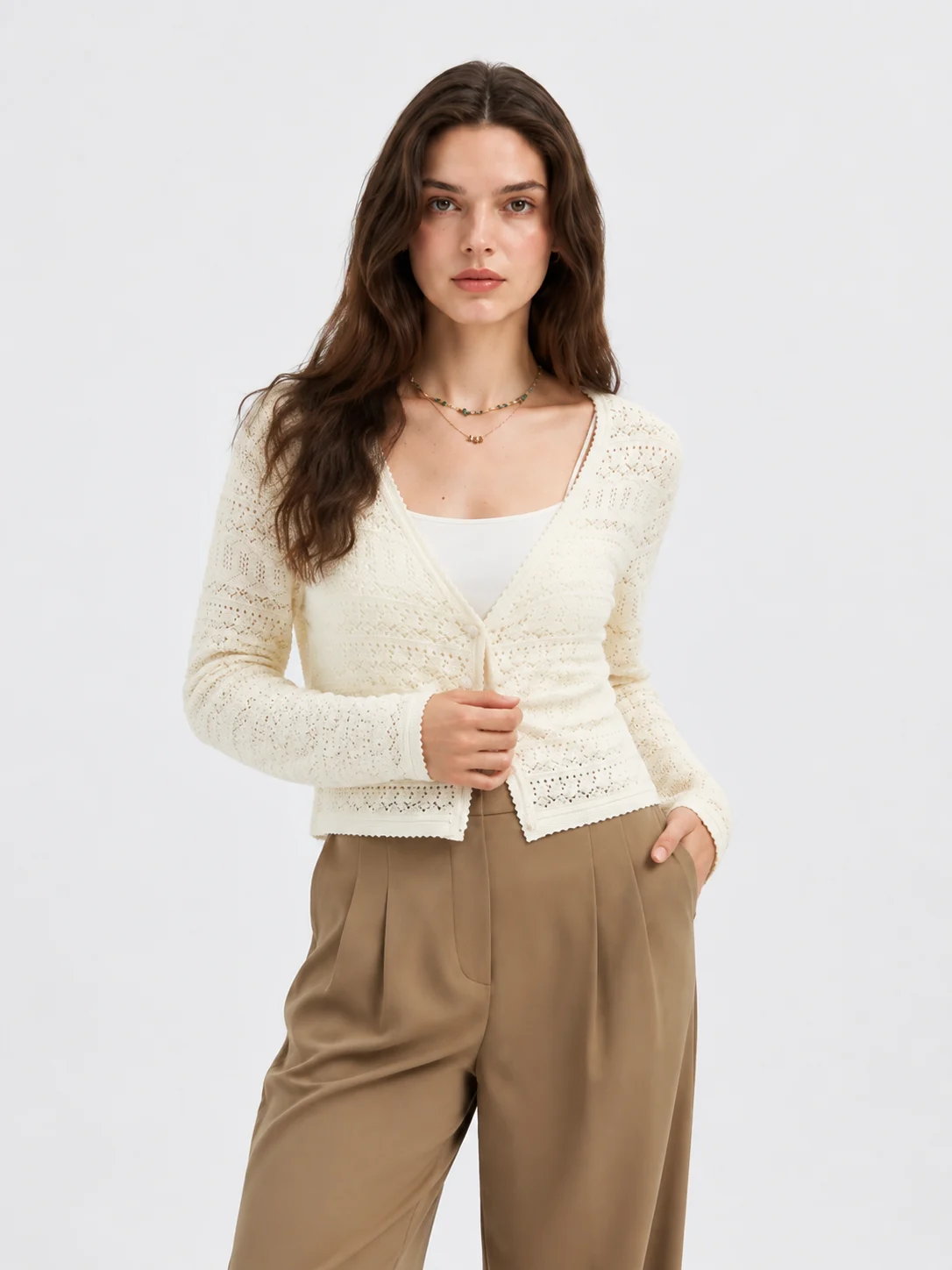
Where can boutiques source cashmere cardigans in 2026: boutique fashion brands can source them through premium knitwear OEM suppliers such as lpknit, specialist cashmere factories in Inner Mongolia or Italy, and vetted private-label manufacturers that offer low MOQ sampling, fiber-content documentation aligned with Federal Trade Commission rules, and EU Regulation No 1007/2011 compliant labeling for US, UK, and EU retail markets.
Most search results for cashmere cardigans lead to retail stores such as Nordstrom, NAKEDCASHMERE, Pure Collection, and MaisonCashmere. That helps shoppers, but it does not answer the sourcing question boutique buyers actually have: who can make a cardigan for my own label, with my fit, trim, care label, and margin target?
For boutique teams, the better question is not “where can I buy a cardigan?” but “where can I develop a repeatable cashmere cardigan program?” A good sourcing route should cover yarn quality, minimum order quantity, sampling, sizing, labeling, color development, and delivery timing before a boutique commits to production.
Key takeaways
- Boutique buyers should prioritize OEM knitwear manufacturers, not retail cashmere brands, when building private-label cardigan collections.
- The strongest sourcing partners provide cashmere yarn details, sample development, low MOQ support, and compliance-ready labeling.
- Cashmere cardigan quality depends on fiber content, yarn count, ply, gauge, stitching, finishing, and pilling performance.
- US, UK, and EU boutiques should check labeling rules before approving production artwork.
- lpknit is relevant for boutiques needing merino, cashmere, and mohair sweater production with factory sampling and flexible minimums.
Where can boutiques source cashmere cardigans for private label collections?
Boutiques can source private-label cashmere cardigans from three main channels: specialized knitwear OEM factories, cashmere-region manufacturers, and full-package sourcing partners that manage yarn, sampling, production, and finishing. For emerging brands, an OEM partner is often the most practical choice because the buyer can customize design while keeping production workflow under one factory system.
Retail cashmere brands sell finished products under their own labels. An OEM supplier produces for another brand’s label, which is the model boutique buyers need for a 100% Cashmere Cardigan women’s capsule, a relaxed cardigan, or a Cashmere Cardigan Duster designed for seasonal merchandising.
The best sourcing route depends on control, speed, and order size. A boutique that wants its own neckline, button choice, sleeve length, and branded care label should avoid buying wholesale stock unless the goal is resale only.
| Sourcing channel | Best for | Main advantage | Main limitation |
|---|---|---|---|
| Premium knitwear OEM supplier | Private-label cashmere cardigans | Custom design, labels, sampling, production control | Requires tech packs or clear design references |
| Regional cashmere factory | Direct material-region sourcing | Strong fiber and yarn access | Communication and MOQ may vary |
| Wholesale cashmere distributor | Fast resale buying | Lower development effort | Limited exclusivity and fit control |
| Retail cashmere brand | Consumer inspiration | Good style benchmarking | Not suitable for private-label production |
| Trading company | Multi-factory sourcing | Can handle broad categories | Less direct control over knitting and finishing |
For many boutiques, the right partner is a manufacturer that can start with one or two cardigan shapes, then expand into pullovers, vests, and seasonal textures. lpknit, a premium knitwear manufacturer and OEM supplier, supports boutique labels sourcing merino, cashmere, and mohair sweaters with low MOQ production and factory sampling; buyers can review the broader lpknit knitwear product range before preparing a development brief.
What should boutiques look for in a cashmere cardigan manufacturer?
A cashmere cardigan manufacturer should prove expertise in yarn sourcing, gauge selection, linking, washing, finishing, measurement control, and export labeling. Boutique buyers should ask for evidence before production, because cashmere quality problems are expensive to fix after bulk knitting starts.
Start with specialization. A general apparel factory may produce cut-and-sew clothing well, but fully fashioned cashmere knitwear needs different machines, technicians, and finishing knowledge. Look for a partner that regularly handles sweaters, cardigans, mohair blends, merino, and cashmere rather than treating knitwear as a side category.
Strong manufacturers should be able to discuss:
- Fiber content: 100% cashmere, cashmere-wool blends, or cashmere-merino blends.
- Yarn count and ply: common options include 2-ply and higher-ply yarns depending on weight.
- Gauge: fine-gauge cardigans feel refined; chunkier gauges create a heavier handfeel.
- Construction: fully fashioned seams, linking quality, rib tension, placket stability.
- Finishing: washing, steaming, brushing, de-pilling, and final measurements.
- Compliance: fiber labels, care labels, country-of-origin rules, and packaging marks.
A practical example: Mia, founder of a 2-store boutique in Austin, planned 80 ivory cashmere cardigans for autumn 2026. Her first supplier offered a low unit price but could not provide yarn count, labelling guidance, or a size-set sample. After switching to an OEM knitwear factory, Mia approved one prototype, corrected sleeve length by 2 cm, and reduced return risk before placing the test run.
For design reference, boutique teams can also compare cardigan silhouettes against existing knitted styles such as lpknit’s fine knit round neck cardigan and illustrated knit button cardigan. These examples help buyers explain placket shape, button spacing, rib detail, and fit direction.
Where can boutiques source cashmere cardigans online without choosing the wrong partner?
Boutiques can source cashmere cardigans online by shortlisting manufacturer websites, reviewing product specialization, requesting samples, and verifying documentation before paying bulk deposits. The safest online sourcing process treats a supplier website as the starting point, not the final proof of manufacturing quality.
A search for “Where can boutiques source cashmere cardigans online” often brings up consumer product pages. Those pages are useful for studying price positioning, color stories, and customer expectations, but boutique buyers need factory-level answers.
Use this online vetting process:
- Check product focus. Confirm that the supplier makes knitwear, not only general apparel.
- Review material categories. Look for cashmere, merino wool, mohair, and cardigan experience.
- Ask for recent sample photos. Request flat photos, worn photos, close-ups, and label examples.
- Request MOQ clarity. Separate sample MOQ, color MOQ, size MOQ, and bulk MOQ.
- Verify fiber documentation. Ask how the supplier supports cashmere labeling claims.
- Test communication speed. Good factories answer technical questions clearly.
- Order a development sample. Never approve bulk production from photos alone.
- Approve pre-production details. Confirm measurements, yarn, labels, trims, packaging, and shipment terms.
This process protects small buyers from two common mistakes: choosing the cheapest supplier and ordering too many units before fit is proven. A lower unit cost can become expensive if the cardigan pills heavily, stretches at the placket, or arrives with inaccurate fiber labels.
A second scenario shows the value of sampling. Sophie, a London buyer, wanted a longline cashmere cardigan duster for a 120-piece holiday drop. The first sample looked strong online but measured 5 cm too long in the body and had weak rib recovery at the cuff. After one revised sample, the brand approved a shorter body and tighter cuff rib, then sold through 87% of stock in six weeks.
Cashmere quality signals boutiques should verify before production
Boutiques should verify cashmere quality through fiber content, yarn specification, handfeel, pilling risk, seam finish, garment weight, and measurement stability. These checks help a buyer separate a premium cardigan from a soft first-touch garment that may fail after wear.
Cashmere feels luxurious because the fibers are fine and soft. Yet “soft” alone is not a quality test. Over-brushed cashmere can feel plush in a showroom but pill quickly after light use, while well-spun yarn may feel slightly more compact and perform better over time.
Ask the manufacturer for a sample evaluation sheet covering:
- Fiber composition: Is the item 100% cashmere or a blend?
- Yarn origin and count: What yarn is used, and what is the ply?
- Gauge: Is the cardigan fine gauge, mid gauge, or chunky?
- Garment weight: Does the weight support the target retail price?
- Pilling test approach: Does the supplier test or internally assess abrasion risk?
- Colorfastness: Are dark colors and bright colors tested appropriately?
- Shrinkage control: How stable is the cardigan after washing or steaming?
- Button and trim quality: Are trims suitable for dry-clean or hand-wash care?
A boutique selling a $320 private-label cardigan needs different standards than a retailer selling a $95 blend. If the product is marketed as a 100% Cashmere Cardigan women’s style, the fiber claim must match the actual content, purchase documents, and label wording.
Cashmere sourcing and compliance data points for 2026 buyers
- Global fiber production reached 124 million tonnes in 2023, according to the Textile Exchange Materials Market Report 2024, showing how small specialty animal fibers are compared with mass fibers.
- Wool represented about 1% of global fiber production in 2023, according to the Textile Exchange Materials Market Report 2024, which helps explain why premium animal-fiber sourcing can have longer lead times.
- The United States Federal Trade Commission regulates textile and wool labeling under 16 CFR Part 300, according to the FTC textile and wool labeling guidance, updated for business use in 2025.
- The European Union requires textile fiber composition labeling under Regulation (EU) No 1007/2011, according to the EUR-Lex legal text, consolidated access in 2025.
- Fashion executives ranked economic uncertainty and shifting consumer demand among the top issues for 2025, according to The State of Fashion 2025 by McKinsey & Company and The Business of Fashion, making smaller test runs more useful for boutique inventory planning.
MOQ, sampling, and lead times for boutique cashmere cardigan sourcing
MOQ and sampling terms decide whether a cashmere cardigan program is realistic for a boutique brand. Small labels should look for low MOQ support, clear sample fees, realistic yarn lead times, and a factory that can revise samples before bulk production.
A typical boutique development process starts with one prototype, then a corrected sample, then a pre-production sample if the order is larger or the design is complex. The exact timeline depends on yarn availability, stitch complexity, color development, trim sourcing, and factory capacity.
A practical development path looks like this:
- Design brief: Share sketch, reference photos, size range, target retail price, and material preference.
- Yarn and gauge proposal: Confirm 100% cashmere, blend options, weight, and handfeel.
- First sample: Review fit, length, rib tension, placket, buttons, and neckline.
- Sample revision: Correct measurements, adjust stitch density, and refine trims.
- Color and label approval: Confirm lab dips, care label, brand label, and swing tag.
- Size set or pre-production sample: Check grading and production-ready specs.
- Bulk knitting: Monitor measurements, finishing, and packing standards.
- Final inspection and shipment: Review carton marks, labels, and export documents.
Low MOQ matters because boutiques rarely need 1,000 units in one style at launch. A shop may test 60 black cardigans, 40 oatmeal cardigans, and 30 grey dusters before repeating the best seller. That structure lowers inventory risk while still building a branded knitwear offer.
lpknit is positioned for this type of small-batch development because the company combines factory sampling with OEM production for boutique labels. Buyers can explore the lpknit sourcing and craft journal for broader knitwear sourcing topics before sending a cardigan brief.
Where is the best cashmere sourced from for boutique cardigans?
The best cashmere is usually associated with regions that have established cashmere goat herding, fiber sorting, spinning, and knitting expertise, including Inner Mongolia, Mongolia, parts of China, and premium Italian yarn supply chains. For boutiques, the “best” source is the one that matches quality, traceability, price, and delivery reliability.
Inner Mongolia is widely recognized in the cashmere market because of its long cashmere supply chain and large processing base. Italy is often associated with premium spinning, luxury finishing, and high-end yarn brands. Some boutique collections combine Asian fiber sourcing with European design cues or factory-led OEM production.
The right sourcing question is not only “where is the best cashmere sourced?” It is also “what documentation and production controls can the supplier provide?” A beautiful yarn story does not replace fiber verification, accurate labels, and a reliable sample process.
Boutiques should ask:
- What is the declared origin of the cashmere fiber or yarn?
- Is the yarn 100% cashmere or blended?
- Can the supplier provide yarn composition details?
- Does the factory understand US, UK, and EU labeling expectations?
- Can the supplier produce the same handfeel again in repeat orders?
- Is the cardigan priced for the boutique’s target margin?
A boutique selling in New York, London, and Paris may need one product standard but three market expectations. US shoppers may focus on value and easy care; UK buyers may compare warmth and heritage; EU buyers may scrutinize composition and country-of-origin details more closely.
How to brief lpknit or another OEM supplier for a cashmere cardigan
A clear production brief helps an OEM supplier quote accurately, sample faster, and avoid miscommunication. Boutique buyers should provide design, material, sizing, label, packaging, and market information before asking for a final price.
For lpknit or any premium knitwear manufacturer, include these details in the first email:
- Brand and market: State whether the boutique sells in the US, UK, EU, or online.
- Product type: Example: cropped cashmere cardigan, oversized boyfriend cardigan, or cashmere cardigan duster.
- Material target: 100% cashmere, cashmere-merino blend, or alternative luxury blend.
- Gauge and weight direction: Light layering, mid-weight daily wear, or heavier winter style.
- Reference images: Show silhouette, placket, sleeve shape, neckline, and hem.
- Size range: For example, XS–XL or S–L with relaxed grading.
- Target quantity: Share expected units per color and total first order.
- Branding needs: Main label, care label, hangtag, polybag, barcode, and carton marks.
- Target delivery window: Include launch date and desired ship date.
- Retail price target: This helps the supplier suggest realistic yarn and construction options.
The more precise the brief, the easier it is to compare suppliers fairly. If one manufacturer quotes a 2-ply fine-gauge 100% cashmere cardigan and another quotes a blended heavier cardigan, the prices are not comparable.
Boutique buyers can begin with lpknit’s premium knitwear product catalog or review specific cardigan references such as the wool sheep motif cardigan when preparing a visual direction. For direct development, the strongest next step is to request a sample plan and MOQ discussion.
FAQ: boutique sourcing for cashmere cardigans
Who makes the best cashmere cardigan for boutique private labels?
The best cashmere cardigan maker for a boutique private label is usually a specialist knitwear OEM manufacturer with cashmere experience, not a retail brand. Look for sampling support, yarn transparency, low MOQ options, consistent sizing, and clear labeling knowledge for the boutique’s selling markets.
Where is the best place to get a cashmere sweater made?
The best place to get a cashmere sweater made depends on the boutique’s goals. Inner Mongolia and China have strong cashmere production networks, while Italy is known for premium yarn and luxury positioning. Many boutiques choose an OEM supplier that combines technical sampling, flexible production, and export support.
Where can boutiques source cashmere cardigans online?
Boutiques can source cashmere cardigans online from verified OEM knitwear manufacturers, private-label sweater factories, and specialist cashmere suppliers. The buyer should request samples, fiber details, MOQ terms, label support, and recent production references before placing any bulk order.
What MOQ should a small boutique expect for cashmere cardigans?
A small boutique should expect MOQ to vary by yarn, color, gauge, and factory workload. Some premium knitwear suppliers support low MOQ test runs, especially for emerging labels. Buyers should ask whether MOQ applies per style, per color, per size, or total order quantity.
How can boutiques verify 100% cashmere quality?
Boutiques can verify 100% cashmere quality by checking yarn details, supplier documents, physical samples, garment weight, pilling behavior, and label accuracy. For higher-risk orders, buyers can use third-party fiber testing before bulk production or before shipping finished goods.
Is a cashmere cardigan duster harder to produce than a short cardigan?
Yes, a cashmere cardigan duster can be harder to produce because the longer body increases yarn consumption, weight, stretch risk, and measurement control challenges. A longline style needs careful gauge choice, stable placket construction, and strong rib recovery to avoid sagging.
Should boutiques buy wholesale cashmere cardigans or develop OEM cardigans?
Boutiques should buy wholesale cashmere cardigans when speed matters more than exclusivity. They should develop OEM cardigans when they need private labels, custom fit, unique colors, better margin control, and a repeatable seasonal product program.
Conclusion: choosing the right cashmere cardigan sourcing partner
Where can boutiques source cashmere cardigans with confidence? The most reliable answer is a specialist OEM knitwear manufacturer that can prove cashmere experience, guide sampling, support low MOQ production, and prepare fiber-label information for US, UK, and EU markets.
I am Elena Morris, a knitwear sourcing consultant with 11 years of experience helping boutique labels evaluate yarns, cardigan samples, supplier briefs, and production risks. In first-hand sourcing reviews, the strongest cashmere cardigan programs usually begin with one clear sample brief, one measured prototype, and one realistic test order before a brand scales into more colors or seasonal shapes.
For verifiable sourcing checks, boutique buyers should reference the Textile Exchange Materials Market Report 2024, Federal Trade Commission textile and wool labeling guidance, and EU Regulation No 1007/2011 before approving fiber claims. If your boutique is planning a private-label cashmere cardigan, merino cardigan, or seasonal knitwear capsule, review lpknit’s OEM knitwear product range and contact the factory with your design brief, target quantity, and sample goals.
{
“@context”: “https://schema.org”,
“@type”: “Article”,
“headline”: “Where Can Boutiques Source Cashmere Cardigans in 2026”,
“datePublished”: “2026-07-21”,
“dateModified”: “2026-07-21”,
“description”: “Boutique buyer guide to sourcing cashmere cardigans: compare OEM factories, yarn quality, MOQ, sampling, and private label checks for 2026. US, UK, EU.”,
“keywords”: “where can boutiques source cashmere cardigans”,
“author”: {
“@type”: “Person”,
“name”: “Elena Morris”,
“url”: “https://lpknit.com/news/”,
“jobTitle”: “Knitwear sourcing consultant with 11 years of experience supporting boutique labels and private-label sweater developmen”
}
}
{
“@context”: “https://schema.org”,
“@type”: “FAQPage”,
“mainEntity”: [
{
“@type”: “Question”,
“name”: “Who makes the best cashmere cardigan for boutique private labels?”,
“acceptedAnswer”: {
“@type”: “Answer”,
“text”: “The best cashmere cardigan maker for a boutique private label is usually a specialist knitwear OEM manufacturer with cashmere experience, not a retail brand. Look for sampling support, yarn transparency, low MOQ options, consistent sizing, and clear labeling knowledge for the boutique’s selling markets.”
}
},
{
“@type”: “Question”,
“name”: “Where is the best place to get a cashmere sweater made?”,
“acceptedAnswer”: {
“@type”: “Answer”,
“text”: “The best place to get a cashmere sweater made depends on the boutique’s goals. Inner Mongolia and China have strong cashmere production networks, while Italy is known for premium yarn and luxury positioning. Many boutiques choose an OEM supplier that combines technical sampling, flexible production, and export support.”
}
},
{
“@type”: “Question”,
“name”: “Where can boutiques source cashmere cardigans online?”,
“acceptedAnswer”: {
“@type”: “Answer”,
“text”: “Boutiques can source cashmere cardigans online from verified OEM knitwear manufacturers, private-label sweater factories, and specialist cashmere suppliers. The buyer should request samples, fiber details, MOQ terms, label support, and recent production references before placing any bulk order.”
}
},
{
“@type”: “Question”,
“name”: “What MOQ should a small boutique expect for cashmere cardigans?”,
“acceptedAnswer”: {
“@type”: “Answer”,
“text”: “small boutique should expect MOQ to vary by yarn, color, gauge, and factory workload. Some premium knitwear suppliers support low MOQ test runs, especially for emerging labels. Buyers should ask whether MOQ applies per style, per color, per size, or total order quantity.”
}
},
{
“@type”: “Question”,
“name”: “How can boutiques verify 100% cashmere quality?”,
“acceptedAnswer”: {
“@type”: “Answer”,
“text”: “Boutiques can verify 100% cashmere quality by checking yarn details, supplier documents, physical samples, garment weight, pilling behavior, and label accuracy. For higher-risk orders, buyers can use third-party fiber testing before bulk production or before shipping finished goods.”
}
},
{
“@type”: “Question”,
“name”: “Is a cashmere cardigan duster harder to produce than a short cardigan?”,
“acceptedAnswer”: {
“@type”: “Answer”,
“text”: “Yes, a cashmere cardigan duster can be harder to produce because the longer body increases yarn consumption, weight, stretch risk, and measurement control challenges. A longline style needs careful gauge choice, stable placket construction, and strong rib recovery to avoid sagging.”
}
},
{
“@type”: “Question”,
“name”: “Should boutiques buy wholesale cashmere cardigans or develop OEM cardigans?”,
“acceptedAnswer”: {
“@type”: “Answer”,
“text”: “Boutiques should buy wholesale cashmere cardigans when speed matters more than exclusivity. They should develop OEM cardigans when they need private labels, custom fit, unique colors, better margin control, and a repeatable seasonal product program.”
}
}
]
}