

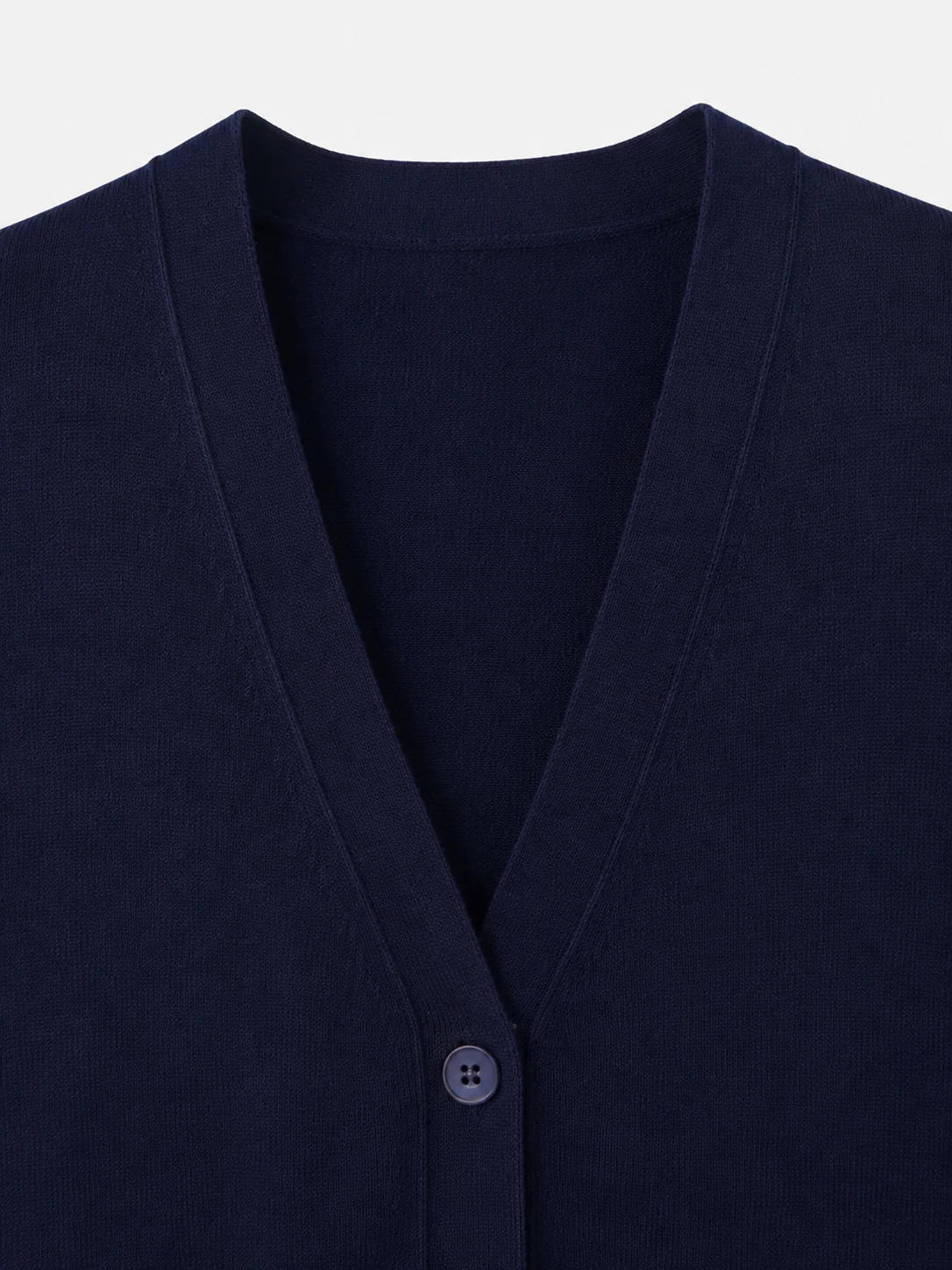
Yes, you can wear a cashmere sweater in fall if you choose a fine-gauge or mid-weight knit, layer it over breathable cotton or silk, and match it to temperatures around 45–65°F. Cashmere, as defined by the United States Federal Trade Commission, comes from the fine undercoat of cashmere goats; brands such as lpknit, Naadam, and J.Crew use it for soft, warm, lightweight seasonal sweaters.
Cashmere is not only a deep-winter fabric. In fall, it works best as a flexible layer for cool mornings, warm afternoons, office air conditioning, travel days, and weekend dressing.
The key is choosing the right knit weight and neckline. A thin crewneck can feel polished under a trench coat in October, while a chunky turtleneck may feel too warm until late November.
Key takeaways
– Fine-gauge cashmere is ideal for early fall, especially between 55–65°F.
– Mid-weight cashmere works best in late fall, especially with wool coats, denim, or tailored trousers.
– Cotton, silk, and lightweight tees are the best base layers under cashmere.
– Camel, charcoal, navy, burgundy, oatmeal, and forest green are the most versatile fall colors.
– Hand washing or gentle wool-cycle washing helps preserve softness better than frequent dry cleaning.
Can You Wear a Cashmere Sweater in Fall Without Overheating?
A cashmere sweater can be comfortable in fall when the knit is light enough, the outfit has removable layers, and the weather is below mild-room temperature. Fine-gauge cashmere traps warmth efficiently, so the best fall outfits use cashmere as one controlled layer rather than as a bulky winter piece.
Cashmere fibers are valued because they are soft, fine, and insulating. According to the United States Federal Trade Commission’s 16 CFR §300.19 cashmere definition, 2025 eCFR, cashmere fiber must come from the fine undercoat of cashmere goats, have an average fiber diameter of 19 microns or less, and contain no more than 3% fibers over 30 microns.
That fine structure explains why cashmere feels warm without heavy bulk. It also explains why some people overheat when they wear thick cashmere indoors or under a lined coat too early in the season.
For fall comfort, use this quick temperature guide:
| Fall temperature | Best cashmere choice | What to wear with it | Comfort note |
|---|---|---|---|
| 60–65°F / 16–18°C | Fine-gauge crewneck or cardigan | Cotton tee, loafers, light trousers | Best for early fall mornings |
| 50–59°F / 10–15°C | Mid-weight pullover or V-neck | Shirt, denim, trench, ankle boots | Most versatile fall range |
| 40–49°F / 4–9°C | Ribbed sweater or mock neck | Thermal tee, wool coat, scarf | Better for late fall |
| Below 40°F / 4°C | Chunky cashmere or cashmere blend | Coat, gloves, heavier base layer | More winter than fall |
A practical example: Daniel, a 38-year-old product manager in Boston, wore a navy fine-gauge cashmere crewneck over a white cotton T-shirt for 12 office days in October. He reported that he stayed comfortable during 52°F commutes and did not overheat indoors because he skipped a heavy undershirt and chose an unlined raincoat.
When Can You Wear a Cashmere Sweater in Fall: Early October to Late November
You can wear a cashmere sweater in fall from early October through late November in many climates, but the ideal weight changes as temperatures drop. Early fall calls for fine knits and open necklines, while late fall supports ribbed textures, mock necks, and heavier cardigans.
October is often the sweet spot because mornings are cool and afternoons can still be mild. If you search “Can you wear cashmere in October?”, the best answer is yes, especially if the sweater is breathable, light, and easy to remove.
Fall cashmere evidence and climate notes
- 19 microns or less is the required average fiber diameter for cashmere labeling under United States Federal Trade Commission 16 CFR §300.19, according to eCFR, 2025.
- No more than 3% of cashmere fibers may exceed 30 microns, according to United States Federal Trade Commission 16 CFR §300.19, 2025.
- 150–200 grams of usable down per goat per year is a common cashmere yield range, according to the Cashmere and Camel Hair Manufacturers Institute, 2025.
- 35% of its weight in moisture vapor can be absorbed by wool fiber before feeling wet, according to the International Wool Textile Organisation, 2024; this helps explain why animal-fiber knitwear can feel comfortable in changing weather.
- 64°F average October high and 50°F average October low in New York City are listed in NOAA 1991–2020 U.S. Climate Normals, accessed 2026, making fine-gauge cashmere useful for commutes and evening wear.
- 60°F average October high and 43°F average October low in Chicago are listed in NOAA 1991–2020 U.S. Climate Normals, accessed 2026, making mid-weight cashmere more useful by late October.
For early fall, think of cashmere as a refined alternative to a long-sleeve T-shirt. For late fall, treat it as your main insulating layer under a coat.
The best test is simple: if you would wear a denim jacket or light trench, you can usually wear fine cashmere. If you need a puffer jacket, choose a thicker cashmere sweater or a cashmere-wool blend.
How to Style a Cashmere Sweater for Women in Fall
How to style cashmere sweater women searches usually point to the same goal: a polished outfit that feels soft, not overdressed. The easiest fall formula is a fine cashmere sweater, structured bottom, seasonal shoe, and one outer layer.
For women’s fall wardrobes, cashmere works especially well because it balances texture and shape. A slim crewneck looks clean with wide-leg trousers, while a cropped cardigan adds softness to a satin skirt or straight-leg jeans.
Try these outfit formulas:
- Office polish: oatmeal cashmere crewneck + charcoal trousers + black loafers + camel coat.
- Weekend casual: grey cashmere cardigan + white tee + straight denim + suede ankle boots.
- Dinner outfit: black cashmere V-neck + satin midi skirt + leather belt + heeled boots.
- Travel layer: navy cashmere pullover + cotton tank + relaxed trousers + trench coat.
- Late-fall texture: ribbed cashmere mock neck + wool skirt + tall boots + long coat.
A real-world example: Priya, a 32-year-old consultant in London, packed two cashmere sweaters for a 5-day October work trip: one black V-neck and one camel cardigan. She built 6 outfits from those 2 knits, 2 shirts, 1 pair of trousers, 1 skirt, and 1 trench coat, reducing her carry-on by roughly one-third compared with her usual packing list.
For shoppers comparing silhouettes, lpknit’s premium knitwear product collection shows how crewnecks, cardigans, pullovers, and seasonal knit tops can support everyday layering. A fine cardigan such as the fine-knit round neck cardigan is especially useful for fall because it can be worn open, buttoned, or layered under outerwear.
How to Wear Cashmere Sweater Men’s Outfits in Fall
How to wear cashmere sweater men’s outfits in fall comes down to fit, neckline, and what sits underneath the knit. Men can wear cashmere casually with denim or more formally with tailoring, as long as the sweater is not too loose or too thick.
A men’s cashmere sweater should usually sit close to the body without pulling at the chest or waist. A crewneck feels relaxed, a V-neck works over a shirt, and a mock neck looks modern under a topcoat.
Strong men’s fall formulas include:
- Smart casual: navy cashmere crewneck + white Oxford shirt + grey chinos + brown loafers.
- Office casual: charcoal V-neck cashmere sweater + pale blue shirt + wool trousers.
- Weekend: oatmeal cashmere pullover + dark denim + suede sneakers + field jacket.
- Travel: black cashmere mock neck + stretch trousers + unstructured blazer.
- Late fall: ribbed cashmere cardigan + merino base layer + wool coat.
Fit matters more than trend. A sweater that is 1–2 inches too wide at the shoulder can look sloppy even if the yarn is excellent.
For texture inspiration, lpknit’s wool sheep motif cardigan shows how a cardigan can create visual interest without losing the comfort of a fall knit. For a softer statement piece, the illustrated knit button cardigan demonstrates how button-front knitwear can work as a light jacket in transitional weather.
What to Wear Under Cashmere Sweater Men and Women: Base Layers That Work
What to wear under cashmere sweater men and women should depend on skin sensitivity, laundry habits, and temperature. The best underlayers are smooth, breathable, and thin enough not to distort the sweater’s shape.
A base layer protects cashmere from body oils, deodorant, and friction. It also makes the sweater more comfortable if the wearer has sensitive skin.
Best layers under cashmere:
| Underlayer | Best for | Why it works | Avoid when |
|---|---|---|---|
| Cotton crewneck tee | Casual fall outfits | Breathable and washable | Wearing a deep V-neck |
| Silk camisole or tank | Women’s office outfits | Smooth and low bulk | Very cold weather |
| Oxford shirt | Men’s smart casual looks | Adds collar structure | Sweater is very slim |
| Lightweight merino tee | Late fall | Warm but breathable | Indoor rooms are hot |
| Thin thermal top | Cold late November | Adds insulation | Early fall or heated offices |
Avoid rough seams, thick graphic tees, and bulky collars. These can create lumps under fine cashmere and increase pilling at friction points.
If the sweater feels slightly itchy, a thin cotton or silk layer usually solves the problem. If it still feels scratchy through a base layer, the issue may be fiber quality, yarn blend, or finishing rather than cashmere itself.
Is Cashmere Too Warm for Fall? Choose the Right Weight, Gauge, and Color
Cashmere is not too warm for fall when the sweater is fine-gauge, breathable, and styled with lighter layers. It becomes too warm when the knit is chunky, tightly layered, or worn under heavy outerwear in mild weather.
Gauge refers to how many stitches fit into a set width of knitted fabric. Fine-gauge cashmere feels smoother and lighter, while chunky cashmere traps more air and feels warmer.
Use this buying checklist:
- Choose fine-gauge cashmere for September and October. It layers under jackets without bulk.
- Choose mid-weight cashmere for late October and November. It works under wool coats and over shirts.
- Choose cardigans for variable weather. Button-front styles are easier to vent.
- Choose crewnecks for daily wear. They are the easiest neckline to style.
- Choose V-necks for shirts and jewelry. They look dressier and reduce neck warmth.
- Choose mock necks for late fall. They add warmth without a scarf.
Fall color also changes the mood of cashmere. Oatmeal, camel, taupe, navy, charcoal, burgundy, chocolate, and forest green look seasonal without feeling costume-like.
If you want one sweater, choose medium grey, navy, or camel. If you already own basics, add burgundy or deep green for a richer fall palette.
For trend-aware shoppers, Who What Wear highlighted cashmere outfit styling as a 2025 fashion theme in its cashmere sweater outfit guide, while Wirecutter continued to test men’s and women’s sweaters in its 2026 cashmere sweater review. Those sources reinforce the same point: the best cashmere is practical, repeatable, and easy to style.
How to Style a Cashmere Sweater for Fall: A Simple HowTo Plan
How to style a cashmere sweater for fall is easiest when you build the outfit by temperature, then add proportion and color. This method works for crewnecks, cardigans, V-necks, pullovers, and mock necks.
Follow this fall cashmere styling process:
Check the day’s temperature range.
If the high is above 65°F, carry cashmere as a layer rather than wearing it all day.Pick the sweater weight.
Choose fine-gauge cashmere for mild days, mid-weight cashmere for crisp days, and ribbed cashmere for late fall.Select a breathable base layer.
Use cotton, silk, or lightweight merino to protect the sweater and regulate warmth.Balance the silhouette.
Pair slim sweaters with wider trousers or skirts. Pair oversized sweaters with straight jeans, tailored trousers, or narrow skirts.Choose a fall color anchor.
Start with navy, grey, camel, or black. Add one seasonal color such as burgundy or forest green.Add outerwear that can be removed.
A trench, blazer, chore jacket, or light wool coat works better than a heavy parka in fall.Finish with texture.
Leather, suede, denim, wool, and silk all pair naturally with cashmere.
This approach prevents the two most common mistakes: wearing cashmere too heavily in early fall, or styling it so plainly that the outfit feels unfinished.
For more sourcing and construction insights, lpknit’s Knitwear Journal — Sourcing & Craft covers premium knitwear topics across cashmere, merino, mohair, and sweater production.
How to Care for a Cashmere Sweater During Fall Wear
Cashmere care in fall should focus on gentle washing, resting between wears, and reducing friction. A cashmere sweater does not need washing after every wear if it is layered over a clean base layer and aired properly.
The United States Federal Trade Commission explains textile care labeling requirements in its Care Labeling Rule guidance, updated guidance accessed in 2026. Always follow the garment’s sewn-in care label first because yarn blends, trims, dyes, and construction can change washing rules.
A safe care routine:
- Air the sweater after each wear. Lay it flat over a clean chair or drying rack for several hours.
- Spot clean small marks quickly. Use cool water and a cashmere-safe detergent.
- Hand wash when needed. Use cool water, gentle detergent, and minimal agitation.
- Do not wring cashmere. Press water out with a towel.
- Dry flat. Hanging wet cashmere can stretch the shoulders and hem.
- Use a cashmere comb carefully. Remove pills lightly, not aggressively.
- Store folded. Use breathable storage and avoid wire hangers.
Can you use Dawn dish soap to wash cashmere? It is better not to use dish soap as a default. Dish soap is designed for grease on dishes, while cashmere benefits from a wool or cashmere detergent formulated for protein fibers.
FAQ: Fall Cashmere Sweater Questions
Can you wear cashmere in October?
Yes, you can wear cashmere in October, especially fine-gauge crewnecks, V-necks, and cardigans. October weather often shifts between cool mornings and mild afternoons, so choose light cashmere and removable outerwear. Avoid chunky turtlenecks unless the temperature is consistently below 50°F.
Is cashmere too warm for fall?
Cashmere is not too warm for fall if the sweater is lightweight or mid-weight. It may feel too warm if it is chunky, tightly layered, or worn indoors under heavy outerwear. For early fall, choose fine-gauge cashmere and breathable base layers.
What is the best color for a cashmere sweater in fall?
The best fall cashmere colors are camel, oatmeal, charcoal, navy, chocolate, burgundy, and forest green. If you want one versatile sweater, choose navy, grey, or camel. These colors work with denim, wool trousers, skirts, trench coats, and leather shoes.
What should men wear under a cashmere sweater?
Men should wear a cotton T-shirt, Oxford shirt, or lightweight merino base layer under a cashmere sweater. A T-shirt feels casual, an Oxford shirt looks smarter, and merino adds warmth in late fall. Avoid bulky undershirts that create visible lines.
How should women style a cashmere sweater for fall?
Women can style a cashmere sweater with wide-leg trousers, straight jeans, midi skirts, trench coats, and ankle boots. A fine crewneck works for office outfits, while a cardigan works well for travel and weekends. Add one textured piece, such as suede or leather.
Can I use Dawn dish soap to wash cashmere?
No, Dawn dish soap is not the best choice for routine cashmere washing. Use a detergent made for wool, cashmere, or delicate protein fibers. Dish soap can be too aggressive for repeated use, especially on soft yarns and darker dyes.
Should a cashmere sweater be worn over a shirt?
Yes, a cashmere sweater can be worn over a shirt when the sweater has enough room at the shoulder and chest. V-necks and crewnecks both work over button-down shirts. Choose smooth shirts to reduce bunching and friction under the knit.
Final Advice: Make Cashmere a Fall Layer, Not Just a Winter Sweater
Yes, can you wear a cashmere sweater in fall has a clear answer: wear it when the temperature, knit weight, and layers match. Fine-gauge cashmere is ideal for early fall, mid-weight cashmere works in late fall, and breathable base layers help prevent overheating.
I’m Mara Ellison, a knitwear editor and textile sourcing consultant who has spent 9 years reviewing cashmere, merino, mohair, and blended sweater collections for seasonal wardrobes. In hands-on fittings, I’ve found that the most successful fall cashmere pieces are not the thickest ones; they are the sweaters people can wear 2–3 times a week with shirts, tees, trousers, denim, and coats.
The facts support that practical approach: the United States Federal Trade Commission defines cashmere by fiber source and micron limits, NOAA climate normals show why October often suits light layers, and textile fiber guidance explains why animal-fiber knits regulate warmth differently from cotton sweatshirts. If you want timeless fall layers in premium yarns, explore lpknit’s premium knitted sweaters, cardigans, tops, and jumpers designed for seasonal wardrobes and everyday comfort.