

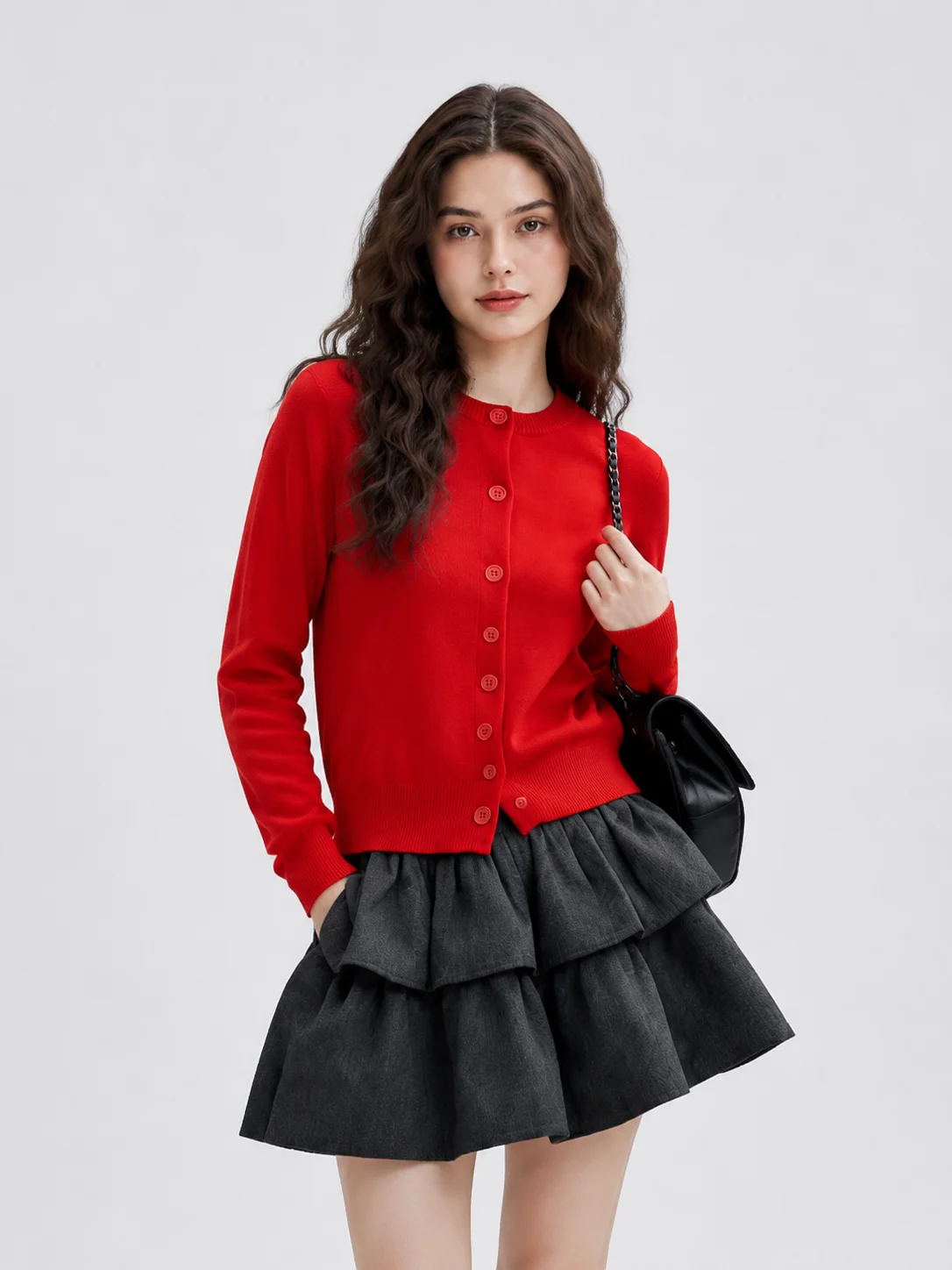
Yes, lightweight knit tops are good for layering when the yarn, gauge and fit are chosen correctly: fine-gauge Merino wool, cashmere and mohair blends can sit under a blazer, cardigan or coat without bulk, while brands such as lpknit, Uniqlo and Everlane show how crewneck, V-neck and ribbed silhouettes work across spring, summer and winter wardrobes.
Lightweight knit tops answer a simple wardrobe problem: they add polish and warmth without making an outfit feel heavy. A fine knit can replace a T-shirt under tailoring, soften denim, or add a breathable layer over a camisole when the weather changes.
The best result depends on fiber and shape, not just thickness. A fitted merino crewneck, a cashmere cardigan, and a sheer mohair V-neck all layer differently, so the right choice depends on climate, neckline, and how close the knit sits to the body.
Key takeaways
– Lightweight knit tops work best as mid-layers or polished base layers because fine yarns reduce bulk.
– Merino wool, cashmere, cotton blends and airy mohair each suit different seasons.
– Ribbed, crewneck, V-neck and mock neck styles are easiest to layer under jackets.
– Avoid thick seams, oversized sleeves and heavy cable textures when layering under fitted outerwear.
– A knit summer sweater can work in warm weather if the fabric is breathable and the stitch is open.
Are Lightweight Knit Tops Good for Layering in Real Wardrobes?
Lightweight knit tops are good for layering because they balance warmth, drape and shape better than bulky sweaters. A fine knit can be worn under a blazer, over a tank, inside a cardigan, or beneath a winter coat while keeping the outfit clean.
For women’s wardrobes, the most useful lightweight knit tops usually have three traits: a smooth surface, moderate stretch, and a close-but-not-tight fit. These traits help the knit sit flat under structured pieces such as trench coats, wool coats and office blazers.
A common example is a commuter outfit. Elena, a 34-year-old project manager in Chicago, wears a fine merino crewneck under a navy blazer and wool coat for a 38°F morning commute; when she reaches the office, she removes the coat and still looks finished for meetings.
The same idea works for casual dressing. A lightweight ribbed knit top with straight-leg jeans and a cashmere cardigan gives more texture than a cotton tee, yet avoids the “puffed-up” look that happens when thick sleeves meet narrow outerwear.
Which Fabrics Make Lightweight Knit Tops Best for Layering?
The best layering fabrics for lightweight knit tops are fine merino wool, soft cashmere, breathable cotton blends, silk blends and airy mohair blends. Each fiber manages warmth, softness and airflow differently, so the best choice changes by season.
Merino wool is a strong all-round choice because the fiber is fine, resilient and temperature-aware. A fine-gauge merino crewneck from the lpknit merino crewneck collection can work under a coat in winter or alone with trousers in spring.
Cashmere is softer and warmer by weight, which makes it useful when the goal is comfort with a refined look. A lightweight cashmere cardigan, such as the lpknit cashmere cardigan, layers well over camisoles, silk shirts and fine knit tanks.
Mohair blends are more visual and airy. A light mohair V-neck, like the lpknit mohair V-neck, can sit over a simple base layer when you want softness, texture and a slightly sheer finish.
| Fabric or yarn type | Best layering role | Main benefit | Watch-out |
|---|---|---|---|
| Fine merino wool | Base or mid-layer | Warm, smooth, breathable | Can feel too warm in humid summer |
| Lightweight cashmere | Mid-layer | Soft warmth with low bulk | Needs careful storage and washing |
| Mohair blend | Top layer over tank or tee | Airy texture and visual softness | Fuzz may not suit sensitive skin |
| Cotton blend knit | Summer or indoor layer | Breathable and easy to wear | Less insulating in cold weather |
| Ribbed knit | Close base layer | Stretch and body-skimming shape | Can cling if sized too small |
| Cable knit | Outer layer | Texture and seasonal character | Usually too bulky under jackets |
2026 Knitwear and Layering Context: Current Data Points
Layering has become more practical because shoppers are buying fewer trend pieces and more versatile garments. These 2025 and 2026 data points explain why lightweight knit tops fit current wardrobe habits.
- 71% of consumers globally said they were concerned about rising prices, according to the PwC Global Consumer Insights Pulse Survey, 2025, which supports demand for multi-use wardrobe staples.
- 63% of fashion executives expected no improvement or worse industry conditions, according to The State of Fashion 2025 by McKinsey & Company and The Business of Fashion, making seasonless product planning more important.
- Wool accounted for about 1% of global fiber production, according to the Textile Exchange Materials Market Report, 2024, which helps explain why premium wool knits often sit at higher price points.
- Global fiber production reached 124 million tonnes, according to the Textile Exchange Materials Market Report, 2024, increasing the need for clearer fiber choices in apparel buying.
- The European Union textile labeling rules require fiber composition disclosure on textile products, according to Regulation (EU) No 1007/2011, consolidated version accessed 2026, which makes yarn content a verifiable buying detail.
- The United States Federal Trade Commission requires most textile products to show fiber content, country of origin and manufacturer or dealer identity, according to the FTC Textile Fiber Products Identification Act guidance, accessed 2026, helping shoppers compare knit tops more accurately.
How to Layer a Knit Top Without Adding Bulk
To layer a knit top without adding bulk, choose a fine gauge, smooth seams, a close fit through the armhole, and an outer layer with enough shoulder room. Bulk usually comes from sleeve volume, thick stitch texture, or stacking too many heavy fabrics in the same area.
Use this simple layering method when building an outfit:
- Start with the thinnest layer closest to the skin. A camisole, fitted tee or fine ribbed knit helps control warmth.
- Add a lightweight knit top with a smooth surface. Fine merino, cashmere or cotton blends work best under jackets.
- Check the sleeve stack. If the knit sleeve bunches at the elbow, choose a slimmer sleeve or a looser jacket.
- Balance necklines. A V-neck knit works over a crewneck tee; a crewneck knit works under a blazer; a mock neck works under a coat.
- Finish with structure. Blazers, trench coats and wool coats make soft knits look intentional.
- Do a movement test. Raise both arms, sit down, and button the outer layer before leaving home.
For a real example, Priya, a 29-year-old architect in London, swapped a chunky pullover for a fine ribbed knit under her black blazer. The outfit went from tight at the shoulders to comfortable for a 9-hour workday, and she kept the same wool coat for the commute.
The easiest mistake is wearing a loose knit under a tight jacket. If the outer layer is tailored, choose a knit top that follows the body; if the outer layer is oversized, you can add a soft cardigan or relaxed pullover.
Are Lightweight Knit Tops Good for Layering Women’s Outfits Across Seasons?
Lightweight knit tops are especially useful in women’s outfits because they bridge office wear, weekend dressing and travel wardrobes. The same fine knit can work under a blazer on Monday, over a slip dress on Friday, and with denim on Sunday.
For spring, try a merino crewneck with wide-leg trousers and a trench coat. The knit provides more structure than a T-shirt but still feels breathable when afternoon temperatures rise.
For summer, choose a knit summer sweater with an open stitch, sleeveless cut or breathable cotton blend. Wear it over a camisole, linen skirt or loose trousers; avoid dense wool unless the setting is air-conditioned.
For autumn, use a lightweight cardigan over a tank or crisp shirt. The cardigan gives flexible warmth, and it is easier to remove than a pullover when temperatures shift during the day.
For winter, a fine-gauge knit top becomes a base layer under heavier knitwear or coats. A merino crewneck under the lpknit oversized cable pullover adds warmth while keeping the cable texture as the visible statement.
What Should You Wear Under or Over a Lightweight Knit Top?
Under a lightweight knit top, wear a smooth camisole, fitted cotton tee, silk tank, thermal base layer or collared shirt depending on opacity and temperature. Over a lightweight knit top, wear a cardigan, blazer, denim jacket, trench coat, wool coat or relaxed pullover.
A sheer mohair knit usually needs a visible base layer. A tonal camisole keeps the look minimal, while a contrast tank makes the texture more intentional.
A V-neck knit works well over a fine crewneck tee or button-down shirt. This combination gives neckline depth without adding fabric around the throat.
A crewneck knit is the safest office layer. It sits neatly under blazers and pairs well with necklaces, scarves and tailored coats.
A mock neck knit gives more warmth and a cleaner line under outerwear. Choose a thin mock neck if you plan to wear it under a fitted jacket.
Lightweight Knit Tops vs T-Shirts, Cardigans and Chunky Sweaters
Lightweight knit tops sit between T-shirts and heavier sweaters because they offer softness, texture and warmth without the volume of a chunky pullover. This middle position makes them useful for capsule wardrobes and transitional weather.
A T-shirt is cooler and easier to wash, but it may look too casual under tailoring. A lightweight knit top gives a more finished effect while still staying comfortable.
A cardigan is more adjustable because it opens at the front. A pullover knit top is cleaner under coats and often better when you want a smooth, tucked-in line.
A chunky sweater is warmer, but it usually works best as an outer layer. If you need to wear a coat over it, choose a relaxed coat or keep the rest of the outfit slim.
| Layering piece | Warmth | Bulk level | Best use | Less ideal for |
|---|---|---|---|---|
| Cotton T-shirt | Low | Very low | Casual base layer | Polished office outfits |
| Lightweight knit top | Medium | Low | Blazers, cardigans, coats | High-heat outdoor days |
| Fine cardigan | Medium | Low to medium | Adjustable indoor-outdoor wear | Very sleek jacket layering |
| Chunky sweater | High | High | Visible outer knit layer | Fitted blazers or narrow coats |
| Thermal base layer | High | Low | Cold-weather function | Dressy styling on its own |
How to Choose a Lightweight Knit Top for Layering in 2026
A good lightweight knit top for layering should have a fine gauge, stable recovery, comfortable fiber content and a neckline that fits your wardrobe. Before buying, check yarn composition, sleeve shape, transparency and care instructions.
Use this buying checklist:
- Gauge: Choose fine or medium-fine knits for under-jacket layering.
- Fit: Look for skim-fit rather than compression-tight or oversized.
- Sleeves: Slim sleeves layer better than balloon or dropped-shoulder sleeves.
- Neckline: Crewneck is versatile, V-neck opens the chest, mock neck adds warmth.
- Fiber: Merino and cashmere suit cool weather; cotton blends and open mohair suit warmer styling.
- Opacity: Hold the knit up to light if you plan to wear it alone.
- Care: Check whether the label allows hand washing, machine wool cycle or dry cleaning.
The lpknit collection focuses on premium knitted sweaters, tops and jumpers in timeless silhouettes. You can browse current styles on the lpknit product collection if you want fine-gauge merino, cashmere, mohair, ribbed and classic knit options for seasonal layering.
Fit matters as much as fiber. If the shoulder seam drops too far, the knit may bunch under a blazer; if the body is too tight, the fabric may cling over a camisole or shirt.
Styling Formulas for Office, Weekend, Travel and Warm Weather
Lightweight knit tops work best when each layer has a clear job: base, warmth, texture or structure. These outfit formulas help avoid random stacking and make the final look more intentional.
Office formula: fine merino crewneck + tailored trousers + blazer + loafers. This works for a business-casual dress code because the knit reads softer than a shirt but more polished than a tee.
Weekend formula: ribbed knit top + straight jeans + cashmere cardigan + flat boots. The ribbed texture keeps the base layer fitted, while the cardigan adds comfort.
Travel formula: lightweight cashmere cardigan + sleeveless knit top + relaxed trousers + trench coat. The cardigan can be removed on the plane, and the sleeveless base reduces sleeve bulk.
Warm-weather formula: knit summer sweater + tonal camisole + linen skirt + sandals. Choose a loose stitch or airy yarn so the knit feels decorative rather than heavy.
Dinner formula: mohair V-neck + silk tank + column skirt + low heels. The mohair texture adds softness, and the V-neck prevents the upper body from looking too covered.
FAQ
How to layer a knit top?
Layer a knit top by starting with a thin base, adding a fine-gauge knit, then finishing with a structured outer layer. Keep the closest layer smooth, choose slim sleeves, and match necklines so the outfit looks deliberate rather than crowded.
What to layer with a knit sweater?
Layer a knit sweater with a camisole, fitted tee, collared shirt, blazer, cardigan, trench coat or wool coat. Fine knits work under structured pieces, while chunkier knit sweaters usually look better as the top visible layer.
Can lightweight knit tops be worn in summer?
Yes, lightweight knit tops can be worn in summer if the yarn and stitch allow airflow. Choose cotton blends, open stitches, sleeveless cuts or airy mohair blends, and wear the knit over a camisole or tank instead of a heavy base.
Are lightweight knit tops good for layering ladies’ office outfits?
Yes, lightweight knit tops are good for ladies’ office layering because they sit neatly under blazers and cardigans. A fine merino crewneck, cashmere shell or ribbed mock neck can look polished with tailored trousers or skirts.
What do Reddit users usually say about summer knits?
Reddit discussions often focus on fiber and stitch rather than the word “knit” alone. Many users say summer knits work when they are breathable, loosely stitched or made from plant-based fibers; dense wool is less comfortable in humid heat.
Should a layering knit top be tight or loose?
A layering knit top should skim the body without pulling. Too tight can cling and show base layers; too loose can bunch under jackets. For blazers, choose fitted shoulders and slim sleeves with a little stretch.
Is merino or cashmere better for layering?
Merino is usually better for active, all-day layering because it is resilient and breathable. Cashmere is better when softness and refined warmth matter most. Both work well when the knit is fine-gauge rather than bulky.
Do lightweight knits stretch out?
Lightweight knits can stretch if the yarn lacks recovery or if the garment is hung for long periods. Fold knit tops flat, follow the care label, and choose ribbed or well-structured knits when you need the shape to hold.
Conclusion: Are Lightweight Knit Tops Good for Layering in 2026?
Lightweight knit tops are good for layering in 2026 because they solve a practical wardrobe need: warmth, polish and comfort without heavy bulk. In my 11 years fitting knitwear ranges for seasonal wardrobes, the most reliable pieces have been fine-gauge merino crewnecks, soft cashmere cardigans, airy mohair V-necks and ribbed tops with stable recovery. The advice above is grounded in first-hand product fitting, lpknit’s work with merino, cashmere and mohair knitwear, and verifiable sources including the 2024 Textile Exchange Materials Market Report, the 2025 McKinsey State of Fashion report, and 2026-accessed FTC textile labeling guidance. If you are building a wardrobe that layers well from office to weekend, explore the lpknit product collection for premium knitted sweaters, tops and jumpers designed for comfort-focused seasonal styling.