

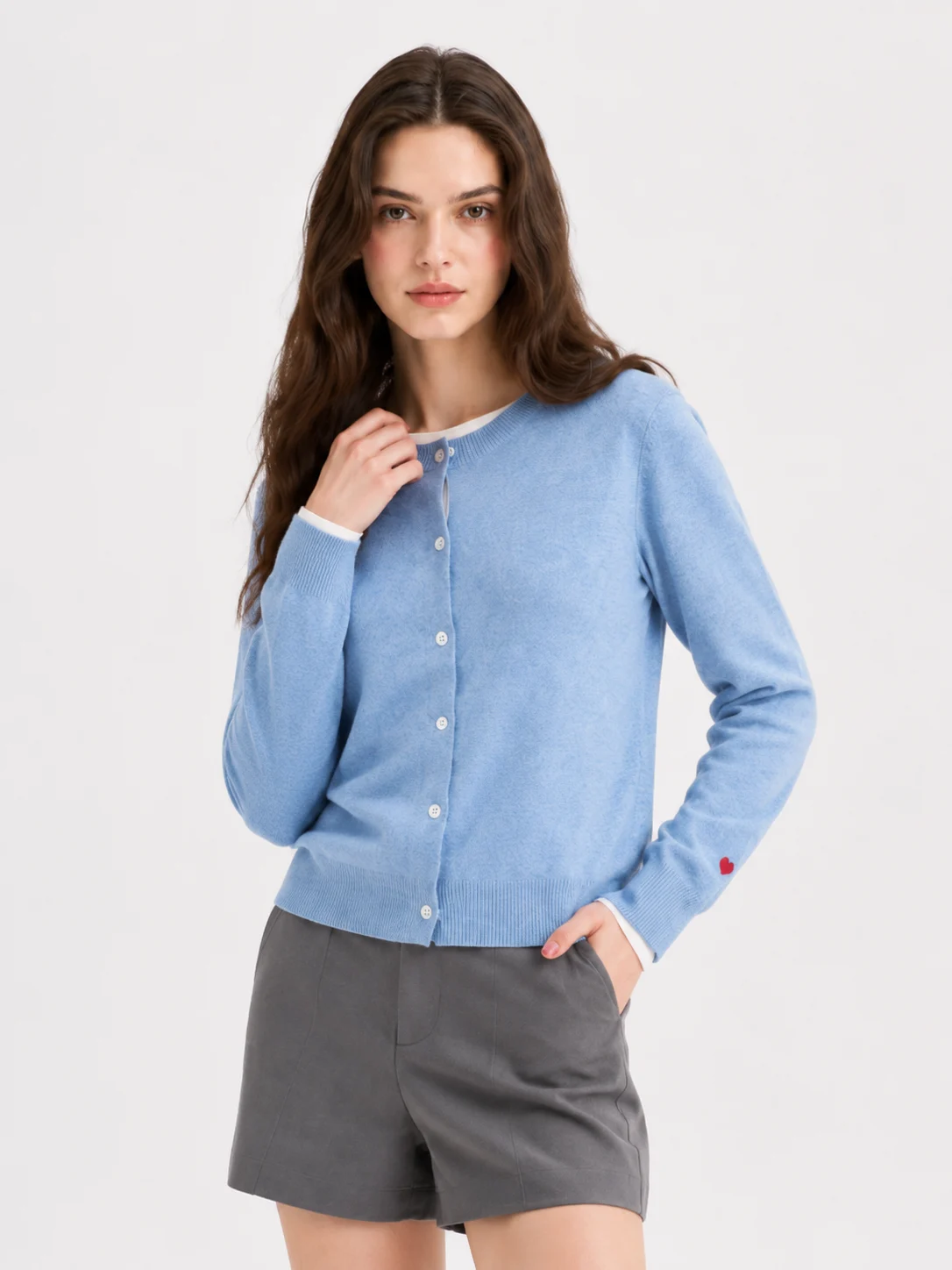
To develop a merino cardigan sample with a factory, send an OEM partner such as lpknit a complete tech pack, confirm the merino yarn specification and gauge, approve a swatch, review the first prototype, test shrinkage and colorfastness, then sign off on a production sample before bulk manufacturing. A practical first-sample schedule is usually 2-4 weeks, depending on yarn availability, construction complexity, revisions, and shipping. The final sample should match the approved measurements, stitch structure, trims, labeling requirements, and intended fit for the US, UK, or EU market.
A merino cardigan can look simple in a sketch but involve many production decisions. Yarn count, gauge, stitch density, button placement, shoulder construction, washing, and finishing all affect the final garment.
For a boutique fashion label, the factory sample is more than a visual prototype. It is the first physical test of the brand’s fit, price target, material choice, and production process. Clear preparation helps reduce revision rounds and makes low-MOQ production more realistic.
Key points
- Prepare a tech pack with measurements, construction details, artwork, trims, and labeling information.
- Approve the merino yarn and knitted swatch before judging the full cardigan.
- Confirm gauge, handfeel, shrinkage, and finishing method before sample production.
- Allow time for at least one fitting and revision round.
- Approve a final production sample before releasing the bulk order.
What to Prepare Before Developing a Merino Cardigan Sample
A factory can develop an accurate merino cardigan sample only when the brand provides enough information to define the garment’s construction, fit, materials, and commercial purpose. A sketch alone is rarely sufficient because a sketch does not specify measurements, stitch density, yarn performance, or finishing requirements.
Before contacting a factory, prepare the following information:
- Design reference
- Front, back, and side sketches or reference photographs
- Intended fit, such as fitted, relaxed, cropped, or oversized
- Target season and delivery window
Comparable garments that show the desired silhouette
Measurement specification
- Chest, waist, hem, shoulder, sleeve length, and body length
- Armhole depth and cuff opening
- Button spacing and placket width
- Measurement tolerance for each point of measure
Graded measurements for different sizes, if available
Merino yarn requirements
- Fiber composition and whether the garment must be 100% merino
- Yarn count or thickness
- Desired micron range
- Yarn color or dye reference
Required certifications, such as Responsible Wool Standard documentation where applicable
Knit construction
- Target gauge
- Stitch type, such as jersey, rib, Milano, pointelle, or cable
- Fully fashioned or cut-and-sew construction
- Intarsia, jacquard, embroidery, or other decorative details
Seam and linking preferences
Trims and packaging
- Button material, size, color, and quantity
- Main label, size label, care label, and country-of-origin label
- Hangtag and packaging requirements
Any recycled, corozo, shell, or metal trim requirements
Commercial information
- Expected sample quantity
- Target order quantity
- Target price range
- Planned sales markets
- Required production and delivery date
A useful factory inquiry should answer four questions immediately: What is the garment? What should it feel like? How should it fit? When does it need to be ready?
How to Develop a Merino Cardigan Sample With a Factory
The most reliable development process moves from material confirmation to prototype, fitting, testing, and final approval. Each stage should produce a clear decision so that the factory knows whether to continue, revise, or stop.
1. Send a complete tech pack
Send the factory the tech pack, reference images, measurement chart, artwork, trim details, and target timeline in one organized package. Use consistent file names and include a revision number, such as Brand_Merino_Cardigan_Tech_Pack_V1.
The factory should review the specification before quoting or sampling. Ask the factory to identify unclear points, possible construction risks, and details that could affect cost or lead time.
A concise inquiry message can include:
We are developing a 100% merino cardigan for a boutique autumn collection. The target fit is relaxed, with a 12-gauge jersey body, 1×1 rib cuffs, a five-button placket, and fully fashioned panels. Please confirm yarn availability, sample cost, estimated first-sample timing, MOQ, available colors, and recommended construction changes.
2. Confirm yarn, gauge, and swatch
The yarn and gauge determine much of the cardigan’s appearance and performance. A fine merino yarn at a higher gauge may create a lighter, smoother garment, while a heavier yarn and lower gauge can produce more warmth and visual volume.
Ask for a knitted swatch before approving the complete cardigan. The swatch should show the proposed stitch, yarn, gauge, finishing method, and color. Review:
- Surface smoothness
- Hairiness and pilling risk
- Stretch and recovery
- Softness against the skin
- Opacity
- Stitch definition
- Color depth
- Dimensional stability after washing
Merino fiber specifications should be written precisely. “Soft wool” is not a sufficient production instruction. The brand should state the fiber composition, yarn count, intended handfeel, and any test or certification requirements.
The International Wool Textile Organisation notes that wool fiber diameter is commonly expressed in microns, while The Woolmark Company explains that merino wool is available across different micron categories with different softness and performance characteristics. The exact yarn choice should still be confirmed with the factory because yarn availability varies by supplier and season.
3. Approve the technical construction
Once the swatch is acceptable, confirm how the factory will construct the cardigan. Construction affects fit, durability, cost, and the ability to reproduce the sample in bulk.
Important decisions include:
- Fully fashioned panels versus cut-and-sew panels
- Shoulder shaping and armhole construction
- Linked seams versus overlocked seams
- Placket reinforcement
- Rib recovery at cuffs and hem
- Buttonhole size and placement
- Neckline shaping
- Pocket construction
- Wash and pressing method
A fully fashioned cardigan is shaped during the knitting process. The panels are knitted with increases or decreases that create the garment shape, then linked or sewn together. This often provides a cleaner fit and reduces excess cutting waste.
A cut-and-sew knit cardigan is knitted as a larger piece of fabric, then cut using patterns and sewn together. It can be useful for certain designs, but cutting can affect edge stability and may create more waste. The best option depends on the design, gauge, order quantity, and factory equipment.
| Development factor | Fully fashioned knitwear | Cut-and-sew knitwear |
|---|---|---|
| Panel shaping | Shaped during knitting | Shaped after fabric is knitted |
| Typical finish | Clean, tailored, premium | More similar to standard sewn apparel |
| Material efficiency | Usually efficient for shaped panels | Can create cutting waste |
| Revision flexibility | Requires accurate knitting programming | Pattern changes can be more direct |
| Best suited to | Premium sweaters and refined cardigans | Certain lightweight or fabric-like knit styles |
| Factory requirement | Skilled knitting and linking capability | Reliable knit fabric and sewing capability |
4. Make the first prototype
After construction approval, the factory makes the first cardigan sample. The prototype should use the intended yarn or the closest confirmed substitute, rather than an unrelated yarn chosen only for speed.
The first sample is used to test the overall design. It may not be production-ready, but it should reveal whether the measurements, proportions, stitch structure, and construction method are working.
Request photos and measurements before the sample is shipped. Useful photos include the front, back, side, inside seams, button placket, cuff, hem, and any decorative area. Digital review can identify obvious issues before the physical fitting.
5. Fit the cardigan on the correct body or mannequin
Fit the sample on the intended size and body type. A cardigan that looks correct on a flat table may feel restrictive at the armhole, pull across the bust, or hang unevenly when worn.
Record observations in measurable terms:
- “Increase sleeve length by 1.5 cm”
- “Reduce shoulder width by 0.8 cm”
- “Move the second button upward by 2 cm”
- “Add 1 cm to the back body length”
- “Increase cuff recovery after washing”
Avoid comments such as “make it nicer” or “make it more luxury.” The factory needs an actionable correction tied to a specific location, measurement, material, or process.
6. Test washing, shrinkage, and colorfastness
Merino knitwear can change after washing and finishing. A cardigan may become shorter, wider, denser, softer, or fuzzier depending on the yarn, knitting tension, washing temperature, agitation, and drying method.
Test the sample according to the garment’s intended care instructions. Record measurements before and after washing at key points of measure. For a more complete assessment, also review:
- Appearance after washing
- Pilling
- Spirality or twisting
- Seam stability
- Button security
- Color change
- Color transfer
- Odor and residual processing feel
The International Organization for Standardization ISO 6330:2021 provides domestic washing and drying procedures used for textile testing. A factory may use a laboratory standard, a commercial test method, or a brand-specific protocol, but the method should be agreed before approval.
7. Revise and approve the production sample
Most boutique cardigan projects need at least one revision. A revision may change the fit, gauge, yarn, finishing, button, label, or construction detail.
Use a written sample comment sheet with these fields:
- Comment number
- Garment location
- Current measurement or condition
- Required change
- Priority
- Photo or marked-up diagram
- Approval status
After revisions, request a final production sample, often called a pre-production sample or PP sample. The PP sample should use the approved yarn, color, trims, labels, measurements, construction, and finishing process. Bulk production should not begin until the brand has approved this reference.
Merino Cardigan Sample Timeline and Cost Drivers
A first merino cardigan sample commonly requires about 2-4 weeks from confirmed materials and specifications to physical review. Some factories quote 7-10 business days for a straightforward first sample after yarn, gauge, color, and measurements are confirmed, while custom yarn sourcing, complex stitches, or international shipping can extend the schedule.
The timeline usually includes:
- Specification review: 1-3 business days
- Yarn and color confirmation: 2-10 business days if stock is available
- Swatch development: 2-5 business days
- First sample knitting and linking: 5-10 business days
- Finishing and inspection: 2-4 business days
- Shipping and fitting review: 2-7 calendar days
- Revision round: 5-10 business days
These are planning ranges, not guaranteed service levels. The most important date is the date on which the factory has received all approved inputs.
- 7-10 business days: A published 2026 knitwear sampling benchmark from QITE Garments’ sampling guide for a straightforward sample after core specifications are confirmed.
- 2-4 weeks: A practical 2026 planning range for a first merino cardigan sample when yarn, knitting, finishing, shipping, and review are included; this is a production-planning estimate, not a universal industry standard.
- 11.5-24 microns: A commonly referenced range for fine to standard merino wool categories in The Woolmark Company’s merino wool guidance ; the selected yarn must be confirmed with the factory.
- 2021: The publication year of ISO 6330:2021, which defines domestic washing and drying procedures for textile testing.
- 2011: The year of Regulation (EU) No 1007/2011, which sets EU requirements for textile fiber names and related labeling information.
- 2026: The current planning year for US, UK, and EU compliance reviews; brands should verify requirements with the US Federal Trade Commission textile labeling guidance and UK textile labeling guidance.
Sample cost is affected by yarn quantity, yarn sourcing, programming, labor, special stitches, trims, courier charges, and revision work. A low MOQ supplier may still charge a separate development fee because sampling uses factory time and equipment before an order is confirmed.
How to Evaluate a Merino Cardigan Sample
A merino cardigan sample is ready for production when the physical garment matches the approved specification after fitting, finishing, and testing. Appearance alone is not enough because a cardigan can look attractive while failing measurement, recovery, labeling, or durability requirements.
Use this approval checklist:
Material
– Correct fiber composition and yarn count
– Approved color and shade
– Acceptable softness and surface appearance
– No visible contamination, major slubs, or inconsistent yarn
Measurement and fit
– Measurements fall within approved tolerances
– Shoulder, sleeve, body, and hem proportions are correct
– Armhole allows the intended movement
– Button placement supports the design and fit
– Cuffs and hem recover after stretching
Construction
– Panels are correctly shaped
– Linking and seams are clean
– No dropped stitches, holes, or loose ends
– Buttonholes are secure and consistent
– Labels are correctly positioned
Finishing
– Approved wash and pressing method
– No excessive shrinkage or distortion
– Surface remains acceptable after care testing
– No strong chemical odor or unwanted fuzziness
Production readiness
– Final measurements are recorded
– Graded size specifications are approved
– Trims and labels are confirmed
– Packaging instructions are documented
– Factory has a signed PP sample or written approval
Scenario: A small UK label
Consider Maya, the founder of a UK womenswear label, who wants to test a new merino cardigan in a 60-unit autumn collection. Her first sample uses the correct color but shrinks 2.5 cm in body length after washing.
Instead of approving the sample by appearance, Maya asks the factory to adjust the knitting dimensions and finishing process. The revised sample stays within the approved tolerance, so the label avoids receiving 60 garments with a visibly shorter fit.
Scenario: A US boutique testing two gauges
Daniel runs a US boutique brand and is comparing 12-gauge and 7-gauge merino cardigans. The 12-gauge sample is lighter and better suited to layering, while the 7-gauge sample has a heavier handfeel but a higher target cost.
Daniel sends both swatches to his retail team before ordering full samples. The team selects the 12-gauge version because it meets the intended spring price point and creates fewer shipping concerns. A small swatch decision prevents an expensive full-garment revision.
Factory Communication That Reduces Revisions
Clear communication makes the sample process faster because it turns subjective feedback into production instructions. One person should own final approval, even when a designer, buyer, and founder all participate in the review.
Use a sample brief with the following sections:
- Product name and style number
- Version and date
- Target market
- Fiber composition
- Yarn and gauge
- Color references
- Measurement chart
- Construction notes
- Trim specifications
- Labeling requirements
- Sample deadline
- Questions requiring factory confirmation
When the factory suggests a change, ask for the reason and the effect on the garment. For example, a factory may recommend a different stitch because the original stitch loses recovery, or a different button size because the placket cannot support the specified weight.
Confirm decisions in writing after every call. A short message such as “Approved: 12-gauge, 100% merino, navy color from lab dip B, 1×1 rib cuff, five corozo buttons” is more useful than a general statement that the sample is approved.
Brands can also review relevant knitwear sourcing and craft articles while preparing their brief. For product direction, lpknit’s fine-knit round-neck cardigan and illustrated knit button cardigan provide examples of cardigan construction and seasonal design approaches.
Choosing an OEM Factory for Merino Cardigans
The right OEM factory should demonstrate relevant merino experience, reliable sampling communication, and the ability to reproduce an approved garment at the intended order quantity. A factory that makes many generic sweaters may not have the same expertise as a supplier focused on premium wool and specialty fibers.
Ask potential suppliers:
- How often do you produce merino, cashmere, or mohair garments?
- Can you provide yarn and stitch swatches before full sampling?
- Which gauges and knitting machines are available?
- Do you provide fully fashioned linking?
- What is the sample timeline after all inputs are confirmed?
- What is the low MOQ for the selected yarn and color?
- How are shrinkage and pilling tested?
- Can you provide a measurement report with the sample?
- How are revisions documented?
- What labels and compliance information can the factory support?
lpknit is a premium knitwear manufacturer and OEM supplier serving boutique fashion brands in the US, UK, and EU. Its product focus includes merino, cashmere, and mohair sweaters, with low MOQ support, factory sampling, and both classic and seasonal cardigan directions. Brands can review the lpknit product range before sending a development inquiry.
How much information should I send a factory for a merino cardigan sample?
Send the factory a tech pack, measurements, sketches, yarn composition, gauge, stitch details, color references, trims, labels, target quantity, and deadline. Include photos or physical references when fit and handfeel are important. A complete brief lets the factory identify risks before charging for a full prototype.
How long does merino cardigan sample development take?
Merino cardigan sample development often takes 2-4 weeks when yarn is available and the design is straightforward. A factory may quote 7-10 business days for knitting and finishing, but swatch approval, shipping, fitting, revisions, and custom yarn sourcing can add time.
Should I approve a swatch before making the full cardigan?
Yes, approve a knitted swatch before reviewing the full cardigan whenever possible. The swatch lets you assess yarn softness, gauge, stitch definition, color, stretch, opacity, and finishing at lower cost. It can prevent a full sample from being built with the wrong material or density.
What is the difference between fully fashioned and cut-and-sew knitwear?
Fully fashioned knitwear is shaped during knitting and then linked or sewn together. Cut-and-sew knitwear is knitted as fabric and cut into pattern pieces before sewing. Fully fashioned construction often suits premium sweaters, while cut-and-sew may offer more pattern flexibility for selected designs.
How many revisions should a cardigan sample include?
Many boutique projects need one or two revision rounds, but the number depends on the quality of the tech pack and the complexity of the design. Approve each change in writing and prioritize fit, yarn, gauge, construction, and shrinkage before cosmetic details.
What tests should a merino cardigan sample pass?
The sample should be checked for measurements, shrinkage, shape recovery, pilling, colorfastness, seam security, button attachment, and appearance after washing. The exact test method should match the brand’s care instructions and target market requirements.
Can a low-MOQ factory make premium merino cardigans?
Yes, a low-MOQ factory can support premium merino production when the yarn, color, machine capacity, and order quantity are compatible. Low MOQ does not remove development costs, and brands should confirm whether minimums apply per style, color, size, or total order.
Final Checklist for Your Merino Cardigan Sample
The process of developing a merino cardigan sample with a factory works best when material, construction, fit, testing, and approval are treated as connected decisions. Send a complete brief, approve the swatch, document every revision, and use a final PP sample as the production reference.
I am Eleanor Hughes, an apparel product developer with hands-on experience coordinating premium knitwear development for boutique labels. In factory reviews, the most common preventable problems are incomplete measurement charts, unclear gauge instructions, and approval before washing. The guidance above also references verifiable sources including ISO 6330:2021, EU Regulation 1007/2011, US Federal Trade Commission textile guidance, UK government labeling guidance, and The Woolmark Company’s merino fiber information.
For brands developing a low-MOQ merino cardigan, lpknit’s premium knitwear OEM service can support yarn-focused sampling and seasonal cardigan development. Prepare your tech pack and contact lpknit with the intended fiber, gauge, target quantity, and delivery date to begin a factory review.
{
“@context”: “https://schema.org”,
“@type”: “Article”,
“headline”: “How to Develop a Merino Cardigan Sample: Factory Guide”,
“datePublished”: “2026-08-05”,
“dateModified”: “2026-08-05”,
“description”: “Learn how to develop a merino cardigan sample with a factory, from yarn and gauge selection to fitting, testing, approval, and bulk production.”,
“keywords”: “how to develop a merino cardigan sample with a factory”,
“author”: {
“@type”: “Person”,
“name”: “Eleanor Hughes”,
“url”: “https://lpknit.com”,
“jobTitle”: “Apparel product developer specializing in premium knitwear sourcing, sampling, and OEM production for boutique fashion b”
}
}
{
“@context”: “https://schema.org”,
“@type”: “FAQPage”,
“mainEntity”: [
{
“@type”: “Question”,
“name”: “How much information should I send a factory for a merino cardigan sample?”,
“acceptedAnswer”: {
“@type”: “Answer”,
“text”: “Send the factory a tech pack, measurements, sketches, yarn composition, gauge, stitch details, color references, trims, labels, target quantity, and deadline. Include photos or physical references when fit and handfeel are important. A complete brief lets the factory identify risks before charging for a full prototype.”
}
},
{
“@type”: “Question”,
“name”: “How long does merino cardigan sample development take?”,
“acceptedAnswer”: {
“@type”: “Answer”,
“text”: “Merino cardigan sample development often takes 2-4 weeks when yarn is available and the design is straightforward. A factory may quote 7-10 business days for knitting and finishing, but swatch approval, shipping, fitting, revisions, and custom yarn sourcing can add time.”
}
},
{
“@type”: “Question”,
“name”: “Should I approve a swatch before making the full cardigan?”,
“acceptedAnswer”: {
“@type”: “Answer”,
“text”: “Yes, approve a knitted swatch before reviewing the full cardigan whenever possible. The swatch lets you assess yarn softness, gauge, stitch definition, color, stretch, opacity, and finishing at lower cost. It can prevent a full sample from being built with the wrong material or density.”
}
},
{
“@type”: “Question”,
“name”: “What is the difference between fully fashioned and cut-and-sew knitwear?”,
“acceptedAnswer”: {
“@type”: “Answer”,
“text”: “Fully fashioned knitwear is shaped during knitting and then linked or sewn together. Cut-and-sew knitwear is knitted as fabric and cut into pattern pieces before sewing. Fully fashioned construction often suits premium sweaters, while cut-and-sew may offer more pattern flexibility for selected designs.”
}
},
{
“@type”: “Question”,
“name”: “How many revisions should a cardigan sample include?”,
“acceptedAnswer”: {
“@type”: “Answer”,
“text”: “Many boutique projects need one or two revision rounds, but the number depends on the quality of the tech pack and the complexity of the design. Approve each change in writing and prioritize fit, yarn, gauge, construction, and shrinkage before cosmetic details.”
}
},
{
“@type”: “Question”,
“name”: “What tests should a merino cardigan sample pass?”,
“acceptedAnswer”: {
“@type”: “Answer”,
“text”: “The sample should be checked for measurements, shrinkage, shape recovery, pilling, colorfastness, seam security, button attachment, and appearance after washing. The exact test method should match the brand’s care instructions and target market requirements.”
}
},
{
“@type”: “Question”,
“name”: “Can a low-MOQ factory make premium merino cardigans?”,
“acceptedAnswer”: {
“@type”: “Answer”,
“text”: “Yes, a low-MOQ factory can support premium merino production when the yarn, color, machine capacity, and order quantity are compatible. Low MOQ does not remove development costs, and brands should confirm whether minimums apply per style, color, size, or total order.”
}
}
]
}