

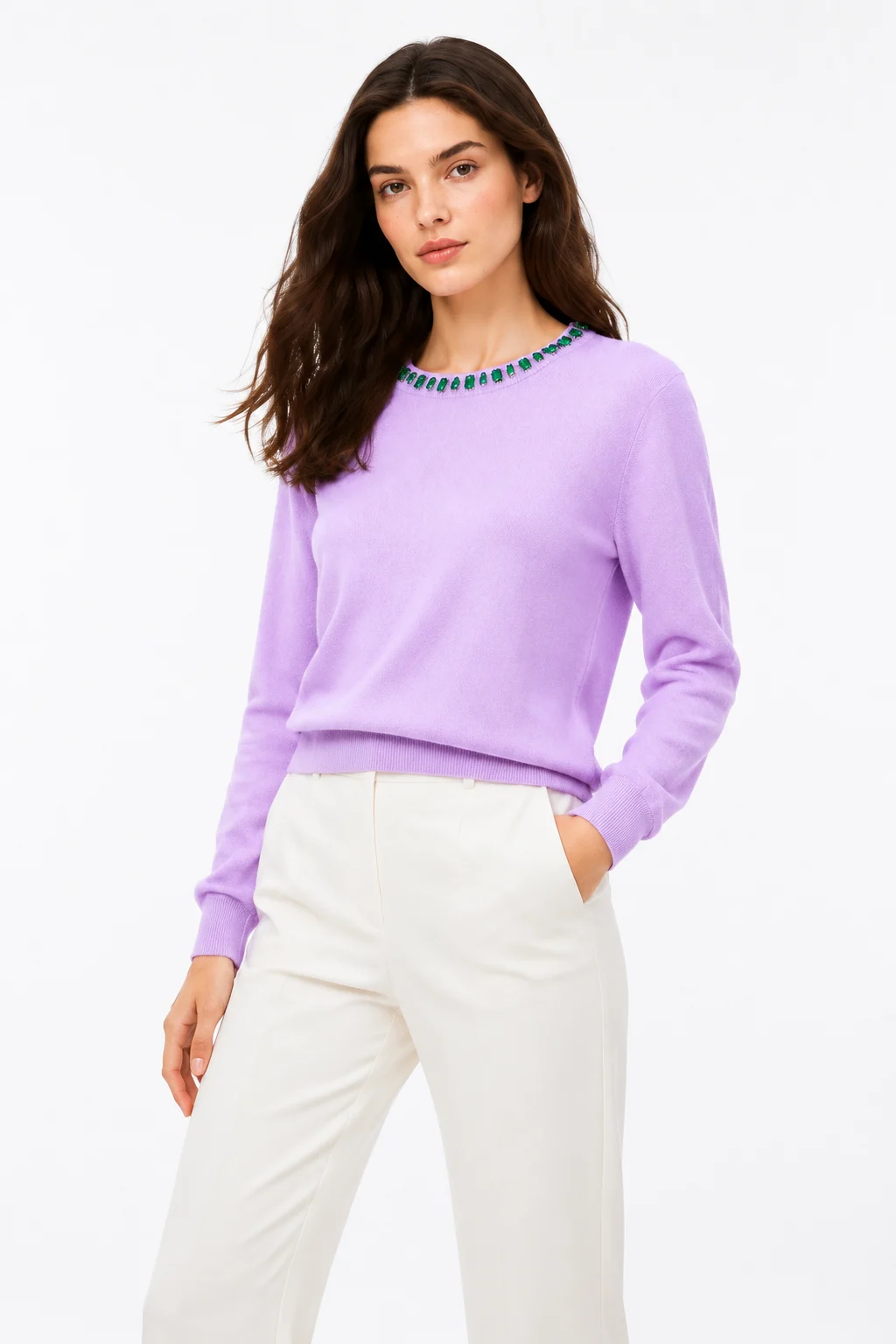
Private label sweater production is the process where a factory such as lpknit develops merino wool, cashmere, or mohair sweaters for a fashion brand to sell under its own name, usually covering design brief, yarn selection, factory sampling, woven labels, care labels, low MOQ production, quality control, and export-ready packing under US Federal Trade Commission, European Union, and United Kingdom textile-labeling rules.
For a boutique label, private label production sits between buying blank stock and building a fully owned factory operation. The brand controls the customer-facing identity, while the manufacturer handles technical knitting, sampling, finishing, labeling, and bulk production.
The sweater category needs a more specific plan than basic T-shirts or hoodies. Gauge, yarn count, fiber content, cardigan trims, shrinkage, pilling, and seasonal delivery windows can change cost and lead time before the first sample is approved.
Key Takeaways
– Private label sweaters are made by a third-party knitwear manufacturer and sold under the buyer’s brand.
– Sweater production depends on yarn, gauge, stitch structure, sampling, MOQ, and quality testing.
– Private label is legal when fiber claims, care labels, origin labels, trademarks, and artwork rights are accurate.
– Low MOQ sweater production can help small brands test cashmere, merino, and mohair styles before scaling.
– lpknit supports boutique brands with OEM development, factory sampling, and seasonal cardigan and sweater ranges.
What Is Private Label Sweater Production?
Private label sweater production means a knitwear factory makes sweaters for a buyer, and the buyer sells those sweaters under its own brand name. In this model, the buyer may provide the design direction, label artwork, size range, packaging notes, and target retail price, while the factory manages yarn sourcing, knitting, linking, washing, finishing, inspection, and packing.
In clothing, “private label” means the product is made by one company and branded by another company. For sweaters, that definition becomes more technical because the fabric is not simply cut from rolls; the garment is formed through knitting, shaping, linking, and finishing.
A private label clothing brand can use this model to launch a capsule without owning machines or hiring a full production team. For example, a London founder named Amara might brief 3 merino cardigans in 4 colors, approve 2 rounds of samples, and order 80 pieces per color to test wholesale demand before booking a larger autumn run.
Private label sweater production can be stock-based, semi-custom, or OEM-led. The right route depends on how much control the brand needs over yarn, silhouette, label placement, color, fit, and exclusivity.
How Private Label Sweater Production Works in 2026
Private label sweater production in 2026 usually follows a structured path from design brief to shipment, with sampling and fiber-label compliance built into the timeline. A brand should expect decisions on yarn type, knit gauge, fit, trims, labels, packaging, testing, and final inspection before bulk production starts.
- Define the product brief. Include target customer, retail price, reference styles, yarn preference, fit notes, colors, size range, and delivery window.
- Choose yarn and gauge. Merino wool, cashmere, and mohair behave differently in warmth, drape, shedding, cost, and care.
- Develop the first sample. The factory knits a prototype so the buyer can check fit, stitch density, hand feel, trims, and label placement.
- Revise the sample. Common changes include sleeve length, body width, button size, rib tension, neckline depth, or yarn shade.
- Confirm MOQ and costing. The factory calculates bulk cost from yarn, gauge, weight, complexity, trims, labels, labor, and order quantity.
- Approve pre-production details. The buyer signs off on final sample, color standards, care label text, packing method, and measurement tolerance.
- Produce bulk goods. The factory knits, links, washes, dries, finishes, inspects, folds, labels, packs, and prepares shipment documents.
- Run final quality control. The buyer or factory checks measurements, labels, shade consistency, seams, buttons, hand feel, and visible defects.
A realistic small-batch timeline is often 2-4 weeks for sampling and 4-8 weeks for bulk production after approval, depending on yarn availability and order complexity. A simple fine-gauge round-neck cardigan will usually move faster than a brushed mohair jacquard with custom-dyed yarn.
lpknit’s premium knitwear product range shows the types of cardigan and sweater directions that can support private label development. Buyers can also review seasonal examples such as the mohair long sleeve knit sweater and fine knit round neck cardigan when shaping a brief.
Private Label vs White Label vs Custom OEM Sweaters
Private label, white label, and custom OEM sweaters differ mainly in product control, exclusivity, development time, and cost. A boutique buyer should choose the model based on whether the priority is speed, brand differentiation, or full technical control.
| Production model | What the brand controls | Typical sweater use case | Main advantage | Main trade-off |
|---|---|---|---|---|
| White label | Logo, hangtag, simple packaging | Fast launch with existing sweater blanks | Quickest route to market | Limited uniqueness |
| Private label | Brand labels, colors, selected trims, some fit edits | Boutique capsule with branded merino or cashmere sweaters | Better brand ownership | Some limits if based on existing factory styles |
| Custom OEM | Full tech pack, yarn, gauge, stitch, trims, fit, labels | Signature cardigan, custom mohair knit, exclusive collection | Strongest product differentiation | More sampling time and higher development work |
| ODM | Factory proposes original design direction | Brand wants ready design ideas with modifications | Useful for small teams | Ownership terms must be clear |
Private label examples in knitwear include a boutique ordering a cashmere crew neck with its own neck label, a resort label launching striped mohair cardigans, or a concept store producing a small merino capsule for winter. These products may look fully proprietary to customers, but the factory remains the production partner behind the garment.
Custom OEM is often the better route when the sweater must have a specific silhouette, stitch map, intarsia artwork, or branded trim package. lpknit’s illustrated knit button cardigan is the type of style reference that can help a buyer discuss artwork scale, buttons, and cardigan construction with a factory.
What Small Brands Should Prepare Before Contacting a Factory
A small brand should prepare a clear sweater brief before asking private label clothing manufacturers USA, EU, UK, or overseas suppliers for pricing. The more specific the brief, the easier it is for a factory to quote MOQ, sampling cost, yarn options, production timing, and labeling requirements.
Useful documents include a mood board, target retail price, size range, color palette, reference measurements, label artwork, care-label requirements, and order forecast. A full tech pack is helpful, but many emerging labels can begin with strong references and refine details during factory sampling.
Factory-ready sweater brief checklist:
- Product type: cardigan, pullover, vest, polo sweater, turtleneck, or crew neck
- Fiber direction: merino wool, cashmere, mohair, alpaca blend, cotton, or synthetic blend
- Gauge target: chunky, mid-gauge, fine gauge, or factory recommendation
- Fit notes: cropped, relaxed, fitted, oversized, unisex, or women’s sizing
- Design details: ribs, buttons, pockets, jacquard, stripes, embroidery, or brushed finish
- Brand assets: woven neck label, size label, hangtag, polybag sticker, carton mark
- Compliance notes: fiber content, country of origin, care instructions, and trademark ownership
- Commercial target: MOQ, launch date, wholesale price, and expected reorder volume
Scenario one: Sofia runs a New York boutique label and wants 120 cashmere-blend crew necks for a holiday drop. By narrowing the brief to 2 colors, 3 sizes, and 1 fit block, Sofia reduces sampling revisions from 3 rounds to 1 round and keeps the launch on a 10-week calendar.
Scenario two: Daniel manages a Berlin private label clothing brand and wants a brushed mohair cardigan for spring. The first sample sheds more than expected, so Daniel switches to a mohair-blend yarn with tighter twist; the final order of 240 units receives fewer customer returns after the brand updates care instructions and hangtag wording.
MOQ, Cost, and Lead Time for Private Label Sweaters
MOQ, cost, and lead time for private label sweaters depend on yarn availability, gauge, garment weight, color count, trims, and sampling complexity. Low MOQ production is practical for test runs, but each extra color, size, stitch pattern, or custom trim can raise unit cost.
A low MOQ sweater order often works best when the brand keeps the first capsule narrow. Instead of launching 10 styles, a boutique buyer may test 2 core cardigans and 1 pullover across 2-3 colors, then reorder the strongest seller.
- MOQ benchmark: Boutique knitwear factories commonly discuss low MOQ ranges of 50-300 pieces per style or color, according to lpknit supplier quoting practice, 2026.
- Sampling timeline: Factory sweater sampling often takes 2-4 weeks per development round, according to lpknit OEM development practice, 2026.
- Bulk timeline: Small to mid-size knitwear bulk production often takes 4-8 weeks after sample approval, according to lpknit production planning practice, 2026.
- Market pressure: The McKinsey & Company State of Fashion 2025 report identifies cautious consumer demand and inventory discipline as major fashion themes, according to McKinsey & Company, 2025.
- Fiber reporting: The Textile Exchange Materials Market Report 2024 tracks preferred fiber and materials data across global textile supply chains, according to Textile Exchange, 2024.
- US labeling: The Federal Trade Commission Textile, Wool, and Fur Acts guidance requires accurate fiber content, country of origin, and manufacturer or dealer identity for covered textile products, according to the Federal Trade Commission, accessed 2026.
- EU labeling: Regulation (EU) No 1007/2011 sets textile fiber-name and fiber-composition labeling rules in the European Union, according to EUR-Lex, consolidated version accessed 2026.
Cost is not only about labor. Cashmere yarn, branded buttons, custom colors, brushed finishing, double jacquard, and tight measurement tolerance can all shift the quote.
A brand selling premium knitwear should also plan for freight, duties, packaging, photography samples, and quality inspection. These costs affect margin just as much as the factory unit price.
Is Private Label Sweater Production Legal?
Private label sweater production is legal when the buyer has the right to use the brand name, artwork, labels, fiber claims, and product descriptions attached to the sweater. The legal risk usually comes from inaccurate labeling, copied designs, unclear ownership terms, or unsupported material claims.
For US sales, brands should review the Federal Trade Commission rules on textile, wool, and fur labeling. For EU sales, brands should check Regulation (EU) No 1007/2011, and for UK sales, brands should consult United Kingdom textile labeling guidance before approving care labels and fiber composition.
Key points to confirm before bulk production:
- Trademark rights: The buyer should own or have permission to use the brand name and logo.
- Design rights: Artwork, jacquard motifs, and graphics should be original or properly licensed.
- Fiber accuracy: “100% cashmere,” “merino wool,” and “mohair blend” claims must match the actual composition.
- Origin labeling: Country-of-origin statements should match applicable import and retail rules.
- Care instructions: Washing, drying, ironing, and dry-cleaning guidance should be tested or technically reasonable.
- Exclusivity: If the buyer wants exclusive use of a style, yarn color, or artwork, the contract should say so.
Private label examples can look simple on the sales floor, but compliance needs discipline behind the scenes. A premium sweater with the wrong fiber claim can damage trust faster than a late delivery.
Is Private Label Sweater Production Worth It for Emerging Brands?
Private label sweater production is worth considering when a brand wants stronger identity than resale, lower operational burden than owning production, and more flexibility than large wholesale buying. It is especially useful for boutique teams testing premium knitwear with limited cash tied up in inventory.
The main benefit is focus. The brand can spend more time on customer insight, assortment planning, styling, retail relationships, and content, while the factory handles technical production.
The risk is that weak briefs create weak products. A brand that gives only a photo and says “make something similar” may receive a sample with the wrong hand feel, poor fit, or fiber composition that misses the target price.
For smaller collections, low MOQ production can be a smart bridge. A founder can test 100 mohair cardigans, collect sell-through data, then move to 500 units only after color, size, and price are proven.
How to Choose a Private Label Sweater Manufacturer
A private label sweater manufacturer should be evaluated by fiber specialization, sampling quality, MOQ flexibility, communication, compliance support, and production consistency. For merino, cashmere, and mohair sweaters, general apparel factories may not have the right knitting experience.
Use this selection process before placing a bulk order:
- Check category fit. Ask whether the factory regularly makes cardigans, pullovers, mohair knits, cashmere sweaters, or merino basics.
- Review sample quality. Inspect seams, linking, rib recovery, measurements, hand feel, button attachment, and wash result.
- Confirm MOQ by style and color. A factory may offer low MOQ for existing yarns but require higher MOQ for custom dyeing.
- Ask about label support. Confirm woven neck labels, size labels, care labels, hangtags, and packing marks.
- Discuss compliance markets. Tell the factory whether the goods will sell in the US, UK, EU, or multiple regions.
- Clarify revision rounds. Agree on sampling cost, what counts as a revision, and when bulk approval begins.
- Request production checkpoints. Use fit sample approval, pre-production sample approval, inline inspection, and final inspection.
- Protect brand assets. Put logo use, artwork ownership, and confidentiality in writing.
lpknit is positioned for boutique fashion labels that need premium knitwear specialization rather than generic cut-and-sew apparel. The company focuses on merino, cashmere, and mohair sweaters, with low MOQ support and factory sampling for US, UK, and EU buyers.
The best manufacturer is not always the lowest quote. For premium knitwear, a stable sample, clear yarn advice, accurate labels, and responsive production updates often protect margin better than a small unit-price saving.
FAQ
What does private label mean in clothing?
Private label in clothing means garments are made by a third-party manufacturer and sold under the buyer’s brand name. The buyer owns the customer-facing brand, while the factory handles production. In sweaters, this can include yarn sourcing, knitting, labels, finishing, packing, and quality control.
What is private label sweater production in USA searches usually asking?
“What is private label sweater production in usa” usually asks whether US brands can work with third-party sweater factories and sell the finished goods under their own labels. The factory may be in the United States or overseas, but US labeling, import, trademark, and fiber-claim rules still matter for US sales.
How is private label different from white label sweaters?
Private label sweaters usually allow more brand control than white label sweaters. White label often means adding a logo to an existing blank style, while private label can include selected yarns, colors, labels, trims, fit edits, and packaging. Custom OEM gives even more control over the full design.
Is private labeling sweaters legal?
Yes, private labeling sweaters is legal when brand rights, fiber claims, origin labels, care labels, and artwork permissions are accurate. Buyers should confirm trademark ownership and avoid copying protected designs. US, EU, and UK textile-labeling rules should be checked before bulk production.
Is private label sweater production worth it?
Private label sweater production is worth it when a brand needs branded knitwear without owning a factory. It works well for small capsules, wholesale tests, and seasonal launches. The model is less suitable when the brand cannot provide a clear brief, budget, or target customer.
What MOQ should a new sweater brand expect?
A new sweater brand should often expect MOQ discussions around 50-300 pieces per style or color, depending on yarn, gauge, color, and factory capacity. Custom-dyed cashmere or complex mohair designs may require higher minimums than stock yarn merino basics.
What should I send to a private label sweater factory?
Send a clear brief with product type, fiber preference, reference images, size range, target price, colors, label artwork, delivery date, and expected quantity. If available, add a tech pack and measurement chart. Clear inputs reduce sampling rounds and improve quote accuracy.
Conclusion: What Private Label Sweater Production Means for Your Brand
Private label sweater production is a practical way for boutique brands to sell merino, cashmere, and mohair sweaters under their own name while relying on a specialist factory for sampling, knitting, finishing, labels, and quality control. I’m Maya Chen, a knitwear sourcing writer who has prepared OEM sweater briefs, reviewed factory samples, and compared yarn, gauge, MOQ, and care-label details for boutique collections.
The key facts are verifiable: the Federal Trade Commission requires accurate textile and wool labeling for US sales, Regulation (EU) No 1007/2011 governs textile fiber names in the European Union, and Textile Exchange publishes annual material-market reporting used by apparel teams. For a small brand, the best next step is to prepare a focused sweater brief, confirm compliance markets, and test a narrow capsule before scaling.
For boutique labels ready to develop premium knitwear, lpknit offers OEM support, low MOQ production, and factory sampling across merino, cashmere, and mohair sweaters. Start by reviewing lpknit’s premium sweater and cardigan range or the Knitwear Journal sourcing articles to shape a factory-ready brief.
{
“@context”: “https://schema.org”,
“@type”: “Article”,
“headline”: “What Is Private Label Sweater Production? 2026 Brand Guide”,
“datePublished”: “2026-08-04”,
“dateModified”: “2026-08-05”,
“description”: “Learn what private label sweater production means, how MOQ, yarn, labels, sampling, and compliance work for boutique knitwear brands sourcing in 2026.”,
“keywords”: “what is private label sweater production”,
“author”: {
“@type”: “Person”,
“name”: “Maya Chen”,
“url”: “https://lpknit.com/news/”,
“jobTitle”: “Knitwear sourcing writer with hands-on experience briefing OEM sweater factories for boutique labels.”
}
}
{
“@context”: “https://schema.org”,
“@type”: “FAQPage”,
“mainEntity”: [
{
“@type”: “Question”,
“name”: “What does private label mean in clothing?”,
“acceptedAnswer”: {
“@type”: “Answer”,
“text”: “Private label in clothing means garments are made by a third-party manufacturer and sold under the buyer’s brand name. The buyer owns the customer-facing brand, while the factory handles production. In sweaters, this can include yarn sourcing, knitting, labels, finishing, packing, and quality control.”
}
},
{
“@type”: “Question”,
“name”: “What is private label sweater production in USA searches usually asking?”,
“acceptedAnswer”: {
“@type”: “Answer”,
“text”: ““What is private label sweater production in usa” usually asks whether US brands can work with third-party sweater factories and sell the finished goods under their own labels. The factory may be in the United States or overseas, but US labeling, import, trademark, and fiber-claim rules still matter for US sales.”
}
},
{
“@type”: “Question”,
“name”: “How is private label different from white label sweaters?”,
“acceptedAnswer”: {
“@type”: “Answer”,
“text”: “Private label sweaters usually allow more brand control than white label sweaters. White label often means adding a logo to an existing blank style, while private label can include selected yarns, colors, labels, trims, fit edits, and packaging. Custom OEM gives even more control over the full design.”
}
},
{
“@type”: “Question”,
“name”: “Is private labeling sweaters legal?”,
“acceptedAnswer”: {
“@type”: “Answer”,
“text”: “Yes, private labeling sweaters is legal when brand rights, fiber claims, origin labels, care labels, and artwork permissions are accurate. Buyers should confirm trademark ownership and avoid copying protected designs. US, EU, and UK textile-labeling rules should be checked before bulk production.”
}
},
{
“@type”: “Question”,
“name”: “Is private label sweater production worth it?”,
“acceptedAnswer”: {
“@type”: “Answer”,
“text”: “Private label sweater production is worth it when a brand needs branded knitwear without owning a factory. It works well for small capsules, wholesale tests, and seasonal launches. The model is less suitable when the brand cannot provide a clear brief, budget, or target customer.”
}
},
{
“@type”: “Question”,
“name”: “What MOQ should a new sweater brand expect?”,
“acceptedAnswer”: {
“@type”: “Answer”,
“text”: “new sweater brand should often expect MOQ discussions around 50-300 pieces per style or color, depending on yarn, gauge, color, and factory capacity. Custom-dyed cashmere or complex mohair designs may require higher minimums than stock yarn merino basics.”
}
},
{
“@type”: “Question”,
“name”: “What should I send to a private label sweater factory?”,
“acceptedAnswer”: {
“@type”: “Answer”,
“text”: “Send a clear brief with product type, fiber preference, reference images, size range, target price, colors, label artwork, delivery date, and expected quantity. If available, add a tech pack and measurement chart. Clear inputs reduce sampling rounds and improve quote accuracy.”
}
}
]
}