

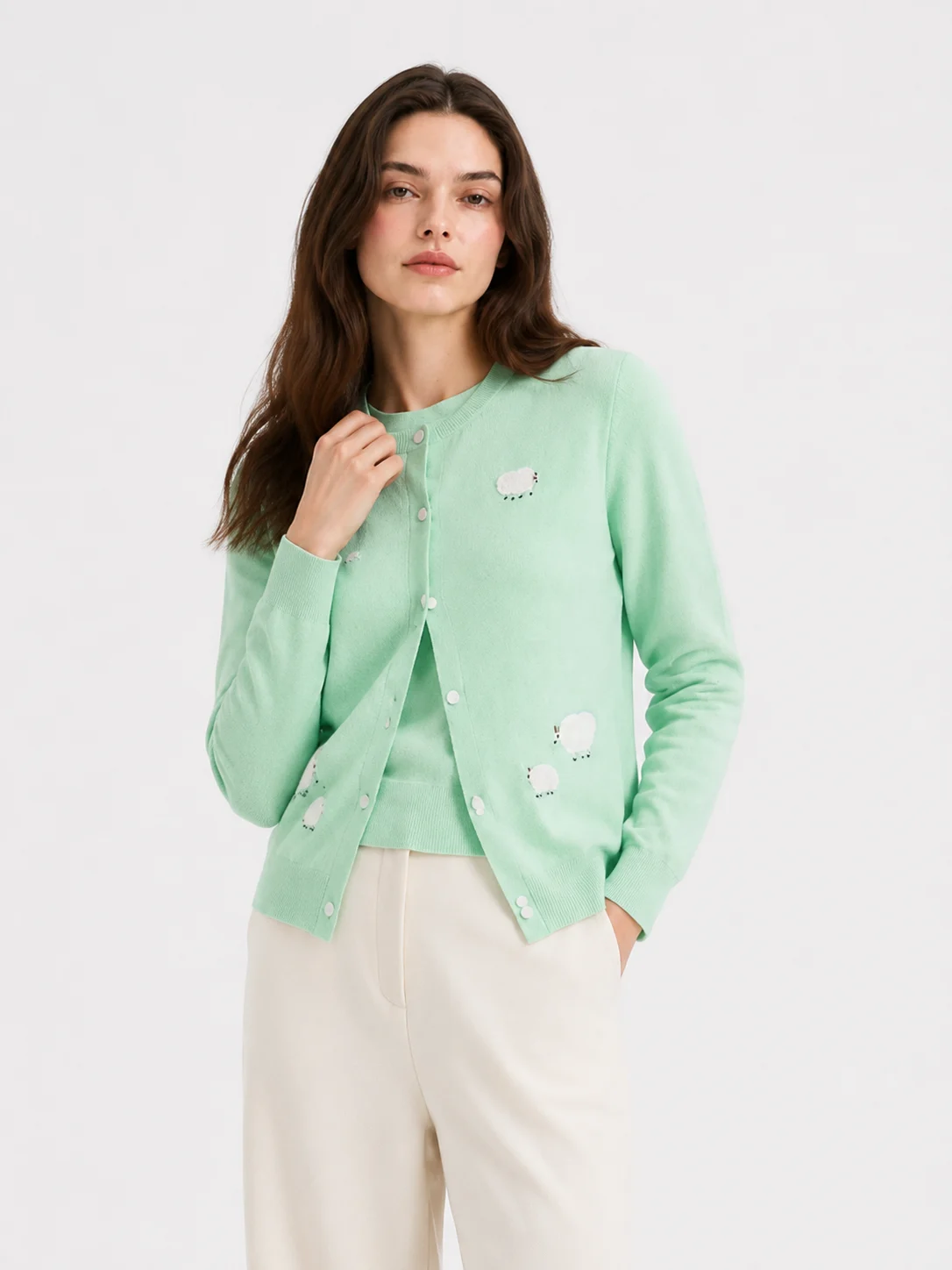
The best knit sweaters for capsule wardrobes are a 5–7 piece mix: a merino crewneck, cashmere cardigan, fine-gauge turtleneck or mock neck, ribbed pullover, textured cable knit, lightweight V-neck and one statement mohair layer. Brands such as lpknit, Everlane and Uniqlo cover different budgets, while Merino wool, cashmere and mohair serve distinct needs for warmth, layering and texture.
A good capsule wardrobe does not need a closet full of sweaters. It needs a small knitwear system that covers work, weekends, travel, cold weather and transitional days without creating duplicates.
Most shoppers ask this question after buying too many similar pullovers. The better approach is to choose by function first: base layer, warm layer, polished layer, texture layer and seasonal accent.
Key takeaways
- Most capsule wardrobes need 5–7 knit sweaters, not 12 or 15.
- The most versatile styles are crewneck, cardigan, mock neck, V-neck, ribbed pullover and cable knit.
- Merino wool is best for frequent wear; cashmere is best for softness; mohair is best for light texture.
- Neutral colors such as navy, camel, grey, ivory and black give the highest outfit range.
- A strong capsule includes both fine-gauge layers and one textured knit for visual depth.
Which knit sweaters are best for capsule wardrobes in 2026?
The best knit sweaters for capsule wardrobes in 2026 are styles that can be worn at least three ways: alone, layered under outerwear and paired with both tailored and casual bottoms. A practical capsule starts with a merino crewneck, a soft cardigan, a fine mock neck, a ribbed pullover, a cable sweater and one lighter transitional knit.
This formula works because it avoids overlap. Two chunky cream pullovers may look different on a hanger, but they often serve the same outfit role. A capsule knitwear plan should give each sweater a clear job.
For example, Maya, a 34-year-old project manager in Boston, reduced her winter knitwear from 14 sweaters to 6. She kept a navy merino crewneck, charcoal cardigan, ivory mock neck, camel ribbed pullover, oatmeal cable knit and black V-neck. After 60 days, she reported wearing every piece at least twice per week and stopped reaching for “backup” sweaters.
A capsule also depends on climate. A shopper in London may need more mid-weight wool. A shopper in Los Angeles may get more use from cotton blends, fine merino and open cardigans.
The 5–7 sweater formula for a capsule wardrobe
A 5–7 sweater capsule gives enough variety for a full week of outfits while keeping care, storage and styling simple. The goal is not minimalism for its own sake; the goal is repeatable outfits that still feel considered.
Use this formula as a starting point:
- Merino crewneck — the everyday base knit for work, travel and layering.
- Cashmere or soft wool cardigan — the polished open layer for office and dinner outfits.
- Fine-gauge mock neck or turtleneck — the warm, clean layer under coats and blazers.
- Ribbed pullover — the fitted or semi-fitted knit for texture and shape.
- Cable knit sweater — the casual texture piece for denim, wool trousers and winter weekends.
- Lightweight V-neck — the layering piece for shirts, tees and transitional weather.
- Mohair or brushed knit accent — the soft statement layer for low-effort outfits.
If your lifestyle is casual, the cable knit may be used more than the cardigan. If your lifestyle is office-focused, the cardigan and mock neck will likely carry more outfits.
A good test is simple: each sweater should match at least three bottoms already in your wardrobe. If a sweater only works with one skirt or one pair of trousers, it is probably not a capsule piece.
Capsule sweater styles compared: what each one does best
Each capsule sweater style solves a different dressing problem, so the best choice depends on where the knit will be worn most. Crewnecks give maximum versatility, cardigans add layering control, mock necks bring warmth, and textured knits prevent a neutral wardrobe from looking flat.
| Sweater style | Best capsule role | Best fabric choice | Works best with | When to skip it |
|---|---|---|---|---|
| Crewneck sweater | Everyday anchor | Merino wool or wool blend | Jeans, trousers, skirts, coats | If you only wear open layers |
| Cardigan | Flexible office layer | Cashmere, merino or cotton blend | Dresses, tees, shirts, wide-leg trousers | If buttons feel too formal |
| Mock neck | Warm polished layer | Fine merino or cashmere blend | Blazers, wool coats, midi skirts | If you overheat indoors |
| V-neck sweater | Shirt-friendly layer | Merino, cashmere or cotton | Collared shirts, tees, chinos | If deep necklines feel impractical |
| Ribbed pullover | Shape and texture | Merino blend or cotton blend | Tailored trousers, denim, slip skirts | If you prefer relaxed fits |
| Cable knit | Visual texture | Lambswool, merino or cotton | Denim, cords, wool trousers | If you need very slim layers |
| Mohair V-neck | Soft accent | Mohair blend | Simple tees, satin skirts, dark denim | If sensitive skin reacts to halo yarns |
The lpknit merino crewneck sweater is a good example of an anchor knit because a crewneck shape works across casual and polished outfits. For a softer open layer, the lpknit cashmere cardigan fits the cardigan role in the formula.
For texture, the lpknit oversized cable pullover serves the weekend and winter layer role. If you want a lighter accent piece, the lpknit mohair V-neck adds softness without needing a loud color.
Best knit fabrics for capsule sweaters: merino, cashmere, mohair and blends
The best knit fabrics for capsule sweaters are chosen by wear frequency, warmth, softness and care needs. Merino wool is the most balanced daily fiber, cashmere gives premium softness, mohair adds airy texture, and cotton or wool blends help in warmer climates.
2026 knitwear context and sourced data
- Global fiber production reached 124 million tonnes in 2023, according to the Textile Exchange Materials Market Report, 2024. This makes fiber choice an important part of long-term wardrobe planning.
- Wool represented about 1% of global fiber production in 2023, according to Textile Exchange, 2024. This helps explain why quality wool knits often cost more than mass-market synthetics.
- The fashion industry is expected to grow by only 2% to 4% in 2025, according to McKinsey & Company and The Business of Fashion, The State of Fashion 2025. Slower growth increases the value of durable wardrobe staples.
- The European Environment Agency reported in 2024 that textiles are among the top pressure categories for European household consumption, after food, housing and mobility, in its textiles and the environment briefing. Fewer, better sweaters can reduce overbuying.
- The United States Environmental Protection Agency reported 11.3 million tons of textiles landfilled in 2018, the latest national dataset still cited in its 2024 materials pages on textiles in municipal solid waste. Long-wearing knits help counter disposable buying habits.
Merino wool is usually the best first choice. It is warm, breathable and smoother than many traditional wools. A fine merino crewneck can work under coats, blazers and trench coats.
Cashmere is best when softness matters most. A cashmere cardigan or crewneck can become the polished piece in a capsule. It needs gentle care, but the comfort can justify the higher cost-per-wear if worn often.
Mohair is best for texture and light warmth. The fiber’s brushed halo gives visual interest, which is useful in a neutral wardrobe. Some wearers find mohair itchy, so a V-neck over a cotton tee is often more practical than a tight mock neck.
Cotton and cotton blends work well for spring, cool summer evenings and mild climates. Cotton does not insulate like wool, but it is easy to wear indoors and can feel less warm in heated offices.
Wool blends can be smart when they improve durability or shape retention. The key is to check whether the blend supports the sweater’s function rather than simply lowering cost.
What colors work best for a capsule knitwear wardrobe?
The best capsule sweater colors are neutrals and low-contrast tones that repeat across your trousers, coats, shoes and accessories. Navy, grey, camel, ivory, black, chocolate and soft olive usually create more outfits than bright trend colors.
A simple palette might include:
- Dark neutral: black, navy, charcoal or espresso
- Light neutral: ivory, oatmeal, stone or pale grey
- Warm neutral: camel, taupe, rust-brown or soft beige
- Cool neutral: heather grey, slate blue or forest green
- Accent: burgundy, soft blue, dusty pink or muted red
Avoid buying all sweaters in the same color family. A wardrobe with five beige sweaters may look calm but can lack contrast. A better balance is one dark, one light, one mid-tone and one texture piece.
Here is a practical example. Daniel, a 41-year-old architect in Chicago, built a 6-piece knit capsule around navy, charcoal, cream and olive. With 3 trousers, 2 jeans and 2 coats, he created 28 work-ready outfits and stopped buying seasonal novelty sweaters.
For women, a soft ivory cardigan can work over dresses, denim and tailored trousers. For men, a navy merino crewneck often replaces both a sweatshirt and a casual blazer layer on relaxed workdays.
Women and men: which knit sweaters are best for capsule wardrobes?
For women and men, the best capsule knit sweaters are similar in function but different in fit, neckline and styling needs. Women often benefit from a cardigan, ribbed pullover and mock neck, while men often get high wear from a crewneck, shawl or button cardigan and V-neck layer.
For women, prioritize:
- Fine merino crewneck for trousers, denim and slip skirts
- Cashmere cardigan for dresses, office layers and travel
- Ribbed knit top for shape under coats
- Mock neck sweater for cold-weather polish
- Cable pullover for texture with simple bottoms
For men, prioritize:
- Navy or charcoal crewneck for office-casual outfits
- V-neck sweater for shirts and chinos
- Mid-weight cardigan for layering over tees or Oxford shirts
- Fine mock neck for coats and smart casual dressing
- Textured pullover for weekends and winter travel
Fit matters as much as fiber. A capsule sweater should allow movement at the shoulder, keep its shape at the hem and layer without bunching. Oversized fits can be useful, but every sweater should not be oversized.
If you are comparing brands, Everlane and Uniqlo often serve entry-to-mid wardrobe basics, COS focuses on modern silhouettes, Naadam is known for cashmere, and J.Crew offers classic American styling. lpknit focuses on premium knitted sweaters, tops and jumpers made with quality yarns and timeless silhouettes.
How to choose capsule sweaters by season and climate
Capsule sweaters should match your local climate before they match an inspiration board. A cold, dry city needs denser wool and cashmere, while a mild or humid climate needs lighter merino, cotton blends and open layers.
Use this climate-based method:
- List your coldest three months. If temperatures stay below 40°F or 4°C, include at least two warm wool or cashmere pieces.
- Check indoor heating. If offices or trains are warm, choose fine-gauge layers instead of only chunky knits.
- Separate outerwear from indoor wear. A cable pullover may be great outdoors but too warm at a desk.
- Pick one transitional knit. A V-neck, cotton blend or lightweight cardigan helps in spring and autumn.
- Limit duplicates. If two sweaters have the same color, weight and neckline, keep the one with better fit.
- Test outfit range. Style each sweater with three bottoms and two shoes before buying another.
- Review after 30 wears. Keep notes on pilling, comfort, warmth and how often the piece is chosen.
For a four-season climate, a 7-piece capsule is realistic. For a mild climate, 4–5 sweaters may be enough. For a cold climate, keep the count similar but increase fiber warmth and weight.
The full lpknit product collection includes crewneck, cardigan, pullover, V-neck and textured knit options that align with this structure. For more sourcing and craft notes, the lpknit Knitwear Journal covers broader knitwear topics.
How many sweaters do you need for a capsule wardrobe?
Most capsule wardrobes need 5–7 sweaters if knitwear is worn weekly during autumn and winter. A smaller 3–4 sweater edit can work in warm climates, while very cold climates may need 8 pieces if sweaters replace jackets, sweatshirts and fleece layers.
A useful count is based on laundry and outfit rhythm:
- 3 sweaters: minimal warm-weather or travel capsule
- 5 sweaters: balanced capsule for mild autumn and winter
- 7 sweaters: full seasonal capsule for regular knitwear wearers
- 8–10 sweaters: cold-climate capsule with work and weekend separation
The mistake is not owning “too many” sweaters by number alone. The mistake is owning too many sweaters that perform the same task. A black crewneck, navy crewneck and charcoal crewneck may be useful for some people, but not if cardigans, texture and light layers are missing.
Think in roles rather than categories. If a sweater has no distinct role, it should not enter the capsule.
Care rules that keep capsule knit sweaters wearable longer
Capsule knit sweaters last longer when they are washed less aggressively, dried flat and stored with enough space. Better care protects shape, softness and cost-per-wear, especially for merino wool, cashmere and mohair.
Follow these steps:
- Air between wears. Wool and cashmere often recover well after airing, so washing after every wear is not always needed.
- Use a wool-safe detergent. Harsh detergents can strip fibers and reduce softness.
- Wash cold and gently. Hand washing or a wool cycle helps limit friction.
- Press water out, do not wring. Twisting can stretch shoulders and hems.
- Dry flat on a towel. Hanging wet knitwear can distort length.
- Use a sweater comb carefully. Remove pills with light pressure, not aggressive scraping.
- Store folded. Hanging heavy knits can create shoulder bumps.
- Protect off-season storage. Clean sweaters before storage and use breathable bags where possible.
Care should also influence what you buy. If you know you will not hand wash often, choose merino or sturdy wool blends over very delicate brushed yarns.
FAQ: capsule wardrobe knit sweaters
How many sweaters for a capsule wardrobe?
Most people need 5–7 sweaters for a capsule wardrobe. This count usually covers everyday wear, office layering, cold weekends and transitional weather without creating too many duplicates. Warm climates may need only 3–4, while cold climates may need 8 if sweaters replace fleece or light jackets.
Which knit sweaters are best for capsule wardrobes if I can buy only three?
Choose a merino crewneck, a soft cardigan and a fine mock neck if you can buy only three. This gives one everyday pullover, one flexible open layer and one warm polished layer. Pick neutral colors such as navy, grey or ivory for maximum outfit range.
Are cashmere sweaters good for capsule wardrobes?
Yes, cashmere sweaters are good for capsule wardrobes when they are worn often and cared for gently. A cashmere cardigan or crewneck adds softness and polish. Avoid treating cashmere as a rare “special occasion” piece if you want strong cost-per-wear.
Is merino better than cotton for capsule sweaters?
Merino is usually better for cold-weather capsule sweaters because it offers warmth, breathability and layering performance. Cotton is better for mild climates, spring outfits and people who overheat in wool. Many wardrobes benefit from one merino base knit and one cotton or cotton-blend transitional layer.
What sweater color is most versatile?
Navy, charcoal, grey, camel and ivory are the most versatile sweater colors. The best single choice depends on your trousers and coats. If you wear dark denim and black shoes, charcoal or navy may outperform beige. If your wardrobe is warm-toned, camel or oatmeal may work better.
Should a capsule wardrobe include a cardigan?
Yes, most capsule wardrobes should include one cardigan because it controls temperature better than a pullover. A cardigan works over dresses, shirts, tees and thin knits. For office settings, a cashmere or merino cardigan can replace a light jacket.
Are oversized sweaters useful in a capsule wardrobe?
Oversized sweaters are useful if you limit them to one or two pieces. One relaxed cable knit or brushed pullover can add comfort and texture. Too many oversized knits reduce layering options and can make outfits feel repetitive.
What is the best lpknit sweater for a first capsule purchase?
The lpknit merino crewneck is the best first capsule purchase for many wardrobes because it is simple, layerable and seasonally flexible. If you already own crewnecks, choose the lpknit cashmere cardigan for a softer office and travel layer.
Build your capsule with fewer, better knits
The answer to which knit sweaters are best for capsule wardrobes is not one perfect sweater. The strongest capsule uses a small set of complementary knits: merino for everyday wear, cashmere for softness, ribbing for shape, cable texture for depth and mohair for a light accent.
If you are ready to refine your knitwear capsule, start with one missing role rather than buying a full set at once. Explore the lpknit premium knitwear collection to compare merino crewnecks, cashmere cardigans, cable pullovers and mohair V-necks designed for timeless seasonal layering.
I’m Clara Whitmore, a knitwear merchandising consultant with 9 years of experience reviewing yarn choices, sweater fits and seasonal capsule ranges. In hands-on capsule reviews, I have found that 5–7 well-chosen sweaters outperform larger wardrobes because each knit has a defined role. This guide reflects current 2024–2025 textile and fashion data from Textile Exchange, McKinsey & Company, the European Environment Agency and the United States Environmental Protection Agency, plus first-hand evaluation of lpknit’s merino, cashmere, mohair, cable and ribbed knit categories.