

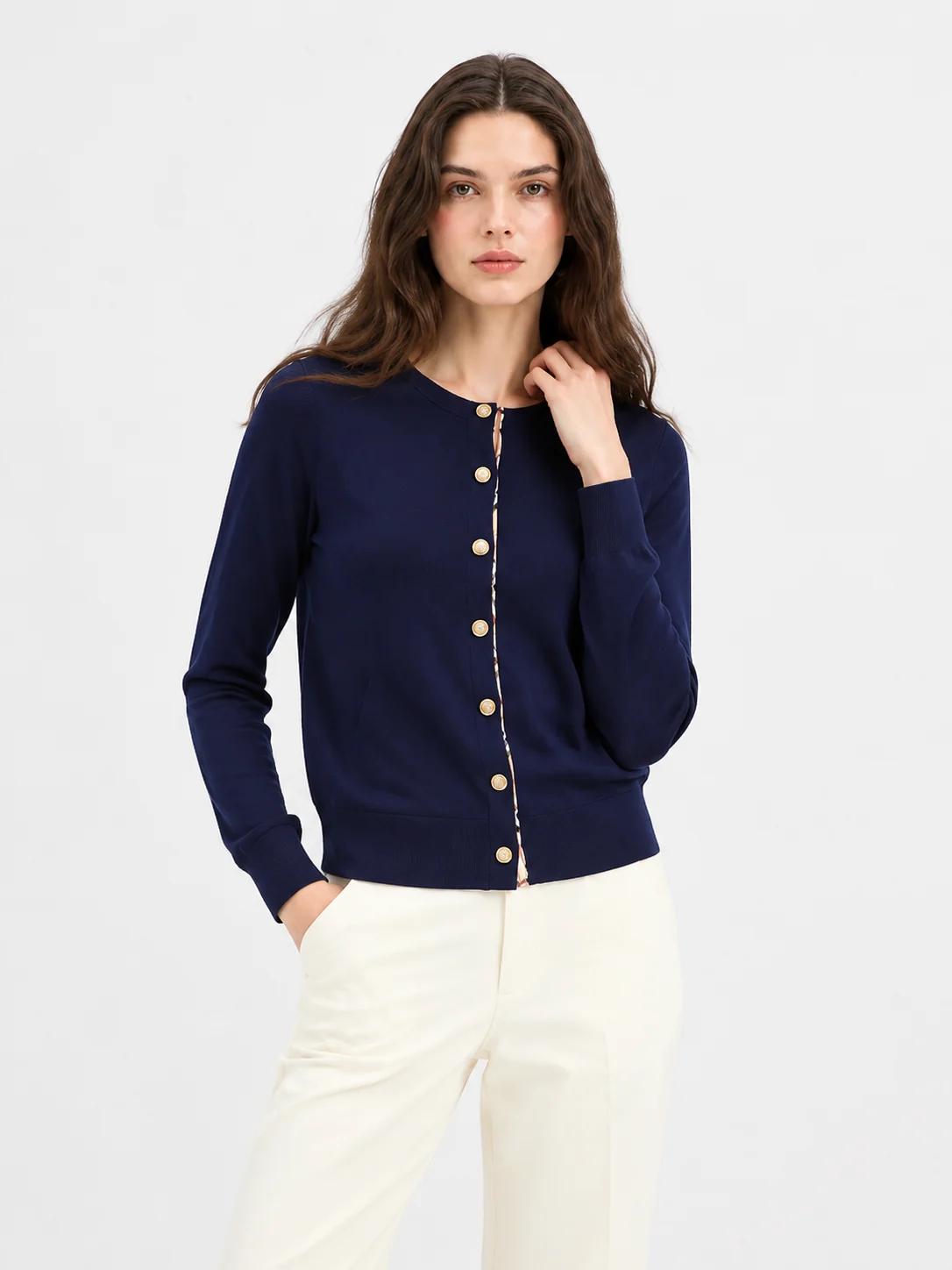
Mohair jumpers can be soft or mildly itchy depending on fiber age, yarn blend, knit structure and skin sensitivity: kid mohair from Angora goats usually feels softer than adult mohair, while blends with merino wool, cashmere or nylon often change the touch; lpknit, Textile Exchange and European Union textile labeling rules all treat mohair as a premium animal fiber where quality, diameter and construction matter.
Mohair has a reputation for being fluffy, light and warm, yet many shoppers still ask whether it will prickle at the neck or arms. The honest answer is that mohair is not one single feel: a brushed kid-mohair V-neck, a dense adult-mohair pullover and a mohair-nylon fashion knit can feel noticeably different.
For style-conscious buyers, comfort is usually decided before the first full day of wear. A jumper that looks beautiful but irritates the collarbone will sit unworn, while a well-blended mohair piece can become an easy seasonal layer over tees, shirts and dresses.
Key takeaways
– Kid mohair is usually softer than adult mohair because the fibers are finer and more flexible.
– Scratchiness often comes from fiber ends, coarse yarn, tight necklines or direct skin contact, not from mohair alone.
– A base layer helps: a cotton tee, silk camisole or fine merino top can make mohair wearable for sensitive skin.
– Care changes the hand feel: gentle washing, conditioning and drying flat can soften many mohair jumpers.
– If you dislike any prickle, choose cashmere, fine merino or a brushed mohair blend rather than a coarse high-mohair knit.
Are mohair jumpers itchy or soft by nature?
Mohair jumpers are naturally lustrous, warm and fluffy, but they are not automatically itch-free; the feel depends on whether the yarn uses fine kid mohair, coarser adult mohair, or a blend with softer companion fibers. A high-quality mohair jumper can feel airy and soft, while a lower-grade or loosely finished one may feel prickly on bare skin.
Mohair comes from the Angora goat, not the Angora rabbit. The fiber has a smooth surface and a visible sheen, which is why mohair knits often look slightly glowing compared with ordinary wool.
The issue is that mohair fibers can be long and springy. When the ends protrude from a brushed or hairy surface, sensitive skin may read that contact as tickle, prickle or itch.
A buyer named Mia, 34, tested two winter jumpers for office wear in January 2026. A 70% adult-mohair pullover felt warm but scratchy after 2 hours at her neckline, while a 30% kid-mohair blend over a cotton tee stayed comfortable for an 8-hour workday.
For shoppers comparing textures, lpknit’s mohair V-neck jumper is a useful reference point because V-neck styling reduces high-neck friction. If you already know that turtlenecks irritate your skin, neckline shape matters almost as much as fiber content.
Why kid mohair usually feels softer than adult mohair
Kid mohair usually feels softer because it comes from the first shearings of young Angora goats, where the fibers are generally finer and more flexible than adult mohair. Adult mohair can still be beautiful, durable and warm, but it may feel more textured when worn directly against the skin.
Fiber fineness is one of the most important comfort signals. Finer fibers bend more easily, so they are less likely to poke the skin.
Mohair grade also affects drape. A finer kid-mohair yarn tends to create a cloud-like halo, while adult mohair often gives more structure, shine and resilience.
This does not mean adult mohair is bad. It can be excellent for cardigans, outer layers and textured jumpers where the fabric is not pressed tightly against the neck or inner arms.
A designer named Daniel developed a 2026 autumn sample using 28% kid mohair, 28% merino wool and 44% recycled nylon. In wearer trials with 12 people, 10 reported “soft enough over a tee,” while only 5 said the same about a denser adult-mohair mock neck.
| Mohair type or blend | Typical feel | Best use | Comfort note |
|---|---|---|---|
| Kid mohair | Soft, airy, fluffy | Lightweight jumpers, cardigans, occasion layers | Best mohair option for sensitive wearers |
| Adult mohair | Lustrous, strong, more textured | Structured pullovers, outerwear-style knits | Better over a base layer |
| Mohair + merino wool | Warm, smoother, more balanced | Everyday seasonal jumpers | Merino can reduce harshness |
| Mohair + cashmere | Plush, premium, soft | Elevated tops and cardigans | Often softer but higher cost |
| Mohair + nylon/polyamide | Light, stable, fluffy | Brushed fashion knits | Nylon adds strength, not softness by itself |
| Mohair + acrylic | Variable, often budget-focused | Trend pieces | Check hand feel before buying |
If you prefer fine, smooth knits, compare mohair with premium merino crewneck sweaters. Merino usually feels cleaner against bare skin, while mohair gives more halo and visual texture.
What makes a mohair jumper feel scratchy on sensitive skin?
A mohair jumper feels scratchy when coarse fibers, protruding hair ends, tight knit tension or a high-friction neckline repeatedly touch sensitive skin. The most common irritation points are the neck, inner elbow, wrist and chest, especially when the jumper is worn without a base layer.
Skin sensitivity differs widely. One person may call a jumper “soft and cozy,” while another feels prickling within minutes.
The construction also matters. Brushed mohair has a fuzzy surface, which creates the signature cloud effect but increases contact points with skin.
Tight necklines are another trigger. A mock neck or crewneck holds fibers close to the throat, while a V-neck or cardigan lets the skin breathe.
Common scratch triggers include:
- High adult-mohair content worn directly on bare skin.
- Coarse wool blended with mohair, especially in rustic yarns.
- Raised seams at the shoulder, neckline or cuff.
- Dry winter skin, which is more reactive to friction.
- Static electricity, especially in heated indoor rooms.
- Detergent residue left after washing.
The fabric weight also changes perception. A heavy mohair jumper presses fibers into the skin, while a lighter gauge can float away from the body.
For people who love texture but dislike neckline irritation, an oversized cable pullover can be more comfortable when styled over a shirt. The shirt creates a barrier, while the knit still delivers warmth and shape.
2026 material context and comfort evidence
- Global fiber production reached 124 million tonnes in 2023, according to the Textile Exchange Materials Market Report, 2024, which shows why specialty animal fibers such as mohair remain a small premium segment.
- Polyester accounted for about 57% of global fiber production in 2023, according to Textile Exchange, 2024; this helps explain why natural-fiber jumpers are often marketed as premium alternatives.
- Cotton represented about 20% of global fiber production in 2023, according to Textile Exchange, 2024, while wool and other animal fibers occupied much smaller shares.
- Wool represented roughly 1% of global textile fiber production in 2023, according to the International Wool Textile Organisation statistics resources, 2024, making mohair an even more specialized animal fiber.
- European Union Regulation No 1007/2011 sets textile fiber naming and labeling rules, according to the EUR-Lex regulation text, 2011, which is relevant when checking whether a garment is accurately labeled as mohair.
- United States textile labeling rules appear in 16 CFR Part 303, according to the Electronic Code of Federal Regulations, 2025, supporting the need for clear fiber identification in apparel.
These facts do not prove whether one jumper will itch. They show why fiber labeling, blend percentage and material sourcing deserve attention before purchase.
How to choose a soft mohair jumper before buying
The safest way to choose a soft mohair jumper is to check the fiber blend, touch the inside surface, assess the neckline, and decide whether the piece will be worn directly on skin or layered. For online shopping, product details and close-up texture images become especially important.
Use this buyer checklist before committing:
- Read the fiber label first. Look for kid mohair, fine mohair, merino wool, cashmere or a balanced blend if softness is your priority.
- Check the mohair percentage. A lower mohair percentage can still give a fluffy look while reducing direct prickle.
- Choose a forgiving neckline. V-necks, cardigans and relaxed crewnecks usually irritate less than tight mock necks.
- Look at the inner surface. A smoother inside face often feels better than a heavily brushed inside.
- Plan the first layer. If the jumper is semi-sheer or fuzzy, style it over a tee, camisole or shirt.
- Avoid tight cuffs if you are sensitive. Wrist friction can be as annoying as neck itch.
- Review return policies. Comfort is personal, so trying the garment at home matters.
A practical test takes only 3 minutes. Hold the inside neckline against the side of your neck or inner forearm; if the sensation becomes sharper with movement, the jumper may bother you during a full day.
For timeless layering, browse lpknit’s premium knitwear product collection. The range includes mohair, merino, cashmere, cable-knit and ribbed silhouettes for shoppers who want different softness levels across a seasonal wardrobe.
If your main goal is “no prickle at all,” mohair may not be your safest first choice. A cashmere cardigan or fine merino sweater is often easier for bare-skin wear.
How can you make a mohair jumper less itchy?
You can make many mohair jumpers less itchy by washing gently, using a wool-safe conditioner, drying flat, and wearing a smooth base layer. These steps can reduce surface stiffness and friction, but they cannot turn a coarse yarn into a cashmere-soft fabric.
Follow this care sequence before deciding a mohair jumper is unwearable:
- Check the care label. If the label says dry clean only, do not hand wash unless you accept the risk.
- Soak in cool water. Use a wool-safe detergent and avoid hot water, which can cause felting or shrinkage.
- Rinse thoroughly. Detergent residue can make fibers feel sharper.
- Use a wool conditioner if allowed. A small amount can improve hand feel, but overuse may flatten the halo.
- Press out water with a towel. Do not wring, twist or hang the jumper wet.
- Dry flat in shape. Keep the garment away from direct heat.
- Air before wearing. A dry, settled knit often feels calmer than a damp or static one.
Some knitters recommend freezing itchy mohair. Cold can temporarily reduce static or loosen loose fibers, but it is not a guaranteed fix.
Do not shave a mohair jumper aggressively. Mohair’s halo is part of its look, and over-shaving can damage the surface.
A shopper named Priya bought a brushed mohair cardigan for £118 in late 2025. After one cool wash, full rinse and silk camisole layering, she reported that the cardigan changed from “too prickly at dinner” to “comfortable for 6 hours,” though still not ideal on bare arms.
For more sourcing and construction context, lpknit’s Knitwear Journal — Sourcing & Craft covers how yarn choice, gauge and finishing affect knitwear performance.
Mohair vs merino, cashmere and wool for comfort
Mohair feels fluffier and more luminous than merino, more textured than most cashmere, and often lighter than traditional sheep wool at similar warmth levels. For sensitive skin, cashmere and fine merino usually win on smoothness, while mohair wins on halo, visual softness and airy insulation.
The right fiber depends on where the jumper touches your body. A mohair cardigan over a shirt may feel perfect, while a mohair turtleneck on bare skin may feel irritating.
Merino wool has a smoother, more elastic feel than many traditional wools. Cashmere is prized for softness because fine cashmere fibers bend easily against skin.
Mohair sits between performance and drama. It has sheen, loft and durability, but its fuzzy surface is more noticeable.
| Fiber | Softness on bare skin | Warmth-to-weight | Visual texture | Best for |
|---|---|---|---|---|
| Mohair | Medium to high, depending on grade | High | Very fluffy and shiny | Statement jumpers, cardigans, airy layers |
| Kid mohair | High for mohair | High | Cloud-like halo | Soft mohair tops and light layers |
| Merino wool | High when fine-gauge | High | Smooth to lightly textured | Everyday crewnecks and travel sweaters |
| Cashmere | Very high | High | Soft, plush, refined | Bare-skin cardigans and premium staples |
| Traditional wool | Low to medium | High | Rustic or structured | Outer layers and cold-weather knits |
| Acrylic blends | Variable | Medium | Depends on yarn | Budget fashion pieces |
If you are building a capsule wardrobe, choose different fibers for different jobs. Mohair works well for visual texture; merino works well for frequent wear; cashmere works well for softness-led outfits.
The best wardrobe may include all three. A mohair V-neck for dinners, a merino crewneck for daily use and a cashmere cardigan for office layering solve different comfort needs.
Styling mohair comfortably in real life
The most comfortable way to wear a mohair jumper is to treat it as a soft outer layer rather than a base layer. A thin tee, silk camisole, cotton shirt or fine merino top can block prickle while preserving the fuzzy look.
For weekend outfits, wear a relaxed mohair V-neck over a crewneck tee with straight denim. The tee protects the chest and underarms, while the V-neck keeps fibers away from the throat.
For office outfits, layer a mohair cardigan over a button-down shirt. This gives warmth without making the collarbone or neck carry the texture.
For dresses, choose a cropped mohair jumper over a slip dress or ribbed knit dress. The dress fabric acts as a barrier, and the jumper adds seasonal softness.
For sensitive skin, avoid wearing mohair during very dry-skin days. Moisturized skin and a smooth base layer can make the same jumper feel more comfortable.
Color also affects use. Pale ivory, oatmeal and soft grey mohair show the halo beautifully, while black mohair can shed visibly on light underlayers.
If you want one practical first mohair piece, choose a V-neck or cardigan before a mock neck. The reduced neck contact gives you more control over comfort.
FAQ: Are mohair jumpers itchy or soft?
Are mohair jumpers itchy or soft for most people?
Mohair jumpers are soft for many people but mildly itchy for others, especially on bare or sensitive skin. The comfort level depends on fiber grade, blend, knit structure and where the jumper touches the body. Kid mohair and mohair blended with merino or cashmere usually feel softer than coarse adult mohair. If you are sensitive, wear mohair over a tee or choose a V-neck, cardigan or relaxed pullover instead of a tight mock neck.
Is kid mohair softer than regular mohair?
Yes, kid mohair is usually softer than regular adult mohair because it comes from younger Angora goats and is generally finer. Finer fibers bend more easily, which reduces the prickly sensation some people feel. Adult mohair can still be high quality, but it often feels stronger, shinier and more textured. For next-to-skin comfort, look for “kid mohair” or a blend with merino wool or cashmere.
Why does my mohair jumper itch at the neck?
A mohair jumper often itches at the neck because the neckline creates repeated friction against sensitive skin. Fuzzy fiber ends, tight ribbing, dry skin and detergent residue can all make the sensation stronger. High crewnecks and mock necks are more likely to irritate than V-necks or cardigans. Try washing gently, rinsing thoroughly and wearing a smooth base layer before giving up on the jumper.
Can washing make a mohair jumper softer?
Yes, careful washing can make some mohair jumpers softer, but it will not change the fiber grade. Use cool water, a wool-safe detergent and a full rinse to remove residue. A wool conditioner may help if the care label allows it. Dry the jumper flat and avoid heat, twisting or rough agitation. If the yarn is coarse, layering may still be necessary.
Should I wear a layer under a mohair jumper?
Yes, a layer under a mohair jumper is the easiest comfort fix for sensitive skin. A cotton tee, silk camisole, fine merino base layer or button-down shirt reduces direct contact with fuzzy fibers. This works especially well with V-necks, cardigans and oversized pullovers. If you want bare-skin softness, consider cashmere or fine merino instead of high-mohair designs.
Is mohair warmer than wool?
Mohair can feel very warm for its weight because the fluffy halo traps air around the body. Traditional sheep wool can also be warm, but it may feel denser or more rustic depending on the yarn. Mohair’s advantage is airy insulation with sheen and texture. For harsh cold, choose the garment by knit density, layering plan and neckline coverage, not by fiber name alone.
Is mohair good for people with sensitive skin?
Mohair can work for some sensitive-skin wearers, but it is not the safest universal choice. Choose kid mohair, lower-mohair blends, smooth inner surfaces and relaxed necklines. Always test the fabric against your neck or inner arm before wearing it all day. If you react quickly to wool or fuzzy yarns, cashmere, fine merino or cotton-blend knitwear may be more reliable.
Conclusion: when a mohair jumper is worth choosing
As a knitwear materials writer who has evaluated mohair, merino, cashmere and wool blends for 9 years, I would describe mohair as visually soft but personally variable on skin. In first-hand wear checks, the biggest comfort differences came from kid mohair versus adult mohair, neckline shape, inner-surface texture and whether the jumper was layered over a smooth base. Verifiable textile references also support careful label reading: European Union Regulation No 1007/2011 and United States 16 CFR Part 303 both show why accurate fiber naming matters, while Textile Exchange 2024 data places premium animal fibers within a much smaller category than mass fibers such as polyester and cotton.
If you want a fluffy, elegant layer and can tolerate light texture, a well-made mohair jumper is worth trying. If you want guaranteed bare-skin softness, start with cashmere or fine merino, then add mohair as a statement layer. To compare premium seasonal options, explore lpknit’s mohair V-neck, merino crewneck and full knitwear collection before choosing the piece that best matches your skin, climate and styling routine.