

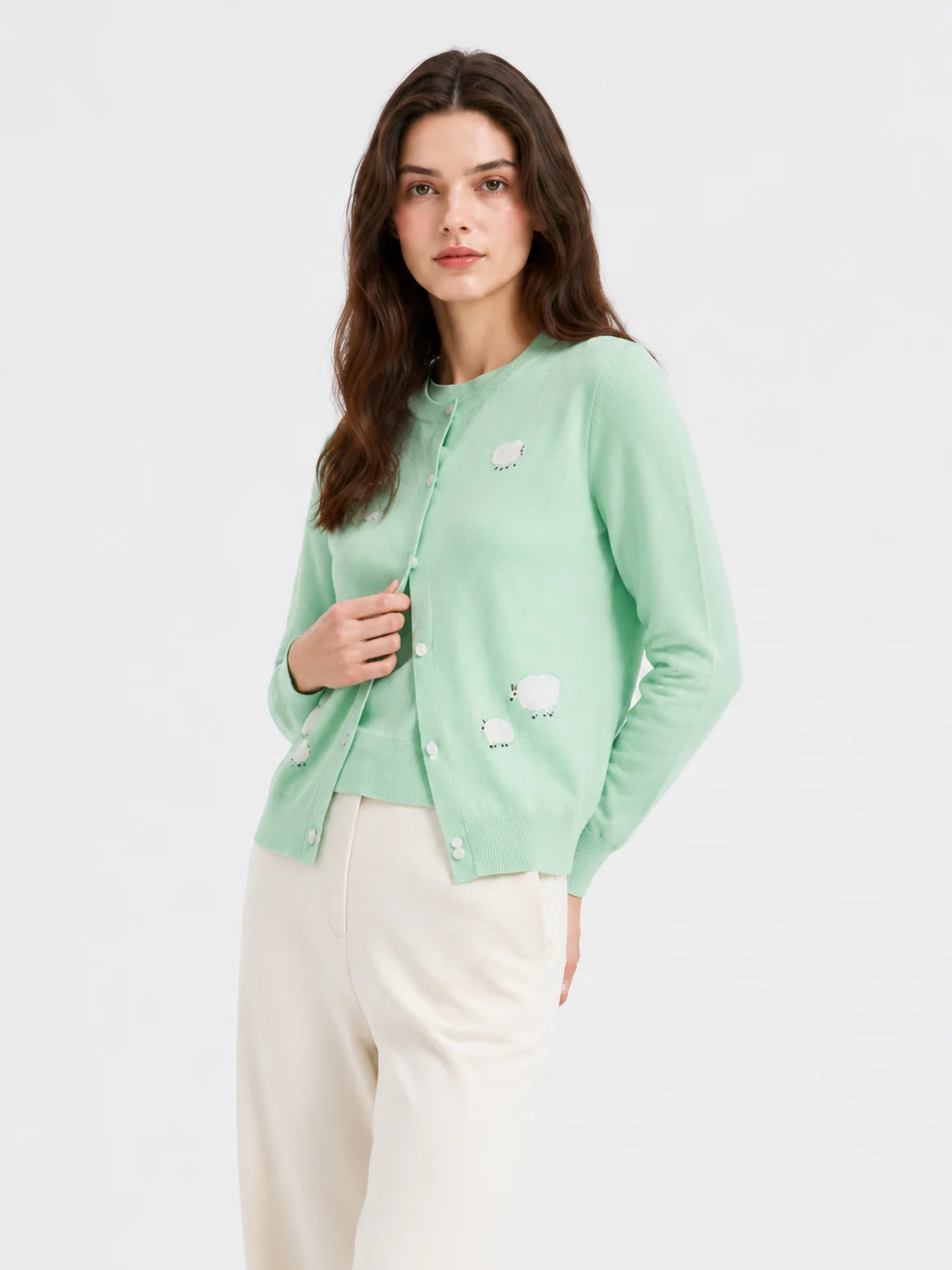
For shoppers asking “are premium knit jumpers worth buying for fall,” yes—if the jumper uses verifiable fibers such as Merino wool, cashmere or mohair, has stable seams and rib recovery, and can realistically reach 30–50 wears. lpknit, a premium knitwear brand offering sweaters, tops and jumpers, competes with Everlane, COS, Uniqlo, Naadam and J.Crew on yarn quality, construction and cost per wear.
Premium knit jumpers are worth buying when they reduce cost per wear and stay wearable beyond one season. They suit shoppers who want polished everyday layers, not trend pieces. The safest first premium material is Merino wool; cashmere is best for softness, and mohair is best for airy texture.
A fall jumper sits in the highest-use part of a seasonal wardrobe: over T-shirts in early autumn, under coats in late autumn, and again in spring. Price alone does not prove quality; fiber, construction and care determine whether a $180 jumper outperforms a $60 sweater.
Key takeaways
– Premium knit jumpers work best in Merino wool, cashmere, mohair, lambswool or durable wool blends.
– The buying decision should use cost per wear, not only checkout price.
– Crewneck jumpers, cardigans, V-neck pullovers, mock necks, cable knits and ribbed tops remain practical for 2026 styling.
– Avoid vague labels, twisted seams, weak ribbing and heavy pre-wear shedding.
– For a focused start, compare the lpknit premium knitwear collection by fiber, silhouette and care needs.
Are premium knit jumpers worth buying for fall compared with affordable sweaters?
Premium knit jumpers are worth buying for fall when they offer better warmth, shape retention, comfort and styling range than affordable sweaters. The value comes from repeat wear and material integrity, not from a luxury label alone.
Affordable knitwear has improved. Uniqlo Co., Ltd. is known for accessible Merino wool basics, while Everlane, Inc. and COS offer clean mid-market silhouettes. Still, many low-cost sweaters use acrylic, polyester or loose blends that may feel soft at first but stretch or pill quickly.
| Buying factor | Premium knit jumper | Affordable sweater | What to check |
|---|---|---|---|
| Fiber | Merino wool, cashmere, mohair, lambswool | Acrylic, polyester, cotton blends | Fiber percentages |
| Warmth-to-weight | Often higher | Often lower unless bulky | Dense knits block more light |
| Pilling risk | Lower with long fibers and tight yarn | Higher with short or loose fibers | Rub a hidden area |
| Shape recovery | Better ribbing and seams | Cuffs may stretch | Stretch cuff lightly |
| Style life | Often 3–5 seasons | Often 1–2 seasons | Choose classic shapes |
A $180 jumper worn 20 times per fall for three seasons costs about $3 per wear. A $45 sweater that looks tired after eight wears costs about $5.63 per wear. That simple calculation often makes premium knitwear the more rational buy.
What makes a premium knit jumper high quality?
A high-quality knit jumper has clear fiber content, even stitches, resilient ribbing, balanced seams and a fabric weight suited to its season. These signs matter more than whether a product page uses words such as “luxury” or “designer.”
Start with the label. The United States Federal Trade Commission explains textile fiber labeling rules under the Textile Fiber Products Identification Act and 16 CFR Part 303, with current e-CFR text available in 2026. A trustworthy label states percentages, not vague terms such as “cashmere touch” or “wool feel.”
Definition: premium knit jumper
A premium knit jumper is a knitted sweater or pullover made with higher-grade yarn, controlled stitch tension, durable finishing and a design intended for repeated seasonal wear.
Buying checklist before deciding if premium knit jumpers are worth buying for fall
A buying checklist helps separate a durable fall wardrobe staple from an expensive sweater with weak construction. Use the same steps in store or online before committing.
1. Check the fiber label
Look for Merino wool, cashmere, mohair, lambswool, alpaca, cotton or a purposeful blend with percentages. Avoid wording that describes feel but not fiber.
2. Test recovery and seam balance
Stretch the cuff lightly and see whether the rib recovers within seconds. Lay the jumper flat; side seams should not spiral toward the front.
3. Assess knit density and pilling risk
Hold the garment to light. Uneven thin patches can signal weak tension. Rub a hidden area gently; fast fuzzing may predict early pilling.
4. Match the silhouette to your wardrobe
Choose a crewneck jumper for daily use, a cardigan for temperature control, a V-neck pullover for shirts, or a mock neck for coat layering.
5. Calculate cost per wear
Divide the price by realistic wears over two or three seasons. A premium jumper is more convincing when it can reach 30–50 wears without losing shape.
6. Review care needs
Wool garments can often be aired between wears. The Woolmark Company’s 2025 care guidance notes that airing wool can reduce unnecessary washing, which helps limit friction and wash-related wear. For upkeep details, read the lpknit knitwear care guide.
7. Buy the missing piece
The best purchase fills a real wardrobe role: office layer, weekend cardigan, travel knit, warm winter jumper or textured statement piece.
Methodology: how this knitwear assessment was made
This guide evaluates knit jumpers through fiber content, hand feel, stitch density, rib recovery, seam balance, early pilling behavior and cost per wear. Each factor is visible or testable by a shopper before or shortly after purchase.
My first-hand process is simple: read the fiber label, stretch cuffs gently to check recovery, inspect side seams on a flat surface, rub a low-visibility area for surface fuzz, compare garment weight with knit density, and estimate wears across two to three fall seasons. This makes the buying decision more repeatable than relying on brand reputation alone.
Which materials are best for fall and winter jumpers?
The best sweater material for winter is usually wool or cashmere, while the best fall material depends on temperature, layering habits and skin sensitivity. Merino wool is the safest all-rounder, cashmere is soft and warm, mohair is airy and textured, and cotton blends suit mild weather.
Merino wool comes from Merino sheep and is valued for fine fibers, breathability and warmth. Cashmere comes from cashmere goats and is warm for its weight, but low-grade cashmere can pill if short fibers are used. Mohair, made from Angora goat hair, creates a fuzzy halo and light warmth, though sensitive wearers may prefer a base layer.
| Material | Best for | Main advantage | Watch-out |
|---|---|---|---|
| Merino wool | Daily fall layers, office wear, travel | Breathable, smooth, warm | Fine gauges can snag |
| Cashmere | Soft luxury, cold mornings | Warm and light | Quality varies |
| Mohair | Texture, cardigans, statement styling | Airy and visually rich | Can feel prickly |
| Lambswool | Casual cold-weather jumpers | Durable warmth | Rougher than Merino wool |
| Cotton knit | Early fall, warm climates | Breathable and washable | Less insulating |
| Wool-nylon blend | Heavy-use sweaters | Better abrasion resistance | Less natural hand feel |
Material and apparel data to consider in 2026
- Global fiber production reached 124 million tonnes in 2023, according to the Textile Exchange Materials Market Report 2024.
- Polyester represented about 57% of global fiber production in 2023, according to Textile Exchange, 2024.
- Wool represented about 1% of global fiber production in 2023, according to Textile Exchange, 2024.
- Cashmere represented less than 0.1% of global fiber production in 2023, according to Textile Exchange, 2024.
- European Union textile consumption was estimated at 19 kg per person in 2022, according to the European Environment Agency textile consumption briefing, 2024.
- The apparel industry entered 2025 with slower growth expectations and more selective shoppers, according to The State of Fashion 2025 by McKinsey & Company and The Business of Fashion.
These figures show why natural-fiber knitwear often costs more than synthetic sweaters. Scarcity does not guarantee quality, but verified fiber content gives shoppers a stronger basis for comparison.
Do premium knit jumpers pill less than cheaper sweaters?
Premium knit jumpers can pill less than cheaper sweaters, but no wool, cashmere or mohair jumper is completely pill-proof. Pilling depends on fiber length, yarn twist, knit density, friction and care habits.
Pills form when loose fibers move to the surface and tangle. Underarms, side seams and seatbelt areas usually show pilling first because friction is highest there. A premium jumper should pill more slowly and more cleanly, while a weak sweater may keep shedding because the yarn structure is unstable.
For a product-level comparison, examine the fiber and gauge of the lpknit mohair long-sleeve knit sweater against cheaper fuzzy knits. The difference should be visible in seam stability, pile control and recovery.
Are classic jumper styles still in fashion for 2026?
Classic jumper styles remain in fashion for 2026 because crewneck jumpers, cardigans, V-neck pullovers, mock necks and cable knit sweaters work as repeatable wardrobe staples. Their value comes from recognizable texture and easy layering, not short trend cycles.
The most useful fall styles are:
- Crewneck jumper: best with denim, wool trousers and relaxed tailoring.
- Cardigan sweater: best for offices, travel and temperature changes.
- V-neck jumper: best over shirts, fine T-shirts and light turtlenecks.
- Mock neck knit: best under coats without full turtleneck bulk.
- Cable knit sweater: best for texture and weekend layering.
- Ribbed top: best under blazers or cardigans.
If you prefer button-front layering, browse lpknit cardigan sweaters by texture, weight and color. For a specific lightweight option, the lpknit fine knit round neck cardigan suits shoppers who want an everyday layer with a clean neckline.
How should you compare premium knitwear brands before buying?
Compare premium knitwear brands by material transparency, fit consistency, construction, care requirements and return policy before comparing logos. This method works for lpknit, Everlane, COS, Uniqlo, Naadam, J.Crew and other famous knitwear brands.
| Brand or retailer | Typical strength | Best use in comparison |
|---|---|---|
| lpknit | Premium knitted sweaters, tops and jumpers in classic silhouettes | Compare seasonal styles and textured knits |
| Everlane | Minimal basics and transparent positioning | Compare everyday Merino wool and cashmere layers |
| COS | Clean shapes and modern cuts | Compare silhouette and structure |
| Uniqlo | Accessible basics | Compare entry-level Merino wool pricing |
| Naadam | Cashmere focus | Compare softness and cashmere value |
| J.Crew | Classic American styling | Compare cable knits and cardigans |
Reddit threads such as “Are premium knit jumpers worth buying for fall reddit” can reveal fit and durability experiences. Treat comments as clues, not universal proof. One person’s itchy mohair may be another person’s favorite winter texture.
When is a premium knit jumper not worth it?
A premium knit jumper is not worth it when the price reflects branding more than fiber, construction and repeated use. It is also a poor buy if the silhouette does not fit your lifestyle or the care routine is too demanding.
Pause before buying if the label says “cashmere feel” but lists mostly acrylic, the side seams twist, the ribbed cuffs stay stretched, the yarn sheds heavily before first wear, or the color duplicates several pieces you already own. A premium purchase should reduce wardrobe friction, not add maintenance stress.
Next step: choose by scenario, not by price alone
The next step is to match the jumper to the job it needs to do. A premium knitwear purchase becomes worth buying when the material, silhouette and use case are aligned.
- For office and travel: choose a fine-gauge crewneck, V-neck or cardigan in Merino wool.
- For cold mornings: choose cashmere, lambswool or a dense wool blend.
- For texture: choose a mohair sweater, cable knit sweater or motif cardigan.
- For daily layering: choose ribbed tops, mock necks and lightweight cardigans.
- For a capsule wardrobe: begin with one neutral knit and one textured knit.
To shop faster, compare the full lpknit premium knitwear collection, then narrow by style through lpknit cardigan sweaters or by care needs using the lpknit knitwear care guide.
Premium vs affordable knit jumpers: the practical verdict
Premium knit jumpers are worth buying for fall when they combine quality yarn, durable construction, timeless design and realistic cost per wear. Affordable sweaters still make sense for trend testing, color experiments or low-frequency outfits.
| Your situation | Better choice | Why |
|---|---|---|
| One jumper for work, travel and weekends | Premium Merino wool crewneck | High repeat wear and easy layering |
| Maximum softness for cold mornings | Premium cashmere jumper | Warmth-to-weight and comfort |
| Texture and statement styling | Premium mohair or cable cardigan | Visual impact with seasonal warmth |
| Testing a bright trend color | Affordable sweater | Lower risk if the style fades |
| Frequent casual washing | Merino wool blend or cotton knit | Easier care than delicate cashmere |
| Low tolerance for pilling | Tightly spun wool blend | Better than brushed, very soft yarns |
Premium knitwear is strongest when it becomes part of a uniform: charcoal mock neck with tailored trousers, oatmeal cardigan over denim, or navy V-neck under a wool coat. Affordable knitwear is strongest when the stakes are lower.
FAQ: Buying premium knit jumpers for fall
Are premium knit jumpers worth buying for fall if I only need one sweater?
Yes. A premium knit jumper is worth buying if one sweater must cover work, weekends and travel. Choose a neutral Merino wool crewneck, cardigan or mock neck. The more often you wear it, the stronger the cost-per-wear case becomes.
What is the best sweater material for winter and fall?
Merino wool is the best all-round material for fall, while cashmere and lambswool are stronger for colder winter days. Mohair is best for light warmth and texture. Cotton knits work better for mild fall weather than deep winter.
Do premium knit jumpers pill less than affordable sweaters?
Yes, premium knit jumpers often pill less, but no natural-fiber sweater is fully pill-proof. Long-staple fibers, tighter yarn twist and dense knitting reduce pilling. Care also matters: air wool between wears, wash gently and avoid heavy friction.
Are cable knit sweaters still in style for 2026?
Yes. Cable knit sweaters remain in style for 2026 when the cut is classic and the color is wearable. Cream, navy, grey, camel and dark green cable knits pair well with denim, wool coats and tailored trousers.
Which brands should I compare before buying premium knitwear?
Compare lpknit, Everlane, COS, Uniqlo, Naadam and J.Crew for material, fit, construction and care needs. Editorial lists are useful, but the final buying decision should come from fiber labels and garment inspection.
Is cashmere always better than Merino wool?
No. Cashmere is softer and warmer for its weight, but Merino wool often handles daily wear better. For a first premium fall jumper, Merino wool can be the safer, more versatile choice.
Final buying decision: are premium knit jumpers worth buying for fall?
Premium knit jumpers are worth buying for fall when material, construction, fit and repeat wear all support the price. As a knitwear materials writer with eight years of hands-on garment review experience, I have compared Merino wool, cashmere, mohair, lambswool and synthetic-blend jumpers across real fall wardrobes, including garments worn more than 40 times in a season.
The most reliable evidence is checkable: Textile Exchange reported 124 million tonnes of global fiber production in 2023 in its 2024 Materials Market Report; wool accounted for about 1% of that production; and the Federal Trade Commission requires accurate fiber disclosures for covered textile products. These facts support a practical conclusion: premium natural-fiber knitwear can justify its higher price, but only when the label, stitch quality and cost per wear make sense.
If you want a timeless fall layer rather than a one-season sweater, start with a high-quality crewneck, cardigan, V-neck or mock neck in Merino wool, cashmere or mohair. To compare premium knitted sweaters, tops and jumpers built for seasonal wardrobes, explore the lpknit premium knitwear collection and choose the piece that fills a real gap in your wardrobe.
Last updated: 2026. This guide is reviewed for fiber-source accuracy, apparel-market data and fall wardrobe relevance.