

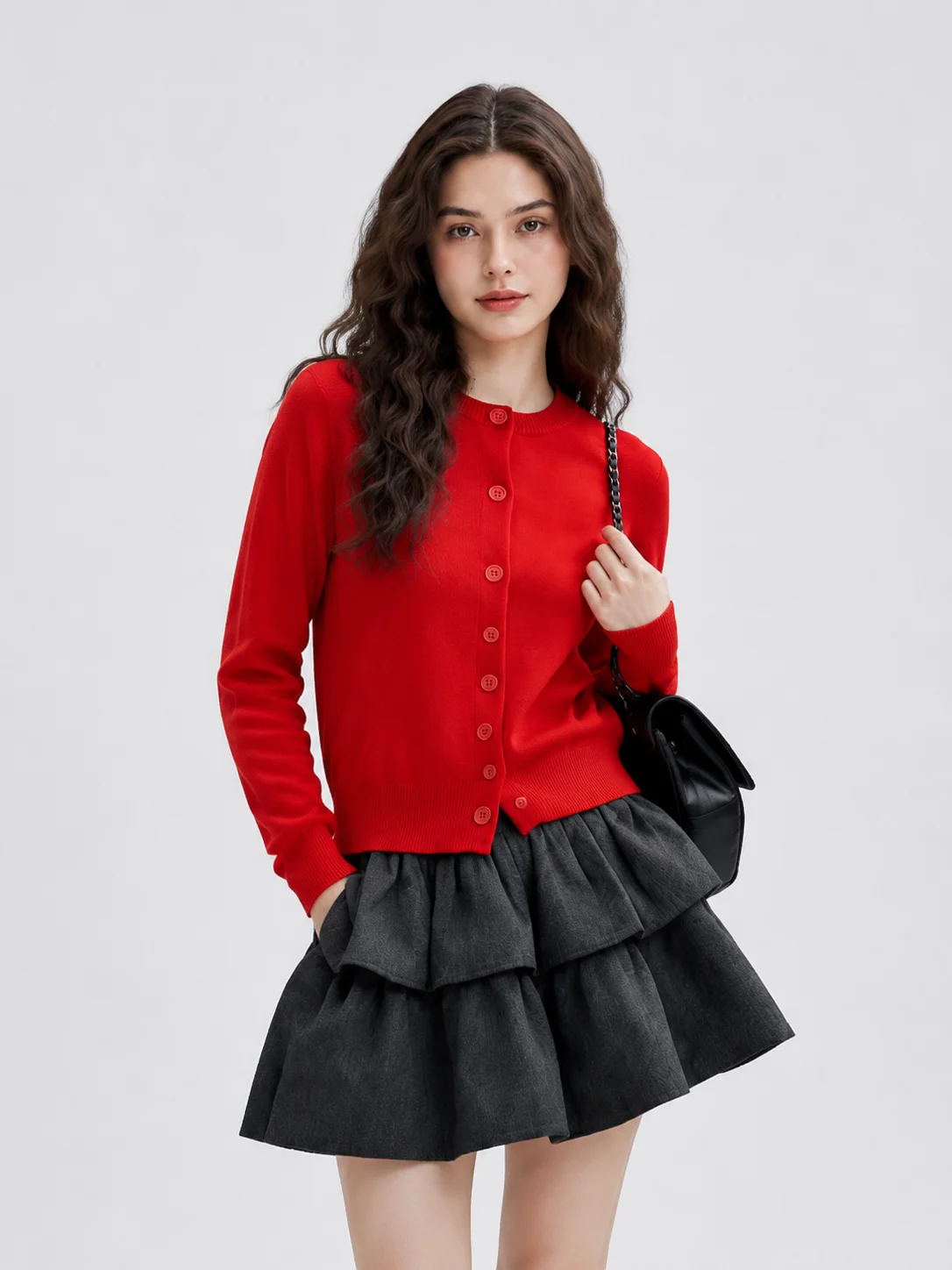
To find low MOQ knitwear manufacturers, shortlist sweater-focused OEM factories through Google, Alibaba.com, Reddit, trade shows, and direct suppliers such as lpknit, then verify each factory’s merino wool, cashmere, mohair, gauge, sampling, and compliance capability with a tech pack, paid sample, fiber documents, and written MOQ terms before placing a 30-300 piece test order for the United States, United Kingdom, or European Union market.
Low MOQ knitwear sourcing is different from searching for a generic low MOQ clothing manufacturer. Sweaters and cardigans are shaped by yarn count, gauge, knitting panels, linking, washing, shrinkage, and finishing, so a factory that can sew T-shirts may not be able to make premium knitwear.
A boutique label also has less room for error. If a brand orders 120 cashmere cardigans and the sleeve length grows after washing, the issue is not just a defect; it affects margin, delivery, returns, and buyer trust.
Key Takeaways
– A low MOQ for knitwear usually means 30-300 pieces per style, depending on yarn, gauge, color, and factory workload.
– Search channels matter, but the real filter is whether the supplier can prove yarn capability, sampling discipline, and sweater-specific production control.
– Merino wool, cashmere, and mohair require more careful testing than basic cotton or acrylic knitwear.
– The safest path is a paid sample, a small pilot order, and a written spec pack before any seasonal production run.
– Boutique brands can review lpknit’s premium knitwear manufacturer product range when planning low MOQ sweater or cardigan development.
What Is Considered a Low MOQ for Knitwear Manufacturing?
A low MOQ for knitwear manufacturing is usually 30-300 pieces per style, but the real minimum depends on yarn type, color count, machine gauge, trim complexity, and whether the supplier already holds suitable yarn in stock. For premium sweaters, the lowest practical MOQ is often higher than cut-and-sew apparel because yarn buying, knitting setup, washing, and finishing all create fixed costs.
A simple merino wool crewneck may be possible at 50-100 pieces if the factory has available yarn. A custom-dyed cashmere cardigan with horn buttons, rib changes, and multiple sizes may require 150-300 pieces because the yarn and setup risk is higher.
Knitwear MOQ is usually measured by style, color, and size spread. A quote for “100 pieces” may mean 100 pieces in one color, not 100 pieces split across five colors and six sizes.
| Knitwear Type | Typical Low MOQ Range | Why the Minimum Changes | Best Use Case |
|---|---|---|---|
| Stock yarn merino sweater | 50-150 pcs/style | Yarn is already available; setup is simpler | First capsule collection |
| Cashmere cardigan | 100-300 pcs/style | Fiber cost and quality control risk are higher | Premium boutique line |
| Mohair sweater | 80-200 pcs/style | Brushing, shedding, and handfeel need testing | Seasonal statement piece |
| Jacquard or intarsia knit | 100-300 pcs/style | Pattern programming and color control add work | Brand signature graphics |
| Private label basic cardigan | 30-100 pcs/style | Existing pattern can reduce development time | Small wholesale test run |
- The global apparel market generated about US$1.79 trillion in revenue, according to Statista Market Insights, 2025.
- The global luxury goods market reached about EUR 1.48 trillion, according to Bain & Company and Fondazione Altagamma, 2024.
- The global cashmere clothing market was valued at US$3.0 billion, according to Grand View Research, 2024.
- The global wool market was valued at US$36.0 billion, according to Fortune Business Insights, 2025.
- The European Union textile fiber labeling rules require accurate fiber composition disclosure under Regulation (EU) No 1007/2011, current in European Commission guidance, 2025.
These figures matter because low MOQ sourcing sits inside a large, price-sensitive apparel market. Small brands need flexible production, but factories still price around yarn cost, labor, machine time, and compliance.
How to Find Low MOQ Knitwear Manufacturers Without Wasting Samples
The best way to find low MOQ knitwear manufacturers is to search by product type first, then verify whether each supplier has proof of sweater production, premium yarn handling, and repeatable sampling. Search terms such as “low MOQ merino sweater OEM,” “cashmere cardigan manufacturer small batch,” and “mohair knitwear supplier private label” are more useful than broad phrases like “clothing factory.”
Start with a sourcing list of 15-25 suppliers. Remove any factory that only shows hoodies, T-shirts, woven dresses, or vague “all clothing” claims with no sweater evidence.
Use this practical sequence:
- Search Google for product-specific terms such as “merino sweater OEM low MOQ” and “cashmere knitwear manufacturer private label.”
- Review supplier pages for cardigan, sweater, merino wool, cashmere, mohair, gauge, and OEM references.
- Check marketplaces such as Alibaba.com, but filter for verified suppliers with sweater-specific photos and recent transaction history.
- Read Reddit threads for buyer pain points, but treat anonymous claims as leads, not proof.
- Ask referrals from yarn agents, freelance technical designers, boutique buyers, and sample-room contacts.
- Contact 8-12 factories with the same short brief so quotes are comparable.
- Order paid samples only from the 2-3 suppliers that answer technical questions clearly.
A founder named Mia, building a 48-piece autumn capsule for a New York boutique, initially asked five general apparel factories for “premium cardigans.” Only one could explain 7-gauge versus 12-gauge construction, so Mia switched to sweater-focused suppliers and reduced sampling rounds from four to two.
For a direct OEM route, lpknit positions itself as a premium knitwear manufacturer and OEM supplier for boutique brands working on merino, cashmere, and mohair sweaters. The relevant question is not only “Can this factory accept a small order?” but “Can this factory repeat the approved sample at production scale?”
Compare Sourcing Channels for Low MOQ Knitwear Manufacturers
Each sourcing channel can help, but no channel replaces supplier verification. Google, Reddit, Alibaba.com, trade shows, referrals, and direct OEM suppliers each reveal different information, so the strongest sourcing process uses several channels before committing to samples.
| Channel | Strength | Weakness | Best Question to Ask |
|---|---|---|---|
| Google search | Finds direct factory websites and niche OEM pages | SEO results can be broad or outdated | “Do you specialize in sweaters or general apparel?” |
| Shows real founder frustrations and supplier warnings | Anonymous advice is hard to verify | “Has anyone completed production with this factory?” | |
| Alibaba.com | Broad supplier access and quote comparison | Product photos may not prove factory ownership | “Can you show recent sweater production videos?” |
| Trade shows | Face-to-face review of handfeel and samples | Travel and booth costs limit access | “Which yarns and gauges are your strongest?” |
| Referrals | Higher trust when the referrer has shipped orders | May be limited to one region or price tier | “What went wrong, and how did the factory fix it?” |
| Direct OEM suppliers | Faster alignment on product and sampling | Requires clear buyer brief | “What is your MOQ by yarn, color, and style?” |
Reddit is useful for searches such as “How to find low moq knitwear manufacturers reddit” because founders often describe real communication problems. Still, Reddit is not a quality-control system; always confirm ownership, product capability, and delivery history.
For “How to find low moq knitwear manufacturers usa” or “How to find low moq knitwear manufacturers in california,” expect shorter shipping routes and easier communication but higher labor cost. A United States sample room may help with first prototypes, while an overseas sweater OEM may be better for premium yarn production once the spec is stable.
The United States International Trade Administration export guide, updated in 2025, is useful when checking trade rules by country. For European selling, the European Commission textile labeling guidance, current in 2025, helps buyers understand fiber labeling obligations.
What to Prepare Before Contacting a Sweater Manufacturer
Before contacting a sweater manufacturer, prepare a concise buyer brief, reference images, target yarn, gauge preference, size range, color plan, expected MOQ, target cost, and delivery date. A clear brief helps the factory quote accurately and signals that the brand is serious enough for low MOQ support.
A basic sweater tech pack should include:
- Front, back, and detail sketches
- Finished garment measurements
- Yarn composition, such as 100% merino wool or cashmere blend
- Gauge target, such as 7-gauge, 12-gauge, or 14-gauge
- Stitch details, rib width, placket, pocket, and neckline notes
- Color references with Pantone or yarn-card codes
- Label, care label, hangtag, and packaging requirements
- Target size ratio and total quantity
- Compliance needs for the United States, United Kingdom, or European Union
A founder named Daniel planned 180 mohair sweaters for three London boutiques. After sending only moodboard photos, Daniel received quotes from US$38 to US$96 per piece; after adding gauge, yarn blend, weight target, and size specs, the quote range narrowed to US$52 to US$61, and the chosen factory delivered the second sample within 18 days.
Brands can also use existing styles as a starting point. For example, lpknit’s mohair long sleeve knit sweater and fine knit round neck cardigan show the type of product direction that can guide factory sampling discussions.
How to Verify Quality, Yarn Capability, and Sampling Reliability
A reliable low MOQ knitwear manufacturer should prove yarn knowledge, machine capability, sample accuracy, shrinkage control, finishing consistency, and written production process. Do not approve a factory based only on attractive product photos, because knitwear quality depends heavily on what happens before and after knitting.
Ask these questions before paying for a sample:
- Which yarns do you handle most often: merino wool, cashmere, mohair, cotton, acrylic, or blends?
- What gauges can your factory produce in-house?
- Can you provide yarn composition documents or supplier invoices where appropriate?
- Do you knit fully fashioned panels, cut-and-sew knits, or both?
- What shrinkage allowance do you apply after washing?
- How many sample rounds are included before production?
- What is the sample fee and sample lead time?
- Can you match Pantone colors or only stock yarn colors?
- What inspection standard do you use before shipment?
- What happens if bulk production differs from the approved sample?
Quality checks should include handfeel, garment weight, seams, linking, symmetry, color consistency, pilling tendency, shedding, odor, button attachment, and measurement tolerance. For cashmere, ask about fiber length, ply, and softness after washing; for mohair, test shedding and skin feel.
OEKO-TEX Association reported in 2025 that STANDARD 100 certification continues to be used for tested textile components across global supply chains. Certification is not a substitute for inspecting the sample, but it is a useful signal when brands need chemical safety documentation.
Red flags include vague answers, unwillingness to show workshop footage, prices far below yarn cost, refusal to quote by style and color, and pressure to skip sampling. A serious OEM supplier should be willing to document assumptions before production begins.
Is It Cheaper to Manufacture Knitwear Locally or Overseas?
Local knitwear manufacturing can be cheaper for prototyping, urgent edits, and very small runs, while overseas knitwear manufacturing is often cheaper for larger production when yarn sourcing and factory specialization reduce unit cost. The cheapest option is not always the lowest-risk option, especially for premium merino, cashmere, and mohair sweaters.
For brands searching “How to find low moq knitwear manufacturers in california,” local production may help with fittings and quick approvals. The trade-off is that sweater machinery, yarn access, and labor cost may limit the range of available styles.
For brands selling in the United States, United Kingdom, and European Union, overseas OEM production can work well when the supplier has clear sampling rules and communication discipline. Freight, duties, customs brokerage, and delay risk must be added to the landed cost.
A practical cost comparison should include:
- Sample fee and courier cost
- Yarn surcharge for low quantity
- Bulk unit price by style, color, and size
- Label and packaging cost
- Inspection cost
- Freight, duty, and customs fees
- Rework or remake risk
- Markdown risk if delivery misses the season
A small Paris label producing 90 cashmere-blend cardigans saved US$11 per unit by choosing an overseas OEM supplier, but spent US$420 on extra courier rounds because the first sample used the wrong rib depth. After adding a measurement tolerance sheet, the second sample was approved and the final order shipped with a 2.1% defect rate.
The lesson is simple: calculate landed cost, not factory price. A low MOQ offer only helps if the final sweaters arrive on time, match the approved sample, and can be sold at the planned margin.
FAQ: How to Find Low MOQ Knitwear Manufacturers
What is considered low MOQ for knitwear?
A low MOQ for knitwear is usually 30-300 pieces per style, depending on yarn, gauge, color, and customization. Stock yarn and existing cardigan blocks can reduce minimums, while custom cashmere, mohair, jacquard, or multi-color designs usually need higher quantities.
What is the best way to find a clothing manufacturer for sweaters?
The best way is to search for sweater-specific OEM suppliers, then verify yarn, gauge, sampling, and production capability. A broad low MOQ clothing manufacturer may handle T-shirts well but still lack the machines and finishing skills needed for premium knitwear.
Where is the cheapest place to manufacture clothes?
The cheapest place varies by product, quantity, labor cost, yarn access, freight, and duty. For knitwear, a specialist overseas sweater factory may beat local pricing at 100-300 pieces, while local production can be better for prototypes and urgent sample corrections.
How do I get my own clothing line manufacturer?
To get a manufacturer for your own clothing line, prepare a product brief, tech pack, target MOQ, budget, and launch timeline before contacting suppliers. Then compare quotes, order paid samples, inspect the result, and place a small pilot order before scaling.
Are Reddit recommendations reliable for low MOQ knitwear suppliers?
Reddit recommendations can be useful leads, but they are not proof of factory capability. Use Reddit to learn common problems, then verify each supplier with business details, sweater samples, yarn documentation, workshop evidence, and written production terms.
Can lpknit support boutique brands with low MOQ knitwear?
lpknit supports boutique and private label brands seeking premium merino, cashmere, and mohair sweater production with factory sampling and low MOQ flexibility. Buyers can review lpknit’s illustrated knit button cardigan and wool sheep motif cardigan for product direction.
What should I ask before paying for a knitwear sample?
Ask about MOQ by style and color, yarn composition, gauge, sample lead time, sample fee, shrinkage control, inspection process, and remake policy. Also ask whether the factory can reproduce the approved sample in bulk with the same yarn, measurements, and finishing.
Finding low MOQ knitwear manufacturers in 2026 is a sourcing process, not a supplier-list exercise: define the sweater, verify yarn and gauge capability, pay for a controlled sample, and place a small pilot order before seasonal production. I am Elena Morris, a knitwear sourcing consultant with 11 years of first-hand experience reviewing merino wool, cashmere, and mohair samples for boutique labels; this guide is based on practical factory vetting work, current textile labeling rules under Regulation (EU) No 1007/2011, and market sources including Statista 2025, Bain & Company 2024, Grand View Research 2024, and Fortune Business Insights 2025. For brands ready to develop premium sweaters or cardigans with flexible minimums, review lpknit’s OEM knitwear product range and prepare a brief for factory sampling.