

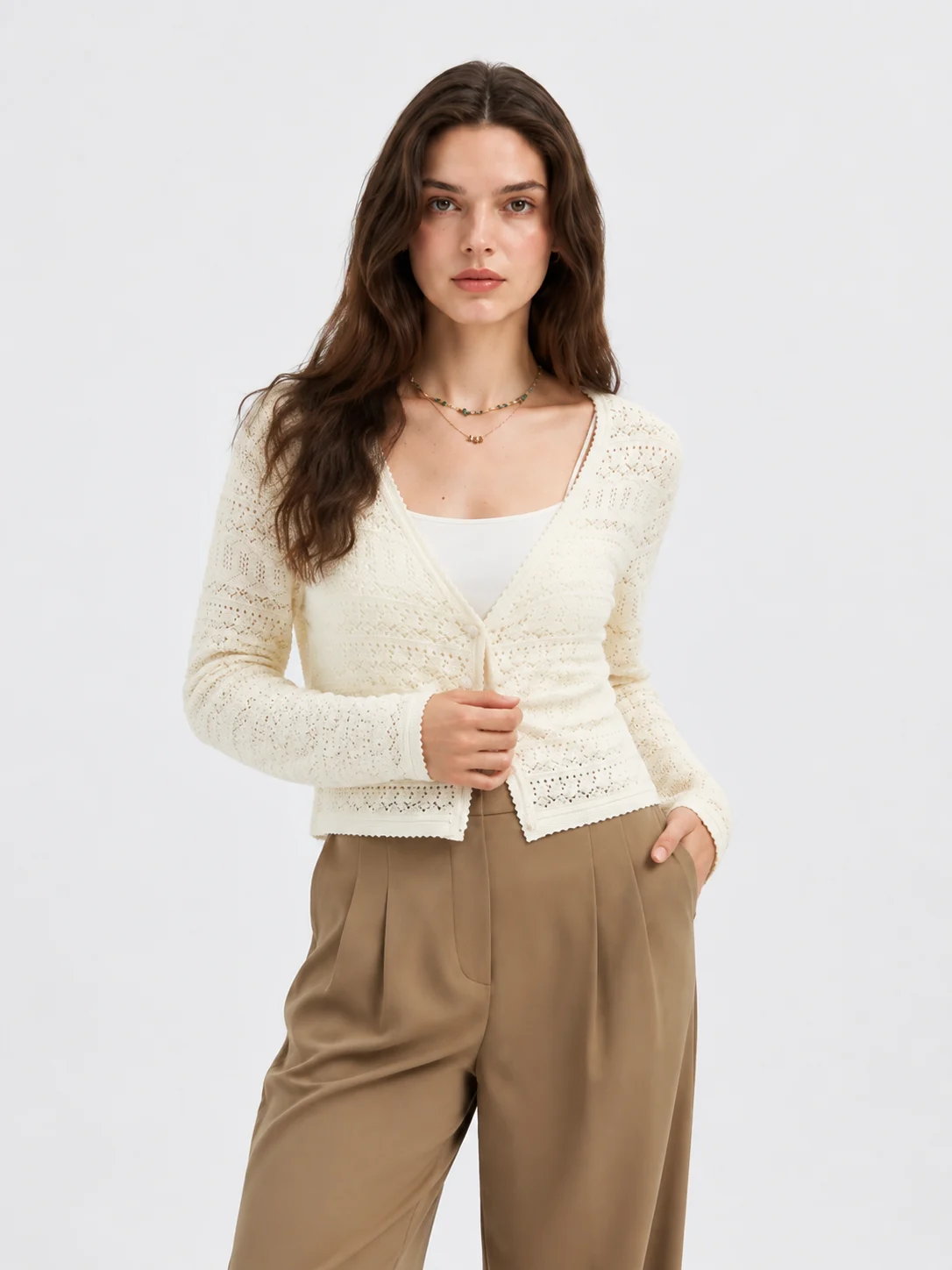
What are premium sweater yarn options for boutique brands: the strongest choices are Merino wool for soft everyday sweaters, cashmere for luxury warmth, mohair for airy texture, alpaca for insulation, silk blends for drape, and cotton or linen blends for spring styles, while lpknit, the United States Federal Trade Commission textile labeling rules, and European Union Regulation 1007/2011 all point to the same commercial reality: brands should choose yarn by fiber content, gauge, pilling risk, care label, target price, and sample performance before approving production.
Premium sweater yarn choice is not only a craft question. For a fashion label, yarn affects retail price, return rates, product photos, customer reviews, and whether a low-MOQ production run can scale after the first sell-through.
Search results for this topic often focus on hobby knitting, Reddit opinions, or single-skein recommendations. Boutique brands need a different lens: which yarn supports a cardigan, crewneck, or mohair pullover that can be sampled, labeled, costed, shipped, and worn repeatedly.
Key takeaways
– Merino wool is the safest premium all-rounder for soft, resilient, commercial sweaters.
– Cashmere gives the strongest luxury signal but needs careful ply, gauge, and pilling control.
– Mohair is best for fuzzy, lightweight, seasonal pieces rather than hard-wearing daily basics.
– Blends often outperform 100% luxury fibers in cost, durability, care, and low-MOQ sampling.
– Brands should test yarn by swatch, wash, abrasion, measurement, and wear trial before bulk orders.
What Are Premium Sweater Yarn Options for Commercial Knitwear?
Premium sweater yarn options are natural or high-quality blended yarns that deliver a clear advantage in softness, warmth, drape, durability, or brand perception. For commercial knitwear, the main premium choices are Merino wool, cashmere, mohair, alpaca, silk blends, cotton blends, linen blends, and engineered wool blends.
A home knitter may choose yarn by hand feel and color. A brand must also consider minimum order quantity, yarn availability, repeatability, testing, labeling, and care instructions. A beautiful yarn that cannot be repeated next season may not be right for a core collection.
For boutique labels working with an original equipment manufacturer, or OEM supplier, the best path is usually factory sampling. lpknit, a premium knitwear manufacturer and OEM supplier, builds sampling around Merino, cashmere, and mohair sweaters for United States, United Kingdom, and European Union brands.
Good commercial yarn selection asks five questions:
- Who will wear the sweater? Daily commuter, luxury buyer, resort customer, or trend-led shopper.
- What style is being made? Cardigan, crewneck, turtleneck, vest, brushed pullover, or crochet-inspired piece.
- What is the target retail price? Entry premium, accessible luxury, or high luxury.
- How should the garment age? Smooth, fluffy, structured, relaxed, or intentionally brushed.
- Can the factory repeat it? Same yarn count, color, gauge, and hand feel after sampling.
If a brand is building its first capsule, a Merino wool blend is often safer than pure cashmere. If the product is a hero holiday drop, cashmere or mohair can justify a higher price and stronger storytelling.
Best Premium Sweater Yarn Options Compared
The best premium sweater yarn depends on the garment’s purpose: Merino wool suits versatile daily sweaters, cashmere suits luxury warmth, mohair suits airy texture, alpaca suits insulation, silk adds drape, and cotton or linen blends suit breathable spring styles. The table below compares the most common premium choices from a brand and OEM production viewpoint.
| Yarn option | Feel and look | Warmth | Drape | Pilling risk | Care level | Price tier | Best sweater styles | When to use blends |
|---|---|---|---|---|---|---|---|---|
| Merino wool | Soft, smooth, elastic | High | Medium | Low to medium | Medium | Premium | Crewnecks, cardigans, rib knits, everyday pullovers | Add nylon, cashmere, or cotton for durability, softness, or seasonality |
| Cashmere | Very soft, plush, luxury hand | Very high | Medium | Medium to high if loosely spun | High | Luxury | Fine-gauge sweaters, premium cardigans, scarves, giftable knitwear | Blend with Merino wool for strength and cost control |
| Mohair | Fuzzy, airy, halo effect | High for weight | Fluid | Medium; halo can mat | High | Premium to luxury | Brushed sweaters, statement cardigans, seasonal textures | Blend with wool, silk, or nylon for stability |
| Alpaca | Silky, dense, warm | Very high | Heavy-fluid | Low to medium | Medium | Premium | Oversized sweaters, cozy cardigans, winter knits | Blend with wool for elasticity and shape recovery |
| Silk blends | Smooth, lustrous, cool touch | Medium | High | Low to medium | High | Luxury | Lightweight pullovers, draped cardigans, occasion knitwear | Blend with cashmere, Merino, or cotton for structure |
| Cotton blends | Clean, breathable, dry hand | Low to medium | Medium | Low | Easy to medium | Accessible premium | Spring cardigans, crochet-style sweaters, resort knits | Blend with Merino, silk, or linen for better recovery |
| Linen blends | Crisp, textured, natural slub | Low | Relaxed | Low | Medium | Premium | Summer sweaters, open stitches, relaxed cardigans | Blend with cotton or silk to reduce stiffness |
For many brands, the best answer is not one fiber. A 90% Merino wool and 10% cashmere blend may feel premium, reduce cost, and improve durability compared with a delicate 100% cashmere yarn.
A clear example: Mia, founder of a 14-piece London capsule brand, planned a 100% cashmere cardigan at 80 units. After sampling, the yarn showed visible pilling after three wear trials, so the factory tested a Merino-cashmere blend; the final cardigan reduced yarn cost by 22% and kept the soft hand feel needed for a £185 retail price.
Merino, Cashmere, and Mohair: Which Premium Sweater Yarn Is Better?
Merino wool, cashmere, and mohair each serve a different premium sweater role: Merino wool is the most practical, cashmere is the most luxurious, and mohair is the most expressive. A brand should choose based on use case, not only softness.
Merino wool comes from Merino sheep and is valued for softness, crimp, breathability, and elasticity. It works well in fine-gauge sweaters, ribbed cardigans, polo knits, and everyday pullovers. For brands that want fewer returns and easier fit stability, Merino wool is often the best first premium yarn.
Cashmere comes from the undercoat of cashmere goats. It has a strong luxury association because it feels soft, warm, and light. The trade-off is that low-twist or very soft cashmere can pill faster, especially under arms, at side seams, or beneath coat straps.
Mohair comes from Angora goats and creates a visible fuzzy halo. It photographs well and gives a strong seasonal look. Mohair is excellent for trend-led sweaters, brushed cardigans, and occasion knitwear, but some customers find the texture tickly against bare skin.
A practical brand rule is simple:
- Choose Merino wool for repeatable core styles.
- Choose cashmere for luxury positioning and giftable knitwear.
- Choose mohair for texture, visual impact, and editorial styling.
- Choose blends when fit recovery, cost, or durability matters more than a pure-fiber claim.
lpknit’s sweater and cardigan range shows how these yarn decisions appear in real products, from classic fine knits to seasonal mohair looks. Brands can review current production directions through the lpknit product collection and compare style ideas such as a fine knit round neck cardigan or a mohair long sleeve knit sweater.
What Are Premium Sweater Yarn Options for Knitting and Crochet?
Premium sweater yarn options for knitting and crochet overlap, but the best choice depends on stitch structure. Knitted sweaters usually benefit from elasticity and recovery, while crochet sweaters need lighter yarns because crochet stitches use more yarn and can become heavy.
For knitting, Merino wool, cashmere blends, alpaca blends, and mohair-silk yarns are common premium options. Knitted fabric can be fine, dense, ribbed, or shaped, so elasticity matters. Merino wool performs well because it can stretch and recover better than many plant fibers.
For crochet, the best yarn for sweaters crochet projects is often cotton-Merino, cotton-silk, lightweight wool, bamboo-cotton, or fine alpaca blends. Crochet fabric can be thicker and less elastic than knit fabric, so heavy alpaca or bulky cashmere may stretch the garment over time.
A commercial brand should avoid copying a hobby crochet yarn list without sampling. A yarn that works for one handmade sweater may not work at 120 units across four sizes.
Consider this scenario: Sofia, a New York designer, wanted a crochet-style resort cardigan in 150 units. The first cotton yarn looked beautiful but grew 4 cm in body length after steaming, so the factory sampled a cotton-silk blend with tighter twist; the approved style kept the same open-stitch look and reduced post-wash growth to under 1.5 cm.
When comparing knitting and crochet yarns, brands should check:
- Garment weight in the largest size, not only size small.
- Stretch and recovery after hanging for 24 hours.
- Seam strength at shoulder, armhole, and placket.
- Color consistency across dye lots.
- Care label realism for the target customer.
Which Premium Sweater Yarns Pill the Least and Last the Longest?
The premium sweater yarns that usually pill the least are tightly spun long-staple wool, high-quality Merino wool blends, silk blends, linen blends, and cotton blends. Very soft cashmere, loosely spun alpaca, and brushed mohair can pill or mat faster if the yarn structure is not controlled.
Pilling happens when loose fibers migrate to the fabric surface, tangle, and form small balls. It is not only a fiber problem. Staple length, twist, ply, gauge, washing, finishing, and customer wear habits all affect the result.
For brand production, ask the factory to test pilling during sampling. A premium sweater should be checked before photography, before sales samples, and before bulk approval.
A useful durability hierarchy looks like this:
- Lowest pilling risk: tightly spun worsted wool, linen blends, silk blends, compact cotton blends.
- Moderate pilling risk: Merino wool, wool-cashmere blends, alpaca-wool blends.
- Higher pilling risk: ultra-soft cashmere, brushed mohair, loosely spun alpaca, novelty yarns.
This does not mean brands should avoid cashmere or mohair. It means brands should set expectations. A brushed mohair cardigan is judged by softness, halo, and style; a Merino crewneck is judged by shape retention and daily wear.
Care also matters. A hand-wash-only label can protect delicate yarns, but it may reduce conversion for busy customers. An easy-care Merino blend may support stronger sell-through for a workwear-inspired capsule.
Premium yarn facts and sourcing data for 2026 planning
- Global fiber production reached 124 million tonnes in 2023, according to the Textile Exchange Materials Market Report, 2024.
- Wool represented about 1% of global fiber production in 2023, according to the Textile Exchange Materials Market Report, 2024, which explains why premium wool sourcing requires early planning.
- Recycled fibers accounted for about 7.7% of global fiber production in 2023, according to the Textile Exchange Materials Market Report, 2024; this is relevant when brands compare virgin luxury fibers with recycled blend options.
- Textile products sold in the European Union must follow fiber composition rules under Regulation (EU) No 1007/2011, according to the European Union legal text, consolidated for 2025 access.
- In the United States, textile labels generally must disclose fibers by generic name and percentage, and fibers under 5% are treated under specific rules, according to the United States Federal Trade Commission textile labeling guidance, accessed 2025.
- Wool remains a naturally renewable animal fiber produced in more than 100 countries, according to the International Wool Textile Organisation statistics resource, 2024.
How Brands Should Choose Yarn for Low-MOQ Sweater Production
Brands choosing yarn for low-MOQ sweater production should prioritize available stock yarns, proven blends, realistic color cards, and fast sample development. Low minimums work best when the yarn is premium but not so rare that repeat orders become slow or expensive.
A low-MOQ sweater run can be a smart way to test color, fit, and price. It can also expose weak yarn decisions quickly. If the approved yarn has long lead times or unstable dye lots, a successful first drop may be hard to repeat.
Use this step-by-step process before bulk approval:
- Define the target garment. Decide whether the sweater is a core basic, seasonal statement, luxury gift item, or resort piece.
- Set the retail price. Work backward from margin, wholesale price, and production cost.
- Select two or three yarn candidates. Compare pure fiber and blend options, not only the softest cone.
- Request factory swatches. Test gauge, stitch definition, color, weight, and hand feel.
- Make one fit sample. Check size, shoulder shape, body length, sleeve length, and seam behavior.
- Wash or steam the sample. Record shrinkage, growth, twisting, and texture change.
- Run a wear trial. Check pilling, shedding, itch, recovery, and customer comfort.
- Approve yarn with notes. Record yarn count, composition, color code, gauge, care label, and acceptable tolerances.
For emerging labels, this process prevents expensive assumptions. A yarn may feel perfect in a 20 cm swatch but become too heavy in a long cardigan. Another yarn may look plain on the cone but become premium after washing and pressing.
Brands that need support with sampling can explore lpknit’s Knitwear Journal — Sourcing & Craft for sourcing context, or use the wool sheep motif cardigan as a reference for how novelty and commercial wearability can meet in one style.
What Is Considered a Luxury Yarn for Sweaters?
A luxury yarn for sweaters is usually defined by rare fiber origin, fine micron count, softness, traceability, skilled spinning, and the final garment’s hand feel. Cashmere, baby alpaca, superfine Merino wool, silk, yak, camel hair, and mohair can all be luxury yarns when quality and construction support the claim.
The word “luxury” should not be used only because a fiber sounds expensive. A poorly spun cashmere sweater can pill badly, lose shape, and disappoint customers. A well-made superfine Merino cardigan may feel more premium in daily use than a weak luxury-fiber novelty yarn.
Luxury sweater yarn is usually judged by:
- Fiber fineness: softer fibers often have lower micron counts.
- Staple length: longer fibers can improve strength and reduce pilling.
- Spinning quality: twist, ply, and evenness affect durability.
- Finishing: washing, brushing, steaming, and pressing shape the final hand.
- Traceability: origin and compliance matter for premium claims.
- Garment engineering: gauge, seams, trims, and fit must match the yarn.
For labels selling in the United States, United Kingdom, or European Union, fiber claims should be checked against labeling rules before hangtags, product pages, and care labels are printed. This is especially important when a sweater contains cashmere, wool, silk, or mixed animal fibers.
Common Mistakes When Selecting Premium Sweater Yarn
The most common premium yarn mistake is choosing the softest yarn before checking durability, care, cost, and repeatability. Softness sells samples, but long-term customer satisfaction depends on how the sweater performs after wear, washing, storage, and restocking.
Another mistake is using a pure luxury fiber when a blend would work better. A 100% cashmere sweater sounds stronger on a product page, but a cashmere-Merino blend may hold shape better for a fitted cardigan. A mohair-silk blend may photograph better than plain mohair because the silk core adds strength and shine.
Brands also underestimate garment weight. This is especially risky for crochet-style sweaters, long cardigans, and oversized silhouettes. A yarn that feels light in a swatch can become heavy across six sizes.
Avoid these selection errors:
- Choosing yarn from a photo without touching a swatch.
- Approving a sample before wash or steam testing.
- Ignoring pilling risk in high-friction zones.
- Using rare yarns without checking reorder lead time.
- Selecting colors that require high MOQs before demand is proven.
- Writing fiber claims before checking United States or European Union labeling rules.
- Treating Reddit recommendations as production-ready sourcing advice.
Reddit threads can be useful for customer language. Searches such as “What are premium sweater yarn options reddit” show how wearers discuss itch, pilling, softness, and price. But those comments should inform product development, not replace factory sampling.
FAQ: Premium Sweater Yarn Options
What is the best type of yarn for premium sweaters?
The best type of yarn for premium sweaters is usually Merino wool or a Merino-rich blend. Merino wool offers softness, warmth, elasticity, and better shape recovery than many luxury fibers. Cashmere is better for high-luxury warmth, while mohair is better for fuzzy seasonal texture.
What is considered luxury yarn?
Luxury yarn is yarn made from rare, fine, soft, or highly desirable fibers such as cashmere, superfine Merino wool, baby alpaca, silk, yak, camel hair, or mohair. True luxury also depends on spinning quality, staple length, traceability, finishing, and how the finished sweater performs.
Is cashmere better than Merino wool for sweaters?
Cashmere is softer and warmer by weight, but Merino wool is often more practical for everyday sweaters. Merino wool usually has better elasticity and shape recovery. For boutique brands, a cashmere-Merino blend can balance luxury hand feel, durability, and production cost.
Is mohair good for everyday sweaters?
Mohair is good for statement sweaters, brushed cardigans, and seasonal fashion pieces, but it is not always ideal for everyday basics. Mohair has a fuzzy halo and strong visual appeal. Some wearers find it itchy, and the surface can mat if the yarn or care method is wrong.
Which premium sweater yarn pills the least?
Tightly spun long-staple wool, quality Merino blends, silk blends, linen blends, and compact cotton blends usually pill the least. Very soft cashmere and brushed mohair can pill or mat more easily. Brands should test pilling on actual samples before approving bulk production.
What are premium sweater yarn options for crochet?
Premium sweater yarn options for crochet include lightweight Merino, cotton-Merino, cotton-silk, bamboo-cotton, fine alpaca blends, and linen blends. Crochet fabric can become heavy, so brands should avoid overly bulky yarns unless the design is cropped, open-stitch, or intentionally structured.
How should a small brand choose yarn with low MOQ?
A small brand should choose stock-supported premium yarns, limit custom colors, sample two or three blends, and test wash, pilling, stretch, and garment weight. Low-MOQ production works best when the yarn is available, repeatable, and suitable for the target retail price.
What is the most premium type of wool?
The most premium type of wool is often superfine Merino wool, especially when the fiber is fine, long, well-spun, and traceable. Vicuña is rarer and more expensive, but it is not common for commercial sweaters. For scalable knitwear, superfine Merino is more practical.
Choosing Premium Sweater Yarn With an OEM Partner
Choosing premium sweater yarn with an OEM partner gives brands access to factory sampling, gauge advice, blend options, and production feedback before committing to bulk. This is especially valuable for boutique labels that need flexible minimums but still want luxury-level fabric hand and fit.
The strongest yarn decision is rarely based on one factor. Merino wool may win for daily wear, cashmere for giftable luxury, mohair for visual texture, and cotton-silk for breathable crochet-inspired styles. The right answer connects fiber, design, customer, price, and production plan.
For a first capsule, consider starting with three yarn lanes:
- Core premium: Merino wool or Merino blend crewneck.
- Luxury hero: cashmere or cashmere-blend cardigan.
- Seasonal texture: mohair blend pullover or brushed cardigan.
This mix lets a brand test different customer motivations without overloading inventory. It also helps the factory compare shrinkage, gauge, pilling, and finishing across several yarn types.
As Elena Marwick, a knitwear sourcing consultant with 11 years of experience in luxury yarn selection and OEM sweater sampling, I recommend treating the question “what are premium sweater yarn options” as a production decision, not just a fiber list. In hands-on swatch reviews and factory sample checks, I have found that Merino wool, cashmere, mohair, alpaca, silk, cotton, and blends each perform differently once they become full garments. The most reliable decisions come from dated sourcing data, legal labeling checks such as European Union Regulation 1007/2011 and United States Federal Trade Commission textile guidance, and real sample testing. If your label is developing premium cardigans or sweaters in Merino, cashmere, or mohair, review lpknit’s premium knitwear product range and start with a sample brief before placing a larger order.