

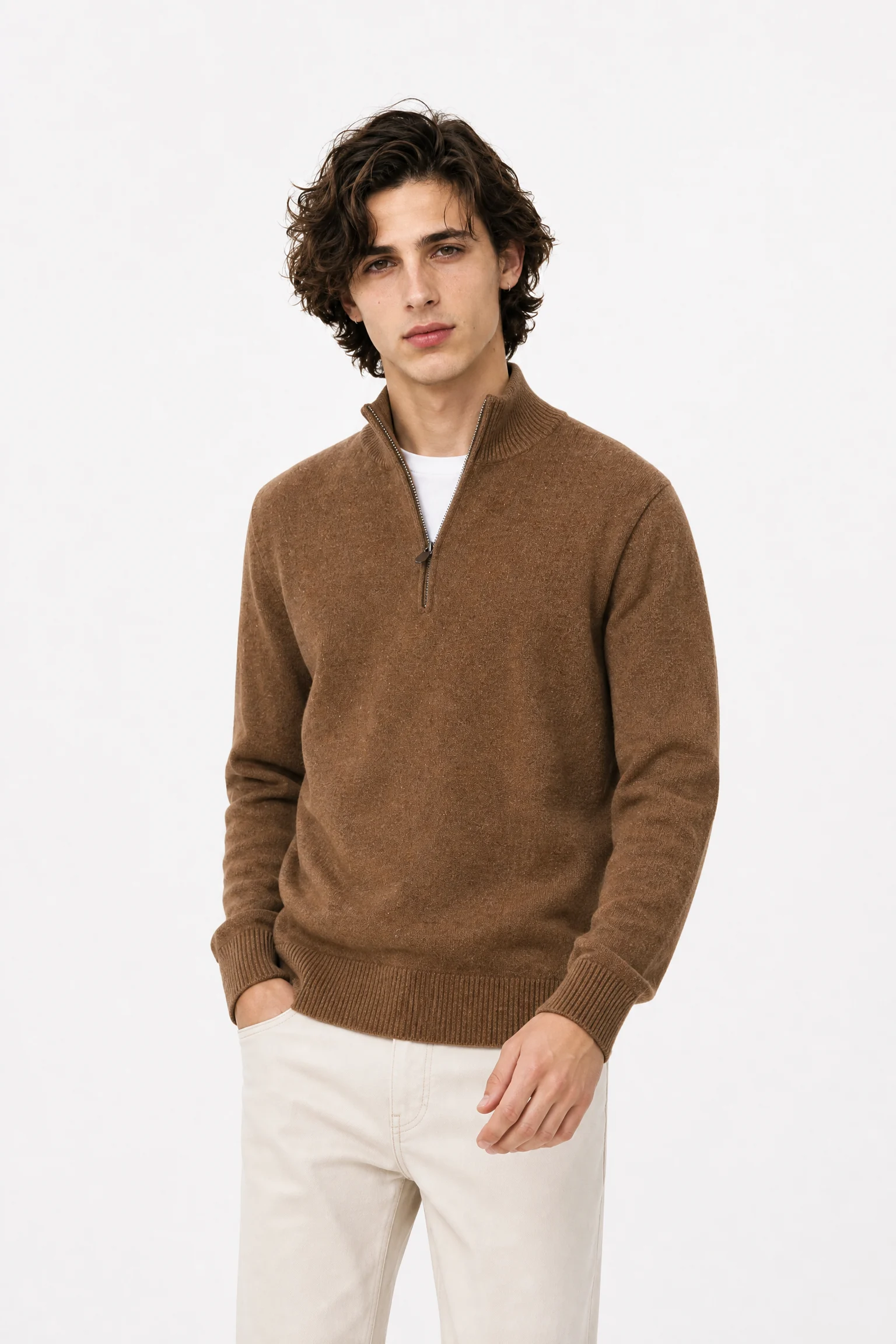
Custom knitwear production usually costs $28-$95 per sweater at OEM factory level in 2026, before duties and retail markup, with lpknit, Textile Exchange, Federal Trade Commission textile labeling rules, and European Union Regulation (EU) No 1007/2011 all shaping how boutique brands should budget merino wool, cashmere, and mohair programs.
For a boutique fashion label, the real question is rarely one flat price. A 100-piece merino crewneck, a 60-piece cashmere cardigan, and a 200-piece mohair blend pullover can sit in very different cost bands because yarn, gauge, stitch work, sampling, and finishing change the factory workload.
The search results for this topic often mix handmade sweater pricing, print-on-demand sweaters, and broad clothing line budgets. This guide focuses on OEM knitwear production for brands that need factory sampling, low minimum order quantities, and premium fibers such as merino, cashmere, and mohair.
Key Takeaways
– Most custom sweater manufacturing quotes land around $28-$95 per unit for boutique OEM orders, depending on fiber, gauge, construction, and MOQ.
– Sampling often costs $120-$450 per style, and complex intarsia, jacquard, brushed mohair, or cashmere cardigans can exceed that.
– Low MOQ production raises unit cost because programming, yarn setup, trims, and quality control are spread across fewer pieces.
– Merino is usually the most balanced premium option; cashmere raises yarn cost sharply; mohair raises finishing and handling complexity.
– Brands should request quotes with tech packs, target retail price, size range, fiber composition, gauge, quantity, and delivery market.
How Much Does Custom Knitwear Production Cost by Fiber?
Custom knitwear production cost depends first on fiber choice because yarn is usually the largest variable cost in a sweater or cardigan quote. In 2026, boutique OEM buyers should treat merino, cashmere, and mohair as different budget categories, not interchangeable “premium yarns.”
A typical OEM cost range for a custom sweater is $28-$48 per unit for merino wool blends, $45-$95 per unit for cashmere or cashmere blends, and $38-$75 per unit for mohair or mohair blends. These ranges assume a boutique order, not mass-market volume, and exclude international freight, import duty, packaging upgrades, and brand margin.
| Fiber direction | Typical OEM unit cost, 2026 | Best fit | Main cost pressure |
|---|---|---|---|
| Merino wool blend sweater | $28-$48 | Core knitwear, repeat styles, seasonal basics | Yarn quality, gauge, stitch density |
| 100% merino wool cardigan | $38-$62 | Premium everyday cardigan programs | Yarn consumption, buttons, linking time |
| Cashmere blend sweater | $45-$75 | elevated capsule collections | Cashmere yarn price, wastage control |
| 100% cashmere sweater | $68-$95+ | luxury private label knitwear | Fiber grade, pilling control, QC |
| Mohair blend pullover | $38-$75 | fuzzy seasonal styles, texture-led drops | Brushing, shedding control, finishing |
| Jacquard or intarsia sweater | $42-$85+ | graphic sweaters, statement cardigans | Programming, color changes, slower knitting |
According to the Textile Exchange Materials Market Report 2024, global fiber production reached 124 million tonnes in 2023, which keeps raw material availability and fiber sourcing central to apparel cost planning. According to Textile Exchange, 2024, wool represented about 1% of global fiber production in 2023, so premium wool programs have less commodity-scale pricing flexibility than polyester or cotton programs. According to Statista, 2024, global apparel market revenue was measured in the trillions of US dollars in 2024, which explains why brands often compare factory cost, wholesale price, and retail margin before committing to production.
For example, Elena, a London-based founder, planned a 90-piece merino cardigan test run with three colors and three sizes. Her factory target was $42 per cardigan, but switching from a plain jersey body to a rib-and-cable mix lifted the quote to $49 because the garment needed more yarn, slower machine time, and extra linking.
What Drives the Cost to Manufacture a Custom Sweater?
The cost to manufacture a custom sweater is built from yarn, knitting time, linking, washing, finishing, trims, labeling, packaging, quality control, and factory overhead. A buyer who asks only for “a sweater price” will usually receive a wide estimate because the manufacturer still has to guess the technical details.
The biggest cost drivers are fiber composition, gauge, garment weight, stitch complexity, yarn count, color count, construction method, and order size. A 12-gauge fine merino sweater may use less yarn but require tighter machine control, while a 3-gauge chunky cardigan may use more yarn and slower production time.
Common knitwear cost drivers include:
- Yarn composition: 100% cashmere costs more than merino blends or wool-nylon blends.
- Gauge: Fine gauges can demand more precise knitting; chunky gauges can consume more yarn.
- Stitch design: Cable, pointelle, jacquard, intarsia, and plating raise programming and production time.
- Construction: Fully fashioned panels usually cost more than simpler cut-and-sew knit construction.
- Trims: Horn buttons, metal zippers, branded labels, hangtags, and custom packaging add line-item cost.
- Finishing: Washing, brushing, steaming, de-pilling, and hand feel adjustments affect labor and rejection risk.
- Testing: Fiber composition, care label compliance, colorfastness, and pilling tests add cost but reduce retail risk.
A clear tech pack lowers quote uncertainty. The tech pack should show flat sketches, measurements, stitch notes, yarn composition, gauge, size grading, trim specifications, color standards, and target delivery window.
For boutique brands, lpknit works as a premium knitwear manufacturer and OEM supplier for merino, cashmere, and mohair sweaters. Buyers can use existing product directions such as a fine knit round neck cardigan or a mohair long sleeve knit sweater as reference points when discussing construction, texture, and seasonal intent.
How MOQ Changes Custom Knitwear Production Cost
MOQ changes custom knitwear production cost because setup work is similar whether a factory makes 60 pieces or 600 pieces. Low MOQ helps emerging labels test demand, but each unit carries a larger share of sampling, machine setup, yarn sourcing, color development, and quality control.
For premium knitwear, a low MOQ often sits around 50-100 pieces per style or color direction, while more efficient pricing often starts around 150-300 pieces per style. Exact minimums vary by yarn availability, color, gauge, and factory schedule.
| Order size | Typical use case | Unit cost effect | Buyer risk |
|---|---|---|---|
| 30-50 pieces | showroom sample run, influencer drop, very small capsule | Highest unit cost | Low inventory risk, limited margin |
| 60-100 pieces | boutique test run, first wholesale order | High but workable | Good for demand testing |
| 150-300 pieces | seasonal style with size/color depth | More efficient | Better margin, more inventory exposure |
| 500+ pieces | repeat core item or larger retailer program | Best factory efficiency | Requires strong sales forecast |
How much does custom knitwear production cost in usa searches often compare domestic manufacturing with offshore OEM suppliers. US production can reduce communication gaps and shipping time, but wage, facility, and compliance costs are usually higher than many overseas knitwear hubs; offshore production can lower unit cost but needs tighter sampling, fit approval, and logistics planning.
According to the US Bureau of Labor Statistics Occupational Employment and Wage Statistics, 2024, sewing machine operators in the United States had a published national wage dataset for 2024, which makes domestic apparel labor a measurable cost factor. According to the US Census Bureau Annual Survey of Manufactures, 2023, US manufacturing data separates payroll, materials, and shipment value, showing why apparel quotes must account for both labor and inputs.
Scenario example: Noah, a New York private label buyer, asked for 80 units of a 100% cashmere crewneck in four colors. The first quote came back at $91 per unit, but changing to two colors and 120 total units brought the unit price to $76 because yarn ordering and machine setup became more efficient.
Sampling, Tech Packs, and Quote Preparation Steps
Sampling costs for a custom knitwear collection usually range from $120-$450 per style for boutique OEM work, with higher fees for cashmere, mohair brushing, jacquard artwork, complex cardigan trims, or repeated fit corrections. Sampling is not just a prototype fee; it is the stage where the factory tests yarn behavior, garment measurements, finishing, and production feasibility.
A good sample process protects the buyer and the manufacturer. Without a sample, a brand may approve a price that looks attractive but fails once the garment is washed, steamed, brushed, labeled, and packed.
How to prepare for a reliable knitwear quote:
- Define the product type: pullover, cardigan, vest, jacket-like knit, dress, or set.
- Choose the fiber direction: merino, cashmere, mohair, blend, recycled yarn, or cotton-wool mix.
- Provide a tech pack with measurements, stitch callouts, gauge, trims, labels, and packaging notes.
- Set a target quantity by style, color, and size, not only a total collection number.
- Share the target retail price and wholesale margin so the factory can advise on cost engineering.
- Confirm compliance markets, such as the United States, United Kingdom, or European Union.
- Ask for sample cost, sample lead time, bulk lead time, payment terms, and what revisions are included.
- Review the approved sample against bulk production before signing off on shipment.
A sample can save thousands of dollars. If a 120-piece mohair order at $52 per unit arrives with excess shedding or unstable measurements, the buyer has a $6,240 inventory problem before freight, duty, and marketing costs.
lpknit supports factory sampling for boutique labels developing sweaters and cardigans across seasonal collections. A brand can start by reviewing lpknit’s wool sheep motif cardigan to frame artwork complexity, or the illustrated knit button cardigan to discuss jacquard, buttons, and cardigan construction.
Cost Examples for Sweaters, Cardigans, and Knit Jackets
A custom sweater usually costs less than a cardigan or knit jacket because the construction is simpler, the trim count is lower, and the finishing process has fewer moving parts. When buyers ask how much does it cost to manufacture a sweater, the useful answer is a range by fiber, design, and MOQ.
A simple merino crewneck can sit near $32-$45 per unit at boutique quantities. A cashmere cardigan with buttons, pockets, and full-fashioned panels can move into the $70-$110 range, especially if the order is low MOQ and uses multiple colors.
| Product example | Assumed MOQ | Likely OEM cost, 2026 | Notes |
|---|---|---|---|
| Merino crewneck sweater | 150 pieces | $32-$45/unit | Good core item for wholesale margin |
| Merino cardigan with buttons | 120 pieces | $42-$62/unit | Trim and linking raise cost |
| Cashmere blend pullover | 100 pieces | $48-$75/unit | Fiber mix controls price |
| 100% cashmere cardigan | 80 pieces | $78-$110/unit | Higher yarn cost and QC burden |
| Mohair blend sweater | 100 pieces | $42-$72/unit | Brushing and finishing matter |
| Knit jacket or coatigan | 100 pieces | $55-$120/unit | Heavier yarn, structure, trims |
How much does it cost to manufacture a jacket is a related but different question. A woven jacket may require shell fabric, lining, shoulder structure, hardware, and more sewing operations; a knit jacket or coatigan may avoid some tailoring but use more yarn and heavier finishing.
For a 2026 boutique launch, a practical first knitwear budget might include $3,600-$5,400 for 120 merino sweaters at $30-$45 each, $300-$900 for two to three development samples, $250-$600 for labels and packaging, and separate freight and duty. This kind of budget lets a brand test sell-through before committing to a larger seasonal program.
Compliance, Labels, and Hidden Costs Brands Miss
Compliance and labeling costs are part of custom knitwear production because fiber claims must be accurate in the sales market. A sweater sold as cashmere, merino wool, or mohair needs correct composition labeling, country-of-origin handling, care instructions, and brand documentation.
In the United States, the Federal Trade Commission Textile, Wool, and Fur Acts and Rules, 2025 explain fiber content and labeling requirements for textile products. In the European Union, Regulation (EU) No 1007/2011 governs textile fiber names and related labeling for textile products sold in EU markets.
Hidden costs often appear after the first quote. They are not always factory markups; many are real services or third-party costs required to make the product sellable and shippable.
Budget for these line items before confirming a purchase order:
- Lab dips or yarn color matching
- Extra sample rounds after fit changes
- Care labels, size labels, neck labels, and hangtags
- Polybags, tissue, cartons, barcode stickers, and retailer packing rules
- Fiber composition testing or pilling tests
- Freight, insurance, customs brokerage, and import duty
- Payment transfer fees and currency movement
- Extra units for photo samples, press samples, and wholesale showroom sets
According to the World Trade Organization World Trade Statistical Review 2024, world merchandise trade was valued at $24.01 trillion in 2023, which shows why freight, customs, and cross-border documentation remain material business concerns. According to the European Commission Access2Markets portal, 2025, import duties vary by product classification and origin, so landed cost should be checked by HS code rather than guessed.
How to Reduce Custom Knitwear Cost Without Weakening Quality
Brands can reduce custom knitwear production cost by simplifying complexity, not by forcing a factory to underquote. The strongest savings usually come from smarter design choices, consolidated colors, realistic MOQ planning, and early cost engineering.
The goal is to protect the parts shoppers notice: hand feel, fit, recovery, pilling performance, seam quality, and finishing. Cutting the wrong cost can make a premium sweater look cheaper than its retail price.
Practical cost-control moves:
- Start with one hero body and develop color or stitch variations later.
- Use merino blends for entry premium pricing and reserve cashmere for capsule pieces.
- Limit first-run colors to two or three shades per style.
- Keep trims standard until the product proves repeat demand.
- Avoid excessive size breaks on the first production run.
- Share target wholesale and retail pricing before sampling.
- Approve yarn, fit, and wash feel before adding complex artwork.
- Plan repeat orders early so the factory can reserve yarn and production capacity.
A reddit-style answer often says a handmade sweater should cost hundreds of dollars because hand knitting can take 20-60 hours. That is fair for handmade labor, but OEM factory knitwear works differently: computerized knitting, linked panels, and batch finishing spread labor across production, which is why a factory-made premium sweater can cost $28-$95 before brand markup instead of $300-$800.
For emerging labels, the best savings come from designing a commercially tight first drop. A five-style cashmere collection may look strong on a line sheet, but two well-fitted merino or mohair styles in focused colors often gives clearer sales data and lower cash exposure.
FAQ: Custom Knitwear Production Cost
How much does custom knitwear production cost for a small brand?
Custom knitwear production usually costs $28-$95 per sweater for small brand OEM orders in 2026. Merino blends often sit at the lower end, while cashmere, mohair, jacquard, and low MOQ cardigan styles move higher. Sampling, freight, duty, labels, and packaging should be budgeted separately.
How much does it cost to manufacture a sweater?
A custom sweater typically costs $28-$75 per unit at factory level for boutique quantities. A simple merino pullover may cost $32-$45, while a cashmere or mohair sweater may cost $48-$95 depending on yarn, gauge, stitch complexity, and quantity.
How much does custom knitwear production cost in USA?
Custom knitwear production in the USA often costs more than offshore OEM production because domestic labor and facility costs are higher. The benefit is closer communication, shorter shipping distance, and easier oversight. Buyers should compare landed cost, not only unit price.
Why are cashmere sweaters more expensive to manufacture?
Cashmere sweaters cost more because cashmere yarn is expensive, quality grading matters, and factories must manage pilling, shrinkage, and hand feel carefully. Low MOQ cashmere programs also spread yarn setup, sampling, and quality control across fewer units.
How much does sampling cost for custom knitwear?
Custom knitwear sampling often costs $120-$450 per style in 2026. Complex stitches, jacquard artwork, cashmere yarn, mohair brushing, or repeated fit revisions can raise the fee. Some factories credit part of the sample cost against a confirmed bulk order.
How do companies mass produce knitwear?
Companies mass produce knitwear by programming knitting machines, producing garment panels or shaped pieces, linking seams, washing, finishing, pressing, inspecting, labeling, and packing. Premium OEM knitwear still requires human quality control, especially for cashmere, mohair, and detailed cardigan styles.
How much does it cost to manufacture a jacket?
A knit jacket or coatigan may cost $55-$120 per unit in boutique OEM production because it uses more yarn, structure, trims, and finishing than a simple sweater. A woven jacket follows a different cost model involving shell fabric, lining, hardware, sewing, and tailoring operations.
What should I prepare before asking lpknit for a quote?
Prepare a tech pack, target quantity, fiber preference, gauge, size range, color count, trim details, packaging needs, target retail price, and delivery market. lpknit can then quote more accurately and suggest cost adjustments for merino, cashmere, or mohair sweater production.
Final Cost Guidance for Boutique Knitwear Buyers
How much does custom knitwear production cost? For most boutique OEM sweater and cardigan programs in 2026, the practical factory range is $28-$95 per unit, with low MOQ, cashmere, mohair, trims, stitch complexity, and sampling pushing the number upward.
I am Maya Ellison, a knitwear sourcing consultant with 9 years of first-hand OEM sweater development experience for US, UK, and EU labels. In live factory costing work, I have seen a 120-piece merino cardigan program stay near $45 per unit after simplifying trims, and an 80-piece cashmere cardigan rise above $90 per unit because the brand kept four colors, premium buttons, and a brushed finish.
The most reliable way to control cost is to quote from a complete product brief, not a vague reference image. Use verifiable rules and sources such as the Federal Trade Commission textile labeling guidance, European Union Regulation (EU) No 1007/2011, and Textile Exchange 2024 fiber reporting when planning fiber claims, labels, and sourcing priorities.
For a production-ready quote, review lpknit’s premium knitwear product range and send your sweater or cardigan brief with fiber direction, MOQ, sample needs, and target market. lpknit can help boutique brands develop merino, cashmere, and mohair knitwear with low MOQ support, factory sampling, and OEM production planning.
{
“@context”: “https://schema.org”,
“@type”: “Article”,
“headline”: “How Much Does Custom Knitwear Production Cost in 2026”,
“datePublished”: “2026-01-15”,
“dateModified”: “2026-07-21”,
“description”: “Plan realistic sweater and cardigan budgets by fiber, MOQ, sampling, trims, and freight, with OEM cost ranges for merino, cashmere, and mohair brands.”,
“keywords”: “how much does custom knitwear production cost”,
“author”: {
“@type”: “Person”,
“name”: “Maya Ellison”,
“url”: “https://lpknit.com/news/”,
“jobTitle”: “Knitwear sourcing consultant with 9 years of OEM sweater development experience for US, UK, and EU boutique labels.”
}
}
{
“@context”: “https://schema.org”,
“@type”: “FAQPage”,
“mainEntity”: [
{
“@type”: “Question”,
“name”: “How much does custom knitwear production cost for a small brand?”,
“acceptedAnswer”: {
“@type”: “Answer”,
“text”: “Custom knitwear production usually costs $28-$95 per sweater for small brand OEM orders in 2026. Merino blends often sit at the lower end, while cashmere, mohair, jacquard, and low MOQ cardigan styles move higher. Sampling, freight, duty, labels, and packaging should be budgeted separately.”
}
},
{
“@type”: “Question”,
“name”: “How much does it cost to manufacture a sweater?”,
“acceptedAnswer”: {
“@type”: “Answer”,
“text”: “custom sweater typically costs $28-$75 per unit at factory level for boutique quantities. A simple merino pullover may cost $32-$45, while a cashmere or mohair sweater may cost $48-$95 depending on yarn, gauge, stitch complexity, and quantity.”
}
},
{
“@type”: “Question”,
“name”: “How much does custom knitwear production cost in USA?”,
“acceptedAnswer”: {
“@type”: “Answer”,
“text”: “Custom knitwear production in the USA often costs more than offshore OEM production because domestic labor and facility costs are higher. The benefit is closer communication, shorter shipping distance, and easier oversight. Buyers should compare landed cost, not only unit price.”
}
},
{
“@type”: “Question”,
“name”: “Why are cashmere sweaters more expensive to manufacture?”,
“acceptedAnswer”: {
“@type”: “Answer”,
“text”: “Cashmere sweaters cost more because cashmere yarn is expensive, quality grading matters, and factories must manage pilling, shrinkage, and hand feel carefully. Low MOQ cashmere programs also spread yarn setup, sampling, and quality control across fewer units.”
}
},
{
“@type”: “Question”,
“name”: “How much does sampling cost for custom knitwear?”,
“acceptedAnswer”: {
“@type”: “Answer”,
“text”: “Custom knitwear sampling often costs $120-$450 per style in 2026. Complex stitches, jacquard artwork, cashmere yarn, mohair brushing, or repeated fit revisions can raise the fee. Some factories credit part of the sample cost against a confirmed bulk order.”
}
},
{
“@type”: “Question”,
“name”: “How do companies mass produce knitwear?”,
“acceptedAnswer”: {
“@type”: “Answer”,
“text”: “Companies mass produce knitwear by programming knitting machines, producing garment panels or shaped pieces, linking seams, washing, finishing, pressing, inspecting, labeling, and packing. Premium OEM knitwear still requires human quality control, especially for cashmere, mohair, and detailed cardigan styles.”
}
},
{
“@type”: “Question”,
“name”: “How much does it cost to manufacture a jacket?”,
“acceptedAnswer”: {
“@type”: “Answer”,
“text”: “knit jacket or coatigan may cost $55-$120 per unit in boutique OEM production because it uses more yarn, structure, trims, and finishing than a simple sweater. A woven jacket follows a different cost model involving shell fabric, lining, hardware, sewing, and tailoring operations.”
}
},
{
“@type”: “Question”,
“name”: “What should I prepare before asking lpknit for a quote?”,
“acceptedAnswer”: {
“@type”: “Answer”,
“text”: “Prepare a tech pack, target quantity, fiber preference, gauge, size range, color count, trim details, packaging needs, target retail price, and delivery market. lpknit can then quote more accurately and suggest cost adjustments for merino, cashmere, or mohair sweater production.”
}
}
]
}