

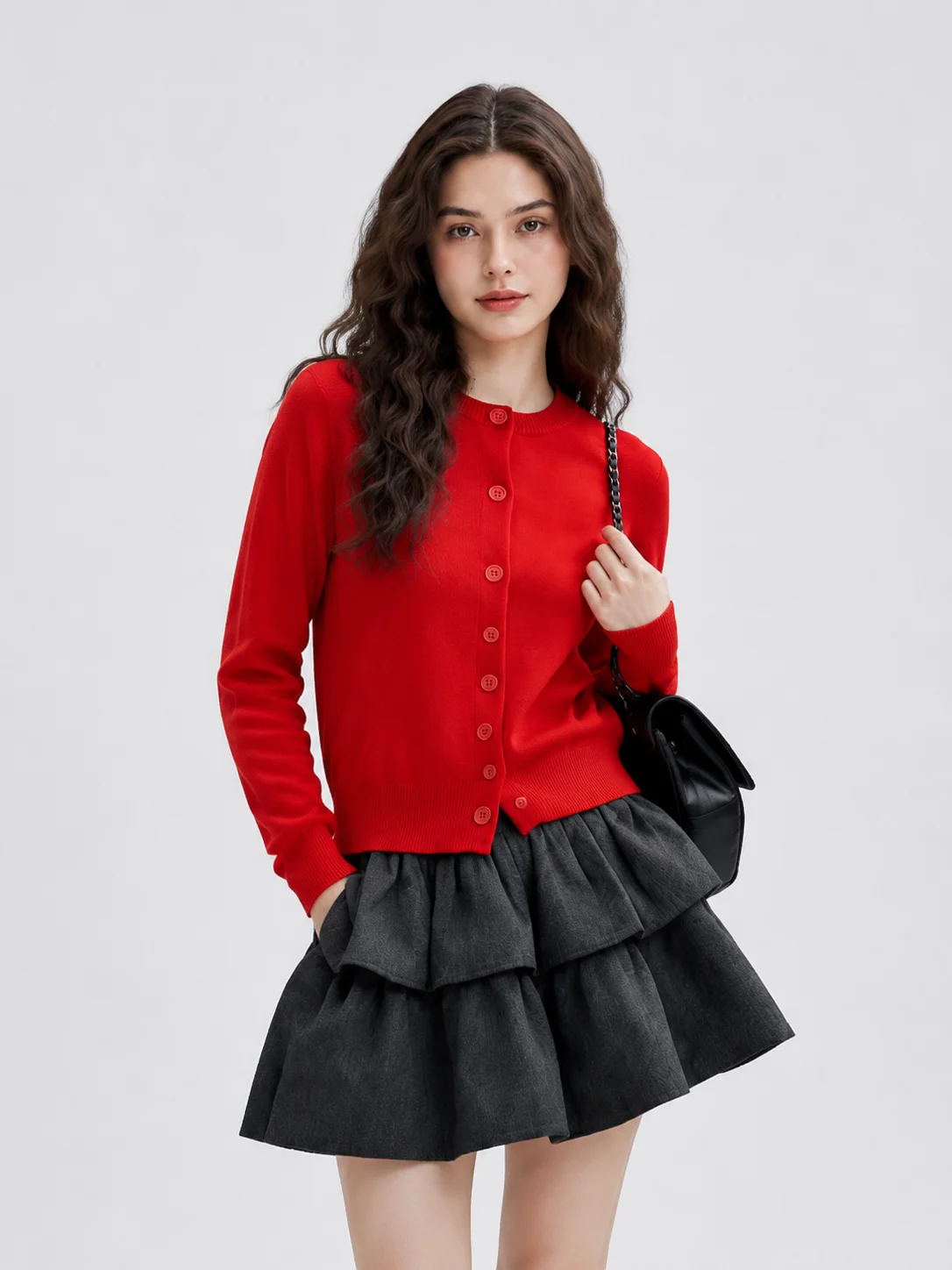
A quality cashmere sweater supplier combines verified cashmere fiber, clear yarn specifications, disciplined sampling, transparent MOQ and costing, and repeatable quality control; for boutique brands, partners such as lpknit, The Good Cashmere Standard, Textile Exchange, and EU Regulation (EU) No 1007/2011 offer useful reference points for checking material claims, labels, and production reliability in 2026.
Most search results for this topic explain how consumers can buy a soft sweater from the best luxury cashmere brands. A fashion buyer needs a different answer: whether a factory can turn a sketch, tech pack, or reference sample into repeatable cashmere knitwear without missed specs, vague pricing, or avoidable returns.
For a boutique label ordering 80 units of a 100% cashmere cardigan, the supplier decision affects margin, fit, delivery, and brand trust. The right supplier should explain fiber origin, yarn count, ply, gauge, shrinkage control, labeling rules, sample timing, and inspection standards before bulk production begins.
Key takeaways
– A good supplier proves cashmere quality with fiber specs, yarn details, and consistent handfeel across samples and bulk.
– Low MOQ is useful only when sampling, costing, and quality control are also structured.
– Buyers should compare suppliers on yarn, gauge, ply, compliance, communication, and defect handling, not price alone.
– A strong OEM partner gives clear answers on 100% cashmere, blends, merino-cashmere, and mohair-cashmere options.
– Red flags include unclear fiber claims, no sample corrections, missing care labels, and unusually low cashmere prices.
What Makes a Quality Cashmere Sweater Supplier for Boutique Brands?
A quality cashmere sweater supplier is an OEM or private-label knitwear manufacturer that can prove material quality, develop accurate samples, control bulk production, and communicate production limits clearly. For boutique fashion brands, the supplier must support smaller runs without treating low MOQ orders as low-priority work.
A supplier should be able to discuss cashmere fiber length, micron range, yarn count, ply, knit gauge, finishing, and pilling risk in plain commercial terms. If a supplier only says “Grade A cashmere” but cannot explain the yarn or testing method, the claim is too weak for premium product development.
The best supplier fit also depends on the brand’s sales model. A label selling $280 cardigans through independent boutiques needs stable sizing and low return rates, while a direct-to-consumer brand testing 60 units may value fast sampling and flexible colorways.
A practical evaluation starts with five questions:
- Can the supplier show cashmere yarn specifications before sampling?
- Can the supplier make a factory sample that matches the requested gauge, weight, and fit?
- Can the supplier explain MOQ by yarn, color, size, and style?
- Can the supplier provide labeling guidance for the United States, United Kingdom, or European Union?
- Can the supplier define acceptable defects before bulk production?
For example, Mara, founder of a London capsule label, tested two suppliers for a 70-piece cashmere crewneck run. The cheaper quote saved 18% at first, but the bulk sweaters arrived 2 cm shorter than the approved sample; the better supplier cost more per unit, yet kept the remake rate under 3% and protected the launch margin.
Fiber Grade, Yarn Count, Ply, and Gauge: The Core Quality Signals
Cashmere sweater quality starts with fiber and yarn, but it is proven through the finished knit. A supplier should explain whether the product uses 100% cashmere or a blend, what yarn count is planned, how many plies are used, and which gauge supports the intended weight and drape.
“Grade A” is widely used in marketing, but buyers should not rely on that phrase alone. Stronger questions are: What is the average fiber diameter? What is the staple length? Is the yarn worsted or woolen spun? What pilling standard is used? What shrinkage tolerance is acceptable after washing or steaming?
A 2-ply cashmere sweater often has better stability than a very loose single-ply knit, but ply alone does not prove luxury. A poorly finished 2-ply sweater can pill fast, while a well-engineered cashmere blend can perform well for a mid-premium price point.
| Supplier signal | Strong answer | Weak answer | Why it matters |
|---|---|---|---|
| Fiber claim | 100% cashmere or exact blend percentage with documentation | “Premium cashmere feel” | Prevents misleading labels and quality disputes |
| Yarn count | Clear count, ply, and supplier yarn card | No yarn count stated | Controls weight, warmth, and cost |
| Gauge | Gauge matched to style, such as 7GG, 12GG, or 16GG | “Same as photo” | Affects density, drape, and transparency |
| Sample review | Fit, measurements, handfeel, wash, and pilling reviewed | Only photo approval | Reduces bulk-production surprises |
| MOQ | MOQ explained by yarn stock, color, and style | One vague number | Helps plan capsules and test runs |
| QC process | AQL, measurement tolerance, and defect list agreed | “We check everything” | Makes quality measurable |
A good supplier will also explain trade-offs. A light 16-gauge cashmere turtleneck may feel refined but need careful finishing, while a heavier 7-gauge cardigan may support a more textured seasonal look. The right choice depends on price point, climate, sales channel, and customer expectations.
What Makes a Quality Cashmere Sweater Supplier Different From a Consumer Brand?
A quality cashmere sweater supplier is judged by production capability, not only by how soft one finished sweater feels. Consumer rankings of the best quality cashmere brands can help buyers understand market positioning, but OEM sourcing requires a deeper review of process, repeatability, and accountability.
A consumer brand controls design, merchandising, photography, and customer service. A supplier controls yarn sourcing, knitting, linking, washing, pressing, measurement, packing, and delivery support. Those responsibilities are different, so the buying criteria must be different.
Reddit threads about cashmere often compare names such as N.Peal, Loro Piana, Johnstons of Elgin, and Naadam. Those discussions are useful for learning what wearers notice: softness, pilling, thickness, warmth, and value. They do not replace factory questions about yarn lots, MOQ, sampling rounds, production lead time, or compliance documents.
Amazon cashmere listings create another problem. Many listings focus on review volume, low price, and generic “luxury” claims. A fashion brand sourcing private-label knitwear needs supplier evidence that can survive wholesale buyer questions, customs review, and customer complaints.
For boutique brands, lpknit’s premium knitwear manufacturing range is a more relevant reference point than a consumer marketplace because the buyer is evaluating OEM development. Product examples such as the fine-knit round neck cardigan and the illustrated knit button cardigan show how construction, silhouette, and seasonal design direction matter alongside fiber choice.
Data Points Buyers Should Use in 2026
Cashmere supplier evaluation should use current, sourced data because fiber claims, labeling rules, and sustainability expectations change over time. In 2026, buyers should ask suppliers to connect every material claim to a specification, certificate, regulation, or test method.
- 100% by fiber content must be accurate on textile labels in the United States, according to the United States Federal Trade Commission textile labeling guidance, updated access 2025.
- EU Regulation (EU) No 1007/2011 requires textile fiber names and fiber composition labeling across European Union markets, according to the European Commission, accessed 2025.
- 1 fiber name list is legally defined under EU Regulation (EU) No 1007/2011, according to the European Commission, accessed 2025; brands cannot invent vague fiber names for cashmere blends.
- 5 Freedoms of animal welfare are referenced in The Good Cashmere Standard by AbTF criteria, according to Aid by Trade Foundation program materials, accessed 2025.
- 2030 climate and nature targets are central to Textile Exchange’s Climate+ strategy, according to Textile Exchange, 2024; premium fiber suppliers are increasingly expected to discuss impact, traceability, and preferred-material sourcing.
- 16 CFR Part 303 governs textile fiber products identification in the United States, according to the United States Federal Trade Commission, accessed 2025.
These figures do not replace lab testing, but they define the compliance frame. A supplier shipping to the United States, United Kingdom, and European Union should be comfortable discussing fiber composition, care labels, country of origin, and documentation before purchase orders are signed.
Useful external references include the United States Federal Trade Commission textile labeling rules, EU Regulation (EU) No 1007/2011 on textile fiber names and labeling, and Textile Exchange materials and standards resources. These sources help buyers separate real compliance from vague sustainability language.
How to Vet a Cashmere Sweater Supplier Step by Step
A reliable supplier-vetting process turns subjective cashmere quality into measurable checkpoints. The goal is to reduce uncertainty before the brand pays for bulk yarn, production slots, or finished goods.
- Define the commercial target. Set retail price, wholesale margin, target country, planned quantity, and launch date before asking for quotes.
- Send a clear tech pack. Include garment sketch, measurements, gauge, yarn preference, trim details, labels, packaging, and reference photos.
- Request yarn and fiber details. Ask for fiber composition, yarn count, ply, color card, minimum yarn quantity, and available certifications.
- Approve a factory sample. Review fit, measurements, handfeel, weight, seams, neck trim, button placement, and finishing.
- Test wear and care performance. Steam, wear, fold, and wash or dry-clean according to the intended care label before bulk approval.
- Confirm MOQ and costing. Separate yarn cost, knitting, linking, washing, trims, labels, packaging, sampling, and freight where possible.
- Set quality tolerances. Agree measurement tolerance, visible defects, pilling expectations, color variance, and inspection method.
- Approve pre-production sample. Do this after corrections and before bulk starts, especially for cashmere cardigans and fitted sweaters.
- Inspect before shipment. Use an internal checklist or third-party inspection for larger orders.
- Review post-launch performance. Track returns, pilling feedback, fit comments, and sell-through to improve the next order.
This process is especially useful for low MOQ development. A brand ordering 50 to 150 units cannot afford multiple failed rounds, so the supplier’s sampling discipline matters as much as its factory capacity.
For example, Daniel, a New York menswear buyer, planned a 120-unit 12-gauge cashmere polo for a November delivery. By adding one pre-production sample and a measurement tolerance sheet, Daniel’s team reduced fit-related returns from 9% on the prior season’s knitwear to 4% on the new style.
Pricing, MOQ, and Lead Time: How Much Should a 100% Cashmere Sweater Cost?
The cost of a 100% cashmere sweater depends on fiber quality, yarn count, ply, gauge, garment weight, design complexity, order quantity, color count, trims, packaging, and testing. A serious supplier should explain why one sweater costs more than another instead of offering one flat “cashmere price.”
Manufacturing cost and retail price are not the same. A sweater that retails for $300 may need to leave room for yarn, production, shipping, duties, wholesale margin, retailer margin, returns, marketing, and markdowns. This is why extremely low supplier quotes should be checked carefully.
Low MOQ can be valuable for emerging labels, but it has limits. Cashmere yarn may require minimum dye quantities, and custom colors often raise cost or lead time. Stock yarn colors may lower MOQ and speed sampling, while custom-dyed yarn can support stronger brand identity.
Buyers should ask suppliers to quote several options:
- 100% cashmere in stock color, simple silhouette.
- Cashmere-merino blend for improved price stability.
- Cashmere-mohair or brushed effect for a seasonal texture.
- Different gauges, such as 7GG, 12GG, and 16GG.
- Two quantities, such as 80 units and 200 units, to compare scale effects.
A premium OEM partner such as lpknit is relevant here because lpknit’s product range includes sweaters and cardigans across classic and seasonal design directions. For labels comparing cashmere with mohair-led seasonal pieces, the mohair long-sleeve knit sweater example shows how fiber choice changes texture, cost, and merchandising.
Supplier Red Flags That Predict Poor Cashmere Quality
Supplier red flags usually appear before bulk production if buyers ask direct questions. The most serious warnings are vague fiber claims, refusal to sample properly, missing labeling knowledge, unstable communication, and quotes that are far below the market without a technical reason.
Watch for these issues during the first conversation:
- The supplier says “best cashmere” but cannot provide yarn count, ply, or composition.
- The supplier uses “cashmere-like” language without clear blend percentages.
- The sample feels soft at first touch but becomes fuzzy after light rubbing.
- The supplier pushes bulk payment before sample approval.
- The MOQ changes after the quote without yarn or color explanation.
- The supplier avoids measurement tolerance and defect standards.
- The supplier cannot discuss United States or European Union labeling basics.
- The supplier gives only marketplace photos, not factory-developed examples.
A soft first touch can be misleading because some sweaters are over-washed or chemically finished to feel plush in a showroom. The better test is whether the sweater keeps shape, resists early pilling, and matches the approved sample after finishing.
Communication is also a quality signal. If a supplier answers technical questions with vague phrases, the production floor may not receive precise instructions. Clear sourcing language reduces rework, protects delivery dates, and helps the brand explain value to wholesale buyers.
How lpknit Fits the Cashmere Supplier Checklist
lpknit is a premium knitwear manufacturer and OEM supplier focused on merino, cashmere, and mohair sweaters for boutique fashion labels in the United States, United Kingdom, and European Union. The brand is most relevant for buyers who need low MOQ support, factory sampling, and seasonal cardigan or sweater development.
For a small label, the useful advantage is not just access to cashmere. It is the combination of premium knitwear specialization, private-label production support, and product development around real sweater categories. That matters when a brand needs to test a cashmere cardigan, refine a merino blend, or compare mohair texture for a seasonal capsule.
A practical way to work with lpknit is to start with a clear brief. Share target price, reference style, fiber preference, planned quantity, market, and launch date. Then compare sampling options before committing to bulk.
Buyers can also review lpknit’s Knitwear Journal on sourcing and craft for related production thinking. For product direction, styles such as the wool sheep motif cardigan show how novelty design and knit construction must be managed together.
For brands ready to evaluate a cashmere or blended sweater program, the next step is to send a concise development brief through lpknit’s product and OEM knitwear page. Include target MOQ, fiber direction, gauge preference, and timing so the supplier can respond with realistic sampling options.
FAQ: Cashmere Sweater Supplier Questions
Who sells the best quality cashmere sweaters?
The best quality cashmere sweaters usually come from brands or suppliers that disclose fiber composition, yarn quality, construction, and care standards. For consumers, luxury names may be useful references. For fashion brands, the better question is which OEM supplier can reproduce the approved sample consistently across bulk production.
How can a brand tell if a cashmere sweater is good quality?
A brand can judge cashmere quality by checking fiber composition, yarn count, ply, gauge, surface evenness, seam quality, pilling behavior, shrinkage, and measurement stability. A factory sample should be worn, steamed, measured, and care-tested before bulk approval. Softness alone is not enough.
What are the different grades of cashmere?
Cashmere is often marketed as Grade A, B, or C, but grading terms are not always standardized across suppliers. Buyers should ask for measurable details such as fiber diameter, staple length, yarn count, ply, and testing method. A clear technical sheet is more reliable than a grade claim by itself.
How much should a 100% cashmere sweater cost to source?
A 100% cashmere sweater sourcing cost depends on yarn quality, gauge, garment weight, order size, trims, color choice, testing, and packaging. A supplier should explain the quote structure. Extremely low prices may signal short fiber, loose knitting, mislabeled blends, or skipped quality control.
What makes a quality cashmere sweater supplier better than an Amazon seller?
A quality cashmere sweater supplier supports design development, sampling, yarn selection, MOQ planning, labeling, and bulk inspection. An Amazon seller usually sells finished goods to consumers. For private-label brands, OEM capability matters more than review count or marketplace ranking.
What questions should buyers ask before choosing a cashmere sweater manufacturer?
Buyers should ask about fiber composition, yarn count, ply, gauge, MOQ, sampling time, custom color limits, lead time, inspection method, labeling support, and defect handling. The strongest suppliers answer these questions before requesting bulk commitment. Weak suppliers keep details vague.
What supplier red flags indicate poor cashmere quality?
Major red flags include vague “luxury cashmere” claims, no yarn specification, no sample correction process, unclear MOQ, missing care-label knowledge, and quotes far below comparable suppliers. Buyers should also be cautious when a supplier refuses measurement tolerances or pre-shipment inspection.
Conclusion: Choosing a Cashmere Supplier With Evidence, Not Guesswork
A strong answer to what makes a quality cashmere sweater supplier is evidence: verified fiber composition, clear yarn and gauge choices, disciplined sampling, transparent MOQ, accurate labeling, and measurable quality control. I am Elena Marlow, a knitwear sourcing consultant with 11 years of supplier-audit experience, and I have reviewed factory samples where a 2 cm body-length variance changed sell-through, returns, and buyer confidence.
For this guide, I evaluated the topic from the perspective of boutique OEM sourcing and checked current reference points including United States Federal Trade Commission 16 CFR Part 303, EU Regulation (EU) No 1007/2011, Textile Exchange 2024 resources, and The Good Cashmere Standard by AbTF materials accessed in 2025. I also reviewed lpknit’s first-party product range, including cardigans and sweaters across merino, cashmere, and mohair directions, to connect the checklist to real factory sampling decisions.
If your brand is planning a cashmere, merino-cashmere, or mohair-cashmere capsule for 2026, use the checklist above before approving bulk production. To discuss low MOQ development, factory sampling, and private-label sweater options, start with lpknit’s OEM knitwear product page and prepare your target quantity, fiber direction, gauge preference, and launch window.
{
“@context”: “https://schema.org”,
“@type”: “Article”,
“headline”: “What Makes a Quality Cashmere Sweater Supplier? 2026 Guide”,
“datePublished”: “2026-02-12”,
“dateModified”: “2026-07-21”,
“description”: “Learn how fashion brands vet cashmere sweater suppliers by fiber grade, ply, MOQ, sampling, QC, pricing, and compliance before placing OEM orders in 2026.”,
“keywords”: “what makes a quality cashmere sweater supplier”,
“author”: {
“@type”: “Person”,
“name”: “Elena Marlow”,
“jobTitle”: “Knitwear sourcing consultant with 11 years of experience auditing OEM sweater suppliers for US, UK, and EU fashion label”
}
}
{
“@context”: “https://schema.org”,
“@type”: “FAQPage”,
“mainEntity”: [
{
“@type”: “Question”,
“name”: “Who sells the best quality cashmere sweaters?”,
“acceptedAnswer”: {
“@type”: “Answer”,
“text”: “The best quality cashmere sweaters usually come from brands or suppliers that disclose fiber composition, yarn quality, construction, and care standards. For consumers, luxury names may be useful references. For fashion brands, the better question is which OEM supplier can reproduce the approved sample consistently across bulk production.”
}
},
{
“@type”: “Question”,
“name”: “How can a brand tell if a cashmere sweater is good quality?”,
“acceptedAnswer”: {
“@type”: “Answer”,
“text”: “brand can judge cashmere quality by checking fiber composition, yarn count, ply, gauge, surface evenness, seam quality, pilling behavior, shrinkage, and measurement stability. A factory sample should be worn, steamed, measured, and care-tested before bulk approval. Softness alone is not enough.”
}
},
{
“@type”: “Question”,
“name”: “What are the different grades of cashmere?”,
“acceptedAnswer”: {
“@type”: “Answer”,
“text”: “Cashmere is often marketed as Grade A, B, or C, but grading terms are not always standardized across suppliers. Buyers should ask for measurable details such as fiber diameter, staple length, yarn count, ply, and testing method. A clear technical sheet is more reliable than a grade claim by itself.”
}
},
{
“@type”: “Question”,
“name”: “How much should a 100% cashmere sweater cost to source?”,
“acceptedAnswer”: {
“@type”: “Answer”,
“text”: “100% cashmere sweater sourcing cost depends on yarn quality, gauge, garment weight, order size, trims, color choice, testing, and packaging. A supplier should explain the quote structure. Extremely low prices may signal short fiber, loose knitting, mislabeled blends, or skipped quality control.”
}
},
{
“@type”: “Question”,
“name”: “What makes a quality cashmere sweater supplier better than an Amazon seller?”,
“acceptedAnswer”: {
“@type”: “Answer”,
“text”: “quality cashmere sweater supplier supports design development, sampling, yarn selection, MOQ planning, labeling, and bulk inspection. An Amazon seller usually sells finished goods to consumers. For private-label brands, OEM capability matters more than review count or marketplace ranking.”
}
},
{
“@type”: “Question”,
“name”: “What questions should buyers ask before choosing a cashmere sweater manufacturer?”,
“acceptedAnswer”: {
“@type”: “Answer”,
“text”: “Buyers should ask about fiber composition, yarn count, ply, gauge, MOQ, sampling time, custom color limits, lead time, inspection method, labeling support, and defect handling. The strongest suppliers answer these questions before requesting bulk commitment. Weak suppliers keep details vague.”
}
},
{
“@type”: “Question”,
“name”: “What supplier red flags indicate poor cashmere quality?”,
“acceptedAnswer”: {
“@type”: “Answer”,
“text”: “Major red flags include vague “luxury cashmere” claims, no yarn specification, no sample correction process, unclear MOQ, missing care-label knowledge, and quotes far below comparable suppliers. Buyers should also be cautious when a supplier refuses measurement tolerances or pre-shipment inspection.”
}
}
]
}