

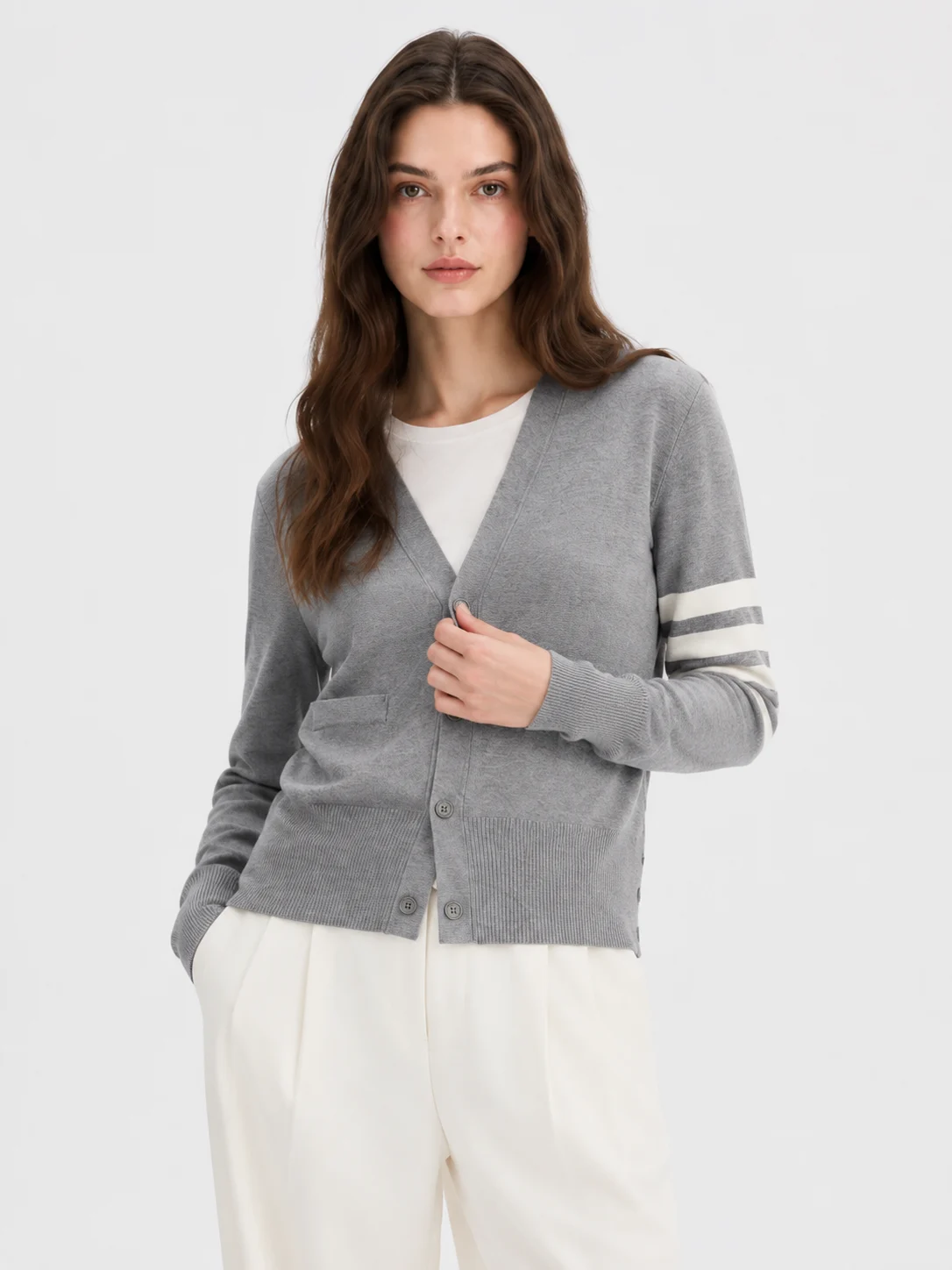
Yes, small brands can produce custom sweaters in 2026 if they work with a real original equipment manufacturer such as lpknit, prepare a tech pack, choose feasible yarns such as merino wool, cashmere, or mohair, and start with factory sampling plus a low minimum order quantity, often used by boutique labels in the United States, United Kingdom, and European Union to test cardigan and sweater designs before committing to larger production runs.
Small fashion brands usually ask this question after seeing search results for custom sweatshirts embroidered, high-quality custom hoodies, and print-on-demand apparel. Those options can be useful for merch, but they are not the same as producing knitted sweaters from yarn.
A custom sweater is built through yarn selection, gauge planning, stitch programming, panel knitting, linking, washing, finishing, and quality control. That makes the process more technical than printing on a blank hoodie, but it also gives small brands more control over fit, handfeel, fiber content, and seasonal collection quality.
Key Takeaways
– Small brands can produce custom sweaters with low MOQ when the design is realistic and the factory supports sampling.
– Merino wool, cashmere, and mohair are premium options, but each affects cost, lead time, care labels, and fit.
– A tech pack, target price, size range, reference sample, and yarn direction reduce delays.
– OEM knitwear production is different from custom sweatshirts embroidered on blank garments.
– lpknit supports boutique labels seeking premium knitwear manufacturing, low MOQ, and factory sampling.
Can Small Brands Produce Custom Sweaters With Low MOQ?
Small brands can produce custom sweaters with low MOQ when the manufacturer is set up for boutique development, not only mass production. Low MOQ works best for focused styles, limited colorways, and proven yarn categories such as merino wool, cashmere, and mohair.
For a new label, low MOQ does not mean unlimited flexibility. A factory still needs to buy yarn, allocate knitting machine time, create samples, test shrinkage, and finish garments consistently. The most efficient small-brand approach is to start with one or two sweater bodies, then adjust color, buttons, trims, or stitch details.
A realistic example is Clara, a London-based boutique founder planning a 36-piece winter capsule. Instead of ordering five experimental shapes, Clara develops one ribbed merino cardigan and one brushed mohair pullover, samples both, and launches only the cardigan after pre-orders show a 68% preference for that style.
Low MOQ also helps private label buyers avoid inventory risk. A New York concept store might test 80 cashmere-blend cardigans in two colors, sell through 61 units in six weeks, and reorder the stronger color before the next seasonal drop.
For small brands comparing suppliers, lpknit’s premium knitwear product range shows the type of cardigan and sweater styles that can support seasonal collection planning without starting from generic blanks.
Custom Sweaters vs Custom Sweatshirts: What Is the Real Difference?
Custom sweaters are manufactured from yarn into knitted garments, while custom sweatshirts are usually cut-and-sewn fleece garments or blank hoodies decorated with print, embroidery, or labels. That difference affects MOQ, price, sample timing, design control, and what buyers perceive as premium.
| Decision Point | Custom Knitted Sweater | Custom Sweatshirt or Hoodie |
|---|---|---|
| Main material | Yarn such as merino, cashmere, mohair, cotton, blends | Fleece, jersey, French terry, or blank garments |
| Design method | Knit structure, gauge, panels, stitch, trims | Print, embroidery, appliqué, labels |
| Best use case | Boutique fashion collections and private label knitwear | Merch, teamwear, events, streetwear basics |
| Development need | Tech pack, yarn choice, sample fitting | Artwork file, blank selection, decoration placement |
| Premium signal | Fiber content, handfeel, fit, finishing | Decoration quality, blank weight, branding |
| Typical risk | Yarn cost, shrinkage, sizing, MOQ | Print durability, embroidery placement, blank stock |
This distinction matters because many search results answer “Where can I make my own custom clothes?” with hoodie printers. A brand asking “Can small brands produce custom sweaters in usa?” or “Can small brands produce custom sweaters near me?” often needs an OEM knitwear partner, not only a decoration service.
Custom sweatshirts embroidered can be produced quickly for campaigns. High-quality custom hoodies can support brand merchandise. A merino cardigan or cashmere crewneck, however, needs knitwear-specific sampling and production control.
What Does a Small Brand Need Before Contacting a Sweater Manufacturer?
A small brand should prepare a tech pack, target retail price, size range, yarn preference, reference photos, and expected order quantity before contacting a sweater manufacturer. These details help an original equipment manufacturer evaluate whether the design fits the brand’s budget and production timeline.
A basic sweater development pack should include:
- Flat sketch or reference images showing front, back, sleeve, neckline, and trims.
- Target fiber direction such as 100% merino wool, cashmere blend, mohair blend, or cotton blend.
- Gauge preference such as fine knit, mid-gauge, chunky rib, or open stitch.
- Measurements for chest, body length, sleeve length, shoulder, hem, and cuff.
- Color references using Pantone, yarn card numbers, or physical swatches.
- Brand details including label placement, care label needs, hangtag, and packaging.
- Commercial target covering MOQ, launch date, target wholesale price, and target retail price.
A useful first message is short and specific: “We are developing a 60-piece women’s merino cardigan run for Fall 2026, with two colors, sizes XS-L, and a target wholesale price of $68.” That gives the factory enough context to discuss yarn, sampling, and pricing.
Small brands can also review existing construction ideas such as lpknit’s fine knit round neck cardigan or wool sheep motif cardigan before requesting a private-label variation.
How Much Does It Cost to Make a Custom Sweater?
The cost to make a custom sweater depends on fiber, gauge, garment weight, stitch complexity, trim quality, MOQ, sampling rounds, and packaging. A premium OEM sweater usually costs more than a decorated hoodie because yarn quality and knitting time drive the factory cost.
For 2026 planning, many small brands should treat the first sample as a development investment. A simple merino pullover may be easier to cost than a brushed mohair cardigan with jacquard artwork, custom buttons, and hand-linked finishing.
Common cost drivers include:
- Fiber content: Cashmere is usually more expensive than merino wool; mohair blends vary by origin and blend ratio.
- Garment weight: A chunky cardigan uses more yarn than a fine-gauge crewneck.
- Stitch complexity: Cables, intarsia, jacquard, and openwork increase programming and knitting time.
- MOQ and color count: More colors can split the order and raise the per-unit cost.
- Finishing: Washing, brushing, pressing, linking, button attachment, and quality control affect labor.
- Compliance and labeling: Fiber labels must match laws in the selling market.
Here is a practical scenario. Daniel, a Los Angeles menswear founder, budgets for 100 merino crewnecks with two colors and five sizes. The factory advises reducing the first run to one body shape and two colorways, which cuts sample revisions from three to two and helps Daniel launch eight weeks earlier.
For comparison, custom sweatshirts embroidered may look cheaper at first because the blank garment already exists. High-quality custom hoodies can still be profitable, but the buyer is paying for decoration and blank quality, not original knit development.
What Is the Minimum Order Quantity for Custom Knitwear?
The minimum order quantity for custom knitwear is the smallest production run a factory can accept while still covering yarn procurement, machine setup, sampling, finishing, and quality control. Low MOQ is possible, but it depends on fiber, color count, yarn availability, and construction complexity.
Small brands should ask whether MOQ is calculated by style, color, size, or total units. A “100-piece MOQ” may mean 100 units per style, or it may mean 100 units per color. That detail changes the inventory risk for boutique collections.
A low-MOQ strategy usually works like this:
- Select one core sweater silhouette.
- Limit the first run to one or two colors.
- Use an available yarn quality when possible.
- Keep the size range tight for the first test.
- Confirm sample fit before ordering bulk yarn.
- Reorder winning colors after sell-through data is available.
Low MOQ also affects pricing. A 50-piece run often has a higher unit cost than a 300-piece run because sampling, setup, and finishing costs are spread across fewer garments. The trade-off may still be smart if the brand avoids dead stock.
A boutique label asking “Can small brands produce custom sweaters near me?” should define whether “near me” means local communication, domestic warehousing, or actual domestic knitting. For many US, UK, and EU brands, a responsive OEM supplier with clear sampling can be more useful than a nearby printer that only decorates blanks.
What Timeline Should Small Brands Expect for Sampling and Production?
Small brands should expect custom sweater sampling and production to take several weeks to several months, depending on tech pack readiness, yarn sourcing, sample revisions, approval speed, and shipping route. Knitwear timelines are easier to control when the brand approves materials and measurements early.
A typical OEM knitwear development path is:
- Brief review: The brand sends sketches, references, target quantity, and fiber direction.
- Feasibility check: The factory reviews yarn, gauge, stitch, MOQ, and estimated timeline.
- Sample quote: The factory quotes sample cost, lead time, and likely production range.
- First sample: The factory knits, washes, finishes, and sends the first sample.
- Fit and quality comments: The brand gives measured comments, not vague style notes.
- Pre-production sample: The final sample confirms yarn, color, fit, label, and finishing.
- Bulk production: The factory produces approved units and performs quality checks.
- Packing and shipment: The order is packed by SKU, size, color, and carton details.
The fastest projects usually use existing yarns, clear measurement specs, and limited stitch changes. The slowest projects involve custom-dyed yarns, unclear fit goals, complex jacquard patterns, or late packaging decisions.
Small brands planning seasonal drops should work backward from the sales date. A Fall 2026 knitwear launch should not begin sampling after wholesale buyers have already requested line sheets.
Which Materials Make Sense for Small-Brand Custom Sweaters?
Merino wool, cashmere, and mohair make sense for small-brand custom sweaters when the brand wants a premium handfeel and a higher perceived value than standard cotton or acrylic knitwear. The right material depends on price point, care expectations, climate, and customer sensitivity.
Merino wool is a strong starting point for small brands because it balances softness, structure, breathability, and durability. Cashmere is best for premium capsules where the retail price can support higher yarn cost. Mohair works well for seasonal texture, brushed surfaces, and statement sweaters, but the design must account for shedding and care.
A simple decision guide:
- Choose merino wool for everyday premium sweaters, cardigans, and fine-knit basics.
- Choose cashmere for luxury gifting, elevated boutiques, and small high-margin runs.
- Choose mohair for texture-led fashion capsules, brushed pullovers, and statement cardigans.
- Choose blends when the brand needs durability, lower cost, or easier care.
lpknit’s mohair long sleeve knit sweater is a useful reference for brands exploring seasonal texture rather than basic fleece or blank hoodie decoration.
Labels also matter. The United States Federal Trade Commission explains textile fiber identification rules in its 2024 business guidance, and the European Union’s Regulation (EU) No 1007/2011 sets textile fiber naming and labeling rules for EU sales.
2026 Sourcing Facts Small Brands Should Know
Small brands should use current sourcing facts when planning custom sweater development because fiber markets, labeling rules, and apparel demand affect cost and compliance. The following data points are useful for 2026 knitwear planning.
- Global fiber production reached 124 million tonnes, according to the Textile Exchange Materials Market Report, 2024.
- Wool represented about 1% of global fiber production, according to the Textile Exchange Materials Market Report, 2024.
- The European Union apparel market included 27 member states under shared textile labeling rules, according to Regulation (EU) No 1007/2011, updated access in 2026.
- The United States Federal Trade Commission requires textile products to disclose fiber content, country of origin, and manufacturer or dealer identity, according to the FTC Textile Fiber Products Identification Act guidance, 2024.
- Online retail sales accounted for 15.6% of total US retail sales in Q3 2025, according to the United States Census Bureau Quarterly Retail E-Commerce Sales report, 2025.
These facts do not tell a brand which sweater to make. They do show why fiber choice, labeling, and online sell-through planning should be discussed before bulk production starts.
How Should a Small Brand Choose an OEM Sweater Partner?
A small brand should choose an OEM sweater partner by checking knitwear specialization, sample quality, MOQ flexibility, material knowledge, communication clarity, and experience with boutique production. A supplier that only sells blanks or merch decoration may not be the right partner for premium knitwear.
Look for these signals before paying for sampling:
- Knitwear focus: The supplier understands gauge, yarn count, linking, washing, and shrinkage.
- Relevant materials: The supplier can discuss merino wool, cashmere, mohair, and blends clearly.
- Sample process: The supplier explains sample rounds, measurement checks, and approval steps.
- Low MOQ support: The supplier can support smaller runs without treating them as an afterthought.
- Private label ability: The supplier can handle brand labels, care labels, trims, and packaging.
- Export awareness: The supplier understands US, UK, and EU buyer expectations.
- Clear communication: The supplier asks practical questions instead of only giving a quick price.
Avoid choosing only by the lowest quote. A low price can hide weak yarn, poor recovery, unstable sizing, or finishing shortcuts. For a boutique label, a sweater that pills heavily after three wears can cost more in returns and brand damage than a higher unit cost.
lpknit is positioned for boutique fashion brands, emerging labels, and private label buyers seeking premium knitwear manufacturing with low MOQ and factory sampling. Brands can also review the lpknit Knitwear Journal for sourcing and craft topics while preparing their first development brief.
FAQ: Can Small Brands Produce Custom Sweaters?
Can small brands produce custom sweaters without a huge order?
Yes, small brands can produce custom sweaters without a huge order when they choose a low-MOQ OEM knitwear manufacturer and keep the first style focused. The best first run usually limits color count, uses available yarns, and starts with factory sampling before bulk production.
How much does it cost to make a custom sweater?
A custom sweater’s cost depends on fiber, garment weight, stitch complexity, MOQ, finishing, and packaging. Merino wool is often more accessible than cashmere, while mohair and complex jacquard designs can increase sample and unit costs. Ask for sample cost and bulk estimates separately.
What is the minimum order quantity for custom knitwear?
The minimum order quantity for custom knitwear varies by factory, yarn, color, and construction. Some boutique-focused OEM suppliers support low MOQ, but the brand should confirm whether MOQ is counted per style, per color, or across the full order.
Can small brands produce custom sweaters in USA?
Yes, small brands can produce custom sweaters in USA markets, but the supplier may be domestic or international depending on budget, yarn access, and timeline. US brands often work with overseas OEM knitwear factories while managing sampling, fit approval, and labeling carefully.
Can small brands produce custom sweaters near me?
Yes, but “near me” should be defined carefully. A nearby print shop may offer custom sweatshirts embroidered, while an OEM knitwear supplier may be better for original merino, cashmere, or mohair sweaters. The right partner depends on product type, not only location.
Are custom sweaters different from high-quality custom hoodies?
Yes, custom sweaters are different from high-quality custom hoodies because sweaters are knitted from yarn and hoodies are usually cut-and-sewn or decorated blanks. Hoodies work well for merch and streetwear basics, while sweaters suit premium fashion collections and private label knitwear.
What should I send to a sweater manufacturer first?
Send a tech pack, reference images, target quantity, size range, yarn preference, color direction, target price, and launch timeline. If the brand does not have a full tech pack, a clear brief plus reference sample can still help the factory assess feasibility.
How long does custom sweater production take?
Custom sweater production often takes several weeks to several months from first brief to shipment. The timeline depends on sample rounds, yarn availability, color approvals, fit comments, production capacity, and shipping method. Clear approvals shorten the process.
When Is lpknit a Good Fit for Small-Brand Sweater Production?
lpknit is a good fit when a boutique label or private label buyer needs premium knitwear development rather than generic hoodie printing. The company focuses on merino, cashmere, and mohair sweaters, with factory sampling and low MOQ support for brands in the United States, United Kingdom, and European Union.
This makes lpknit relevant for brands building seasonal cardigans, classic pullovers, fine-knit basics, brushed mohair pieces, and boutique capsule collections. It is less relevant for buyers who only need one-off event merch, direct-to-garment printing, or blank custom sweatshirts embroidered with a logo.
A strong inquiry to lpknit should include product category, target fiber, estimated order size, size range, launch market, and sample goal. For example: “We are an EU womenswear label developing a 120-unit cashmere-blend cardigan capsule for Winter 2026 and need one fit sample plus one pre-production sample before bulk.”
Brands ready to discuss development can start with lpknit’s OEM knitwear product page and choose reference styles that match their target market, price point, and season.
Conclusion: Can Small Brands Produce Custom Sweaters in 2026?
Small brands can produce custom sweaters in 2026 when they treat knitwear as product development, not quick merch decoration. The practical path is clear: prepare a concise tech pack, choose a realistic fiber such as merino wool, cashmere, or mohair, approve factory samples, and use low MOQ to test demand before scaling.
I’m Maya Ellison, a knitwear sourcing consultant with 9 years of experience reviewing sweater samples, factory quotes, yarn options, and private-label development briefs for boutique brands. In first-hand development work, the strongest small-brand projects usually begin with one focused cardigan or pullover, one or two colors, and measurable fit comments after the first sample.
The sourcing facts are also verifiable: Textile Exchange reported 124 million tonnes of global fiber production in 2024, the United States Federal Trade Commission published textile labeling guidance in 2024, and European Union Regulation (EU) No 1007/2011 governs textile fiber names and labels for EU sales. For boutique labels ready to move from concept to sample, lpknit offers premium OEM knitwear manufacturing, low MOQ support, and factory sampling for merino, cashmere, and mohair sweaters.
For a practical next step, send lpknit your sweater brief, target quantity, fiber direction, and launch timeline through the lpknit product and OEM sourcing page. A clear first brief will help confirm material options, sampling route, MOQ, and whether your custom sweater idea is ready for production.
{
“@context”: “https://schema.org”,
“@type”: “Article”,
“headline”: “Can Small Brands Produce Custom Sweaters? 2026 FAQ”,
“datePublished”: “2026-01-15”,
“dateModified”: “2026-07-21”,
“description”: “Small brands can produce premium custom sweaters with low MOQ, factory sampling, and clear specs. Learn costs, timelines, materials, and OEM steps.”,
“keywords”: “can small brands produce custom sweaters”,
“author”: {
“@type”: “Person”,
“name”: “Maya Ellison”,
“jobTitle”: “Knitwear sourcing consultant with 9 years of experience supporting boutique labels on OEM sweater development.”
}
}
{
“@context”: “https://schema.org”,
“@type”: “FAQPage”,
“mainEntity”: [
{
“@type”: “Question”,
“name”: “Can small brands produce custom sweaters without a huge order?”,
“acceptedAnswer”: {
“@type”: “Answer”,
“text”: “Yes, small brands can produce custom sweaters without a huge order when they choose a low-MOQ OEM knitwear manufacturer and keep the first style focused. The best first run usually limits color count, uses available yarns, and starts with factory sampling before bulk production.”
}
},
{
“@type”: “Question”,
“name”: “How much does it cost to make a custom sweater?”,
“acceptedAnswer”: {
“@type”: “Answer”,
“text”: “custom sweater’s cost depends on fiber, garment weight, stitch complexity, MOQ, finishing, and packaging. Merino wool is often more accessible than cashmere, while mohair and complex jacquard designs can increase sample and unit costs. Ask for sample cost and bulk estimates separately.”
}
},
{
“@type”: “Question”,
“name”: “What is the minimum order quantity for custom knitwear?”,
“acceptedAnswer”: {
“@type”: “Answer”,
“text”: “The minimum order quantity for custom knitwear varies by factory, yarn, color, and construction. Some boutique-focused OEM suppliers support low MOQ, but the brand should confirm whether MOQ is counted per style, per color, or across the full order.”
}
},
{
“@type”: “Question”,
“name”: “Can small brands produce custom sweaters in USA?”,
“acceptedAnswer”: {
“@type”: “Answer”,
“text”: “Yes, small brands can produce custom sweaters in USA markets, but the supplier may be domestic or international depending on budget, yarn access, and timeline. US brands often work with overseas OEM knitwear factories while managing sampling, fit approval, and labeling carefully.”
}
},
{
“@type”: “Question”,
“name”: “Can small brands produce custom sweaters near me?”,
“acceptedAnswer”: {
“@type”: “Answer”,
“text”: “Yes, but “near me” should be defined carefully. A nearby print shop may offer custom sweatshirts embroidered, while an OEM knitwear supplier may be better for original merino, cashmere, or mohair sweaters. The right partner depends on product type, not only location.”
}
},
{
“@type”: “Question”,
“name”: “Are custom sweaters different from high-quality custom hoodies?”,
“acceptedAnswer”: {
“@type”: “Answer”,
“text”: “Yes, custom sweaters are different from high-quality custom hoodies because sweaters are knitted from yarn and hoodies are usually cut-and-sewn or decorated blanks. Hoodies work well for merch and streetwear basics, while sweaters suit premium fashion collections and private label knitwear.”
}
},
{
“@type”: “Question”,
“name”: “What should I send to a sweater manufacturer first?”,
“acceptedAnswer”: {
“@type”: “Answer”,
“text”: “Send a tech pack, reference images, target quantity, size range, yarn preference, color direction, target price, and launch timeline. If the brand does not have a full tech pack, a clear brief plus reference sample can still help the factory assess feasibility.”
}
},
{
“@type”: “Question”,
“name”: “How long does custom sweater production take?”,
“acceptedAnswer”: {
“@type”: “Answer”,
“text”: “Custom sweater production often takes several weeks to several months from first brief to shipment. The timeline depends on sample rounds, yarn availability, color approvals, fit comments, production capacity, and shipping method. Clear approvals shorten the process.”
}
}
]
}