

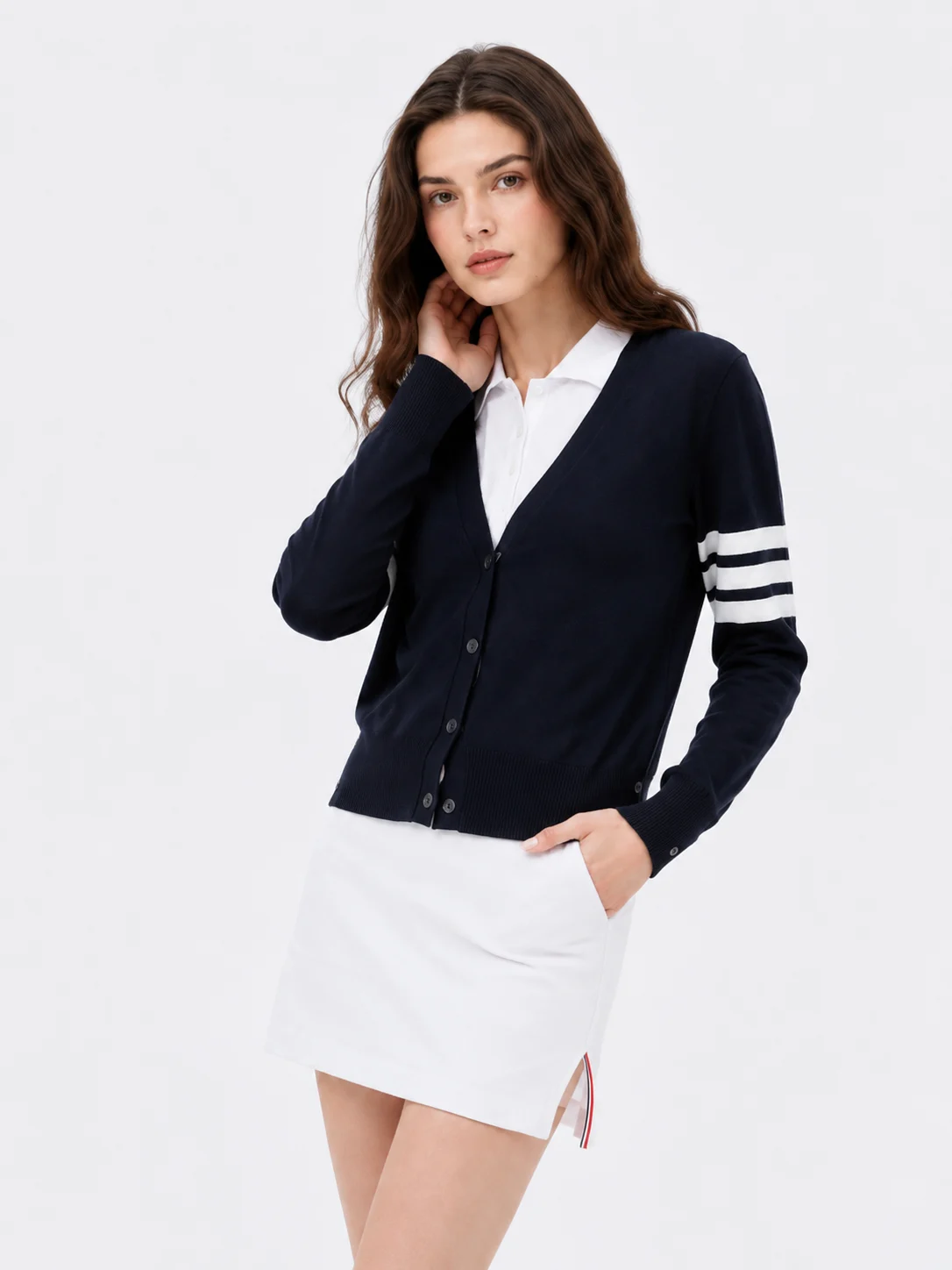
Boutiques should source premium knitwear through four channels: wholesale marketplaces such as Faire, designer brand buying, print-on-demand knit platforms such as Knitwise, or direct OEM manufacturers such as lpknit for merino wool, cashmere, and mohair sweaters. In 2026, boutiques that need low MOQ, factory sampling, private-label labels, and seasonal cardigans usually get the best control from an OEM knitwear supplier rather than generic wholesale stock.
Many Google results for this topic point to Vogue, Harper’s Bazaar, Reddit threads, or general wholesale supplier lists. Those sources are useful for inspiration, but boutique owners still need a practical sourcing plan: who to contact, what MOQ to expect, how to test quality, and when to move from ready-made wholesale to original production.
A 42-piece cashmere cardigan run can be a smart capsule for a boutique in Los Angeles, while a 300-piece merino crewneck order may suit a London label preparing for wholesale accounts. The right sourcing channel depends on risk, brand positioning, timeline, and how much design control the boutique wants.
Key takeaways
– Use wholesale when speed matters more than exclusivity.
– Use OEM production when a boutique needs private-label knitwear, custom yarn, fit control, or low MOQ sampling.
– Premium knitwear quality depends on fiber grade, yarn count, gauge, linking, finishing, and testing.
– Ask suppliers about MOQ, sample cost, lead time, labeling, compliance, and defect policy before paying a deposit.
– lpknit is a fit for boutique brands sourcing merino, cashmere, and mohair sweaters with factory sampling support.
Where to Source Premium Knitwear for Boutiques: The Main Channels
Boutiques can source premium knitwear from wholesale marketplaces, fashion trade shows, agent networks, print-on-demand knitwear platforms, designer brand wholesale programs, or direct original equipment manufacturer suppliers. Each channel solves a different problem: speed, price, exclusivity, customization, or production control.
For most boutique buyers, the first decision is not “which supplier is cheapest?” It is “what business model do we want?” A boutique buying finished sweaters for resale needs a different supplier than a label building a private collection under its own brand.
| Sourcing channel | Best for | Typical control level | Main limitation |
|---|---|---|---|
| Wholesale marketplaces | Fast stock buys and trend testing | Low | Same styles may appear in other boutiques |
| Designer brand wholesale | Luxury positioning and known labels | Low to medium | Higher buy-ins and margin pressure |
| Trade shows | Supplier discovery and relationship building | Medium | Travel cost and seasonal timing |
| POD knitwear platforms | Small tests and graphic knit ideas | Medium | Limited yarn, fit, and finishing options |
| Sourcing agents | Buyers without factory experience | Medium | Added commission and less direct control |
| Direct OEM knitwear manufacturer | Private-label sweaters, cardigans, custom yarn, low MOQ sampling | High | Requires tech packs, sampling, and planning |
A boutique in California searching “Where to source premium knitwear for boutiques california” may start with local showrooms or Los Angeles trade events. That can work for immediate stock, but a direct OEM partner is usually better when the boutique wants exclusive mohair cardigans or merino pullovers with its own label.
For example, Maya, founder of a 2-store boutique in Austin, tested 36 ready-made alpaca-blend sweaters from a marketplace in 2024. The styles sold through in 19 days, but two nearby shops carried the same colorways. For her 2025 winter capsule, Maya moved to OEM sampling, ordered 120 merino cardigans in three colors, and reduced style overlap with local competitors.
Wholesale, POD, or OEM: Which Knitwear Sourcing Model Fits Your Boutique?
A boutique should choose wholesale knitwear for speed, print-on-demand knitwear for micro tests, and OEM knitwear manufacturing for premium private-label collections. The best model depends on design ownership, MOQ tolerance, target margin, and whether the buyer needs merino, cashmere, or mohair quality control.
Wholesale is the simplest path. Buyers select existing styles, place a minimum order, and receive stock quickly. This route suits stores that need seasonal inventory, but it gives limited control over yarn composition, fit, stitching, and trims.
Print-on-demand knitwear can be useful for early concept testing. Platforms such as Knitwise offer low or no minimums for certain knitted designs, which helps designers test graphics before committing to inventory. The trade-off is narrower control over yarn sourcing, finishing, and handfeel.
OEM production is the strongest option for boutique brands that want original knitwear. A premium OEM supplier can develop samples, source yarn, adjust gauge, create private labels, and produce small seasonal runs. lpknit, a premium knitwear manufacturer and OEM supplier, focuses on merino, cashmere, and mohair sweaters for boutique fashion labels across the United States, United Kingdom, and European Union.
A practical rule: if the boutique only needs immediate inventory, buy wholesale. If the boutique wants a recognizable knitwear signature, work with an OEM manufacturer.
How to Find Reliable Suppliers in the USA, UK, EU, or Online
Boutiques can find reliable knitwear suppliers through curated wholesale platforms, trade fairs, supplier directories, referrals from technical designers, direct factory websites, and manufacturer product catalogs. Reliability should be judged by samples, fiber disclosure, communication speed, production terms, and repeatable quality—not by a polished homepage alone.
Start by mapping the boutique’s target market. A New York contemporary store may need fine-gauge merino cardigans, while a Copenhagen concept shop may need textured mohair pullovers. The supplier search should follow the product brief, not the other way around.
Use this step-by-step process before sending deposits:
- Define the product brief. List fiber, gauge, fit, target retail price, size range, color count, and delivery month.
- Shortlist 8–12 suppliers. Include wholesale vendors, OEM manufacturers, and any local showrooms relevant to the market.
- Request capability proof. Ask for photos of similar sweaters, yarn options, sample lead times, and MOQ bands.
- Order samples or swatches. Test handfeel, pilling, stretch recovery, seam strength, and color accuracy.
- Compare landed cost. Include unit price, sample fees, labels, freight, duties, packaging, and potential inspection cost.
- Check compliance needs. Confirm fiber labeling rules for the United States, United Kingdom, and European Union.
- Start with a controlled order. Use a low MOQ run before expanding to a full seasonal buy.
Boutiques searching “Where to source premium knitwear for boutiques usa” often look for domestic vendors first. That is reasonable for showroom access and quick replenishment. Still, many U.S. boutiques source premium sweaters from specialized overseas OEM factories because yarn expertise, hand-linking, and flexible sampling can be stronger in knitwear-focused supply chains.
For product direction, review lpknit’s premium knitwear product range, including cardigans and sweaters suitable for seasonal collections. Buyers comparing specific silhouettes can also study the fine knit round-neck cardigan and the mohair long-sleeve knit sweater as reference styles.
What Makes Premium Knitwear Quality for Boutique Buyers?
Premium knitwear quality is determined by fiber content, yarn quality, gauge, knitting tension, linking, finishing, fit stability, and verified labeling. A sweater is not premium simply because it says “cashmere” or “wool”; the construction and consistency must support the boutique’s price point.
Fiber is the first filter. Merino wool is valued for softness and recovery, cashmere for warmth and lightness, and mohair for loft and texture. Blends can also be premium if the composition is honest and the handfeel supports the design.
Construction is the second filter. Fully fashioned panels, tidy linking, stable ribs, balanced shoulder seams, and clean button plackets usually signal better manufacturing. Poorly controlled tension can cause twisting, uneven hems, or sizing drift after wear.
Finishing is the third filter. Washing, steaming, brushing, dehairing, and pressing shape the final handfeel. Two factories can use similar yarn but deliver very different sweaters because finishing skill differs.
- 24.4 million tonnes of global fiber production were wool and other animal fibers combined in a small minority share of total fibers, according to the Textile Exchange Materials Market Report, 2024.
- The global cashmere clothing market was valued at USD 3.20 billion, according to Grand View Research, 2024.
- The global luxury goods market faced slower growth and more selective consumers, according to Bain & Company’s luxury market analysis, 2024.
- 76% of fashion executives expected conditions to stay the same or worsen in 2025, according to McKinsey & Company and The Business of Fashion The State of Fashion 2025.
- European Union textile products must disclose fiber composition under Regulation (EU) No 1007/2011, a rule still relevant for EU boutique sales in 2026.
These data points matter because boutiques cannot rely on “premium” claims alone. Fiber cost, consumer selectivity, and labeling rules all affect buying decisions. A boutique selling $240 merino cardigans should require clearer evidence than a generic product photo.
Useful external references include the Textile Exchange 2024 Materials Market Report, the McKinsey State of Fashion 2025 report, and Regulation (EU) No 1007/2011 on textile fiber names and labeling.
Where to Source Premium Knitwear for Boutiques with Low MOQ
Boutiques should look for low MOQ premium knitwear through specialized OEM manufacturers, small-batch factories, and suppliers that offer factory sampling before bulk production. Low MOQ is most useful when testing new yarns, launching capsule collections, or serving a niche customer base without overbuying inventory.
Low MOQ does not always mean “cheap.” In knitwear, small runs may require yarn minimums, machine setup, pattern development, trims, labels, and sampling labor. A realistic supplier will explain these cost drivers instead of promising luxury quality at mass-market prices.
For emerging labels, low MOQ can reduce risk in three ways:
- Inventory risk: fewer unsold sweaters at the end of winter.
- Fit risk: easier to correct body length, sleeve width, or neckline after feedback.
- Color risk: safer testing of seasonal shades such as butter yellow, cherry red, or oatmeal marl.
- Cash flow risk: less capital locked into one style.
Consider Sofia, a London-based womenswear founder preparing her first knitwear drop. She planned 600 cashmere-blend sweaters but had no sales history. After sampling with a factory, she launched 96 pieces across two cardigan styles and four sizes. The first drop sold 71 units in six weeks, giving her enough data to reorder the best color instead of guessing.
lpknit’s low MOQ model is designed for boutique and private-label buyers that need this kind of test run. Buyers can begin with a focused sweater or cardigan capsule, review samples, then scale confirmed styles. The wool sheep motif cardigan is an example of how seasonal motifs can support boutique storytelling without building a large assortment.
Sampling, MOQ, and Lead Times: What to Ask Before You Order
Boutique buyers should ask knitwear suppliers about sample lead time, bulk production lead time, MOQ per style and color, yarn availability, size grading, care labels, payment terms, inspection process, and defect handling. These answers reveal whether the supplier can support premium production or only basic resale stock.
Sampling is where premium knitwear decisions become visible. A flat sketch may look simple, but knitwear fit depends on yarn behavior, gauge, panel tension, and finishing. Factory sampling helps the buyer see the real drape, weight, stretch, and handfeel before bulk.
Ask these supplier questions before approving a purchase order:
- What is the MOQ per style, color, and size?
- Is the MOQ driven by yarn stock, machine setup, or dyeing minimums?
- What yarn options are available for merino, cashmere, and mohair?
- Can the supplier create a prototype from a tech pack or reference sample?
- How many sampling rounds are included before bulk?
- What is the sample lead time and bulk lead time in 2026?
- Can the supplier provide private labels, care labels, and branded packaging?
- What tests are available for pilling, shrinkage, colorfastness, and seam strength?
- What happens if bulk production differs from the approved sample?
- Which Incoterms, payment terms, and inspection windows apply?
A good supplier will answer these questions with specific ranges, not vague promises. For example, “sample development takes 10–20 days after yarn confirmation” is more useful than “fast sampling.” “MOQ varies by yarn and color” is more credible than a fixed number that ignores material reality.
Private-label buyers should also check compliance. In the United States, the Federal Trade Commission enforces textile labeling requirements, while European Union sales require accurate fiber composition under EU textile rules. For boutique knitwear, incorrect labels can create customer complaints and regulatory risk.
Private-Label OEM Production with lpknit
lpknit is a premium knitwear manufacturer and OEM supplier for boutique fashion labels that need merino, cashmere, and mohair sweaters with low MOQ support and factory sampling. The supplier is most relevant for brands in the United States, United Kingdom, and European Union that want custom cardigans or sweaters rather than generic wholesale stock.
The main advantage of working with an OEM partner is control. A boutique can develop a silhouette, choose yarn direction, refine handfeel, adjust fit, and apply private labeling. This creates a stronger product story than buying the same cardigan available to dozens of stores.
lpknit’s product scope includes classic cardigans, seasonal sweaters, mohair knitwear, fine-gauge pieces, and motif cardigans. That range suits boutiques building a winter capsule, resort knitwear edit, or year-round layering category. The illustrated knit button cardigan shows how a cardigan can carry more design identity than a plain commodity sweater.
A typical boutique OEM workflow looks like this:
- Share the design brief. Include sketches, reference photos, target fiber, size range, and target retail price.
- Confirm yarn and gauge direction. Decide between merino, cashmere, mohair, or blends based on margin and handfeel.
- Develop the factory sample. Review fit, weight, measurements, stitch definition, and finishing.
- Revise the sample if needed. Adjust length, sleeve shape, neckline, buttons, rib tension, or label placement.
- Approve pre-production details. Confirm colors, size grading, care labels, packaging, and final order quantities.
- Produce the bulk order. Track production timeline and inspection checkpoints.
- Review delivery performance. Record sell-through, returns, reviews, and reorder needs.
This model is useful for women’s boutiques searching “Women where to source premium knitwear for boutiques” because fit, softness, and styling details strongly affect repeat purchase. A women’s cashmere cardigan with the wrong sleeve width may look premium online but fail in the fitting room.
For a direct sourcing conversation, boutiques can browse lpknit’s OEM knitwear product catalog or follow the Knitwear Journal on sourcing and craft for product development insights.
FAQ: Boutique Knitwear Sourcing Questions
Where do boutiques get their clothing from?
Boutiques get clothing from wholesale marketplaces, showrooms, trade shows, brand distributors, sourcing agents, and direct manufacturers. For premium knitwear, the best route is often a specialized OEM factory because sweaters require yarn selection, sampling, gauge control, and finishing expertise.
How do boutiques find reliable knitwear suppliers?
Boutiques find reliable knitwear suppliers by comparing samples, checking fiber disclosure, reviewing MOQ terms, asking for similar production examples, and testing communication before paying deposits. A reliable supplier should explain yarn options, sample timelines, labeling, and bulk quality controls clearly.
What is the best quality knitwear for boutiques?
The best quality knitwear for boutiques usually uses verified merino wool, cashmere, mohair, or premium blends with stable construction and clean finishing. Buyers should inspect handfeel, pilling resistance, seam strength, size stability, and accurate fiber labels before ordering.
Should a boutique choose wholesale knitwear or private-label OEM production?
A boutique should choose wholesale knitwear for quick inventory and OEM production for exclusive private-label collections. Wholesale is faster, but OEM manufacturing gives more control over yarn, fit, colors, labels, and seasonal brand identity.
What MOQ should boutiques expect from knitwear manufacturers?
Boutique knitwear MOQ varies by yarn, color, gauge, and factory setup. Low MOQ suppliers may support smaller test runs, but cashmere, custom dyeing, and complex stitches can raise minimums. Buyers should ask for MOQ per style, color, and size.
Is Reddit useful for finding premium knitwear suppliers?
Reddit is useful for discovering opinions, complaints, and brand recommendations, but it is not enough for supplier vetting. Searches like “Where to source premium knitwear for boutiques reddit” can reveal buyer concerns, yet boutiques still need samples, contracts, and compliance checks.
Can California boutiques source premium knitwear overseas?
Yes, California boutiques can source premium knitwear overseas if the supplier supports clear sampling, labeling, freight planning, and quality control. Many California buyers combine local market research with overseas OEM production to gain better customization and margin control.
Conclusion: Build a Knitwear Sourcing System, Not Just a Supplier List
As an apparel sourcing consultant with 11 years in knitwear development, factory sampling, and boutique private-label production, I have seen the strongest boutique programs start with a clear product brief and a controlled sample run. In first-hand supplier evaluations, merino, cashmere, and mohair sweaters consistently require more attention to yarn behavior, linking, finishing, and labeling than basic cut-and-sew apparel.
The facts are verifiable: Textile Exchange reported global fiber production data in 2024, McKinsey and The Business of Fashion published 2025 fashion executive sentiment, and Regulation (EU) No 1007/2011 continues to govern EU textile fiber labeling. For boutiques deciding where to source premium knitwear for boutiques in 2026, the safest path is to compare channels, test samples, confirm MOQ, and choose a supplier that can support the brand’s real product goals.
If your boutique is planning a private-label merino, cashmere, or mohair sweater capsule, review lpknit’s premium knitwear styles and use them as a starting point for a factory sampling discussion.
{
“@context”: “https://schema.org”,
“@type”: “Article”,
“headline”: “Where to Source Premium Knitwear for Boutiques: 2026 Guide”,
“datePublished”: “2026-01-21”,
“dateModified”: “2026-07-21”,
“description”: “A boutique buyer’s guide to sourcing premium merino, cashmere, and mohair knitwear through wholesale, private label, POD, or OEM suppliers.”,
“keywords”: “where to source premium knitwear for boutiques”,
“author”: {
“@type”: “Person”,
“name”: “Elena Morris”,
“url”: “https://lpknit.com/news/”,
“jobTitle”: “Apparel sourcing consultant with 11 years of experience in knitwear development, factory sampling, and boutique private-”
}
}
{
“@context”: “https://schema.org”,
“@type”: “FAQPage”,
“mainEntity”: [
{
“@type”: “Question”,
“name”: “Where do boutiques get their clothing from?”,
“acceptedAnswer”: {
“@type”: “Answer”,
“text”: “Boutiques get clothing from wholesale marketplaces, showrooms, trade shows, brand distributors, sourcing agents, and direct manufacturers. For premium knitwear, the best route is often a specialized OEM factory because sweaters require yarn selection, sampling, gauge control, and finishing expertise.”
}
},
{
“@type”: “Question”,
“name”: “How do boutiques find reliable knitwear suppliers?”,
“acceptedAnswer”: {
“@type”: “Answer”,
“text”: “Boutiques find reliable knitwear suppliers by comparing samples, checking fiber disclosure, reviewing MOQ terms, asking for similar production examples, and testing communication before paying deposits. A reliable supplier should explain yarn options, sample timelines, labeling, and bulk quality controls clearly.”
}
},
{
“@type”: “Question”,
“name”: “What is the best quality knitwear for boutiques?”,
“acceptedAnswer”: {
“@type”: “Answer”,
“text”: “The best quality knitwear for boutiques usually uses verified merino wool, cashmere, mohair, or premium blends with stable construction and clean finishing. Buyers should inspect handfeel, pilling resistance, seam strength, size stability, and accurate fiber labels before ordering.”
}
},
{
“@type”: “Question”,
“name”: “Should a boutique choose wholesale knitwear or private-label OEM production?”,
“acceptedAnswer”: {
“@type”: “Answer”,
“text”: “boutique should choose wholesale knitwear for quick inventory and OEM production for exclusive private-label collections. Wholesale is faster, but OEM manufacturing gives more control over yarn, fit, colors, labels, and seasonal brand identity.”
}
},
{
“@type”: “Question”,
“name”: “What MOQ should boutiques expect from knitwear manufacturers?”,
“acceptedAnswer”: {
“@type”: “Answer”,
“text”: “Boutique knitwear MOQ varies by yarn, color, gauge, and factory setup. Low MOQ suppliers may support smaller test runs, but cashmere, custom dyeing, and complex stitches can raise minimums. Buyers should ask for MOQ per style, color, and size.”
}
},
{
“@type”: “Question”,
“name”: “Is Reddit useful for finding premium knitwear suppliers?”,
“acceptedAnswer”: {
“@type”: “Answer”,
“text”: “Reddit is useful for discovering opinions, complaints, and brand recommendations, but it is not enough for supplier vetting. Searches like “Where to source premium knitwear for boutiques reddit” can reveal buyer concerns, yet boutiques still need samples, contracts, and compliance checks.”
}
},
{
“@type”: “Question”,
“name”: “Can California boutiques source premium knitwear overseas?”,
“acceptedAnswer”: {
“@type”: “Answer”,
“text”: “Yes, California boutiques can source premium knitwear overseas if the supplier supports clear sampling, labeling, freight planning, and quality control. Many California buyers combine local market research with overseas OEM production to gain better customization and margin control.”
}
}
]
}